







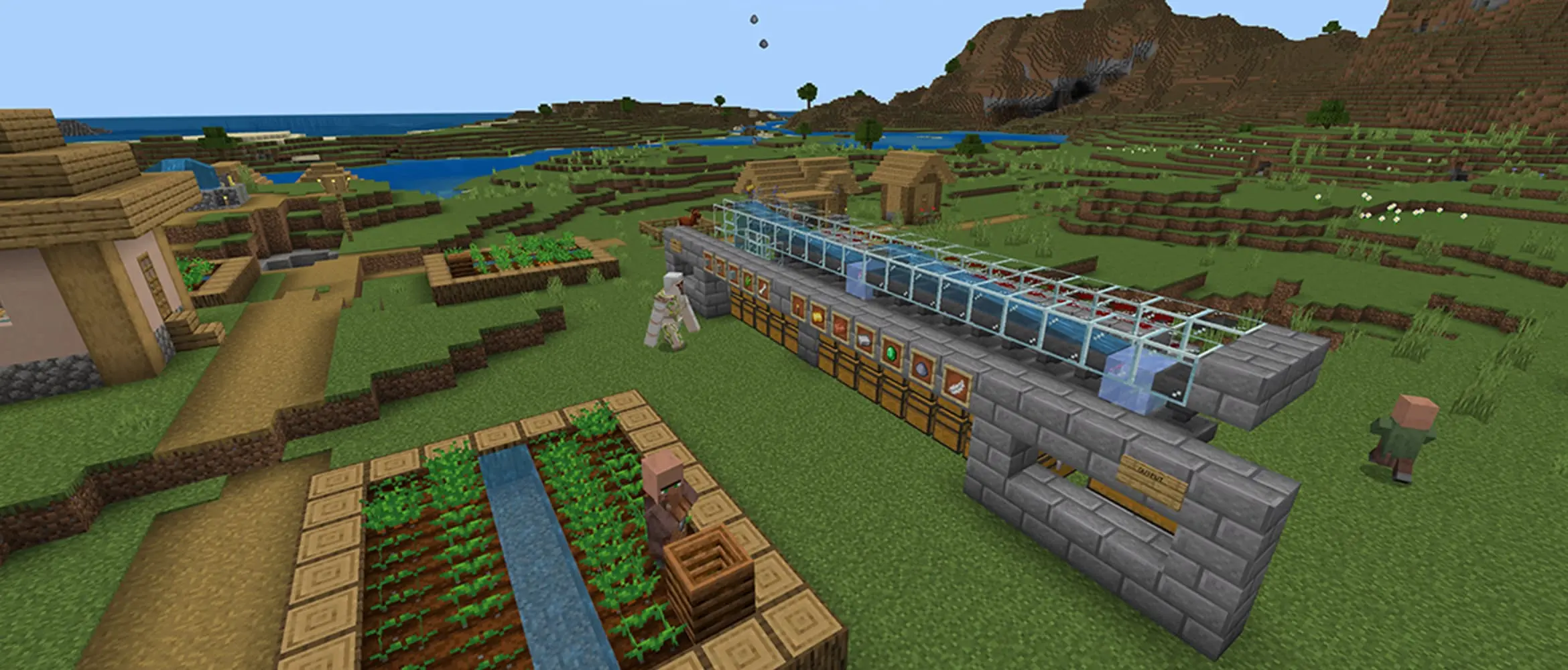



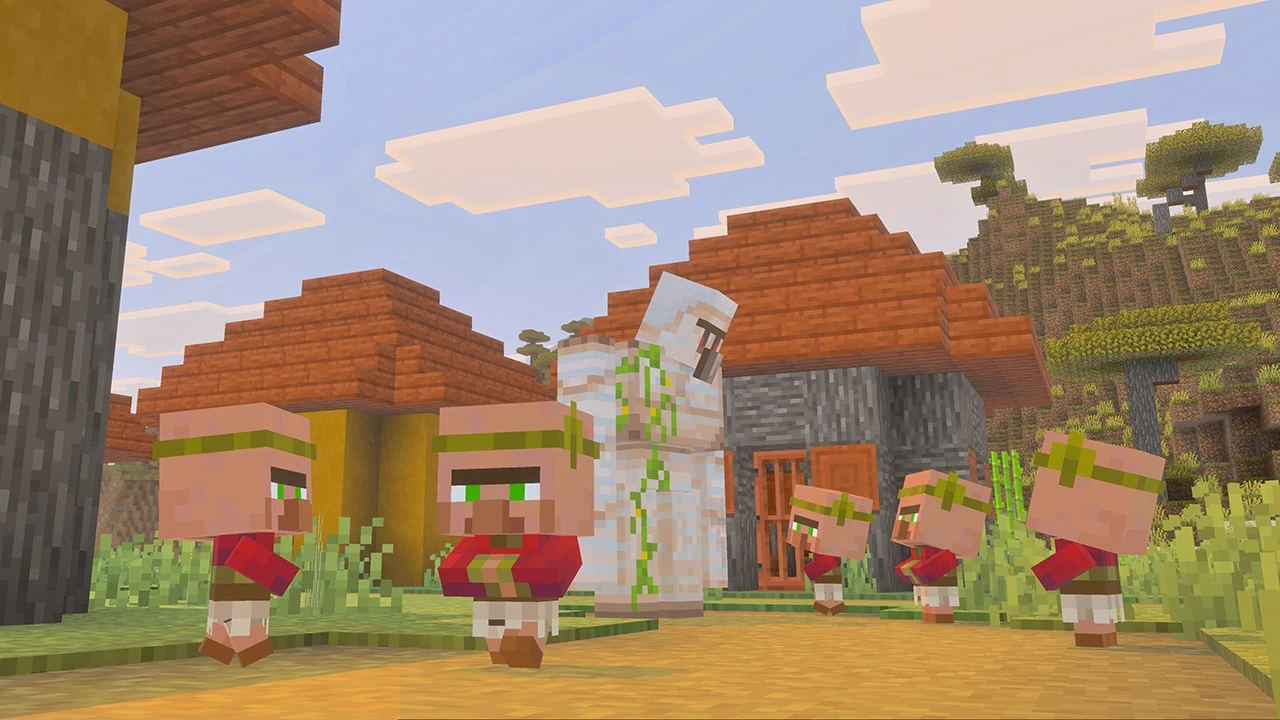
Iron disappears quickly in a developed Minecraft world. Hoppers, rails, anvils, buckets, minecarts, tools, and redstone projects can empty several mining trips before the next build is finished. An iron farm replaces that repeated mining with a controlled village that produces iron golems and sends their drops into storage.
The difficult part is not the lava blade or the hopper chest. It is the village. Java and Bedrock use different conditions for golem spawning, so a tutorial made for the wrong edition can look complete and never produce one piece of iron. Check the edition, release, and tutorial date before gathering villagers.
This guide explains the systems every working farm needs and the main difference between editions. It does not force one block-for-block design, because small changes to beds, workstations, village centers, and spawn checks can break a copied layout after an update.
Confirm the Edition Before Choosing a Design
Java Edition runs on Windows, macOS, and Linux. Bedrock is the edition used on current consoles, mobile devices, and the separate Minecraft for Windows app. Owning both on PC does not make their farm mechanics interchangeable.
Read the tutorial title and description, not only the thumbnail. A trustworthy build names the edition and the game version, shows the farm working in a fresh test world, and explains why each bed, workstation, and villager is present. Skip a guide that claims one tiny layout works everywhere without changes.
Keep the Farm Away From Other Village Blocks
Beds, bells, workstations, and villagers near the build can join the same village system or move its center. That can shift the golem spawning area away from the platform. A trading hall, breeder, or natural village beside the farm is not harmless background decoration.
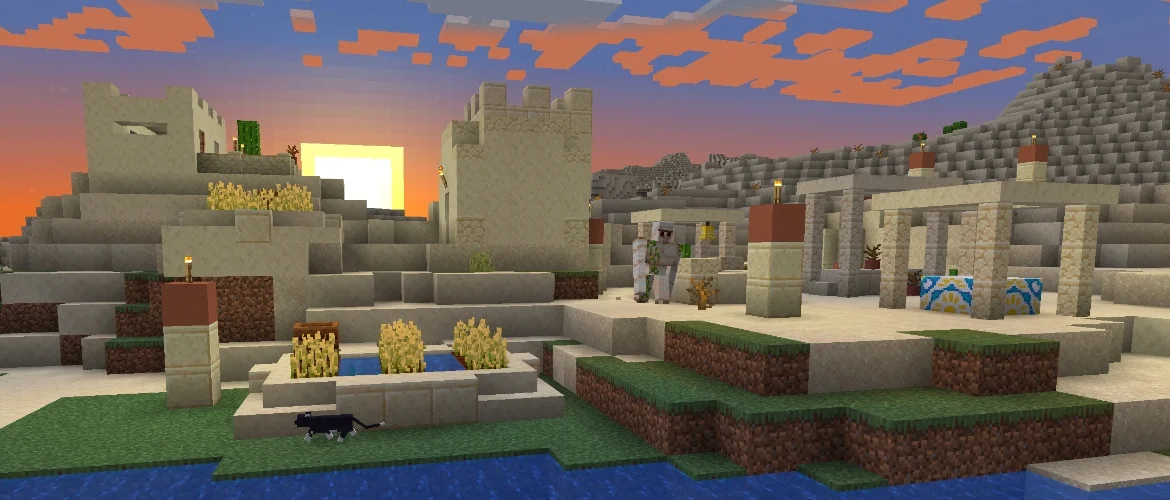
Choose an isolated location before transporting anyone. Many players build above the ground or over water because the spawn area is easier to control, but distance from other village points is more important than the scenery. Follow the separation given by the current design and keep future base expansions outside that space.
Java Farms Usually Use Villager Panic
The common Java design places three villagers near beds and lets them see a zombie or another threat at controlled intervals. Frightened villagers can summon an iron golem when their other conditions are met. The hostile mob is part of the Java trigger; copying that chamber into Bedrock does not create the same system.
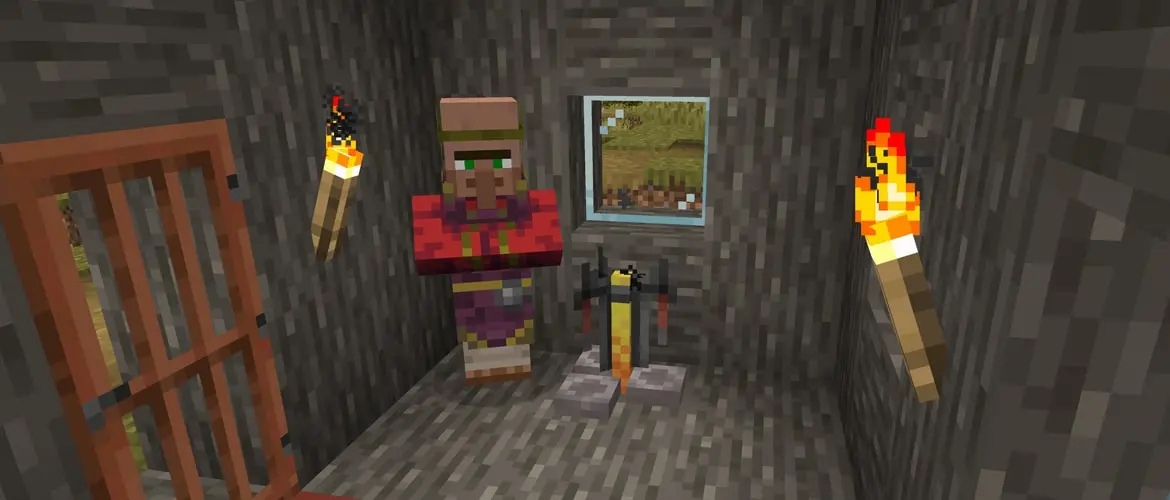
The villagers still need access to sleep. A permanent view of the zombie can keep them panicked and prevent them from using their beds, which eventually stops the farm. Good Java layouts break line of sight long enough for the villagers to lie down, then expose the threat again.
Not every Java farm uses the same panic layout, and larger village-based designs can use different behavior. The practical check is visible: each villager reaches the bed, the threat cannot attack them, and the golem appears on the planned platform instead of inside the villager chamber.
Bedrock Farms Use Population, Beds, and Work
Bedrock iron farms are built as functional villages. The established spawning rules require at least 10 villagers, at least 20 beds, a bed linked to every villager, and at least 75 percent of the villagers to have worked during the previous day. Bedrock also limits the village to one naturally spawned golem for every 10 villagers.
A zombie is not the normal trigger here. The villagers need reachable workstations and time to follow their schedules. If several villagers cannot work, the farm can stop even though the beds and platform have not moved.
Bedrock designs often use more villagers to improve consistency or support additional golems, but extra population does not repair bad job-site links. Watch the green particles when villagers claim beds and workstations, and avoid placing spare village blocks nearby after the links are established.
Move Villagers Before Closing the Structure
Boats and minecarts are the safest tools for transport. Build the rail, water route, or temporary bridge first, then move one villager at a time into a numbered cell. Trying to push a crowd through an unfinished farm usually ends with broken links or a villager standing in the kill chamber.
Protect the route from zombies, raids, lightning, and falls. Move villagers during daylight when possible, or sleep before opening the route. In Bedrock, assign workstations carefully so each villager can reach the block it claimed. In Java, confirm the villagers can use their beds before adding the zombie.
Control Every Valid Golem Spawn Block
The spawning platform should be the easiest valid place for a golem to appear. Give it solid floor space, open height, and water that pushes the golem toward the exit. Buttons, slabs, leaves, glass, or other design-approved blocks can prevent spawning on nearby surfaces, but use the exact spawn-proofing method recommended for the current edition.
Check roofs, ledges, the villager chamber, the ground below, and any temporary staircase. One golem standing outside the collection path may be detected by the village and stop further production. Remove construction blocks after the farm works and watch several spawn cycles from different angles.
Move Golems Into the Kill Chamber
Water streams can carry a golem toward a central hole or side channel. The current should reach every part of the platform without pushing back against itself. Test the water with dropped items before the villagers arrive, then make sure the opening is wide enough for a golem's large body.
Most compact farms use lava to damage the golem while keeping the drops above the fire. Signs, gates, or another supported block hold the lava in place, and hoppers collect the iron and poppies below. Build the chamber where the player cannot accidentally touch the lava while opening the chest.
Test the Collection Before Adding Lava
Point every hopper toward a chest and drop an item onto each collection block. Confirm that the item reaches storage, then add the signs or gates, water, and lava in that order. A missing hopper direction is easy to fix while the chamber is empty.
Leave room for more than one chest. Iron farms can run while the player works nearby, and poppies take storage space alongside ingots. A filter or composter can be added later, but the first version only needs a collection path that never burns or traps the iron.
Place the farm where normal play will keep it active. A machine beside the workshop, storage room, or trading area can produce while the player builds, but only if those spaces respect the farm's required separation. A remote farm may sit idle during most sessions. Bedrock players should also check simulation distance before choosing an AFK position, since an unloaded village cannot keep producing golems.
Diagnose Java and Bedrock Separately
- Java villagers never sleep: break the threat's line of sight at night and confirm each villager can reach a bed.
- Java villagers ignore the threat: check the zombie position, eye line, daylight protection, and whether the hostile mob can despawn.
- Bedrock villagers do not work: recheck workstation ownership and physical access during work hours.
- Bedrock village center moved: look for newly claimed beds, bells, or job sites outside the farm.
- A golem spawned elsewhere: find it, remove it from the village area, and spawn-proof that surface before testing again.
Do not replace random blocks after one quiet minute. Let the game complete a day and night cycle when sleep or work is involved, and watch the villagers. Their behavior usually shows which requirement is missing.
Build the Smallest Farm Your World Needs
A single working module can supply enough iron for a solo survival world. Larger stacked farms produce more, but they also multiply village links, transport work, storage, and update risk. Expand after the first chest proves that the design is stable in your edition.
Keep the tutorial link or a few screenshots with the world notes. When an update changes villager or golem behavior, knowing the original edition and layout makes repairs much faster. An iron farm should reduce repetitive work, not become the most fragile machine at the base.