











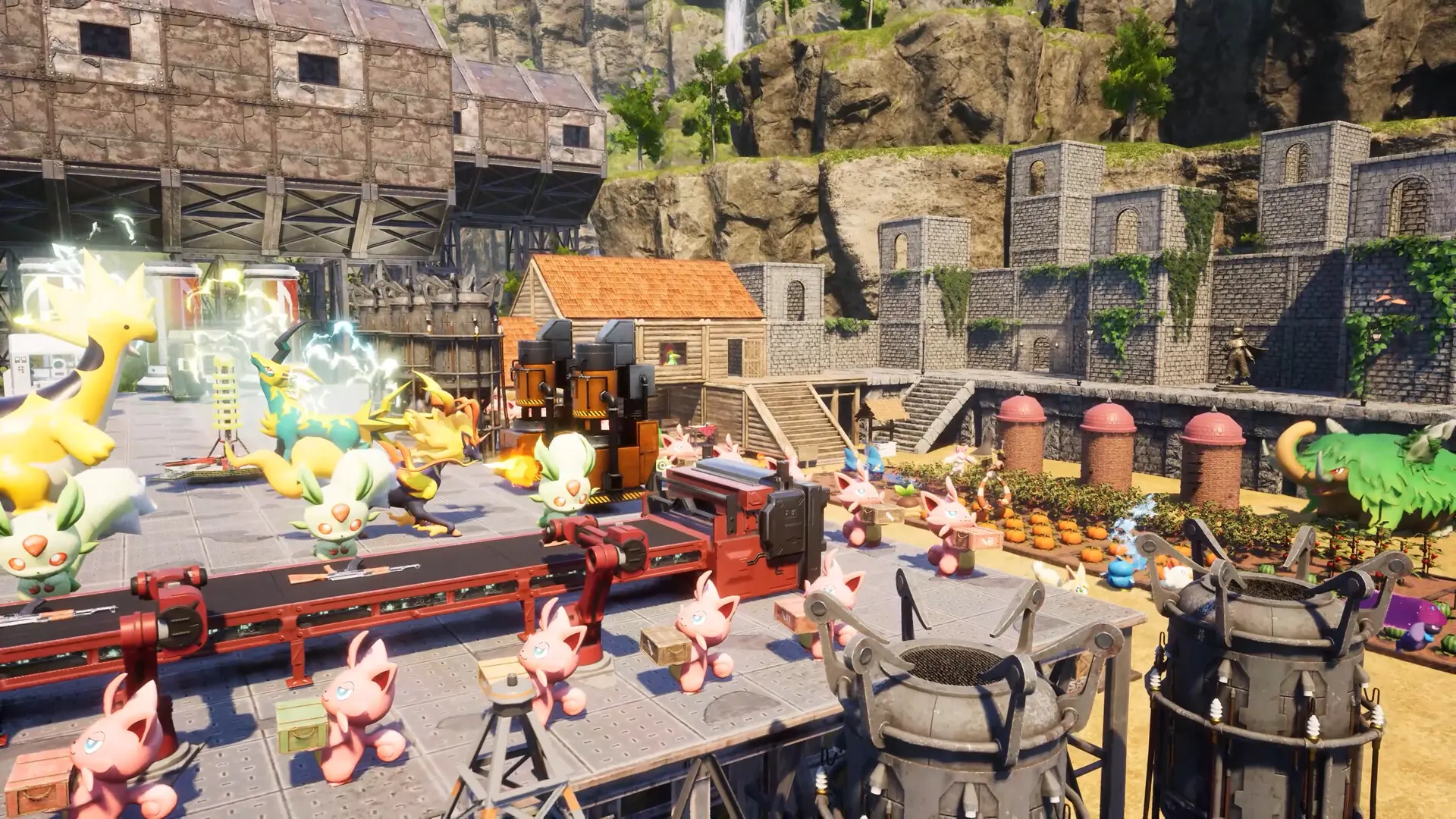


Palworld gives you many choices before you understand which ones are useful. The first hours are easier when you treat survival, catching Pals, and base building as one connected job. Food keeps you moving, captured Pals help you gather and fight, and the base replaces the supplies you use outside.
You do not need a perfect start. The first goal is a small base that can feed its workers, store materials, and make more Pal Spheres. Everything else becomes easier once those supplies are waiting when you return.
Choose Settings You Can Enjoy
Casual is a reasonable choice if you mainly want to explore, build, and collect Pals. Normal keeps more survival pressure without forcing the hardest penalties. Read the death penalty before starting so you know what can be dropped when your character is defeated.
World settings can be adjusted later when loading a save, so your first choice is not permanent. Increase resource collection or lower incoming damage if the game starts feeling repetitive. A setting that keeps you playing is more useful than one chosen to impress someone else.
Gather Enough for Tools and Pal Spheres
Pick up loose wood, stone, branches, and berries near the starting area. Craft a basic workbench, then make an axe, a pickaxe, simple clothing, and Pal Spheres. Fiber comes from trees and is used in several early recipes, so do not leave every piece behind.
Carry food in your inventory and watch its expiration time. Red berries are easy to find and can keep you going at the start, but a base-grown supply is more reliable. Repair useful equipment instead of crafting another copy every time its durability drops.
Catch Useful Pals Before Chasing Rare Ones
Damage a wild Pal until its health is low, then throw a Pal Sphere. The capture percentage shown on screen gives you a quick idea of whether the attempt is reasonable. Attacking from behind and using a better sphere can help against harder targets.
Cattiva is useful early because it can handle several base jobs and its Partner Skill increases your carrying capacity while it is in the party. Lamball supplies wool at a Ranch. Foxparks can light fires, Pengullet can water crops and cool food, and Tanzee can help with planting and lumbering.

Catch duplicates when you have spare spheres. Extra captures provide experience and can later support breeding or Condensation. Do not fill every storage slot with copies you have no plan to use, but one duplicate is rarely wasted during the early game.
Build a Simple First Base
The Palbox creates your base and defines the area where assigned Pals can work. Place it on open ground near wood, stone, and a few useful ore deposits. Leave clear space around the Palbox because you will return there often to manage workers and travel.
Build a chest near the workbench, one bed for each active worker, a feed box, and a berry plantation. Put storage close to the stations that produce items. Pals spend less time carrying materials when the correct chest is only a short walk away.

Your first base can be temporary. Flat ground and simple paths are more important than a dramatic view. Later bases can focus on mining, farming, breeding, oil, or defense once you understand what your save actually needs.
Read the Work Icons
Every Pal has work suitability icons on its information page. Kindling runs fires and furnaces. Watering supports plantations and some machines. Handiwork builds and crafts. Planting and Gathering grow food. Mining and Lumbering collect materials. Transporting moves finished items into storage.
A Pal chooses from the jobs it can perform, which can create delays when one worker has too many options. Early generalists are helpful because your base is small. Later, specialists complete important jobs faster and are easier to control.
Spend Technology Points on Immediate Needs
Unlock recipes you can build and use now. Basic tools, Pal Spheres, the Palbox, beds, storage, food production, and Pal equipment usually deserve attention before decorative pieces. Keep a few points available instead of unlocking every item on each row.
Some Partner Skills need a specific crafted item before they work. Read the description before spending points on a saddle, weapon, harness, or accessory. Unlock it when you own the matching Pal and have the materials to craft it.
Leave the Base Prepared
Carry food, spare Pal Spheres, an axe, a pickaxe, a weapon, and enough open inventory space for new materials. Activate every Great Eagle Statue you pass. These statues are fast-travel points and make a failed trip much easier to recover.
Temperature changes between regions. Equip protection before walking into extreme heat or cold, and do not assume every nearby Alpha Pal is an early fight. Mark the location, improve your armor and team, then return when the level difference is smaller.
First Session Checklist
- Supplies: collect wood, stone, fiber, berries, and materials for several Pal Spheres.
- Team: catch Pals that cover fire, water, gathering, carrying, and basic combat.
- Base: place a Palbox, then add beds, food, storage, a workbench, and a plantation.
- Technology: unlock useful recipes and keep several points for the next problem.
- Exploration: activate fast travel, carry food, and return before every tool breaks.
Once the base can replace food, tools, and spheres without a long manual job, start following the main missions. You will be better prepared for Tower Bosses and new regions without spending hours collecting the same basic materials by hand.