
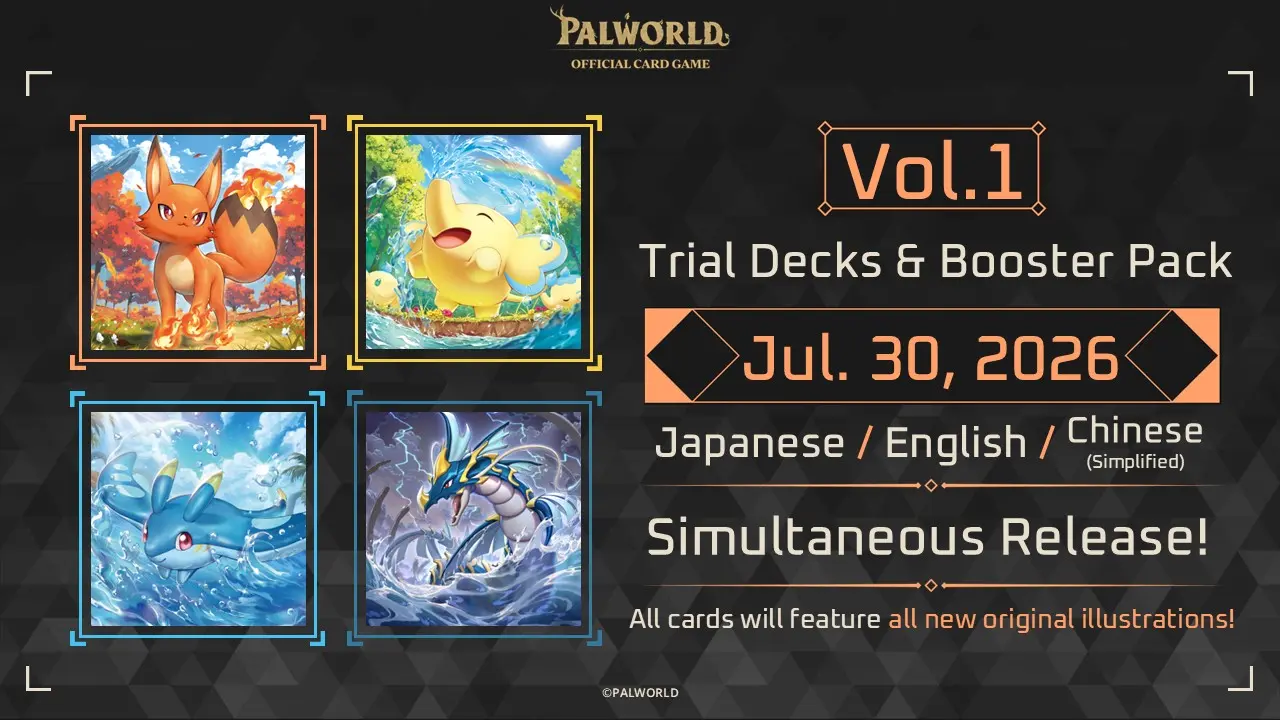
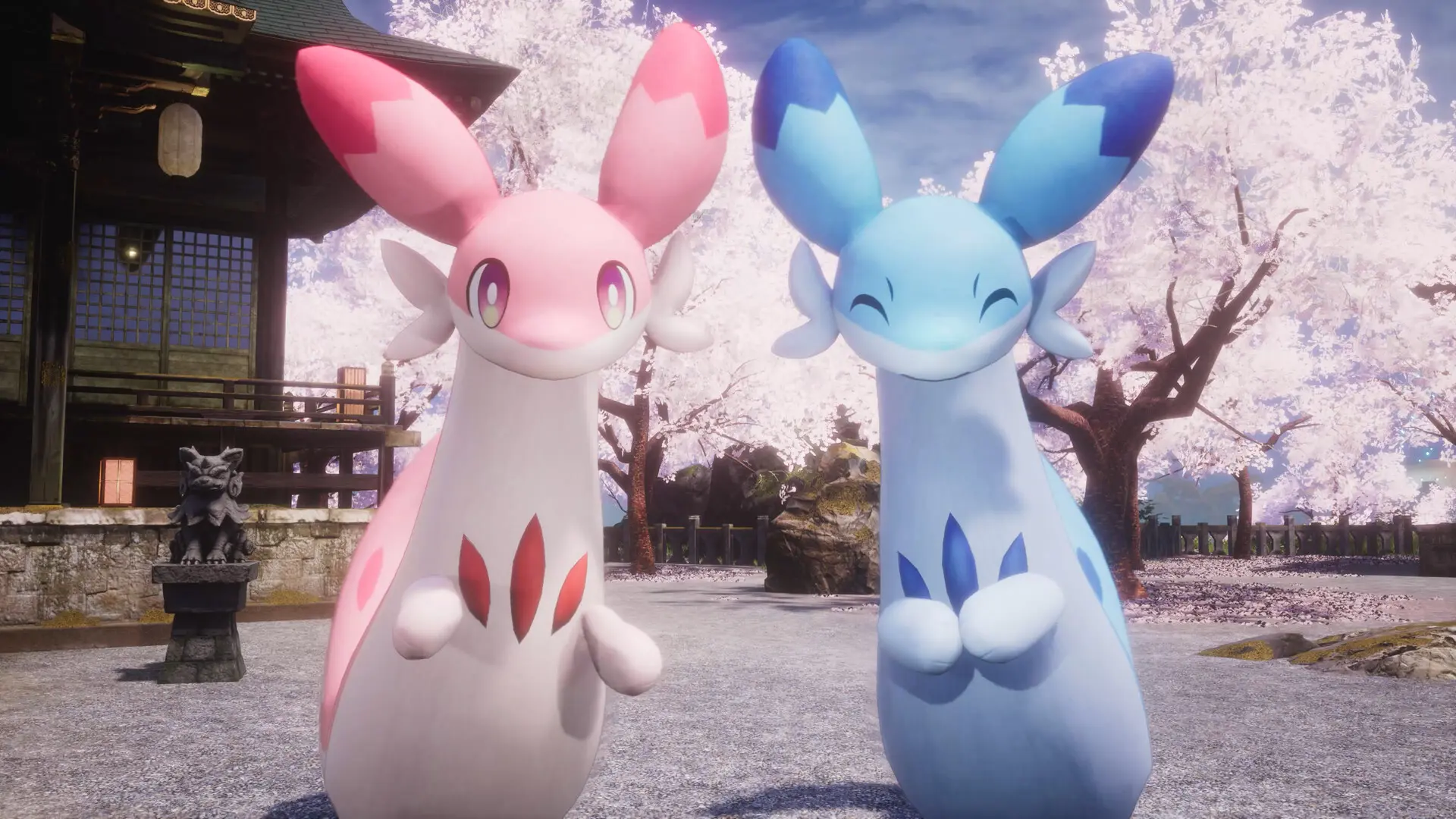
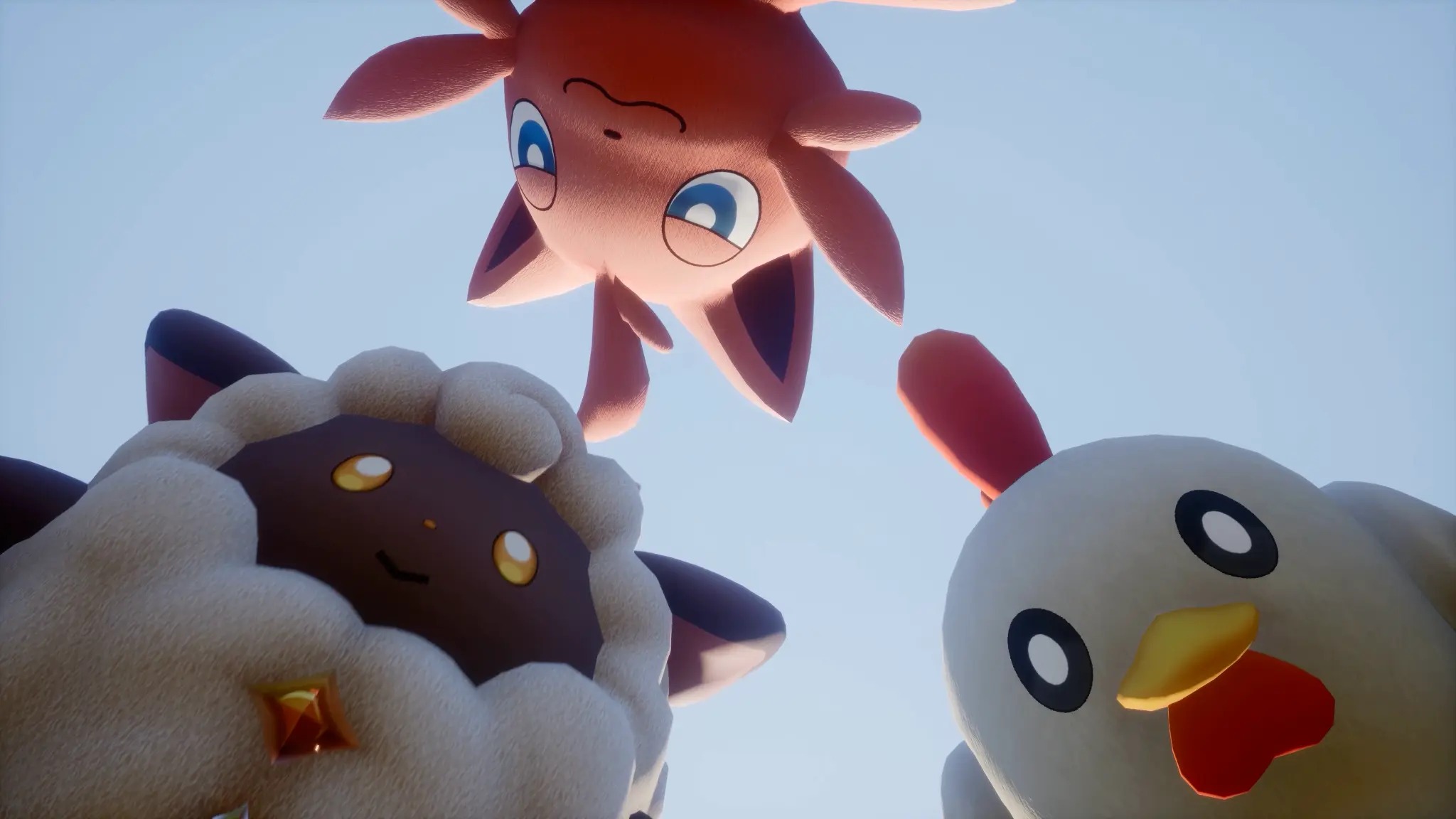
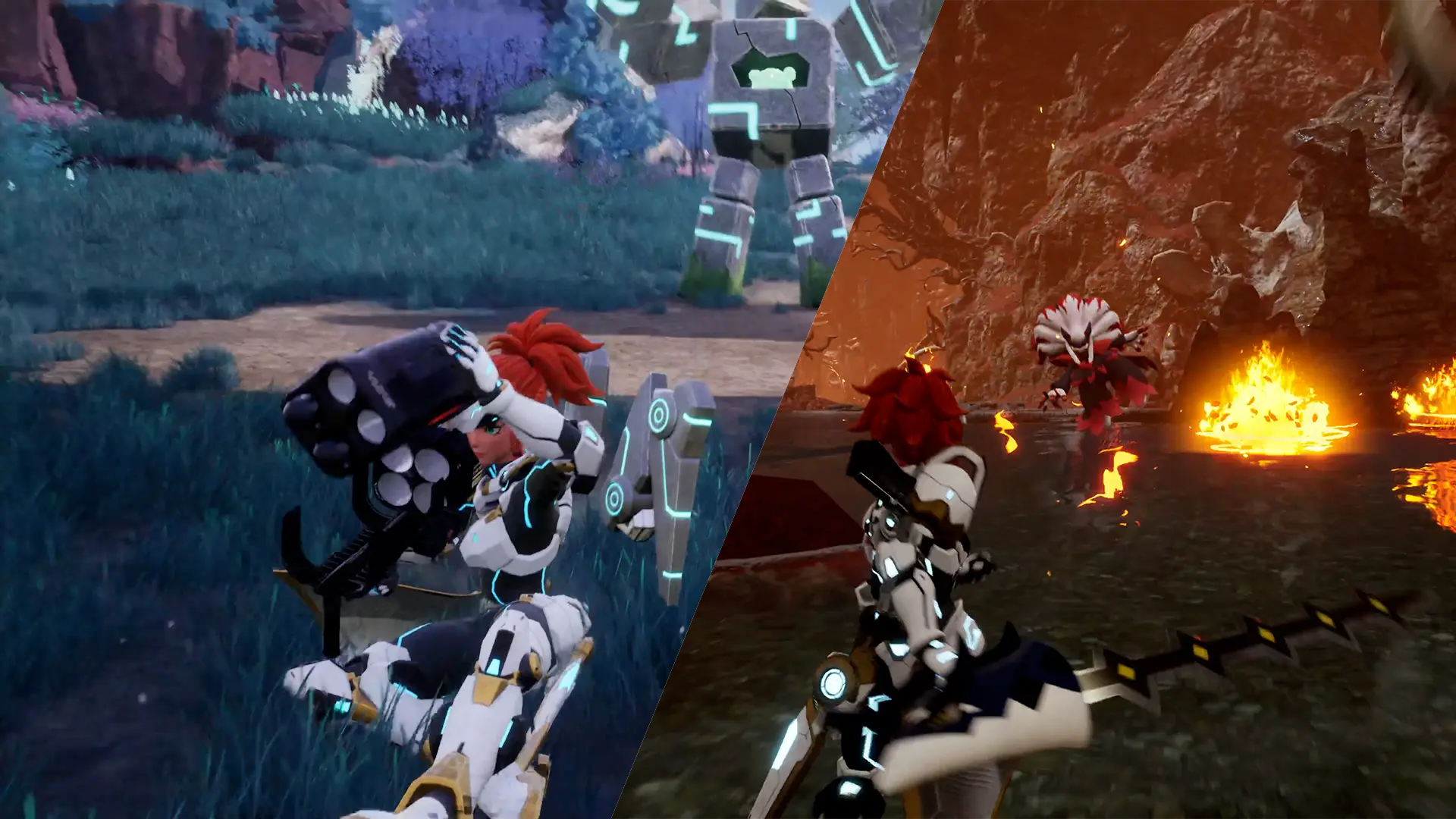
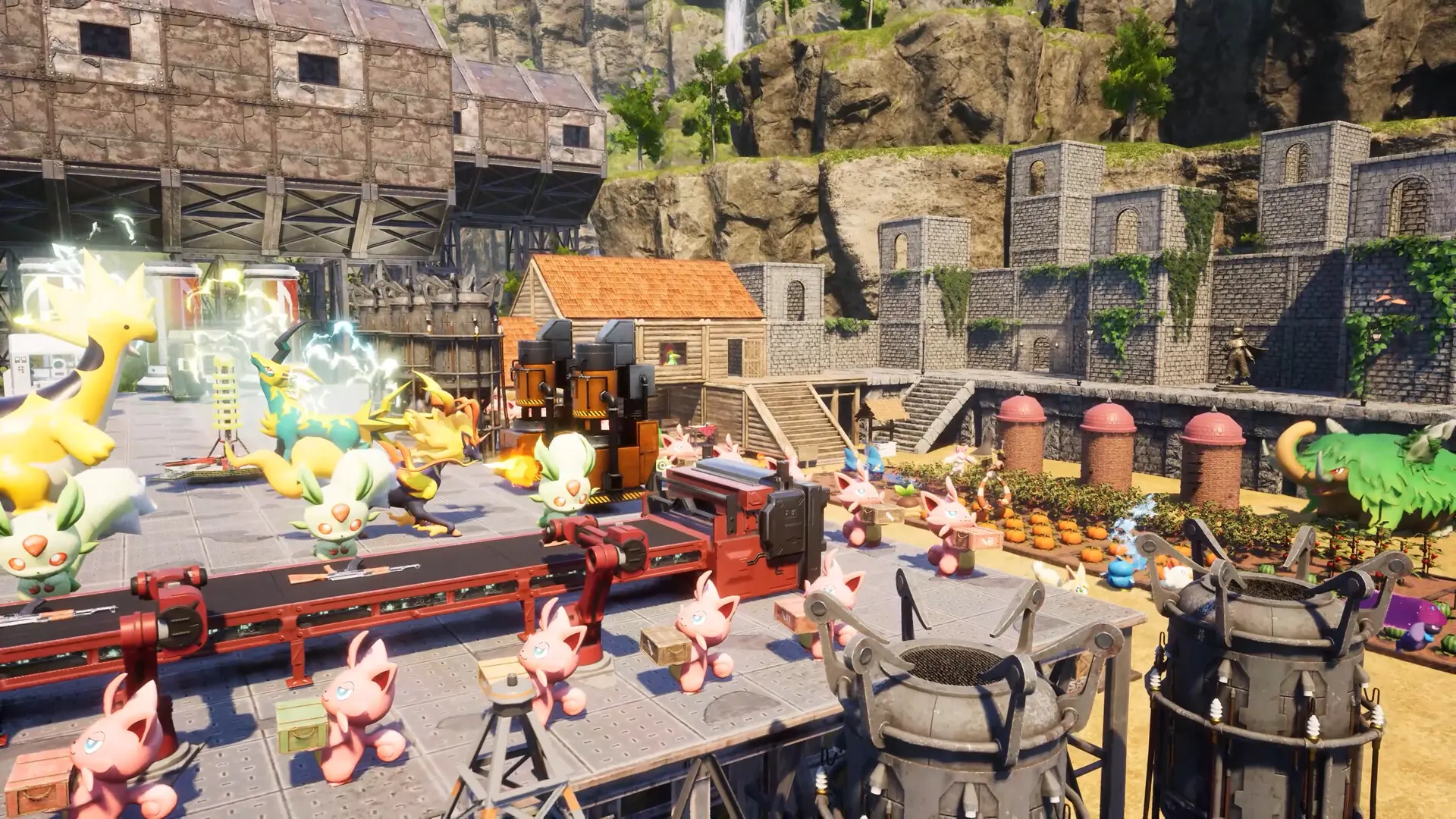
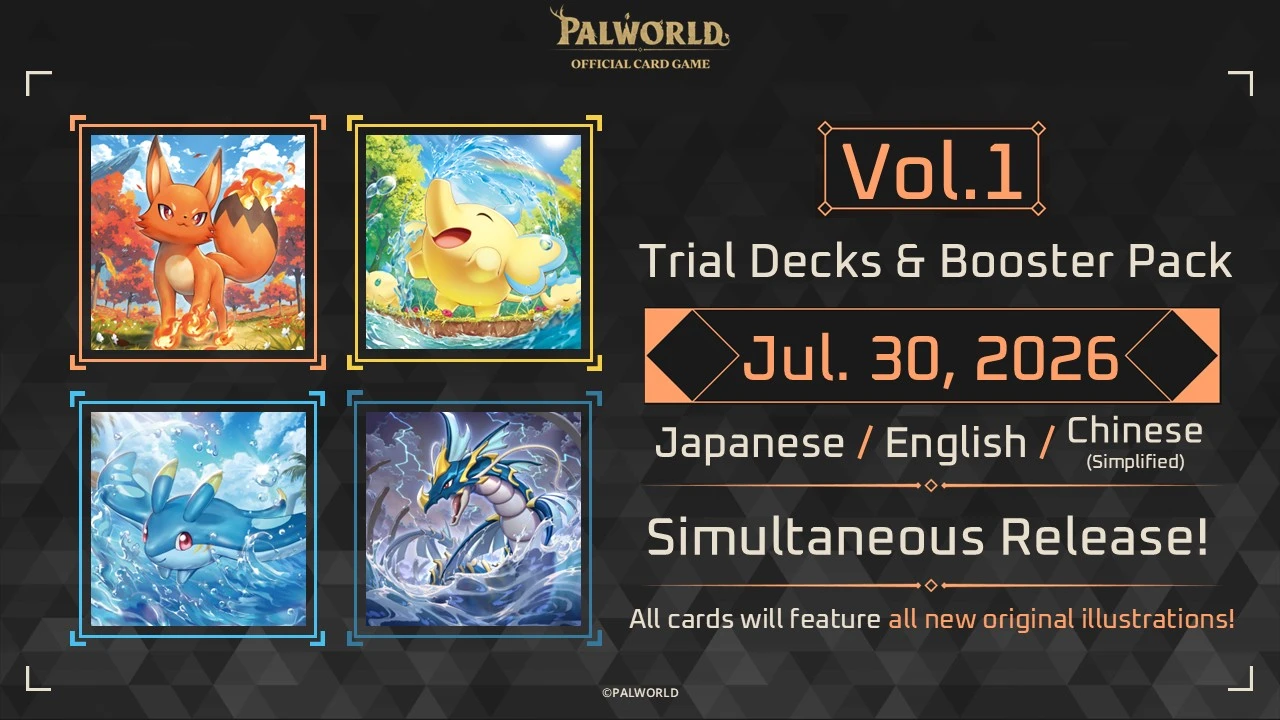
The best way to start the Palworld TCG is with one trial deck, not a pile of booster packs. Each trial deck includes a complete 50-card Main Deck, a 10-card Soul Deck, the counters and play guide you need, and one Dawn of Palpagos booster pack. You can open the box, learn the turn order, and play without building a deck first.
Palworld Official Card Game launched worldwide on July 30, 2026. It turns the video game's Pals, work assignments, resources, equipment, and base building into a two-player tabletop game. This guide explains the basic rules, the difference between the two starter products, what is inside the first booster set, and how to avoid overspending while the market is new.
Palworld TCG quick answer
- Players: Two.
- Main Deck: Exactly 50 cards using no more than two colors.
- Soul Deck: 10 Soul cards.
- Win condition: Reduce the other player's life to zero. You also lose if a deck check happens while your Main Deck has no cards left.
- Best first purchase: One trial deck for each player.
- Starter choices: Red/Blue for direct power or Green/Purple for a more planned style.
- First booster set: Dawn of Palpagos, with 100 base card types and 61 parallel versions.
- Release date: July 30, 2026.
What is the Palworld Official Card Game?
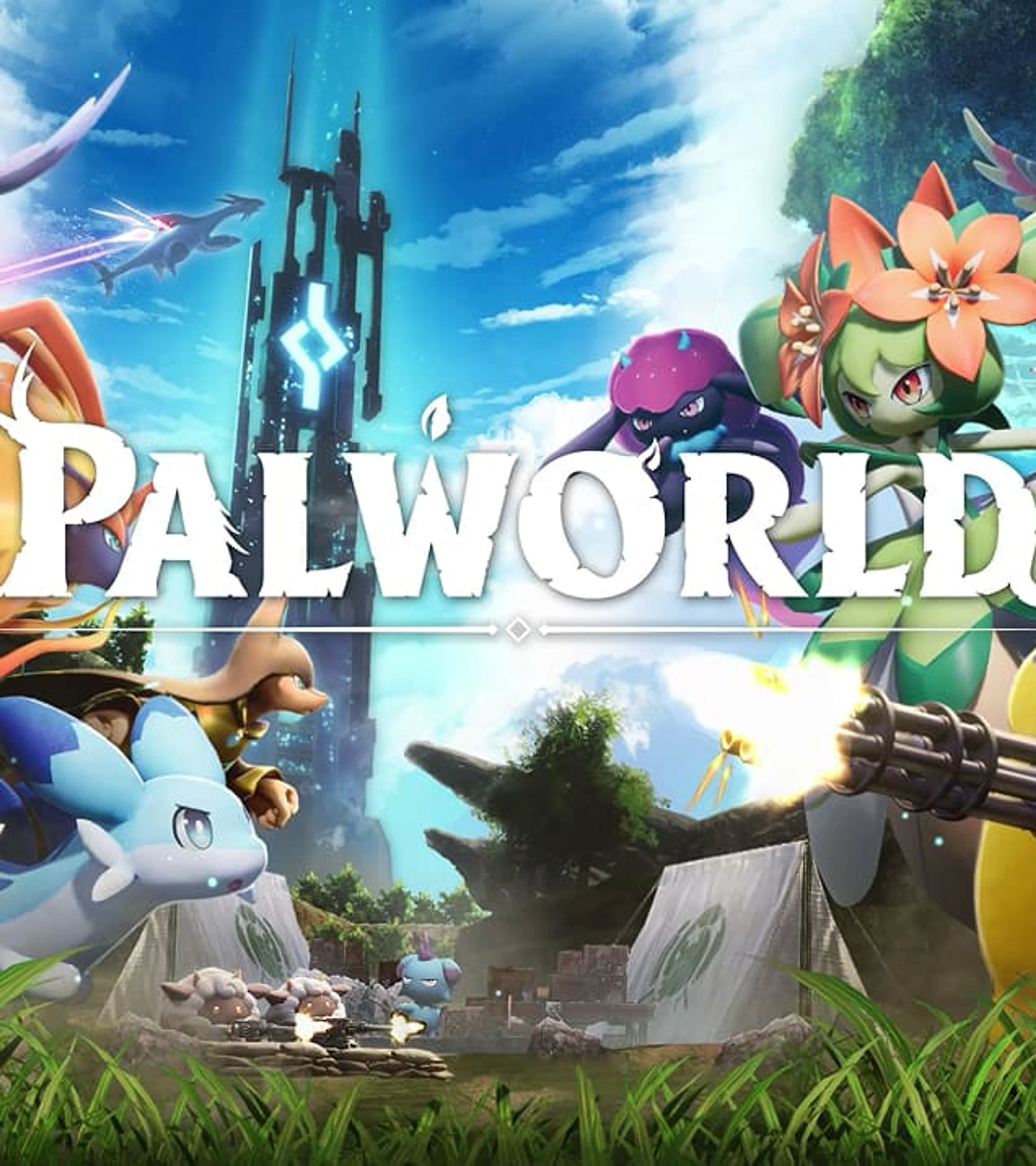
The Palworld TCG is a physical competitive card game published by Bushiroad and based on Pocketpair's survival game. You build a base, deploy Pals, collect resources through the Soul system, use Structures and Gear, and battle the other player. The goal is to bring the feeling of running a Palworld base to the table instead of simply copying a standard monster-battling format.
Its biggest difference is that Pals do more than attack. They can form the core of your battle plan, work in the base, and interact with other card types. The first set includes more than 50 kinds of Pals, plus familiar characters such as Zoe and Lily. Every card in the launch products uses original artwork made for the card game.
Bushiroad announced 3.5 million Dawn of Palpagos pack sales worldwide before launch. That early demand explains why some stores and online listings may look crowded or expensive, but it does not mean every card or sealed product will keep its first-week price.
What should a beginner buy first?
Buy a trial deck first. It is the only launch product designed to work as a complete starting point. A booster pack contains random cards and cannot replace the fixed 50-card Main Deck and 10-card Soul Deck included in the trial product.
Each trial deck also includes a paper playmat, a play guide, a life counter, a Material and Ingredient counter, and one Dawn of Palpagos booster pack. One parallel-rarity card may replace a regular card in the Main Deck, so the box gives you a small collecting surprise without making you build a playable list from random packs.
If two people are learning together, get two trial decks. Using different products makes the first matches easier to read because the players can compare the direct Red/Blue plan with the more tactical Green/Purple plan.
Red and Blue or Green and Purple: which trial deck is better?
Choose Red and Blue for a direct start
Bushiroad describes Red/Blue as the power-focused option. It is the better first choice if you want a simple goal: build pressure, use strong attacks, and make the opponent answer your Pals. New players who prefer learning through action will probably understand this deck faster.
Choose Green and Purple for more planning
Green/Purple is the strategy-focused option. Pick it if you enjoy setting up turns, managing several effects, and winning through timing rather than pure force. It may take an extra match to understand, but it gives players who like combinations more room to experiment.
Neither deck is officially presented as stronger. They are teaching different styles, and both can be upgraded with cards from Dawn of Palpagos. Start with the play pattern you enjoy instead of chasing an early tier list built before the metagame has settled.
How deck building works
A legal setup uses two separate decks. The Main Deck contains the Pals and support cards you play during the match. The Soul Deck supplies the resources used to pay costs.
- Main Deck: Exactly 50 cards.
- Colors: Up to two colors in one deck. Colorless cards can be used freely.
- Normal copy limit: Up to four cards with the same card name.
- Lucky icon limit: Up to eight cards with the Lucky icon.
- Soul Deck: Exactly 10 Soul cards.
The trial decks already follow these rules. Play them unchanged for a few matches before replacing cards. Once you know which draws feel weak or which effects you want more often, use booster cards to make small upgrades instead of rebuilding the entire deck at once.
Palworld TCG card types explained
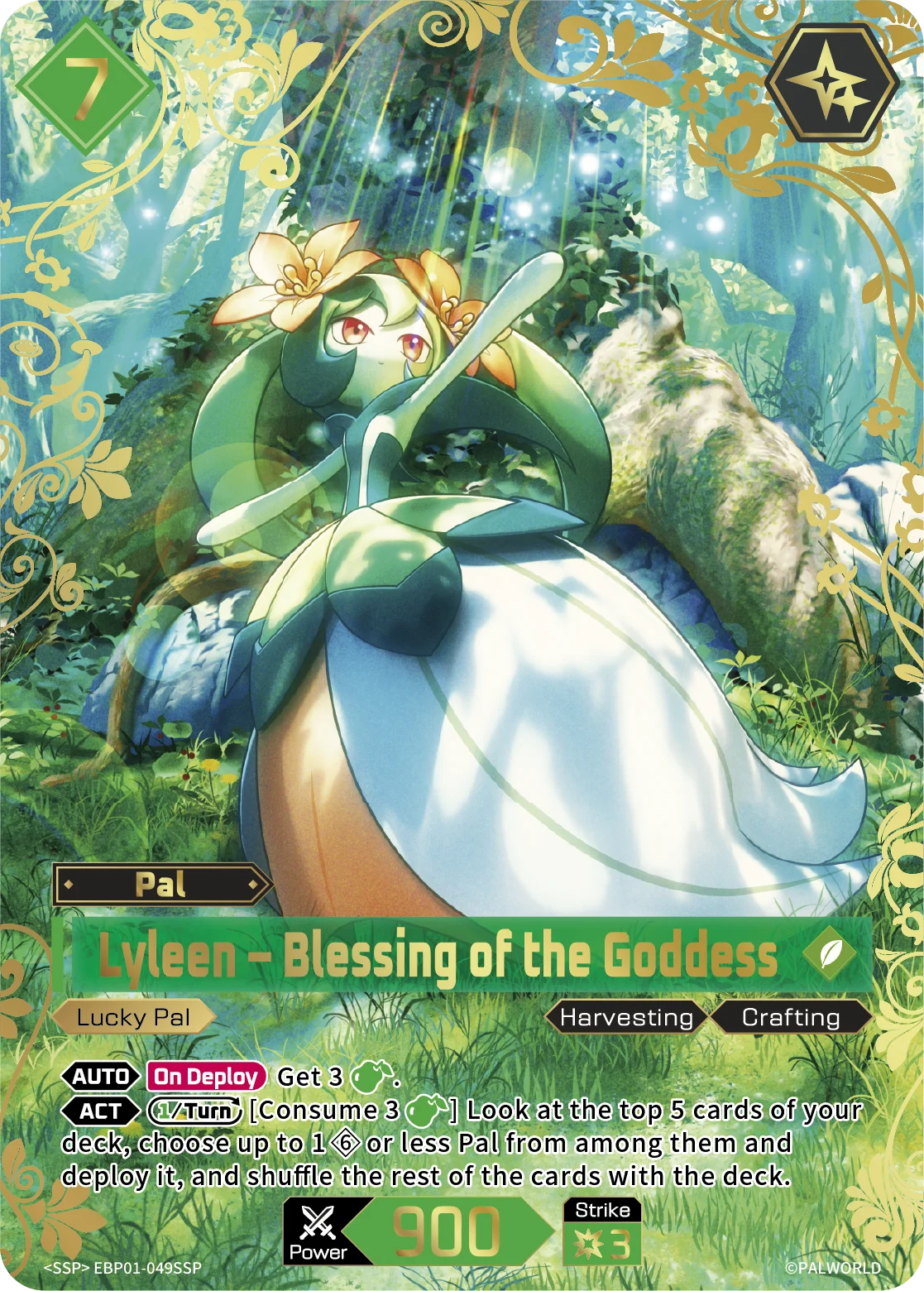
Pal cards
Pals are the center of the deck. They battle, protect you, and support the way your base works. A Pal has power, abilities, and other information that determines how it attacks or contributes to your strategy.
Gear cards
Gear can be equipped to Pals or used to damage an opposing Pal. Think of Gear as a way to improve an important Pal or turn a support card into immediate pressure.
Event cards
Events create one-time effects. Their value comes from timing: they can change a turn, answer a problem, or help your plan without staying in the base.
Structure cards
Structures are deployed in your base and provide ongoing effects. Pals can also work at Structures. Unlike Pals, a Structure has durability and does not deal damage back when attacked.
Soul cards
Soul cards are the resource system. You place Souls into the Soul Area and rest them to pay the costs of cards. Keeping the Soul Deck separate makes the resource flow more predictable than drawing energy cards from the Main Deck.
How a turn works
Before the match, shuffle the Main Deck, place both decks, decide who goes first, and draw five cards. The player going second starts with one Soul in the Soul Area. Each player may return the first five cards to the deck, shuffle, and draw a new five-card hand once.
- Stand Phase: Return all cards in your base to the ready, or stand, position.
- Draw Phase: Draw one card. The first player skips this draw on the opening turn.
- Soul Phase: Place two Souls into the Soul Area in the stand position.
- Main Phase: Play cards, use abilities, attack, or trade three rested Souls for one card draw. That extra draw can be used only once each turn.
- End Phase: Remove all damage from Pals and Structures, then pass the turn.
Main Phase actions can be taken in any order. You pay a card's cost by resting Souls, rest a Pal when it attacks, and may target an opposing Pal, Structure, or the other player when the rules allow it.
How battles, blocking, and life damage work
When one Pal attacks another Pal, both deal damage equal to their power. A Pal that takes damage equal to or above its power goes to the graveyard. Structures use durability instead of power and do not strike back.
When your opponent attacks, you may rest one of your Pals to redirect the attack to that Pal. This is the game's Block action. Cards with the Quick icon can also be used at the specific timing shown by their effect.
An attack on a player causes a damage check. The defending player flips cards from the top of the Main Deck equal to the attacker's Strike value and sends them to the graveyard one at a time. Revealing a Lucky icon stops the remaining flips and cancels that damage. To win, reduce the opposing player's life to zero. Running out of Main Deck cards during a deck check is also a loss, so repeated direct attacks create pressure even before the final life point disappears.
What is in Dawn of Palpagos?
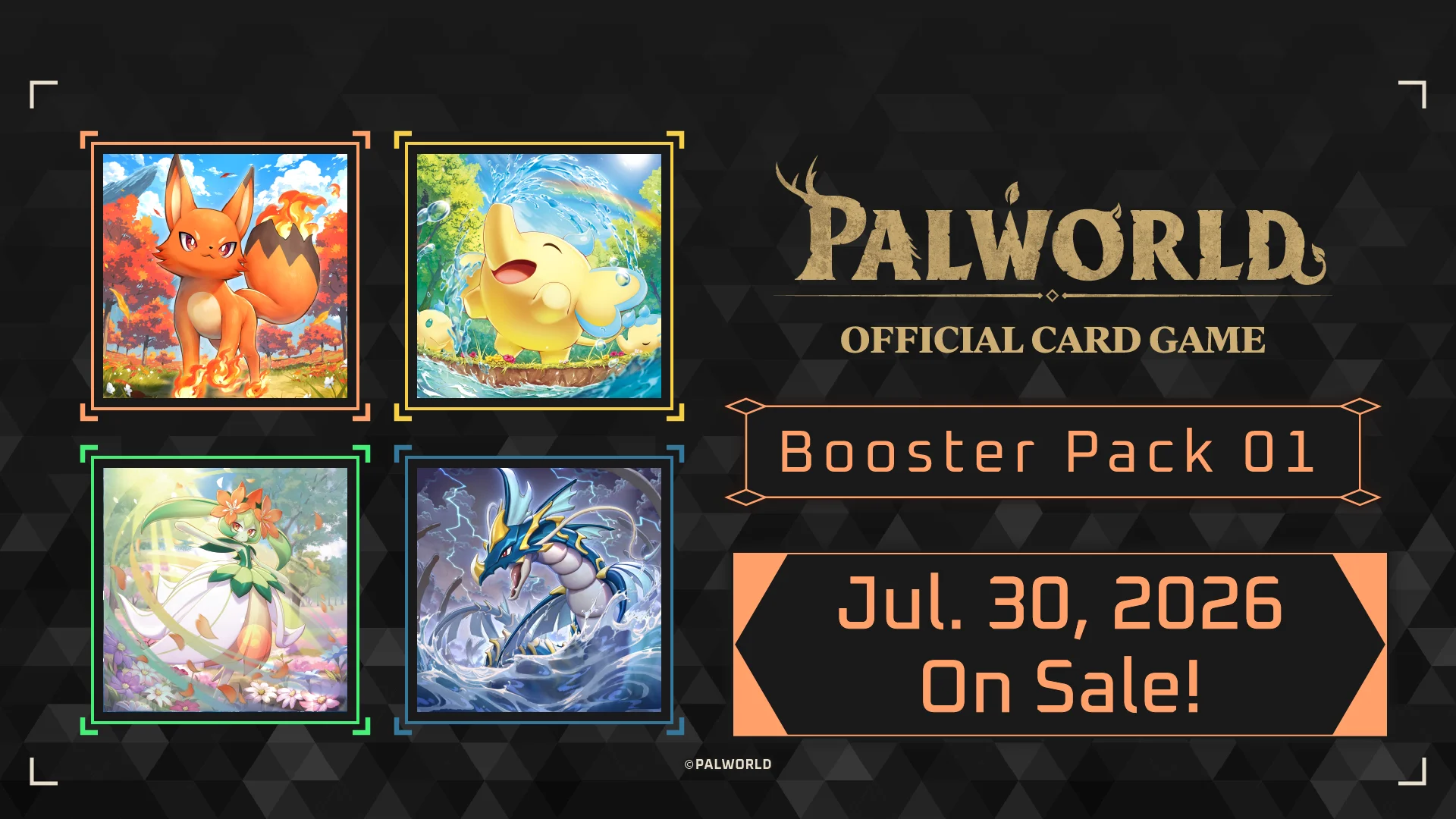
Dawn of Palpagos is the first booster set. The official product list contains 100 base card types across RR, R, U, and C rarities, plus 61 parallel versions. More than 50 Pal species appear, and all cards use newly drawn illustrations.
The trial decks are built to be upgraded with this set, but booster packs are random. A beginner who only wants to play should secure a trial deck before buying loose packs or a booster box. Collectors should check the official card list and decide which art or rarity they actually want instead of assuming every parallel is equally difficult to find.
Bushiroad has also announced a second booster volume for October 30, 2026. That means the card pool will expand quickly. Spending heavily on a launch-week deck can be risky when new cards and strategies are already scheduled for the same year.
Are rare Palworld TCG cards worth thousands?
Early completed online sales included unusually high prices for a few rare cards, while other sellers posted even larger asking prices. Those numbers show strong first-week collector interest, not a guaranteed value for every copy.
Check sold listings, not only asking prices. Confirm the exact card number, rarity, language, condition, and whether an offer was accepted. A single early sale can be driven by scarcity and excitement before more packs reach stores.
Players should avoid paying reseller prices just to learn the game. Trial decks contain fixed playable lists, official demos provide materials, and organized play is only beginning. Waiting for stock or future reprints is usually safer than treating a new card game like a guaranteed investment.
First-print errors and errata
The first Dawn of Palpagos booster packaging contains a misspelling of Palworld. Bushiroad says future reprints will correct it. The company has not said that the typo creates a separate official rarity or special edition, so collectors should be careful with listings that use the error to promise extra value.
The Red/Blue trial deck also has a card with missing Strike text. Bushiroad says the card remains legal at every level of official play and should function as though the correct Strike text were printed. Check the official errata before a tournament instead of replacing or marking the card.
Where to learn and play
Official shop tournaments begin in August, with promo cards changing every three months. The launch schedule also includes Grand Release Tournaments, demo sessions, and a Demo Caravan visiting more than 200 stores worldwide. The first Challengers Cup season begins in September, while the road to Masters League 26/27 begins in November.
Use the official events page to find current dates and participating stores. Event schedules can change, and a local store may require registration even when the event itself is beginner-friendly. Demo sessions are especially useful because materials are provided and no previous trading card game experience is required.
Palworld TCG beginner FAQ
Can one trial deck be used by two players?
No. Each player needs a complete Main Deck and Soul Deck. Two people learning together should have one trial deck each.
Do I need booster packs to play?
No. A trial deck is playable out of the box. Booster packs are used to collect cards and upgrade a deck later.
Can I use more than two colors?
No. A Main Deck can use up to two colors. Colorless cards can be included freely under the official construction rules.
How many copies of one card can I use?
You may include up to four cards with the same name. The deck may contain up to eight cards with the Lucky icon.
Is there an official universal US price?
The English product pages do not list one universal US retail price. Check official tournament stores and approved local retailers, then compare sealed products with the same language and contents.
What is the best Palworld TCG deck for beginners?
Red/Blue is the simplest recommendation for players who want direct power. Green/Purple is better for players who enjoy planning and combinations. Both are complete beginner products, so the better choice is the style you will actually enjoy playing.