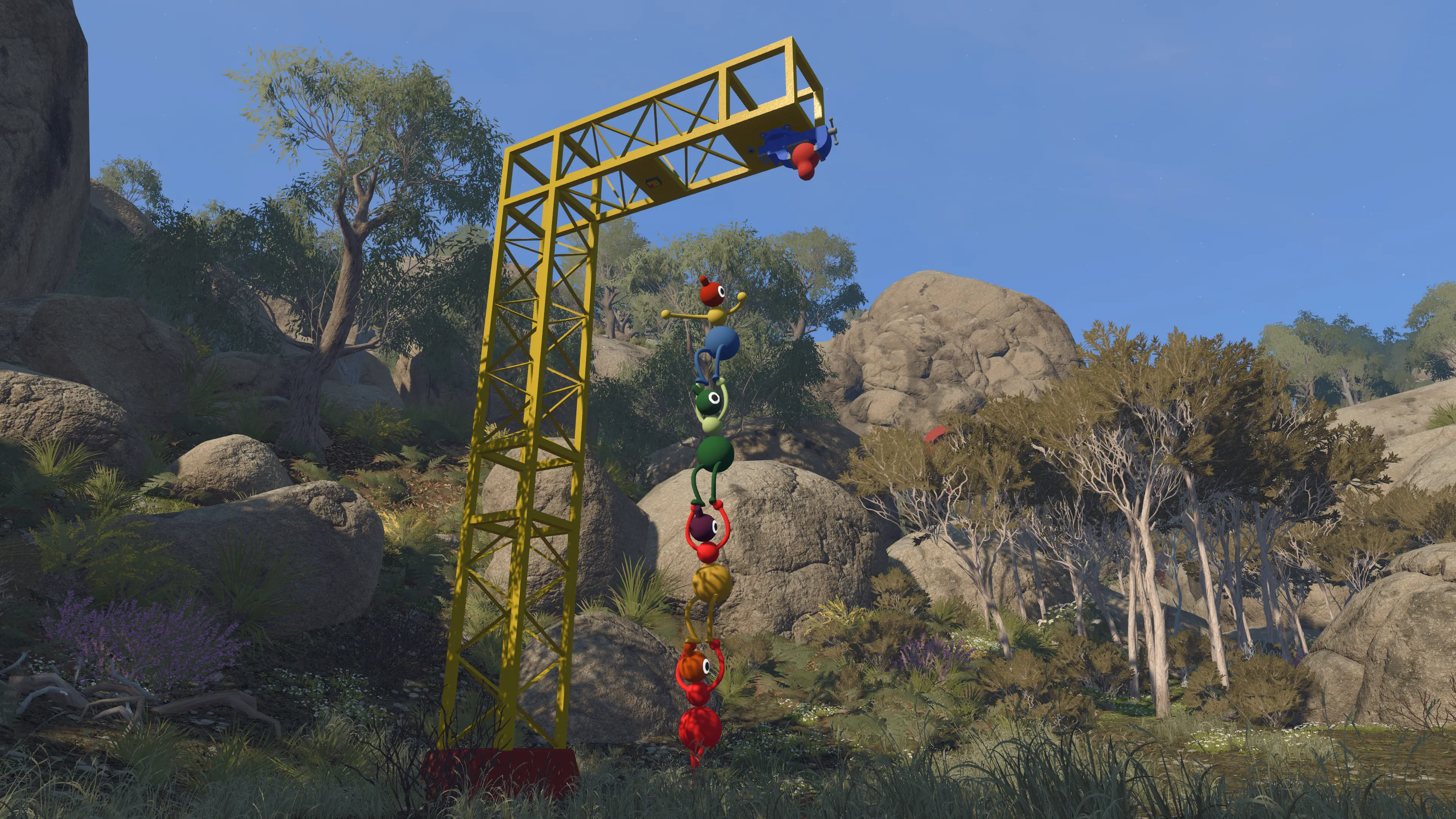
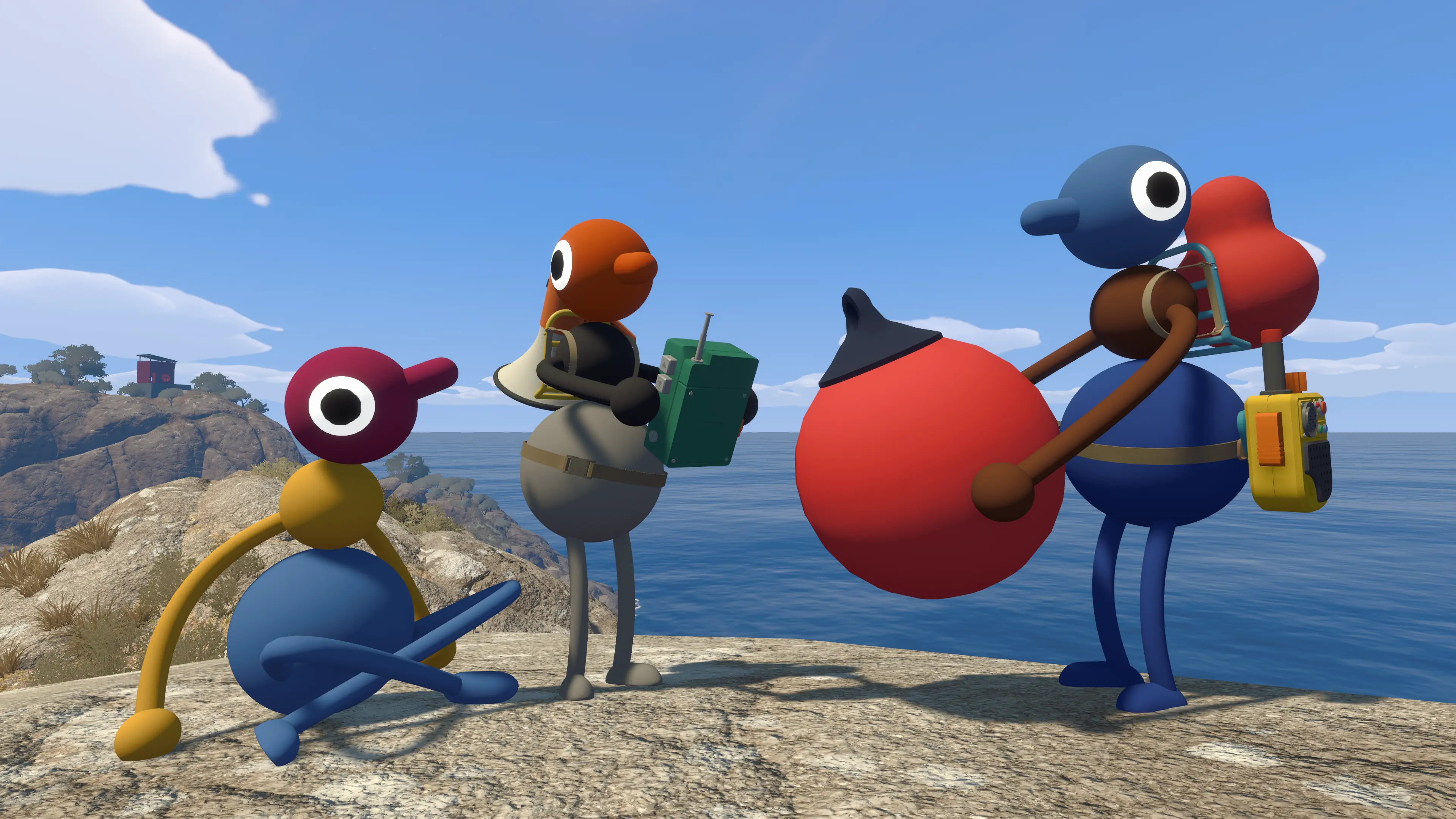
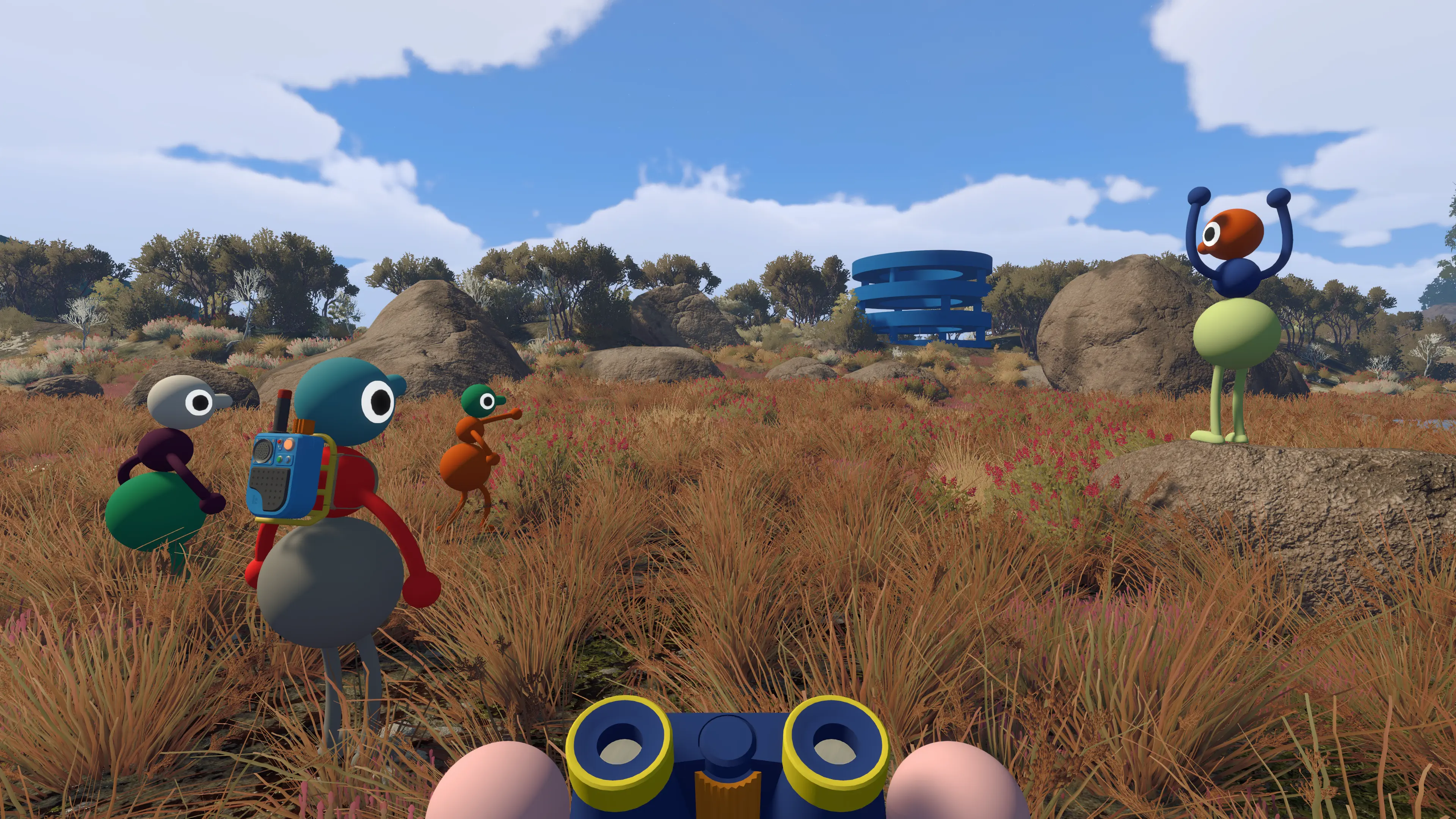
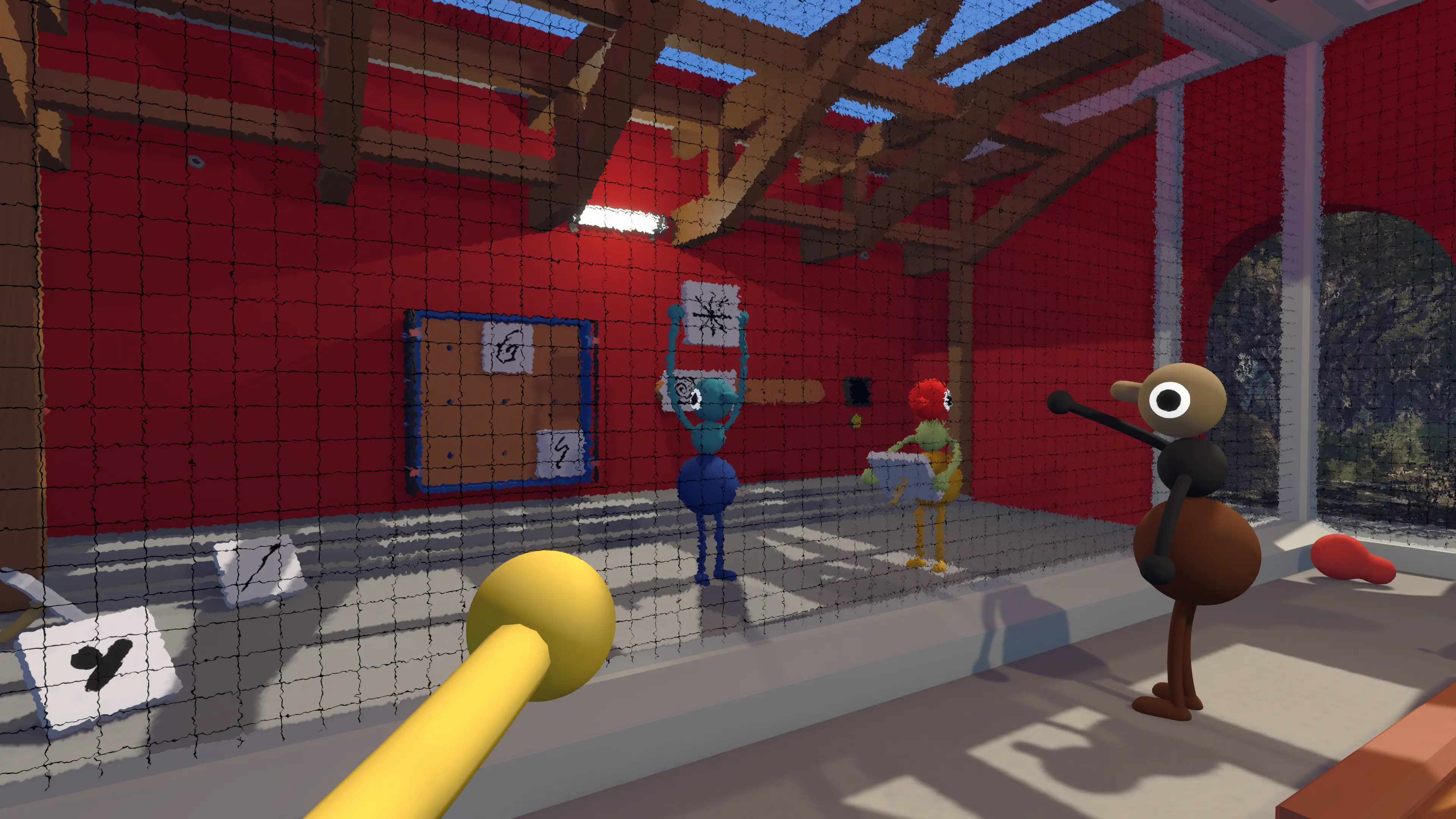
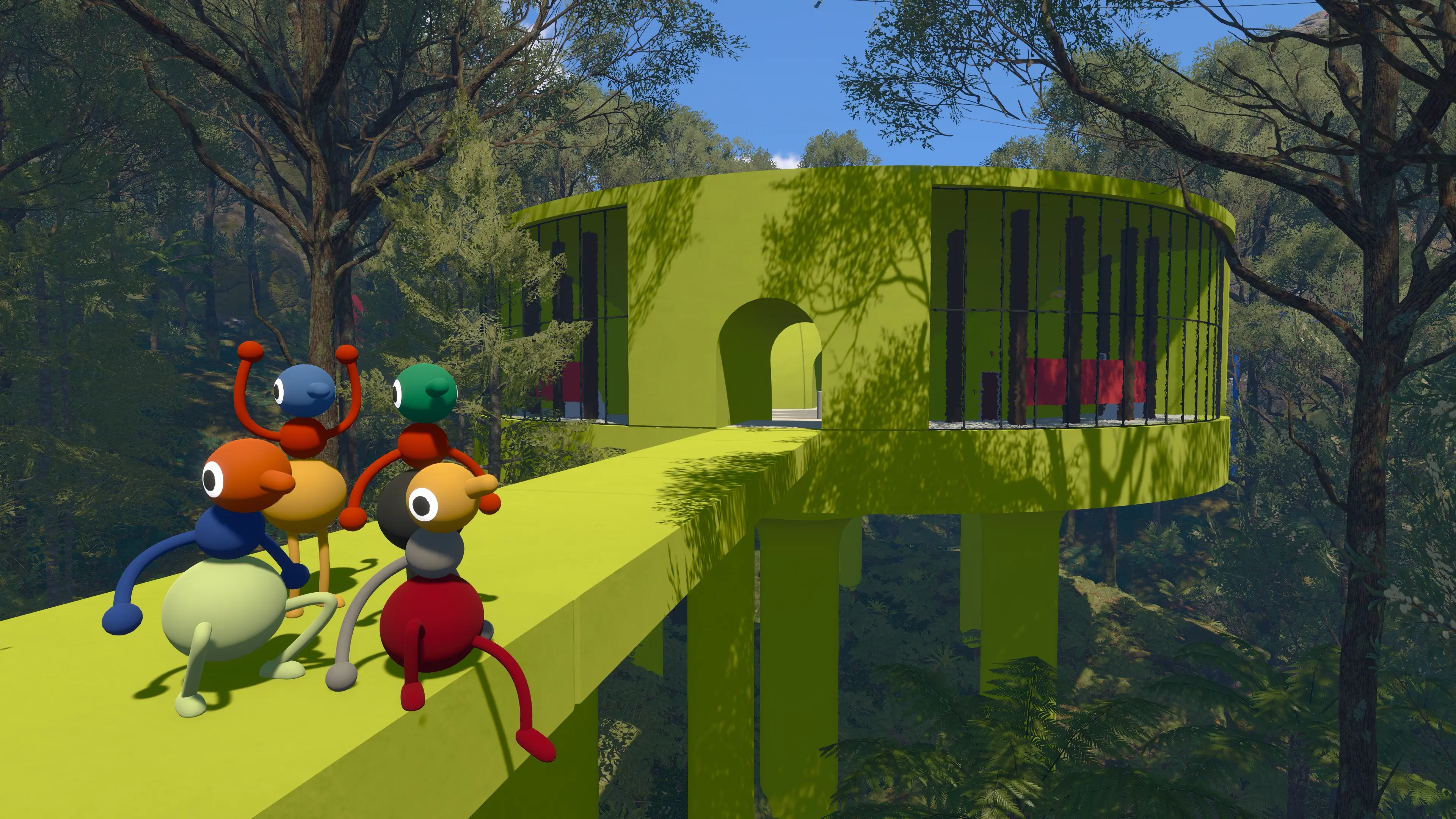
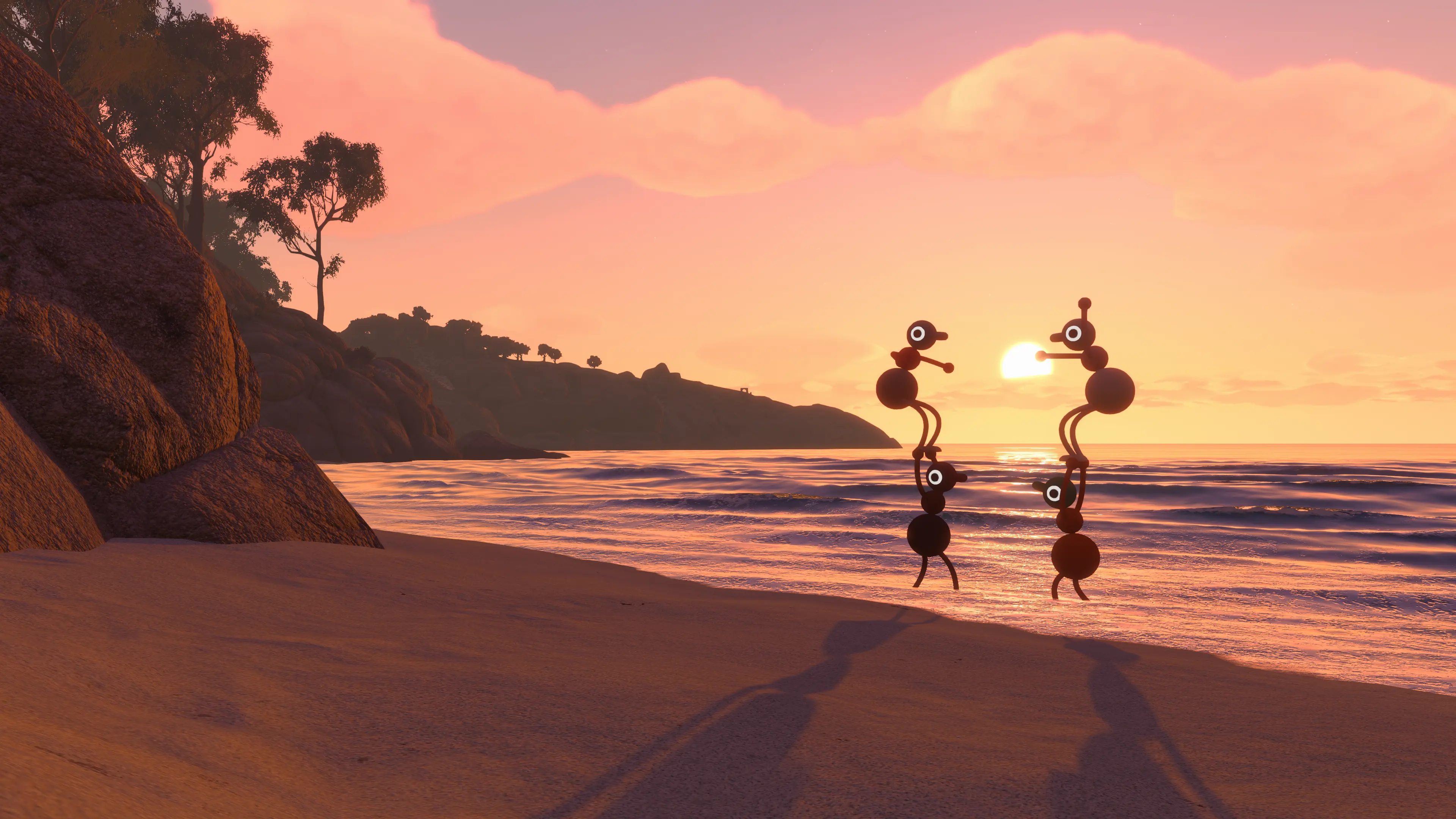
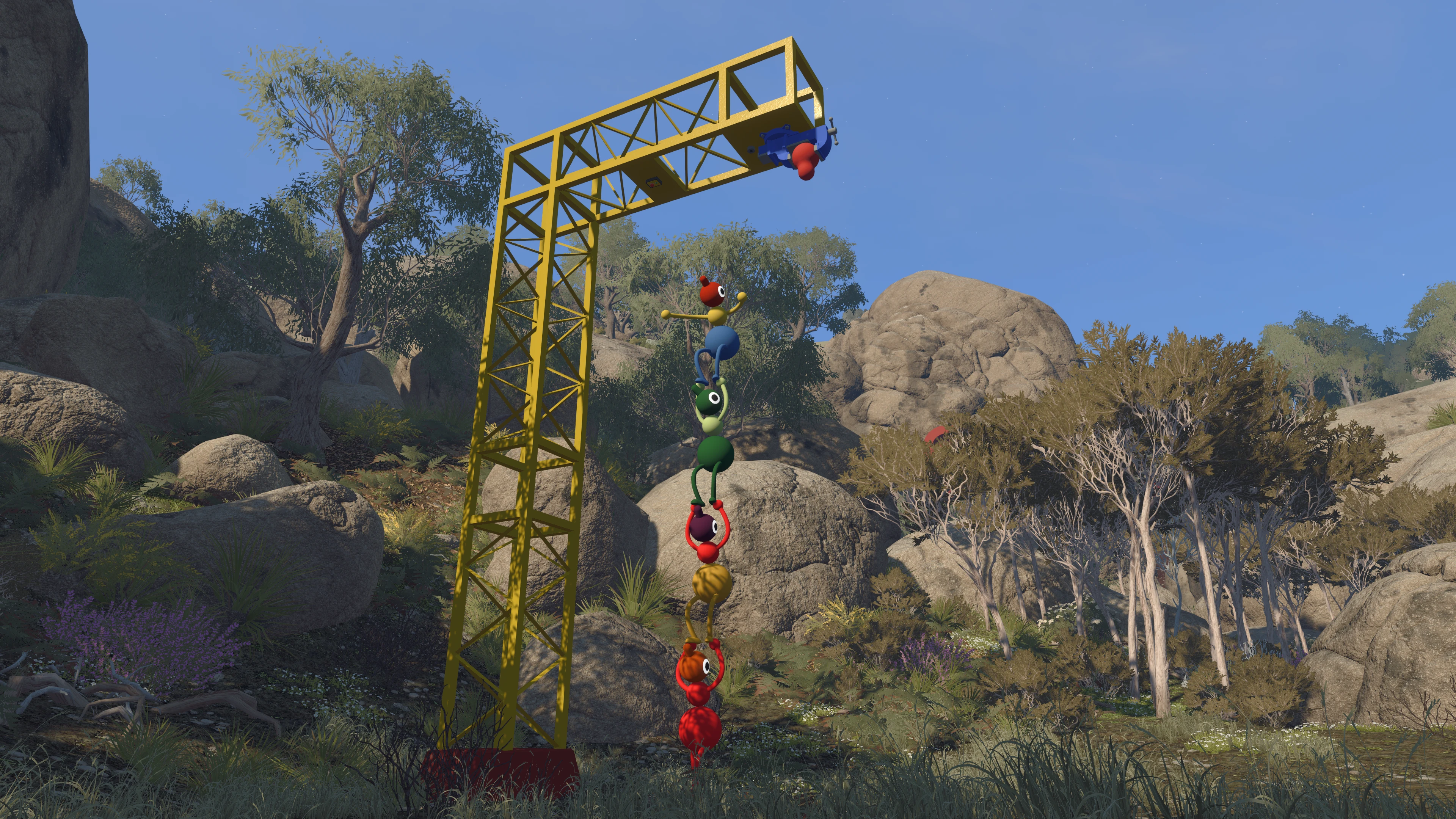
Plan for roughly 12 to 20 hours to reach the ending of Big Walk with a first-time group. That is a useful range, not a stopwatch. A focused team can move faster, while friends who inspect every strange building, lose each other in the woods, or spend ten minutes playing with an object may go beyond it.
House House has not published one official completion time. The studio does confirm that Big Walk is a hand-crafted adventure with a beginning, middle, and end. GameSpot reported a 12–20 hour estimate before launch, and PC Gamer was six hours into a group playthrough with much of the island still waiting. Together, those details make one thing clear: this is a proper co-op journey, not a 90-minute party-game run.
If you are about to start, the Big Walk Beginner Guide explains the opening controls, host choice, and the habits that keep a new group moving without turning the island into homework.
Big Walk Length at a Glance
- Main journey: approximately 12–20 hours for a first group, based on launch coverage rather than an official timer.
- Fast, coordinated group: likely closer to the lower end if everyone stays together and solves puzzles cleanly.
- Exploratory group: closer to the upper end—or longer—when detours, missed clues, and general nonsense become part of the night.
- One sitting required? no. The host can return to the saved journey across multiple sessions.
- Definitive ending? yes. House House describes a complete adventure with a beginning, middle, and end.
There is no trustworthy universal “100%” number yet. Big Walk is new, its route is loose, and groups do not all define completion the same way. Reaching the credits, seeing every corner, and replaying a different world-size version are separate goals.
Why the Same Walk Can Take Very Different Amounts of Time
Big Walk has a funny relationship with the clock. A puzzle can be solved quickly when everyone notices the same clue. It can also absorb half an hour because one person is on the wrong side of a wall, another cannot hear the instructions, and somebody else has wandered off with the useful item.
That is not wasted time in the usual sense. Walking, talking, getting separated, and improvising a way back together are part of the game. A route that looks inefficient on paper may be the session your group remembers.
Your group size changes the world
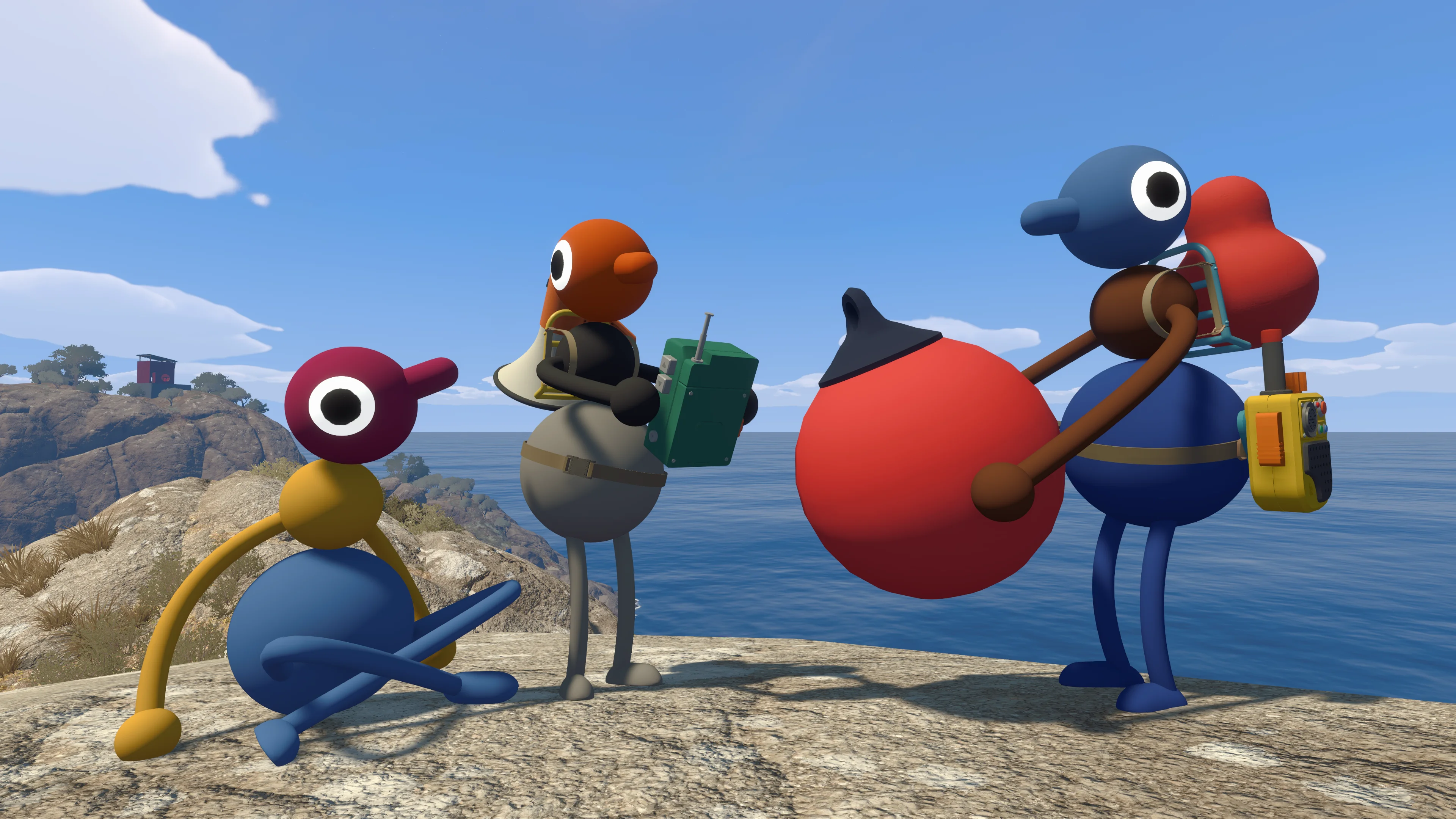
Whenever the host begins a session, they choose the two-player, three-player, or four-plus-player version of the world. House House says some parts of the island change to match that choice. The number is the minimum the session expects, not a hard maximum, so extra friends can still join.
More players do not automatically make the game shorter. A larger group can split up and compare discoveries, but coordinating six voices can take longer than coordinating two. The puzzle layout and the people around you both shape the pace.
The island does not lead you by the hand
There is no normal quest log telling everyone to collect three objects and report back. Landmarks, paths, odd machines, and whatever your friends can describe become the navigation system. Groups that enjoy poking at the scenery will naturally spend longer than groups that head straight for the next major structure.
When a landmark stops being charming and starts becoming confusing, the Big Walk Tower Walkthrough and Map Room puzzle guide provide focused help without forcing you to read a full-game spoiler list.
Can You Finish Big Walk in One Weekend?
Yes, but only if the group can protect a large block of time. A 12–20 hour estimate fits a dedicated weekend better than a single evening. For most people, two- or three-hour sessions will be easier to schedule and more comfortable than trying to drag the same group through the whole island at once.
The game is built to continue. The important detail is not how many nights you use; it is who hosts them. The journey belongs to the host’s save, so that person needs to start the next session if everyone wants to continue from the same progress.
The Big Walk Multiplayer Guide covers Join Codes, passwords, crossplay, version matching, and the host-save rule in more detail.
Does Big Walk Really Have an Ending?
Yes. This is not an endless live-service map and it is not a run-based game that resets after every failure. House House explicitly says the adventure has a beginning, middle, and end and is meant to be played start-to-finish with friends.
That does not mean the island becomes useless after the credits. The official FAQ also describes it as a place you can revisit simply to hang out or take another walk. A different group-size version gives returning players another reason to see how familiar spaces and puzzles change.
How the Host Save Affects Your Total Time
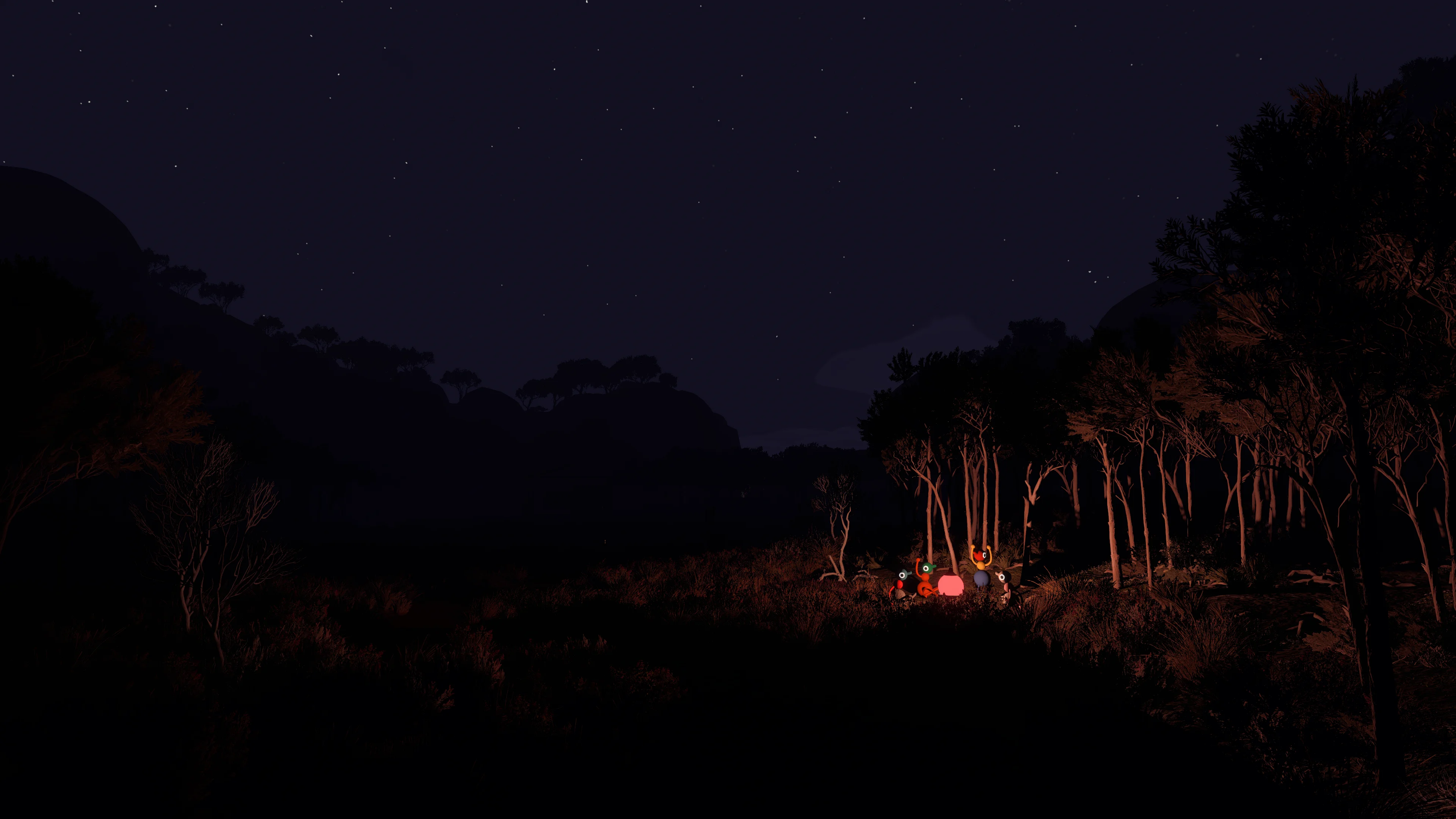
Choose the host carefully before the first serious session. If the most reliable person hosts, the group can return to the same journey without rebuilding plans around someone who is rarely available. Friends can join with a platform invite or a fresh Join Code, but the host still owns the shared progress.
This is also why joining random sessions can feel different from completing one adventure with the same friends. A public group can be fun for an hour, yet it may drop you into progress that does not belong to your regular team. For a full run, keep one dependable host and treat that save as the group’s home.
How to Reach the Lower End of the Estimate
- Keep the group within speaking distance. Proximity chat becomes harder to use when half the team disappears over a hill.
- Use the in-game communication tools. A radio, gestures, text chat, and simple callouts are usually better than five people describing the same clue at once.
- Finish one area before scattering. A quick check for unused keys, switches, or objects prevents a long walk back later.
- Stop only after a clear landmark. Ending a session near a memorable structure makes the next night easier to restart.
If voices are too quiet or the microphone disappears, fix that before a puzzle turns into mime. The Big Walk Voice and Text Chat Guide covers proximity chat, soundproof spaces, input settings, text chat, radios, and common microphone problems.
Should You Rush Big Walk?
Probably not. Knowing the game lasts around 12–20 hours is useful for planning, but chasing the shortest possible time cuts against what makes it work. Big Walk is designed to leave room for conversations, bad directions, quiet scenery, and the moment when the entire group realizes it misunderstood a very simple machine.
Use a guide when everyone is genuinely stuck, not the second a path becomes unclear. The best balance is to protect the evening from frustration while leaving enough uncertainty for the group to make its own stories.
You can browse the wider Big Walk game page for the complete guide cluster. PC and Mac players should also check the system requirements and Steam Deck guide before the host commits the group to a new save.
The Short Answer
Big Walk is roughly a 12–20 hour co-op adventure for a first group. The story has a real ending, and the host's save lets the same journey continue across several sessions. For what happens after the ending, see the Big Walk post-game and replayability guide.