
Valorant is a free-to-play five-versus-five tactical shooter where precise gunfire and Agent abilities work together. Attackers try to plant the Spike, defenders try to stop or defuse it, and most standard matches are won by the first team to reach 13 rounds.
This hub is the starting point for Pixel Twelve’s Valorant guides. It explains what to learn first, then sends you to focused help for Agents, economy, maps, settings, and Competitive. You do not need to memorize the whole game before playing your first match.
For the game overview and current coverage, visit the Valorant game page.
What Should a New Valorant Player Learn First?
Start with four ideas: stop moving before you fire, keep your crosshair near head height, listen for information, and spend credits with your team. Those habits matter in every match and on every Agent. Advanced ability lineups are useful later, but they cannot replace basic positioning and accurate first shots.
Play the tutorial and practice range before entering a full match. Then use a shorter or lower-pressure mode to learn movement, weapons, and abilities. When you understand the Spike objective and can finish a round without feeling lost, move into Unrated. Competitive can wait until the game’s normal pace feels familiar.
The Valorant Beginner Guide gives you a simple first-week routine and explains the habits that transfer from practice into real matches.
How a Standard Valorant Match Works
Each round begins with a buy phase. Attackers choose which site to pressure and carry the Spike toward a plant location. Defenders spread across the map, gather information, and rotate when they understand where the attack is going. Teams switch sides after 12 rounds.
A round can end through elimination, a successful Spike explosion, a defuse, or the timer. Because most players have one life per round, surviving with information can be more valuable than chasing one extra fight. Tell teammates what you saw, where an enemy moved, and whether you heard the Spike or an important ability.
Which Agent Role Should You Play?
- Duelists: create space and take early fights. Choose one if you enjoy entering a site first, but remember that the job is to help the team move forward, not only collect kills.
- Initiators: reveal, flash, or disrupt opponents so the team can enter safely. They reward timing and communication.
- Controllers: use smokes and area control to cut dangerous sight lines. A well-placed smoke can be more useful than an ability saved for later.
- Sentinels: protect areas, watch flanks, and make it harder for enemies to rush or retake a site.
Learn one comfortable Agent and one backup. Knowing two kits well is more useful than changing characters every match. Once you understand what each role is trying to do, team compositions and enemy plans become easier to read.
Weapons, Movement, and First-Shot Accuracy
Valorant heavily rewards shooting while still. Release your movement key before firing at medium or long range, and use short bursts instead of holding the trigger through an entire magazine. Keep your crosshair where an opponent’s head is likely to appear so you need a smaller adjustment when the fight begins.
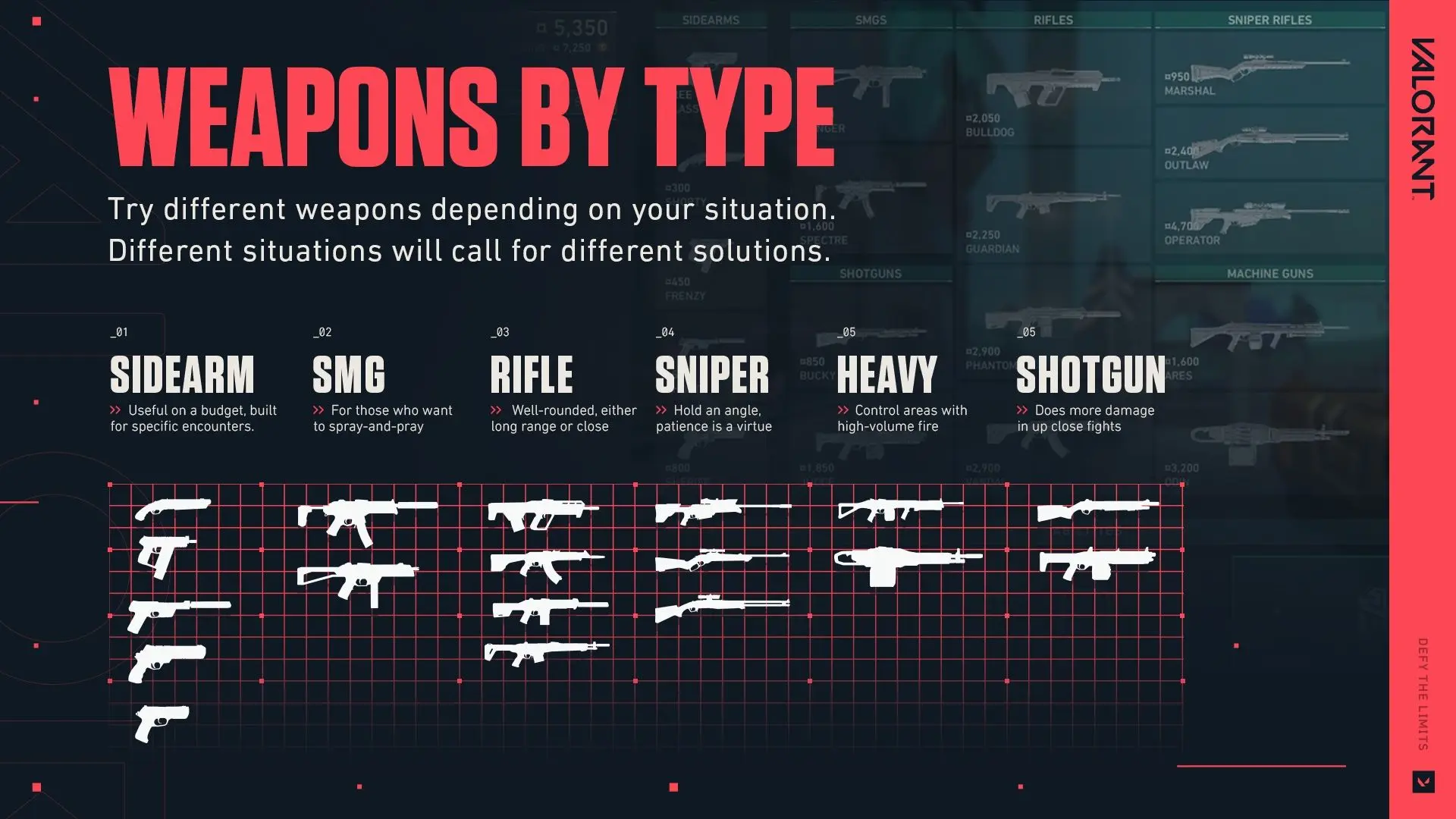
Do not buy only one favorite rifle in practice. Learn a dependable sidearm, a cheaper weapon for low-credit rounds, a rifle for full buys, and the basic danger of sniper sight lines. The official arsenal and practice range show how each weapon behaves without risking a match.
Valorant Economy: Buy, Save, or Force?
Credits carry between rounds, so one bad purchase can weaken the next two. A full buy usually means the team can afford useful rifles, shields, and important abilities. A save or eco round protects credits for the next round. A force buy spends most available credits even when the loadout will be incomplete.
The important rule is to buy together. Five average weapons are normally more dangerous than two rifles surrounded by teammates who cannot trade a fight. Check the team’s credits during the buy phase and use a simple call such as buy, save, or light buy.
See the Valorant Economy Guide for full-buy examples, low-credit options, saving, forcing, and how to recover after losing several rounds.
Maps, Callouts, and Rotations
Do not try to memorize every corner at once. First learn the site names, the main route between sites, and the common entrances. Add callouts as you hear them. Good information should be short and useful: location, enemy count, Spike status, and any important ability you saw.
Rotating too early can leave a site empty. Rotating too late can leave teammates fighting alone. Use the minimap, sound, and teammate information instead of reacting to the first noise. The right choice changes by map, so focus on why a rotation worked rather than copying the same timing everywhere.
The Valorant Map Callouts Guide breaks down a faster way to learn every map without turning the first session into homework.
Crosshair, Sensitivity, and Settings
The best settings are the ones you can repeat. Use a crosshair that remains visible against bright and dark backgrounds, disable visual movement if it distracts you, and choose a sensitivity that lets you make small corrections without running out of mousepad or stick range.
Changing sensitivity every day slows improvement because your hands never learn one distance. Pick a reasonable starting point, practice for several sessions, and change it only when a clear problem keeps appearing. Performance and clear enemy visibility should come before decorative graphics in a competitive match.
Use the Valorant Crosshair and Sensitivity Guide to build a clean setup and test changes without copying a professional player blindly.
When Should You Start Competitive?
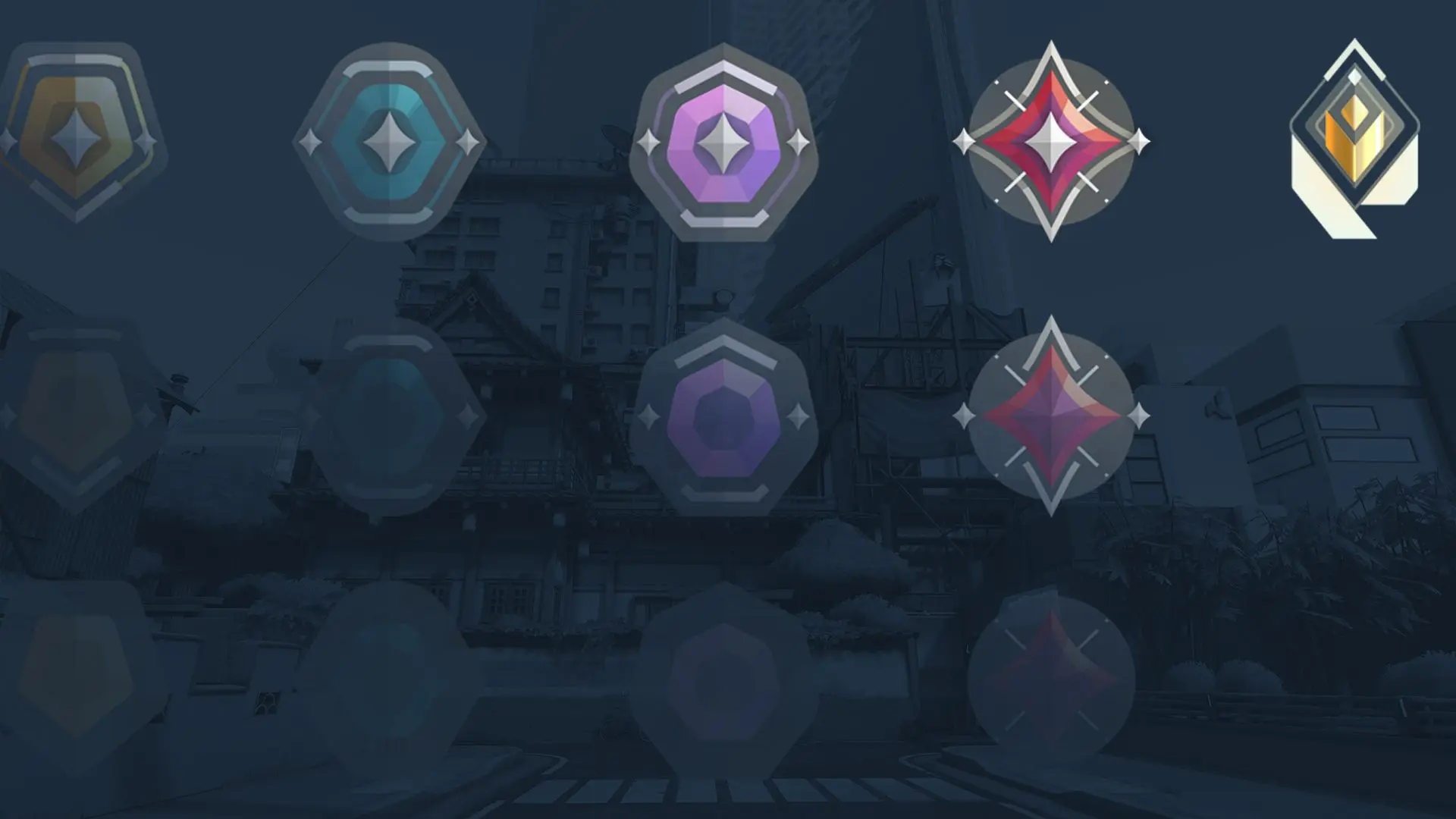
Start Competitive when you understand the Spike, can buy with the team, know a small Agent pool, and can communicate basic information. Ranked is not a separate game that requires perfect aim. It is the same tactical structure with visible rank progress and stronger pressure on consistency.
Rank Rating, hidden matchmaking rating, placements, promotions, and party restrictions are related but not identical. A single match will not explain your full rank movement, so judge improvement across many games instead of one win or loss.
The Valorant Ranks Explained guide covers RR, MMR, placements, rank changes, and playing Competitive with friends.
PC and Console Crossplay
Valorant is available on Windows PC, PlayStation 5, and Xbox Series X|S. PlayStation and Xbox players can match with each other, while console players do not enter PC matches. Progress and eligible account content can carry across supported platforms when the same Riot account is linked.
The separation protects the different input and tuning environments. If friends want to play together, confirm that everyone is in the same matchmaking pool before troubleshooting party invites.
Valorant Guide Directory
- Start playing: Valorant Beginner Guide — rules, first Agents, communication, and practice.
- Fix your purchases: Valorant Economy Guide — full buys, saves, forces, and team credits.
- Improve your aim setup: Valorant Crosshair and Sensitivity Guide — readable crosshairs and consistent sensitivity.
- Learn the map: Valorant Map Callouts Guide — sites, routes, information, and rotations.
- Understand ranked: Valorant Ranks Explained — Competitive, RR, MMR, placements, and parties.
Valorant FAQ
Is Valorant Free?
Yes. Valorant is free to download and play. Optional purchases include cosmetic items and Battle Pass content.
Is Valorant Easier on PC or Console?
Neither version removes the need for positioning, economy, and teamwork. The input and matchmaking environments are different, so use the platform where you can practice consistently.
How Many Agents Should a Beginner Learn?
Start with one main Agent and one backup. Add more after you understand the four roles and can use the first two without checking every ability.
Should I Play Ranked Immediately?
No. Learn the normal match flow in other modes first. Competitive becomes less frustrating when buying, maps, and communication already feel familiar.
Does Valorant Change Often?
Yes. Riot updates Agents, weapons, maps, modes, and Competitive rules. Use this hub for stable fundamentals and check current patch notes before relying on exact prices, damage values, or map rotations.