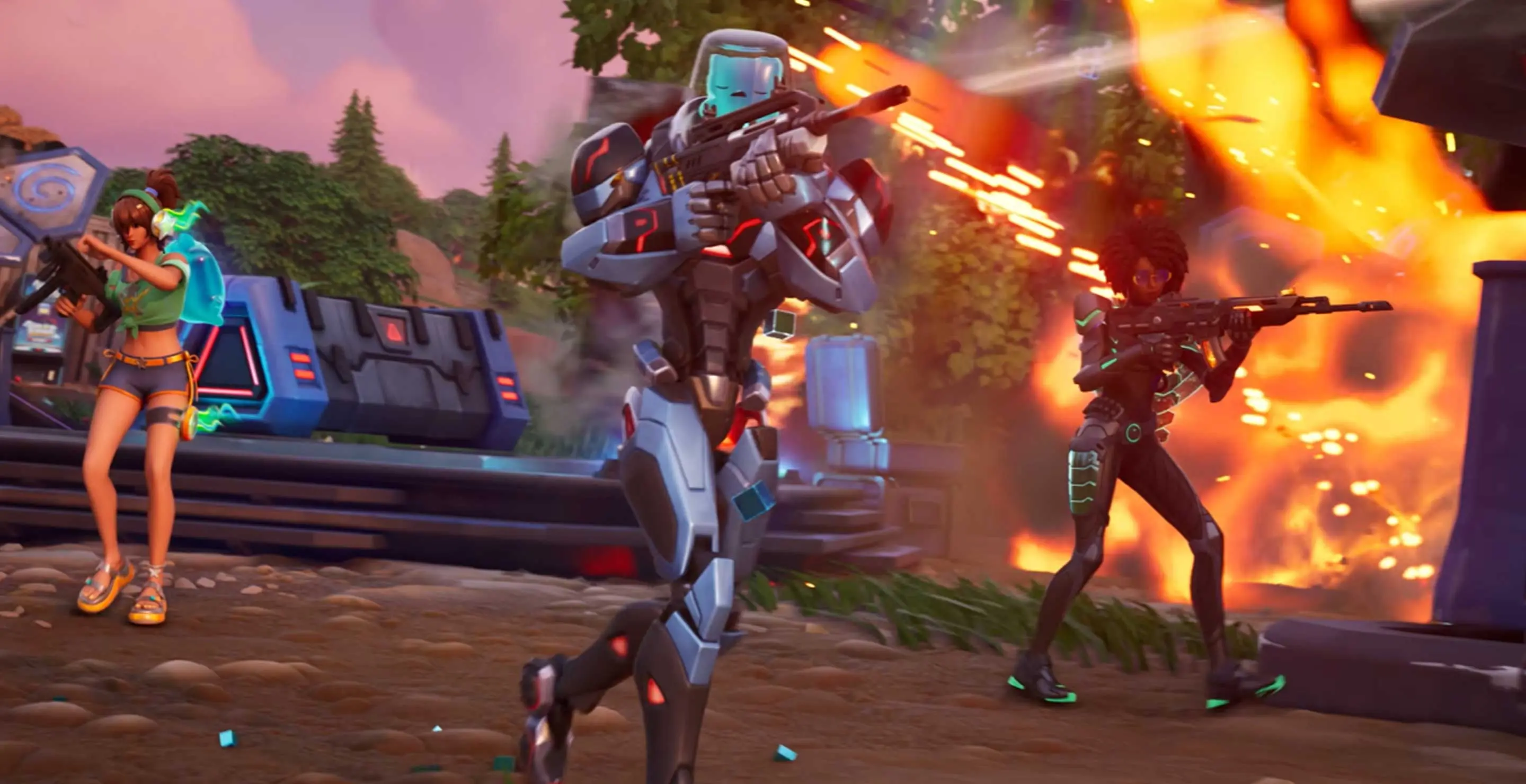






Fortnite Ranked uses the same basic rules as a normal match, but every result moves a visible competitive rank. It is easy to turn the mode on and still feel unsure about what the percentage bar means, whether an early elimination ruined the match, or why one playlist shows a different rank from another.
New accounts must complete the Outlast 500 players Kickstart quest before Ranked becomes available. After that, open the mode selection screen and switch Ranked on. Battle Royale and Zero Build now share Ranked progress under the Rivalry Rises system. Reload keeps a separate rank, so a strong Battle Royale result will not move the Reload ladder.
Players still learning landing, healing, and the Storm should begin with our Fortnite Beginner Guide. Ranked is much easier to learn when those basic decisions already feel normal.
How Fortnite Ranks Work
Epic's support page lists Bronze, Silver, Gold, Platinum, and Diamond with three divisions each. Elite, Champion, and Unreal follow them. Update 40.20 changed progression around Elite and Champion and recalibrated some players, so the Ranked panel is the best place to confirm the exact division shown on your account.
The current season adds Unreal Legends above Unreal. Reaching it requires Unreal rank, at least 2,500 Skill Rating, and a place in the top 500 on the Unreal leaderboard. It is not permanent. Drop below one of those requirements and the Unreal Legends status disappears.
Placement and eliminations both affect progress. The post-match screen now gives more detail about how each contributed, but Epic does not provide a simple fixed formula that predicts every percentage point before the match ends. Surviving longer helps. Eliminations help too, especially when the fight does not cost your health, mobility, or position.
Use that post-match breakdown to compare similar games. If two matches ended around the same placement, check whether the match with more eliminations gave better progress. If a high-elimination match gave little progress, look at how early it ended and whether the opponents were below your level. This is more useful than copying someone else's claim that a certain number of eliminations always guarantees a fixed increase.
The Ranked panel can also show temporary protection from losing progress, including protection tied to your first Ranked match of the day. Read the panel before you queue because Epic can adjust these rules during a season. Protection prevents a loss from reducing progress; it does not turn a poor result into extra progress.
Battle Royale and Zero Build share one rank, while Reload remains separate. Visible ranks reset between seasons, but Epic says the underlying Skill Rating now carries forward and helps place players against opponents with similar skill. Once you reach Elite, the support page says you cannot fall below Elite for the rest of that season.
Higher ranks can open access to Epic-run tournaments, including parts of the FNCS structure. Requirements can change between events. Check the Compete tab and the Ranked panel before planning around a cup instead of relying on an old schedule or screenshot.
Rank and matchmaking are related, but they are not identical. Epic says normal matchmaking looks for players with similar skill instead of using only the visible rank. Stronger players also encounter fewer bots. A difficult lobby after a reset does not automatically mean the rank display is broken.
How to Climb More Consistently
Ranked rewards players who can repeat good decisions. One huge match followed by several careless drops usually produces less progress than a steady group of matches with useful placements and controlled eliminations.
- Choose one playlist to improve first. Building skill, Zero Build positioning, and Reload pacing ask for different habits.
- Use two or three landing spots instead of choosing a new location every match. Learn the nearest chests, exits, vehicles, and safe rotation routes.
- Do not start a fight only because you saw another player. Check your health, ammunition, cover, and the next Storm circle first.
- Keep one close-range weapon, one dependable mid-range option, healing, and mobility when the current loot pool allows it.
- In team modes, make one player responsible for the next rotation call. Four different plans usually leave the squad separated.
- After a loss, identify the first decision that put you in trouble. A bad rotation or empty inventory often caused the problem before the final shot.

Build players can practice defensive boxes and simple edits with our Fortnite Building and Editing Guide. Zero Build players should spend the same practice time on cover, movement, and choosing when to leave a fight.
A rank is useful feedback, but it cannot explain the mistake by itself. Keep the landing route stable, review the matches that went wrong, and change one habit at a time. That gives you a clear way to improve even when the progress bar moves slowly.