No story spoilers: this guide covers the current Early Access item system.
In Titan Quest 2, crafting improves gear you already found. It does not let you create a complete item from an empty menu. The current system has four useful actions: reforge an affix's value, replace an unwanted affix, add an affix when the item has room, or upgrade the item's level once.
This guide reflects the crafting system described by THQ Nordic on August 14, 2026. The important limit is that crafting supports the loot hunt instead of ending it: repeated attempts raise the material and gold cost, and an old item still has a ceiling on how far its affixes can improve. A good craft makes a promising drop fit your character for longer; it does not guarantee a final item for every build.
What Titan Quest 2 crafting can change
An affix is a property attached to an item. It can improve damage, defense, recovery, or another part of a build. THQ Nordic's current explanation describes four ways to work with those properties:
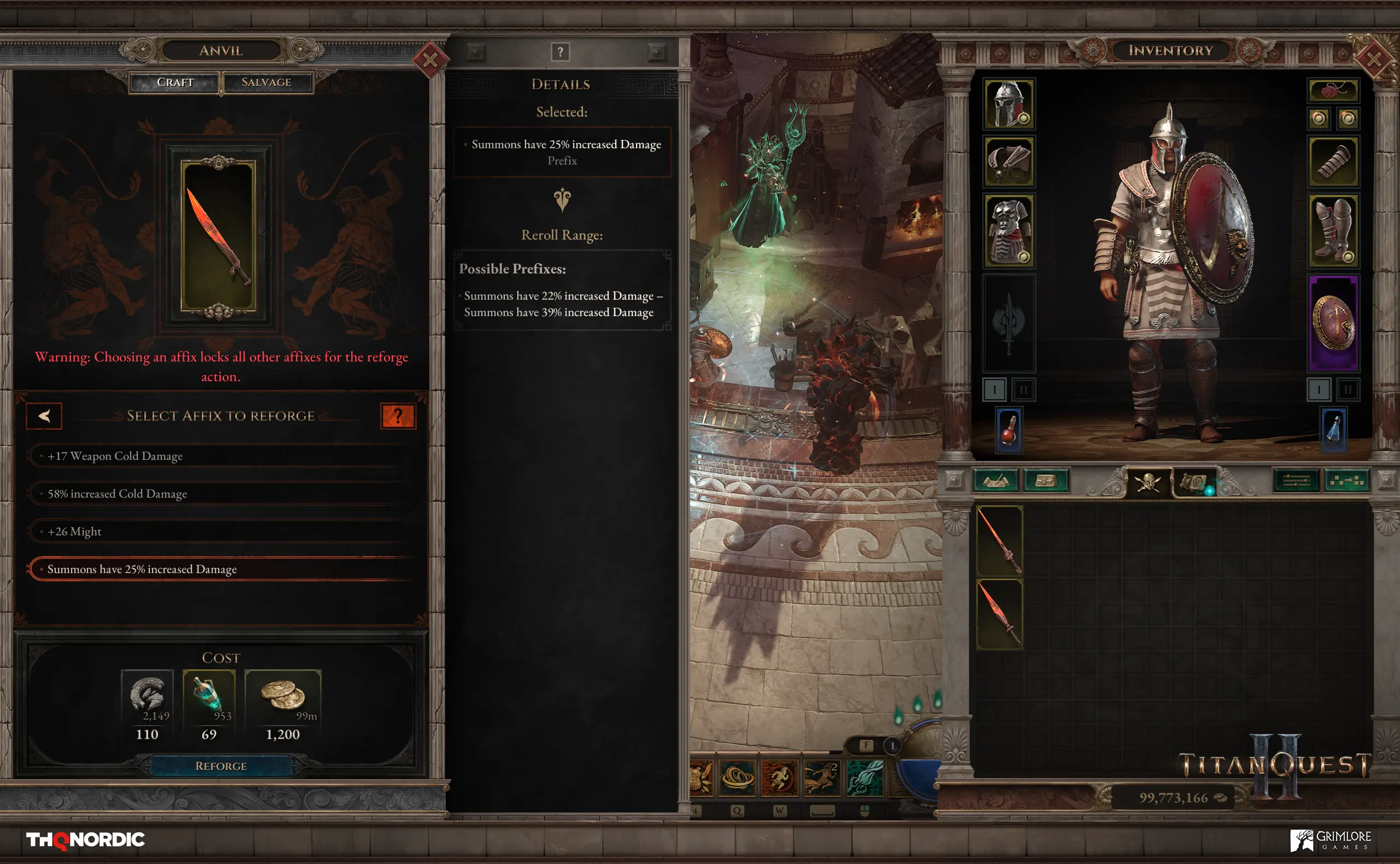
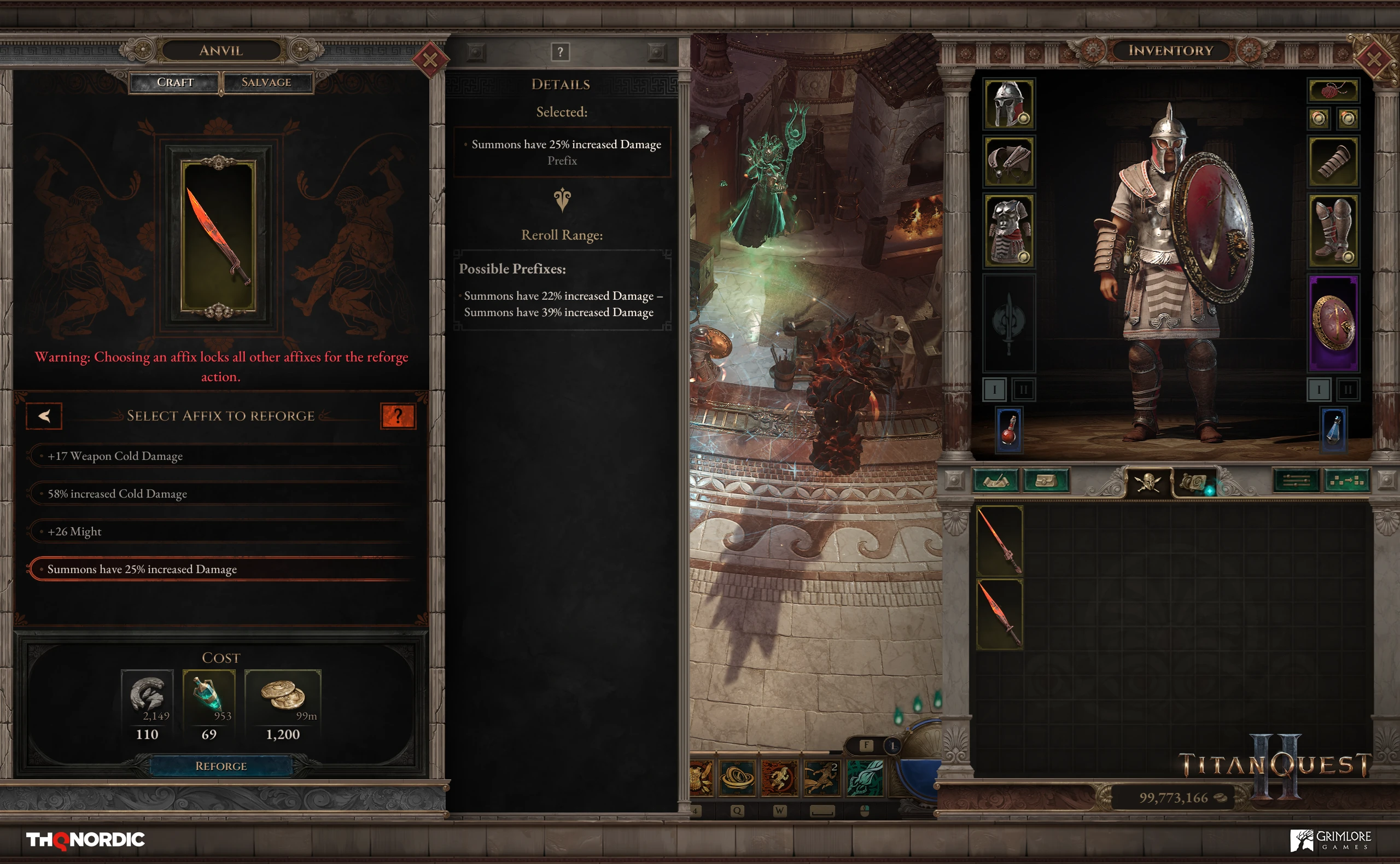
- Reforge changes the value of one existing affix. The game shows the possible range before you commit.
- Replace trades one affix for another property from the item's valid pool. The result is not an open choice from every property in the game.
- Add places another affix on an item that has not reached its allowed number of properties.
- Upgrade raises an item's level one time, improving its base properties and the tier of its affixes.
These actions solve different problems. Reforging fixes a weak number. Replacing removes a property that does not help the character. Adding fills an available space. Upgrading delays the point at which a useful item falls behind the character's level.
Reforge an affix when the item is already close
Reforging is the most focused operation. You select one affix on the item and roll its value again within the range shown by the game. The property stays the same; only its value changes.
That makes reforging useful when the item has the right role but one roll is disappointing. For example, a weapon may already support the damage type you want while carrying a low value on that property. Reforging gives that item another chance without replacing the entire affix.
This is a practical rule, not a promise about the best build: check the rest of the item first. If several properties are wrong, spending on one better number may not solve the larger problem. If the base and its main properties are already useful, a targeted reforge is easier to justify.
Replace an affix, but do not expect any property you want
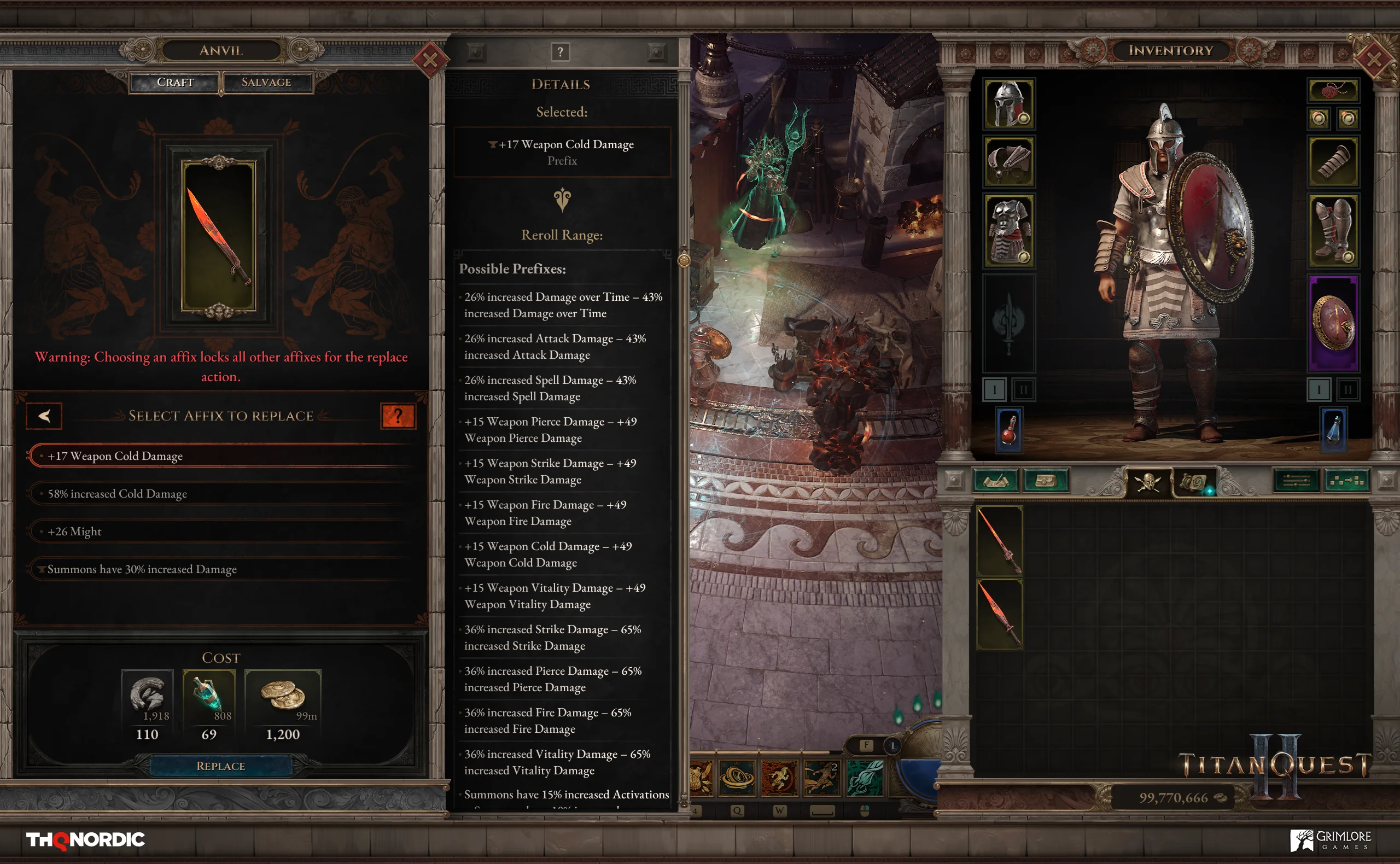
Replacing is more significant than reforging. It removes one property and rolls a different one, but the result follows the item's natural rules. THQ Nordic says the available replacements depend on the prefixes or suffixes that item could have rolled in the first place.
That restriction matters. Crafting is not a command to select any bonus from a complete list. A sword, ring, or piece of armor has its own possible property pool, and the replacement remains inside that pool.
Use replacement when the item has a strong foundation but one affix does not belong in the build. Do not treat it as a reason to keep a weak base forever. If the item has no useful property to protect, a new drop may be a better target for future crafting.
Add an affix when there is still room
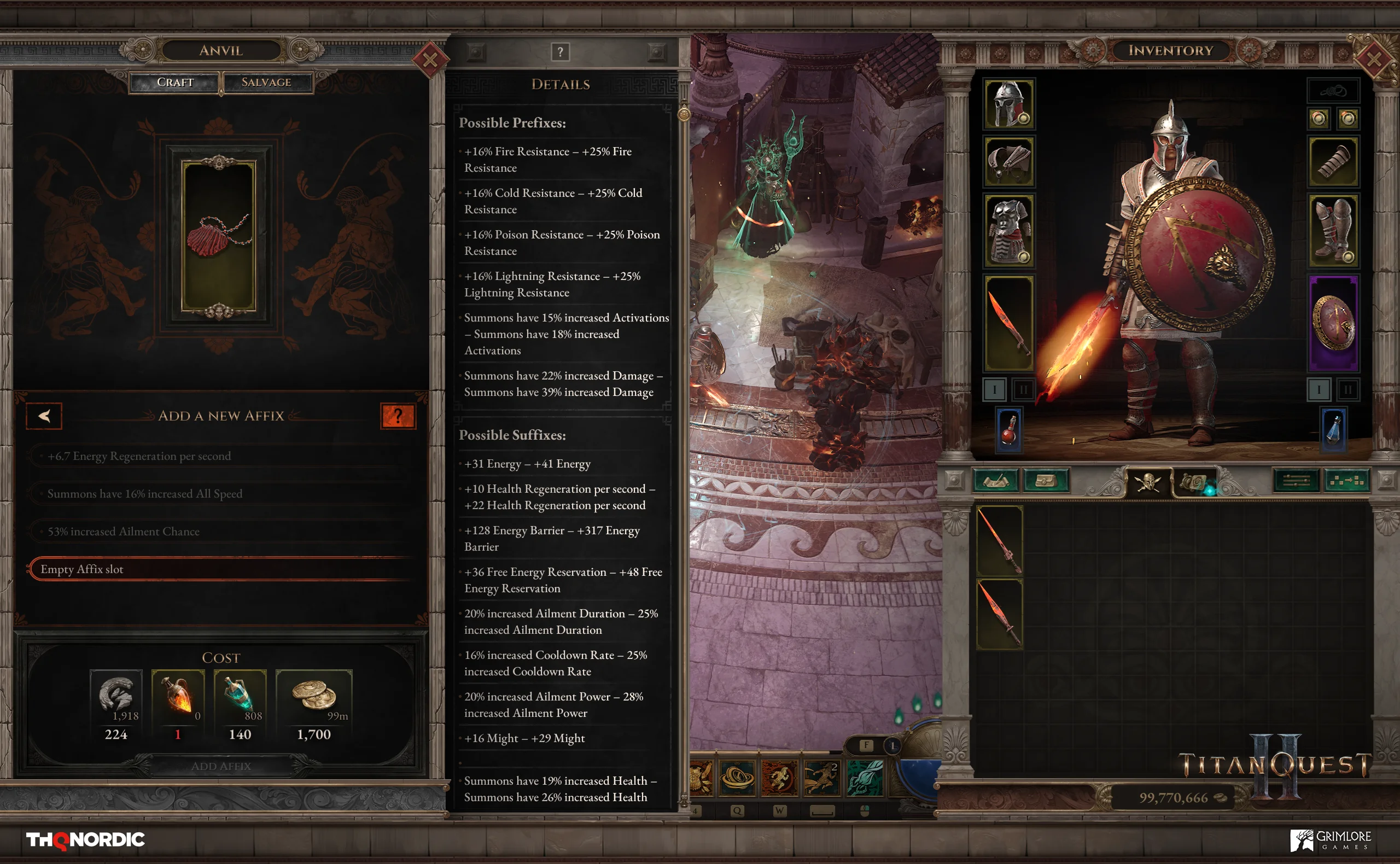
Adding an affix gives an eligible item another property before it reaches the maximum number of affixes allowed by the current system. Check the item screen before spending materials; this guide does not claim a universal cap that will apply to every item or future Early Access build.
Adding is most useful after the item has proved its basic value. A good first property can make a drop worth keeping, but adding another property does not repair a poor base or guarantee that the new result matches a specific build. Treat the open space as an opportunity, not as a reason to craft every item that has an empty slot.
Upgrade an item once, then respect its ceiling
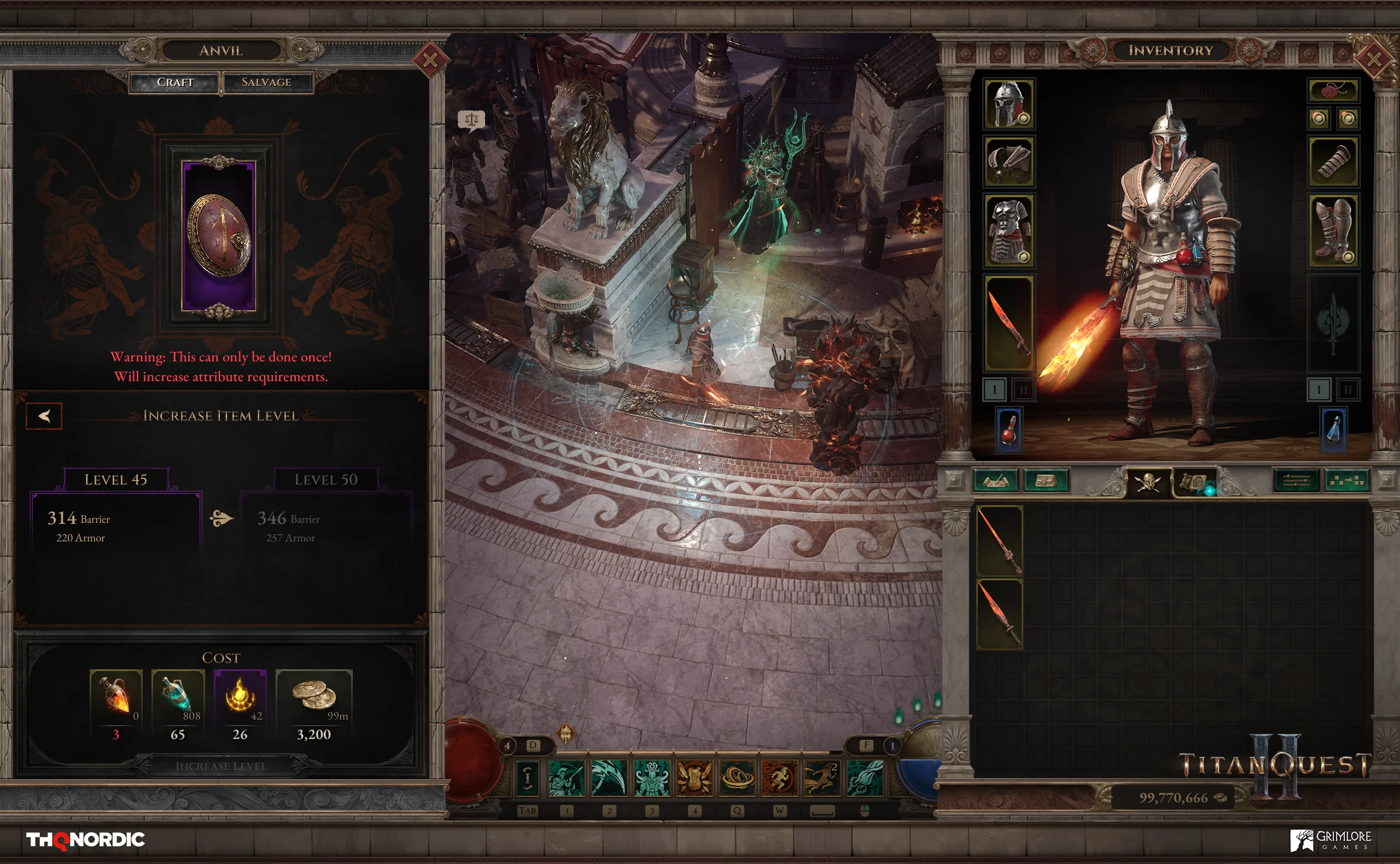
The level upgrade is a one-time operation. It increases the item's base properties and the tier of its affixes, which can keep a strong leveling drop useful after the character moves forward.
It is not an unlimited path from an early item to perfect endgame gear. THQ Nordic specifically warns that an early item cannot simply become a perfect level 55 item. Its affixes eventually hit a ceiling, so the item can still be replaced by a better drop later.
The practical use is straightforward: upgrade an item when its foundation fits the character and you expect to use it for a meaningful part of the current campaign. Save the operation for a piece that has already passed that test. An item that is missing its core properties is not rescued by a higher level alone.
A sensible order for your first crafts
A practical order for the current system is:
- Check the base item. Keep only an item with a role your character actually needs and at least one property worth protecting.
- Improve a weak value. Reforge the affix that is useful but underperforming, and compare the displayed range with the rising cost.
- Remove a bad property. Replace an affix only when the item's valid pool still contains outcomes that help the build.
- Use open space carefully. Add an affix when the item is already worth keeping and the additional property has a clear purpose.
- Upgrade once. Raise the item when its base and affixes remain useful at the next stage of the campaign.
This order keeps the expensive decisions for items that have already earned them. It also leaves room for the next good drop instead of spending every material on the first item with a promising color or name.
Why crafting does not replace loot
Repeated crafting attempts increase future material and gold costs on that item. After enough work, a new base item can be more efficient than continuing to reroll the old one. The system is designed to improve a drop while the character develops, not to make one early item permanent.
That is especially important in an action RPG built around equipment changes. Keep comparing new drops with crafted gear. A new item with better starting properties may need fewer operations and leave more resources for the rest of the character.
How crafting fits a dual-mastery character
Titan Quest 2 lets a character combine two masteries, so the useful question is not only whether an item is strong. It is whether its properties support the way both masteries work together. A defensive property may matter more to a close-range pairing than to a caster. A recovery or energy property may solve a problem that raw damage does not.
Crafting does not decide that pairing for you. Use it to close a clear gap after the character's plan is defined. The Spirit Mastery guide shows how summons and resource choices create specific gear needs, while the same crafting decisions can support any mastery combination.
What can change in Early Access?
Titan Quest 2 is still in Early Access. The store description warns that the game is not complete and may change, and the developers describe updates to features, balance, content, and quality of life as part of the process. Costs, affix pools, upgrade limits, and balance can therefore change after this guide is reviewed.
For that reason, fixed material tables and permanent “best” sequences can become outdated after a major update. Recheck the current in-game costs and rules before making an expensive craft.
Titan Quest 2 crafting FAQ
Can you create an item from scratch?
No. The current crafting system modifies an item you already found. You still need a suitable base item from normal play.
Can you choose any affix when replacing one?
No. Replacement results come from the properties that item could naturally have rolled through its valid prefix and suffix rules.
Can you reroll more than one affix at a time?
No. Each reforge targets one selected affix; it does not reroll the entire item at once.
Can you upgrade an item forever?
No. The level upgrade is a one-time operation, and older items still have an affix ceiling. A stronger drop may eventually be the better replacement.
Is there a universal best item to craft?
No. The right target depends on the character's two masteries, the item's starting properties, and the current Early Access balance. Use the system to fix a clear gear weakness instead of copying a permanent “best” answer.
Explore more builds and systems in the Titan Quest II Guide Hub.