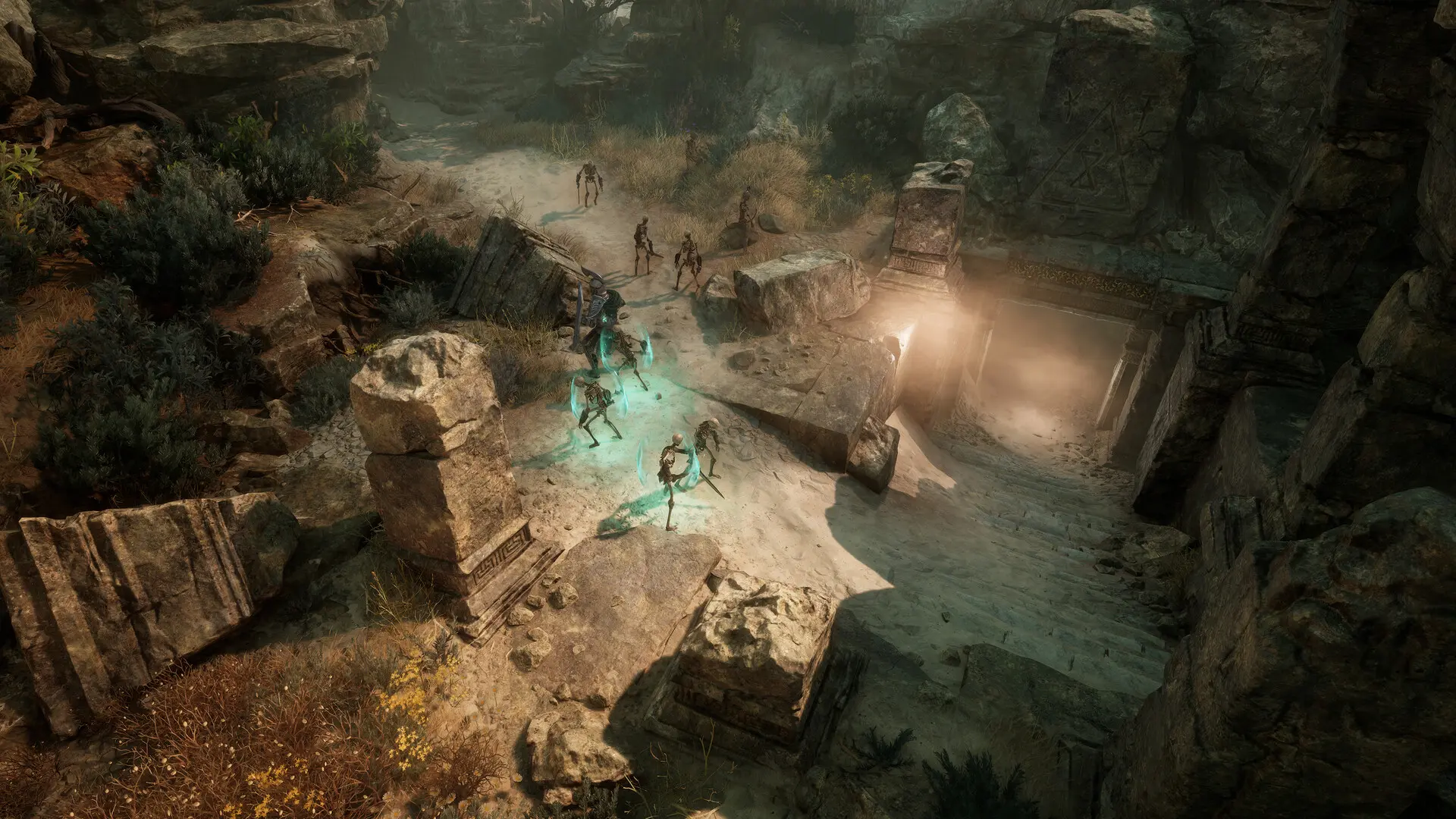
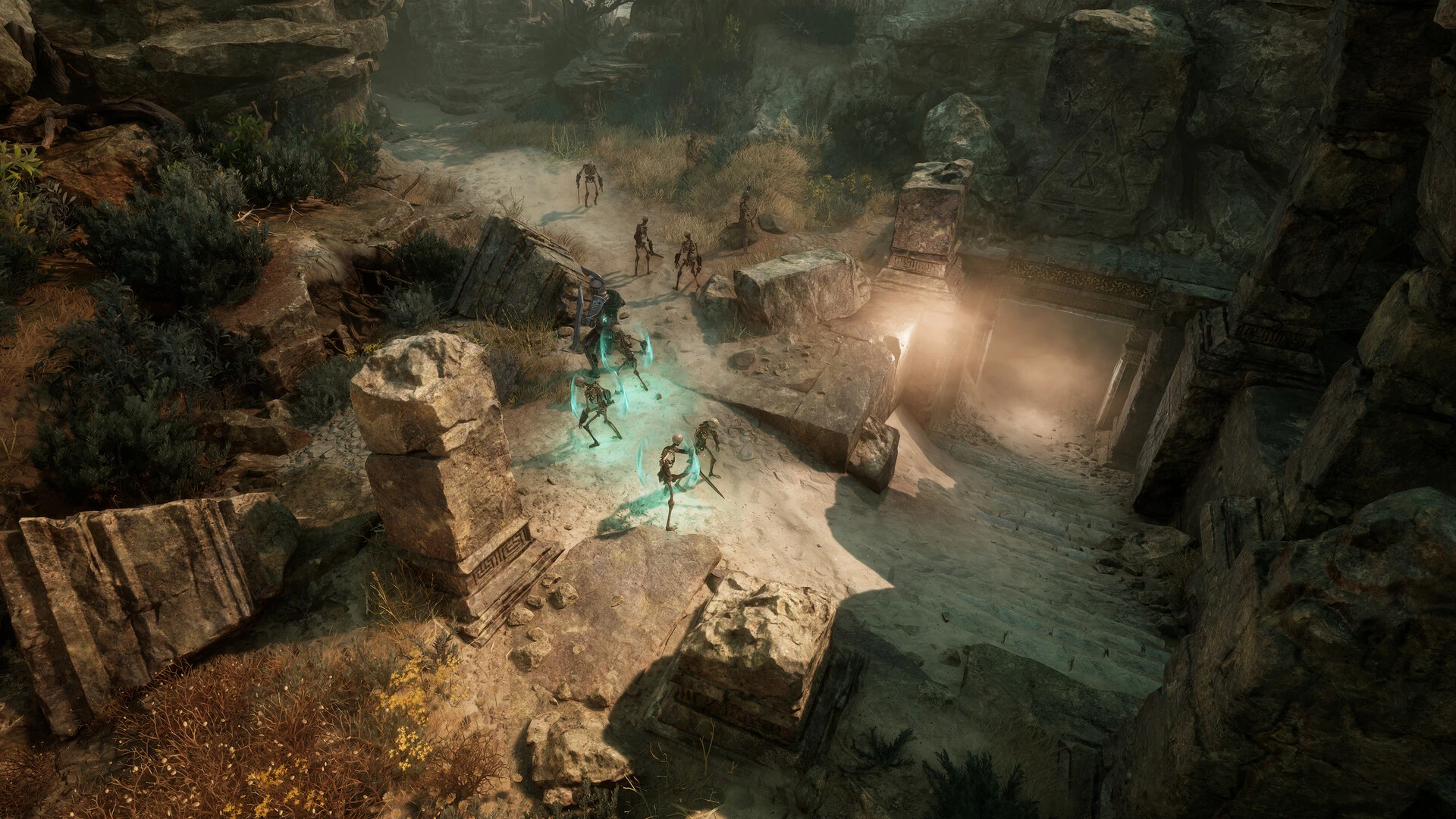
Start a Titan Quest 2 Spirit build by choosing summons, spellcasting, or a mix of both. Eidolon Guards and Athanekros support a summoner; Soul Harvest and Soul Burn support a caster. Spirit is available in the 0.7.0 PC Early Access update, with 10 active skills and 26 passives.
The choice depends on what you want to manage: temporary minions, a supply of Shades for spells, or both. Several Spirit abilities cost health or reserve part of it, so recovery and defenses matter alongside damage.
The plans below explain the mastery’s mechanics, not a tested endgame ranking. No single second mastery, item set, or point allocation is established here as the best Spirit build.
Spirit starter builds: summoner, caster, or hybrid
Choose one main way to deal damage before adding more skills. These starting plans follow the developer’s descriptions; skill availability still depends on your character’s progression.
- Summoner: start with Eidolon Guards. Choose whether to keep them alive with healing and health support or use effects that trigger when they appear or die. Add Athanekros for ranged spellcasting and defensive support when available.
- Caster: choose one main spell with a Soul Burn modifier, then add Soul Harvest generation. Use Soul Vortex to group enemies for attacks such as Deathward Beam. Against bosses, look for a Harvest condition that works on damage rather than requiring kills.
- Hybrid: combine summons with one Shade-powered damage spell. Establish reliable Shade generation and health recovery before adding another spender or more life reservation.
If your Shades repeatedly run out, reduce spending or improve generation. If your Guards disappear too quickly, choose more support or a setup that benefits when they die. If a single hit kills your character, improve defenses before reserving more life; life leech cannot help after that hit.
Choose your second mastery to support this plan. Check whether each bonus affects the player, summons, or a particular skill instead of assuming that all damage bonuses also improve minions.

Titan Quest 2 Spirit Mastery at a glance
- Release: Available now in update 0.7.0
- Active skills: 10
- Passive skills: 26
- Unique resource: Shades
- Main damage theme: Vitality damage and life leech
- Main playstyles: Summoner, spellcaster, or hybrid
- Major summons: Eidolon Guards and Athanekros
- New mechanic: Execution
- Support skills: Soul Vortex and Dark Pact
- Platforms right now: PC Early Access through Steam and Epic Games Store
Current Spirit hotfix status
Hotfix 3, released August 21, is the latest Spirit and Crafting patch in the official announcements checked September 13. Its build is 0.7.0-public.137244+win.2993. These fixes matter when comparing an older build guide or video with your installed game:
- Health reservation: sustained abilities can no longer kill the player. Hotfix 3 also makes the Blood Statue Curse calculate its damage from unreserved health.
- Summons: Hotfix 2 corrected summons after the player character dies and adjusted their pathfinding around playable-space blockers.
- Chthonic Pulse: its Trigger cannot activate faster than Cast Time allows, and Hotfix 3 restored Returning Projectiles and Returning Explosion when the skill is triggered.
- Execution and UI: Lethal Strike now displays its Execution threshold correctly, and enemy Execution overlays no longer appear before an enemy has fully spawned.
These are targeted fixes, not a new mastery rework. The skill counts, Shades, Eidolon Guards, Athanekros, and starter plans below remain current, but the in-game tooltip for the installed build should win if a numerical value changes later in Early Access.
How Shades work
Shades are a resource used only by Spirit. They fuel several parts of the mastery, so a good build needs a way to generate them and a reason to spend them.
The resource supports all three playstyles. Summoners can use it to strengthen their undead army, casters can spend it on powerful Soul Burn effects, and hybrid builds can move between both roles. You are not forced to play a traditional pet build just because Spirit is the game’s main summoning mastery.
Two modifier families shape how casters handle Shades:
- Soul Burn consumes Shades when a spell is cast, trading the resource for major bonuses such as higher damage or removing a cooldown.
- Soul Harvest helps restore Shades when an ability kills normal enemies or damages bosses.
The basic rhythm is easy to understand: Harvest fills the pool, Burn empties it for a stronger moment. A build that takes many Soul Burn modifiers without reliable generation may feel great for one attack and then run dry. Start with a steady loop before stacking every expensive upgrade that looks exciting.
Spirit Summoner: Eidolon Guards and Athanekros
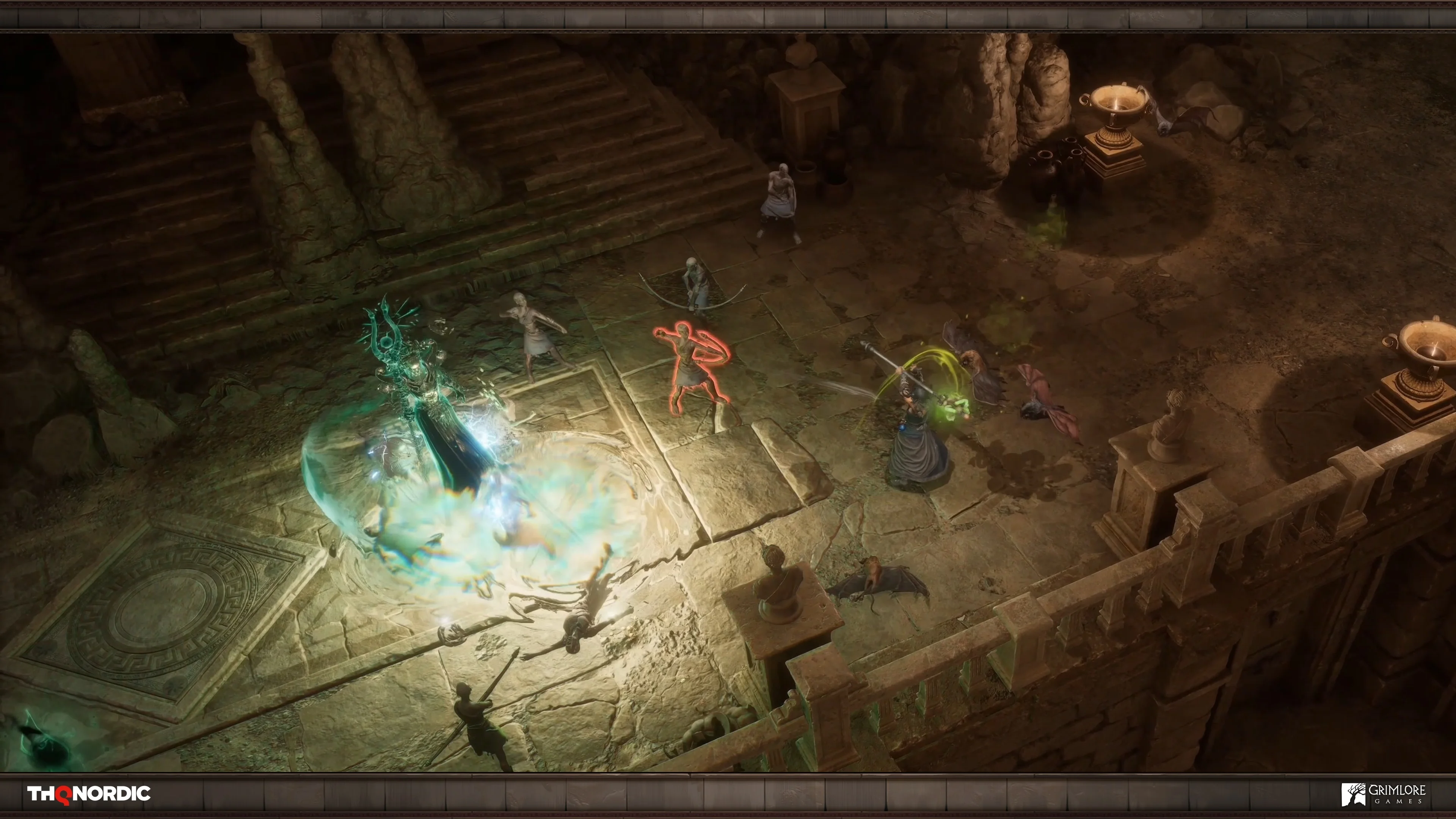
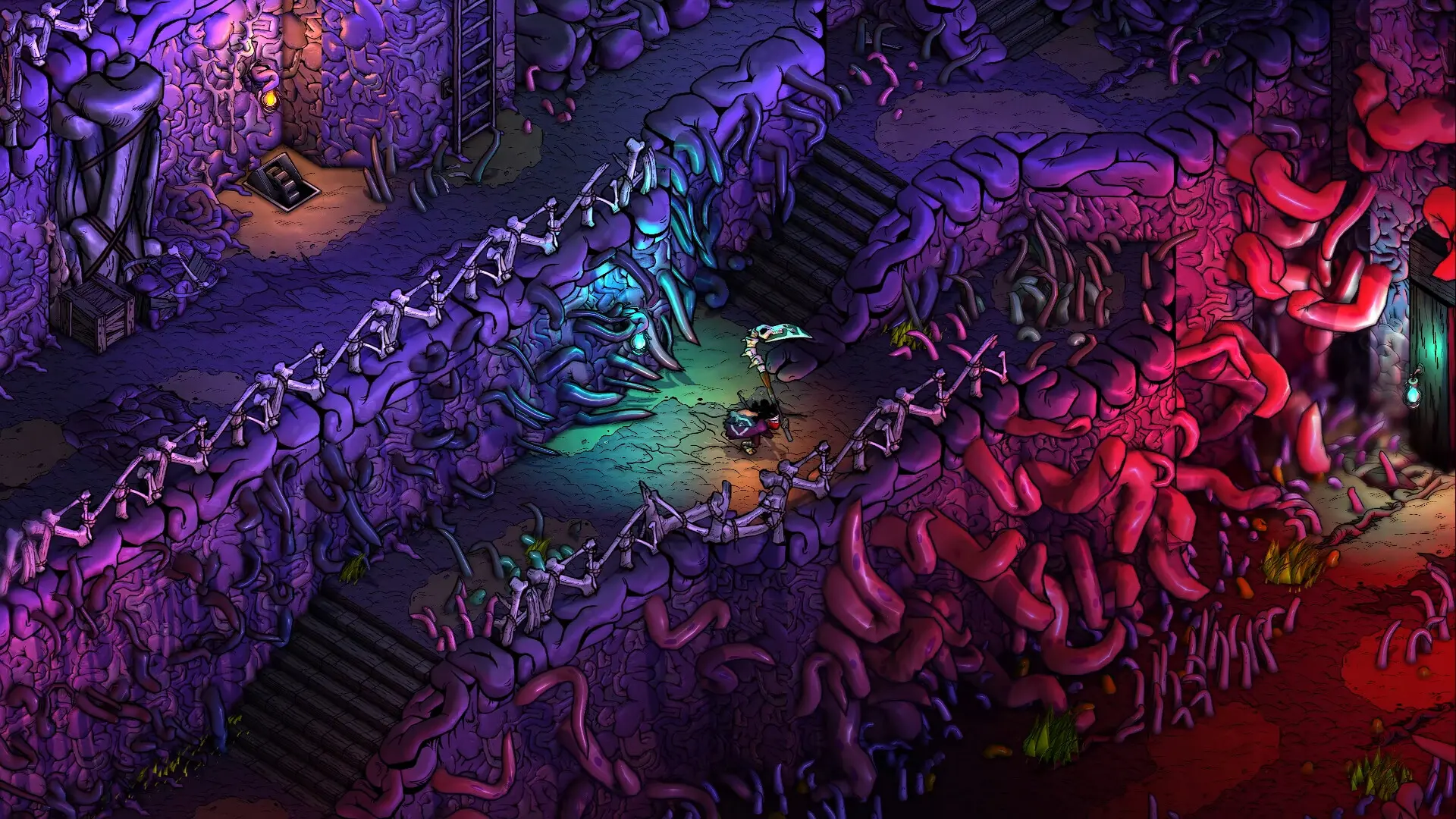
Eidolon Guards form the center of Spirit’s minion setup. They are the shades of fallen heroes, but they are deliberately temporary. Their presence in the living world fades unless the player supports them.
There are two broad ways to use them. The first is to sacrifice some of your own life or use healing abilities to keep the Guards active longer. This suits a player who wants a stable group of minions fighting at the front.
The second option accepts that the Guards will disappear. Spirit includes ways to build around effects triggered when a minion is summoned or dies. Instead of fighting the timer, that approach turns replacement into part of the damage cycle.
One shown modifier gives the Guards a charge, helping them enter combat quickly. That is useful in a fast-moving action RPG where temporary summons can waste precious seconds walking toward the next group.
The major summon is Athanekros, a large spellcaster designed to fight from the back line. Athanekros has unique spells, can use some of the player’s Spirit abilities, deals strong ranged damage, and can improve your defenses when needed.
That combination gives a summoner two layers: short-lived front-line Guards and a more imposing magical ally behind them. The first thing to watch is not only damage, but how much health and attention it costs to maintain the group.
Spirit Caster: Soul Burn, Soul Harvest, and Deathward Beam
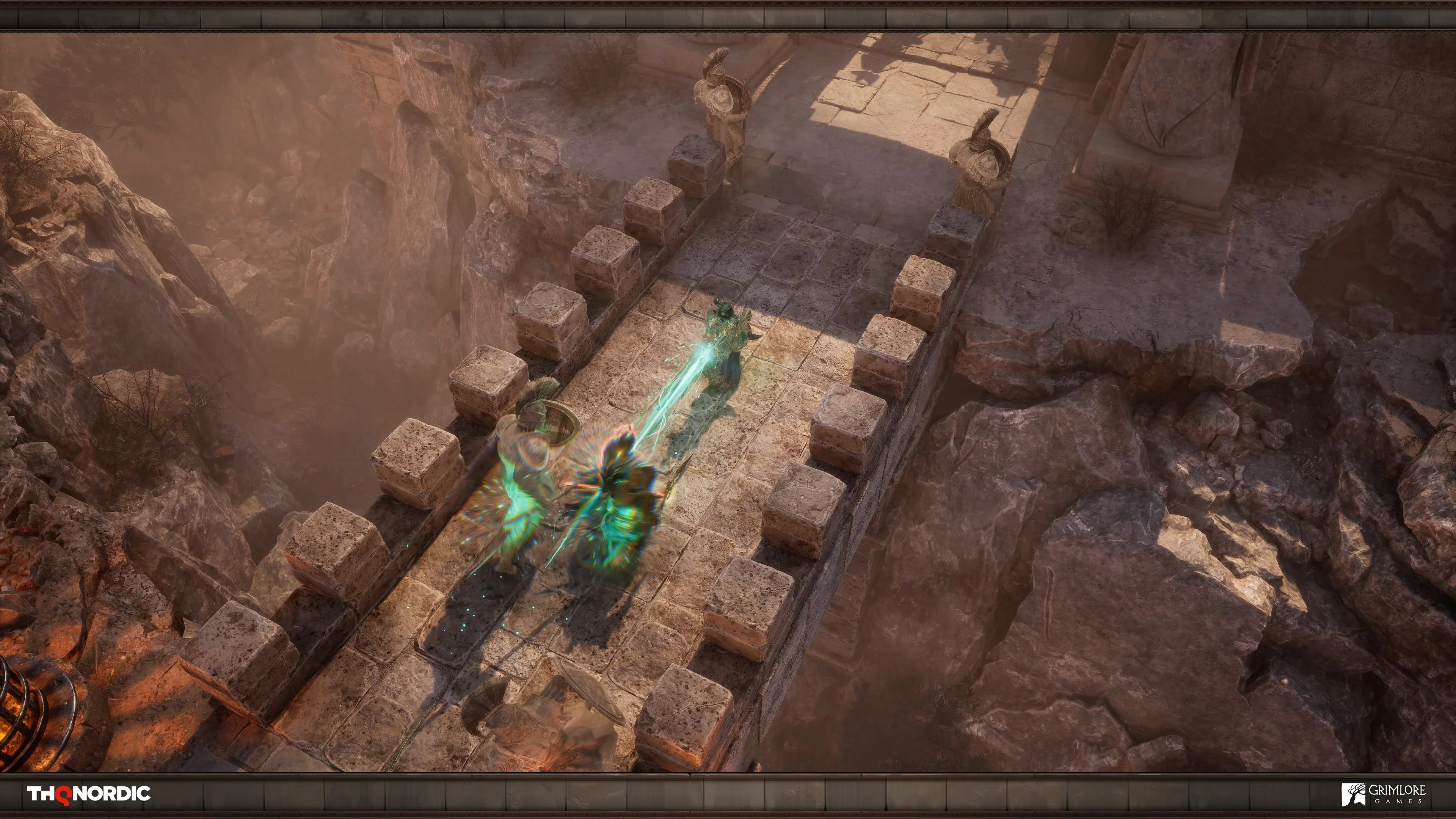
Spirit also works without leaning heavily on minions. The caster path focuses on otherworldly spells, Vitality damage, life drain, and Shade-powered modifiers.
Deathward Beam is one of the abilities Grimlore Games has shown. It fires along a line, rewarding players who position several enemies together before casting. Soul Vortex can help create that setup by dragging targets into one place.
Soul Burn is where the caster can push a spell beyond its normal limits. A modifier may spend Shades for a large damage increase or remove a cooldown, allowing a much more explosive cast. The exact choice depends on whether the build wants frequent pressure or occasional bursts.
Soul Harvest keeps that plan alive. Modifiers can return Shades through kills during ordinary encounters or through damage against bosses. The boss condition is especially useful because there may be no weaker enemies nearby to refill the resource.
For an early setup, avoid spending Shades on every skill. Pick one main Soul Burn ability, then support it with dependable generation. Once the loop feels stable, a second spender becomes easier to judge.
How the Execution mechanic works
Execution lets certain Spirit abilities instantly finish enemies after their health falls below a threshold. Active and passive choices can improve that threshold, making it easier to trigger.
This is different from simply adding more damage. Execution becomes valuable at the end of a fight, skipping the last part of an enemy’s health bar once the requirement is met. It can be particularly appealing against durable targets, although boss rules and balance values will decide how strong it becomes in practice.
Update 0.7.0 also begins spreading Execution beyond Spirit. Rogue’s Trickshot can now use it, and the developers plan to add more support to older masteries later. That creates room for future dual-mastery combinations built around pushing targets into execution range and finishing them cleanly.
Do not treat Execution as an automatic win button. It still needs skill investment and the right abilities. The sensible first step is to see how often it activates in the content you are actually playing before giving up more consistent damage or defense to raise the threshold.
Soul Vortex and Dark Pact support other builds
Spirit is not limited to its own damage and summons. It has support tools that can make a second mastery easier to use.
Soul Vortex pulls enemies toward its center. Grouping targets can set up area attacks, line attacks such as Deathward Beam, or slower skills that normally miss scattered enemies. The Vortex can also apply a debuff that makes enemies take harder hits while they remain inside it.
Dark Pact trades life for energy and other bonuses. It can keep an energy-hungry build moving, but the life cost needs an answer. Spirit’s access to Vitality damage and life leech is designed to help restore what the skill spends.
Several reservation skills across Earth, Forge, Rogue, Storm, and Warfare can now reserve life instead of energy. That change supports Spirit’s new low-life playstyle while freeing energy for active abilities. It also creates a real risk: a larger energy pool is not useful if the character becomes too fragile to survive a heavy hit.
Start cautiously. Reserve only enough life to solve an energy problem, keep a reliable source of recovery, and add more low-life investment when the defenses are ready.
Which second mastery should you check for a Spirit build?
The 0.7.0 notes identify several relevant changes. Use these as checks for a pairing, not as proof that one combination outperforms every other build.
- Forge: Forcefield’s Enhanced Device Damage modifier became Enhanced Summon Damage. Read its current tooltip to see which summons and conditions it affects before spending points.
- Rogue: the update adds Execution support, including Lethal Strike. Hotfix 2 fixed Lethal Strike’s cooldown reset on a kill and its displayed Execution threshold. Older demonstrations may show those bugs.
- Earth Enchantment (Earth), Tempered Arsenal (Forge), Preparation (Rogue), Storm Nimbus (Storm), and Battlefield Awareness (Warfare) gained a health-reservation option. This can free energy for active skills, but leaves less unreserved life.
A reservation option does not make a low-life build safe on its own. Compare your remaining health, resistances, recovery, and skill costs before committing more points.
Spirit changes how passives and Feats work
Spirit arrives with more passives than earlier masteries. Grimlore says the larger pool is meant to offer similar bonuses with slightly different effects, giving builds more ways to solve the same problem.
The old three-Feat limit on each passive is also gone for Spirit. Earlier builds could reach a point where their Feat choices felt almost decided in advance. The new approach offers more options, letting players choose damage, survival, resource help, or another missing piece instead of following one narrow route.
There is a tradeoff: a larger passive tree is harder to read at a glance. The studio knows the overview can become crowded and plans to explore interface solutions. Older masteries may receive the same design approach later if players respond well to it.
The same update adds crafting
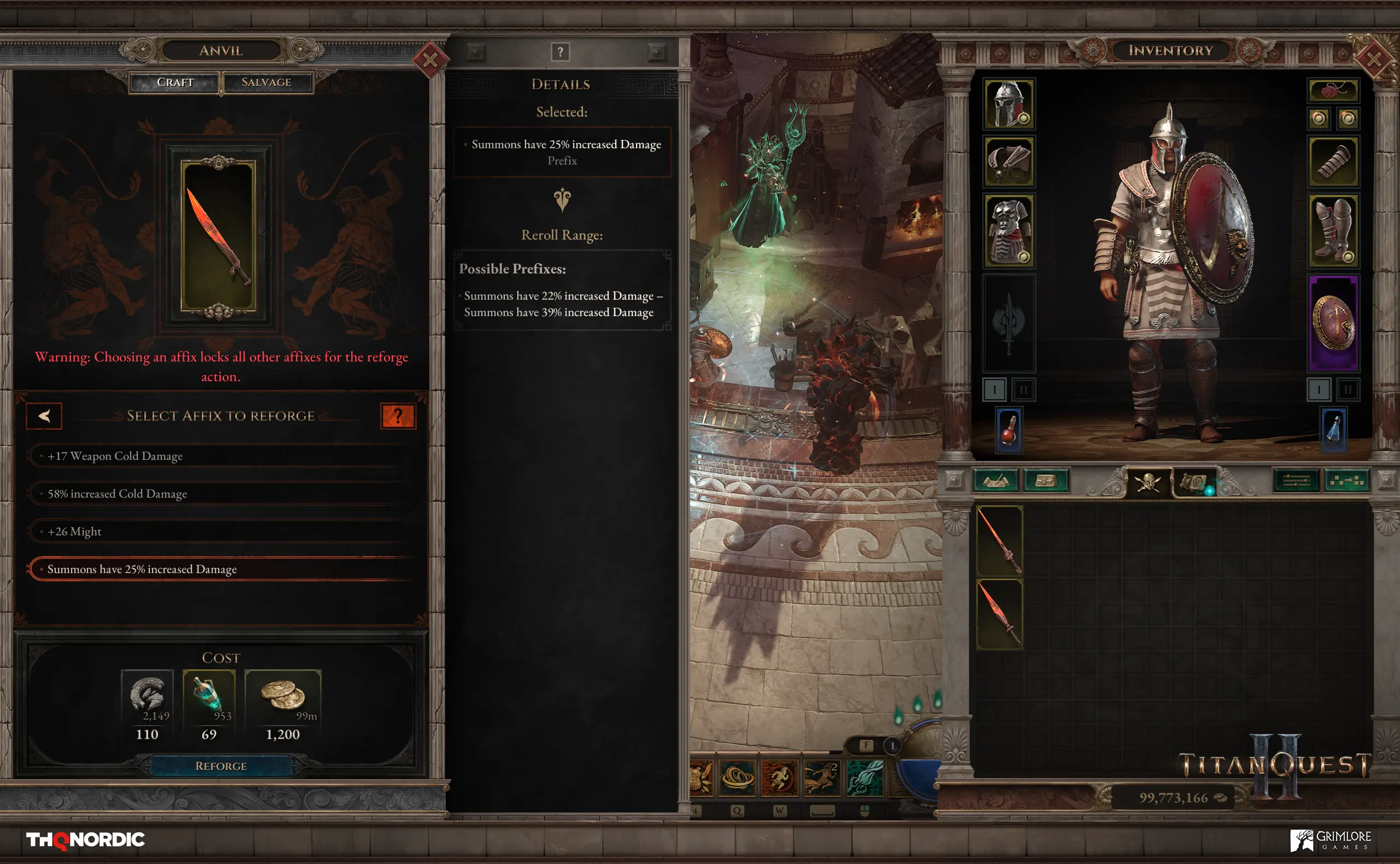
Spirit is only half of update 0.7.0. The patch also introduces a crafting system with four main actions:
- Replace an affix with a different random affix that follows the item’s rules
- Reroll the value of an existing affix
- Add affixes when an item has room below its maximum
- Upgrade an item’s level once, improving its base properties and affix tiers
The one-time item-level upgrade does not remove an older item’s affix ceiling. An early item cannot gain the same top affix values as a comparable high-level drop just by being leveled up.
Crafting costs increase as an item receives more work. Early in the campaign, the system is meant to provide a few cheap improvements before finding a new item becomes the better choice. Later, players can farm more materials and chase stronger rolls without making natural loot irrelevant.
For the differences between reforging, replacing, adding affixes, and the one-time level upgrade, use the Titan Quest 2 crafting guide before spending materials.
The update also increases base movement speed, improves some Epic item and Relic drop rates, makes cooldown-reduction affixes more available, and changes Doom so adding another stack no longer resets its duration. Those adjustments affect old characters even if they do not choose Spirit.
Is Spirit available on consoles?
Titan Quest 2 is currently in Early Access on PC, so Spirit and crafting are available there now. The full game is planned for PlayStation and Xbox with the 1.0 release, but this Early Access update is not a separate console launch.
The game remains in active development, and the new mastery’s skills, costs, and balance may change. You can track its release status, platforms, and future updates on the Titan Quest 2 game page.