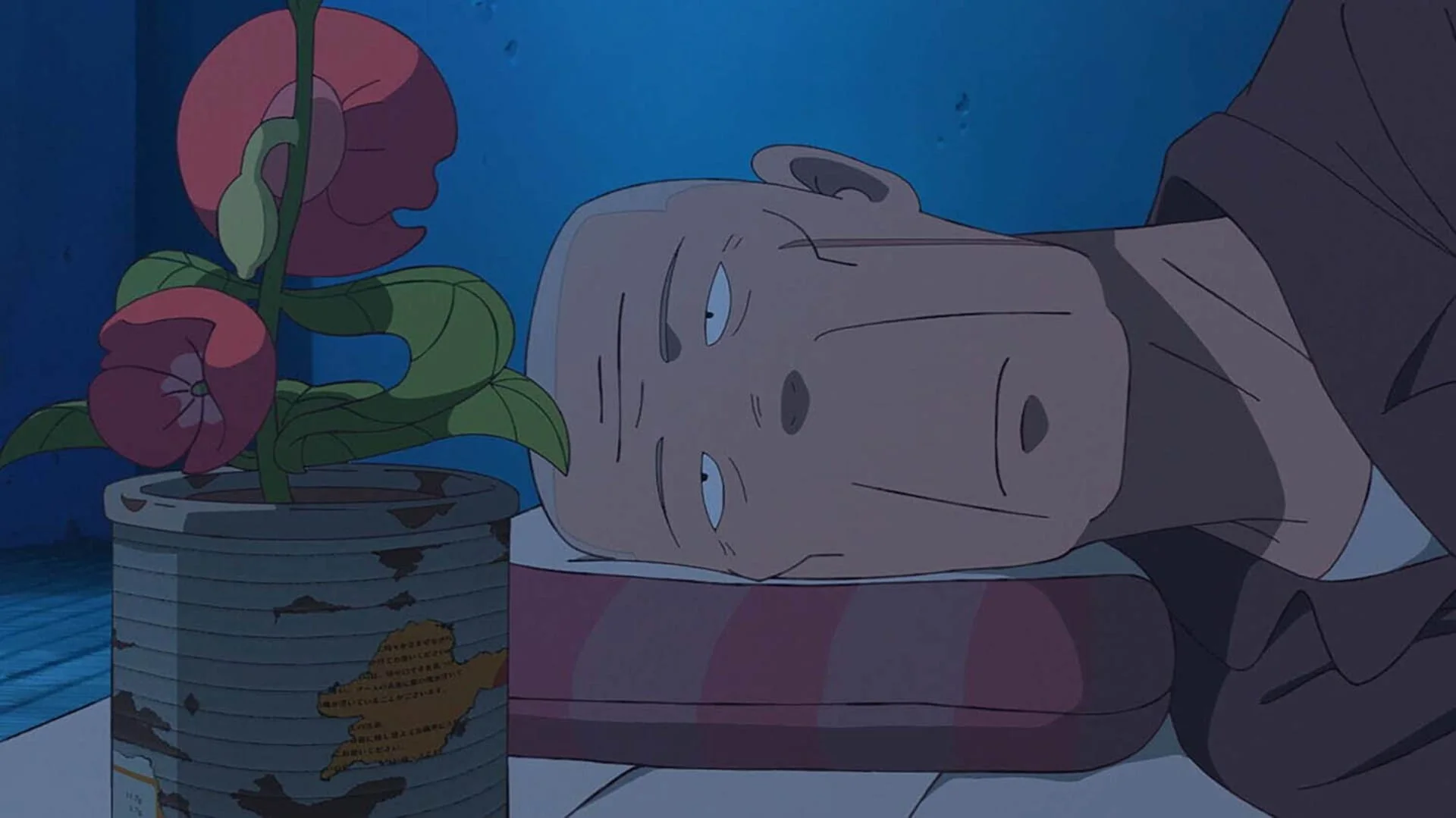
Minoru Akutsu is an old man dying in prison. Beside him sits a flower growing out of a can. Then the flower starts talking, and it is not particularly kind. As Akutsu looks back on his life, it questions him instead of letting him feel sorry for himself. The Last Blossom begins with this strange conversation before taking us back to the years when Akutsu had a home and people to come home to.
The younger Akutsu belongs to the yakuza, a Japanese criminal gang. He shares a seaside home with a woman named Nana and her little boy Kensuke. They are not his wife and son, but living together gives him the chance to become a partner and a parent. Watching Akutsu care for them is the best reason to watch The Last Blossom. You know from the opening that he will end up in prison. What you do not know is how he will treat the people who care about him before that happens.
Director Baku Kinoshita and writer Kazuya Konomoto also made Odd Taxi. This is a separate story, so you do not need to have seen that series. It is a Japanese animated film about an adult trying, and sometimes failing, to look after a family. Do not expect a gangster action film with a cute talking plant. The violence matters, but most of the story is about money, affection and the things Akutsu struggles to say. This review does not reveal the ending.
Akutsu finds a family but struggles to admit he wants one
At first, Akutsu treats his arrangement with Nana as a responsibility. He can give her and Kensuke somewhere to stay without calling it love. Nana does not make that distance easy for him to maintain. Having another adult in the house means sharing space and daily tasks, not just handing over money. Kensuke also needs attention. A child cannot understand all the reasons a grown man might be afraid of getting attached to him.
One lovely scene has Akutsu and Nana unpacking boxes and making music with what is around them. Tape and a microwave help create the rhythm of “Stand by Me.” It is funny because they are doing something so ordinary and getting so much pleasure out of it. They seem comfortable together before Akutsu can explain what Nana means to him. The scene gives you a reason to want them to stay together. It does not need either person to announce that they have found happiness.
That difference between what Akutsu does and what he says keeps him interesting. He can tend plants or spend time with Kensuke, then still refuse to call these people his family. You can understand the fear behind that refusal. Admitting he loves them would mean admitting that his choices can hurt them. It would also leave him with no easy excuse for keeping his distance. His silence can hurt Nana even when he thinks he is protecting her.
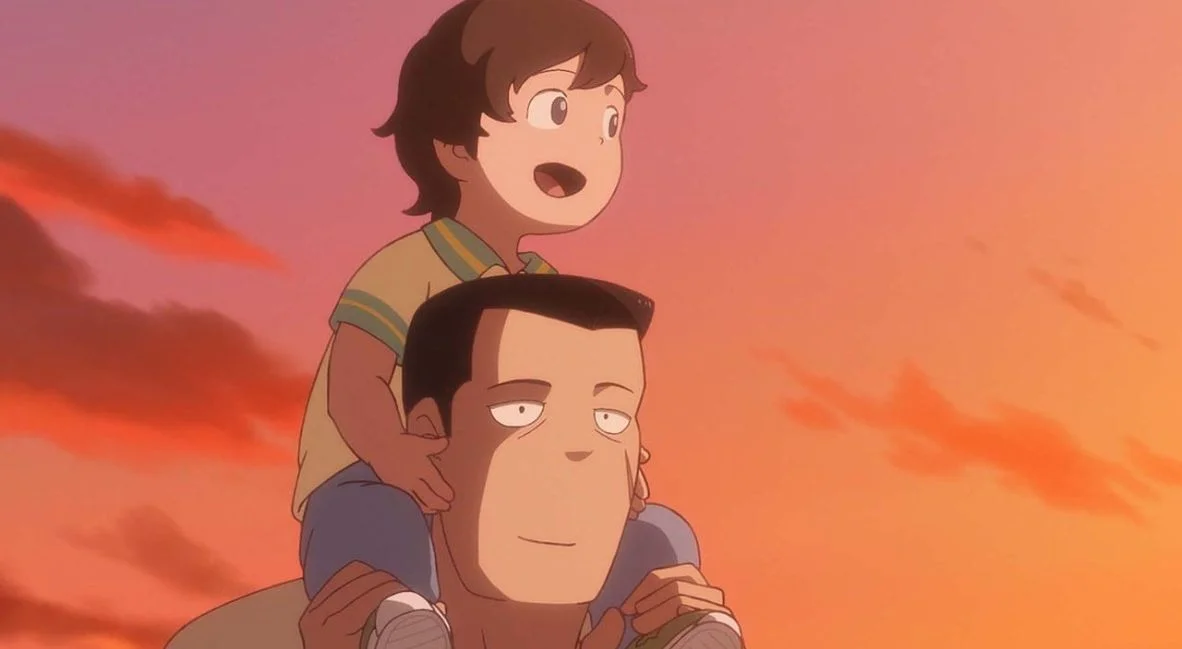
The film lets Kensuke become someone Akutsu cares about, rather than just a child who needs rescuing later. The time they spend together matters because Akutsu has no biological claim on him. He has to choose to be there. That makes his concern feel different from a story that assumes a parent and child must be close simply because they are related. You want him to keep showing up, even when his work gives you reasons to worry.
Hikari Mitsushima voices the younger Nana, while Junki Tozuka plays the younger Akutsu. Nana tries to get Akutsu to talk, while he struggles to say what he feels. We can hear how much Nana wants him to talk to her. She is not speaking to a man who readily tells her what he wants. It is a relief when the pair relax and have fun together instead of worrying about what their relationship means.
There is a limit to how much the film can get out of his reluctance, though. After a while, we understand that Akutsu cares and cannot say so. We could use more scenes of the pair enjoying each other’s company, not more reminders that he keeps his feelings to himself. The unpacking scene is fun to watch. We needed more time with the couple having fun together. Being quiet is part of his personality, but it sometimes makes the relationship less involving than it could be.
More money does not make Akutsu a better partner
Akutsu also works for people who expect him to put the gang first. His boss Tsutsumi expects Akutsu to do what the gang asks, even when that puts him in danger. A criminal group can promise to look after its members while still sending them into danger. The film asks us to notice what Akutsu does for that group and what it actually does for him.
When Akutsu makes money through a land deal, he starts neglecting the home life we have watched him build. This is an important change because it stops him from being a harmless man with an unfortunate job. Akutsu sometimes chooses badly when he has the chance to choose differently. The film can care about him without pretending that every problem is somebody else’s fault. Seeing him pay less attention to Nana and Kensuke is frustrating because we have already seen how much happier he can be with them.
The crime story becomes more urgent when Kensuke falls ill and Akutsu needs a large amount of money. We can understand why he is desperate without needing a detailed explanation of gang business. The child he has grown close to needs help. That gives the decisions ahead a personal reason, rather than treating another criminal job as an exciting adventure. It is also why the family scenes need the time they receive earlier in the film.
Tsutsumi is less interesting than Akutsu, however. His authority and expectations make the problem obvious, but the gang itself offers fewer surprises than the unusual household does. Nana and Kensuke make Akutsu worth following; the gang mostly gives him trouble. If you come for a complicated struggle between criminals, you may wish the other gang members had more to do. The film is better at making us worry about this family than at making the criminal organisation interesting in its own right.
Back in prison, Akutsu has a much smaller audience for his explanations. The flower, voiced by Pierre Taki, does not politely agree with him. It mocks him and challenges the way he thinks about other people. The talking flower stops Akutsu from telling only the version of his life that makes him look good. That is a useful role for such a strange character. Its presence also means these scenes can be a conversation instead of an old man explaining everything directly to us.
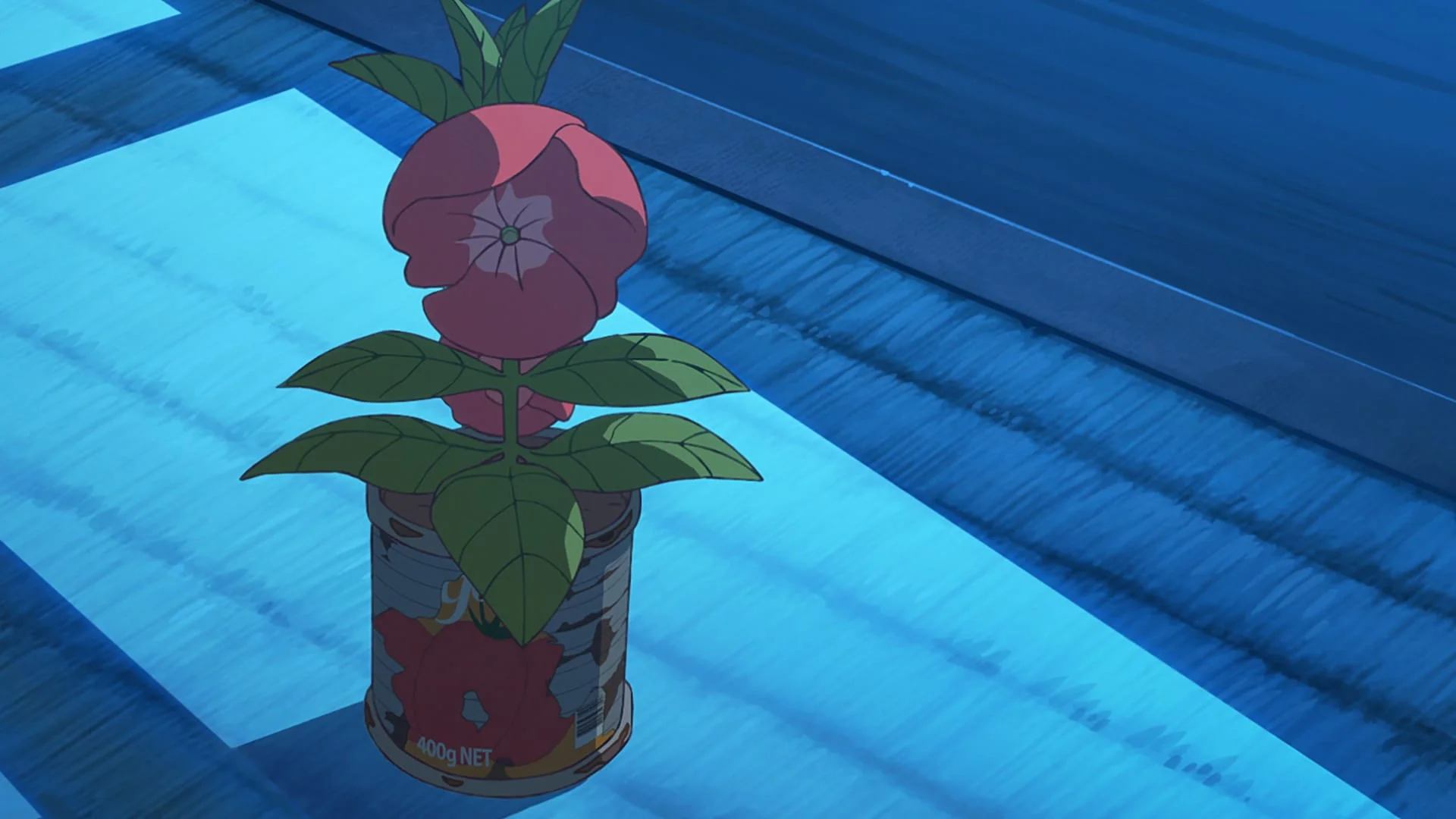
The jokes do not always help. After spending time with Nana and Kensuke, returning to the flower’s loud complaints can interrupt our concern about them. The contrast is sometimes funny. At other times, we have enough to think about without another sarcastic remark. The flower is funniest when it challenges an excuse, not when it interrupts a sad moment. Giving it a little less dialogue would have allowed some of the family’s problems to affect us without an immediate comment.
We can recognise Akutsu even after he has grown old
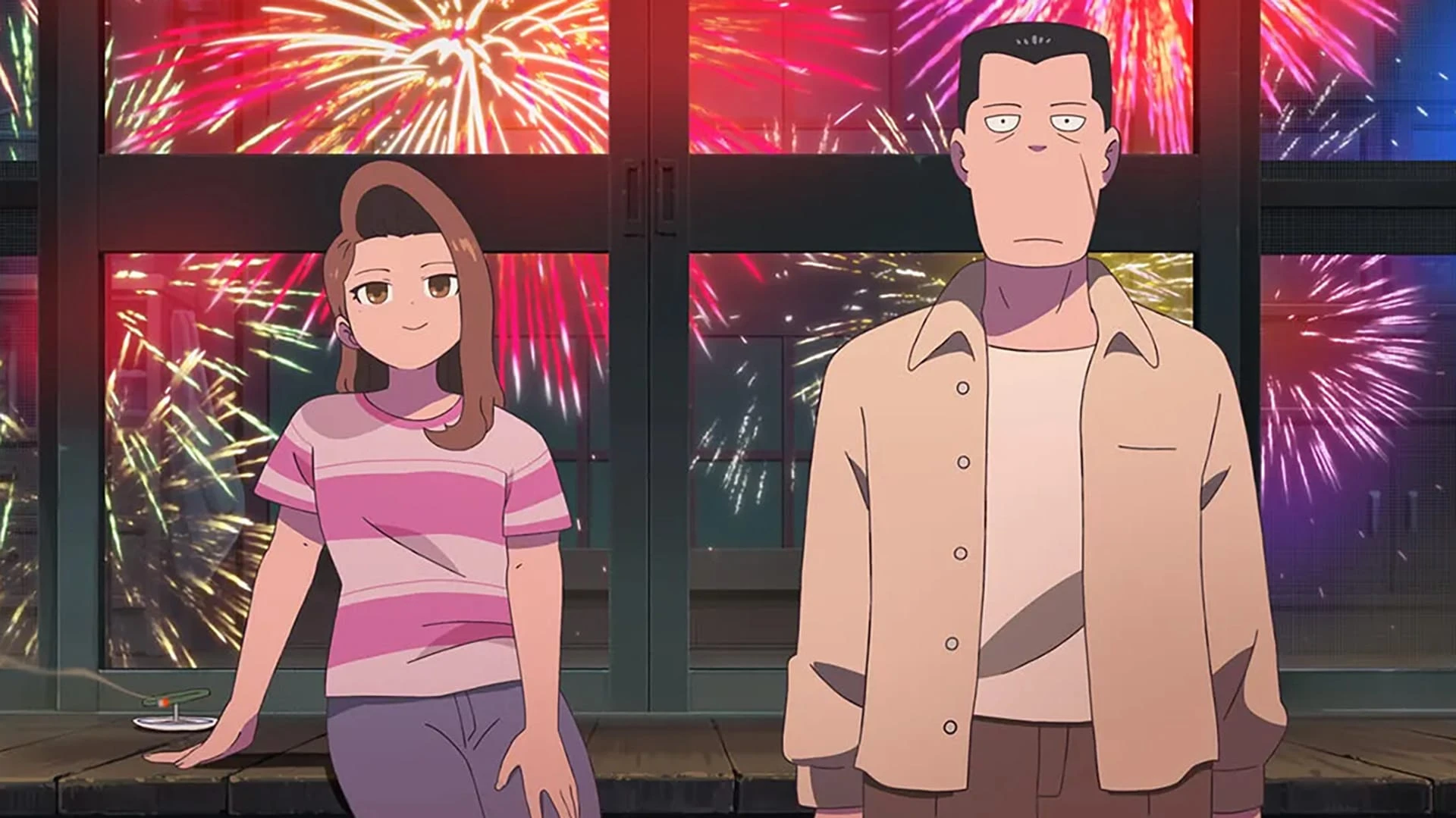
The characters have rounded shapes and relatively few lines on their faces. Akutsu’s scar is easy to recognise when the film moves between his younger and older self. You can see the same person without needing realistic skin or a complicated design. Akutsu rarely explains what he feels, so his movements matter. You pay attention to whether he looks at someone or keeps his distance, rather than waiting for a large expression to tell you what a scene means.
The backgrounds have more colour and detail. Fireworks brighten the view behind Akutsu and Nana, while the prison scenes use cold blues around his bed and the flower. Akutsu once had Nana and Kensuke beside him. Now a flower is the only one listening to him. Seeing him alone makes us think about the time he could have spent with Nana and Kensuke. The film does not need him to explain that regret in a speech.
The flower is fun to watch even when its voice becomes irritating. It uses its leaves almost like arms, giving attitude to something without a human face. That is a good use of animation: an unusual character has a recognisable way of behaving. The music by cero also helps the film spend time with people rather than constantly hurry them to the next problem. The household music scene remains the strongest example of how sound can make an ordinary activity fun.
More scenes from The Last Blossom
3 screenshotsAt around 90 minutes, The Last Blossom is not a long film, but its quiet conversations can feel slow if you are waiting for action. Its appeal is watching a difficult man gradually matter to other people. The animation does not make this a film for young children. Imprisonment, illness and violence are part of the story. Viewers comfortable with those subjects may find the family scenes moving, especially if they prefer imperfect adults to heroes who always know the right thing to do.
There is also a practical warning about its North American release. Some August screenings had subtitles out of sync with the dialogue. Distributor GKIDS acknowledged the problem and said it supplied a corrected version for the following day, although some cinemas could not update in time. That was a problem with the screening copy, not a deliberate choice in the film. As of September 25, GKIDS lists digital pre-orders, not a confirmed on-demand release date. Check your cinema or store for its current listing.
Pixel Twelve score: 7.8/10 — Good. The scenes with Nana and Kensuke give us specific reasons to care about Akutsu before his criminal work puts their future at risk. The drawing style, voices and music make those people fun to spend time with. We wanted more relaxed moments between the adults and fewer interruptions from the flower. Still, the film makes a difficult question easy to understand: will Akutsu act like these people are his family when they need him, or keep telling himself that they are not?
Loading results