Mabel Tanaka wants to stop a road from being built through the woodland she used to visit with her grandmother. She cares deeply about the animals there. Unfortunately, caring does not give her much power over the mayor who wants the road. Then she discovers a machine that lets a person control a realistic robotic animal. Her new plan involves becoming a beaver.
That is the starting point of Hoppers, Pixar’s animated comedy directed by Daniel Chong. Mabel is still a human student, but the robot lets her enter the animals’ world and understand what they say. You do not need to know another movie or character before watching this one. The film explains its strange idea quickly, then lets Mabel find out how little she knows about the creatures she wants to help.
The best surprise is not the machine. It is King George, a friendly beaver who welcomes Mabel into a community she keeps trying to organize around her own plan. Mabel and George are funny together because they disagree about how to treat almost everyone. Their friendship makes the increasingly wild adventure worth following. We wish the film stayed with them a little longer before filling the final stretch with so much danger. This review does not reveal the ending.
Mabel can talk to animals, but that does not mean they will follow her
The laboratory belongs to scientists studying animals through robotic bodies. A person’s mind controls the robot while their human body stays behind. Mabel takes this opportunity without waiting for permission. In beaver form, she can approach animals as one of them. The robot is a way into their community, not a device that makes them obey her. That difference gives the film something more interesting to do than send a cute animal on errands.
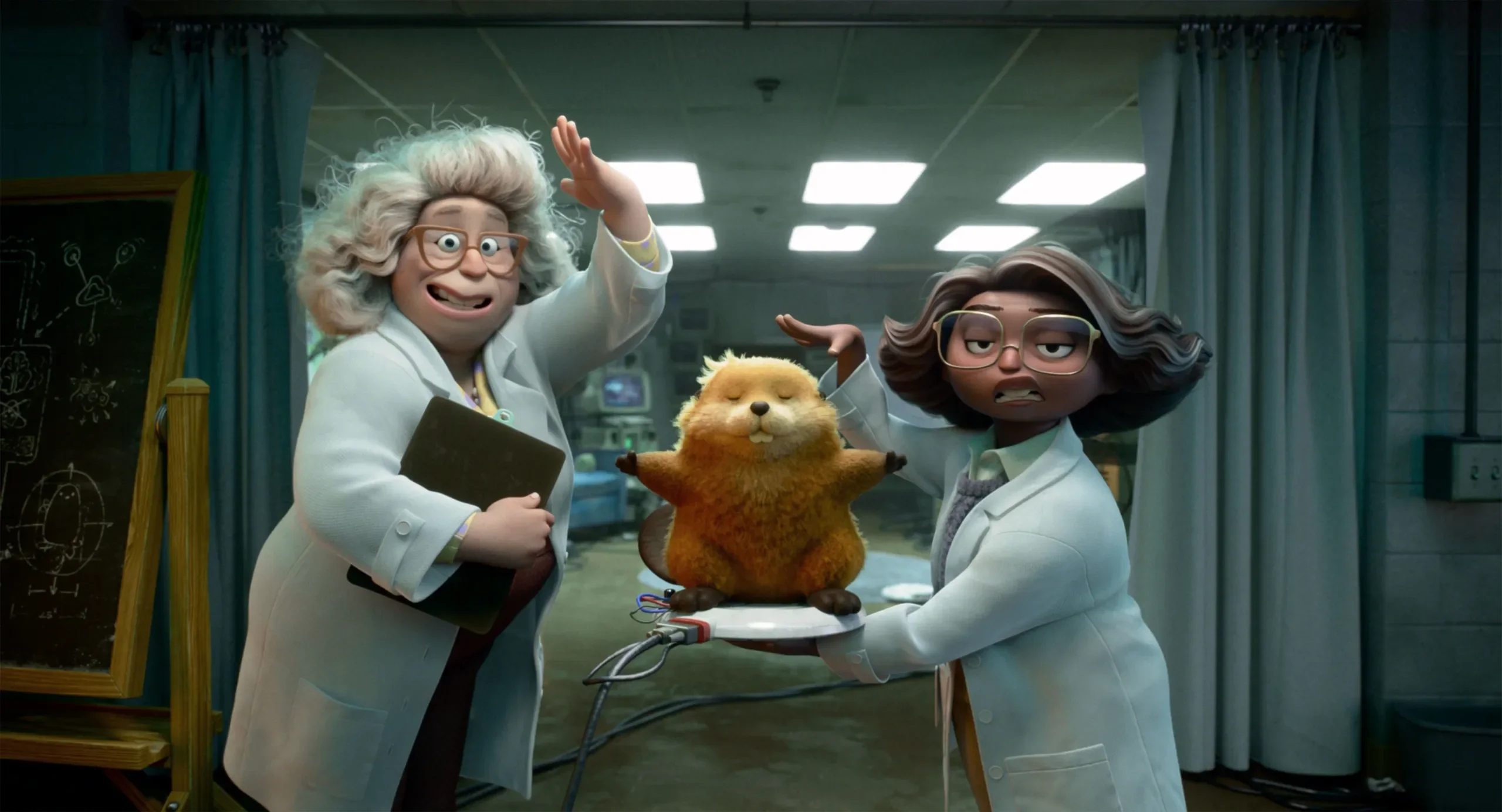
Mabel expects to help, and she is certain that stopping the road is the right thing to do. But she is impatient with anyone who does not immediately understand her urgency. Piper Curda makes that impatience funny without making Mabel sound like a grown-up calmly explaining a lesson. She can be excited one moment and furious the next. You can hear how quickly she decides she knows what needs to happen.
Mabel is easier to understand than she is to agree with. Her grandmother has died, and the woodland is connected to their time together. Losing it would mean losing a place where she still feels close to someone she misses. That gives her anger a personal reason. It also stops the road dispute from feeling like an environmental message with a character added to explain it.
The scenes with her grandmother help because they do not need an emergency to hold our attention. Spending quiet time outdoors matters to these two people. Later, when Mabel rushes into another decision, we remember what she is frightened of losing. The quieter scenes give us a reason to care about the woodland before the action starts. They are among the film’s most affecting moments, even though the noisy animal adventure gets more time.
Mabel’s temper can still become tiring. Wanting to protect a place does not make every interruption or rash decision entertaining. There are moments when we wanted her to stop arguing and hear the answer she was being given. The film knows that this is a problem with her behavior, but knowing a character is supposed to be difficult does not always make the repetition less frustrating.
Jon Hamm voices Mayor Jerry, the human official pushing the road project. His confident public manner gives Mabel someone obvious to oppose. The animals are more fun to spend time with than the people arguing over the road. The human conflict is easy to follow, but it is the stranger conversations beyond town that make Hoppers feel different. We were usually ready to return to George whenever the story moved away from him.
King George makes the animal community worth saving
George is the beaver king of the mammals, but he behaves more like an enthusiastic neighbor than a distant ruler. He wants the animals around the pond to get along. Mabel arrives ready for a fight, while he is ready to make another friend. Bobby Moynihan gives him such an open, cheerful voice that his welcome feels genuine even when his trust looks unwise.
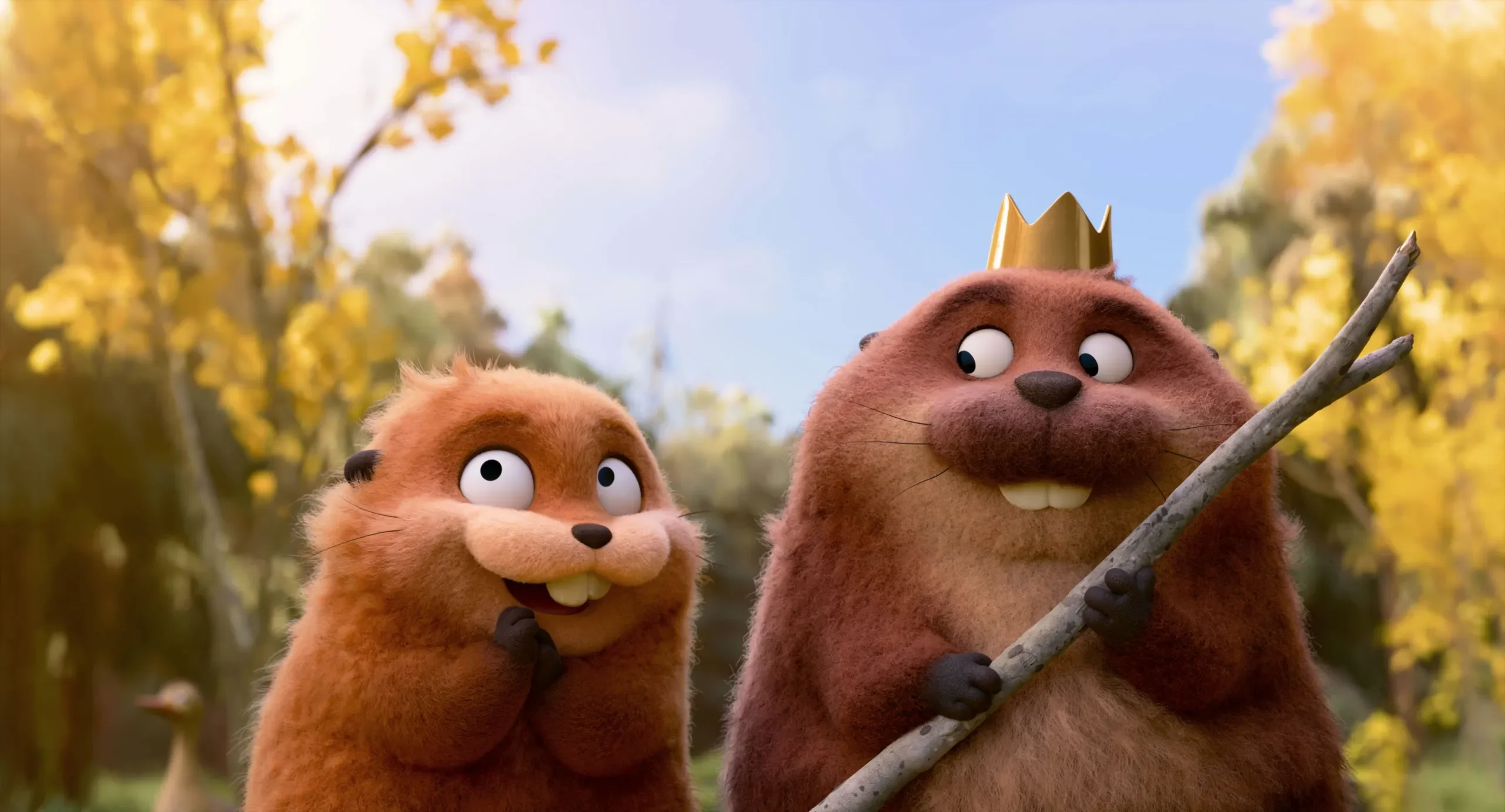
George is kind without being boring. His optimism creates problems of its own. Trusting everyone is not a complete answer to danger, just as Mabel’s anger is not a complete plan for stopping it. That gives their conversations some tension without requiring constant shouting. We can want Mabel to listen to him and still worry that he is being too generous with someone who might hurt him.
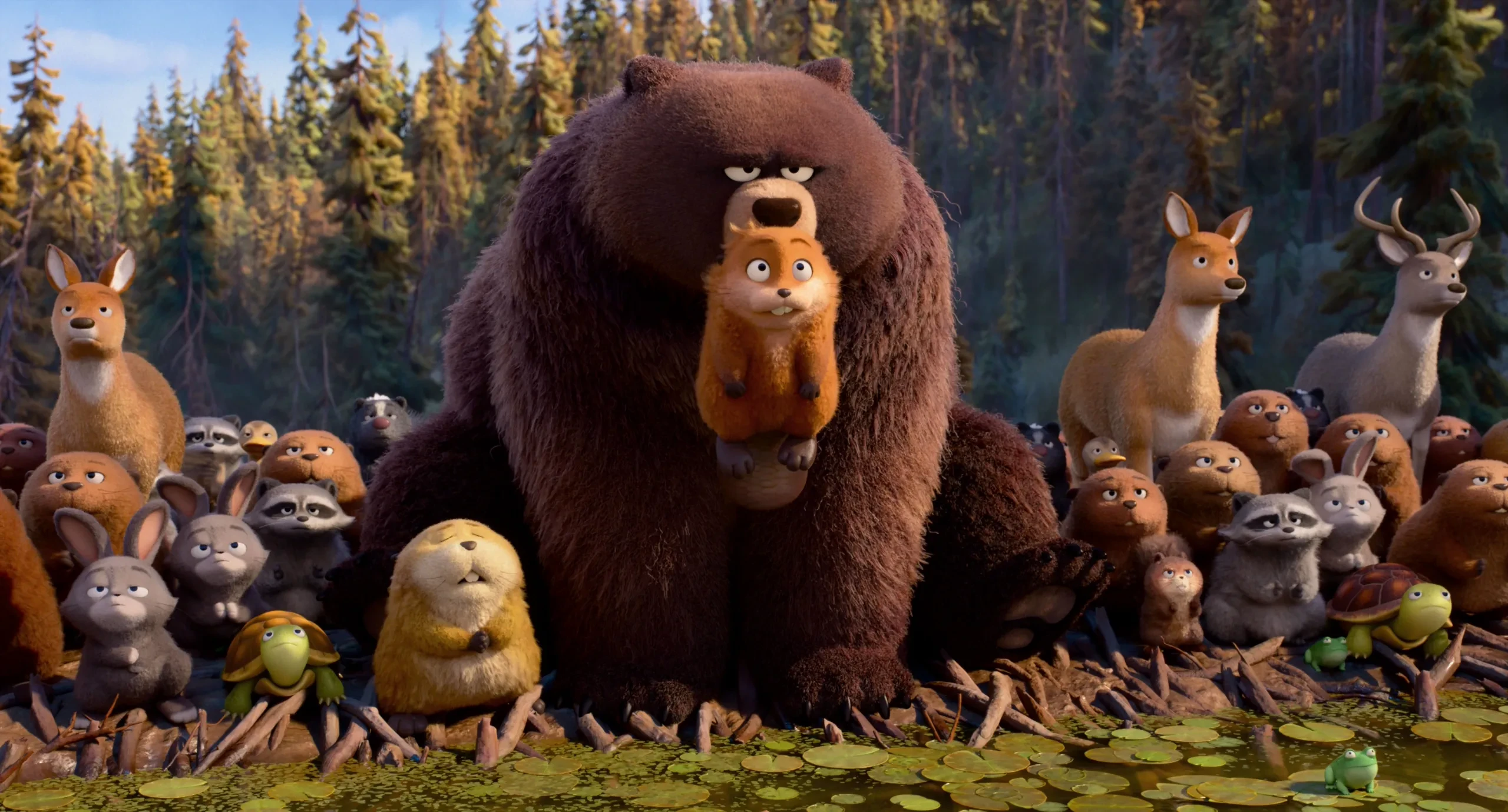
The pond is not a place where every animal has stopped eating other animals. Predators and prey still live beside one another. George has rules intended to keep that community working, including accepting parts of nature that upset Mabel. The film gets good jokes from Mabel discovering that animals do not share all her ideas about being nice. A bear can belong to the neighborhood and still be a hungry bear.
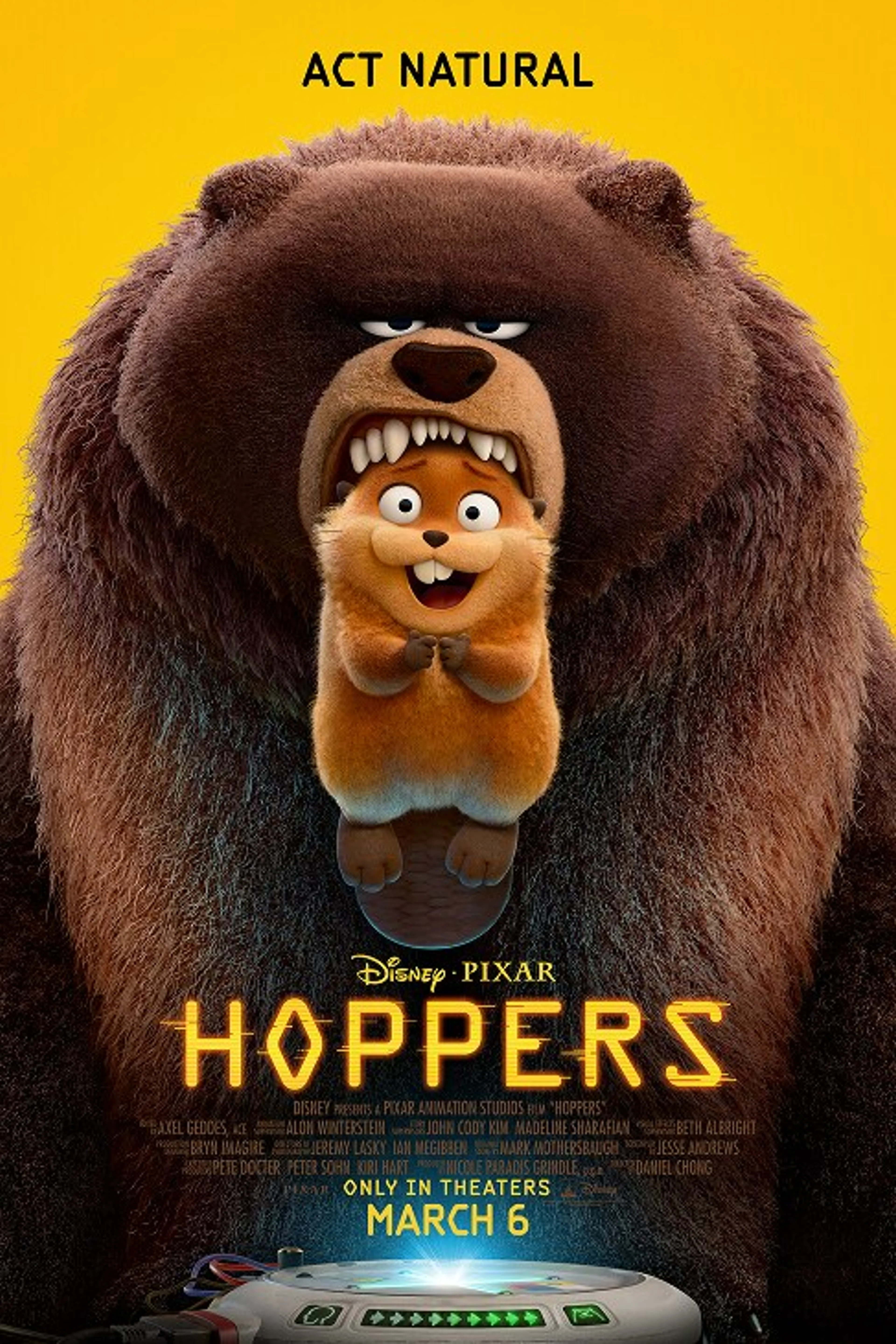
That is a much funnier approach than giving every creature the same friendly personality. Their different needs can make an ordinary introduction uncomfortable. Ellen Bear’s size alone changes how safe Mabel looks beside her. The contrast is easy to understand even before anyone explains it: the little orange beaver is close to a mouth large enough to hold her. The image at the top of this review captures that joke very well.
Hoppers film images and artwork
3 screenshotsThe animation helps us read those differences quickly. Mabel has a rounded body and large eyes that make surprise easy to spot. George’s small crown separates him from another beaver without making him look grand or intimidating. Ellen takes up far more space than either of them. The characters look different enough that a crowded scene does not become a row of interchangeable talking animals. Their shapes do useful comic work before the dialogue adds anything.
Not every joke is equally good. The phone-and-emoji humor is the sort of repeated silliness that will either get funnier for you or wear out its welcome. We preferred the awkwardness of Mabel trying to understand her new neighbors. Those jokes come directly from what she wants and what they consider normal. The more a gag can be detached from those characters, the less we miss it when the film moves on.
Other animal leaders eventually become involved, bringing their own interests to a problem Mabel hoped to solve more directly. Their meetings broaden the conflict, but the larger cast also takes time away from the pair we most enjoy. Mabel and George remain more interesting than the increasingly complicated fight around them. The supporting animals offer funny reactions and unusual personalities. Few are given the same room to become people we care about.
The action gets busy, and some of it may scare younger children
Hoppers does not stay a gentle story about making friends in the woods. The danger grows, with chases and frightening uses of the robot technology. There is a playful freedom to how strange it becomes. But the film also starts moving through problems faster than it can give each one much weight. By the final stretch, we wanted fewer new emergencies and more time for Mabel to respond to what had already happened.
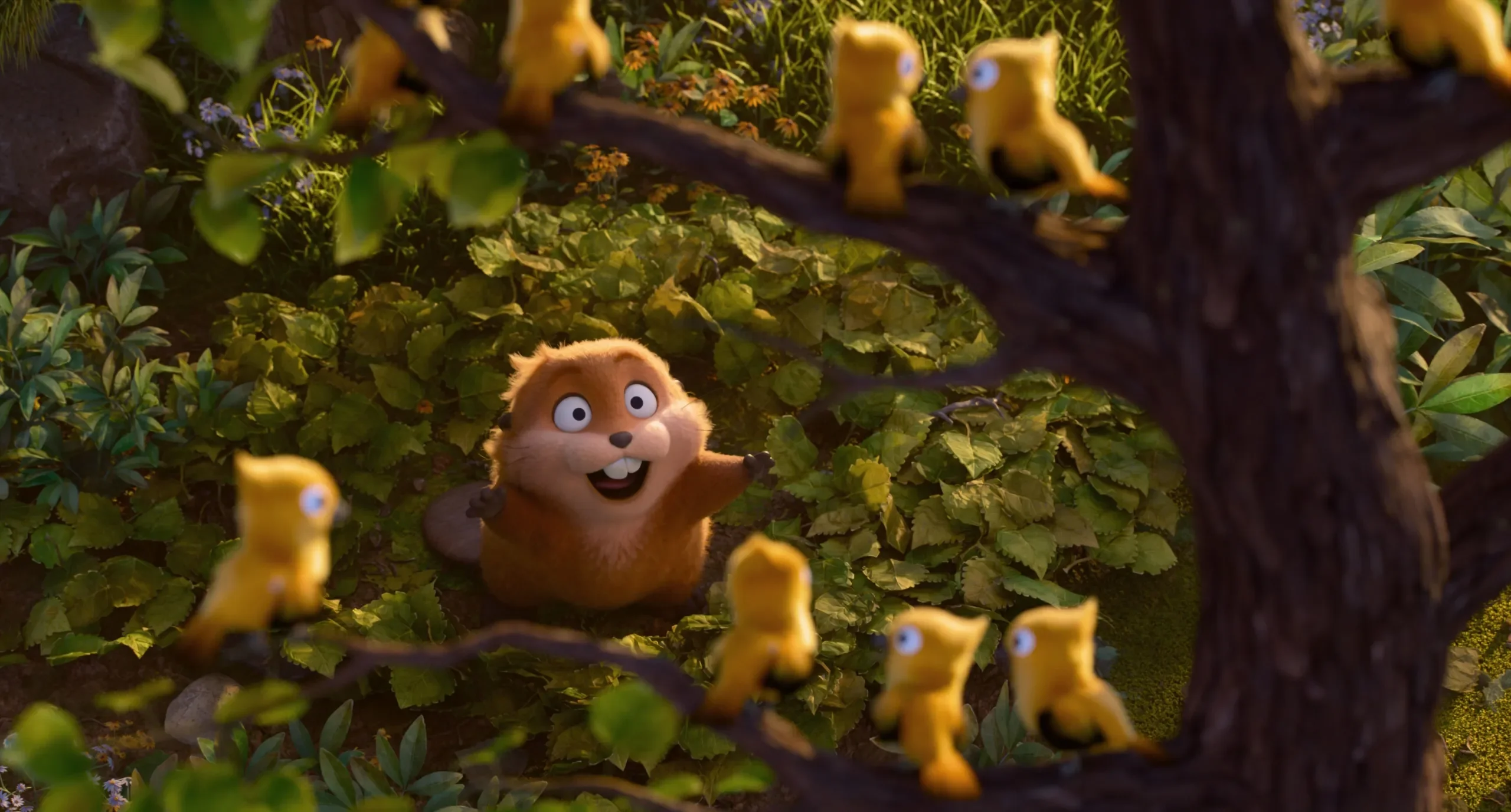
The bigger action scenes are less satisfying than the smaller disagreements by the pond. We know why Mabel wants to save the woodland and why George wants to trust others. Those are enough to make their choices matter. Adding more threats does not always make us care more. Sometimes it simply postpones the conversation we wanted the characters to have, then leaves less time for it afterward.
The ending also has more to settle than the opening suggests. A personal attachment to a woodland has become a conflict involving many animals and people. The film is better at setting up those competing needs than at giving every one of them a satisfying answer. We will not explain how it resolves the danger. The limitation is the speed: some difficult feelings and disagreements get less attention than the action used to bring them together.
Do not mistake the soft-looking animals for a promise that every scene is gentle. There are jokes about animals eating one another, along with peril and scary robot imagery. Children who are comfortable with adventurous family movies may enjoy the surprises. Those who are easily upset by characters being threatened could find parts of it too much. The PG rating is worth taking seriously rather than treating the Pixar name as an age recommendation by itself.
For older children and adults who like odd animal comedy, there is plenty to enjoy. The environmental story is simple to understand without being the only reason to watch. Mabel has to learn something about the creatures she wants to protect, and George has to be more than a pleasant guide for her. Their differences give the film humor and feeling that remain memorable after the busiest scenes have passed.
Hoppers runs about an hour and 45 minutes and is available on Disney+ in the United States; availability can differ by country. Pixel Twelve score: 7.8/10 — Good. We recommend it for Mabel and George’s friendship, the animal comedy and the quiet moments connected to her grandmother. The repeated jokes and crowded final stretch keep it below our strongest family-film recommendations. It is still an easy choice for a night when you want something funny, strange and a little more intense than its cute beaver suggests.
Loading results