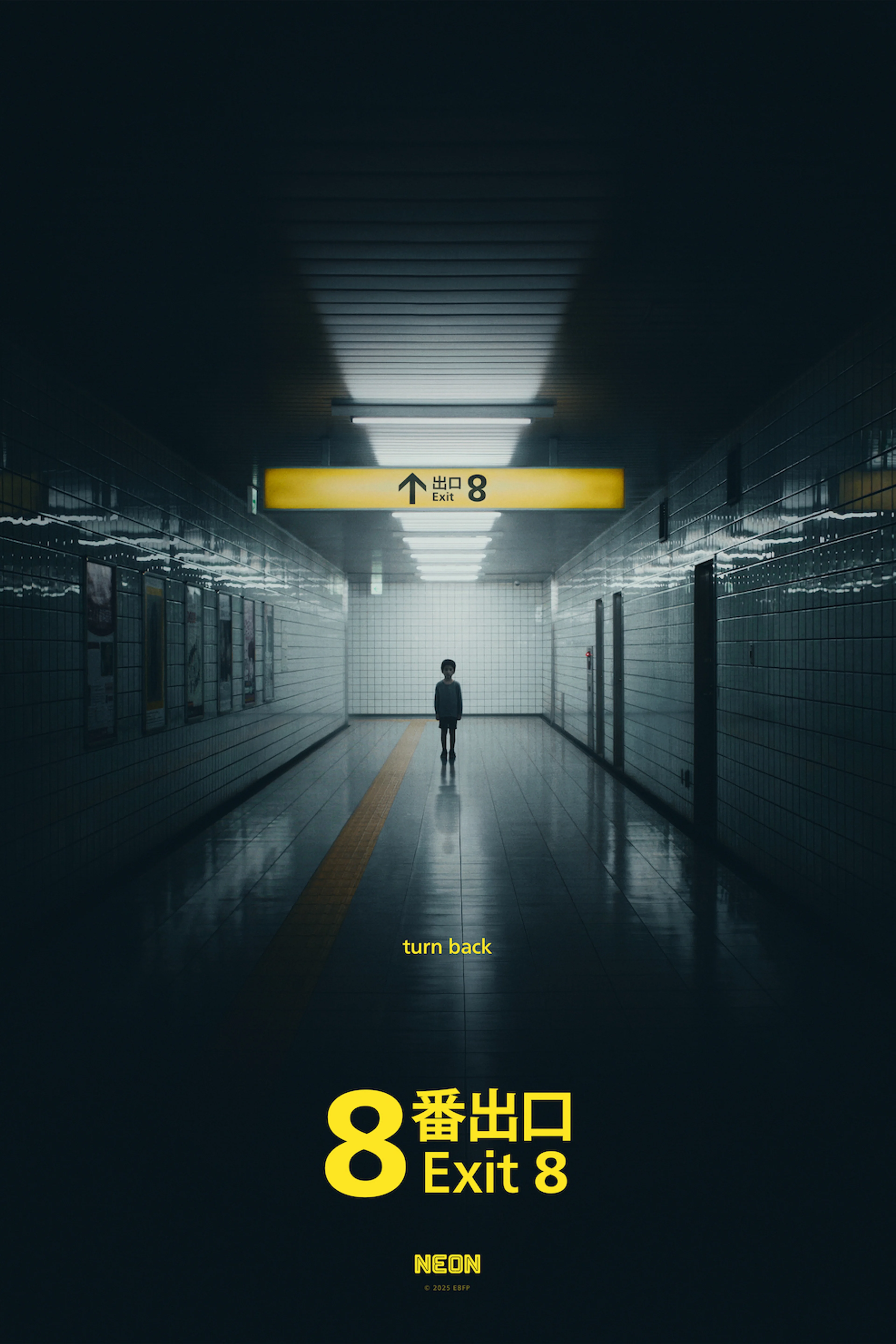
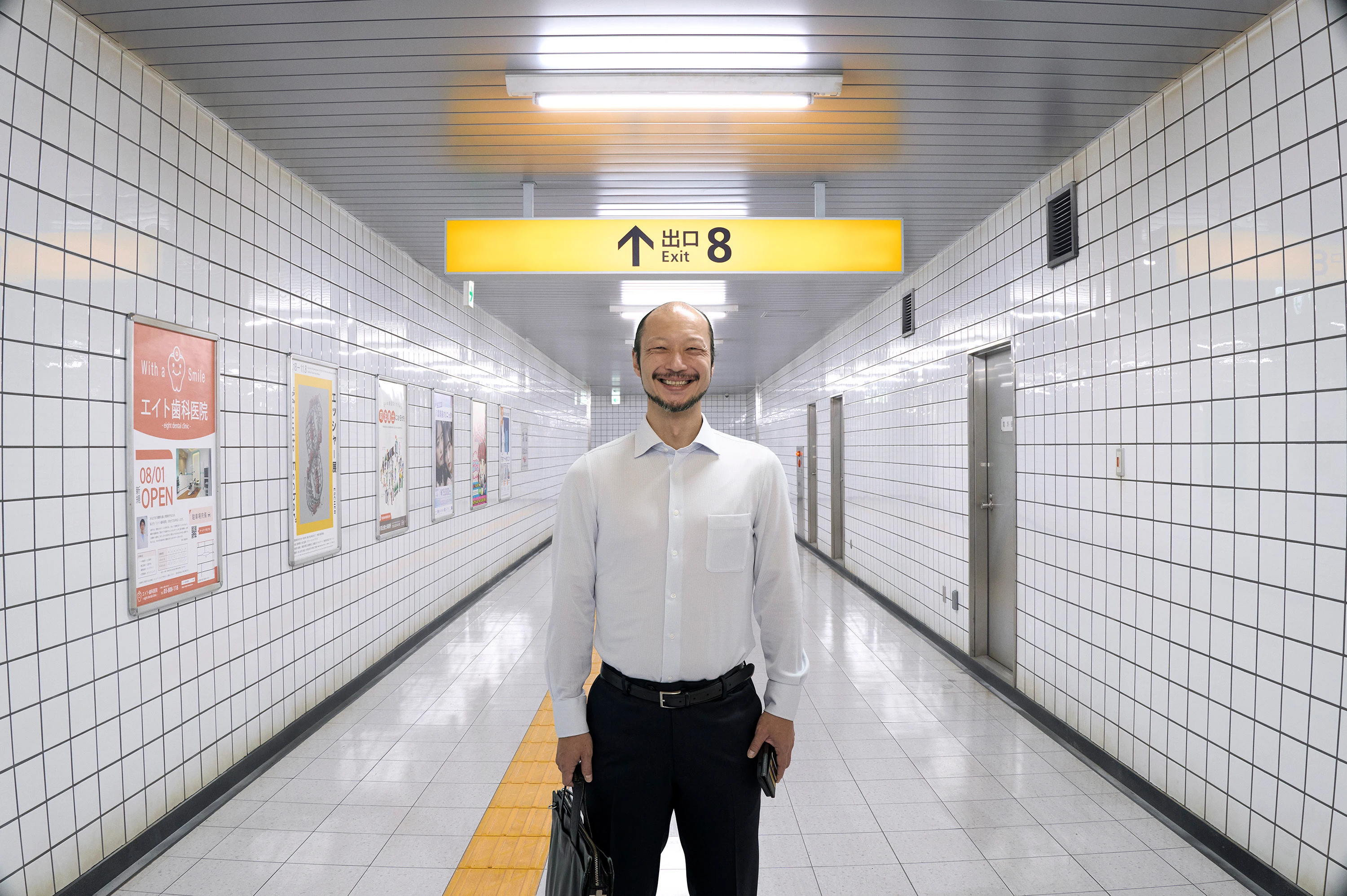
A commuter walks through a subway passage, turns a corner and finds himself back in the same place. There are white tiles, posters and a yellow exit sign. Another man walks past him. He tries again, but the passage still will not let him leave. Exit 8 makes an ordinary trip out of a station feel frightening before it needs anything especially strange to happen.
Directed by Genki Kawamura, this Japanese horror film follows an unnamed traveler played by Kazunari Ninomiya. It adapts Kotake Create’s game about escaping a repeating underground corridor. You do not need to have played the game to understand the film. The rules are explained on the wall, and the camera gives us time to inspect the place alongside its increasingly worried main character.
The small changes are often scarier than the obvious threats. Once we know what the corridor normally looks like, an object in the wrong place is enough to make another walk uncomfortable. That is the film at its best. At 95 minutes, though, it sometimes makes us wait for a character to notice something we spotted much earlier. This review discusses the opening and basic setup without revealing the ending.
First, learn what the corridor is supposed to look like
The traveler has to reach Exit 8, but walking forward is not automatically the right choice. He must check the passage for anything that has changed. If something is different, he should turn around. If everything looks normal, he should keep going. A mistake sends his progress back to zero. Getting out depends on paying attention, not on finding the fastest route. That is why the film spends so much time showing us the same walls.
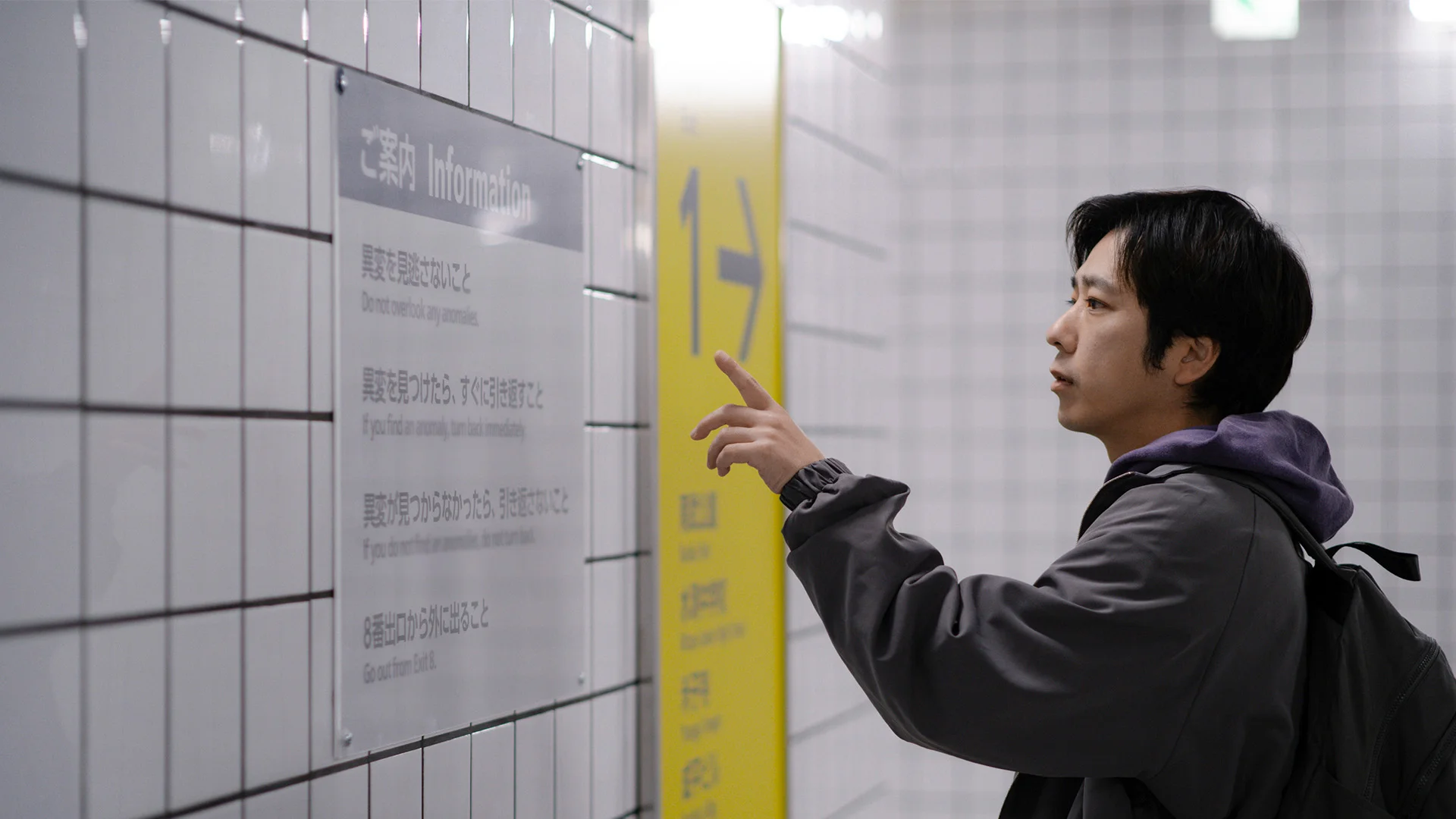
The instructions call an unusual change an “anomaly.” It is a formal word for a simple problem: something here is not as it should be. Posters, doors and lights all deserve a second look. The man repeatedly walking through the passage becomes another thing to watch. Before long, we are checking the background instead of only following Ninomiya’s face. The film gives us a job even though we cannot control what he does.
The wide views of the passage make looking around part of the fun. The camera does not always hurry to identify the important detail. We can scan the frame and wonder whether we have missed something. A close-up that immediately announced every change would make this much less interesting. Here, the space around the actor matters because the wrong detail might be anywhere within it.
This also makes the first few ordinary walks useful. We need to remember the normal corridor before we can recognize a different one. That preparation is not especially exciting on its own, but it gives the later changes something to work against. A familiar setting can become unsettling without the film suddenly replacing it with an entirely different location. The trouble starts when another slow inspection teaches us nothing new.
A game lets you make a decision as soon as you have noticed the problem. A film makes you wait for the character. Exit 8 is most frustrating when we understand the danger before the traveler does. Watching him hesitate can make us want to warn him. Watching the hesitation continue for too long simply makes us want the next scene to start. The film moves between those two reactions more often than it should.
The resets have a similar problem. At first, losing progress makes an error feel serious. He has done all that walking and still has to start again. After several attempts, another return to the beginning is less surprising. The rules remain easy to follow, but understanding why he must repeat a task does not make every repetition worth watching. A shorter version could have kept more of the tension.
Exit 8 film images
3 screenshotsThe passing stranger is hard to stop watching
Yamato Kochi plays the man who repeatedly approaches from the other direction. His white shirt and routine walk make him easy to recognize. In a normal station, a stranger passing by would barely matter. Here, the traveler has been told to notice differences, so another appearance becomes a reason to study the man’s face and movements. Kochi makes a familiar person feel increasingly difficult to trust.
The film gets a lot from that uncertainty. Is there actually something wrong, or are we suspicious because we have been staring at him for so long? Kochi does not need a complicated introduction to hold our attention. We know where we expect to see him and how we expect him to behave. That expectation is enough to make the next encounter uncomfortable, especially when the traveler seems unsure what to do.
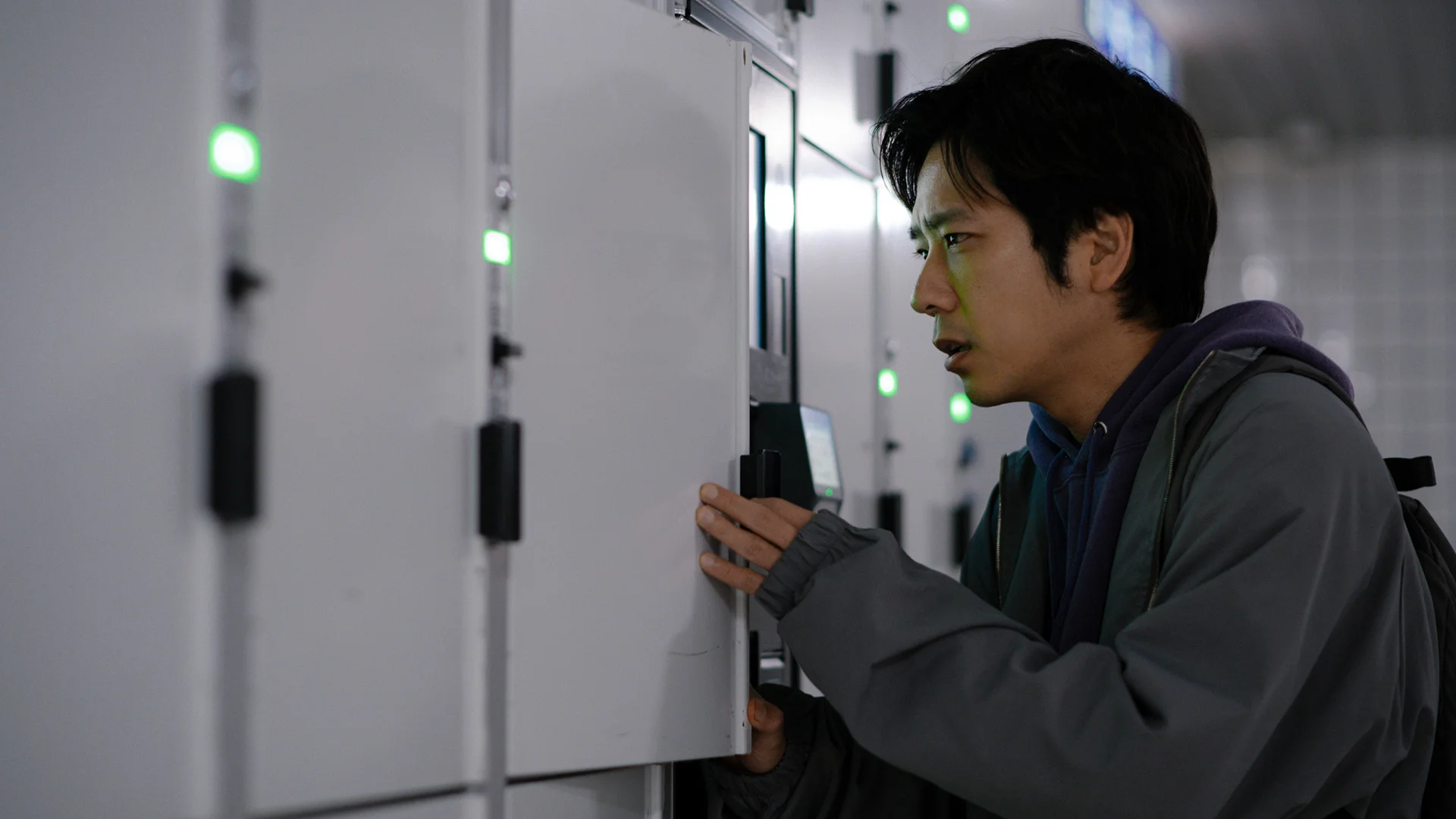
Ninomiya gives us a different kind of unease. His traveler is confused and frightened rather than confidently solving each new problem. We can understand why he would want to check an instruction twice or look behind him again. His fear is believable, even when his slow reactions become annoying. That distinction matters. The performance works better than some of the decisions the story requires him to make.
The traveler also has asthma. Breathlessness makes a confined passage a particularly unpleasant place for him to be trapped. It is a concrete physical problem rather than just another worried expression. Still, using his difficulty breathing to interrupt another attempt can feel too convenient. We do not need him to become an action hero, but we wanted more variety in the obstacles that delay him.
The plain surroundings help more than elaborate horror decoration would. These are tiled walls and station fixtures, not a ruined house that already looks dangerous. Bright lighting does not make the traveler safe. It lets him see enough to know that he should be able to understand this place. The gap between that ordinary appearance and his inability to leave is disturbing without much explanation.
Sound also gives the repeated walks some variety. Footsteps and the noise of the station make us aware of movement outside the part of the corridor we are watching. The music can make a return trip feel more urgent, but the film does not need to be loud all the time. We preferred the moments that left us listening and looking to those that worked harder to announce a scare.
Not every viewer will enjoy that pace. This is a film about watching for changes, not a nonstop chase. There are more direct threats, but much of the experience involves waiting for an ordinary detail to become wrong. If that sounds appealing, the corridor gives you plenty to examine. If repeated walks already sound tedious, the stronger performances are unlikely to remove that problem for you.
The people he ignores matter more than another puzzle
Before he gets trapped, the traveler is on a train where a man shouts at a mother whose baby is crying. He does not intervene. A phone call then brings a personal problem: his former girlfriend is pregnant, and he is unsure about becoming a father. The opening shows someone avoiding difficult situations before the corridor forces him to make decisions. That gives his behavior a reason beyond needing a frightened person for the horror scenes.
Later, a boy played by Naru Asanuma changes what it means to find a way out. The traveler is no longer simply considering his own next move. Another person may need his help. We will not explain how their encounter develops, because that is better discovered in the film. What matters is that helping someone and spotting a changed object are different kinds of responsibility.

The boy gives the film something to care about beyond reaching the next exit. A perfect sequence of correct turns would be a clear goal, but it would not necessarily make an interesting ending to a feature film. Adding another person makes the traveler’s choices more personal. Asanuma is effective without needing to explain everything he feels, and his presence gives Ninomiya more to respond to than another wall or sign.
The film is less effective when it explains these ideas too directly. We have already seen the traveler look away from someone in trouble. We also know why the question of fatherhood worries him. Some of the later explanation repeats what the opening has already shown us. The emotional story would be easier to believe if it trusted those actions more and spent less time making sure we understood their meaning.
There is also a limitation in how the women around him are used. The mother on the train and his former girlfriend help establish the choices he avoids, but we learn much less about their own lives. Their situations matter mainly because of what they reveal about him. That keeps the story focused, yet it also makes its discussion of parenthood feel narrower than the subject deserves.
Even with those problems, the attempt to give the traveler a life outside the corridor is worthwhile. Without it, the film would mostly be a succession of inspections and wrong turns. We wanted the human story to be handled with less explanation, not removed altogether. The best moments make his reluctance to act understandable while still allowing us to be frustrated with him.
Exit 8 is in Japanese and runs about 95 minutes. In the United States, it is available through AMC+, with digital rental options also listed by distributor NEON. Availability differs by country. It is rated PG-13 for terror and bloody images. The simple rules do not make this a gentle puzzle movie for children. People who dislike confined spaces may find the setting uncomfortable even between the more obvious scares.
Pixel Twelve score: 7.5/10 — Good. Exit 8 is worth watching for its careful use of the corridor, Kochi’s unsettling presence and the way it encourages us to inspect the picture. The repeated attempts and overexplained personal story keep it from being a stronger recommendation. Choose it if you enjoy patient horror that asks you to look closely. You do not need any knowledge of the game, but you do need some tolerance for watching a frightened man take longer than you to notice a problem.
Loading results