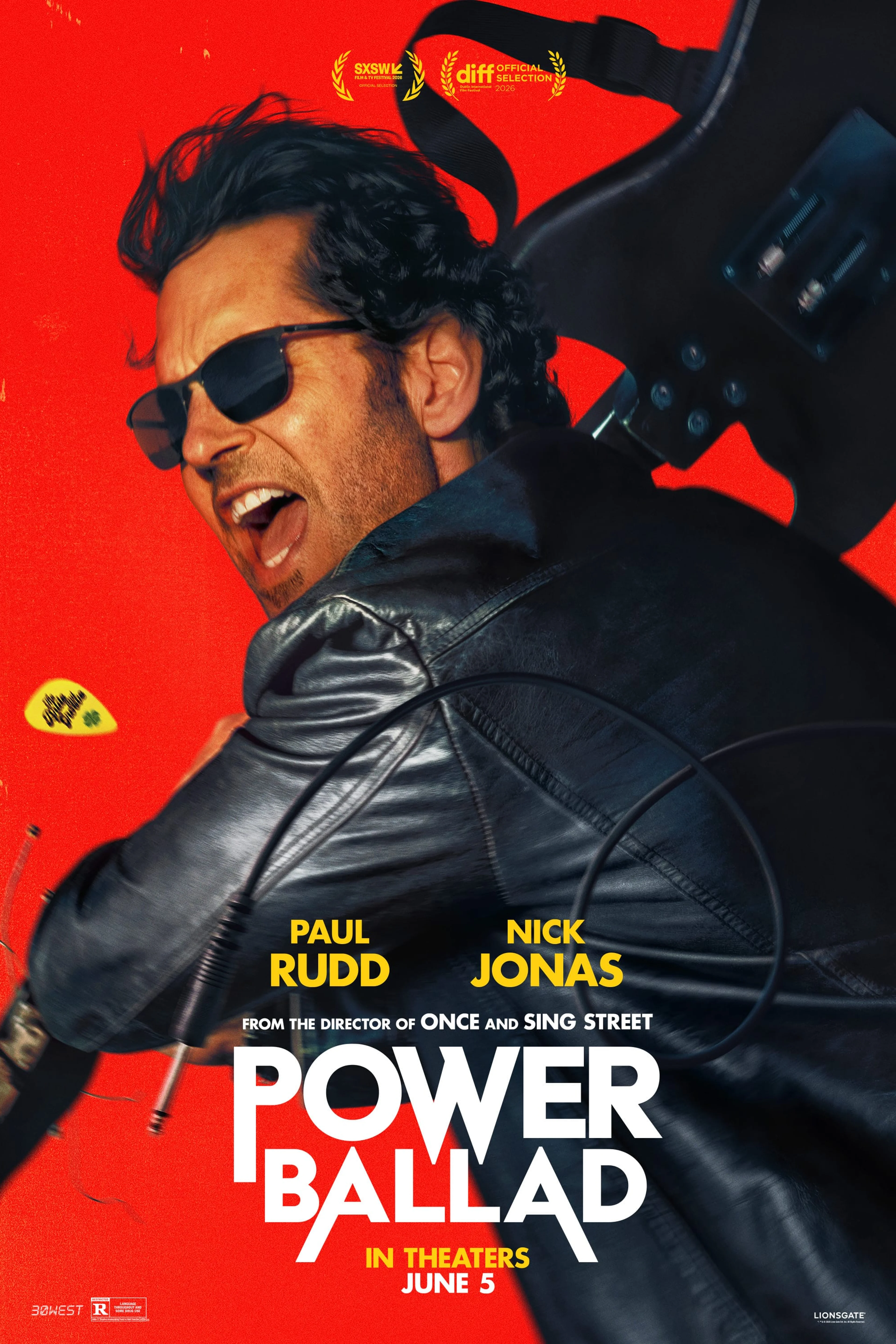
Rick Power sings songs that wedding guests already know. That is his job, and he is good at it. The problem is that he still wants people to hear something he wrote himself. When he tries an original song, the difference between the crowd he imagines and the guests in front of him is painfully funny. They have come to celebrate a wedding, not discover his next record.
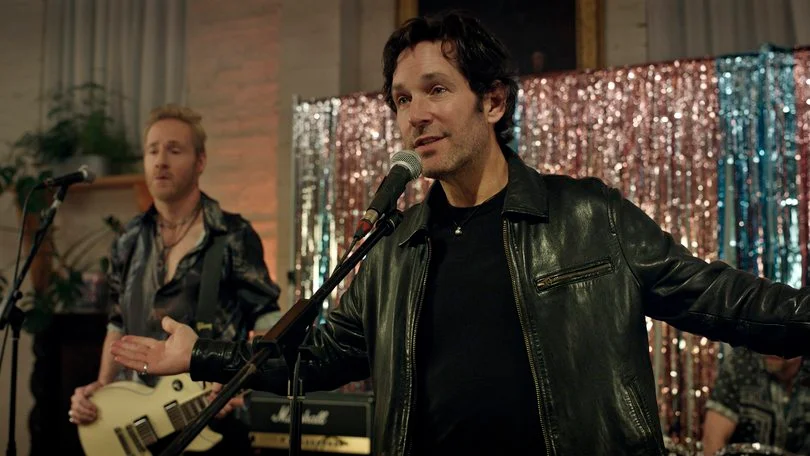
Paul Rudd plays Rick as a man who can entertain a room while privately wondering why his career never went further. He lives in Dublin with his wife Rachel and their teenage daughter Aja. He has a family and steady work, but neither has stopped him wanting to become a famous musician. Rudd makes Rick’s disappointment easy to understand without pretending his life is a failure. That is the most appealing part of Power Ballad.
Nick Jonas plays Danny Wilson, a former boy-band singer trying to succeed on his own. After meeting Rick at a wedding, Danny spends an evening sharing music with him. Months later, a song Rick showed him becomes a hit under Danny’s name. John Carney’s film follows the argument that results. The two leads are fun to watch together, but the film becomes less interesting when their disagreement keeps them apart. This review covers the setup without revealing how the dispute ends.
One evening gives both musicians something they need
Danny has the kind of career Rick wanted, but he is not entirely happy either. Being recognised does not tell him what kind of music he should make next. Rick, meanwhile, has ideas without an audience. Their meeting works because each has something the other wants. For a while, neither needs to be the famous singer or the disappointed one. They can simply enjoy playing together.
Danny joins the wedding performance for Stevie Wonder’s “I Wish.” It gives the film a lively introduction to their partnership before the quieter conversations begin. Jonas looks comfortable performing in front of people, which matters more here than making Danny seem mysterious. You believe that Danny knows how to keep an audience interested. Rudd brings a different pleasure: Rick is delighted to be sharing the stage with someone who has the career he always wanted.
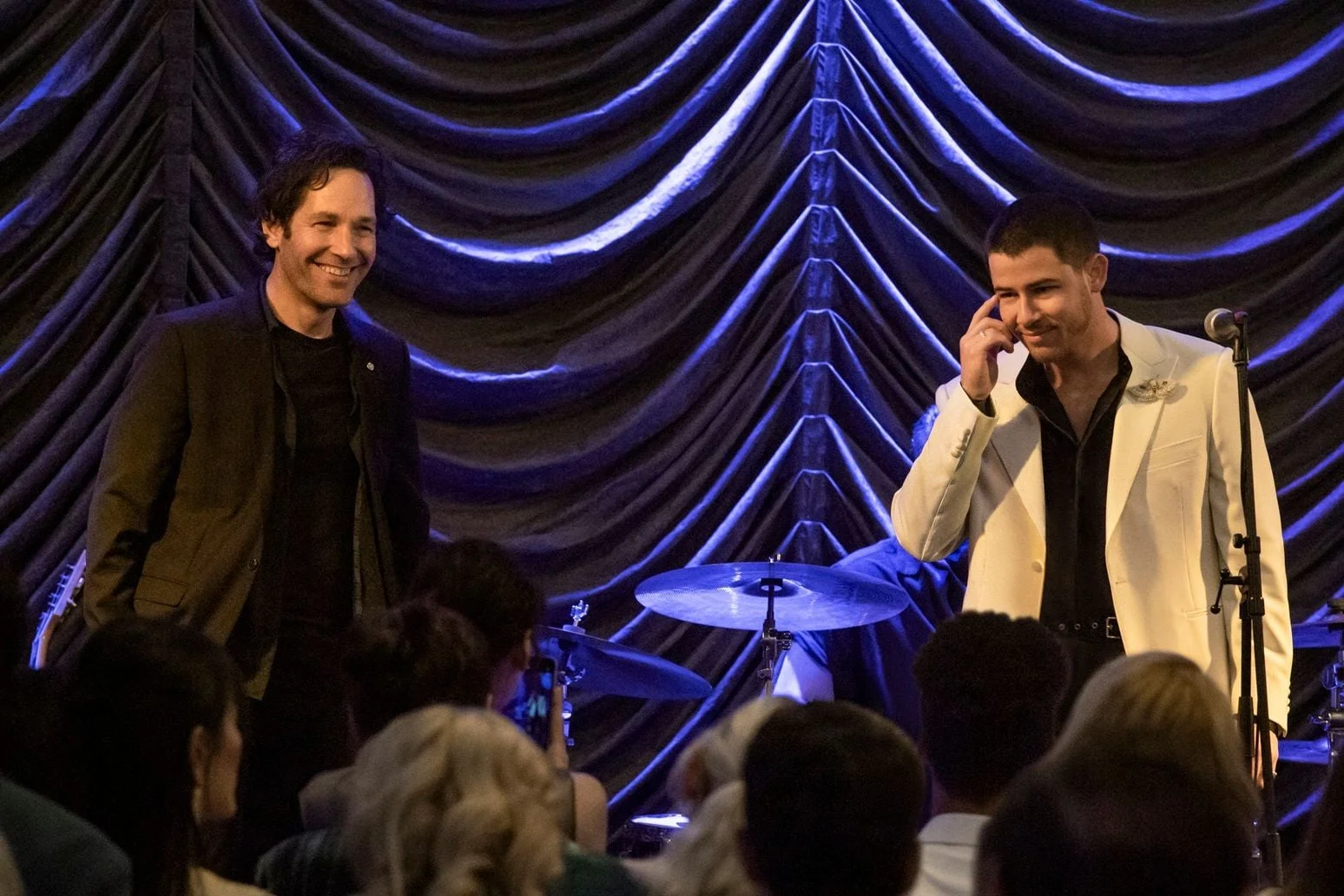
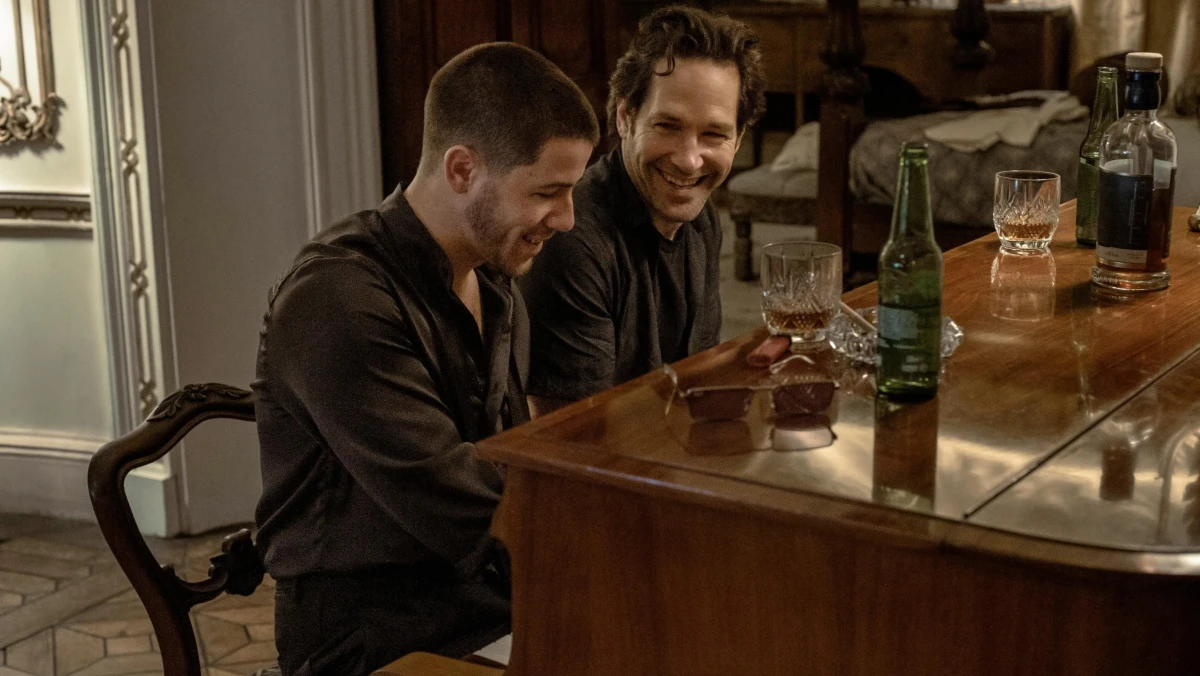
Later, the pair play and talk over drinks. The music gives them something to do while they get to know each other. They listen, offer ideas and try things out. Those exchanges make their friendship more believable than a long conversation explaining how much they have in common would have done. The early music scenes let us understand why Rick trusts Danny. Without that connection, the later argument would be a much simpler story about a stranger taking a song.
The unfinished song is called “How to Write a Song (Without You).” Rick has important parts of it, but Danny helps turn it into something that can be released. That distinction matters. A songwriting credit is the public acknowledgment that someone helped write a song. Rick wants his name attached to work he recognises as his own. He is not claiming that he sang Danny’s recording or that Danny contributed nothing.
The film is more interesting because Danny contributes something real. He is not just a celebrity who secretly presses play on somebody else’s finished recording. Rick deserves recognition, and Danny’s contribution does not erase that. At the same time, seeing what Danny adds makes it possible to understand how each man values his own part more highly. You can follow this disagreement without knowing anything about the music business.
The song itself is pleasant and believable as a polished pop release. Its biggest strength is how its meaning changes for Rick. Hearing an idea during a friendly evening is different from hearing a famous singer perform it for an audience that does not know you exist. The situation gives the song more emotional importance than the tune achieves on its own. It does not have to become your favourite song for the argument to make sense, but the film sometimes treats it as more remarkable than it sounds.
Paul Rudd makes Rick’s anger worth following
Rick hears Danny’s recording while he is out shopping. An ordinary public place becomes the setting for a very private shock: other people can hear an enjoyable song while he hears evidence that his work has succeeded without him. Rudd is good at letting the happiness of recognition turn into hurt. The success Rick hoped for has happened, but it has not happened to him.
From there, Rick tries to make Danny acknowledge what happened. Calls do not produce the response he wants, and finding proof of the original work is not straightforward. The film does not need a courtroom to explain why this is upsetting. Rick knows what he contributed, but knowing it and making other people listen are different problems. His frustration is understandable even when his response starts making life harder for the people around him.
Rudd’s familiar friendliness helps the performance. Rick is not unpleasant from the moment we meet him. He is someone who can make people laugh and do his job well. As he becomes more consumed by the dispute, we notice the change. The actor also allows him to be embarrassing. Wanting fair treatment does not automatically make every decision Rick takes sensible or considerate.
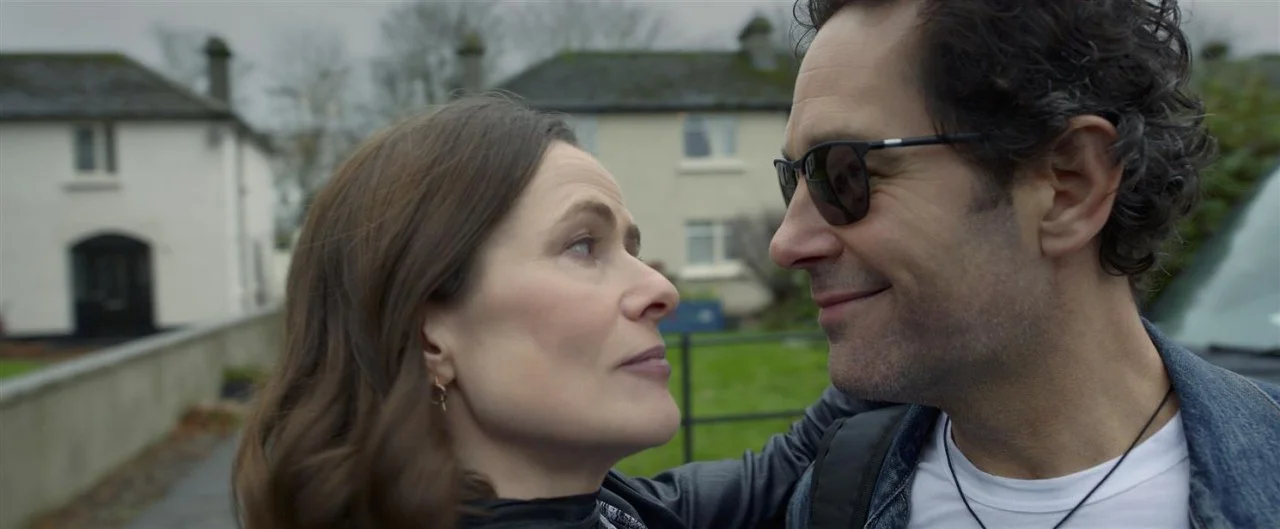
Rachel and Aja make that last point important. Rick’s wife and daughter have lives alongside his ambitions, and his resentment affects the time they spend with him. The family scenes stop the missing credit from feeling like Rick’s only problem. He wants to be seen as a successful musician, but he is already being seen by people whose opinions should matter. Rudd makes that tension more moving than a simple speech about appreciating what you have.
Still, the women deserve more room in the story. Marcella Plunkett gives Rachel a convincing presence, but much of her role involves reacting to Rick. Beth Fallon’s Aja helps us see him as a father rather than only a performer. We learn less about their wants than about how his disappointment changes their day. The film cares about Rick’s family without giving every family member an equally interesting part.
Danny’s girlfriend Marcia has a similar limitation. Havana Rose Liu makes her response to his music feel personal, which helps explain why he wants his work to matter. But the film does not spend enough time with her for that relationship to become as interesting as the one between the two musicians. Danny’s manager Mac, played by Jack Reynor, also has a fairly narrow job in the plot. These characters keep Danny’s career moving without telling us enough about the person behind it.
Jonas is strongest when Danny is making music or talking with Rick. His ease as a performer makes the career believable, and he can suggest discomfort without turning every exchange into a confession. The writing gives Danny less to work with once he is separated from Rick. We understand the pressure to keep a solo career going. We get less of the private thought that would make his decisions as involving as Rick’s.
The trip to Los Angeles is less convincing than the music
Rick travels to Los Angeles with his bandmate Sandy to confront Danny. Peter McDonald gives Sandy the familiarity of someone who has spent years beside Rick, not someone introduced only to explain the story. Their friendship makes the trip easier to enjoy. Having a companion also means Rick cannot spend every scene arguing with himself about what he should do next.
But the move changes the kind of comedy the film is making. In Dublin, Rick has to go to work and spend time with his family while wishing his career had gone differently. In Los Angeles, his attempts to reach Danny become more exaggerated. The later comedy is less believable than the ordinary frustrations that start the story. There are funny moments, but they make it harder to take Rick’s disappointment as seriously.
The separation also removes the film’s best pairing for too long. Rudd and Jonas make listening to each other interesting. Following attempts to arrange another encounter is not as rewarding as watching them actually share a scene. Once we understand that Rick wants an acknowledgment and Danny is avoiding the problem, another delay needs to tell us something new. Not every part of the middle does.
The singing has its own small problem. Some voices sound so polished that they do not always feel like somebody singing in that room at that moment. That makes sense for Danny’s released song. It is less helpful when we are supposed to be watching two people casually making music together. The musicians are fun to watch, but their voices sometimes sound more like a finished record than a casual performance.
More scenes from Power Ballad
3 screenshotsCarney wants us to like these people even when they make mistakes. That makes Power Ballad easy to enjoy, but it also means the film is too forgiving near the end. Without giving away the outcome, it explains why Rick is hurt better than it explains how everyone can get past what happened. The ending is pleasant, but the disagreement is settled too easily. Spending more time on what each person has done would have made it easier to believe.
At about 98 minutes, this is a compact music comedy rather than a detailed account of the recording industry. It is a good fit for viewers who like Rudd’s combination of friendliness and frustration, or who enjoy watching musicians develop a song together. Anyone looking for a hard examination of stolen work may find it too forgiving. The US release is rated R for language throughout and some drug use; simple storytelling does not make it a children’s film.
Pixel Twelve score: 7.2/10 — Good. Rudd gives Rick more than one reason to care about that missing credit, and Jonas is an appealing partner in the music scenes. The family relationships give the disappointment a cost beyond his career. The weaker Los Angeles section, limited supporting roles and overly easy resolution keep the film from being as good as its opening. Watch it for the two musicians getting to know each other, with the expectation that their first evening together is more satisfying than some of the argument that follows.
Loading results