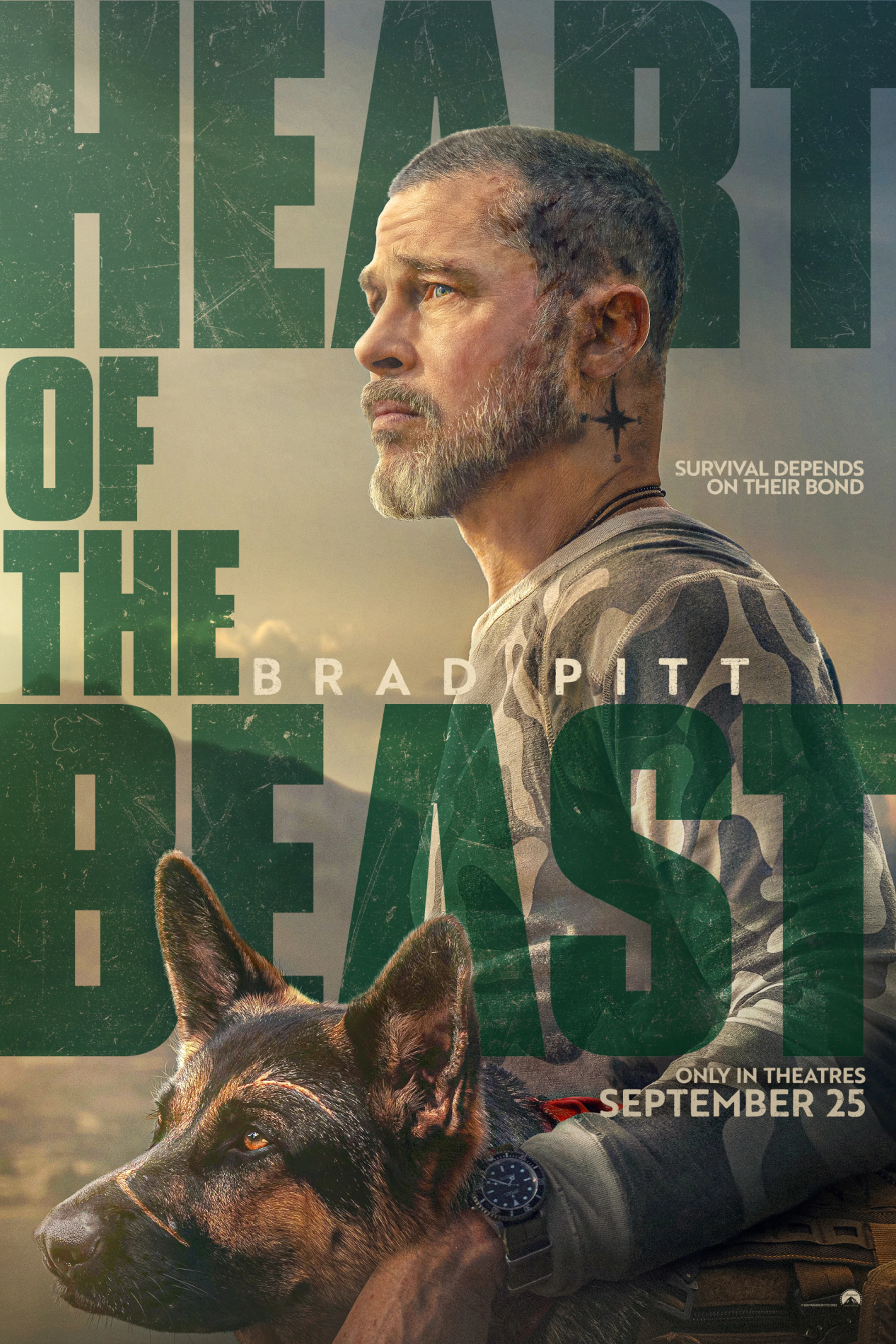
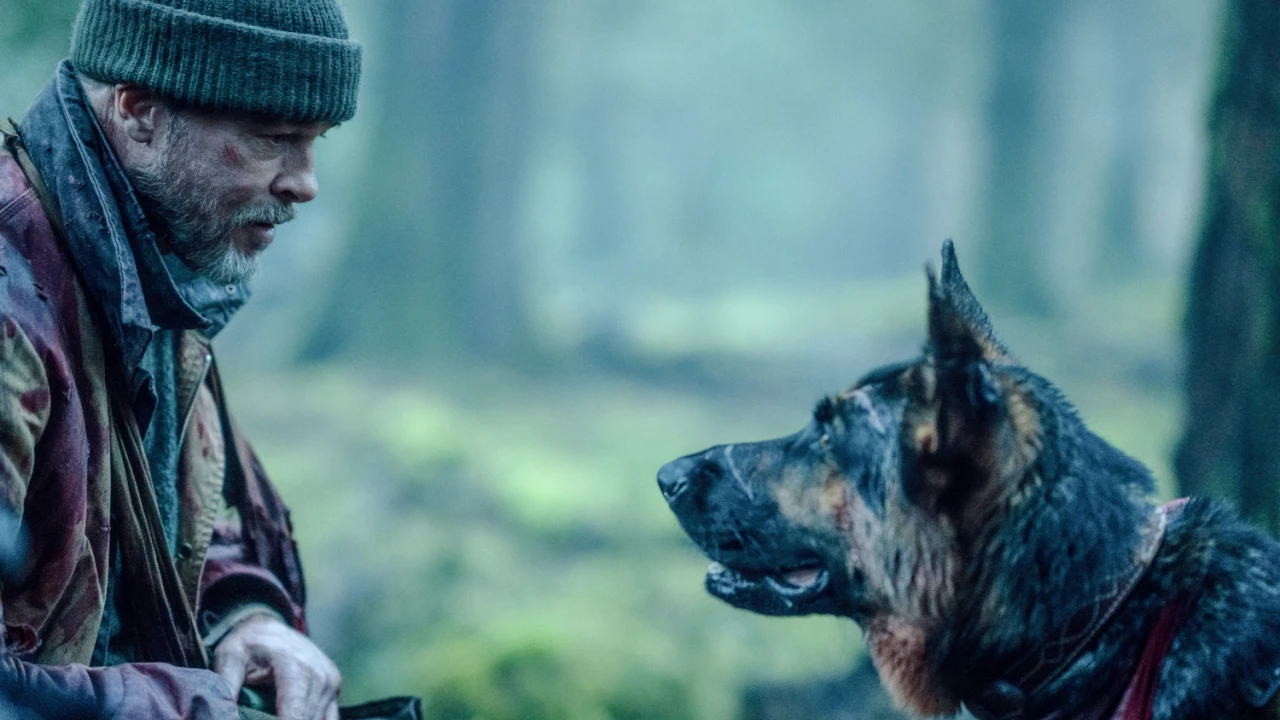
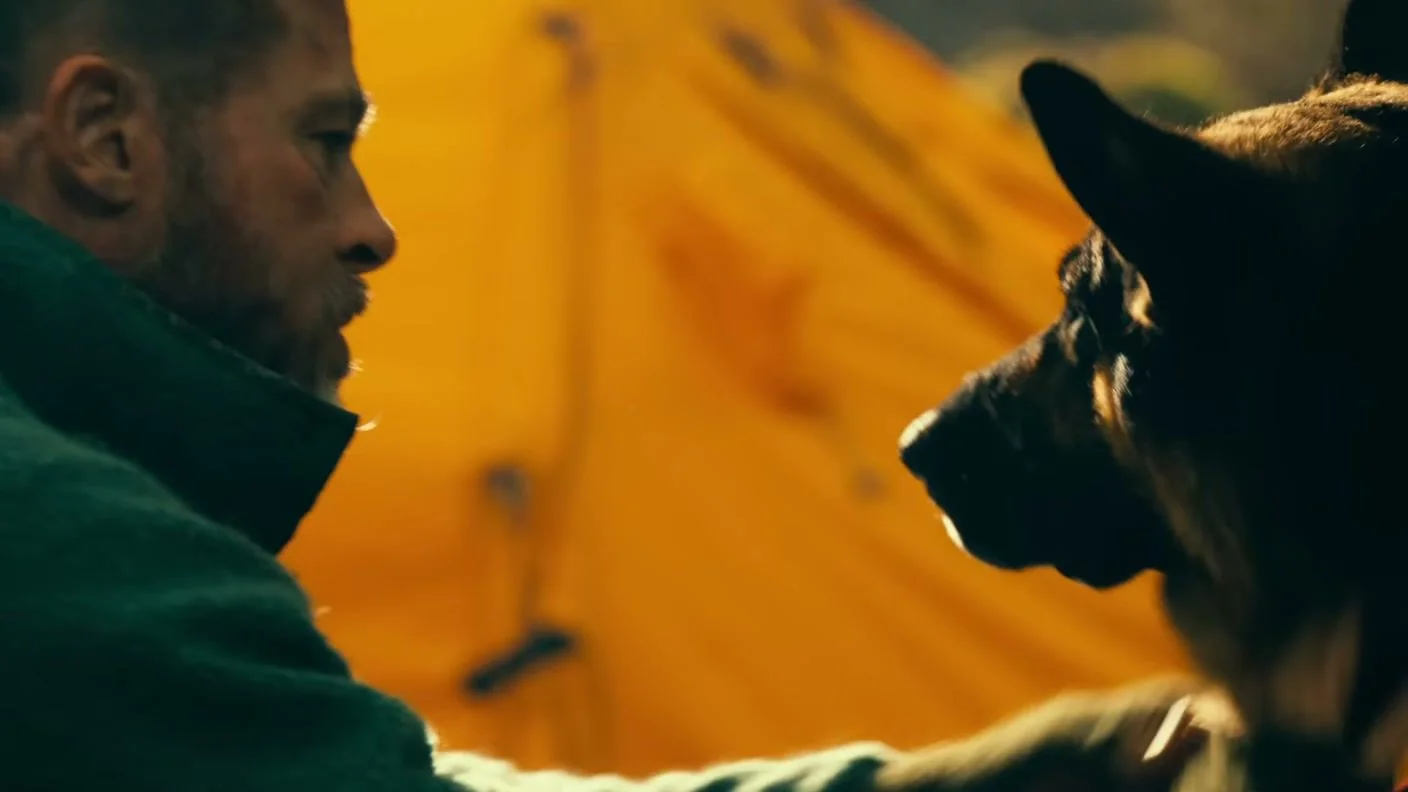
James Belmont takes his dog camping in a part of Alaska where there are few people to interrupt them. He has retired from the military, and Odin is a retired combat dog. They have spent years working together. Now a quiet trip by the lake gives them something much less demanding to do. For a little while, watching these two settle into camp is enough.
Then their plane crashes, leaving them far from help. Heart of the Beast follows James and Odin as they try to reach a road on foot. Brad Pitt plays James, and David Ayer directs this adventure about a man who has to keep going while also looking after his closest friend. You do not need to know anything about military dogs to understand why James refuses to leave Odin behind. The film gives their friendship time to develop before testing it.
That friendship is the reason to watch. The danger can be exciting too, although the film eventually asks us to believe James can survive too much. Pitt and Odin make a better pair than some of the action scenes deserve. We recommend it with that warning: this is an emotional dog movie with a rough survival story, not a realistic account of what an injured person could endure. This review does not reveal the ending.
Odin is a friend, not just someone James has to rescue
Odin has injuries from his military service, including a replacement front leg. James has his own difficulties after leaving the army. The film shows that their time together matters outside a dangerous mission. James can look after Odin, but he also needs the company. Their friendship goes both ways. That keeps the dog from becoming only another responsibility for the human hero.
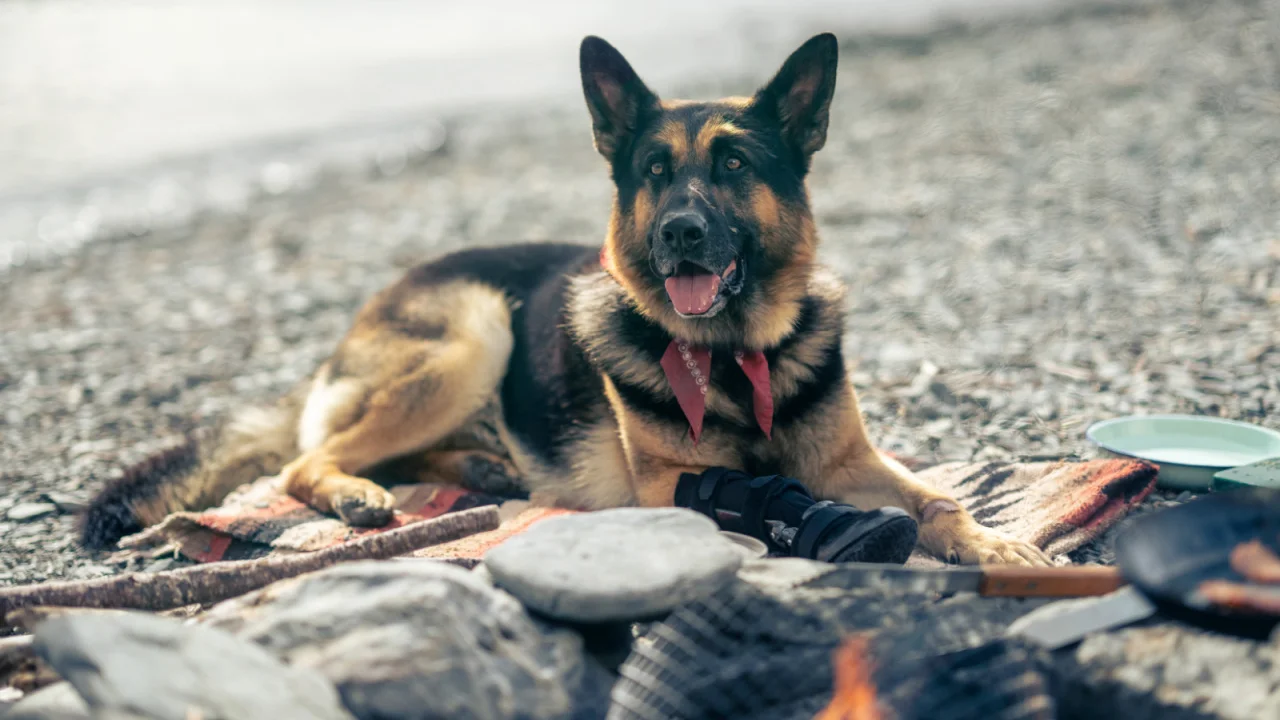
The camping scenes help establish that relationship. There is space for ordinary affection before the next emergency arrives. Odin does not have to perform an extraordinary rescue every time we see him. He can simply be near James. Those quieter moments make the later separation and danger worth worrying about. A film like this needs more than a cute animal to put at risk; it needs us to believe these particular companions want to stay together.
Pitt is good at showing affection without turning every exchange into a speech. He can be physically tough while still looking worried about the dog beside him. James is easier to care about when he is looking after Odin than when he is proving how much pain he can take. The performance gives the film a gentleness that its increasingly violent accidents sometimes interrupt.
Odin is played by several dogs, with Uber doing much of the work. The result feels like one recognizable companion rather than a series of animal tricks. The film cuts between James and Odin so that a look from one seems to answer the other. There is no talking-dog joke or human voice explaining the reaction. We understand the relationship through where they look and how they respond.
That approach is not perfect. A dog can sometimes look quite pleased to be there when the situation is supposed to be frightening. Odin is most believable in the quiet exchanges, where the film does not need him to look terrified on command. This is a small limitation rather than a reason the relationship fails. The affection is convincing enough to carry us through moments when the danger is less so.
J.K. Simmons appears as Watkins, another outdoorsman whom James meets. Their conversation gives Pitt someone other than Odin to respond to. It is a welcome change of pace, and it helps establish how isolated James is. But the film offers relatively little about his life beyond military service and his dog. We can understand his immediate purpose without feeling that we know much about the person he might be in an ordinary setting.
A long walk becomes a series of increasingly unlikely accidents
After the crash, James and Odin need to cover 58 miles to reach a road. That distance gives the adventure a simple goal. They cannot just wait comfortably at camp, and the route is not a marked path through a park. Water and rough ground can block the way. The film makes reaching help feel like a difficult physical task, not just a point on a map.
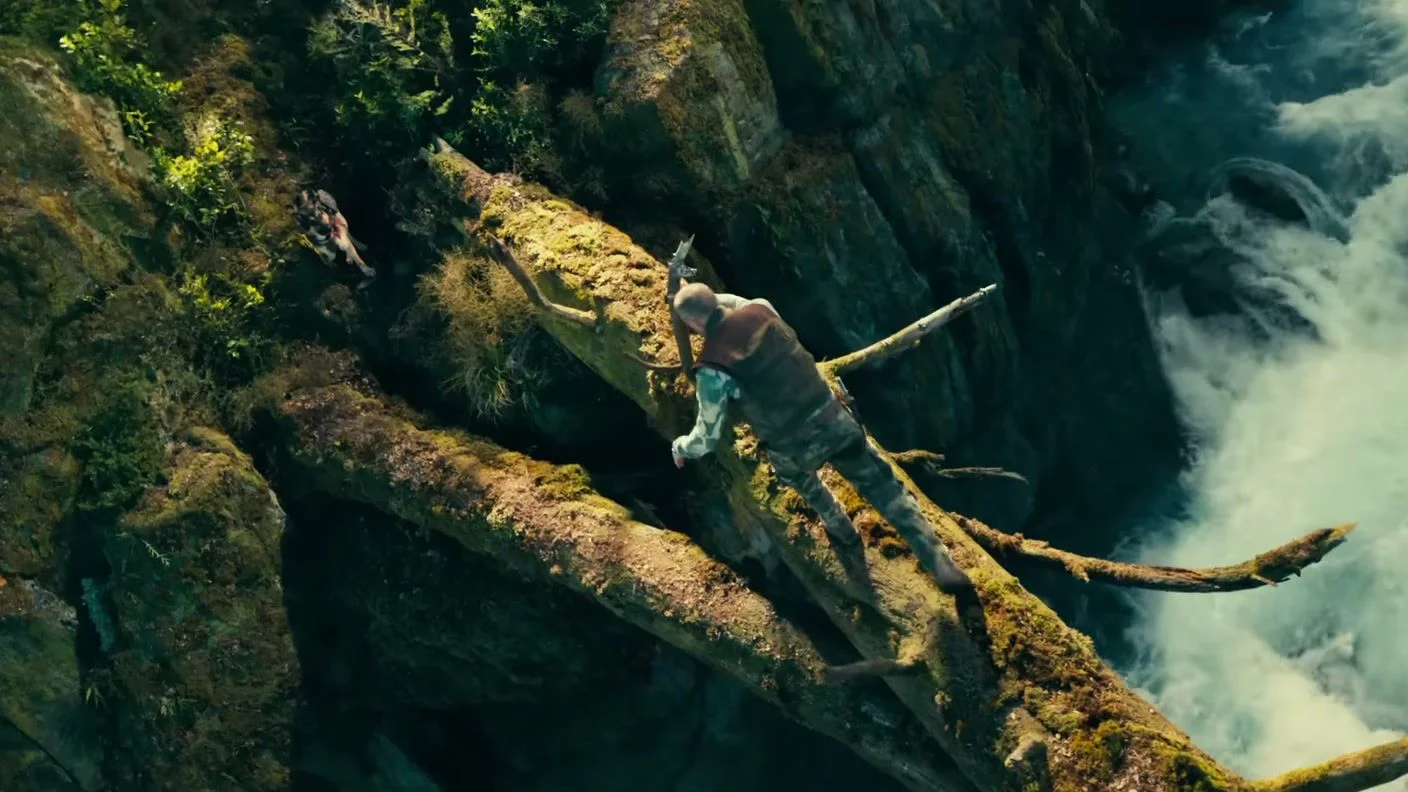
The fallen-tree crossing is a good example. James has to balance above fast water while keeping track of Odin. You can understand the risk as soon as you see the drop. There is no need for a long explanation of outdoor skills. The height and the narrow surface do the work. This kind of scene makes the journey tense because the immediate problem is easy to follow.
The wider views have a different effect. James and Odin look small against the valley and mountains, and the distance between them and other people becomes apparent. The scenery makes the lack of help believable. A beautiful view is not reassuring when someone is injured and has to cross it. The film uses both the attraction of the landscape and the difficulty of moving through it.
Heart of the Beast film images
3 screenshotsThere is also a convincing sense of effort in the way James looks as the trip gets harder. The worn clothes and physical strain suit a man who cannot stop somewhere warm and start again tomorrow. Pitt does not look as though he has arrived for a pleasant walk between action scenes. That consistency helps the smaller stretches of the journey hold our attention, even when little is being said.
The problem is how often the screenplay adds another severe setback. James is already dealing with a serious health emergency when the adventure begins. The later injuries make his ability to continue harder to accept. More injuries do not automatically make the film more tense. After a point, the question changes from how he will manage the next stretch to how his body is still allowing him to move at all.
That is a frustrating choice because the basic situation is demanding enough. An injured man and his dog are far from help. Each difficult crossing could matter without another extreme accident. The repetition makes some of the middle feel predictable: the pair make progress, another danger appears, and the walk becomes harder again. Individual scenes can still work, but the overall journey would benefit from more variety.
The encounters with wild animals are less effective than the difficult terrain. Computer-generated wolves and a bear do not always look as though they belong beside Pitt and the real dog. The digital animals make the danger harder to believe. We do not need real animals put at risk for a movie. We do need the finished images to fit together well enough that we stop thinking about how the scene was assembled.
The film does not need so many reminders of their past
Heart of the Beast returns to James and Odin’s military experience through short scenes from the past. These explain why the two are so close and why peaceful surroundings do not immediately make them feel safe. The idea belongs in the story. But once that connection is established, the repeated returns to combat add less than the film seems to expect.
The scenes from the past explain their history without giving James much more personality. There is a difference between learning that someone has suffered and getting to know them. The film is better at the first. More time with James outside combat could have helped, especially after the brief change of pace provided by Watkins. We wanted more of that person, not another reminder that he has survived terrible things.
The emotional scenes have a similar problem when they become too insistent. James’s concern is already understandable from his actions. He keeps caring for Odin while struggling himself. The film does not always trust that to be enough, and its stronger attempts to make us sad can feel less natural than a quiet exchange between the two. We will leave the details of the final stretch for viewers to discover.
Still, a familiar story is not automatically a bad one. Heart of the Beast gives dog lovers a relationship they can believe in, and the outdoor adventure provides several tense scenes. It works better as a story about companionship than as a test of believable survival. If that sounds like a fair trade, its simpler pleasures may be enough. If repeated accidents and obvious visual effects usually frustrate you, they will probably do so here too.
The US theatrical release is September 25, and the running time is 101 minutes. The PG-13 rating includes violence and bloody injury images. This is not a gentle family outing just because a dog is one of the stars. Expect distressing situations involving both James and Odin. The film can be moving, but its appeal depends partly on being willing to watch these companions have a very difficult time.
Pixel Twelve score: 7/10 — Good. Pitt’s affection for Odin and the difficult outdoor journey make Heart of the Beast worth watching. We place more weight on that relationship than on the lack of surprises. The repeated injuries, weak digital animals and limited picture of James beyond his military past keep the score from going higher. Watch for the two companions, with some patience for the increasingly unlikely things they have to survive.
Loading results