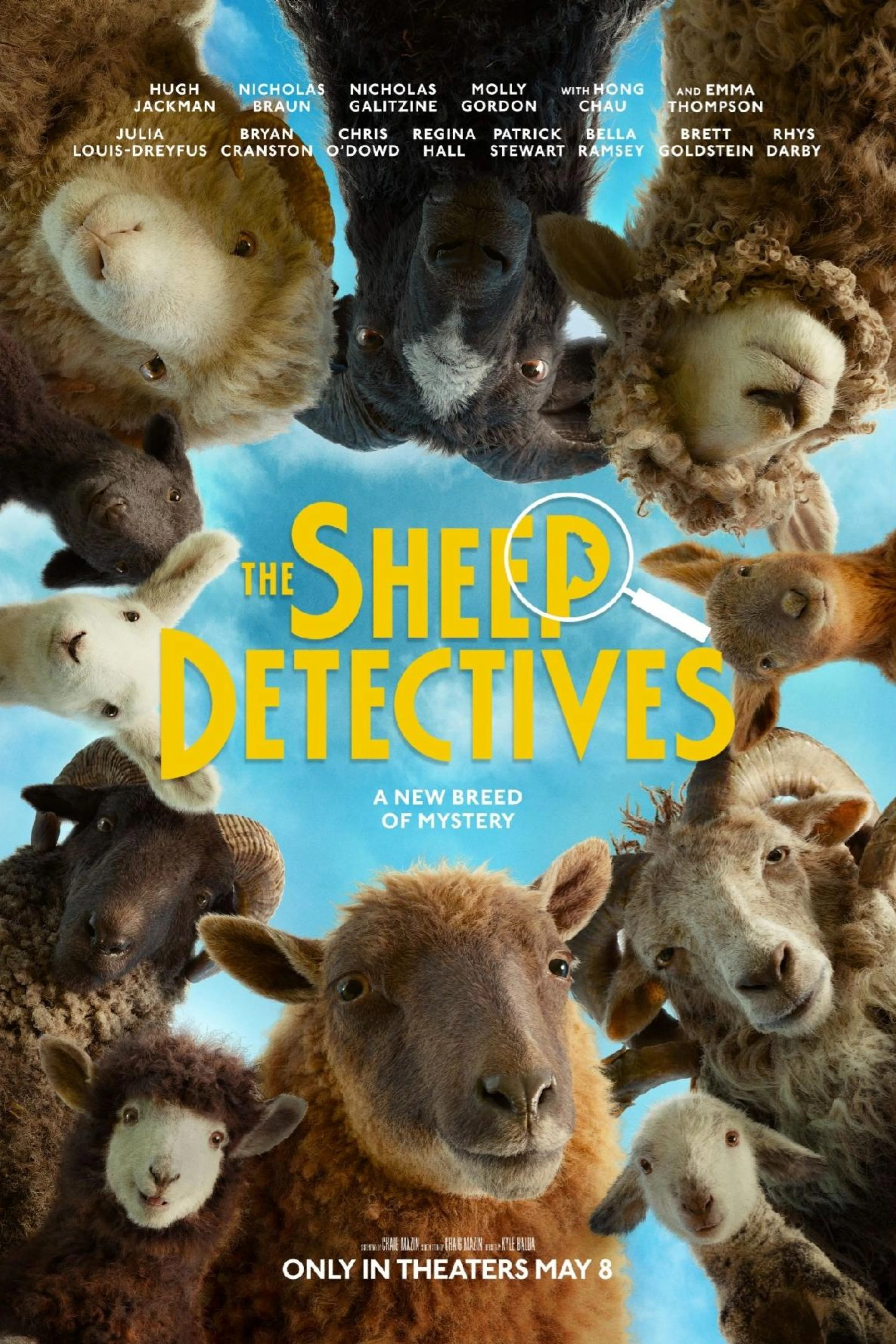
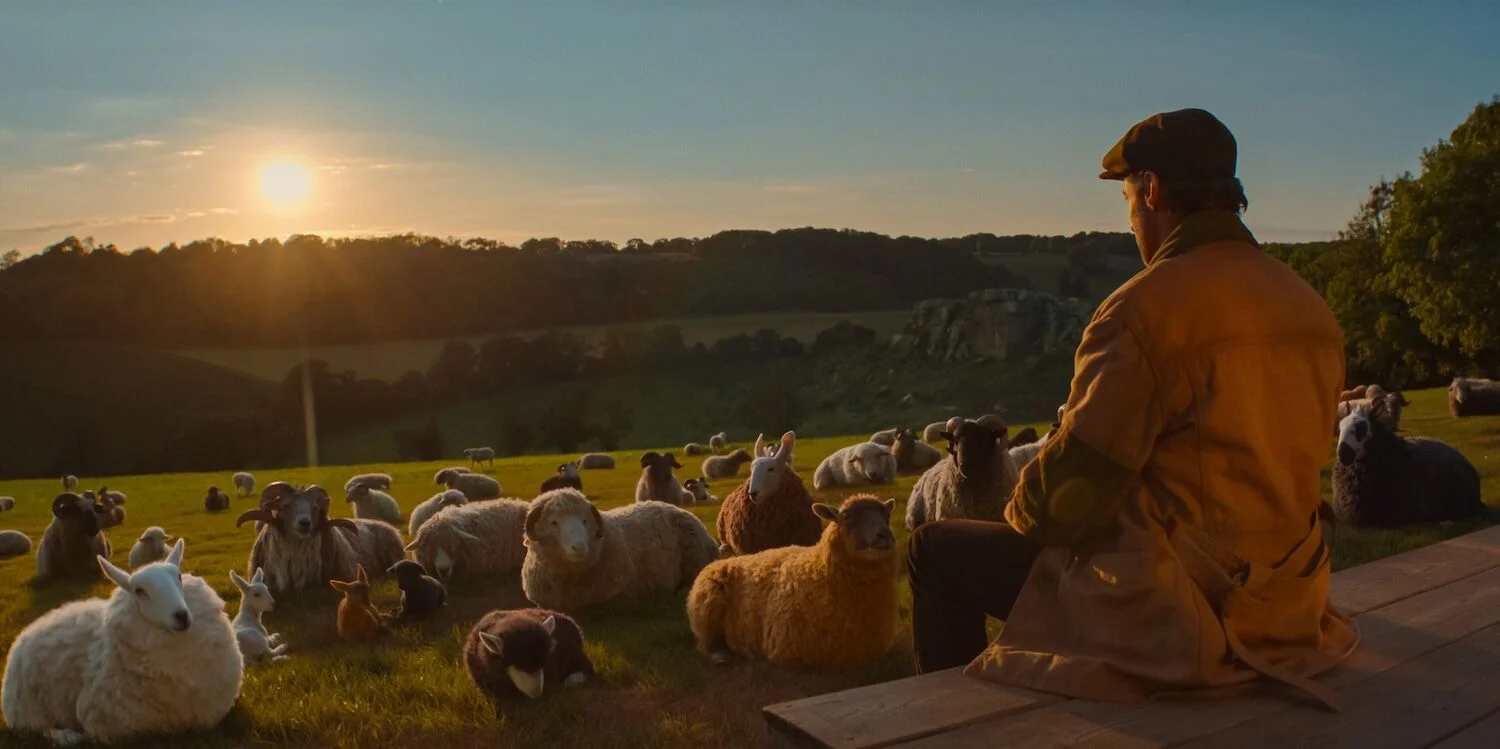
George reads murder mysteries aloud to his sheep at night. He does not know they understand every word, argue about the suspects and try to work out the answer before he finishes. Then George dies, and the flock decides to investigate. That is the starting point of The Sheep Detectives: animals who know the rules of detective stories trying to understand people they have barely met.
The sheep are funny because being good at a guessing game does not prepare them for the human world. They can follow a story, but they cannot walk into a police station and explain what they know. People hear bleating, not the conversations we hear. Even getting somebody to look in the right place becomes a problem. The best jokes come from that gap between what the sheep intend and what a person sees.
Kyle Balda directs, with a screenplay by Craig Mazin based on Leonie Swann’s novel Three Bags Full. You do not need to have read it. Hugh Jackman plays George, while Julia Louis-Dreyfus and Bryan Cranston voice two of the sheep leading the investigation. This is a family mystery with a genuinely sad side, not just a string of talking-animal jokes. Our review discusses the setup but leaves the answer to George’s death unspoiled.
The sheep know stories better than they know people
Lily, voiced by Louis-Dreyfus, is the clever one who can often solve George’s books. That gives her a reason to take charge, but it does not mean she understands everything she encounters. She has spent her life in a pasture. Recognizing a familiar kind of suspect in a story is different from deciding whether a stranger is actually dangerous. Her confidence is fun to watch precisely because it can get ahead of her experience.
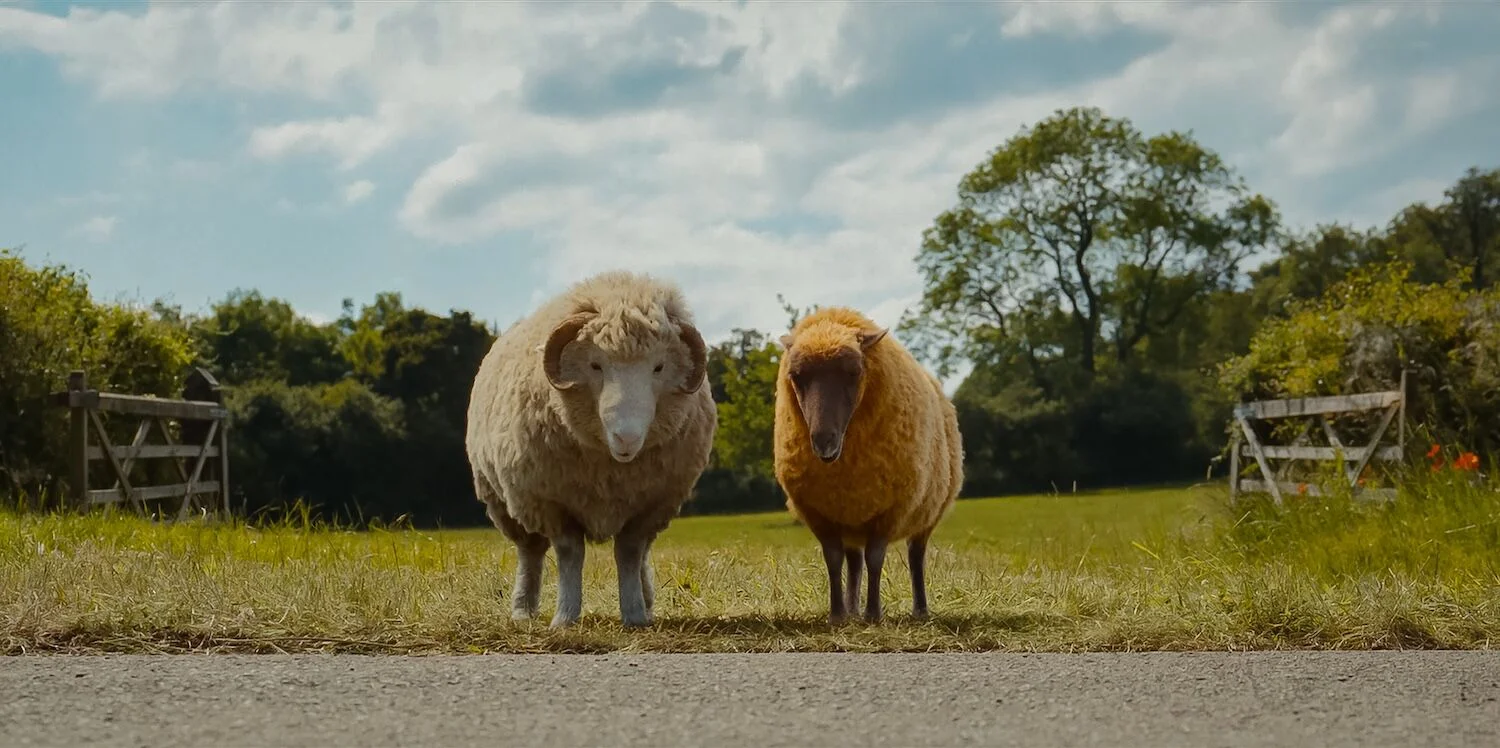
Mopple, voiced by Cranston, has something just as useful: an unusually good memory. In this story, most sheep forget things, including painful experiences. Mopple remembers. That difference gives him a job in the investigation beyond standing next to Lily and making jokes. Lily works out what an event might mean; Mopple helps keep track of what happened. They are a good pair because neither has everything the flock needs.
The memory rule is worth explaining early because it affects more than the clues. Forgetting can make an unpleasant day easier to get through. It can also mean losing something important about a person you loved. These are made-up rules for the film’s animals, not a lesson about real sheep. Within the story, though, they give the flock a difficult choice that younger viewers can understand without knowing anything about detective fiction.
Leaving the pasture gives the comedy more to work with. A road is an everyday part of life for the humans. For these sheep, it is unfamiliar territory they have to cross together. They also take human words and ideas literally, which leads them to misunderstand things that an adult viewer will recognize. The joke is not always that the animals are stupid. Often, they are using the information they have and missing something people take for granted.
The trouble communicating with people is better than another easy talking-animal gag. The sheep cannot simply tell the police what they have noticed. They have to find another way to draw attention to it. That keeps the investigation from becoming a normal detective film with wool instead of clothes. Their bodies and the way people react to them affect what they can actually do.
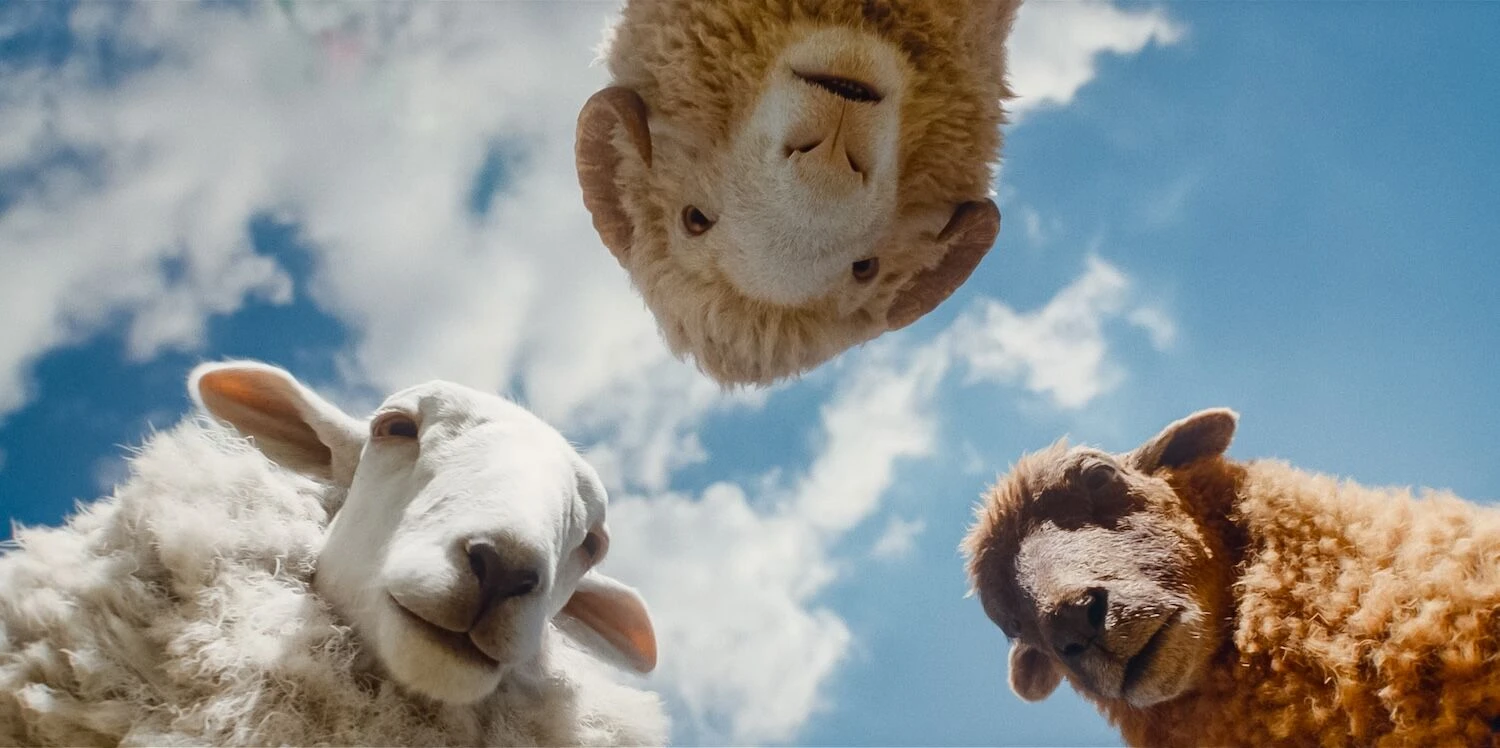
Visually, they remain recognizable farm animals. Their wool and ears do a lot of the work that an exaggerated human face might do in another family film. The different sizes and coats also help us tell them apart when several are together. The computer-made sheep are not invisible effects, and their polished appearance may bother viewers who prefer real animals. Still, their expressions are easy to read without turning them into people in sheep costumes.
The voices help, too. Lily’s confidence and Mopple’s gentler manner make them distinct before we have memorized every name in the flock. Patrick Stewart voices Sir Ritchfield, and the rest of the ensemble gives the group different ages and attitudes. Not every sheep gets equal attention. That is sensible: a mystery already asks us to keep track of clues and suspects, so having two animals to follow most closely makes the story easier to enter.
George matters before the investigation begins
Jackman’s part is important even though George’s death sets the story in motion. The reading routine shows a man who spends time with his animals rather than only feeding them and walking away. He does not realize they can understand the books, which makes the gesture sweeter. He is sharing something he enjoys without expecting a clever response. We can see why the flock would miss that nightly company.
George feels like someone the sheep have lost, not just a body that starts a puzzle. That is the main reason the sadder scenes work. The flock wants an answer, but its members also have to understand why their ordinary life has changed. Following evidence gives them something to do when the person who looked after them is no longer there. The investigation and the grief belong together rather than feeling like two unrelated stories.
The winter lamb adds a different problem within the group. The others treat the little animal as an outsider because of when it was born. Their belief is unfair, and the lamb has no way to change its own birthday. We do not need a long explanation to understand why that hurts. It also keeps the flock from being a collection of perfectly kind creatures who only encounter bad behavior once humans arrive.
That contrast matters. These sheep can love George and still be wrong about somebody smaller and more vulnerable. Caring about the flock does not require agreeing with everything it does. The lamb’s treatment gives the story room to show kindness as something characters have to practice, not simply a quality they automatically possess because they look cute. The gentle appearance does not make the exclusion less unpleasant.
The Sheep Detectives images
3 screenshotsThere are moments when the sadness lasts longer than viewers expecting a light comedy may want. The softer scenes are not all equally effective, and the pace slows when there is little movement in the case. We would still rather spend that time understanding the sheep than rush straight to another suspect. Their attachment to George is what gives the answer emotional importance, even when the puzzle itself is not especially difficult.
Parents should know that death and loss are central to the film. The talking animals and bright publicity images do not make it an entirely carefree choice for very young children. There is humor throughout, but there are also upsetting ideas about what happens to animals. A child who is sensitive to those subjects may find parts difficult. That warning is about the content, not a claim that every child will respond in the same way.
The human suspects are less interesting than the flock
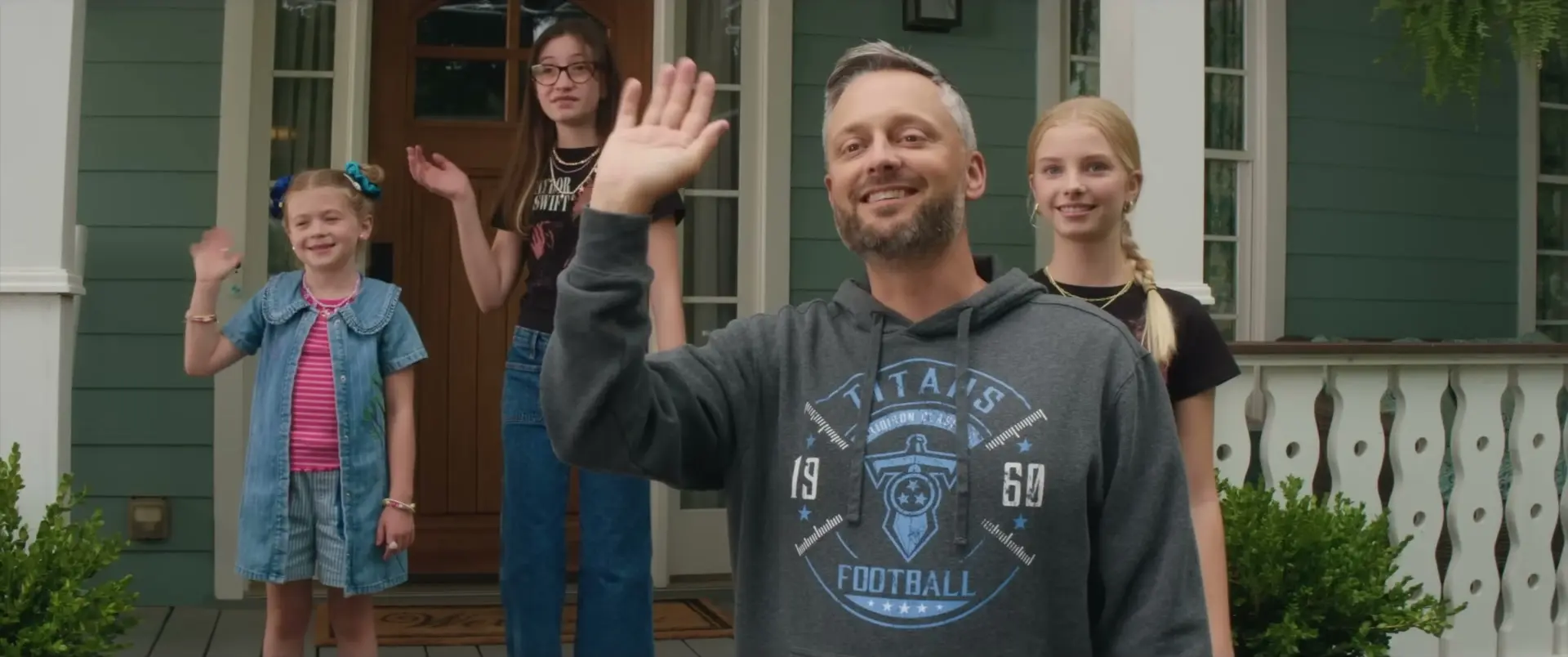
Nicholas Braun plays Tim Derry, the police officer involved in the case. He is not the effortlessly brilliant detective the sheep would want. His awkwardness leaves room for them to contribute, and Braun gives him enough warmth that his mistakes are not only an excuse to laugh at someone useless. There is a practical problem between them: the animals have information, while he is the person who can act on it in the human world.
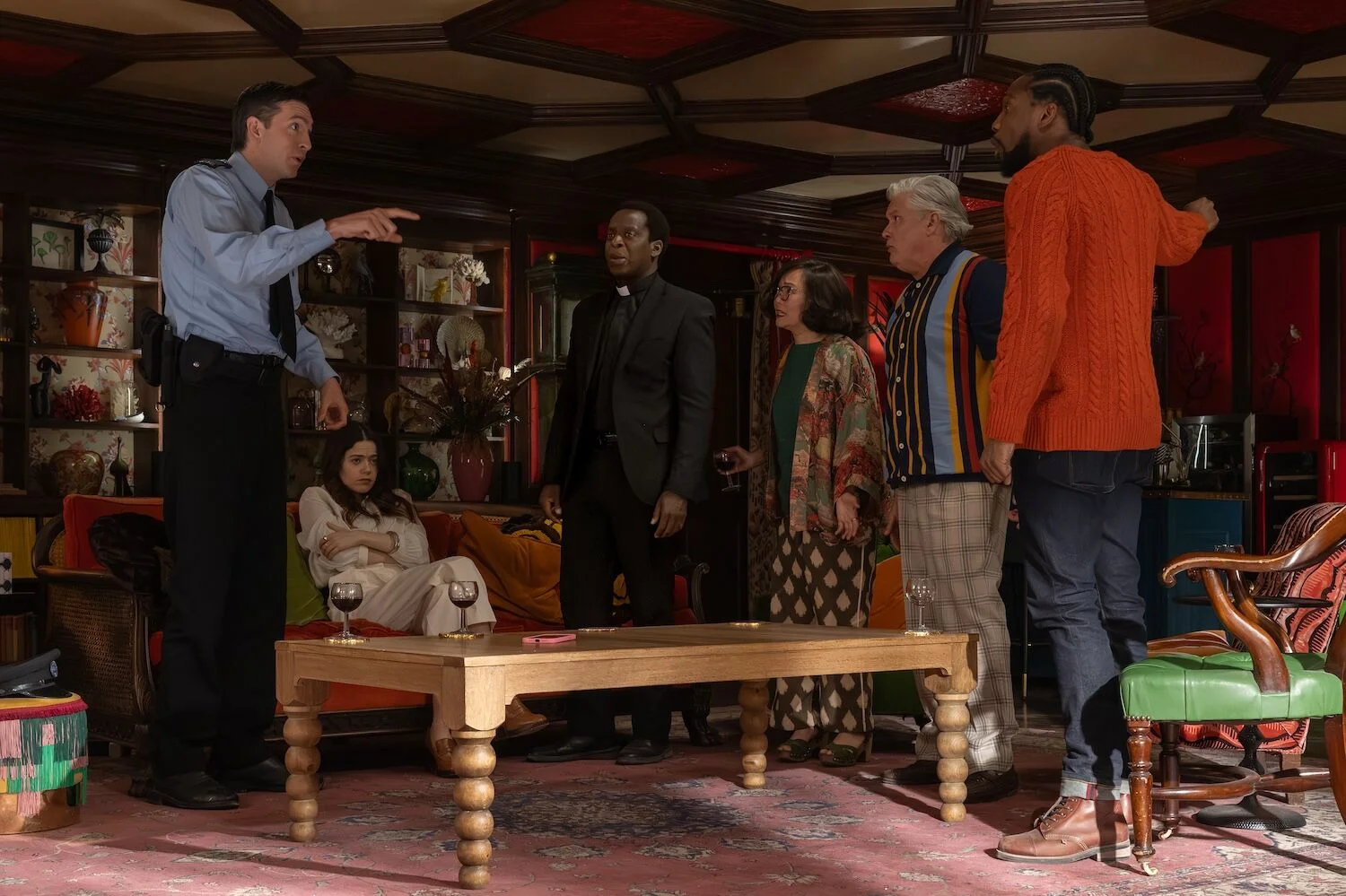
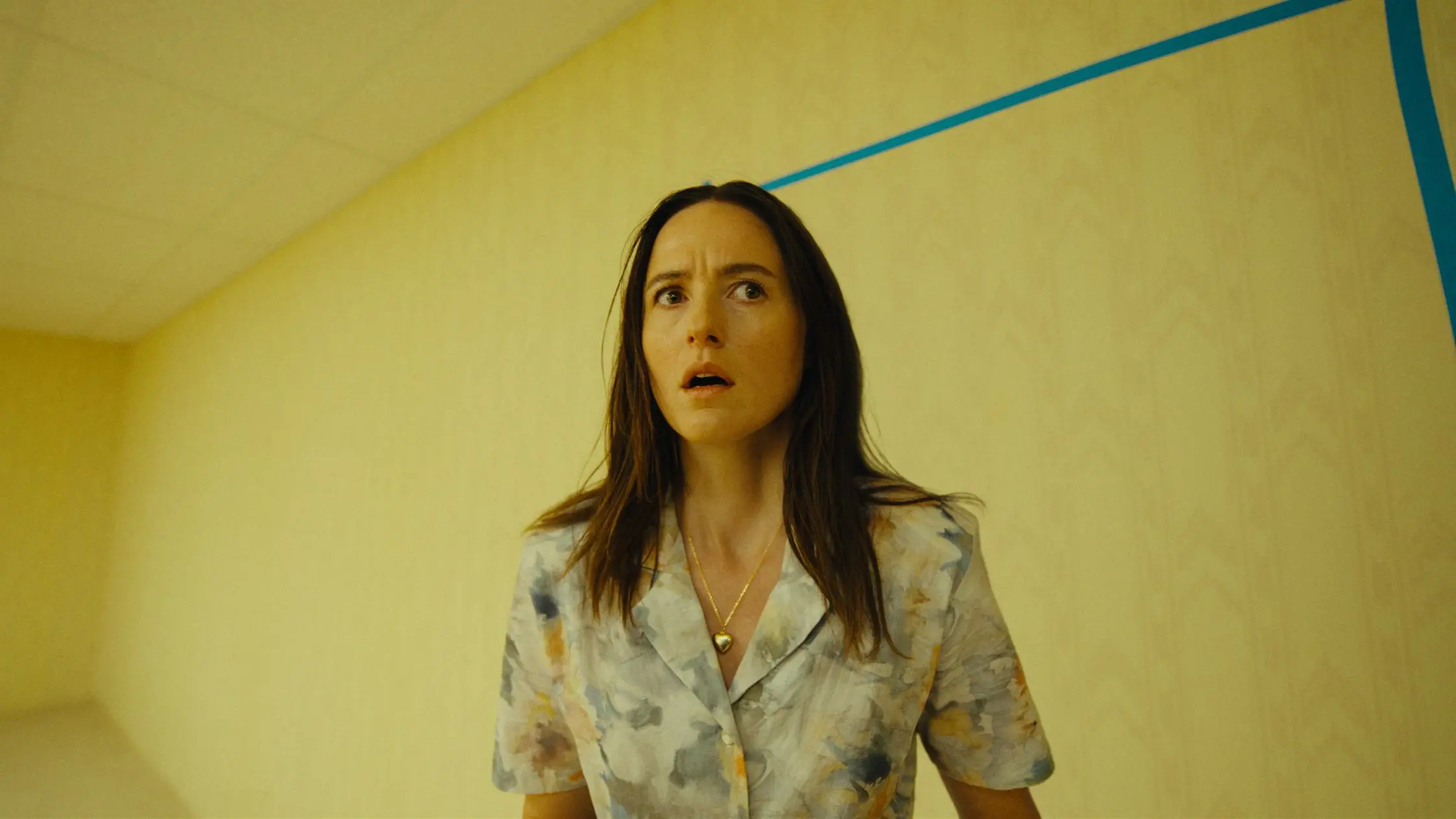
Around Derry are the people who knew George, each with a possible reason to interest the investigators. A mystery needs alternatives so we can wonder who is hiding something. Here, some of those people are introduced more effectively as suspicious types than as full characters. Their odd behavior can be amusing, but it does not always make us curious about their lives. The humans are often easier to label than the sheep.
That difference becomes noticeable whenever the film spends longer sorting through the human suspects. We want enough information to follow the case, but not every detour is as entertaining as watching Lily make sense of something new. The actors give the town plenty of personality. The writing does not give all of them equally useful things to do, so a recognizable face can promise more than the part delivers.
Experienced mystery fans may work out some clues before the flock does. That is not automatically a fault in a family film, especially one that welcomes younger viewers. It does limit the suspense for adults hoping for a difficult case. The question becomes less “Can I solve this?” and more “How will these animals get somebody to listen?” Fortunately, that second question is usually enough to keep us interested.
The Sheep Detectives is available on Prime Video in the United States. It makes most sense for viewers who want funny animal characters and are happy for a family film to spend time on sadness. If your main priority is a tightly paced mystery with deeply developed human suspects, the weaker stretches will be harder to overlook. The sheep are the reason to choose it, not the promise of an unbeatable puzzle.
Pixel Twelve score: 7.8/10 — Good. Lily and Mopple are fun to follow, and their affection for George makes the investigation worth caring about. The jokes use the animals’ limited knowledge well, while the memory problem gives the sadness a specific reason to matter. Some human suspects need more attention, and the pace occasionally slows too much. Even with those limits, this is an easy recommendation for families ready for a funny story that may also make them cry.
Loading results