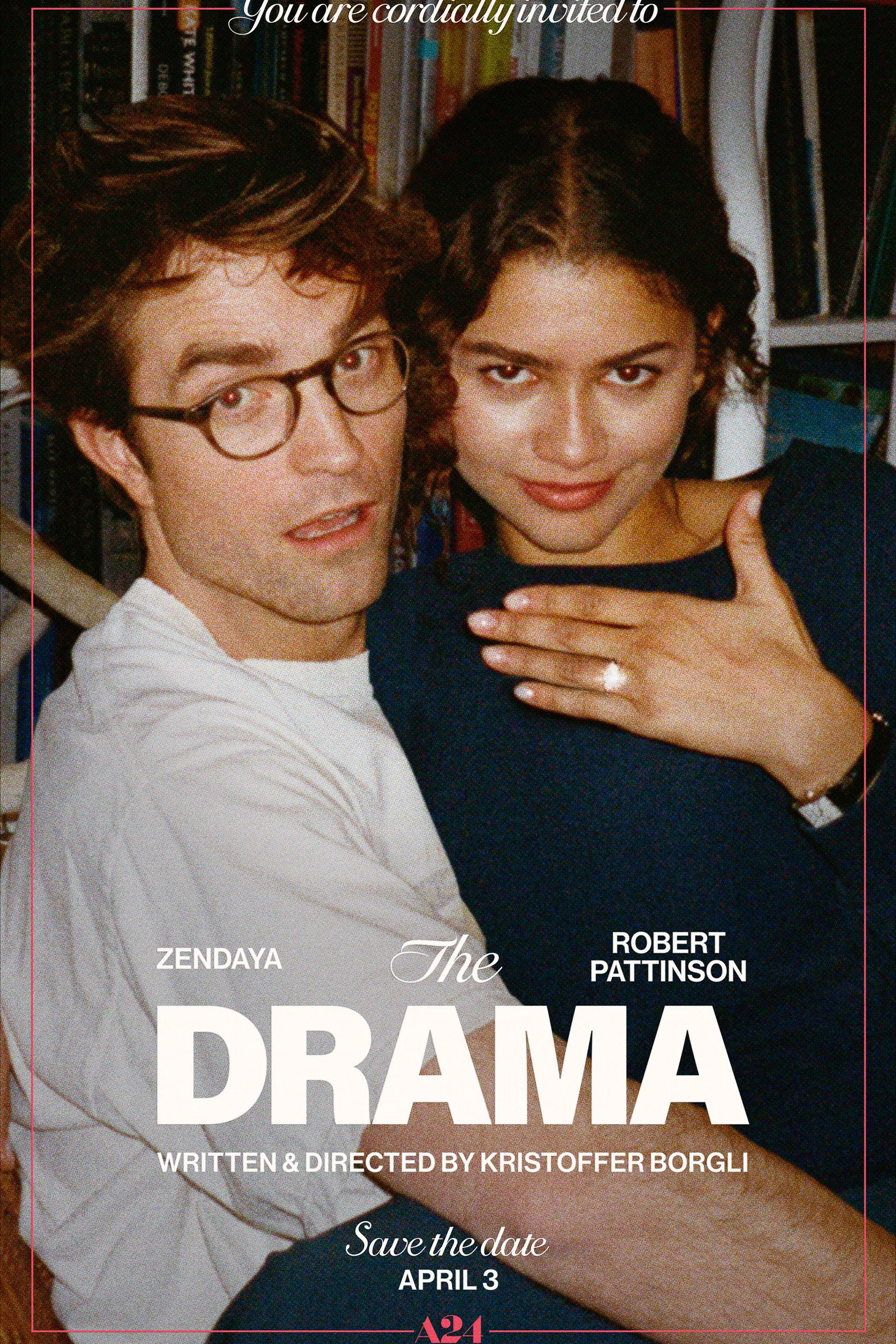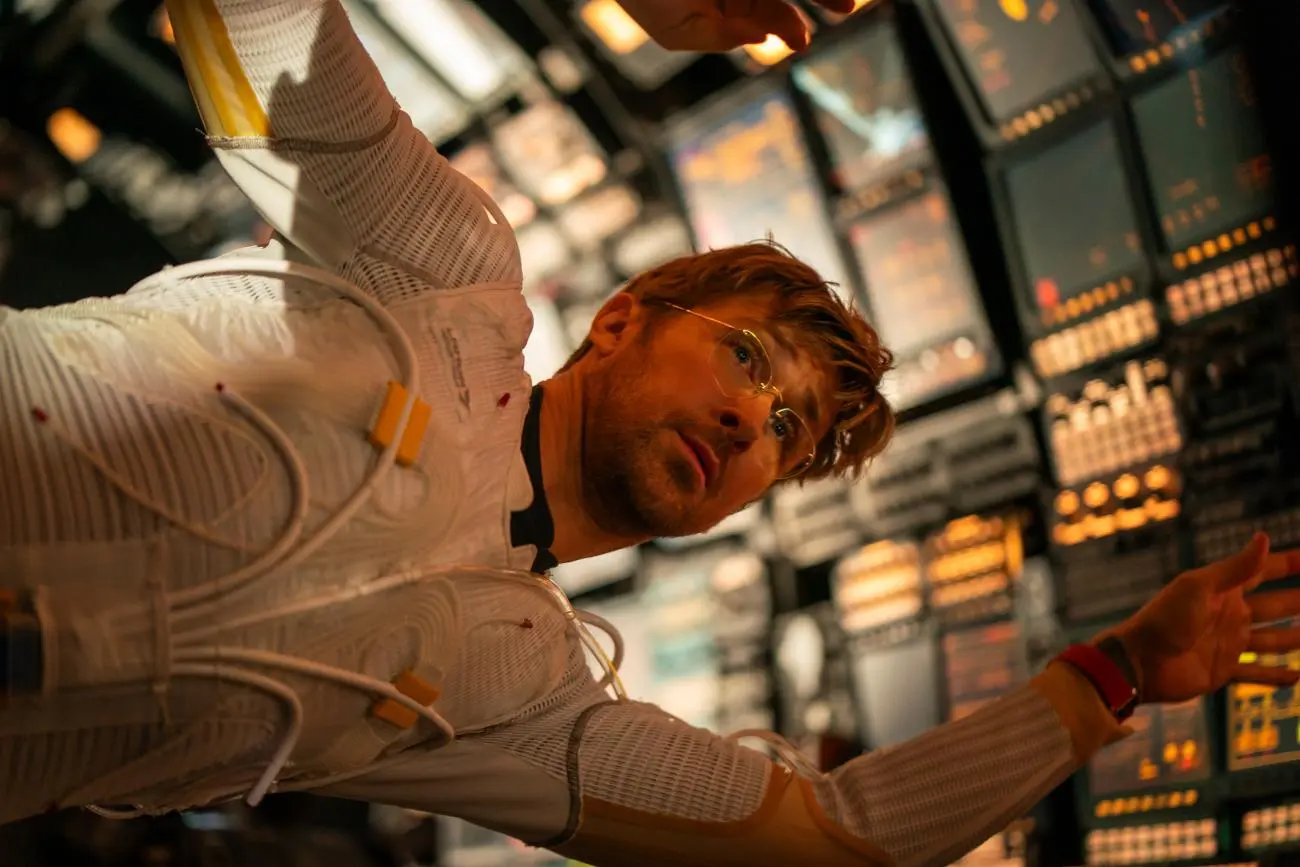
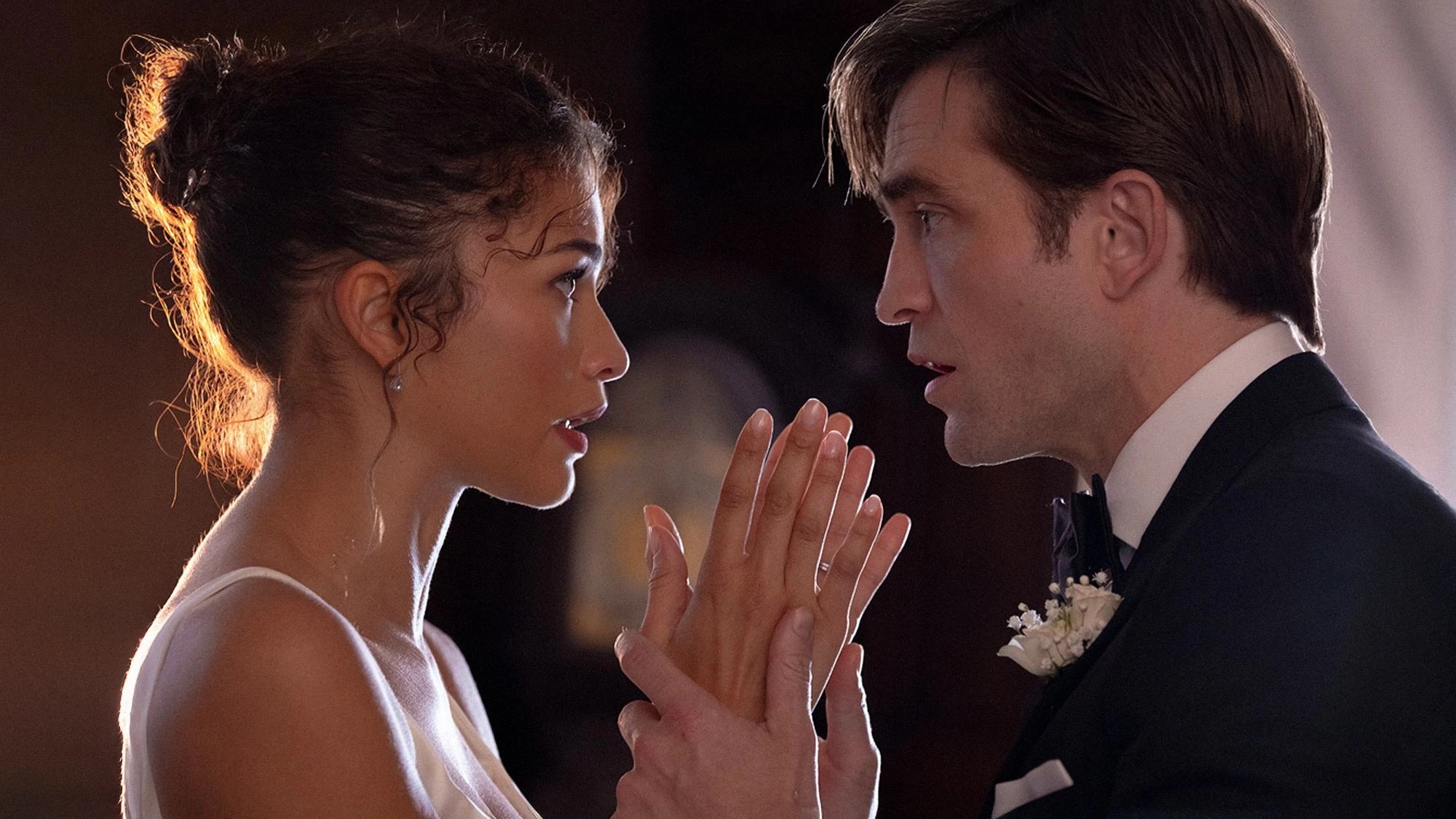
Charlie tries to impress a woman reading alone in a Boston café by pretending he knows her book. He has looked it up rather than read it. His introduction does not go as planned: Emma is deaf in one ear and has not heard him properly. She gives him another chance, and an embarrassing encounter becomes the beginning of a relationship. Robert Pattinson makes Charlie look so anxious to get this right that the small lie is funny before it is troubling.
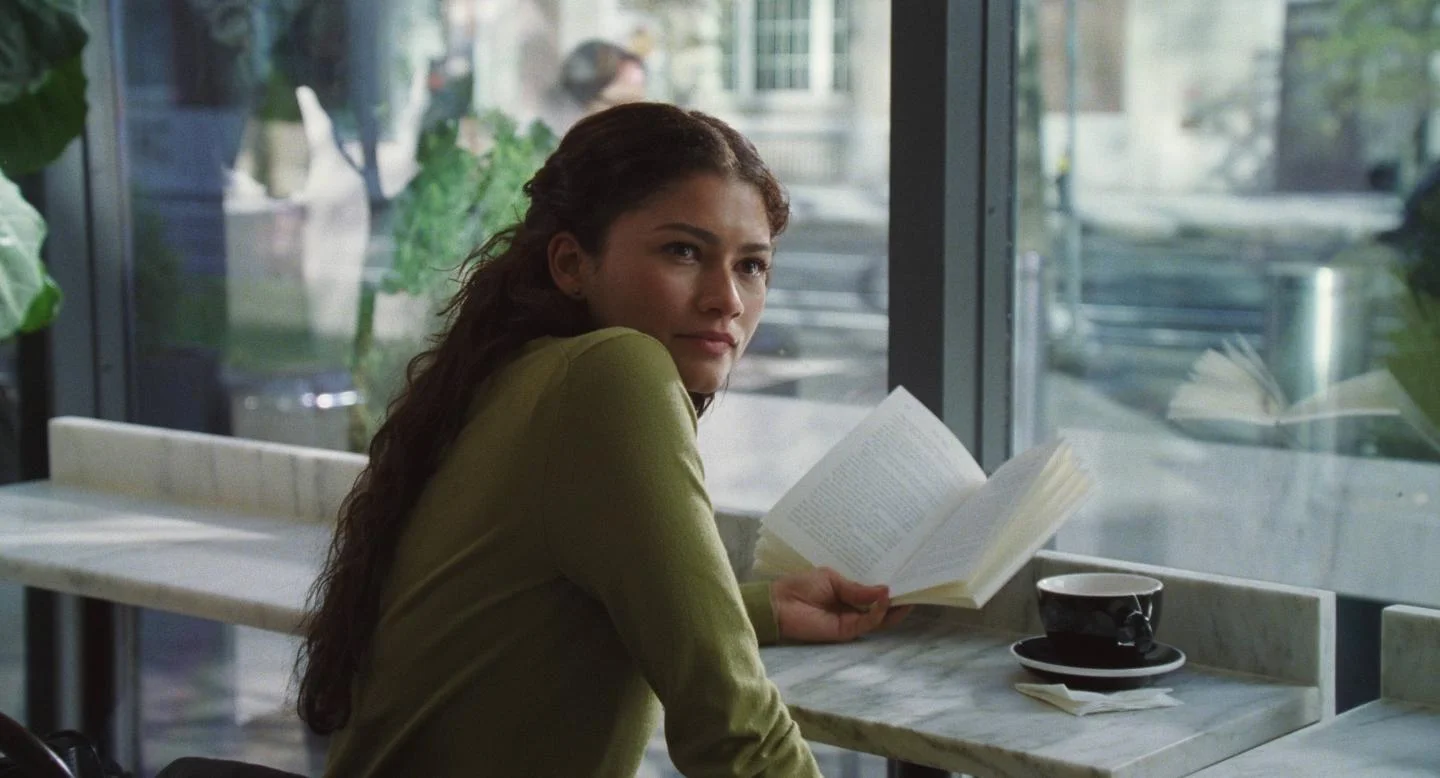
By the time their wedding approaches, Charlie and Emma have a good story to tell about meeting each other. They also have friends, plans and a comfortable life together. Then a conversation over drinks changes how Charlie sees his fiancée. The Drama is about trying to prepare for a wedding when you are no longer sure you should get married. You do not need any background knowledge to follow it, but you should not expect a relaxing romantic comedy.
Zendaya and Pattinson make the couple’s uncomfortable exchanges worth watching. Writer-director Kristoffer Borgli returns to Charlie’s panic so often, though, that Emma’s own experience sometimes gets too little attention. We spend more time watching Charlie worry than hearing Emma explain herself. This review discusses the setup and performances without revealing Emma’s secret or the ending.
A drinking game changes the wedding plans
Emma and Charlie are tasting food and wine for their wedding with their friends Mike and Rachel. Someone suggests that they each share the worst thing they have done. It sounds like a terrible idea even before everyone answers. The group is treating painful memories as entertainment, assuming that friendship makes it safe to confess. That assumption disappears when Emma takes her turn.
What makes the conversation effective is not just the information itself. It is the sudden difference between being invited to speak and being accepted after speaking. A friendly table becomes a place where Emma has to defend herself. Zendaya has to adjust to people reacting in ways she did not expect. The others have to decide what to say while already showing that their opinion of her has changed. Finishing a drink will not let them forget what they have heard.
Borgli also gives the couple ordinary jobs to finish. Speeches still need preparing, and the wedding arrangements have not stopped just because Charlie is upset. This is a useful source of comedy because it gives his anxiety somewhere specific to appear. He cannot spend every scene privately considering his feelings. Other people are waiting for him to cooperate, smile or explain himself.
The wedding preparations work best when they force Charlie and Emma to act happy in front of someone else. A stranger doing a job does not know the whole problem, and the couple cannot easily explain it. There is a recognisable embarrassment in being expected to perform affection when a private conversation has gone badly. The film becomes funnier when those expectations clash than when Charlie merely repeats how distressed he is.
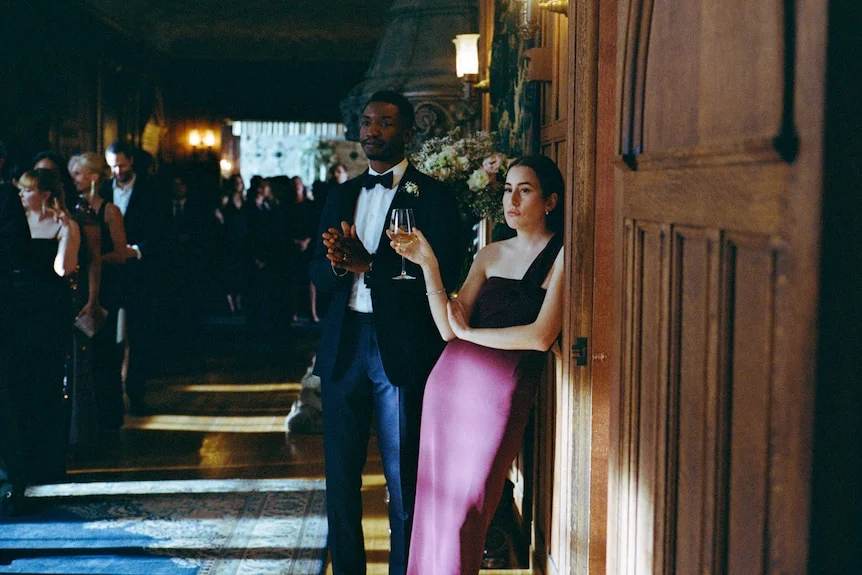
Alana Haim makes Rachel difficult to ignore. She does not politely accept Emma’s explanation and allow the couple to handle everything alone. Her disapproval changes the conversations around her. Haim can make a look or a dismissive response feel as unpleasant as a longer speech. Rachel makes the friendship feel less secure, not just the engagement. Mamoudou Athie gives Mike a different presence, though his role is less forceful and less memorable.
The friends have admitted things about themselves, too. They are judging Emma after describing their own bad behavior. Still, pointing out that they apply different rules to her does not settle the question. Having behaved badly does not prevent someone from being genuinely disturbed by another person’s past. The most interesting conversations allow both things to be true. The weaker ones spend too much time exposing the friends’ faults instead of exploring why Emma’s confession affects them so much.
Zendaya and Pattinson make the arguments worth watching
Charlie cannot decide what the new information means for the person he thought he knew. Pattinson shows that uncertainty through restless reactions and attempts to explain himself. His character wants to sound reasonable while becoming less reasonable in front of us. Pattinson is funny when Charlie tries to hide how badly he is coping. The performance is not built around a charming man delivering clever lines. Much of the humor comes from watching him fail to appear composed.
That approach has a drawback. Charlie is visibly uneasy even before the confession, so his later behavior is not a complete surprise. There are moments when the extra agitation adds little to what Pattinson has already shown. We understand that he is struggling. Another outburst does not necessarily tell us something new about why he wants to stay with Emma or what he believes she owes him.
Zendaya has a different task. Emma is trying to explain her past while asking the people around her to recognise who she is now. She is not only watching a fiancé change his mind. She is seeing familiar conversations turn into questions about whether she can be trusted. Zendaya makes Emma’s need to be heard easy to understand without requiring us to agree with everything she says. That distinction is important in a film where sympathy and approval are not the same thing.
The two actors are especially good at making a conversation feel uneven. Charlie is still processing something that Emma has lived with for years. They cannot talk about it from the same starting point, however much they want the relationship to feel normal again. His attempts to make sense of her can sound like accusations. Her attempts to reassure him can sound like a request to stop asking. Neither response gives the other what they need.
Emma deserves more time outside Charlie’s reactions. The film does show parts of her earlier life, but the present-day story often follows what her confession does to him. That makes the balance frustrating. She is the person being judged, yet his discomfort receives more room than her account of living with the past. Zendaya supplies much of the emotion that keeps Emma from becoming only a problem for Charlie to solve.
The romance also needs a little more ordinary time together. Early scenes establish attraction and a shared life, but the film moves quickly toward the crisis. We can understand that the couple wants to preserve the relationship without always feeling everything they would lose. Their distress is easier to believe than the strength of their earlier happiness. A few more quiet exchanges before the confession would have made the later arguments hurt more.
The repeated arguments become less revealing
Borgli frequently interrupts the present with memories or images of what Charlie is imagining. These are not all straightforward events unfolding one after another. The editing puts his worries into the picture instead of making him explain every thought aloud. That can be unsettling in a useful way: even when a conversation appears ordinary, we know he is distracted by something much worse.
Daniel Pemberton’s uneasy music adds to that feeling. The sound and editing make a conversation tense before anyone raises their voice. The approach suits the film’s move away from a cheerful romance. It also means the quieter moments rarely feel restful. Viewers who enjoy being kept uncomfortable will get more from this than viewers looking for a warm comedy about imperfect people.

The photography appointment shows both the strength and the limit of the humor. Emma and Charlie are expected to look like a happy couple, while the audience knows how difficult that has become. It is a good situation for awkward comedy. Once that contrast is established, however, keeping the embarrassment going does not automatically make it funnier. Some scenes continue after their best joke has already worked. The same problem appears when arguments revisit a doubt without changing either person’s position.
The more serious weakness is how little time the film spends examining Emma’s secret. The revelation involves something much more disturbing than an ordinary romantic mistake. The film uses it to create situations in which people embarrass themselves or judge one another. Those situations can be compelling, but they do not help us understand every part of her explanation. At times, another awkward encounter interrupts an opportunity to learn more about how she has changed.
The Drama: scenes and behind the scenes
3 screenshotsThat is why the film is easier to recommend for its performances than for what it concludes about forgiveness. The Drama raises difficult questions, but not every question receives enough attention. It does not need to tell us which person is right. It does need to make the people and their decisions convincing enough that leaving the question open feels worthwhile. Zendaya and Pattinson often achieve that through their acting, even when the writing gives them less help.
At roughly one hour and 45 minutes, this is not a long film. It can still feel repetitive because the middle spends so much time returning to the same arguments. Fans of dark, uncomfortable comedy may recognise the frustration of having an argument that never seems to end. Anyone hoping for a straightforward love story should choose something else. The US release is rated R for language, sexual content and some violence, and it is available on HBO Max in the United States.
Pixel Twelve score: 6.8/10 — Fair. Zendaya, Pattinson and Haim make these difficult conversations hard to look away from. The wedding preparations give the humor specific situations, and the music makes private doubts feel disturbing. But repeated arguments and too little attention to Emma weaken the drama. Watch it for the cast and the uncomfortable comedy, with the expectation that some of its biggest questions will be more interesting than its treatment of them.
Loading results