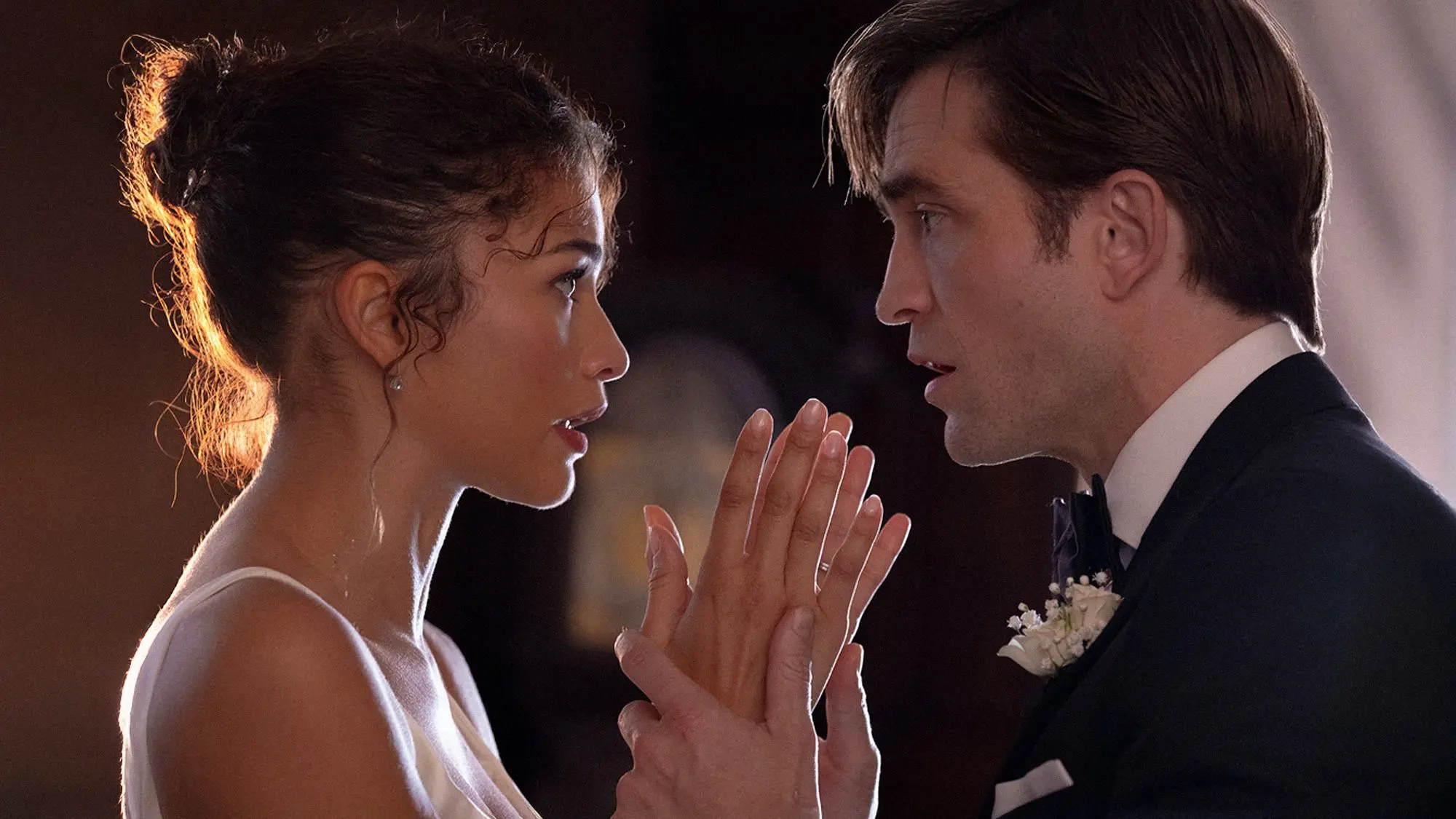

Linda Liddle has done the work. She knows the business and has been promised a promotion. Then her boss dies, his son takes over, and the job goes to one of the son's friends. Rachel McAdams plays Linda as someone who has spent years trying to be useful to people who do not respect her. You do not need to know anything about Send Help before watching it to understand why she is angry.
Her new boss, Bradley Preston, soon has a much bigger problem than an unhappy employee. Their business flight crashes, leaving the two of them stranded on an island. He is injured. She knows how to find food and build a shelter. The woman Bradley would not promote is now the person keeping him alive.
That situation gives director Sam Raimi a very funny starting point, but this is not a gentle comedy about colleagues learning to get along. There is blood, cruelty and a wild-boar encounter that gets extremely messy. The best reason to watch is McAdams. She makes Linda easy to feel sorry for at work, then much harder to predict once there is nobody left to tell her what to do.
Linda knows what to do. Bradley still wants to give orders.
Before the crash, Linda works in strategy and planning. She is good at the job but awkward around her colleagues. Bradley, played by Dylan O'Brien, cares more about whether she looks and acts like someone he wants beside him in a meeting. His decision to give the promotion to a friend tells us how little her work matters to him.
The office scenes make Bradley unpleasant without making Linda helpless. She has a reason to expect better treatment, and she argues for it. McAdams is particularly good at showing how uncomfortable that can be. Linda wants to stand up for herself, but she also still wants these people to like her. That combination is more interesting than simply making her shy or making everyone around her shout insults.
Bradley brings her on a business trip to Bangkok, where she is supposed to help with a client proposal. It is another chance for him to use her work without treating her as an equal. The crash stops that arrangement, but it does not immediately stop his habit of speaking to her as though she is his employee first and a fellow survivor second.
Linda's interest in the reality show Survivor matters here. She has also read about surviving outdoors. After the crash, she can use that knowledge to find water, make a fire and arrange somewhere to sleep. Bradley's money cannot get him a meal on this island. Linda's skills can. The change in their circumstances is easy to follow because the film gives them actual jobs to do, not just arguments about who deserves respect.
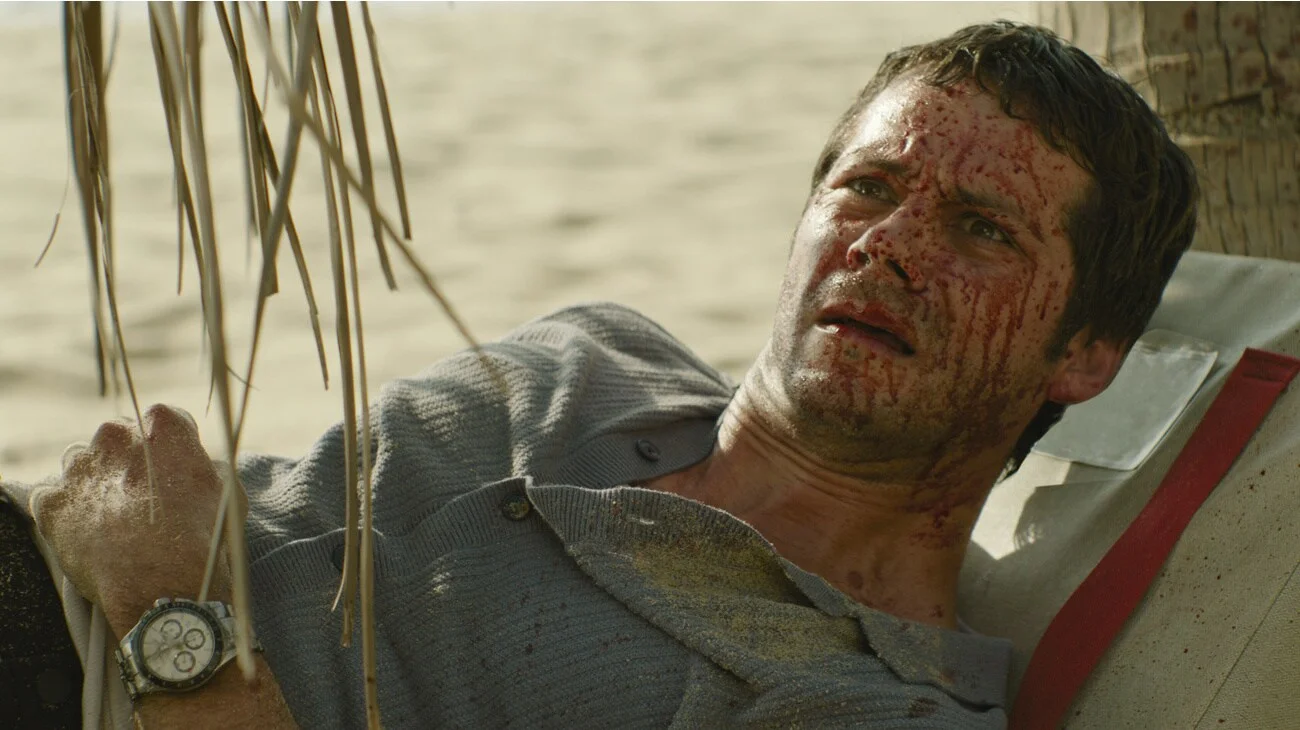
It also gives Linda a practical reason to stay close to him: he needs care. Bradley is not an equally capable rival who happens to disagree with her. At first, he is injured and dependent on the woman he has just humiliated. Watching him try to keep acting superior in that position is funny because his behavior is so obviously useless.
We liked these early island scenes more than the later attempts to surprise us. You already have enough to worry about. The pair need food and shelter, but they cannot agree on how to treat each other. A small disagreement becomes tense because neither person has anyone else to turn to. The film does not need another survivor or a larger group of villains to make that uncomfortable.
Linda's competence is satisfying, although the film sometimes makes it look a little too convenient. Reading about survival and being able to handle a real emergency are different things. Send Help moves quickly past that difference. It works as a cruel joke about Bradley having hired the wrong people, but anyone hoping for a detailed, realistic survival story should adjust that expectation.
McAdams and O'Brien make cooperation hard to trust
Linda becomes more confident once she can prove what she knows. McAdams changes the way she holds herself and looks at Bradley, so the difference is visible even before another argument starts. She is fun to watch when Linda no longer needs to ask for his approval. There is relief in that change, but also something troubling about how much she enjoys being in charge.
The film lets those feelings exist together. You can understand why Linda is pleased without agreeing with everything she does. McAdams does not play every moment as revenge. There are times when she seems glad simply to have company or to be taken seriously. Those quieter reactions give you a reason to keep watching her face instead of only waiting for the next injury.
O'Brien has an equally important job. Bradley needs to be awful enough for the office scenes to work, but not so predictable that every later conversation is pointless. When he behaves more kindly, we want to believe he might be learning something. We also remember that he needs Linda's help. Is Bradley being nicer because he respects her, or because he needs dinner? That question makes their conversations more interesting than a straightforward series of punishments.

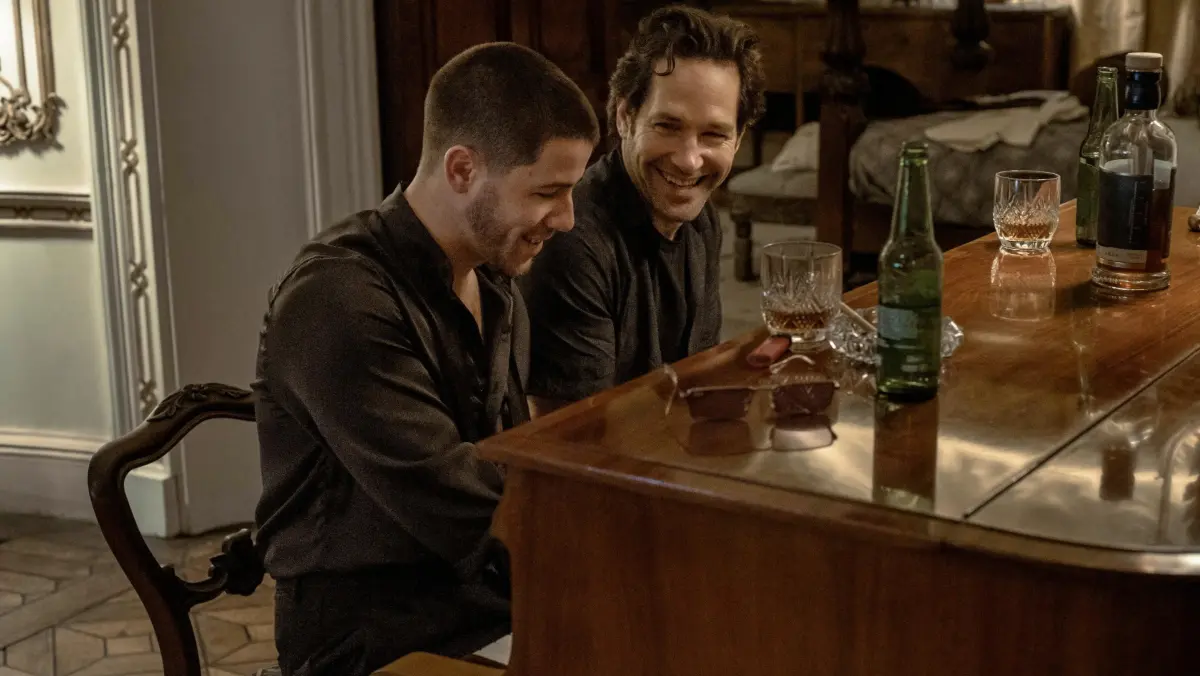
Their camp gives these scenes a useful setting. In the image above, the pair can sit and talk beside a shelter they depend on. This is not a return to normal life. They still have limited resources and no easy way out. Even a friendly conversation happens in a place where one person knows much more about staying alive than the other.
For a while, it is possible to imagine them reaching an agreement. Then their old habits make that harder again. We found these changes in their behavior more engaging than the question of exactly when someone might rescue them. The actors make a temporary truce worth watching because it never feels completely secure. You can enjoy a moment of friendliness while still wondering what each person wants from it.
There is a limit to how often the story can repeat that uncertainty, though. Bradley has already shown us what he thinks of Linda. Once he has disappointed her, another attempt to win her over has less chance of surprising us. The actors keep finding funny and uncomfortable reactions, but the writing does not always give them a genuinely new disagreement.
The later story also spends more time on revelations and danger than on the ordinary business of living together. Some of that is exciting. Some of it feels like an interruption to the part we most wanted to watch: two people trying to cooperate while remembering exactly how badly they have treated each other. The final stretch has more action, but fewer conversations as interesting as their early arguments. That is the main reason this falls short of being one of Raimi's best films.
Funny, bloody, and not always believable
Raimi does not film the violence as something distant or tidy. Faces fill the screen, reactions are exaggerated, and the unpleasant details are often the point of a joke. A terrified look can be funny even when the person wearing it has a very good reason to panic. If you have not seen his earlier horror films, that is the sort of humor to expect here.
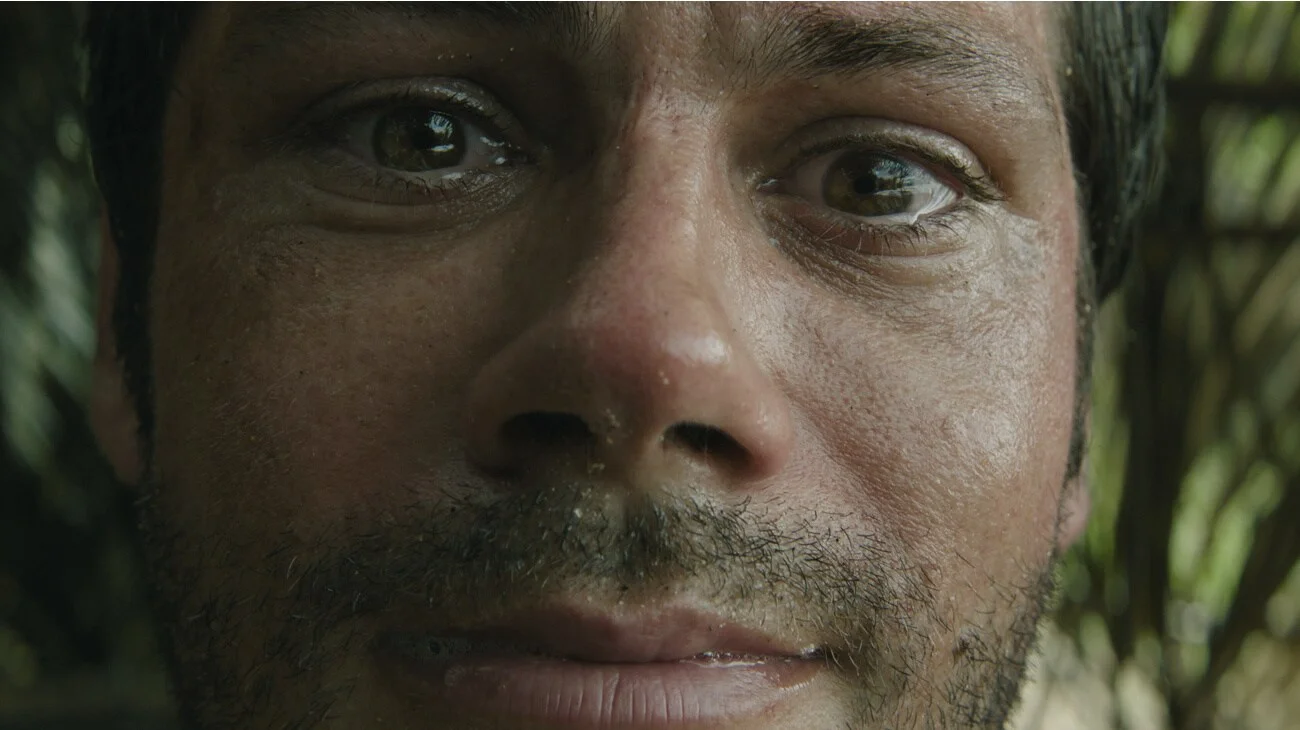
The wild-boar sequence is a good example. Finding food ought to be a practical task. Instead, it becomes a loud, bloody ordeal. The joke is how far the encounter goes, not a clever line someone says afterward. McAdams commits to the physical mess, which makes the sequence much funnier than a restrained performance would have been.
That approach will not suit everyone. People looking for a consistently frightening horror film may find themselves laughing more than feeling scared. People expecting an easygoing comedy may dislike the injuries and bodily fluids. This is an R-rated film, and its most memorable jokes often involve something disgusting happening to someone. Do not choose it for a relaxed movie night with someone who hates gore.
The effects are another limitation. Some of the digital blood and larger action images look artificial. That matters less during a deliberately ridiculous gag, where the exaggeration is part of the fun. It is more distracting when the film wants a dangerous situation to feel real. The performances are often more convincing than what is happening around the actors.
At roughly 113 minutes, Send Help also takes longer than it needs to finish its argument. The early sections carefully establish why Linda resents Bradley and why he struggles to accept her authority. Later developments arrive more quickly, leaving less time to believe the changes they require. We wanted the ending to spend more time with the consequences for these two people, rather than put so much emphasis on the next surprise.
Still, the two leads are enough to make this worth watching. McAdams gets to be embarrassed, capable, funny and frightening without turning Linda into four separate characters. O'Brien gives her someone who is frustrating company but rarely dull. You do not need to admire either character to want another scene with them.
Pixel Twelve score: 7.7/10 — Good. Send Help is an easy recommendation if you like nasty humor and arguments between people who are forced to depend on each other. The fake-looking effects and the less satisfying final stretch keep our score below the very best horror comedies. McAdams and O'Brien give it enough personality to overcome most of those problems, especially while they are arguing over how to survive rather than rushing toward another twist.
In the United States, Send Help is available on Hulu. Eligible Hulu and Disney+ bundle subscribers can also watch through Disney+. Availability and subscription requirements vary by country. This review judges the film itself, not the picture quality or reliability of a particular streaming service.
More scenes from Send Help
2 screenshotsLoading results