

Path of Exile 2 gives players many skills, supports, equipment choices, and passive routes very early. That freedom is useful, but it can also hide the reason a first character has stopped improving. The safest beginner approach is to give the build one clear job, then make each new choice support that job.
This guide covers the core systems connected to the current Path of Exile 2 game page. It avoids patch-specific skill rankings because balance and available content can change during Early Access and again at Version 1.0.
Path of Exile 2 quick-start checklist
- Choose one main Skill Gem for ordinary enemies and learn how it creates damage.
- Add Support Gems that change or strengthen something that skill already does.
- Keep a second skill for a clear purpose, such as movement, control, defense, or a boss opening.
- Spend passive points along a connected route that supports the chosen damage type, weapon, and defenses.
- Compare new equipment with the build's actual problem instead of equipping every higher-level item.
- Enter a boss fight ready to learn the attack pattern before trying to finish it quickly.
- Recheck gem descriptions and requirements after a major update.
Start with one main skill and one clear job
Grinding Gear Games describes Skill Gems as the source of active abilities and Support Gems as modifiers that change how those abilities behave. Supports are socketed directly into skills, so the useful question is not whether a Support Gem sounds powerful on its own. It is whether that support improves the skill the character is already using.
Pick a main skill that feels controllable in ordinary fights. Use it long enough to identify its weakness. It may cover a small area, take too long to set up, cost too much to repeat, or leave the character exposed. A support choice is easier when it answers one of those specific problems.
Do not replace the whole setup every time a different Skill Gem drops. Test the new skill in a safe area, compare its purpose with the current main skill, and keep it only if the build can support it. A character with several unrelated attacks often spends passive points and equipment bonuses in directions that do not help one another.
Give every secondary skill a reason to exist
A second or third skill can be valuable without competing for the main damage role. It can create distance, control a group, apply an effect, protect the character, or punish a boss during a short opening. If two skills solve the same problem, keep the one that fits the current passive route and equipment more naturally.
Use supports as tests, not permanent promises
Support Gems can change across content updates, and a support that works for one skill may not help another in the same way. Read the supported skill's tags and the support description together. If the expected behavior does not appear, remove the support and test the skill again before changing several other parts of the build.
Change one support at a time when possible. That makes it clear whether the character gained damage, control, coverage, or only a higher resource cost. Several simultaneous changes can make a build feel different without showing which choice helped.
When an equipped support stops working after an equipment or attribute change, check its requirements before assuming the skill is broken. The skill menu and item descriptions should be the first places to look after a patch or gear swap.
Let the passive tree strengthen what the character already does
The official game description says classes are starting points rather than fixed build limits. It also presents a large passive tree and dual specialization for different weapons or skill types. That flexibility does not require a beginner to travel in several directions at once.
During the opening hours, connect passive choices to the current main skill. Follow bonuses that clearly match its weapon, damage type, or method of dealing damage, while taking nearby defensive help when the character is dying before the skill can work. A passive point that supports a future idea but does nothing for the current setup delays the next useful improvement.
Dual specialization is most helpful when the two setups have different jobs. Before investing in it, make sure the first setup already works. Splitting an unfinished build into two unfinished plans creates more equipment and skill requirements without solving the original weakness.
Upgrade the build you have before replacing it
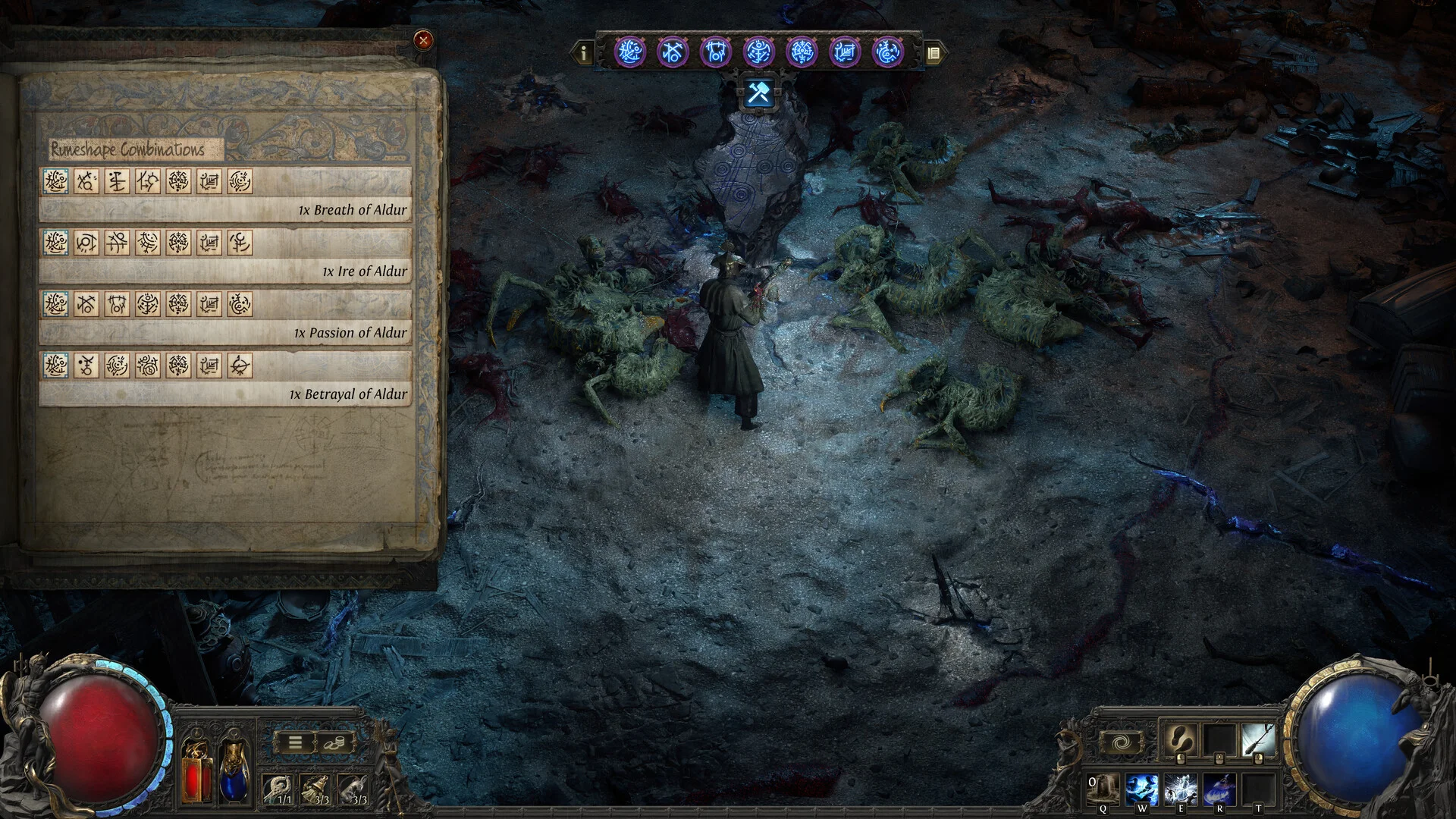
Path of Exile 2 has many equipment bases and upgrade systems. A new item is useful when it improves the part of the character that matters now. For an attack built around a weapon, compare the weapon and the skill result. For any build, check whether new equipment removes an attribute requirement, weakens a defense, or breaks a support setup that was already working.
Do not judge an item only by its level or the number of modifiers. Open the character and skill details, equip one change, and see what moved. If damage rose but the character now dies to the next elemental attack, the swap created a new problem rather than a complete upgrade.
Keep some space in the plan for life, resistances, and the defensive stats available to the chosen class and equipment. Damage cannot solve an encounter if the character cannot survive long enough to use it.
Treat bosses as pattern tests
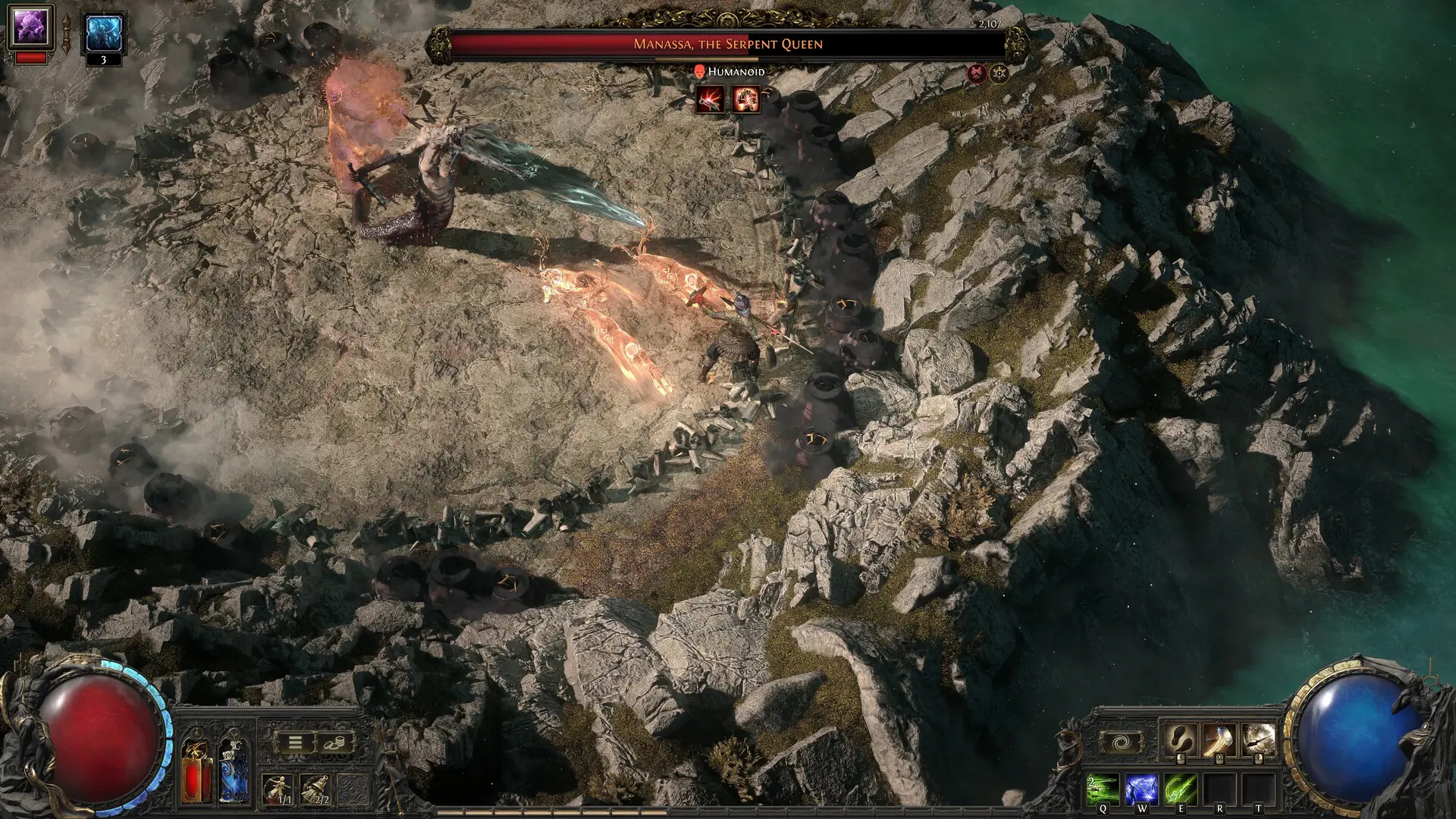
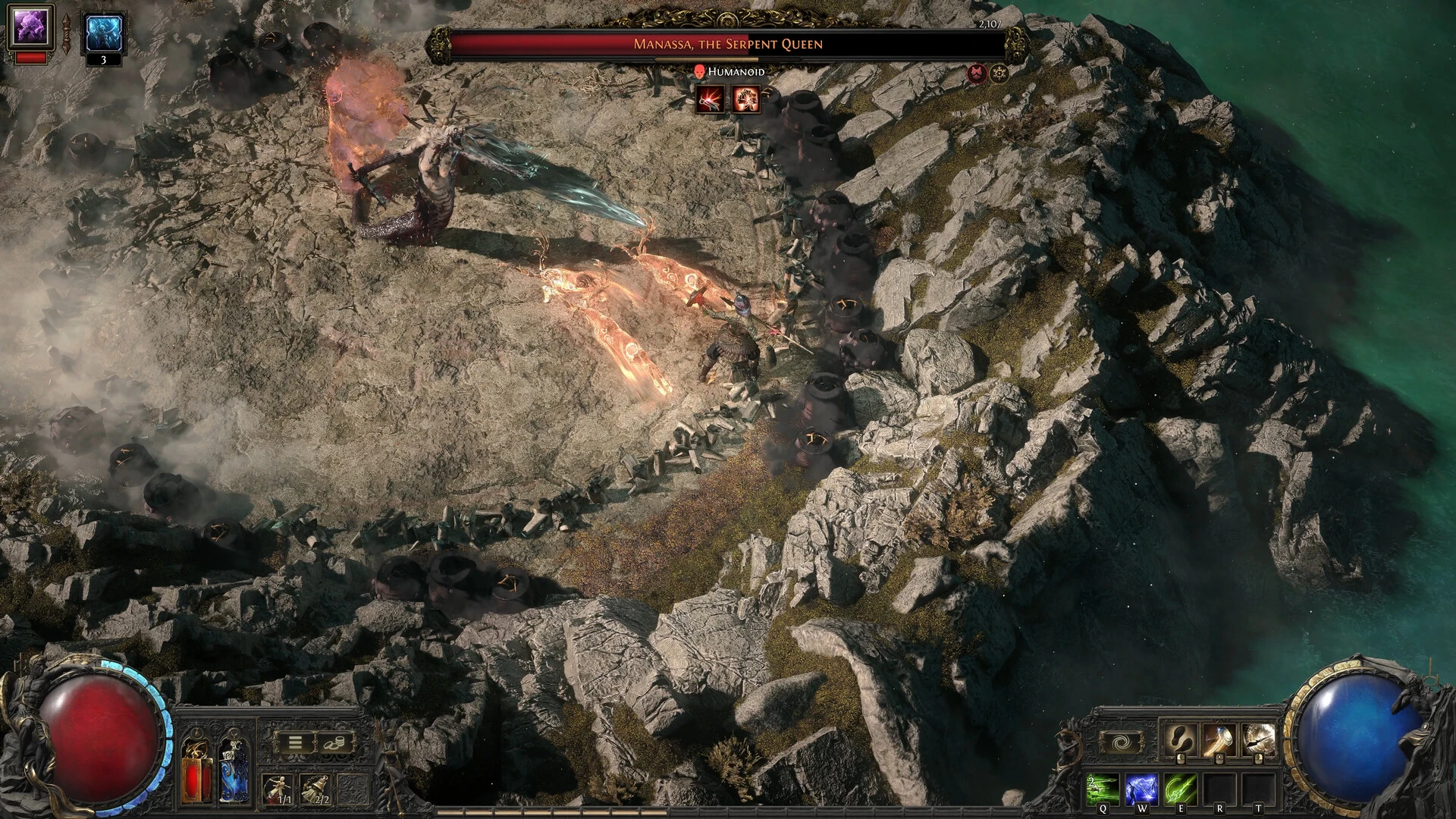
Grinding Gear Games says campaign areas contain bosses with their own mechanics. The first attempt should answer practical questions: which attack covers the largest area, which movement creates a safe angle, what happens after a long animation, and when the boss gives the player time to attack or recover.
Avoid spending every resource during the first safe opening. A later phase may remove space or add a new attack. Use early openings to learn how many actions fit safely, then repeat that amount instead of extending the sequence until the character is hit.
If a boss repeatedly survives with most of its health, review the build. If the fight is close but one attack ends every attempt, the problem is more likely positioning or recognition. That distinction prevents a player from rebuilding a capable character to solve a mechanic that still needs to be learned.
What to check when progress stalls
Ordinary enemies take too long to clear
Confirm that the main skill, its supports, the equipped weapon or relevant gear, and the passive route all improve the same damage plan. Remove choices that serve a different build.
A support appears to do nothing
Read both gem descriptions, tags, and requirements. Test the skill without the support, then add it back. If the expected behavior still does not appear, use another support whose effect is clear in the current setup.
The character deals damage but dies immediately
Check life, resistances, and the defensive stats shown by the equipment and character panels. Replace the weakest defensive item before spending more passive points on damage.
One boss attack ends every attempt
Use the next attempt to watch that attack instead of racing the health bar. Identify its warning, direction, and safe space, then attack only after reaching that space consistently.
Early Access, Version 1.0, and the rest of the guide list
Path of Exile 2 is scheduled to reach Version 1.0 on December 11, 2026. The full release will add content and can change balance, so recheck gem and passive descriptions after major updates. The Path of Exile 2 Version 1.0 article tracks the confirmed release information.
For the separate NVIDIA driver crash and long-pause problem, use the Path of Exile 2 NVIDIA crash fix.
The Path of Exile 2 guide hub keeps the gameplay guide and technical fix together.