Man-su has spent 25 years making paper. He has a wife, two children and a home he is proud of. When his employer fires him, he expects to find another job in a few months. More than a year later, he is still looking. Then he comes up with a terrible plan: find the people who could beat him to a job and kill them.
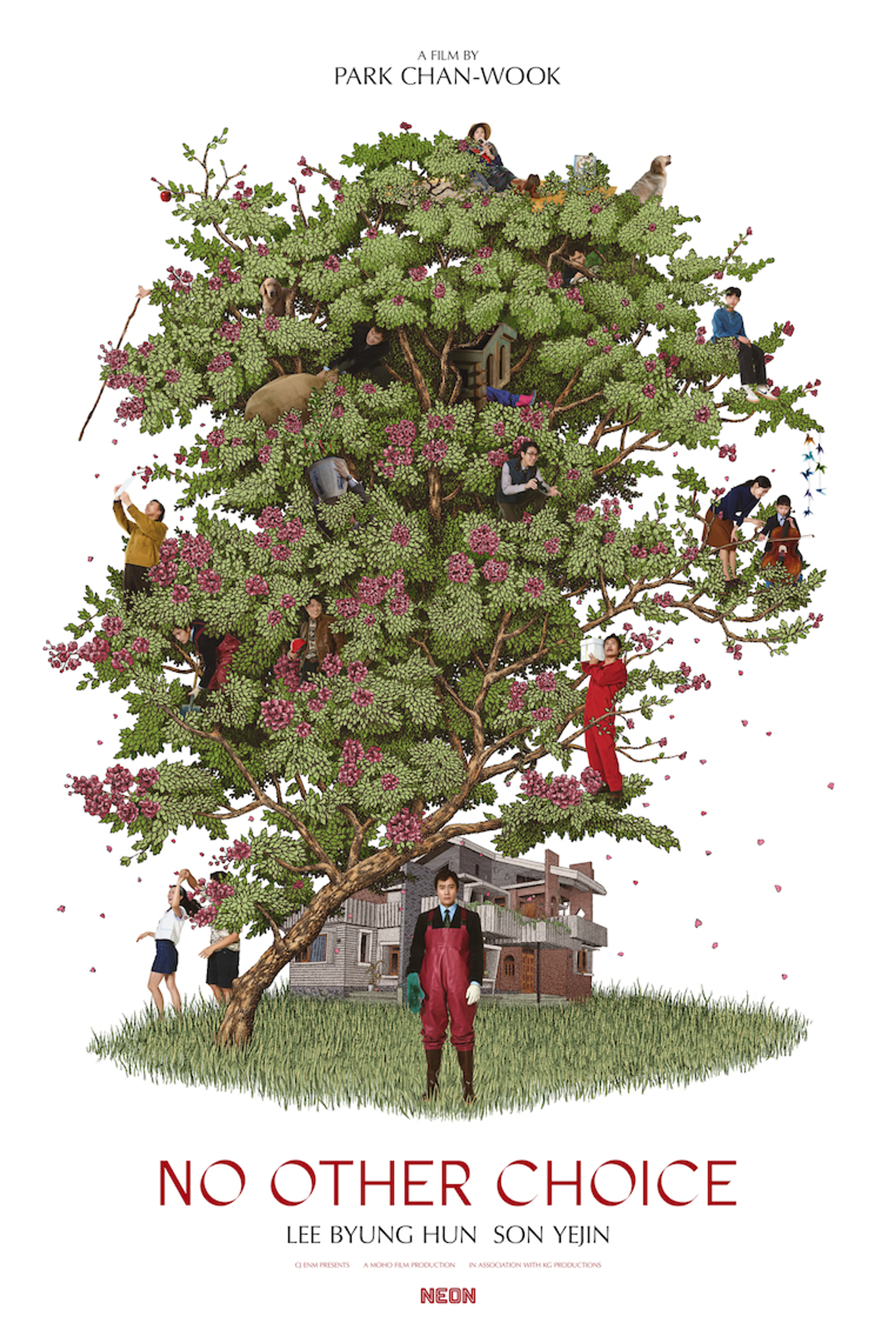
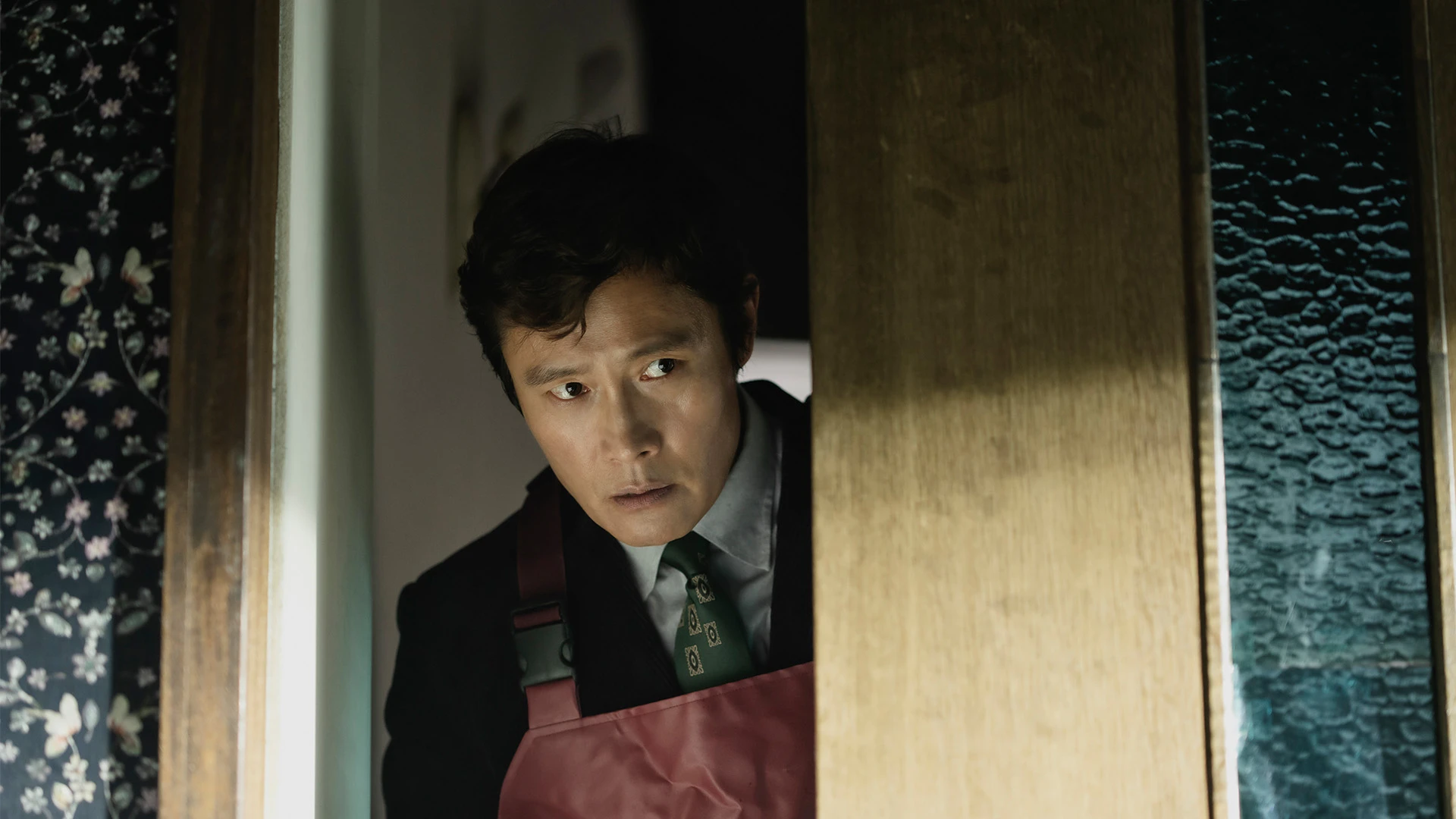
That is the story of No Other Choice, a South Korean crime comedy from director Park Chan-wook. Lee Byung-hun plays Man-su as a worried husband who has convinced himself that murder is a reasonable way to pay the bills. He is also very bad at it. His attempts to act like a capable killer are often funny, even while someone else is in real danger.
The film is worth watching for that uncomfortable mix. You can understand why Man-su is frightened without agreeing with anything he decides to do. There are stretches that take too long, and the script could do more to explain how he first accepts the idea of killing. But Lee makes this foolish, dangerous man difficult to stop watching.
Losing his job changes life for the whole family
Before Man-su starts planning crimes, Park shows what his salary pays for. His wife Mi-ri, played by Son Ye-jin, shares a comfortable life with him. Their daughter plays the cello. Their son expects familiar comforts to stay available. The adults have to consider selling their home, while the children are upset about losing Netflix. That small complaint is funny because it sounds like something a child would actually worry about during a much bigger family problem.
Mi-ri starts cutting expenses and returns to work at a dental clinic. The family even has to send their dogs to stay with relatives. The money problems are easy to follow because we see what the family has to give up. You do not need to know anything about the paper industry to understand why another failed interview hurts.
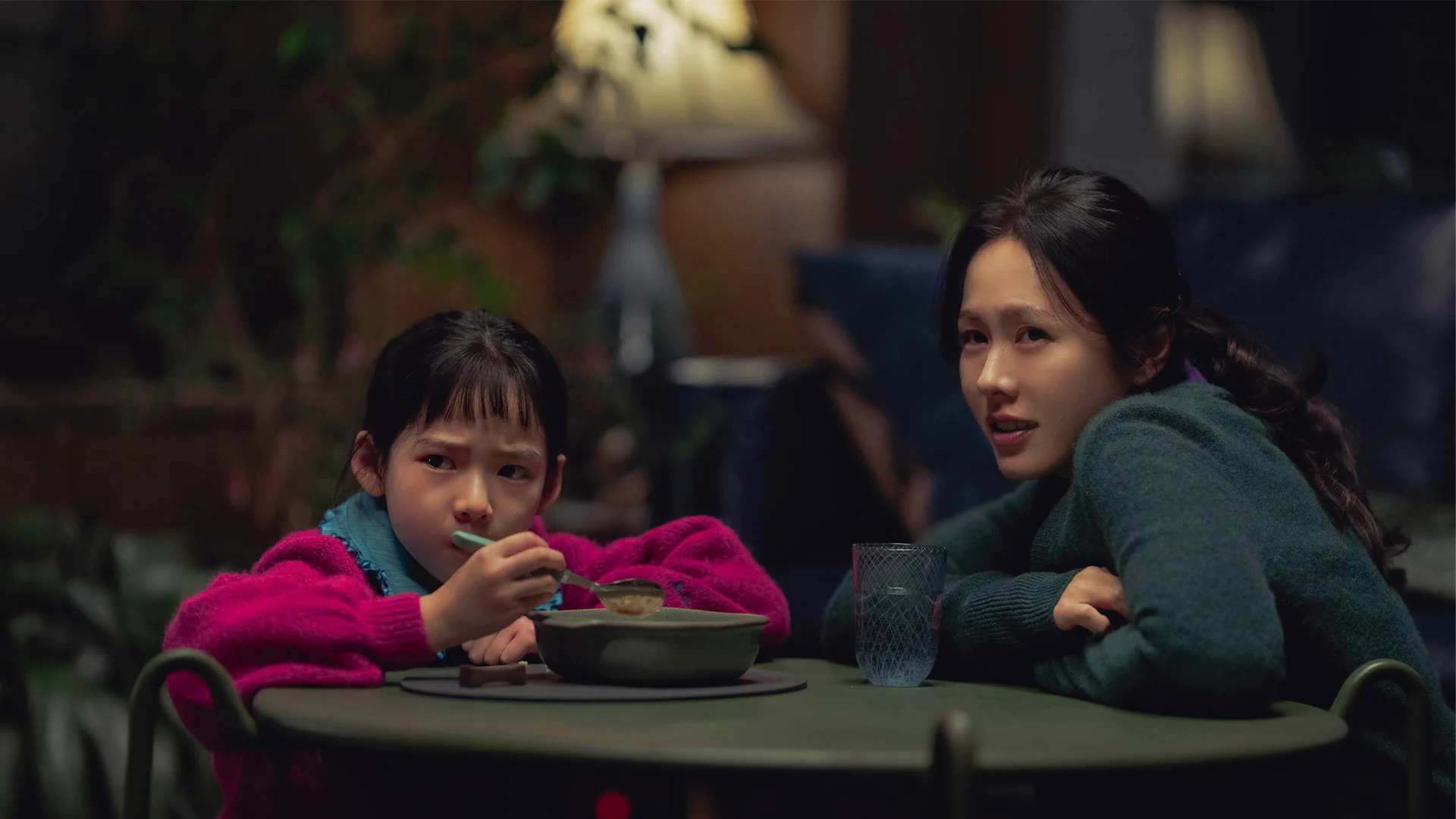
Man-su's response is much harder to agree with. He wants another position in the same industry, with the respect and income he had before. Other work does not feel like a real answer to him. His experience is valuable, but it cannot make a company hire him. The film is particularly good at showing the humiliation of having to prove yourself again after doing the same work for decades.
Lee does not play those moments with constant shouting. Man-su tries to look prepared and optimistic, even when he is getting nowhere. In the sessions meant to help unemployed workers, the reassuring exercises offer little help with the actual problem of finding work. Lee makes Man-su's forced confidence funny without making his fear look fake. His need to seem useful to his family is understandable long before his behavior becomes horrifying.
There is a useful difference between the couple here. Mi-ri starts making changes that might keep the household going. Man-su keeps trying to return to the life they had. She is not asking him to stop caring about his career. She is responding to the fact that the old salary is gone. Their disagreement is more interesting than a simple argument about which bills to pay.
The film also makes it difficult to accept Man-su's favorite excuse. He keeps treating his plans as necessary, although Mi-ri is already showing him that they can change how they live. He is protecting his pride as well as his family. That does not mean losing a job is easy or that he deserved to be fired. It means his hardship does not explain away the harm he chooses to cause.
The move from disappointment to murder is the part that needs more work. We spend enough time with the rejected applications to believe his frustration. We get less of a sense of how he becomes willing to kill a stranger. The outrageous idea is enough to start the comedy, but a little more time with that decision would have made the later crimes more disturbing.
Man-su's murder plans keep going wrong
Man-su invents a company and advertises for workers so that other applicants will send him their information. He studies their qualifications to find the people most likely to get hired instead of him. It is a nasty use of something as ordinary as a job application. These men are hoping someone will read their experience and give them a chance. He is reading it to decide whether they are a threat.
Park does not turn him into a skilled assassin once the plan begins. He has to follow people, get close to them and deal with whatever happens next. The gap between planning a murder and carrying it out produces much of the comedy. Man-su can organize his targets on paper, but he cannot control what they do when he arrives. Lee looks especially uncomfortable whenever a situation requires quick thinking instead of preparation.
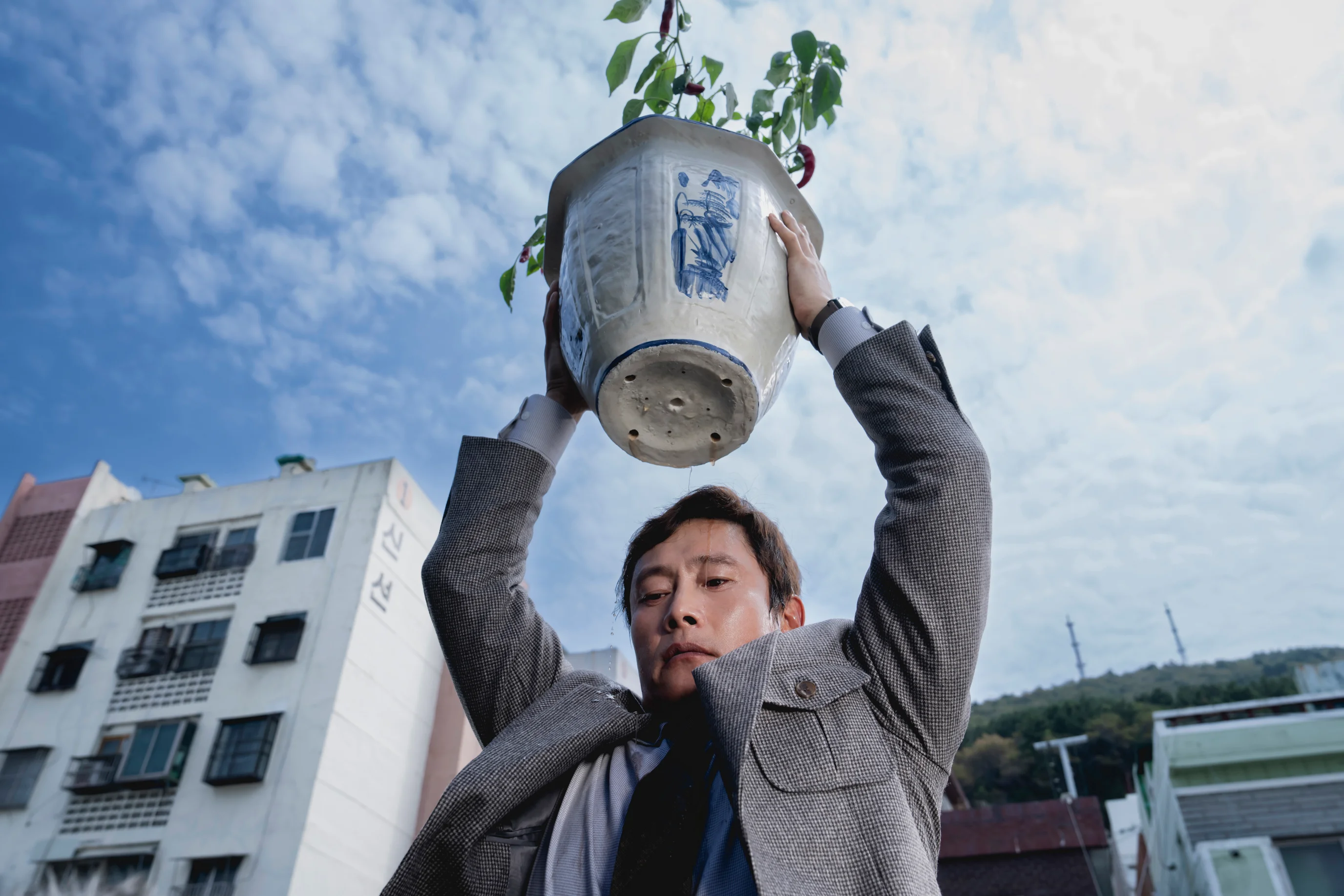
One early attempt involves a large plant pot. Man-su lifts it over his head as if he has found a simple solution, but the weight and awkwardness make him look ridiculous. Lee's strained posture tells you more about this would-be killer than a speech could. He is attempting something terrible with the physical confidence of a man doing a household job he cannot quite manage.
The strongest extended scene involves Bummo, another paper-industry worker, played by Lee Sung-min. Man-su turns up music to cover the sound of a gunshot. Instead of a quick attack, he gets caught in a conversation and a struggle. Bummo's wife, played by Yeom Hye-ran, complicates the situation further. The loud song keeps playing while the people in the room try to make themselves heard.
The music makes the attempted murder harder to carry out, which is why the scene is so funny. It is not simply a cheerful song added to a violent moment. Man-su has created another problem for himself. Park lets the conversation, movements and interruptions keep changing who has control. You can follow the danger even while laughing at how badly the plan is going.
Lee Sung-min and Yeom Hye-ran deserve a lot of credit for that sequence. Their characters have a troubled relationship before Man-su gets involved. He has walked into an argument that does not stop just because he has a weapon. The actors make their irritation with each other believable enough that the interruption becomes absurd rather than random.
The people on Man-su's list also have lives outside his plan. Another rival, Si-jo, played by Cha Seung-won, has taken a job selling shoes after working in paper. These encounters stop the targets from being interchangeable strangers. Man-su is threatening men who have already faced problems much like his own. The resemblance makes his excuse harder to accept. He knows what unemployment has done to them and still treats their survival as an obstacle to his.
The comedy will not work for everyone. Park gives several violent situations enough room to become long, messy confrontations. If laughing during an attempted murder feels wrong to you, the film deliberately keeps you in that position. The injuries and fear have not stopped being serious just because Man-su is clumsy. This is an adult film with violence, strong language and some sexual content, not a harmless comedy about a difficult job search.
Mi-ri makes the family scenes worth staying for
Away from the crimes, Man-su and Mi-ri still have moments of closeness. Son and Lee make it possible to believe these two people enjoyed being married before the money problems began. They are not simply a foolish husband and a wife waiting to criticize him. Their affection makes his secrecy more upsetting: he is putting a real relationship at risk.
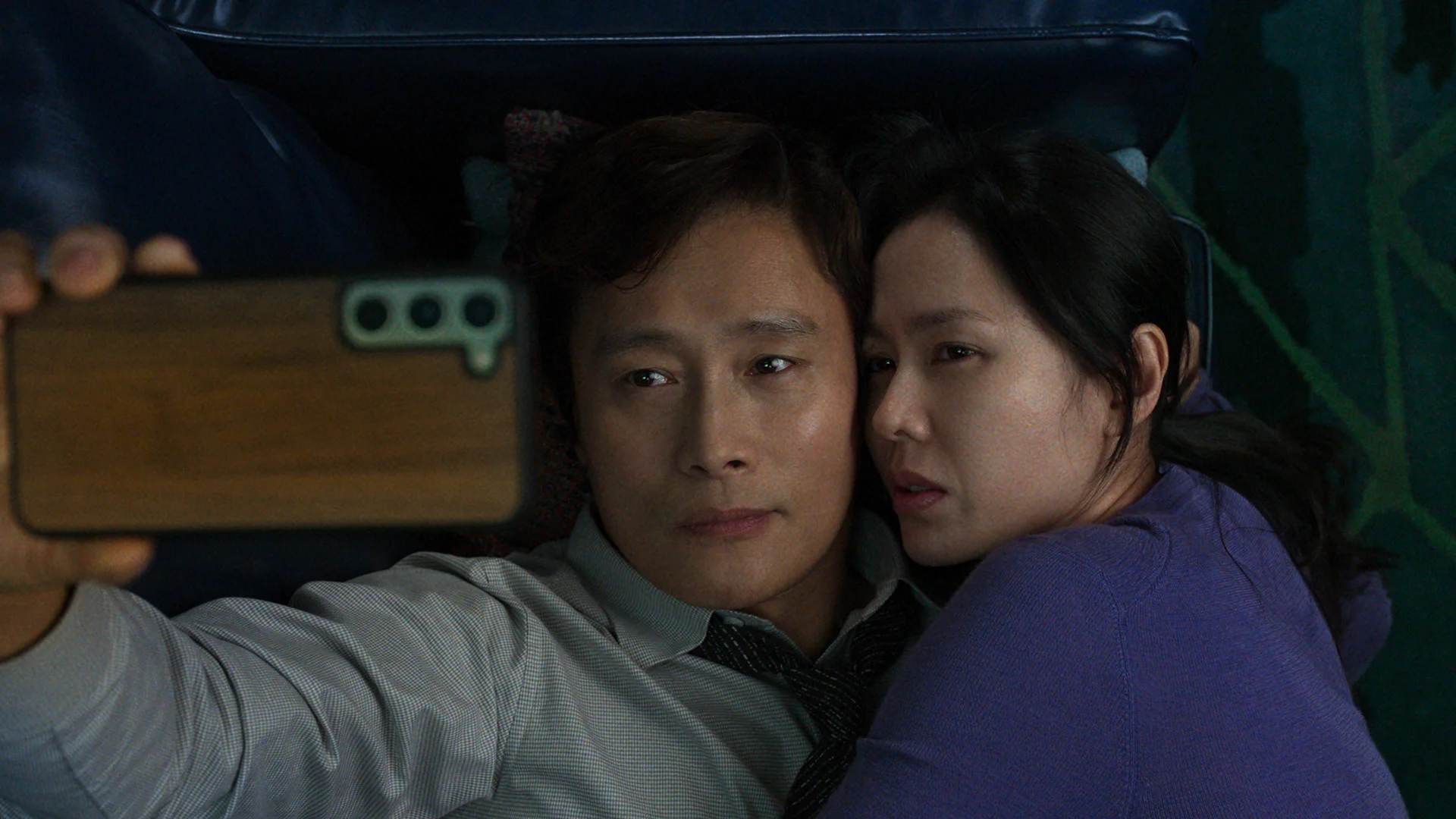
Son gives Mi-ri a directness that is welcome after spending so much time with Man-su's excuses. Her return to the dental clinic should help the family. Instead, he starts worrying about her relationship with her boss. His jealousy is irritating in a believable way. He wants to fix everything himself, then resents the work she is doing to help. Son's reactions make those conversations funny without turning Mi-ri into someone who exists only to explain her husband to us.
There is more going on with the children too, including trouble involving their son and stolen phones. These scenes show that Man-su's problems have not put everyone else's life on hold. They also give Mi-ri things to do beyond worrying about whether he will get hired. The family remains worth following even when the film briefly leaves the murder plans behind.
Still, at 139 minutes, some of the detours become tiring. The repeated delays between Man-su's plans can make the middle feel longer than it needs to be. The toothache, jealousy and family trouble are individually useful, but together they interrupt the pursuit often enough that the next confrontation can take too long to arrive. The film does not need to lose its family scenes. It could spend less time returning to worries it has already established.
That is also why the whole film is slightly less satisfying than its best individual scenes. The confrontation with Bummo keeps finding fresh complications. Other stretches mostly remind us that Man-su is anxious and unwilling to accept a different life. Lee is very good at playing that anxiety, but his performance cannot make every repetition necessary.
There are visual surprises even in the quieter encounters. During a drinking scene, Park and cinematographer Kim Woo-hyung show the drinker from inside a beer glass. The distorted view briefly makes an ordinary action look strange and funny. Elsewhere, the bright autumn colors keep the outdoor scenes from looking like the gloomy crime story the premise might suggest. Those choices give the film more variety than a series of men waiting in dark rooms.
Pixel Twelve's score is 8.4/10. Lee Byung-hun's nervous, physical performance and the disastrous murder attempts make No Other Choice an excellent pick for viewers who enjoy crime stories with cruel humor. Son Ye-jin gives the family scenes their own reasons to matter. The slow detours and Man-su's underexplained decision to start killing keep it from being as strong throughout as it is during its best confrontation. Even so, the film gives you plenty to laugh at and specific reasons to feel uneasy about that laughter.
No Other Choice is streaming on Hulu in the United States. It is primarily in Korean, runs 139 minutes and is rated R. You do not need to have seen Park Chan-wook's earlier films or read Donald E. Westlake's novel The Ax to follow it.
More scenes from No Other Choice
2 screenshotsLoading results