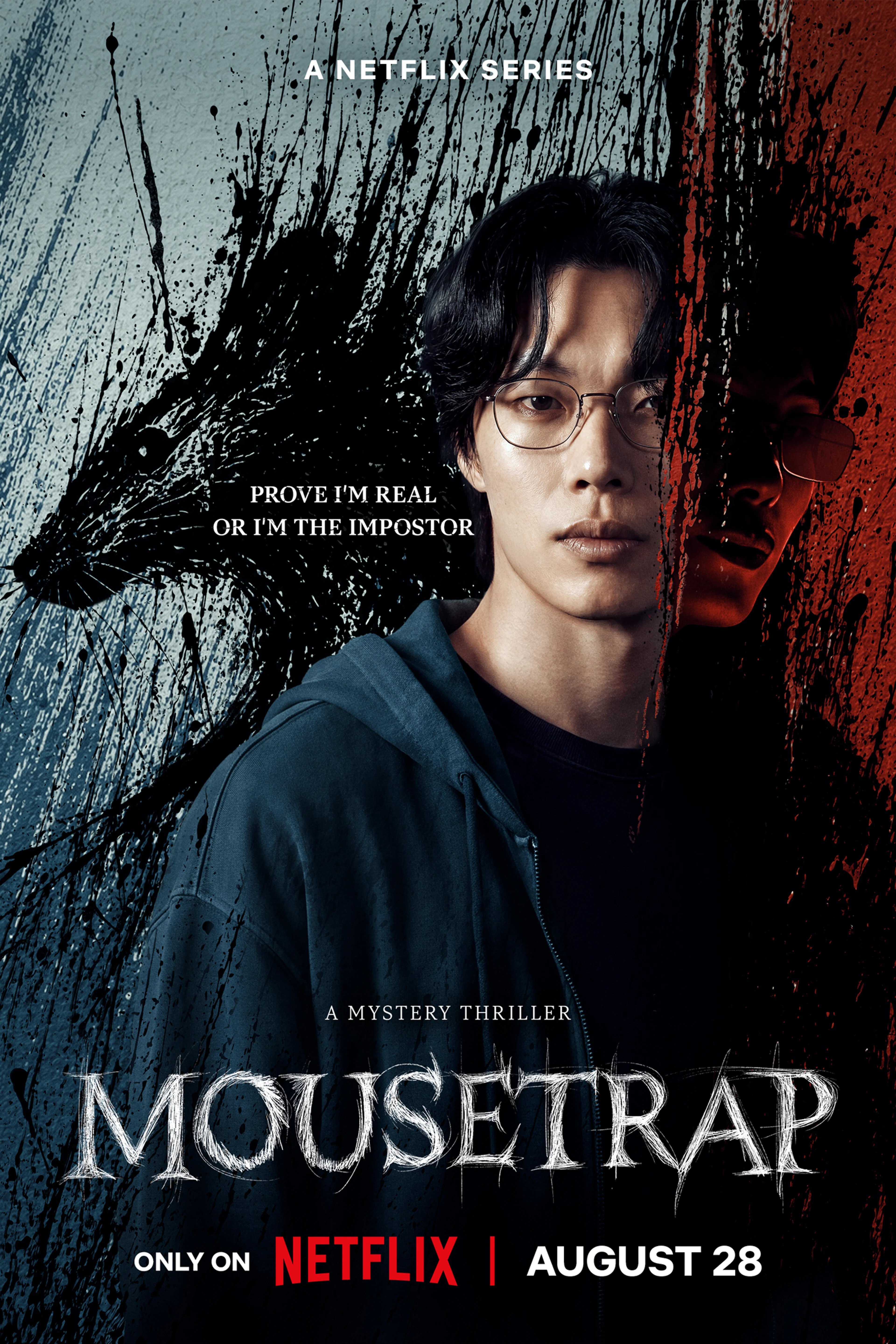
Je Moon-jae is a successful novelist who has not left his apartment in three years. He publishes under a pen name and relies on an old classmate to handle his money and property. Then his fingerprint stops unlocking his phone. His accounts become inaccessible, his apartment is sold and the person he depends on stops answering. He knows where he lives, but he cannot prove that the home is his.
That is the problem at the start of Mousetrap, a Korean Netflix thriller starring Ryu Jun-yeol. Someone called the Rat has taken Moon-jae’s identity. A violent loan shark, Noja, believes Moon-jae owes him money. The novelist needs help finding the impostor, but the man who can help is also one of the people he needs to escape.
This review covers the complete ten-episode limited series. All episodes are available on Netflix in the US. The original dialogue is Korean, with English subtitles and an English dub available. It is rated TV-MA, and includes bloody violence and distressing deaths. We discuss scenes from across the series, including the closing episode, without identifying the Rat’s real identity or describing the final confrontation.
Who’s who in Mousetrap


More cast
- The RatPlayed by Ryu Jun-yeol
- Park Sun-yongPlayed by Lee Kyoo-hyung
- Son Su-hyeonPlayed by Moo Jin-sung
- Han Ji-hyePlayed by Lee El
Je Moon-jae (Ryu Jun-yeol): The novelist trying to prove who he is after losing access to his money and home.
Noja (Sul Kyung-gu): The loan shark who first pursues Moon-jae, then agrees to help him find the Rat.
The Rat (Ryu Jun-yeol): The man using Moon-jae’s face and identity. The investigation tries to establish who he really is.
Park Sun-yong (Lee Kyoo-hyung): The detective following evidence that connects the identity theft to a criminal case.
Son Su-hyeon (Moo Jin-sung): Moon-jae’s former classmate and accountant, who manages his property and money.
Han Ji-hye (Lee El): Moon-jae’s longtime editor. He hopes she can confirm his identity because she knows his work.
How Moon-jae loses his identity
Before the theft, Moon-jae has arranged his life so that he rarely needs another person. He exercises on a treadmill and watches the plaza below his high-rise apartment through large windows. Son Su-hyeon, his former classmate and accountant, is his link to the outside world. Their financial arrangement matters: the property and accounts are held under Su-hyeon’s name. Moon-jae has made himself difficult to find, but he has also made it difficult to establish what belongs to him.
When the bank access fails, Su-hyeon supplies another phone. The replacement does not fix the problem. Moon-jae cannot solve this by changing a device, because the information that should identify him no longer works. The failed login becomes a practical problem, not just an ominous message. He cannot use his money or persuade the people handling his affairs to accept his explanation.

Credits
Official images and trailer excerpt: Netflix.The apartment sale makes things worse. Moon-jae wants to contact Su-hyeon and stop strangers from taking his home, but Su-hyeon has gone silent. Moon-jae ends up outside in his pajamas and slippers, trying to find someone who will believe him. We liked that the series starts with these ordinary tasks. A viewer does not need to understand fraud or banking systems to understand why a locked account and an unreachable accountant frighten him.
Ryu makes the trip outside physically awkward. Moon-jae folds his shoulders inward, hesitates and searches people’s faces for a response. When the street overwhelms him, the image becomes distorted. The camera helps explain why leaving the apartment is already difficult for him. It also creates a problem for the investigation: we cannot always treat what Moon-jae thinks he sees as reliable information.
The opening draws on a Korean folktale in which a rat becomes a person after eating that person’s nail clippings. That is the story behind the title, not an instruction to assume that every strange event has a supernatural cause. Moon-jae’s losses involve people, documents and money. The series asks us to examine those things while he fears that someone has taken more than his name.
At the end of the first episode, he meets a man with his own face. Ryu plays both parts. The second man is more comfortable taking up space and letting Moon-jae struggle for an answer. The two men look alike, but they do not behave alike. That distinction is useful when the investigation gets complicated: even before we understand who the Rat is, Ryu gives us a way to recognize which man we are watching.

Why Moon-jae and Noja need each other
Noja lends money and uses threats and violence to collect it. He does not enter the story to rescue a frightened writer. He is looking for money connected to Moon-jae, and his first approach involves a baseball bat. Moon-jae wants to get away from him; Noja wants to stop him escaping. Their first meeting gives both men a reason not to trust the other.
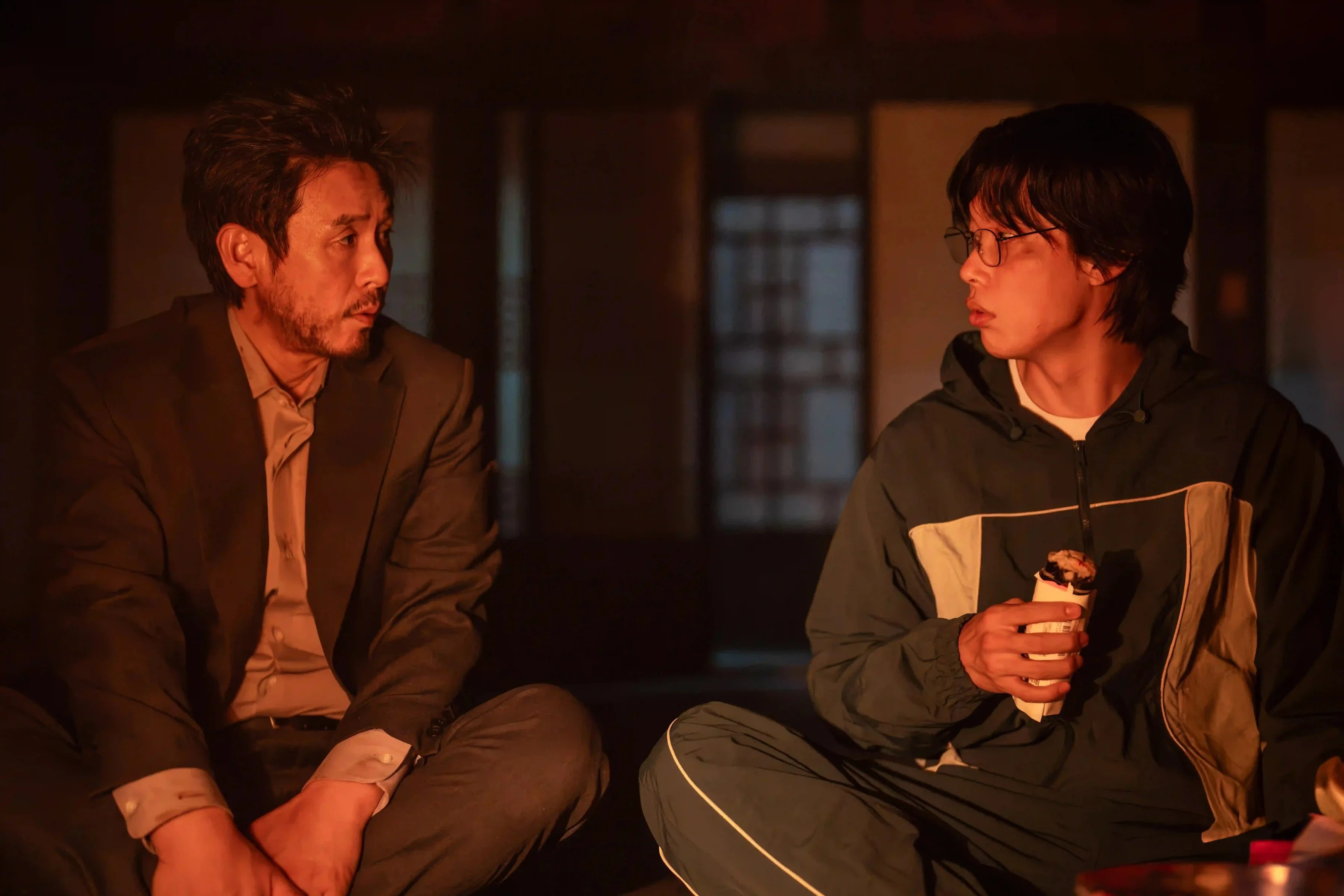
That makes their later agreement more interesting. In Episode 3, Noja takes Moon-jae on as a client while also keeping him as a hostage. They prepare a trap for the person using Moon-jae’s identity. Moon-jae needs someone who can follow suspects and deal with criminals. Noja needs information that will help him recover his money. Working together solves a problem for each man without making either one safe.
Sul Kyung-gu keeps Noja impatient rather than turning him into a kindly protector. He listens because Moon-jae may be useful, and he gets angry when another explanation fails to produce a result. Ryu’s nervous attempts to explain himself give Sul something specific to react to. The partnership is strongest when helping Moon-jae also helps Noja. We can understand why they stay together without pretending that the threats have disappeared.

This also makes the action easier to follow than some of the later revelations. When Moon-jae runs, his immediate need is to get away from whoever is pursuing him. When Noja confronts another criminal, he needs to get information or keep control of the situation. The fights are rough, with bodies colliding at close range. Neither man can settle the investigation by winning one of them, because the person behind the theft can still control information they do not have.
Detective Park Sun-yong approaches the same problem from another direction. He is investigating evidence that connects the men, rather than trying to reclaim Moon-jae’s home or collect Noja’s money. His involvement should make it possible to check what they say. As the series starts connecting the case to his own past, however, it adds another person whose account of himself needs to be questioned.
Where the mystery becomes harder to follow
In Episode 4, a recovered memory leads Moon-jae and Noja to an island where the Rat once stayed. It is a useful reason to change location: Moon-jae remembers something, the men decide to check it, and the search gives them a new place to investigate. By Episode 5, a connection between Noja and the Rat changes what Moon-jae can assume about his companion. The best surprises change the meaning of a relationship we already understand.
The later episodes use that approach too often without allowing the men much time to establish an answer. A new memory suggests one explanation, another person disputes it, and the search moves elsewhere. We still want to know who took Moon-jae’s identity. The problem is that the show sometimes makes us spend more time sorting competing accounts than watching the characters make progress.

Episode 6 provides a clear example. Moon-jae contacts his longtime editor, Han Ji-hye, because someone who has worked with him should be able to vouch for him. He wants a recognizable person to confirm who he is. The attempt does not simply restore his identity; he remains confused and has to rely on a text from Noja. The scene makes his need for another person believable, but it also postpones the answer again.
The same frustration returns in Episode 8. Sun-yong goes to a nursing home looking for a witness who could help establish the truth. By the time he arrives, that witness is gone. The detective has a sensible task, and the missing witness gives him another obstacle. After so many earlier leads have changed direction, though, it feels like another delay at the point where we want the evidence to become clearer.
Sun-yong’s own history complicates this further. He does not just uncover information about Moon-jae; he discovers that his past is connected to the case. Lee Kyoo-hyung makes the discovery upsetting for the detective, but it gives the viewer another identity question to keep track of. The series would be easier to follow if it settled more of its earlier questions before adding this one.
We also wanted more time with people such as Ji-hye outside their usefulness to the investigation. She matters because Moon-jae needs someone who knows his work. There is less room to understand her than there is for another disputed memory or another confrontation. That imbalance is harder to excuse across ten episodes, several of which run close to an hour.
The closing episode gives Moon-jae a more specific problem. He wants to continue the book that made him successful, but a manuscript he receives contains an account of his own past. Publishing it would expose things he wants to hide. He tries to rewrite that account so the blame falls elsewhere. Getting his home back does not make that manuscript safe to publish. We liked this scene because the writer now has to decide what to do with information he understands, rather than chase another person who might explain it. His attempt to change the story also makes it harder to accept him as an innocent victim.
The Pixel Twelve verdict
Pixel Twelve score: 7/10 — Good. We recommend Mousetrap for viewers who enjoy a complete, violent investigation and are willing to follow conflicting memories. Ryu’s two performances and the reasons Moon-jae and Noja stay together make the series worth watching. The final episodes give the theft a personal explanation that improves the story, but they do not remove the delays in the middle.
If you want a detective story that establishes a clue and then steadily builds on it, this may be frustrating. The nursing-home visit and the attempt to get the editor’s help both show why: the characters pursue sensible answers, yet the show repeatedly leaves them needing another lead. Mousetrap is good enough to finish, but not consistently clear enough to make all ten episodes feel necessary.
More from Mousetrap
3 screenshotsLoading results
Find the cast, episode list, age rating and US streaming details on our Mousetrap series page, or browse more Pixel Twelve reviews.