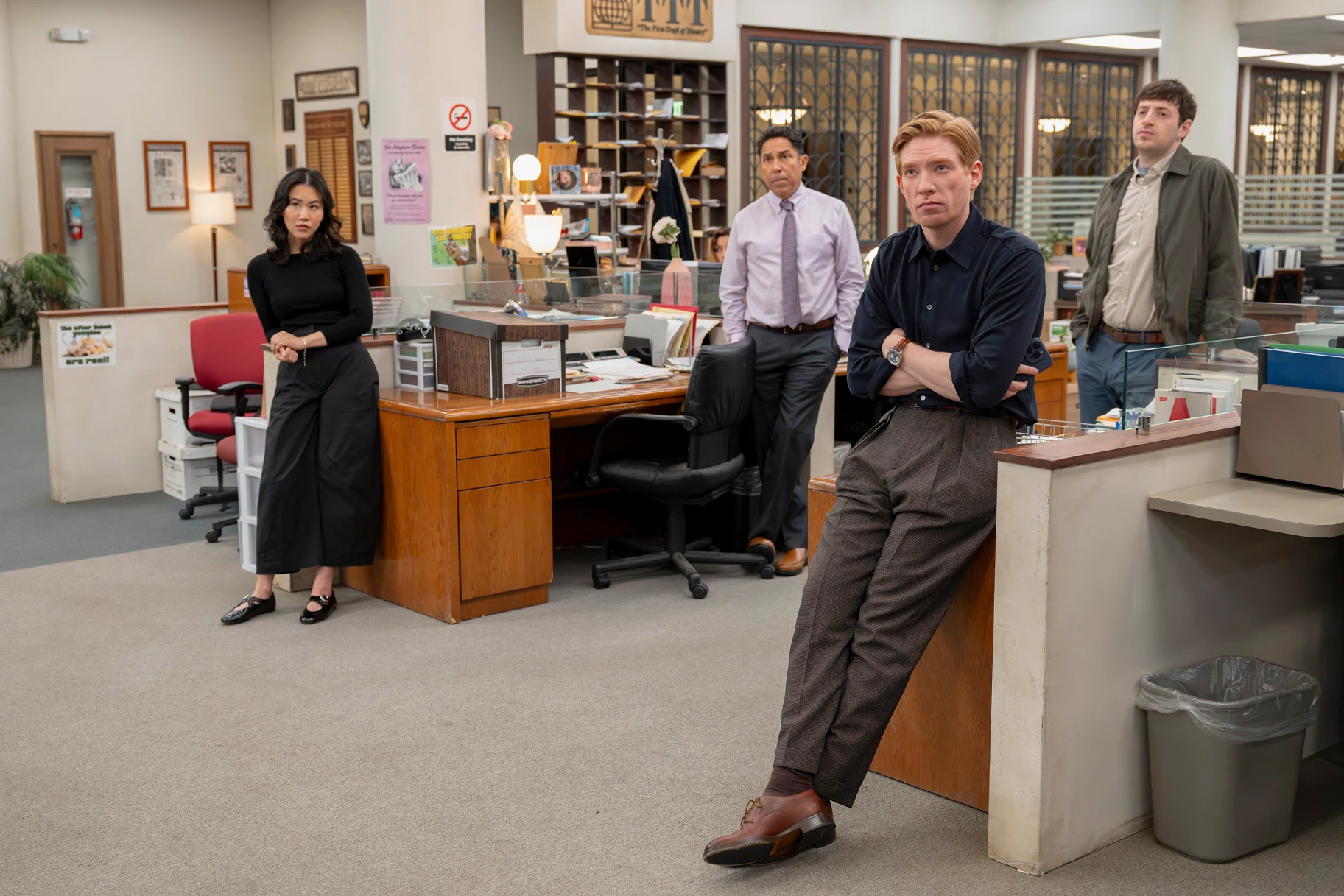
Ned Sampson wants people in Toledo to read their local newspaper again. He runs the Toledo Truth Teller, where some of his reporters used to work in accounting, advertising or the parent company’s toilet-paper business. They have to learn how to find stories while Ned tries to convince the company to pay for the work. That is the starting point of The Paper, a comedy filmed as if a documentary crew were following real employees.
Season 2 begins after the staff win Ohio Journalism Awards. Their next assignments include a trip to a gun range and an attempt to report on a tornado. Ned also starts a secret relationship with Mare, one of his reporters. We had more fun watching the employees get into trouble while working than watching Ned and Mare try to stay together. Esmeralda and a new HR representative are especially good reasons to return.
This review covers all ten episodes of Season 2, now streaming on Peacock in the US. The rating is TV-14. There are sexual jokes and inappropriate workplace conversations. You do not need to have watched The Office, although Oscar Martinez and the documentary crew come from that show. Start with The Paper’s first season to follow the newspaper’s recovery and the beginning of Ned and Mare’s relationship.
Spoiler note: We discuss individual episode situations below, but do not reveal the result of the final investigation or Mare’s last decision.
Who’s who in The Paper
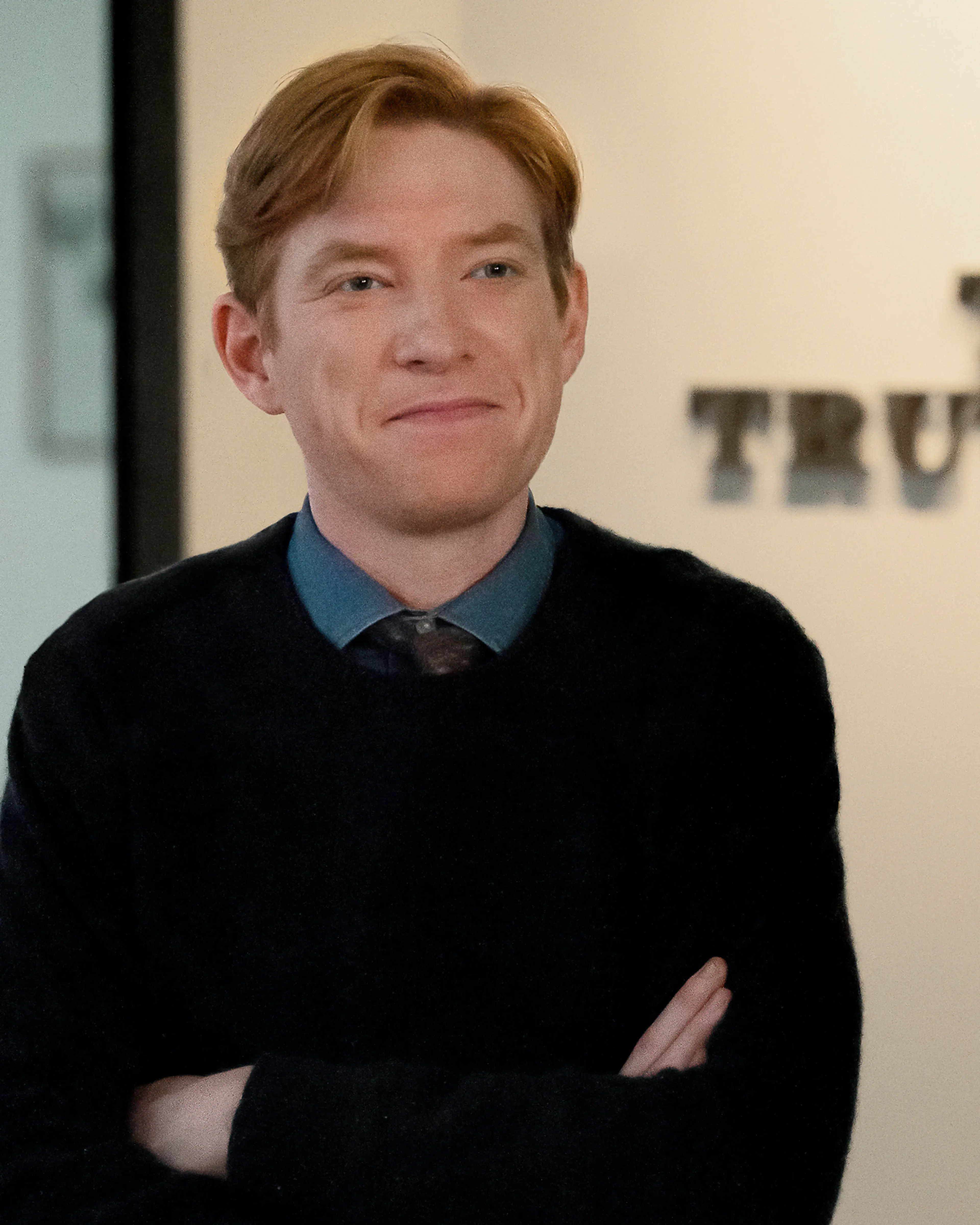




Ned Sampson — Domhnall Gleeson: The editor-in-chief, who decides what the newspaper covers. He wants better local reporting and a relationship with a member of his staff.
Mare Pritti — Chelsea Frei: A reporter and former Army journalist. She dates Ned, but also wants opportunities to do more ambitious work.
Esmeralda Grand — Sabrina Impacciatore: The managing editor responsible for the paper’s online operation. She dislikes following other people’s instructions. Matteo is her young son.
Ken — Tim Key: A corporate strategist working for the company that owns the newspaper. He regularly gets involved in Esmeralda’s plans.
Lisa Graysh — Lisa Gilroy: The HR representative. Her job involves workplace rules and employee complaints, but she asks personal questions that make people uncomfortable.
Adelola, played by Gbemisola Ikumelo, is an accountant recruited into reporting. Travis, played by Eric Rahill, works for the parent company’s toilet-paper business and also reports for the newspaper. Marv Putnam, played by Allan Havey, is the company boss Ned must persuade when he needs more money.
Ned’s reporting plans create the best group scenes
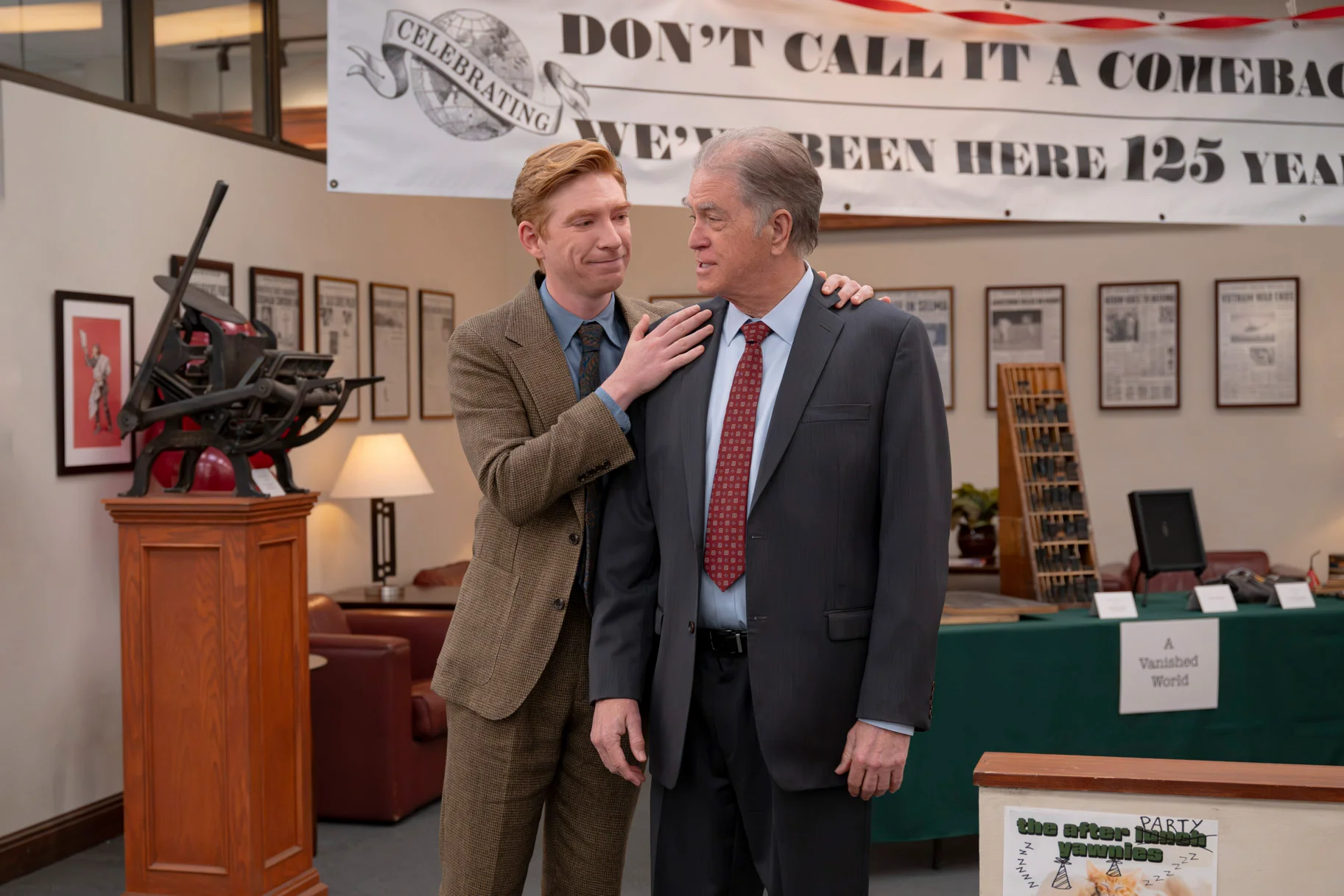
The awards should make it easier for Ned to ask for help. He wants $100,000 for practical things, including overtime pay and laptops, rather than another speech about how well everyone has done. Marv turns him down. Winning an award does not give the staff the equipment or paid hours they need. Gleeson makes Ned’s disappointment easy to understand: he can point to successful work, but still cannot get the people above him to fund the next assignment.
Credits
Official images: Peacock / John P. Fleenor. Character publicity: Peacock.Ned later investigates possible wrongdoing involving powerful advertisers. These are businesses whose advertising helps pay for the newspaper. That puts him in a difficult position: he wants to tell readers what happened, while the company has a reason not to upset the people paying it. By Episode 8, he is organizing a secret reporting team after being told not to cover a story. The conflict is clear even if you have never worked in a newsroom. Investigating a business is harder when your boss needs its money.
The funniest reporting assignment is in Episode 7, “Tornado Alert.” Travis and Adelola go out to cover the storm. Travis wonders whether his car is suitable for storm chasing, then the danger gets too close and they abandon the attempt. Rahill’s enthusiasm turns into fear, while Ikumelo’s alarm makes the bad decision harder to dismiss as harmless. Their attempt to get a story becomes an urgent attempt to get away. We enjoyed the change from confident planning to two people realizing they are not prepared for this job.
Back at the newspaper, Ned is trying to send emergency updates to readers’ phones. The useful job is warning people about the tornado, but he has trouble getting the messages right. That gives the episode two connected problems: the people outside are in danger, and the people inside are struggling to explain it. The office scenes have a reason to matter beyond someone making an embarrassing comment to a camera.
There should be more time for these employees to do things together. When Adam and Adelola are left to handle the weekend edition while Ned and Mare go away, there is an obvious chance to follow how they manage without him. Instead, the couple’s whereabouts remain a major part of the episode. Ned’s absence should give his colleagues more room, not simply more opportunities to discuss Ned. The reporting conflict also has to share later episodes with his relationship problems, so neither story gets as much attention as we wanted.
Esmeralda and Lisa make bad decisions funny
Esmeralda has skipped years of mandatory HR training, the lessons employees are supposed to complete about acceptable behaviour at work. In Episode 6, she has to catch up and tries to get around the requirement. Lisa responds by putting her in a box. It is an absurd punishment, but the situation is easy to follow: Esmeralda refuses a basic workplace duty, and the person enforcing it behaves even worse. Impacciatore’s refusal to accept being told what to do and Gilroy’s confident response make the scene funnier than a straightforward argument over a training video.
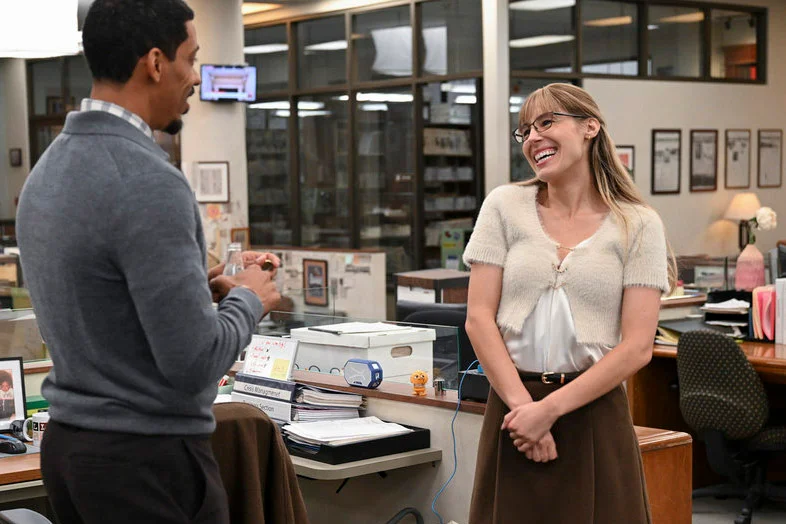
Lisa causes a different problem when Ned tells her about his relationship with Mare. Because he is Mare’s boss, he needs to deal with the workplace rules rather than simply keep dating her in secret. Lisa promises support, then asks him to report private sexual details. Ned has come for advice about professional boundaries; she wants information that is none of her business. Gilroy makes Lisa funny by acting as if the inappropriate request is routine. Gleeson’s confused response gives us time to register how unsuitable her advice is.
Esmeralda’s family schemes work for a similar reason. She recruits Ken to pretend to be Matteo’s father, adding another false claim that both adults now have to maintain. Key’s calmer delivery contrasts with Impacciatore’s more forceful performance. The joke does not depend on learning a long history between them: a colleague has agreed to pose as her son’s dad, and she treats that as a reasonable solution. Ken and Esmeralda are more entertaining together than either is when simply obstructing Ned.

These scenes will not win over everyone who disliked Esmeralda in Season 1. She is still loud and determined to make events about herself. We prefer her when there is a specific task she is trying to dodge, such as the training, or a lie she needs Ken to help maintain. Her behaviour is easier to enjoy when someone can challenge her. When everyone has to stop what they are doing and listen to her, the other employees get less chance to be funny.
Ned and Mare’s romance needs more convincing moments
Ned and Mare begin dating after their Season 1 kiss. They try to hide it from colleagues and the documentary crew, even while finding excuses to spend time together. Their weekend away leaves other employees running the paper, and a search for a reporting project takes them back to Mare’s apartment. Those situations could show both the attraction and the problems caused by an editor dating his reporter. Too often, we learn more about their efforts to hide the relationship than about why they enjoy each other.
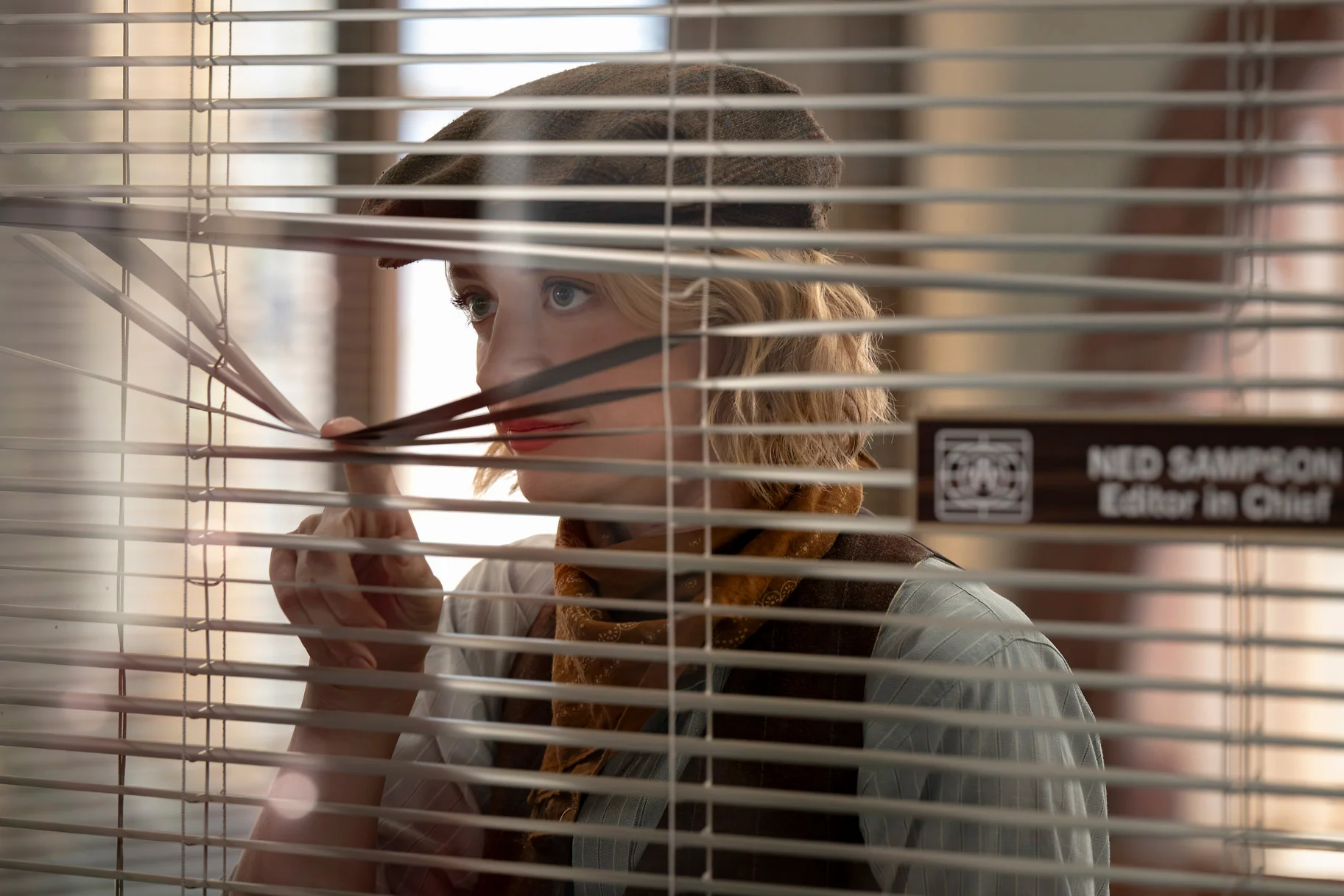
Frei is more convincing when Mare is pursuing a story or a job opportunity than when the season asks us to worry about the couple. At the Cincinnati Chronicle, the staff look down on Mare and her small-town newspaper background. She wants to be taken seriously as a reporter, not treated as someone who does not belong there. We care more about whether she can prove herself to these colleagues than whether she and Ned can manage being apart. Their separation adds another relationship problem before there have been enough enjoyable scenes of them simply spending time together.
The boss-and-reporter problem deserves more attention too. Ned cannot be only her boyfriend during work hours: he also has authority over assignments and how her work is treated. His visit to Lisa makes that issue funny, but a good joke about bad HR advice does not resolve it. We wanted more of Mare making decisions as a reporter, rather than her career mainly becoming another difficulty for the couple.
Pixel Twelve’s verdict is 7/10 — Good. The storm assignment and the HR training punishment give us specific reasons to recommend Season 2. We would watch more scenes with Travis and Adelola learning to report, or Ken helping Esmeralda with an obviously bad plan. Ned and Mare’s romance is the reason the score stops at seven: their relationship takes up too much time without becoming as enjoyable or convincing as those office stories. If you liked the newspaper staff in Season 1, these ten episodes are worth watching. If you mainly want a romance to care about, their secrecy and separation are less satisfying.
More from The Paper Season 2
3 screenshotsLoading results
Find the cast, age rating and US streaming details on our The Paper series page. Read more about Lisa Gilroy joining the cast, or browse more Pixel Twelve reviews.