
Spoiler notice: This review covers all eight episodes of Season 2, including Bella’s fate and the final confrontation between Eddie and Freddy. All eight episodes are available on Netflix. The US listing rates the series TV-MA for an adult audience; expect strong language, drug dealing and graphic violence.
Eddie Horniman invites an influential lord and visiting criminals to a country shooting party, then seats them at an expensive dinner. He is not simply showing off his house. He wants a place in the House of Lords, part of Britain’s Parliament, and a deal that will take his drug business into Italy. The guests have things Eddie cannot buy just by selling more cannabis. The setting makes his plan easy to understand: he is using the family name, the estate and its invitations to get access to people who can help him.
If you are new to The Gentlemen, Eddie inherited the Halstead estate in the first season instead of his older brother, Freddy. Underneath its respectable grounds, the Glass family was growing cannabis to sell illegally. Eddie first wanted to remove that business from his land. Now he wants to make it bigger, working with Susie Glass while her father, Bobby, remains in charge from prison. Watch Season 1 before this one. The inheritance, Freddy’s resentment and Eddie’s relationship with the Glasses are continuing stories, not details this season introduces from scratch.
Who’s who in The Gentlemen Season 2
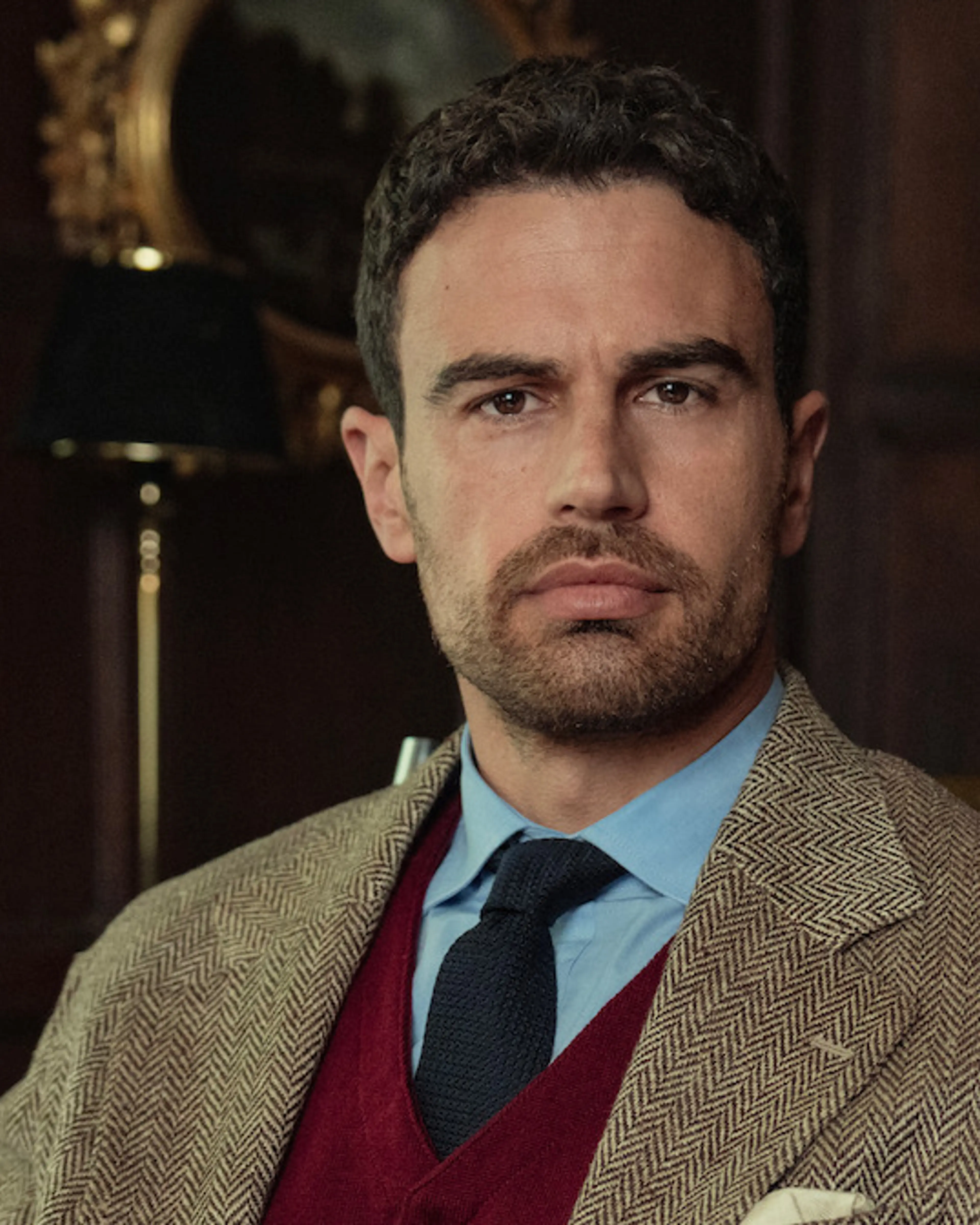

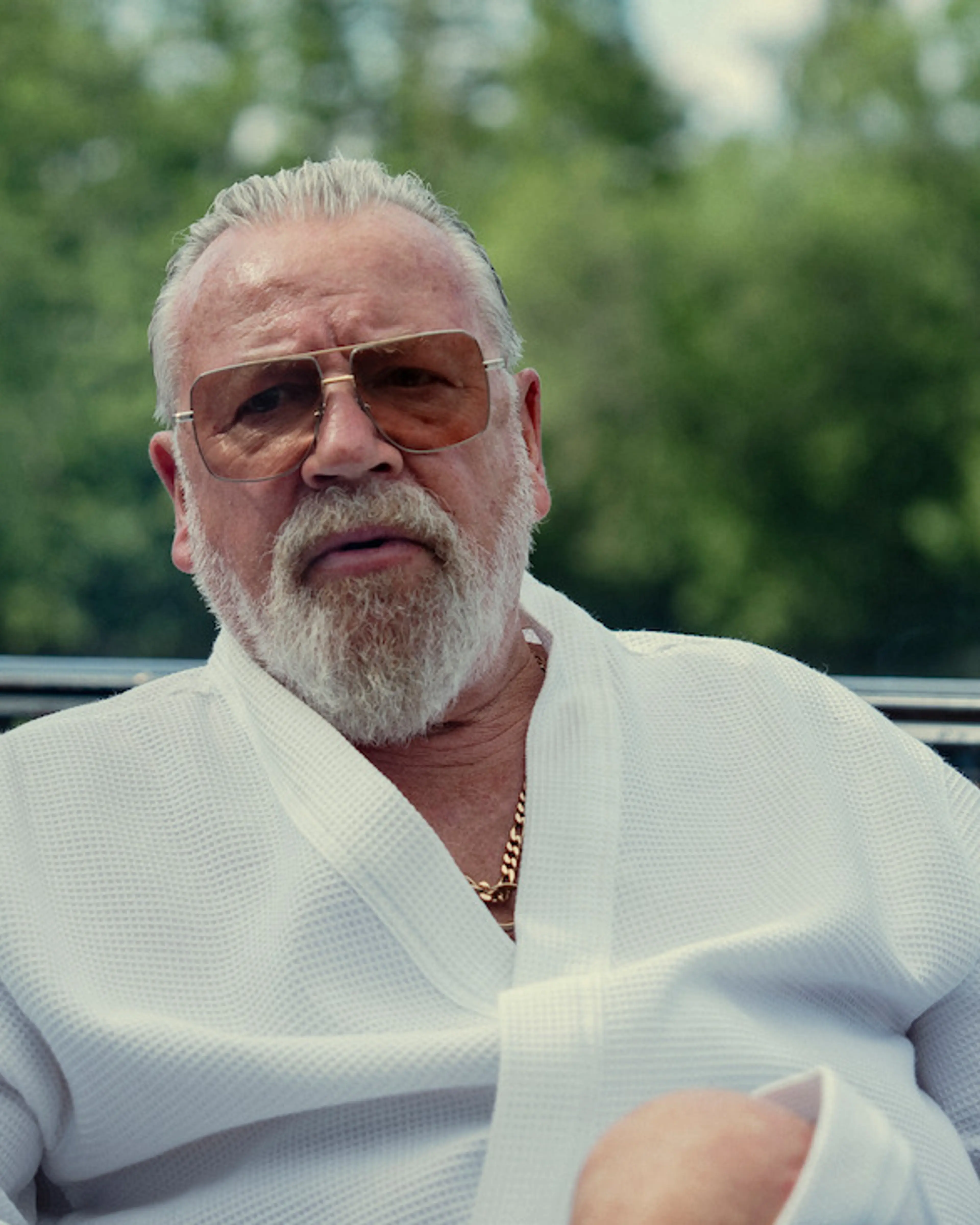


Eddie Horniman (Theo James) owns Halstead and wants to expand the cannabis business. Susie Glass (Kaya Scodelario) runs its daily work and wants more say in its future. Bobby Glass (Ray Winstone) is Susie’s father, the imprisoned boss who still expects both of them to follow his orders.
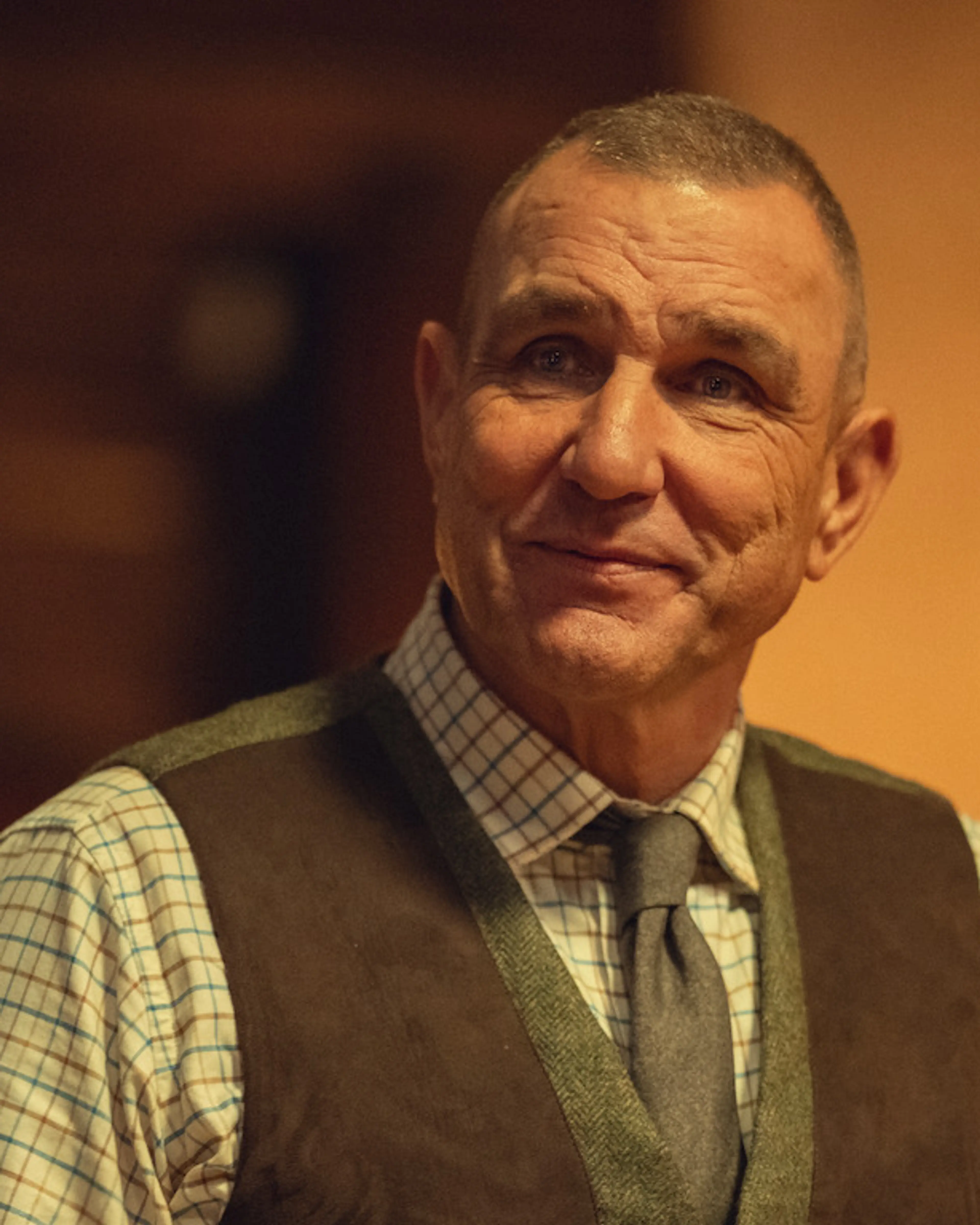
Freddy Horniman (Daniel Ings) is Eddie’s older brother, who expected to inherit Halstead. Bella (Benedetta Porcaroli) is an Italian aristocrat whose marriage to Cico connects her to the new business arrangement. Geoff Seacombe (Vinnie Jones) looks after the estate’s grounds and protects the family; baby Tarquin is his grandson.
Two other men matter to Eddie’s expansion. Lord Hawthorne, played by Hugh Bonneville, has the political connections Eddie wants. Marco Moretti, played by Sergio Castellitto, leads the Italian crime family Eddie hopes to work with. Cico Maldini, played by Michele Morrone, is Eddie’s unreliable contact with that family. Introducing them at the same country gathering is useful: we can see why Eddie has invited each person instead of being asked to remember another unexplained gangster name.
Eddie wants more than a profitable drug business
The season’s main disagreement is about a proposed change to cannabis law. Bobby wants to stop the bill because making the drug legal could threaten his illegal operation. Eddie sees a different opportunity. He wants to use the cannabis they already grow to supply a legitimate business, selling it more cheaply than competitors. To help that happen, he needs political influence. Eddie and Bobby are arguing about what to do with the same product, not merely taking turns announcing that they want more power.
Credits
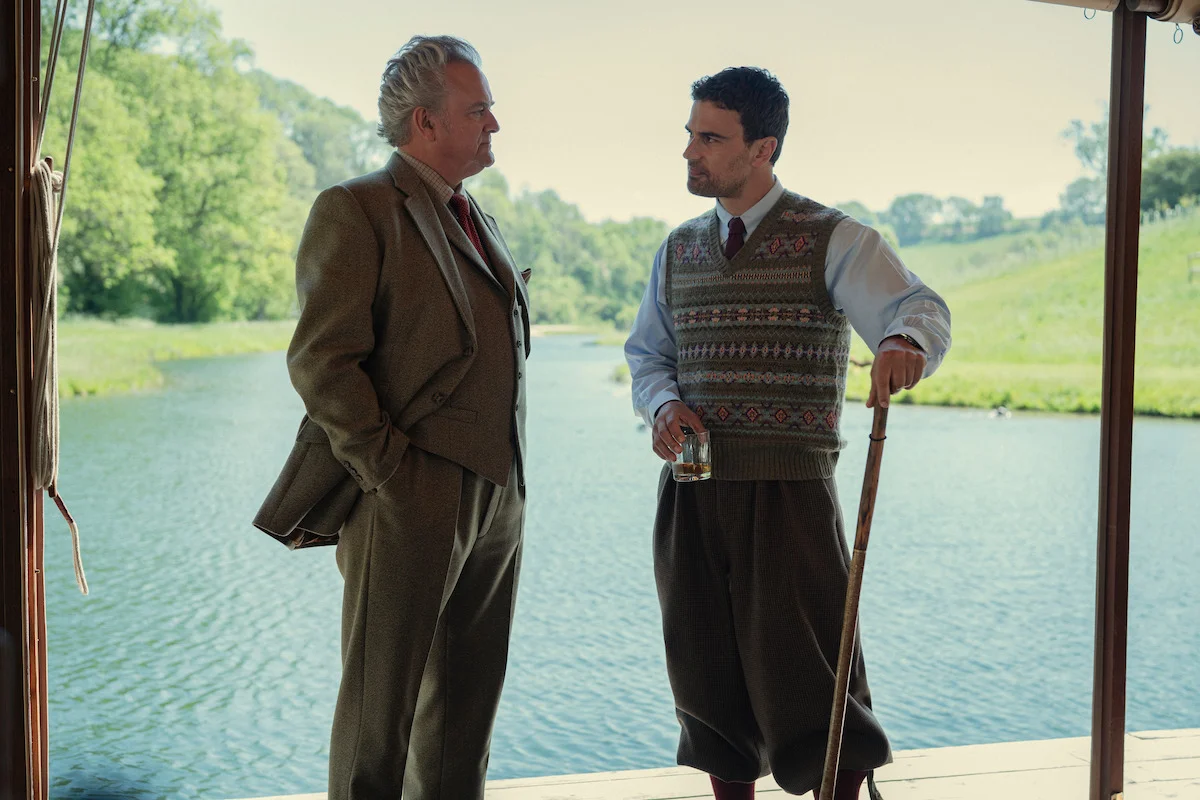
Christopher Raphael / NetflixThat disagreement gives their meetings something worth following. Bobby has built the business and expects Eddie to obey him. Eddie believes his aristocratic connections can get them opportunities Bobby cannot. Ray Winstone makes Bobby sound irritated by the assumption that this younger man understands the business better than he does. Theo James makes Eddie’s answers controlled enough to be insulting without raising his voice. We enjoyed these conversations most when a decision about the bill or the next deal was actually being made.
The country shoot also gives Bonneville something specific to do. Hawthorne needs money, while Eddie needs a nomination and access. The lord’s interest in Jack Glass, Susie’s boxer brother, adds another demand to the arrangement. Eddie’s respectable guest is asking for favors of his own. Bonneville makes the man’s formal manner funny because we already understand how little dignity there is in the negotiation. The humor comes from what he wants, not from assuming an expensive accent is a joke by itself.
Those plans take a long time to move. The early episodes keep returning to new contacts, terms and favors before anyone has to live with the result. The Italian deal is introduced; Hawthorne needs persuading; Bobby still has to be managed. Each part has a reason to exist, but watching another discussion about what Eddie might achieve is less interesting than watching him attempt it. The first half needs fewer negotiations between important decisions. The more direct conflicts later in the season show how much time the opening spends preparing them.
The clothes and locations help those discussions stay watchable. Eddie’s knee-length shooting trousers and patterned sweater place him comfortably at the country party. At dinner, the white jacket and carefully arranged table let him act as host. In Italy, the open rooms overlooking the lake and lighter clothes make the visit look less restricted by the estate’s routines. These are recognizable changes of occasion. We can see Eddie adjusting to his guests, rather than every meeting happening in an interchangeable dark office.
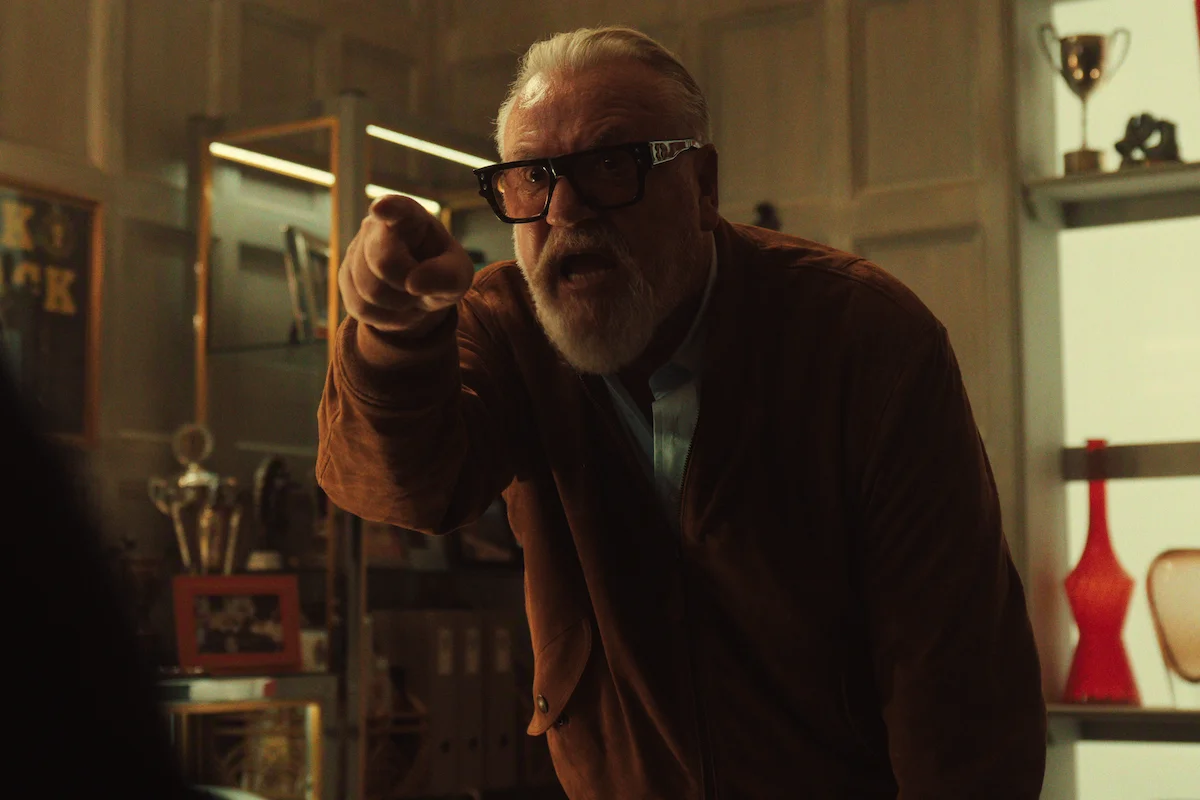
Bobby’s surroundings are deliberately different. He may be in prison, but he has access to a sauna and attendants, and continues directing the people outside. Being locked up has not removed Bobby from the business. The comfortable setting is funny when someone must visit him for permission. It also explains why Eddie cannot assume that leaving England, finding another partner or earning more money will free him from Bobby’s orders.
Credits
NetflixThere is an odd extra part to those prison scenes. Bobby talks with the Bannik, a small bearded figure associated with bathhouses in Slavic folklore. The season leaves us unsure whether this visitor is real or something Bobby imagines. That uncertainty could be interesting if the conversations helped explain a decision we had seen him struggle to make. Instead, they often require us to consider another unexplained presence while the political dispute is already clear. Bobby’s reaction to Eddie is more interesting than the mystery of his bathhouse visitor. We wanted more of the former, not more hints about the latter.
When Eddie pushes against Bobby, the punishment is not another stern conversation. Bobby’s men beat him and leave him in a shallow grave. Eddie has to get himself out. His family name and confident explanations cannot protect him in that situation. James makes the physical effort matter: this is no longer a duke assuming he can negotiate a better arrangement. The scene gives Bobby’s earlier warnings a consequence we can see, and it is one reason the later part of the season becomes easier to stay with.
Susie has a separate problem. She runs the daily operation but still has to answer to her father, and the partner she once trusted to remain calm is becoming more dangerous. Scodelario is good at making Susie listen before replying; when Eddie presses ahead, she looks as if she is deciding how much she can still control. By the end, Susie is also making her own connection with Carlos Vargas, a drug supplier outside Bobby’s operation. She wants a business she can direct, not simply a choice between obeying Bobby and following Eddie. We would have liked that plan to receive more time before the closing scenes.
Bella’s wedding and the attack on Halstead change the season
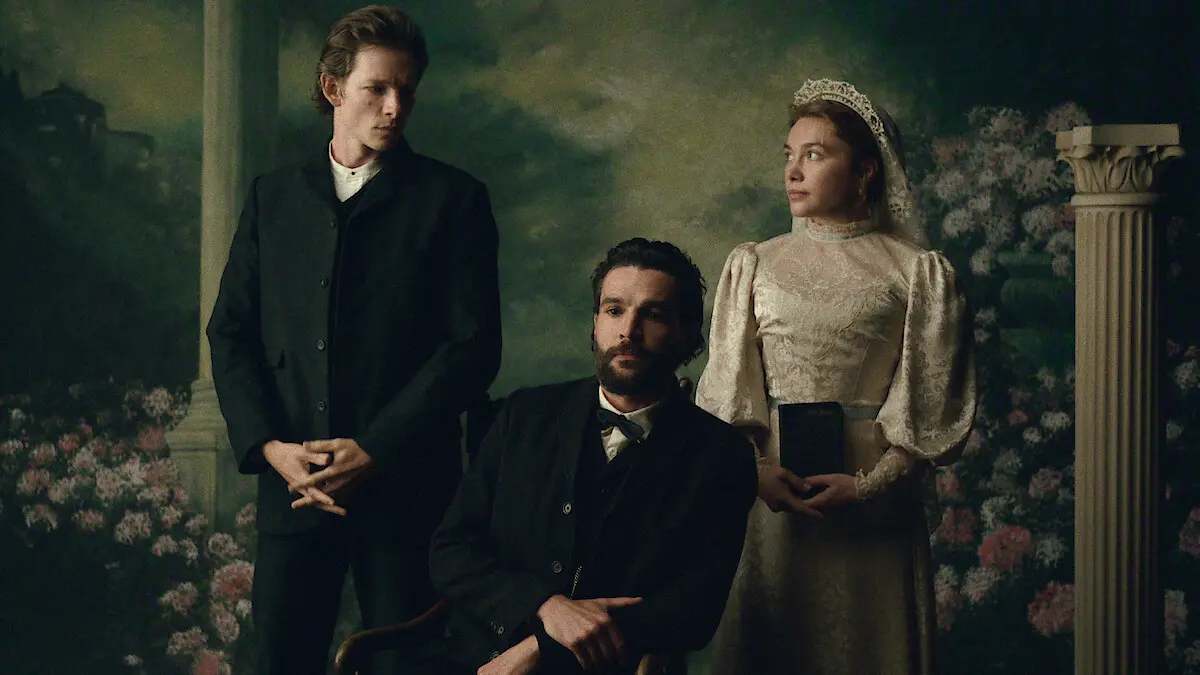
Bella is married to Cico when Eddie first meets her. After Cico dies, she becomes more involved in Eddie’s Italian operation. She is an aristocrat who understands his upbringing and can help him work with the family there. Marrying her would join their families as well as strengthen the business arrangement. Their relationship therefore begins as a practical possibility, not as two strangers immediately deciding they are in love. Bella has a reason to be in these meetings beyond attracting Eddie. That makes her a welcome addition to the Italian story.
Credits
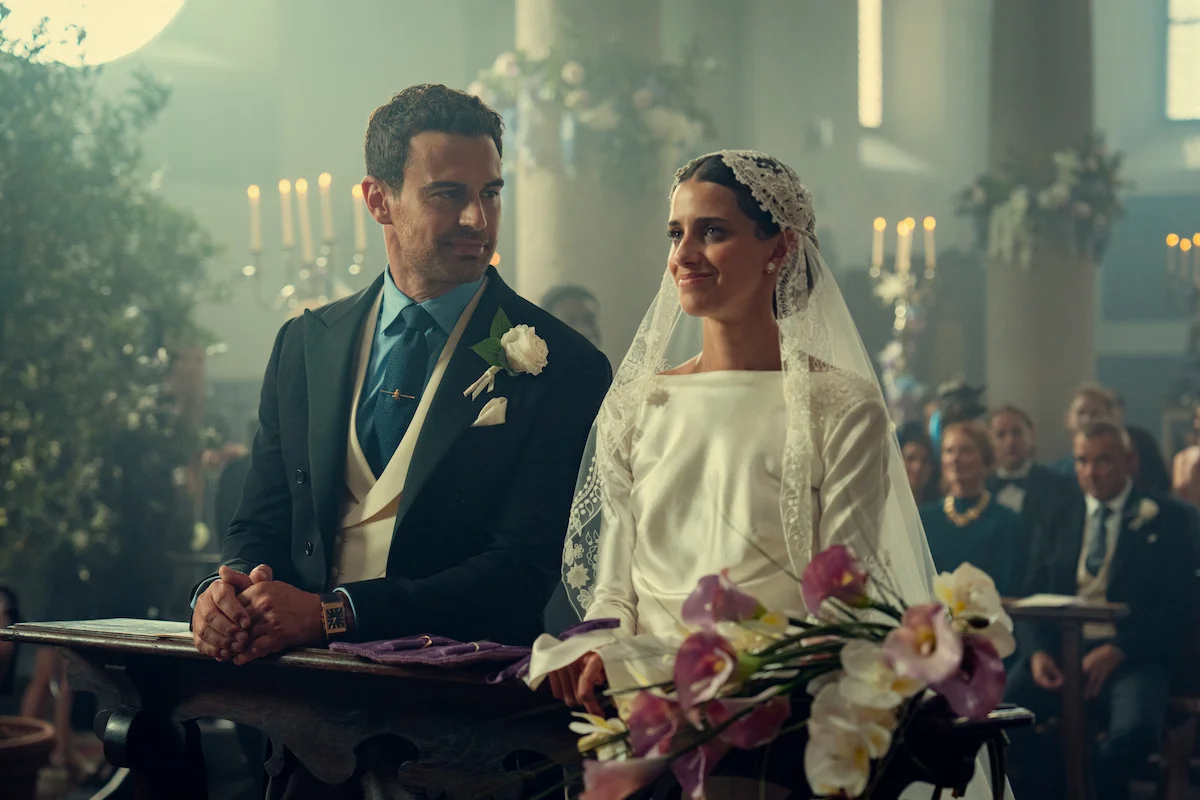
Matt Towers / NetflixThe problem is the speed at which that useful relationship becomes a romance we are expected to care deeply about. Eddie and Bella move from cooperation to a wedding without enough ordinary time together to make the change convincing. The ceremony beside the Italian lake looks beautiful, and James and Porcaroli are comfortable beside each other. But clothes, guests and a good location cannot show us the conversations the relationship needs. We understand why the marriage is useful more clearly than why they have fallen in love.
After the wedding, Bella takes a seaplane while Eddie drives toward Switzerland. She circles him and blows him a kiss before the plane explodes. The contrast is brutal: he has just married her, and now he can do nothing to stop her death. Eddie’s reaction makes sense, and the suddenness is upsetting. But the series has given their courtship so little time that the scene also feels designed to get him angry quickly. We believed his shock more than we believed the depth of the romance that was meant to come before it.
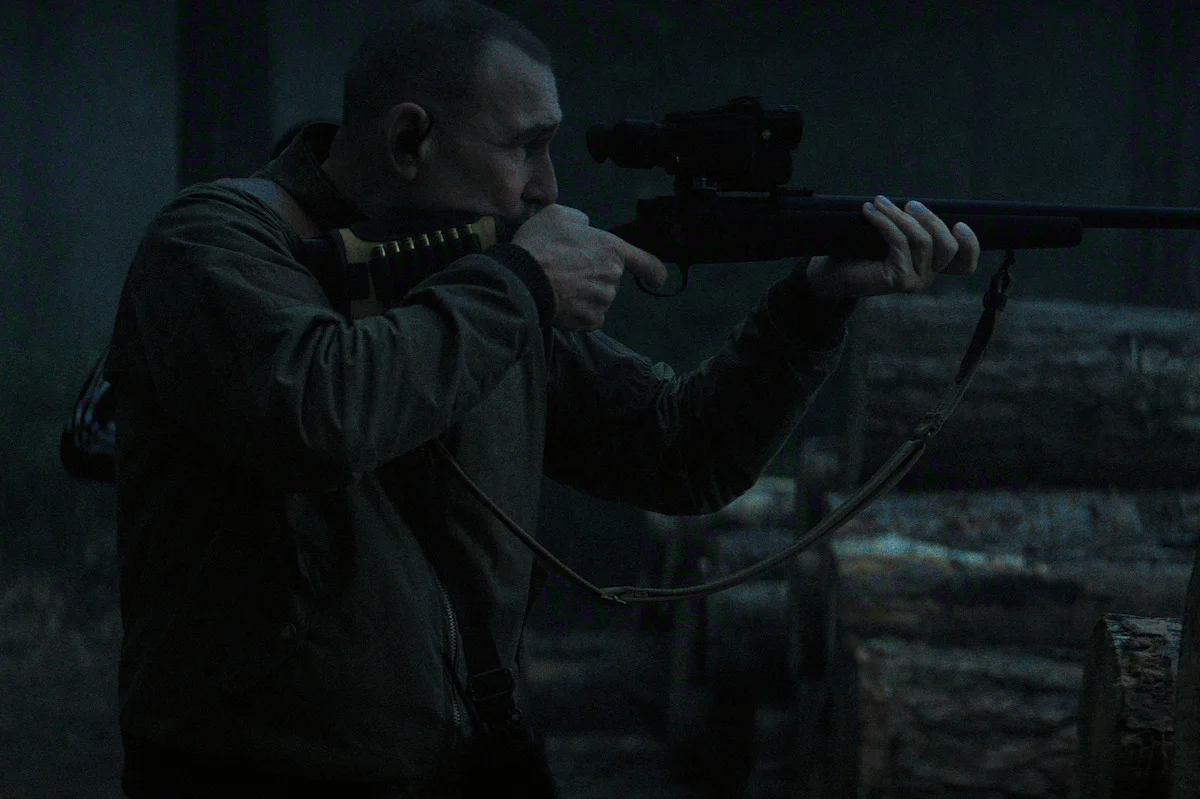
The seventh episode gets the personal reason for its violence much more clearly established. Armed mercenaries attack Halstead Manor to kidnap Tarquin, the baby son of Eddie’s sister, Charly. Eddie is away. Geoff Seacombe, the estate’s gamekeeper, must defend the family and keep the child safe. Geoff is also Charly’s father, which makes Tarquin his grandson. Geoff is defending a child he loves, not just an employer’s property. You understand what he is trying to stop before the fighting becomes the main event.
Credits
NetflixVinnie Jones makes this the season’s best episode. Geoff is usually a quiet man who knows the grounds and takes care of them. When the attack begins, that knowledge and his willingness to fight become useful. Jones does not need to keep explaining how frightened or determined Geoff is. The child is in danger, and his decisions are directed toward protecting him. The action is violent, but the goal stays simple enough to follow. The attack on Halstead is more involving than a larger fight without that personal reason.
Eddie’s response afterward is less sensible. He is convinced Bobby must be responsible for Bella’s death and the attack, and questions a captured mercenary accordingly. Rather than leaving room for a different answer, he keeps pushing his own explanation until the prisoner confirms it. Eddie then arranges an attempt on Bobby’s life. He gets the answer he demands, not proof that his theory is right. This is a much better use of the character’s anger than another scene in which everyone discovers the duke has secretly planned everything perfectly.
Stanley Johnston, played by Giancarlo Esposito, is the wealthy American businessman Eddie borrowed money from. Stanley reveals that he sold Eddie’s debt to Bobby on the wedding day. Eddie now owes Bobby the money he previously owed Stanley. Bobby has bought a financial hold over him, and Eddie realizes that his accusation about the attacks was wrong. But the assassin Eddie requested is already heading to the prison. Eddie and Susie hurry there; Eddie helps stop the attack in the bathhouse, and Bobby kills the assassin with a knife. The sequence works because Eddie’s own decision has created the emergency. Saving Bobby does not make his earlier reasoning correct. James is more interesting when Eddie has to deal with that mistake than when he only explains another clever deal.
The final answer also brings Freddy back into the story. He still resents being passed over for the inheritance. Gospel John, played by Pearce Quigley, is a criminal who uses that resentment to turn him against Eddie. Freddy has been away in rehabilitation for much of the season, so his involvement is a surprise. There is a clear motive, but keeping him at a distance also makes it harder to follow how he reached this decision. More scenes with Freddy would have made the betrayal stronger, even if they made it easier to suspect him.
Eddie eventually forces Freddy into a van with Gospel John and a chainsaw. The killing is heard rather than fully shown; Freddy comes out bloodied while Eddie smokes a cigar. This is a deliberate change from treating the older brother as a source of embarrassing jokes. Eddie has decided what Freddy must do and has made him do it. The scene is effective, but it also tells returning viewers something important: the brothers’ relationship is now cruel in a way that another funny mistake cannot easily undo.
Pixel Twelve score: 7/10 — Good. We recommend Season 2 if you want to see Eddie make dangerous decisions and then deal with the results. Geoff protecting Tarquin, the mistaken accusation against Bobby and the brothers’ final confrontation give the later episodes specific reasons to be tense. We stop at 7 because the early deal-making takes too long, Bella’s romance develops too quickly, and Freddy is kept out of view for too much of his own story. Those problems affect the whole eight-episode season, even when its final stretch is gripping. Expect a more violent crime drama with less broad comedy, and start with the first season rather than treating this as a new entry point.
More from The Gentlemen Season 2
3 screenshotsLoading results
Find cast and release details on our The Gentlemen series page, read the Season 2 ending explanation, or compare more Pixel Twelve reviews.