The EA Sports FC 27 Transfer Market replaces quick one-scene deals with a process that can change over time. Players begin with an enquiry, wait for permission, negotiate with the club and footballer, and may have to return to the table if a rival bid changes the situation.
The system also adds installments, achievement bonuses, loan-back agreements, buyback clauses, first refusal, sell-on rights, and a clearer view of future costs. Dynamic OVR connects current form and fitness to player value, so the best deal may not always be the footballer with the highest normal rating.
How FC 27 transfer stages work
1. Make an enquiry
Buying a player, arranging a loan, approaching a free agent, or planning a future move begins with an enquiry. The target club or player takes time to respond. A negative answer can stop the move before a formal negotiation, while a positive response gives permission to continue.
2. Negotiate with the club and player
Club and player talks can happen in parallel. The buying club agrees on the transfer structure while the footballer and agent discuss the contract. Managers who do not want to handle every detail can delegate negotiations to the Director of Football.
3. React to competing interest
An agreement is no longer guaranteed to stay final. Interest from another club can create fresh demands and return the deal to negotiation. Parallel AI shortlists also mean clubs can chase several targets rather than waiting for one move to fail.
4. Complete or walk away
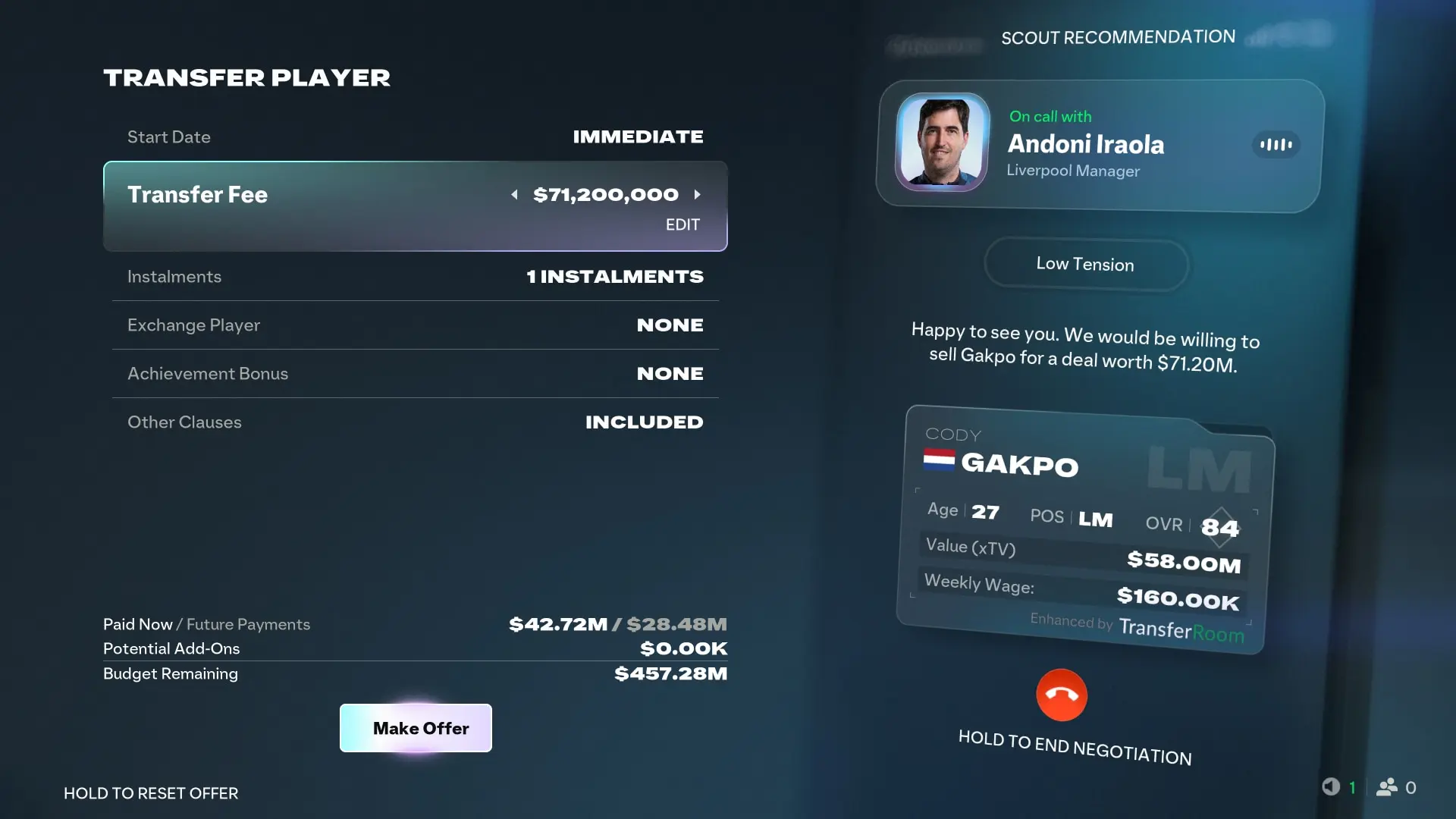
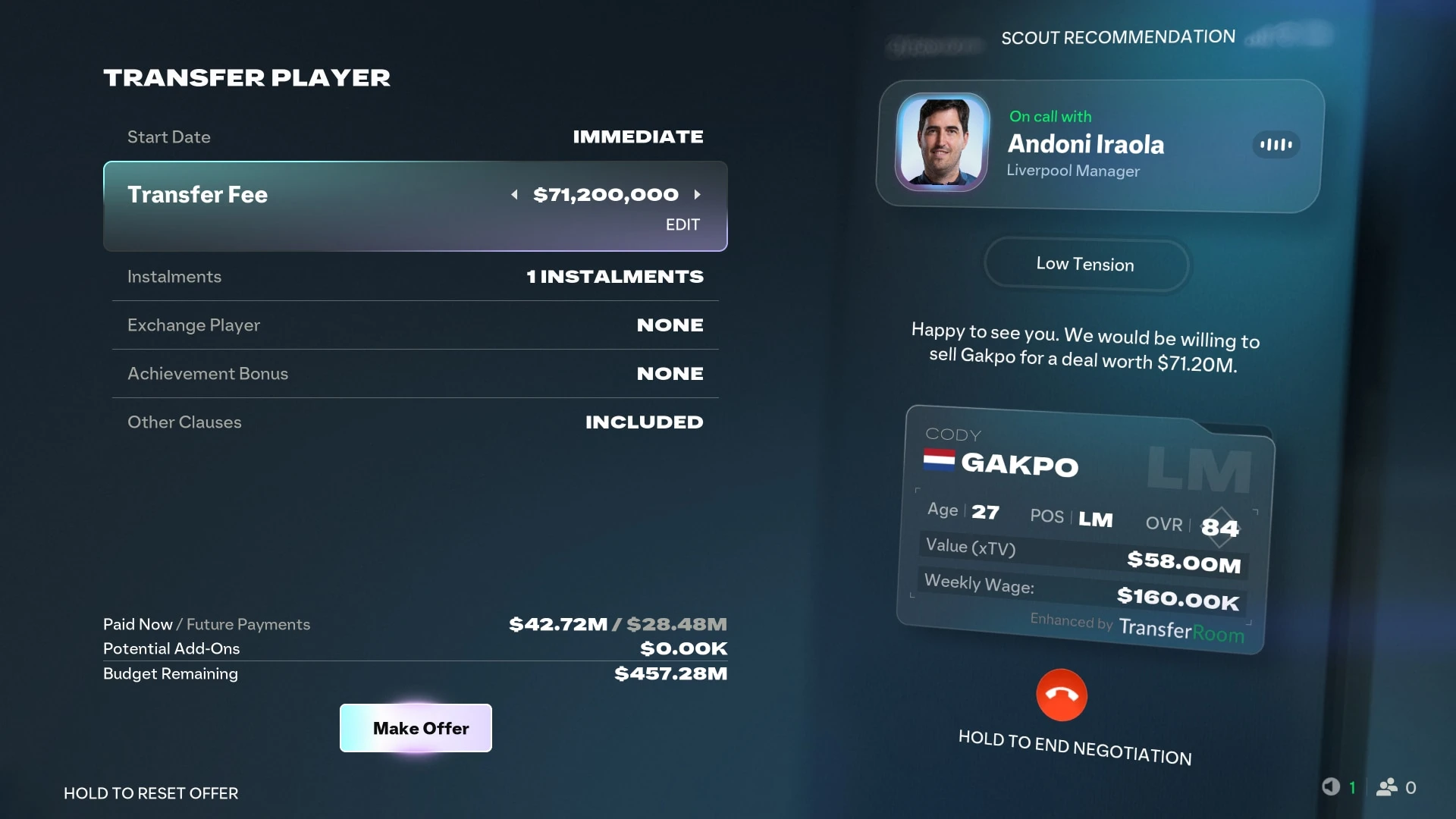
The redesigned 2D negotiation screen includes a tension meter, the financial effect of the proposal, and a clear option to leave. Managers are not locked into an unproductive discussion.
TransferRoom values and changing prices
EA partnered with TransferRoom, a platform used by professional clubs, to inform an expected transfer value system called xTV. It works with the game’s adjusted value model, which considers form and league strength. Values move across seasons instead of staying fixed around one starting number.
A target producing goals, assists, high ratings, or clean sheets can attract more attention and cost more. A player in poor form may become cheaper even if their long-term ability remains strong. Scouts now show the reasons behind the current state instead of slowly hiding basic attributes.
Every major transfer option and clause
- Immediate, next-window, or next-season moves: Choose when the transfer takes effect instead of forcing every signing to arrive immediately.
- Loan-back agreements: Buy a player while allowing them to remain at the selling club for a period of development or squad planning.
- Player exchanges: Include a current squad member to reduce the cash part of a deal or move someone who no longer fits.
- Installments: Spread a fee across several seasons. This protects the current budget but creates future obligations.
- Achievement bonuses: Add payments tied to club success, personal awards, appearances, goals, assists, or clean sheets.
- Buyback clause: Give the selling club a future option to bring the player back for an agreed fee.
- First refusal: Allow the selling club to match a later offer before the player moves elsewhere.
- Sell-on clause: Promise the previous club a percentage of a future transfer fee.
- Promotion and relegation wages: Contracts can automatically increase after success or decrease following relegation.
- Squad roles: Playing-time promises affect morale, so offering an important role simply to close a deal can create problems later.
The new Transfer Hub
The hub separates Scouting from Transfers. Scouting contains player searches, reports, and the network used to discover talent. Transfers contains Active Negotiations for incoming deals, outgoing moves, and renewals.
A Lists area combines the Shortlist, Transfer List, Loan List, and Blocked Offers. Contracts and Clauses shows expiring deals, bonuses, installments, and future financial commitments. Transfer History records activity across clubs for the entire season.
Each active deal displays its stage and the next action. A new Interest indicator gives an early view of how willing a player may be to join, helping managers decide whether to continue or move to another target.
How Dynamic OVR changes transfers
Dynamic OVR is the current version of a player’s rating. Form, morale, playing time, energy, and injury status can push it above or below the baseline. The number can change for players at every club, not only your own squad.
This affects recruitment in two ways. Current performance changes the value that clubs expect, and it changes how useful a player looks right now. A prospect in strong form may be expensive but ready to contribute. A proven player returning from injury may be cheaper but carry poor Match Fitness and reinjury risk.
Dynamic Potential remains separate but connected. Repeated strong seasons can improve a player’s longer-term ceiling, while a long period of poor performance can slow development. A bargain should therefore be judged on current price, baseline ability, form, fitness, and growth profile together.
Smarter AI clubs and harder rival deals
AI clubs now build squads around a longer-term philosophy. Youth-focused teams spend more on younger targets, while other clubs prefer established first-team players. Recruitment also reacts to the current manager’s tactical style and the club’s financial behavior.
Relationships between clubs affect negotiations. Historic and local rivals are less likely to sell directly to each other. Major competitive rivals also resist deals, while clubs in the same ownership network may be more willing to trade.
Players consider club size, league strength, wages, contract length, career stage, continental competition, and the possibility of returning to their home country. Someone interested in one destination may reject another club offering similar money.
Practical transfer tips for FC 27
- Start important deals early: Stages and response delays mean a deadline-day enquiry may leave too little time.
- Keep several targets: AI clubs use parallel shortlists, and the same approach protects you from rejected enquiries or rival hijacks.
- Read the full future cost: Installments make a signing affordable today but reduce flexibility in later seasons.
- Use bonuses for uncertain performance: A smaller guaranteed fee plus achievement payments can protect the budget if the signing struggles.
- Check current OVR causes: A low Dynamic OVR caused by temporary morale or fitness may create value, while a strong run can inflate the price.
- Do not promise every player a major role: Broken playing-time expectations can lower morale and Dynamic OVR after the transfer.
- Respect rival relationships: When a direct deal looks unrealistic, search for a similar player at a more cooperative club.
What changes on Deadline Day?
Deadline Day expands to twenty hours. A two-hour skip option joins the existing one-hour advance, allowing managers to move faster when no urgent deal is active. The extra time matters because a late agreement can still face a rival bid or renewed demand before completion.
More FC 27 Career Mode help
Read our overview of every major FC 27 Career Mode feature, including injuries, deeper simulation, Practice Arena, Player Career Rivalries, and Authentic Gameplay 2.0.
You can also learn how to build and share scenarios in our FC 27 Creator Challenges guide.
All details here come from EA’s July 31 Career Mode Deep Dive and describe a game that has not launched yet. Exact balance and menu behavior can still change through release updates, but the transfer stages, clauses, xTV values, and Dynamic OVR are confirmed features rather than community rumors.