Unabomber follows a teenager who wants his Harvard professors to take him seriously and, decades later, the FBI agents trying to catch him. That teenager is Ted Kaczynski, who would go on to send bombs through the mail. Janus Metz’s Netflix film spends much of its time with Ted before those crimes, when a university experiment turns what he expects to be a debate into a series of personal attacks.
Jacob Tremblay plays the young Ted. Russell Crowe is Henry Murray, the psychologist running the study. Their scenes together are the main reason to watch. Ted wants approval from someone he admires. Murray wants results from a student he can observe and question. Watching Ted realize that those are very different relationships gives the film its most uncomfortable moments.
But this is also an FBI thriller starring Shailene Woodley, and those scenes are much less interesting. The agents argue about following leads while the film keeps returning to Harvard. By the end, Unabomber has spent plenty of time on Ted’s anger without explaining enough about the years between the experiment and his crimes.
Ted expects a debate, not an interrogation
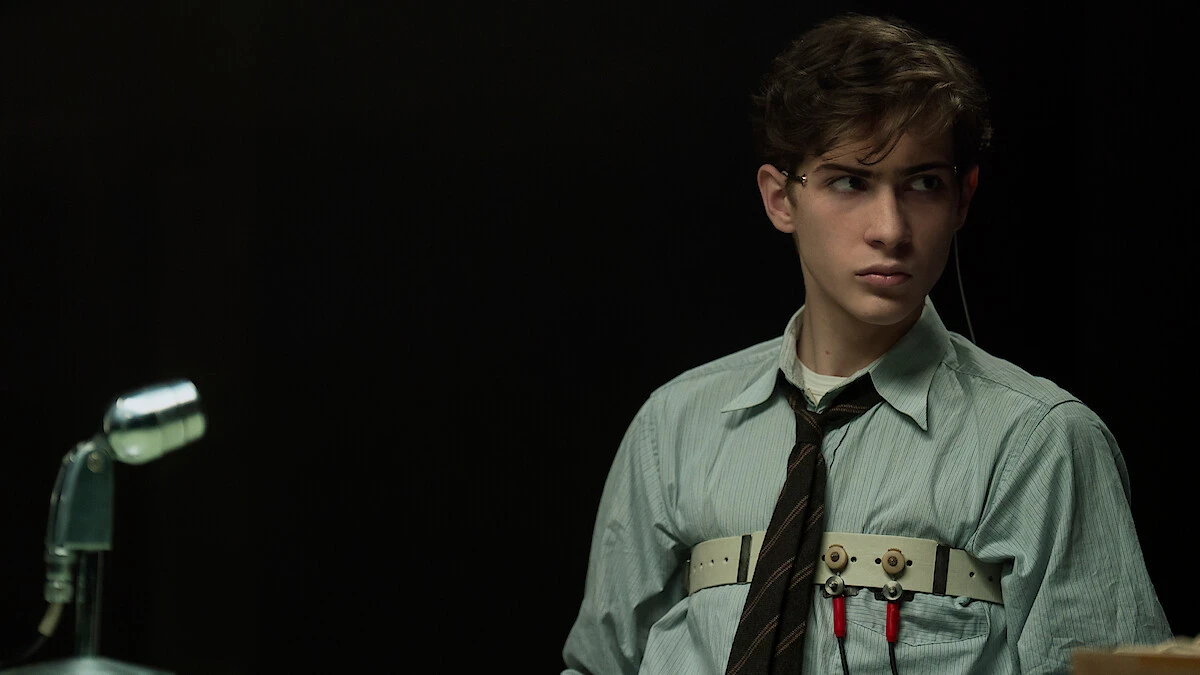
When Ted arrives at Harvard at 16, being good at school does not make him comfortable around other people. His classmates are older. He can help with their work, but finding friends is harder. Tremblay makes that difference easy to understand: Ted has confidence in his ideas without having the same confidence in an ordinary conversation.
That is why Murray’s attention matters. Here is a respected professor who seems willing to listen. Ted wants to prove that he belongs at Harvard, and the chance to discuss his beliefs with someone important looks like a way to do it. You do not need to know anything about psychology to understand why he agrees.
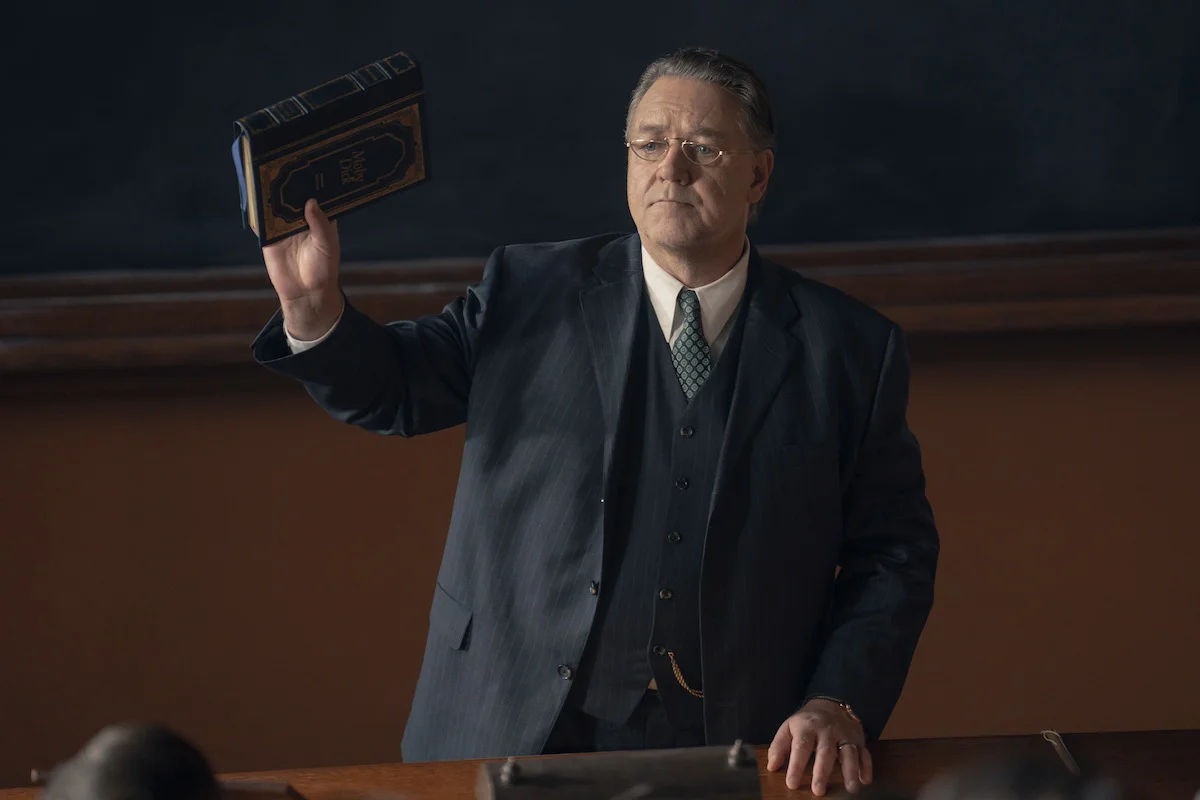
Crowe is good at making Murray sound worth listening to. In a classroom, the professor holds up Moby-Dick and uses the book to talk about different ways of seeing a subject. His confidence makes the lesson feel important. That helps explain Ted’s interest more effectively than simply telling us Murray is a famous academic.
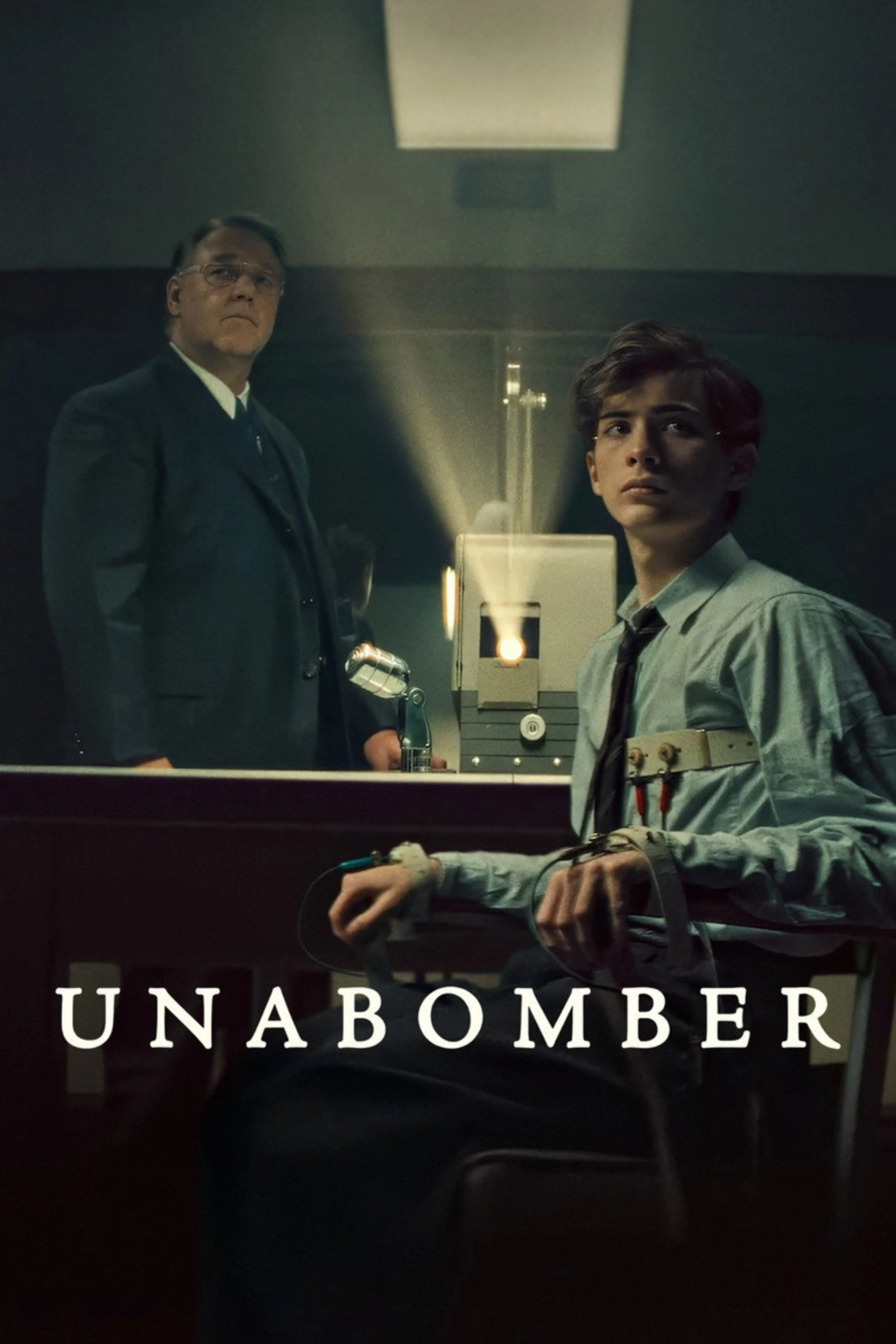
Once Ted enters the experiment, the arrangement changes. He has written about his beliefs and expects someone to challenge his arguments. Instead, the person opposite him uses the material to insult him. The researchers record his reactions. He is being studied while he thinks he is defending himself. The microphones and recording equipment make that difference visible.
These scenes are upsetting because Ted keeps trying to succeed at something that is not being run as a fair debate. A stronger argument will not make the other man treat him respectfully. Ted does not want to accept that. He returns, determined to show he can handle the sessions, even as they make him angrier.
Tremblay handles that growing anger well. He does not begin by playing an obvious villain. At first, it is possible to understand the young student’s embarrassment and desire to be heard. As his arguments become more forceful, he becomes harder to like. The performance lets Ted be hurt and unpleasant in the same scene, which is more interesting than making him entirely helpless or immediately frightening.
Murray has a different advantage: he gets to decide what Ted’s behavior means. When the student objects, the professor can treat that objection as another response to examine. Crowe’s calm manner makes this especially unpleasant. Ted is taking the conversation personally, while Murray can speak as though he is simply discussing his work.
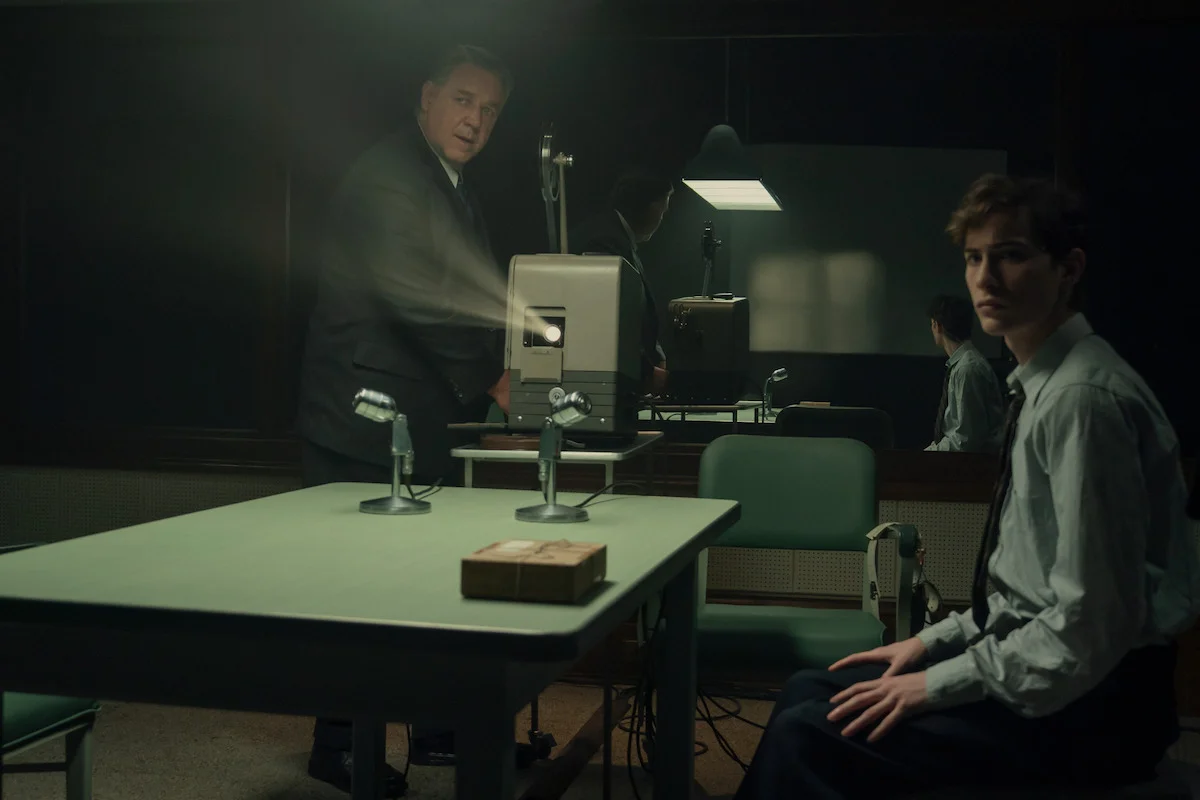
Annabelle Wallis plays Christiana Morgan, Murray’s research partner. Her presence also matters because Ted is not dealing with one hostile stranger in an empty room. He is surrounded by adults involved in the study. The setting tells him this is serious university work. Their participation helps explain why walking away is not as simple, to him, as it may look to us.
There is a limit to how much the film gains from repeating these encounters, though. After we understand how the experiment humiliates Ted, more humiliation does not explain much more about him. We can watch his anger increase without learning how he will eventually choose to hurt strangers. Tremblay and Crowe remain interesting to watch, but the script starts relying on their confrontations to answer a much bigger question.
The FBI scenes keep returning to the same argument
In the later story, Woodley plays Joanne Miller, an FBI agent trying to identify the bomber. She studies his writing because she thinks his ideas can help the investigators understand who he is. A manifesto is a document in which someone sets out their beliefs. Here, the bomber’s manifesto gives the agents language and arguments they can compare with other writing.
There is a good reason to build an investigation around that. A person may hide their location but still repeat a familiar phrase or express a belief their family recognizes. It gives the search a specific task. Instead of waiting for someone to discover a convenient clue, the investigators have words they can examine.
Joanne Miller is a fictional character created for this film. That is worth knowing before watching, especially if this is your first introduction to the case. The movie combines a real criminal investigation with invented characters and dramatic conflict. Woodley is not playing a documented agent whose personal story the film is carefully recreating.
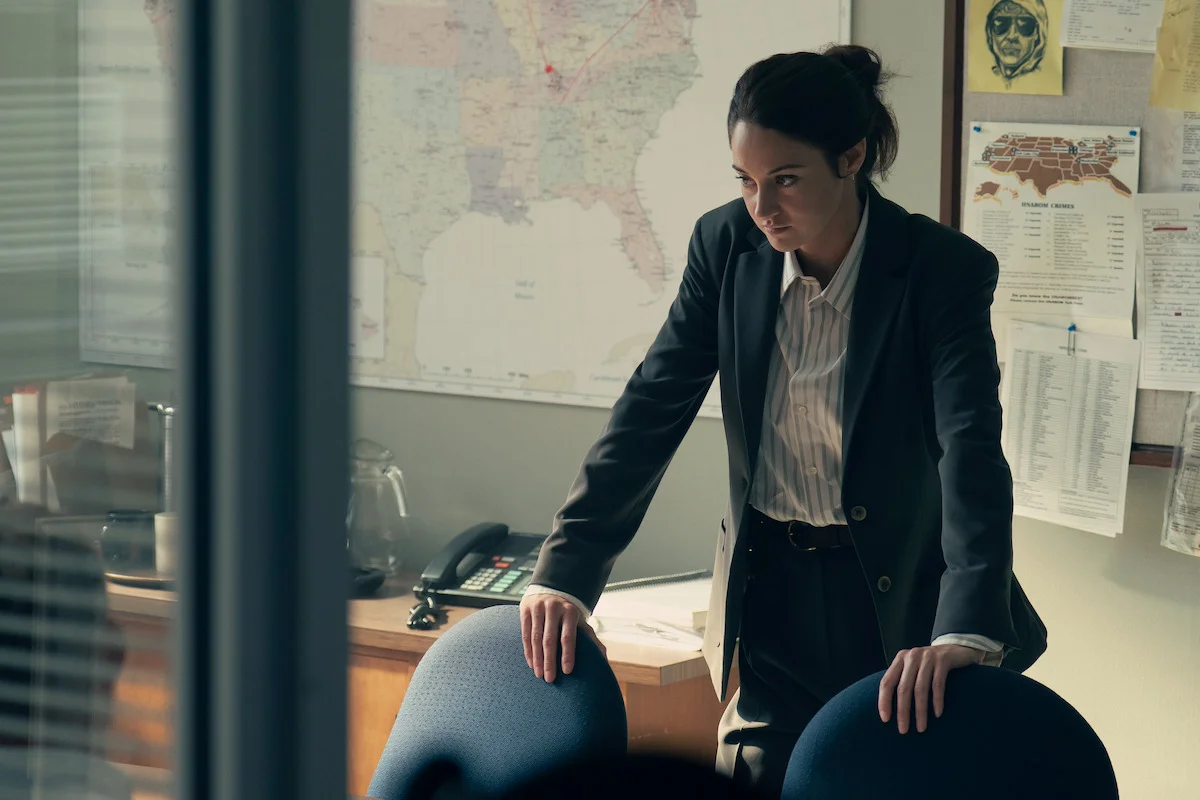
The problem is not that Joanne is invented. It is that the script gives her so many scenes in which she has to convince colleagues who do not want to listen. She sees a reason to keep investigating. Someone resists. She pushes harder. The repeated disagreements make the investigation feel slower, even when the information itself should be interesting.
Woodley is left to show frustration more often than discovery. There is little surprise in another meeting where Joanne believes she has the right approach and the men around her doubt it. The film wants us to recognize her determination, but we already understand it. Another argument does not make us much more worried about whether the agents will find their suspect.
The contact with Ted’s family offers something more involving. Suspecting a relative is not the same as recognizing a stranger in a photograph. David Kaczynski has to consider whether his brother could be responsible for terrible violence. That is a painful problem without anyone needing to invent an office dispute around it.
The film would benefit from giving that difficulty more attention. What makes the family connection interesting is the cost of acting on a suspicion about someone you know. The FBI scenes too often make the central question whether Joanne can persuade her coworkers. The family’s uncertainty is more worth exploring than another dismissive response from a colleague.
Moving between the two periods does help keep the dates and settings distinct. Harvard has warm wood-paneled rooms and classrooms; the investigation uses cooler-looking offices. You can usually tell where the film has taken you before anyone explains it. But being easy to follow is not the same as being equally interested in both stories. A return to Joanne’s workplace often feels like an interruption when Ted and Murray have just had a difficult exchange.
Good performances do not make the explanation convincing
The biggest issue is what happens between the two stories. We see a young man subjected to a cruel experiment. We also know he will become a murderer. The film encourages us to connect those events, yet it leaves out much of the life between them. Showing that Ted was mistreated does not, by itself, explain his decision to send bombs.
A drama can imagine private conversations. It can also concentrate on a short period rather than cover someone’s entire life. But when those imagined conversations are used to suggest why real people were killed, the distinction matters. The exact relationship between Murray and Ted is partly speculative. The film’s version should not be mistaken for a proven account of what caused the crimes.
That does not mean a movie about Kaczynski must show him as evil from the moment he appears. Tremblay’s performance is more effective because it does not do that. Understanding why a teenager feels isolated is different from excusing his later choices. The problem comes when so much attention goes to what adults did to Ted that there is too little explanation of what Ted later chose to do to others.
This also affects the experience if you arrive knowing very little about the case. You get a close view of the experiment but not a similarly detailed account of his later life. Unabomber is not a complete explanation of Kaczynski’s crimes. Its title and historical subject may suggest that, but the movie is much narrower: a Harvard drama repeatedly interrupted by the final stages of an investigation.
The closing scenes make the connection between the periods more forceful. Without giving away their details, they are designed to make the earlier arguments feel relevant to the capture. They provide an ending to the movie, but they cannot supply all the missing years. The extra urgency is welcome; the explanation remains incomplete.
Pixel Twelve’s score is 5.0/10. Tremblay and Crowe make the Harvard scenes worth paying attention to, and the experiment gives them a troubling relationship to explore. We rate the film lower than those performances alone would suggest because the FBI story repeats itself and the suggested explanation for Ted’s violence asks us to accept too much.
If you mainly want to see Tremblay and Crowe work together, there is enough here to make you curious. If you want a gripping investigation or a thorough account of the real case, this is harder to recommend. The actors make several conversations tense. The film as a whole does not do enough to explain the man it has chosen to examine.
Unabomber is streaming on Netflix. It is rated R and includes disturbing violence and psychological abuse.
More from Unabomber
3 screenshotsFilm stills: Philippe Bosse / Netflix.
Loading results