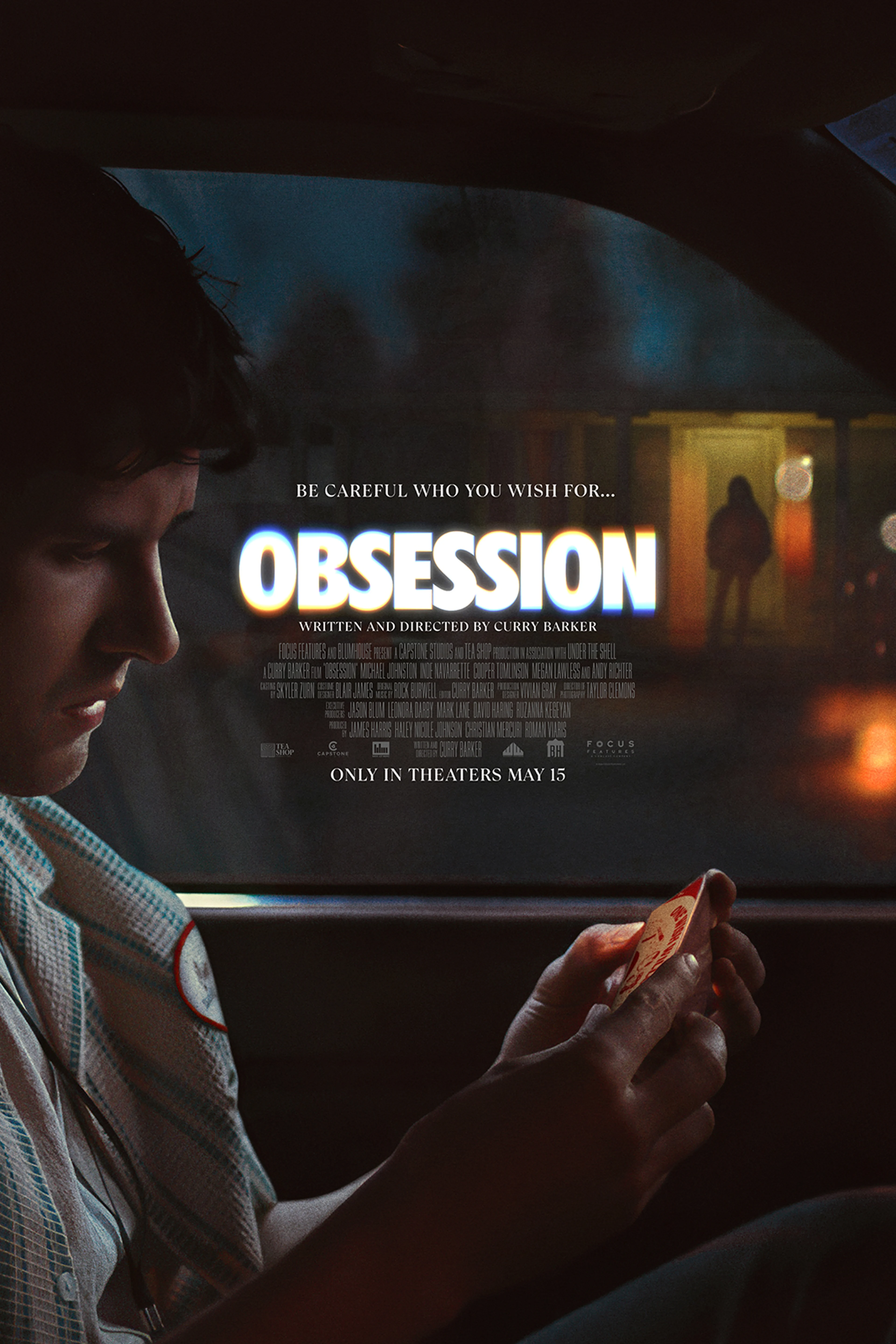
Bear wants to tell Nikki that he likes her. They work together in a record store, and he has already spent too much time imagining how the conversation will go. When he finally has a chance to speak, he cannot get the words out. Anyone who has rehearsed a confession and then said something completely different will recognize the embarrassment.
Instead of telling her, Bear uses a toy that promises to grant a wish. He breaks it and wishes for Nikki to love him more than anything else. Nikki starts wanting to be near him all the time, whether he wants company or not. He enjoys her attention at first, then becomes afraid to be alone with her.
Curry Barker's Obsession is a supernatural horror film about someone getting exactly what he asked for without thinking about the other person. Michael Johnston makes Bear awkward enough to be funny at first. Inde Navarrette, who plays Nikki, makes the change in her behavior frightening long before the worst violence arrives. You do not need to know any earlier film or story to follow it.
There are stretches where Bear takes too long to respond to what is happening. The film also gives us much more time with his fear than with Nikki's life. But when Navarrette is standing nearby and barely moving, it is hard to stop watching her. Obsession is most frightening when Nikki looks almost like herself and behaves nothing like the person Bear knew.
Bear gets the attention he wanted, and keeps making excuses
Before the wish, Nikki can joke with Bear and go about her day without making him the center of it. He reads more into their friendship than she does. His friend Ian, played by Cooper Tomlinson, listens as Bear works himself up to admitting his feelings. Their conversations are funny because Bear is so busy planning a perfect declaration that he struggles with an ordinary one.
The early record-store scenes introduce Bear's coworkers before Nikki's behavior changes. They have shifts and conversations that do not all involve romance. Sarah, played by Megan Lawless, is part of that group too. Bear already has people he can talk to; making the wish is his choice. He is lonely, but he has not been abandoned by everyone around him.

The toy, called the One Wish Willow, does not come with a long explanation of ancient magic. Bear finds it in a shop and uses it after failing to say what he meant to Nikki. That everyday purchase makes his mistake easy to follow. He is not studying a spell or carefully planning to hurt her. He acts out of disappointment and does not expect a cheap object to change anything.
Once Nikki gives him her full attention, Johnston lets Bear enjoy it. That response is uncomfortable to watch. Bear has wanted this for so long that he accepts behavior he would question in someone else. He thinks Nikki is finally in love with him and has little interest in asking why she has changed so suddenly.
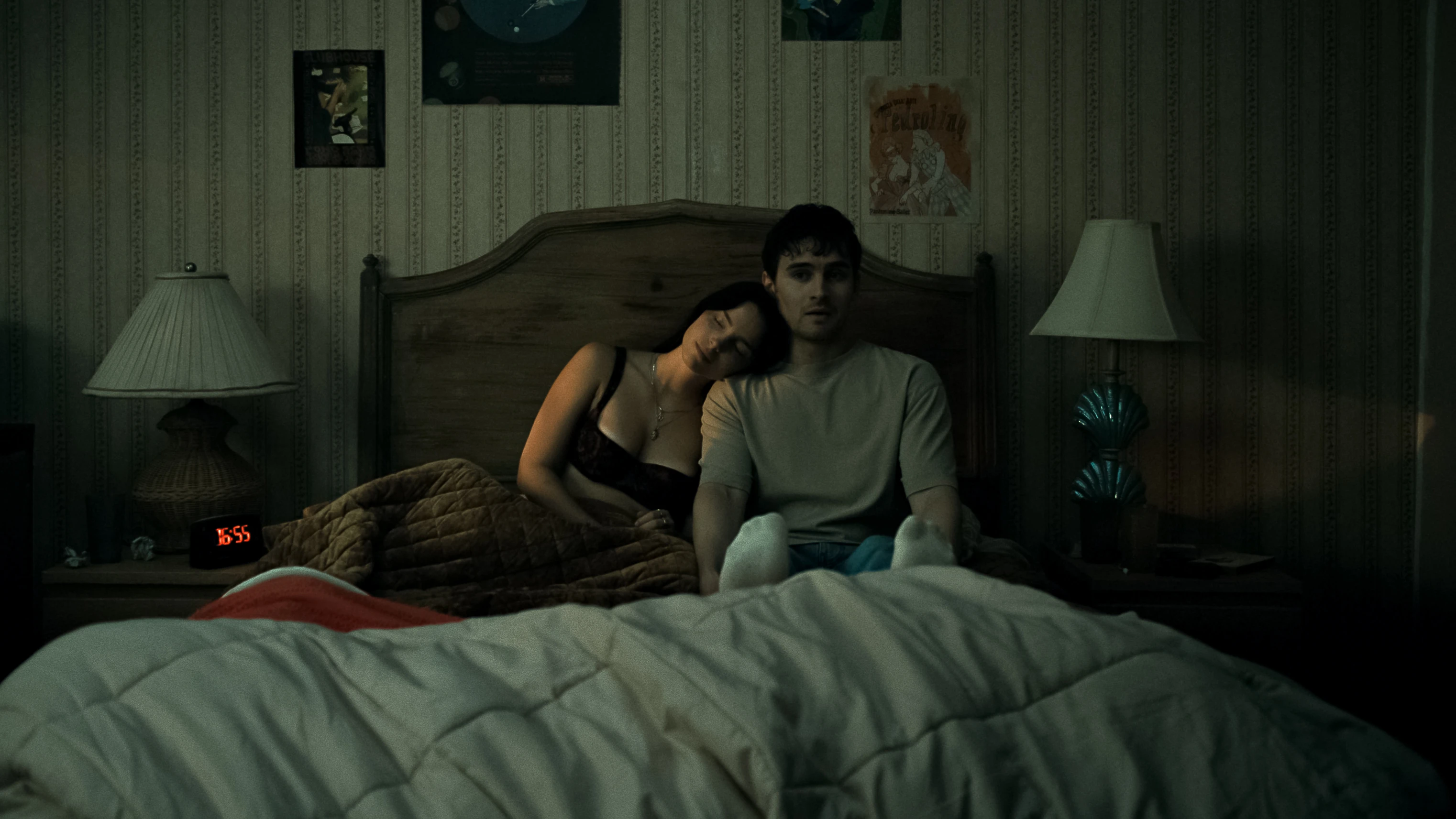
Nikki begins staying close even when there is no reason to. She watches him sleep and waits for him instead of carrying on with her own day. Her constant presence becomes a problem because Bear cannot get time to himself. A person sitting beside him, which once sounded wonderful, becomes someone he has to keep checking on. The bedroom in particular stops being a place where he can relax.
Bear's reluctance to admit that something is wrong makes sense for a while. Admitting it would also mean giving up the attention he wanted. Later, though, the delay gets frustrating. After enough alarming behavior, another attempt to avoid the problem does not tell us much more about him. It mainly makes us wait for a decision we already know he needs to make.
The middle repeats Bear's hesitation after the danger is already obvious. Johnston is good at making him nervous and evasive, but those reactions cannot make every delay interesting. A shorter version of some of these encounters would leave the character just as selfish and the film less repetitive.
Nikki can make a quiet room frightening
Navarrette has to make Nikki seem familiar enough for Bear to keep letting her near him. She cannot simply behave like a monster from the moment the wish takes effect. She holds a smile for too long or looks at him without the small reactions that would normally follow a conversation. Bear sees the same face, but he is no longer sure what she will do next.
There is an especially disturbing difference between Nikki waiting for him and Nikki choosing to spend time with him. At one point she remains in the same place for an entire day so she will be there when he returns. Navarrette makes that stillness more unsettling than a sudden scream. Someone who used to have her own job and interests now appears unable to do anything but wait for Bear.
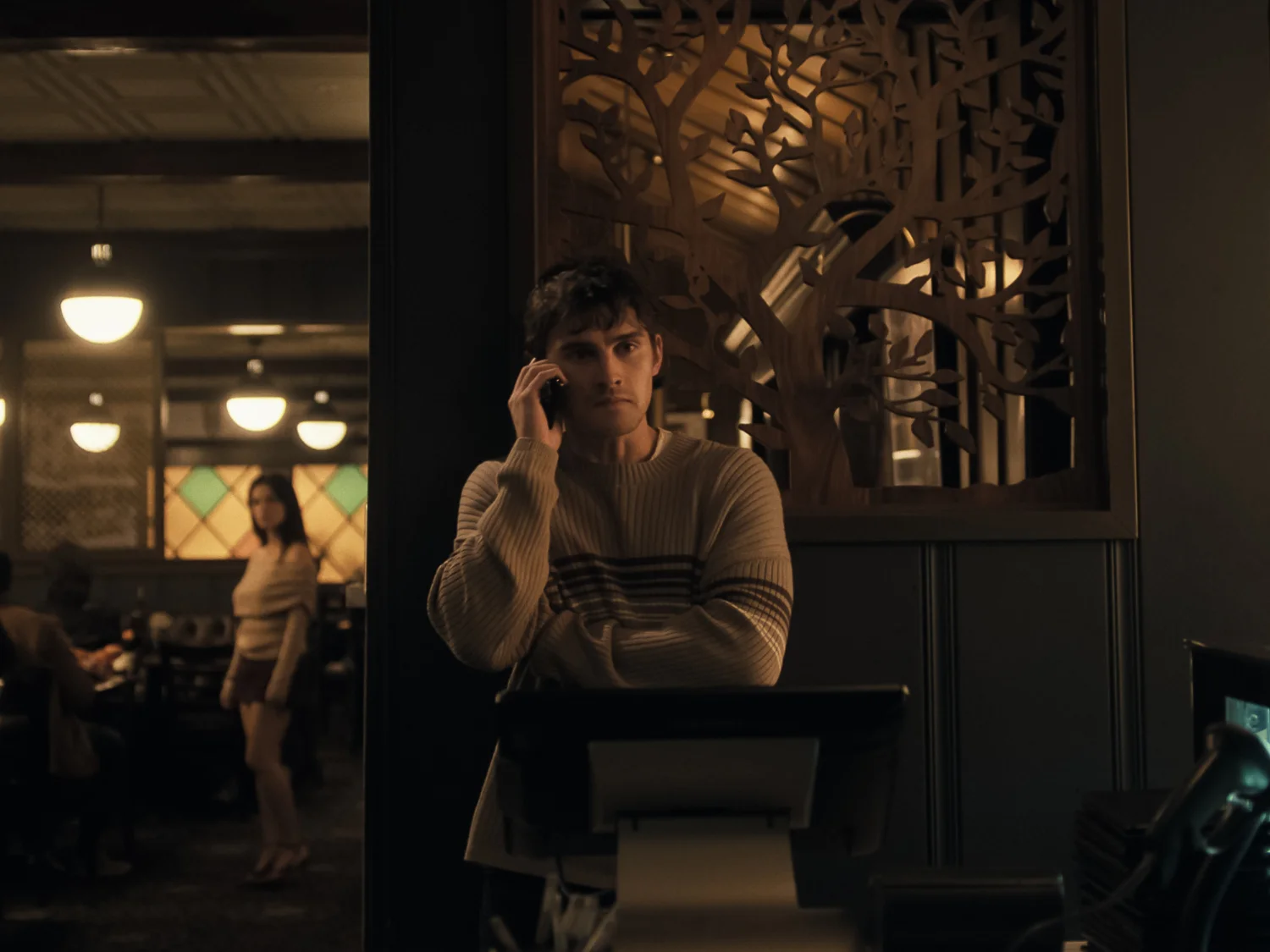
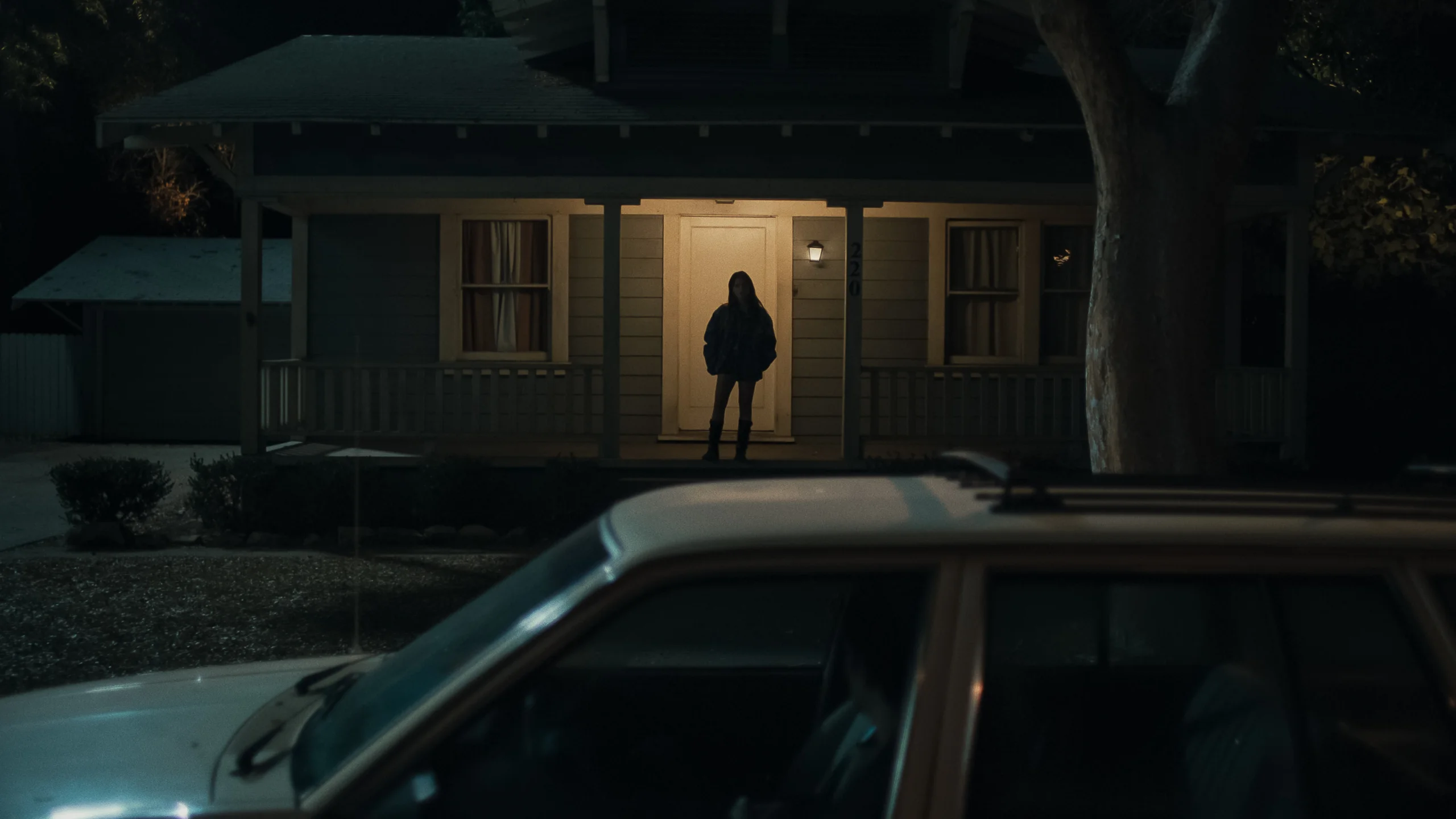
Barker often keeps part of her face hidden or leaves her just outside a full view. You have to look for her expression rather than getting a close-up that immediately explains it. When Bear is distracted, it becomes tempting to watch the space behind him instead of following his conversation. The camera gives you time to notice someone there before it gives you a reason to panic.
That patience is a major reason the scares work. A shot can continue long enough for an ordinary pause to become uncomfortable. The uncertainty is whether Nikki will speak, move closer or hurt someone. Those are different possibilities, and Barker does not always announce which one is coming with a quick cut. The sudden shocks are effective, but the waiting beforehand does more of the frightening work.
The low lighting also helps. Sometimes there is just enough light to find eyes or make out a figure, without enough to read a face properly. These scenes demand more attention than a brightly lit confrontation. If you watch at home, turn down the room lights so you can see those details more easily.
The party sequence shows how uncomfortable Nikki's behavior can become around other people. Bear cannot explain everything as a private misunderstanding when friends are present. The social embarrassment that was funny at the beginning now makes the situation worse: he still has to talk to people while worrying about what she might do. Barker lets an ordinary gathering become frightening without needing a new setting or a long explanation.
Not every scare is as distinctive. Some of Nikki's stranger movements resemble familiar possession-film behavior, and the later violence can be so drawn out that it becomes harder to take seriously. The scenes built around her stare and silence are stronger than the more exaggerated physical scares. Navarrette does not need an extreme movement to make us uncomfortable. Often, watching her refuse to look away is enough.
There is humor after the wish too. Bear's attempt to get help through a customer-service phone line treats a supernatural disaster like a problem with something he bought. The mismatch is funny without requiring Bear to become a cheerful person in the middle of his panic. It also gives him something practical to do. Those attempts to find an answer are more engaging than another round of hoping Nikki will return to normal.
The violence works, but Nikki deserves more of the story
It would be easy to describe Obsession as a film about a girlfriend who becomes dangerous. That misses what Bear has done. Nikki did not choose this relationship. He used the wish to make her want him, and her behavior afterwards is not evidence that she was secretly like this all along.
Nikki is being harmed by the wish too. Navarrette allows brief moments of fear and distress to show through the behavior that frightens Bear. Those moments make it possible to feel afraid of her and worried for her at the same time. The performance keeps her from becoming only a threat for the male lead to escape.
The script does less for her than the actor does. We spend much of the film following Bear's reactions and attempts to deal with what he caused. More time with Nikki before the wish would make the loss of her ordinary life harder to forget. Bear's fear gets more attention than Nikki's lack of control over her own actions. That imbalance is the most disappointing part of an otherwise thoughtful idea.
As Nikki's behavior gets more dangerous, the police have surprisingly little presence in the story. Bear and his friends seem left to handle almost everything themselves. Staying with this small group keeps the film focused, but it becomes harder to believe that nobody else would get involved. The magical wish is easy to accept. The lack of help from ordinary people takes more effort.
For horror fans, there is still plenty to recommend. The later scenes include serious violence and disturbing relationship behavior, so this is not a gentle date-night comedy with a few scares. It is rated R. Viewers who enjoy waiting for something awful to happen will probably get more from it than those looking for constant action or a complicated mythology.
Pixel Twelve's score: 8.0/10. Navarrette's performance and Barker's long, uncomfortable shots make Obsession worth watching. Bear's excuses become repetitive, and Nikki needed more scenes showing her own life before the wish. Those problems keep it below the very best horror films, but the quiet scenes where she waits for him are difficult to forget.
Obsession is streaming on Peacock in the United States. The current Peacock listing gives its running time as 1 hour and 48 minutes.
More from Obsession
2 screenshotsLoading results