Niki earns his living listening to pianos, but he needs earplugs to get through the day. Sounds that other people can ignore are painful for him. He once hoped to perform music himself. Now he adjusts instruments that other people will play, working alongside an older man who treats him like family. Before Tuner introduces its thieves, there is already a good reason to care about what happens to Niki.
Leo Woodall plays the young technician in Daniel Roher’s crime drama, now available on Paramount+ in the US. Dustin Hoffman is Harry Horowitz, his employer and mentor. When Niki discovers he can open a safe by listening carefully to its lock, an illegal way to make money becomes available. His reasons for accepting it are easier to understand than some of the choices he makes afterward.
The pleasure here is not a complicated robbery plan or a succession of fights. It is getting to know someone who has a useful skill, an uncomfortable daily routine and people he wants to look after. Woodall makes the ordinary work as engaging as the burglaries. The later plot depends on coincidences that are harder to accept, but the relationships give us enough reason to stay interested. This review leaves the major revelations and ending unspoiled.
Niki’s work gives the crime story a convincing beginning
A piano tuner checks the notes an instrument produces and adjusts its strings when those notes are wrong. Niki has an unusually accurate ear for this work. He can also recognize musical notes without first comparing them to another note, an ability called perfect pitch. Separately, he has a condition called hyperacusis, which makes everyday noise difficult to tolerate. The film uses both parts of his hearing to explain his routines, without requiring the audience to know music theory.

The distinction matters because Niki is not simply a musician with a convenient talent. He protects his ears even when there is no immediate danger around him. The sound sometimes becomes muffled, then much more intrusive, letting us understand why he reacts differently from the people nearby. The changes in what we hear make his discomfort understandable without repeated explanations. We do not have to be told that a noisy room could become a problem after seeing how carefully he manages quieter ones.
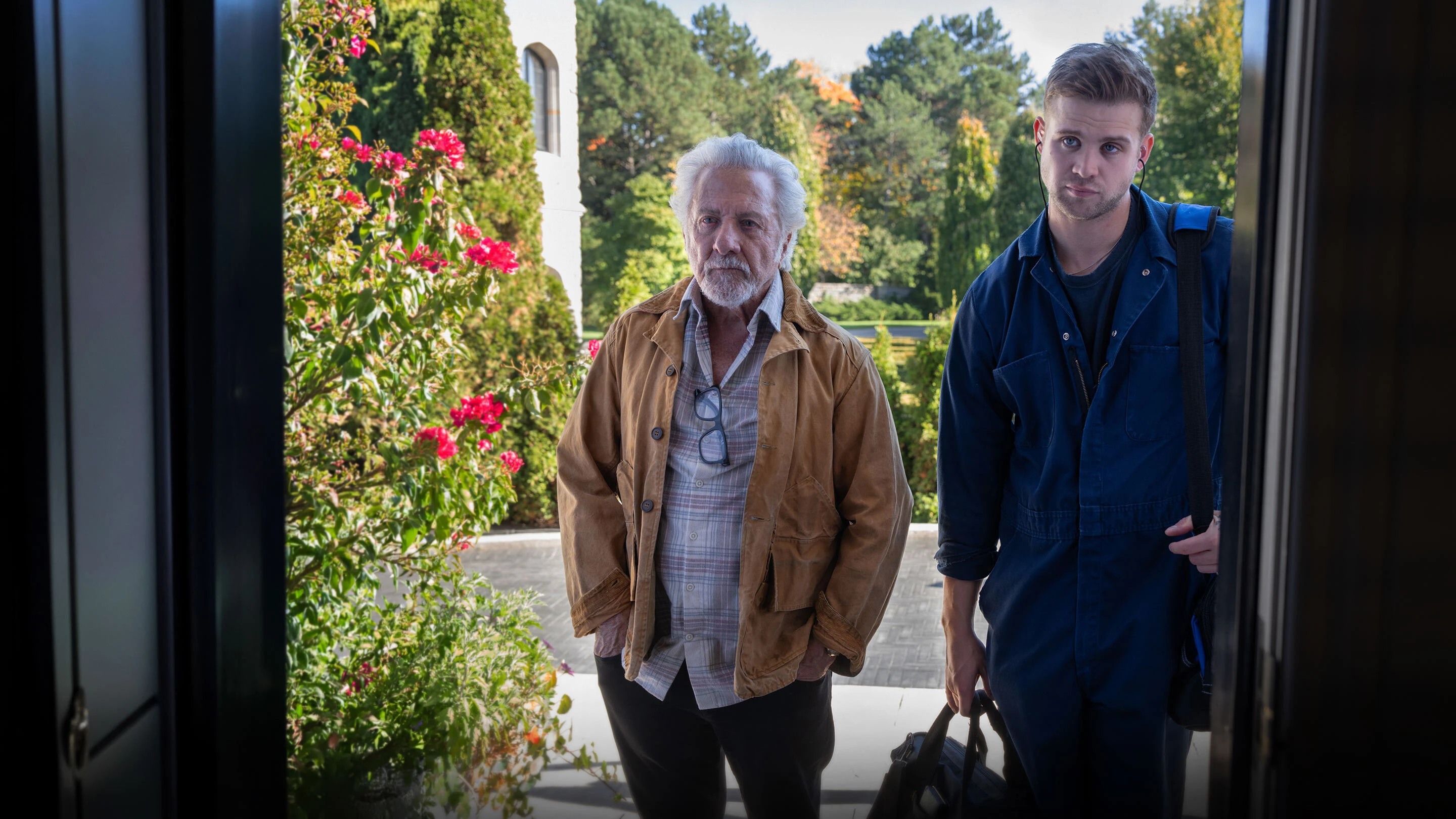
Harry is much more talkative. He knows the clients and has spent years doing this work, while Niki concentrates on the instruments. Their visits have an easy humor: some wealthy customers own expensive pianos without taking much interest in the people who maintain them. The men are welcomed into beautiful homes, but not necessarily treated with respect. Those encounters make the job more specific than a quick explanation that Niki needs money.
Hoffman is entertaining in the conversations between appointments. Harry can be affectionate without turning every exchange into advice, and Woodall gives him someone quiet enough to make the difference between them funny. Their companionship makes the early part of Tuner unusually enjoyable for a crime film. There is no need to hurry them into trouble just to make the movie feel as though it has started.
Harry’s wife Marla, played by Tovah Feldshuh, also belongs to this working life. The business is not an anonymous company that exists only to give Niki a job. It supports people he knows personally. When Harry’s health deteriorates and medical bills become a concern, Niki’s wish to help has a believable history. We have spent enough time around them to understand why he feels responsible.
That does not make stealing the only possible answer, or an admirable one. It makes the temptation comprehensible. Helping Harry is a sympathetic motive; accepting work from thieves is still a bad decision. The screenplay is most convincing when it lets those two things be true at once. Niki does not need to be secretly ruthless to take a risk he is poorly prepared to manage.
Ruthie gives Niki something to want beyond another job
While working at a music conservatory, Niki meets Ruthie, a composition student played by Havana Rose Liu. She writes music and needs time and a properly maintained piano to develop it. Their first connection therefore comes from something each of them understands. He is not merely a stranger who happens to arrive during a romantic subplot. His work directly affects hers.
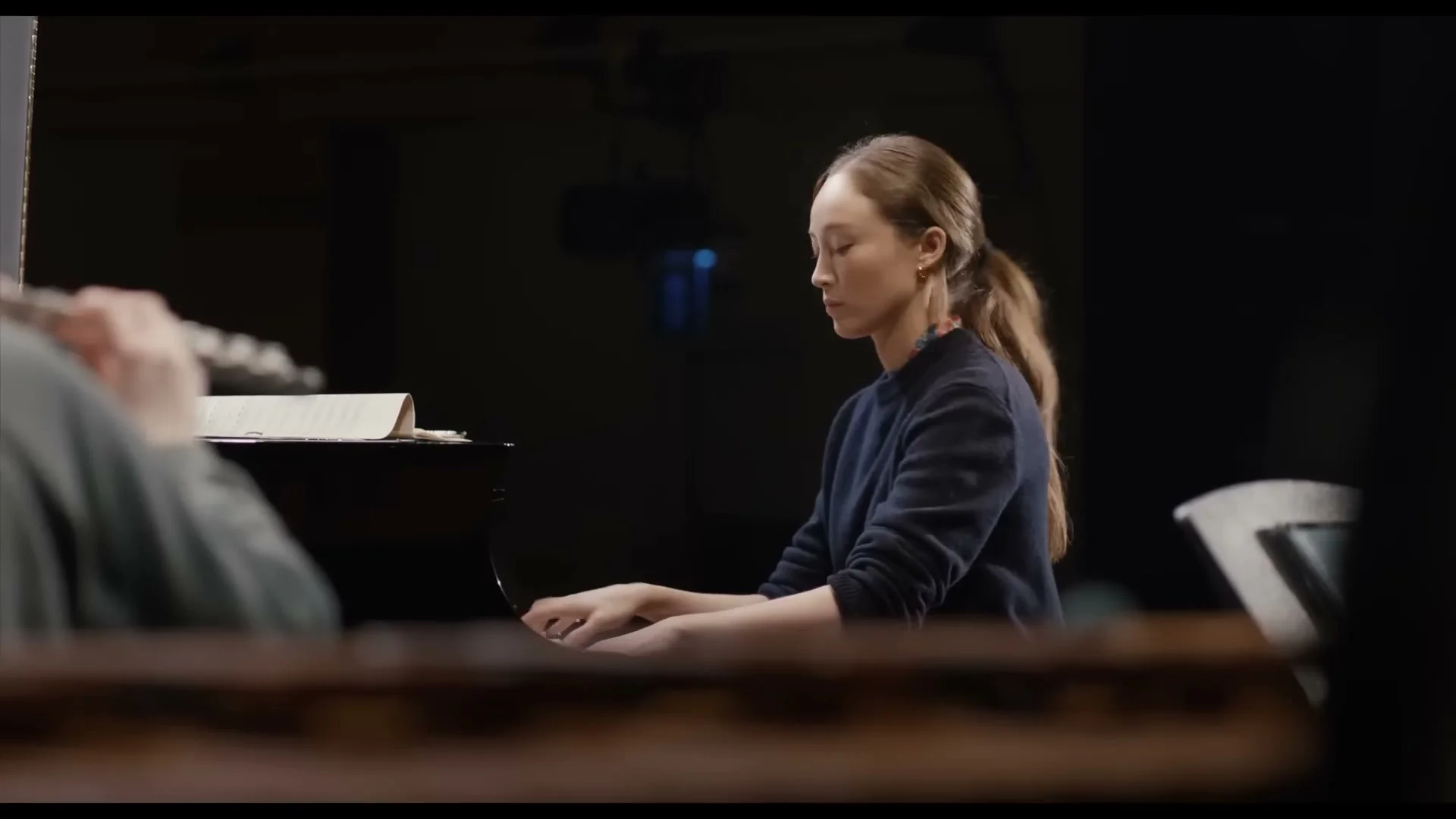
Ruthie is occupied with her own ambitions rather than waiting for someone to improve her life. Liu makes her interest in Niki feel like a change in attention, not an instant abandonment of everything else. Woodall is good at the hesitation that follows. The awkward conversations are more appealing than an immediately perfect romance would have been. These two people have something to discuss, but that does not mean they immediately know how to talk to each other.
Music also makes the attraction more complicated. Ruthie can pursue the kind of performing life that Niki has lost. Being close to her means spending more time around something he still cares about and cannot experience in the same way. Woodall lets frustration become noticeable beneath Niki’s quietness. His restrained performance is not an absence of feeling; the difficulty is in how much he is willing to admit.
Niki’s disappointment with his own career gives the romance a problem that money cannot solve. He can admire Ruthie and still resent the opportunities available to her. That is more interesting than a relationship threatened only by a dangerous man outside it. The film does not always balance these personal tensions with the criminal plot, but the conflict makes Niki less automatically likable and more believable.
The editing helps keep the working days and the relationship moving. Short sequences of appointments establish repetition without making us sit through every stage of every job. Music makes those passages lively, while the quieter exchanges allow Woodall and Liu more time. The film can be pleasant to watch before it becomes threatening, which makes the later change more noticeable.
There is a limit to how much the supporting characters get to do, though. Harry becomes less present as the thefts demand more attention. His importance to Niki remains, but we miss the conversations that made their relationship enjoyable in the first place. The growing criminal complications do not consistently provide an equally interesting replacement. Tuner is better when it lets these people interact than when it has to rearrange them for another problem.
The safecracking is tense; the later coincidences are less convincing
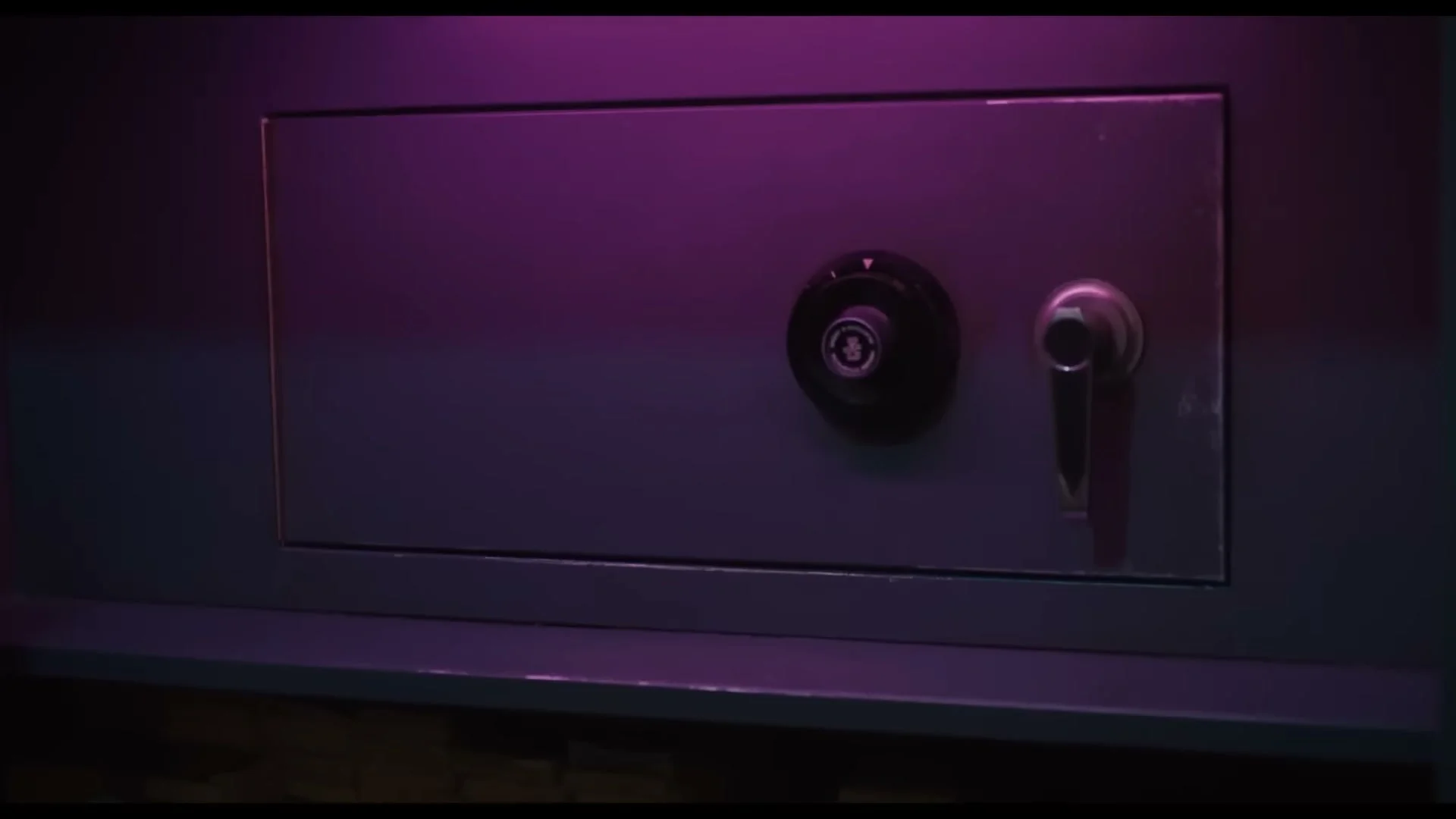
Opening a safe becomes another task that depends on Niki listening while other people wait. He turns the combination dial and pays attention to the mechanism inside. For someone who needs quiet, working beside impatient criminals is an immediate difficulty. The scenes give us a simple action to follow, rather than expecting us to understand an elaborate security system before we can feel nervous.
Lior Raz plays Uri, a security operator who has found a criminal use for his access to wealthy clients. He recognizes what Niki can do and offers him work. Uri’s ability to make theft sound manageable is more unsettling than a villain who starts by shouting threats. The offer is attractive because it sounds like a service Niki can provide, collect payment for and leave behind. That is not the same as actually being free to leave.
The early jobs allow some excitement in Niki’s discovery that he can do this. Later, the people around him and the possible consequences make the same concentration harder. Roher does not need every scene to be a bigger robbery than the last. The change in Niki’s circumstances can make another locked safe more worrying even when the basic task has not changed.
What works less well is the way the screenplay connects parts of his private life to the crimes. One important later discovery depends on a coincidence that is difficult to believe in a city this large. Revealing its details would spoil the scene, but its effect is frustrating: a carefully established personal problem becomes dependent on an unusually convenient connection. The performers remain convincing even when the chain of events does not.
The criminal story is also easier to predict than the premise suggests. Niki can keep his extra income secret for a while, but doing dangerous work for unreliable people is unlikely to remain a harmless arrangement. Knowing that trouble is coming is not itself a flaw. The disappointment is that some of the escalation feels more familiar than the daily life that came before it. The gang needs Niki’s skill, yet its behavior can be careless enough to make the jobs less credible.
Tuner images
3 screenshotsStill, the sound and the actors keep the film from becoming only a series of plot problems. A safe opening means something different when we understand what Niki wants the money for. A conversation with Ruthie can be uncomfortable without a threat being made. Those smaller concerns are the reason to choose Tuner over a thriller built mainly around action. Anyone expecting constant chases or a meticulously realistic robbery procedure should adjust those expectations.
Tuner runs under two hours and is rated R in the US for language throughout, some violence, drug use and brief nudity. The story involves painful sensitivity to sound, and its changing volume is an important part of the presentation. It is now available to stream on Paramount+ in the US.
Pixel Twelve score: 7.8/10 — Good. Woodall gives Niki enough uncertainty and frustration to make him worth following beyond his unusual skill. The friendship with Harry and the developing relationship with Ruthie give the thefts personal consequences. We recommend Tuner for those performances and the attention to sound, with reservations about the late coincidences and the less distinctive criminal storyline. The best reason to watch is spending time with Niki, not trying to guess which safe he will open next.
Loading results