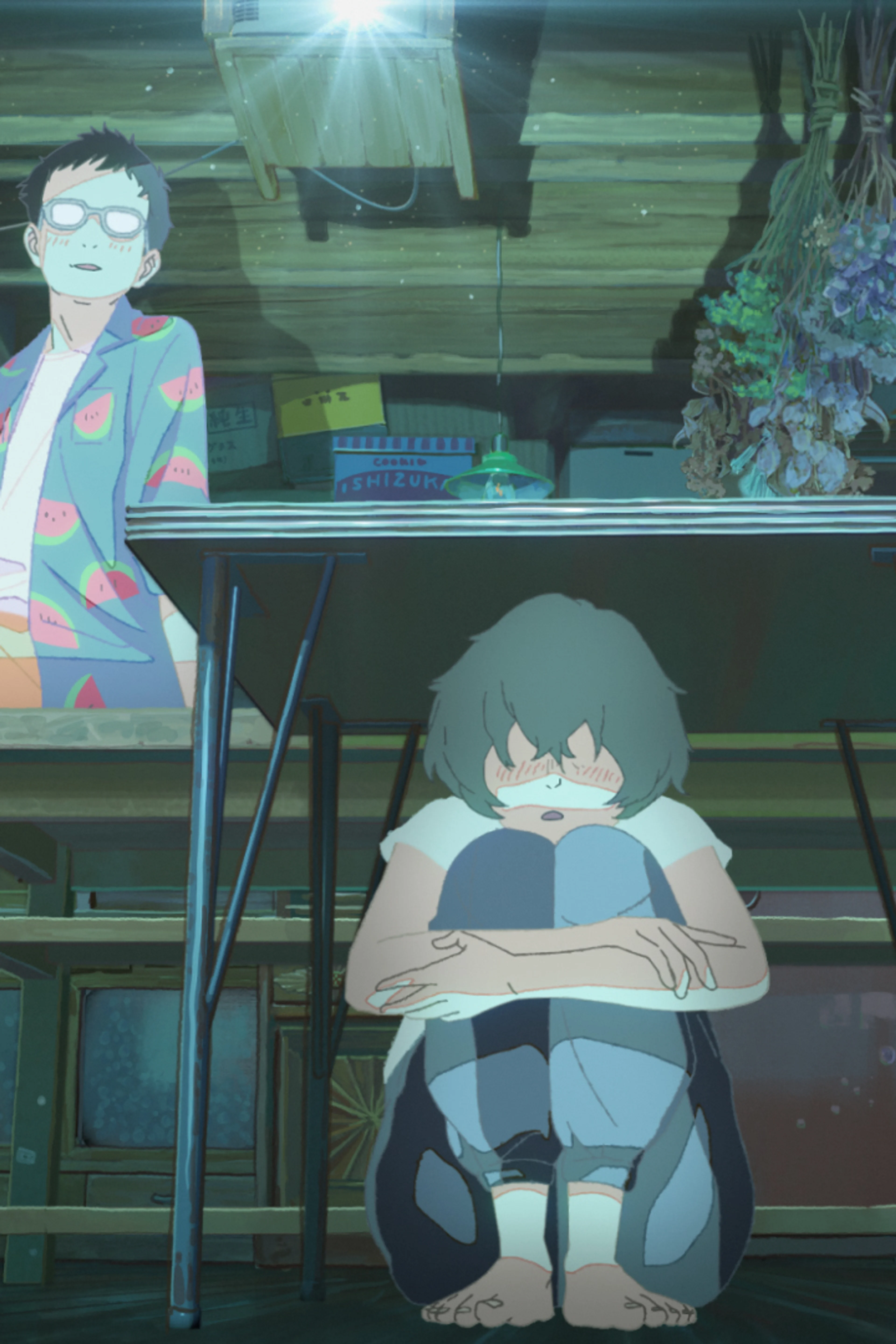
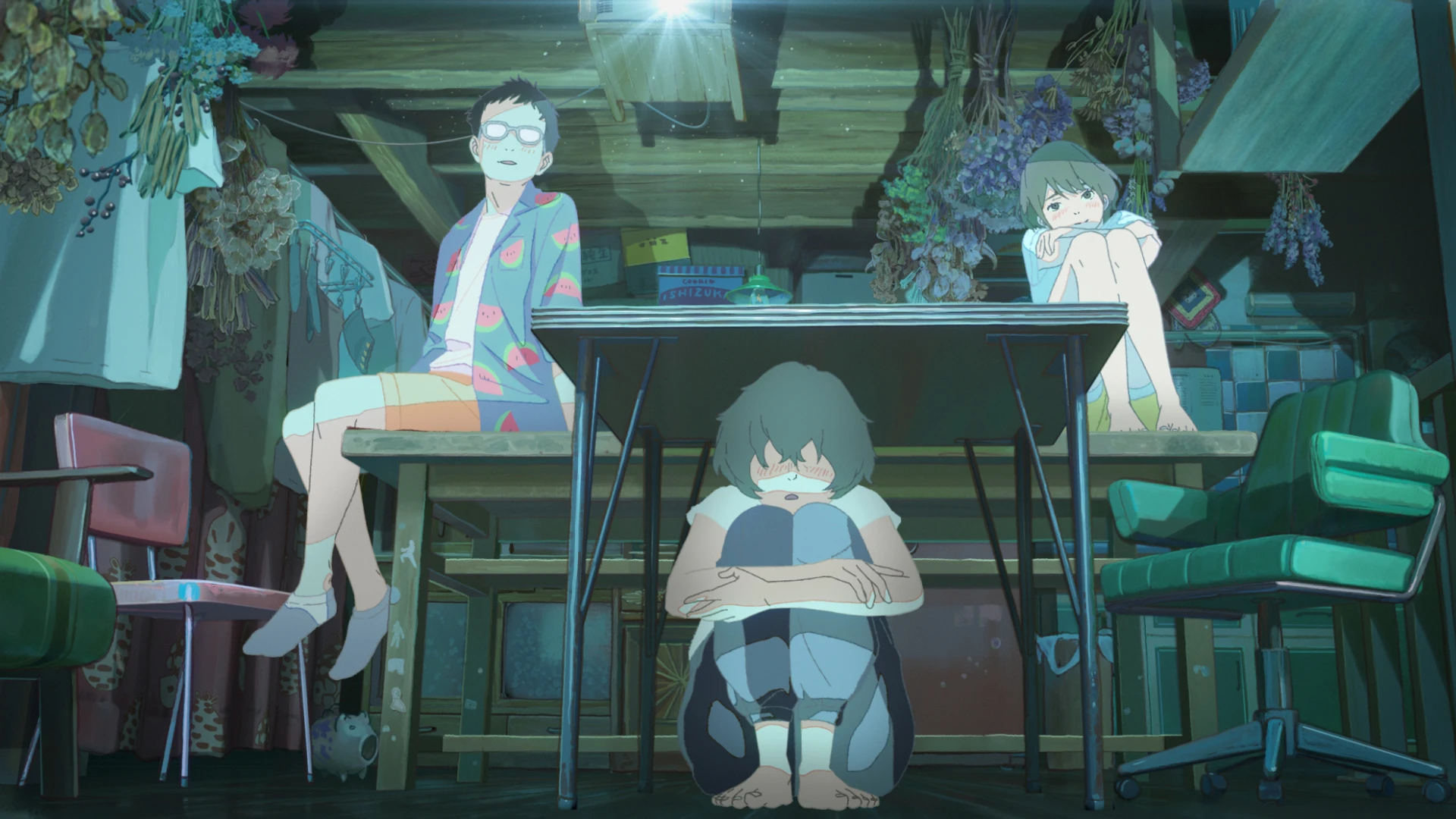
Keitaro has stayed behind in his family's fireworks workshop while the people around him have moved on. His father disappeared years ago. His childhood friend Kaoru left for Tokyo, and his older brother Sentaro now works for the local government. When Kaoru comes back, the workshop is about to be cleared for redevelopment. Keitaro is still trying to finish a special firework his father designed. A New Dawn starts with an understandable problem: he cannot keep living there as though nothing has changed.
Yoshitoshi Shinomiya's animated film is an original story, not an adaptation that requires homework. You do not need to recognize a character or have watched another anime. Unfortunately, following the basic situation is easier than understanding every argument that develops from it. The film introduces family history and local disputes quickly, then moves on before some of their consequences become apparent.
The reason to watch is the animation. The workshop has uneven levels and crowded interiors that distinguish it from a tidy cartoon home. Outside, fields of solar panels occupy land beside dense greenery. During more unusual passages, the drawings give way to other kinds of images altogether. The visual changes are exciting enough to earn a qualified recommendation, even though the relationships need more explanation. This is a film we admire more consistently for what it shows than for how it tells its story.
Three people return to a home they cannot keep
Keitaro is not simply running an ordinary shop while waiting for his father to return. He has devoted himself to recreating his father's extraordinary firework, called Shuhari. That unfinished task gives him a reason to remain at the property. Leaving would mean accepting an interruption to work that has already taken years, as well as leaving the place most closely associated with his missing parent.
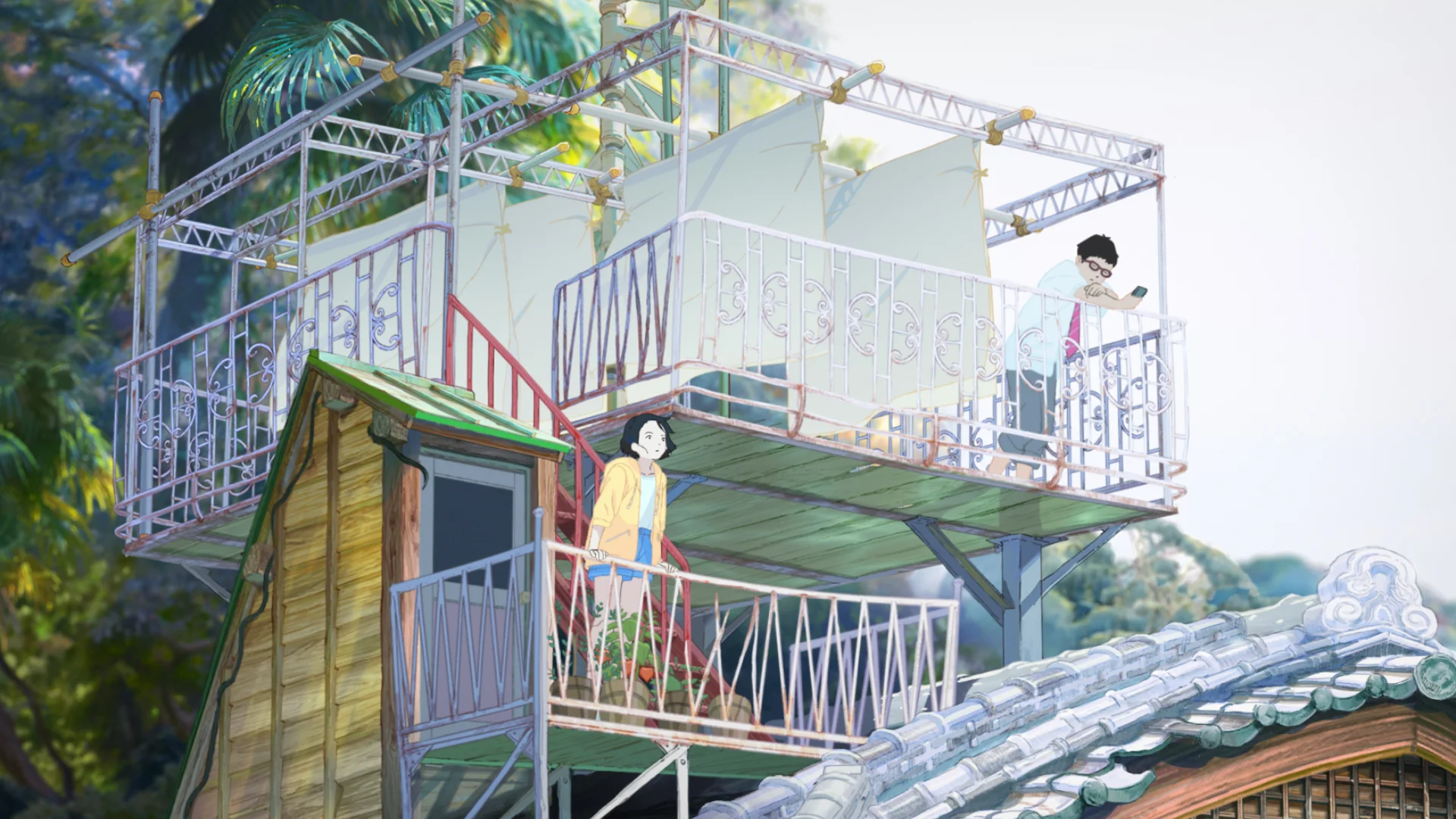
Shinomiya makes the building worth looking at before asking us to mourn its possible loss. Balconies and stairs connect different levels, while equipment takes up space inside. The arrangement helps explain why leaving involves more than moving a few personal belongings. Keitaro's home and his work occupy the same place. The film's detailed drawings make that practical connection visible without needing a speech about the value of a family business.
Sentaro brings the immediate problem into the house: the deadline to leave is almost here. His government job puts him in an awkward position beside a brother who refuses to cooperate. There is potential for a strong disagreement between someone trying to continue an old way of life and someone dealing with the rules that now apply to it. Neither position needs a villain to make sense.
But the script is less effective at explaining what the brothers expect from each other. We know that they have responded differently to their father's absence. We get less time to understand how their relationship became so difficult. The brothers' disagreement needs more everyday conversation, not necessarily another explanation of the town's history. Hearing them discuss what leaving would actually involve could give their frustration a more personal basis.
Kaoru provides a third perspective. She is a childhood friend returning after four years, not another person who has spent every day inside this dispute. Her arrival gives us a reason to notice what has changed. She also has her own connection to the families involved. The difficulty is that these connections arrive alongside other information, so a viewer can understand why she has come back without fully understanding every reaction she gets.
The film sometimes relies on the characters' shared memories to produce an emotion we have not had enough time to share. Old images can mean a great deal to people who recognize everyone in them. For an audience only recently introduced to those people, the effect is weaker. The childhood history is more convincing as a reason for the reunion than as a complete explanation of the friendship. We needed a few more specific exchanges between the three as they are now.
The changing landscape is easier to understand than the arguments
The threat to the workshop is part of a larger change to the area. New development and a planned road affect what can remain where the family has lived and worked. This gives the property dispute a physical scale: it is not just an official arriving with an inconvenient piece of paper. The surrounding landscape is being rearranged, and the old business does not fit the new plans.
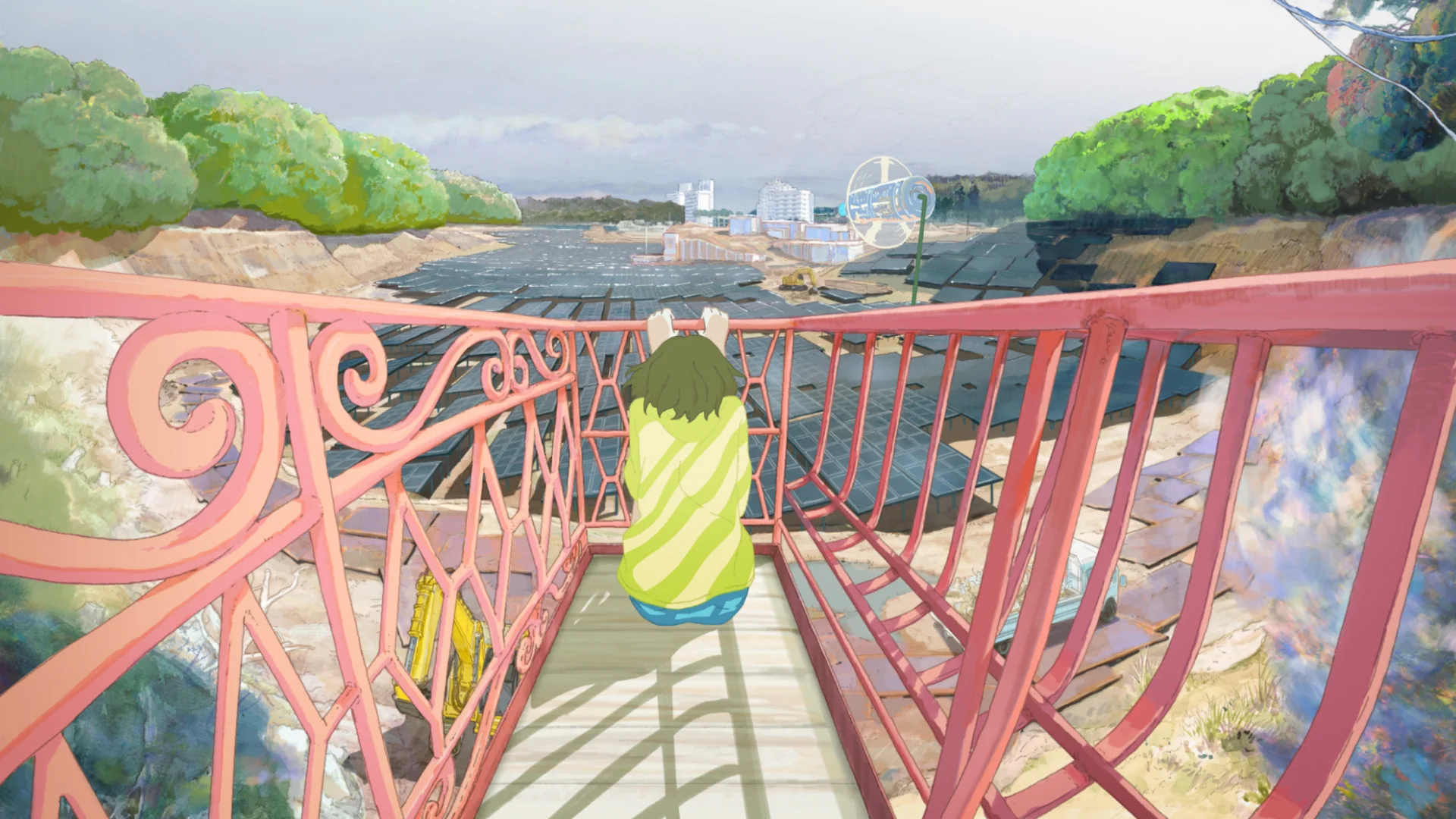
One of the most striking views places Kaoru above long rows of solar panels. Trees are still visible beside them, but the repeated dark rectangles occupy an enormous area. The solar panels complicate the film's environmental argument. Renewable energy can be valuable while a particular development still changes someone's home beyond recognition. The picture makes those two ideas possible at once, rather than dividing everything into attractive nature and obviously evil machinery.
We wish the disputes received the same precision as that image. There is a difference between trying to stop a development and making a final public gesture before leaving. Both can matter, but they create different expectations for a story. A New Dawn is not always specific enough about what the characters believe they can achieve. That uncertainty makes it harder to judge whether a risky decision is hopeful, desperate or simply impractical.
An approaching typhoon adds another deadline to the one already imposed on the property. The weather gives the outdoor scenes movement and makes remaining there feel less comfortable. It also adds pressure to a film already explaining several problems at once. The short running time does not make the storytelling simple. At 76 minutes, the film has less room to establish a family dispute, a changed friendship and the consequences of redevelopment than its busy setup needs.
The drawings are not uniformly polished into the same smooth finish. Soft colors and visible lines give some views the appearance of paintings or sketches. Buildings can be carefully detailed while the sky remains pale and relatively empty. That difference directs attention toward the places people occupy. We can notice the workshop's structure without every corner of the frame competing equally for attention.
Shinomiya also interrupts the hand-drawn animation with other techniques. In a comic passage involving a drunken Sentaro, stop-motion makes movement look different from the drawings around it. Stop-motion means photographing an object in slightly different positions so that it appears to move when those photographs play in sequence. The change of technique makes Sentaro's drunken behavior more visually exaggerated, and it supplies welcome humor amid the arguments.
Not every shift in style makes the story easier to follow. Live-action textures and more abstract images can pull our attention away from the immediate problem at the workshop. Still, those interruptions offer something distinct from the exposition. We would rather see Shinomiya experiment with how a scene looks than watch the same information repeated in another conversation. The limitation is that visual surprise cannot explain a relationship the script has left underdeveloped.
The fireworks and music justify watching, with reservations
Keitaro's work provides a concrete task amid the arguments. He handles the materials needed to produce a firework while trying to complete a design associated with his father. The round shells and cramped working space make this look like a demanding craft, not a wish that becomes real because someone wants it badly enough. The attention to preparation helps make his persistence believable, even when his refusal to leave frustrates the people around him.
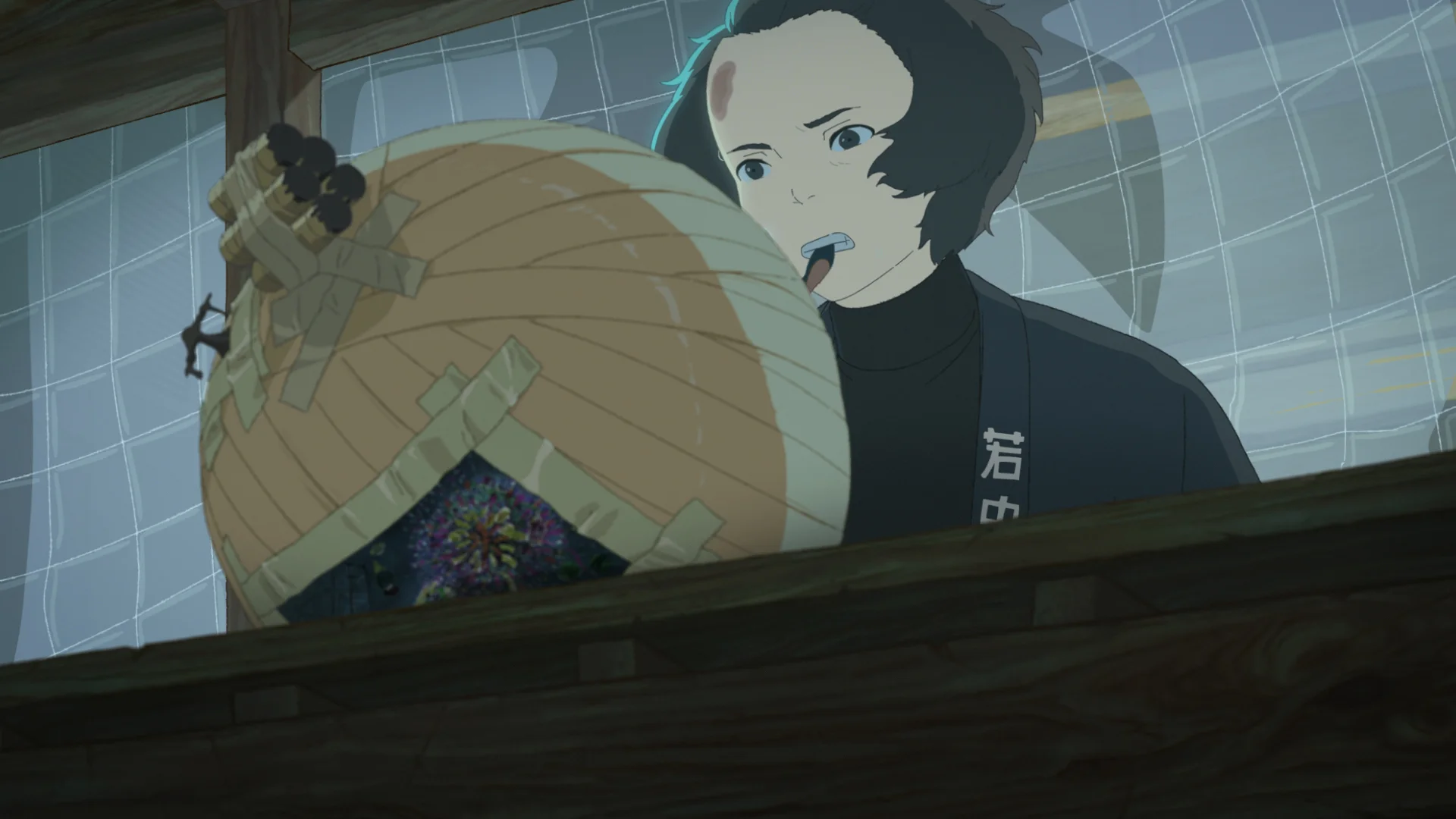
The firework imagery gives Shinomiya an opportunity to use color and movement on a much larger scale than the rooms allow. We will not describe the final events or say where each character ends up. What matters for our recommendation is that these visual passages offer a substantial reward for watching. They are not merely a brief attractive shot surrounded by indifferent animation. The film develops its interest in light and changing shapes throughout.
Shuta Hasunuma's music contributes energy that the dialogue does not always supply. Its changing rhythms suit a film willing to interrupt ordinary scenes with very different images. Music and movement can make a passage engaging even when its precise meaning remains uncertain. We do not think that excuses confusing writing, but it does explain why the experience can be enjoyable without every story detail working equally well.
A New Dawn images
3 screenshotsOur recommendation is strongest for viewers interested in experimental animation. If you enjoy noticing how a film changes its drawings, colors and movement, there is plenty here to examine. If you mainly want an absorbing family story with fully developed relationships, the workshop's beauty may not compensate for the missing conversations. The premise is accessible to newcomers; the way Shinomiya develops it is less straightforward than the premise suggests.
The film opened in Japan in March 2026. A Japanese Blu-ray released on September 11 lists English subtitles, making this month's home release relevant to viewers following its international availability. That is an availability detail, not an assessment of the disc's picture or sound quality. Release options vary by country, and we are not treating a Japanese disc listing as confirmation of an English-language streaming release.
Pixel Twelve score: 6.4/10 — Fair. We recommend A New Dawn with reservations because its detailed workshop, unusual animation techniques and music provide sustained interest beyond the thinly explained family conflict. Those strengths earn it more than a dismissal for confusing storytelling. They do not earn a higher score: the reunion should make us understand the three young people better than it does. Watch for the visual invention, but do not expect every argument or piece of family history to feel complete.
Loading results