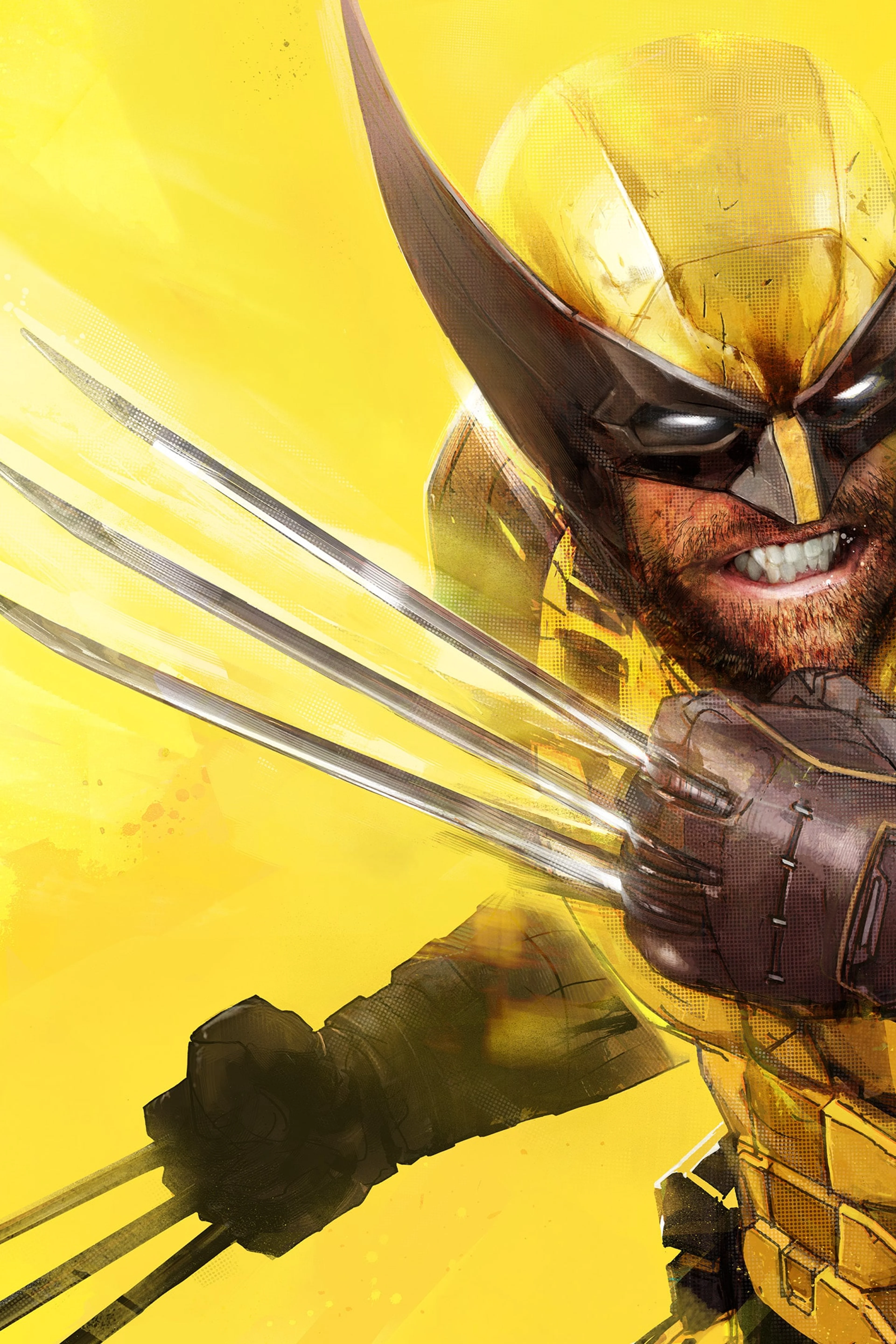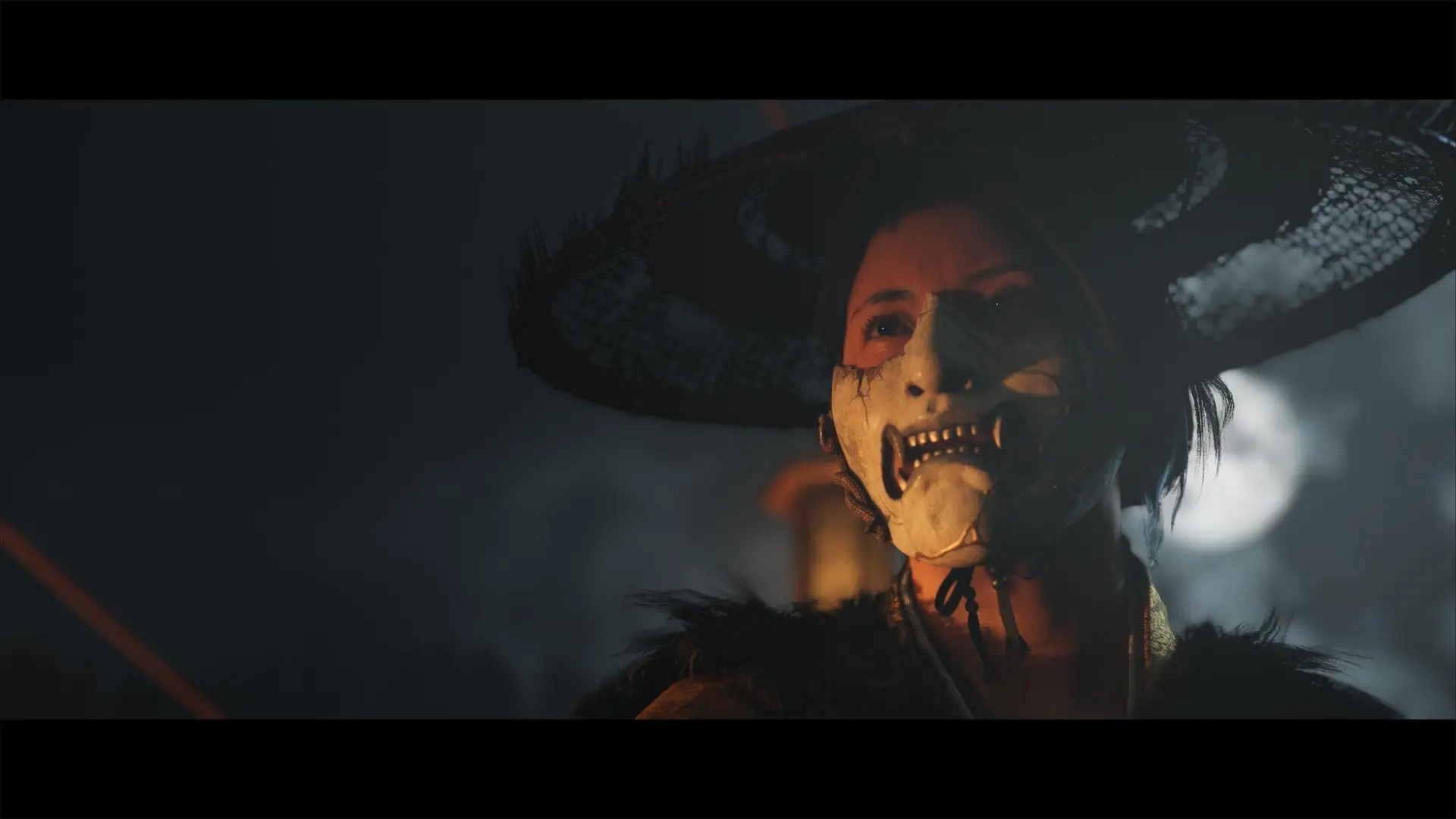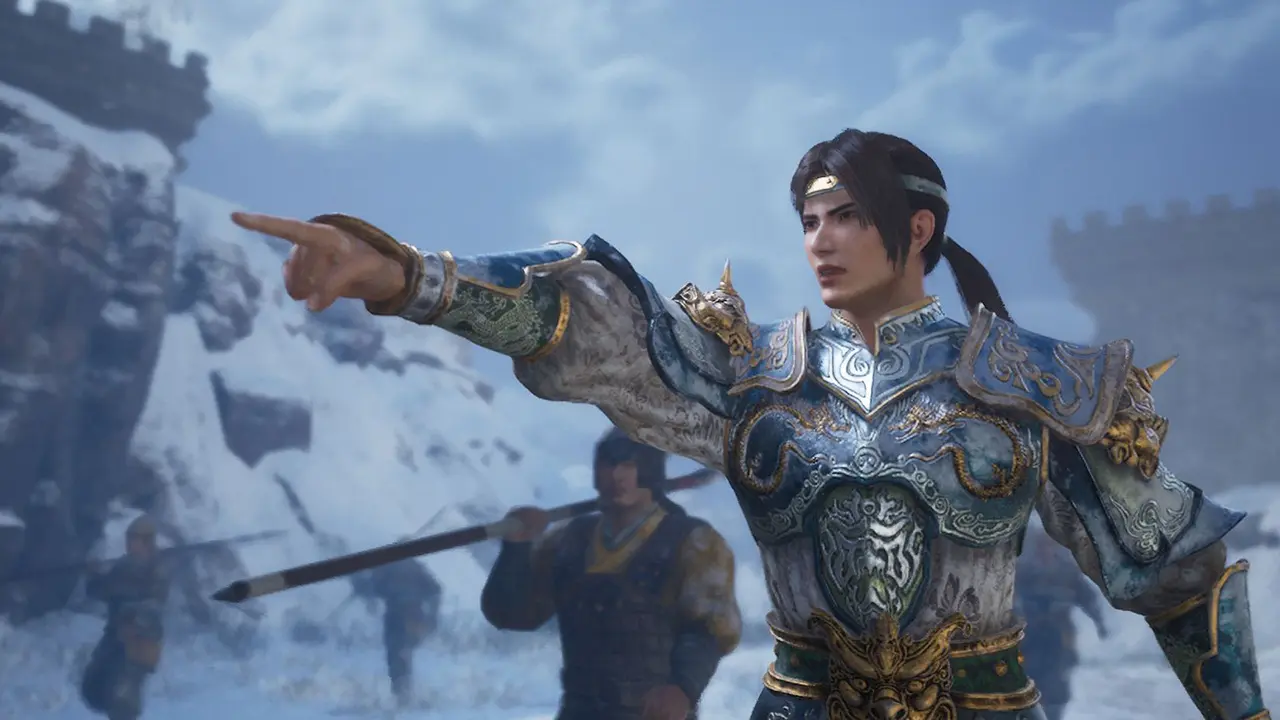
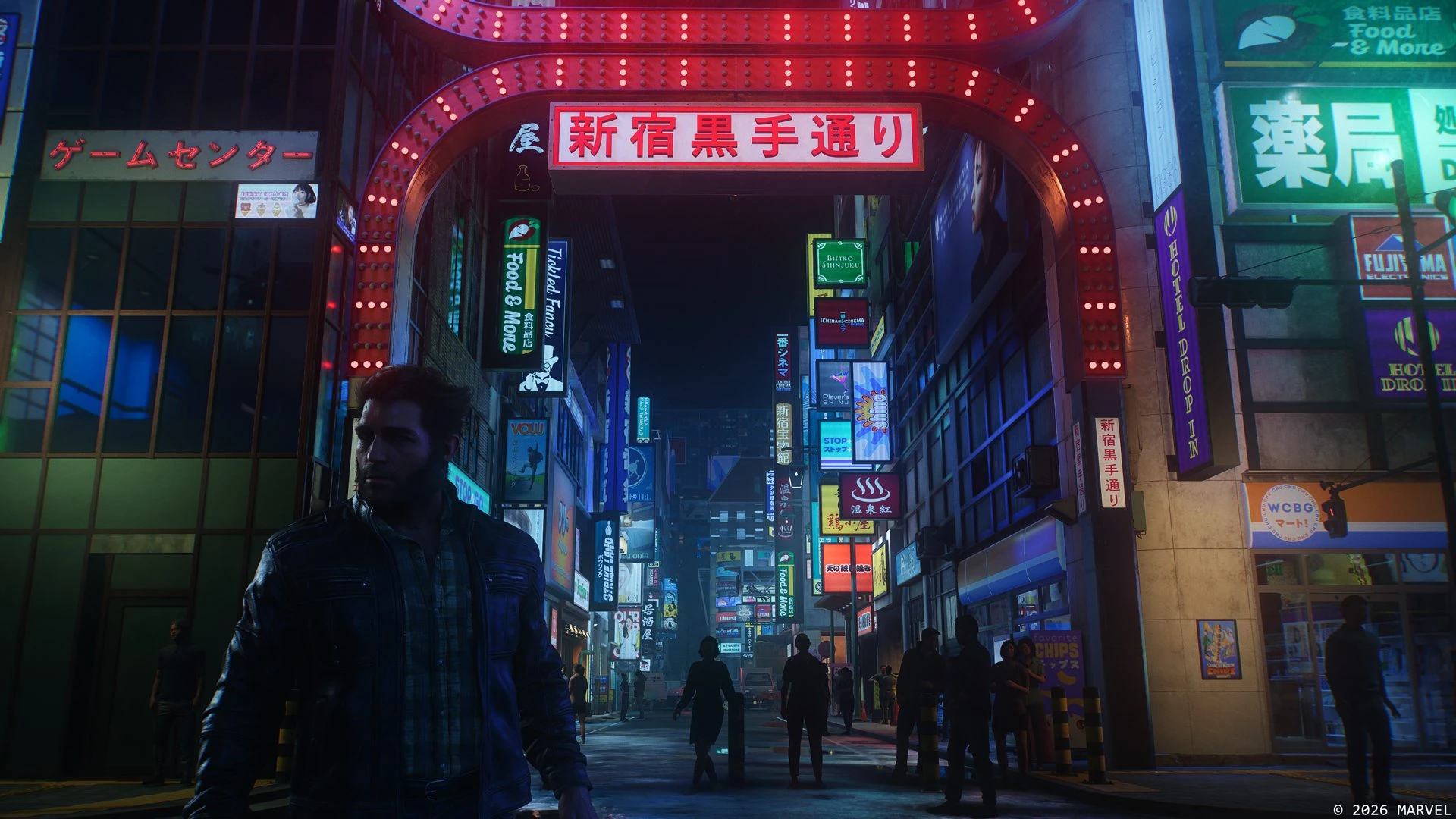
AI upscaling is no longer just a PS5 Pro feature. Sony has introduced Quick Spectral Super Resolution, or QSSR, for the regular PS5, with support arriving in Marvel’s Wolverine and Ghost of Yōtei on October 1. If either game is already in your library, this is a reason to check its latest update before your next session.
The name sounds close to PSSR, the upscaling system associated with PS5 Pro. The distinction matters: QSSR is designed for the less powerful console, rather than a promise that an ordinary PS5 now has the Pro’s hardware. Its first examples focus on keeping small details clearer as the camera moves. That means windows, plants, clothing patterns and other things that can become harder to read from a distance.
QSSR and PSSR are not the same setting
Sony describes QSSR as a lighter option developed through its Project Amethyst collaboration with AMD. It uses a streamlined neural network and an implementation tuned for PS5. PSSR remains the higher-performance option on PS5 Pro; QSSR gives developers another way to improve reconstruction on the standard machine.
For players, that is a more useful distinction than treating the similar names as interchangeable. QSSR is not a PS5 Pro upgrade delivered by software. Sony’s Pro teardown shows a different system-on-chip design with a more capable GPU, alongside its ray-tracing and PSSR capabilities. A new reconstruction option on the standard console does not add those physical components.
Nor should the comparison be reduced to the resolution number printed on a television’s information screen. Two images can occupy the same screen and still resolve thin lines or patterned surfaces differently. The important result is how readable the game remains during play, not whether its graphics menu contains the longest acronym.
Wolverine’s comparison gives you specific details to watch
PlayStation’s Wolverine demonstration starts with a split-screen comparison of Fidelity Mode with and without QSSR. It then magnifies parts of the city four times. The FISK building, its window rows and the narrow structures in front of it give you something concrete to compare, rather than two unrelated screenshots taken in different locations.
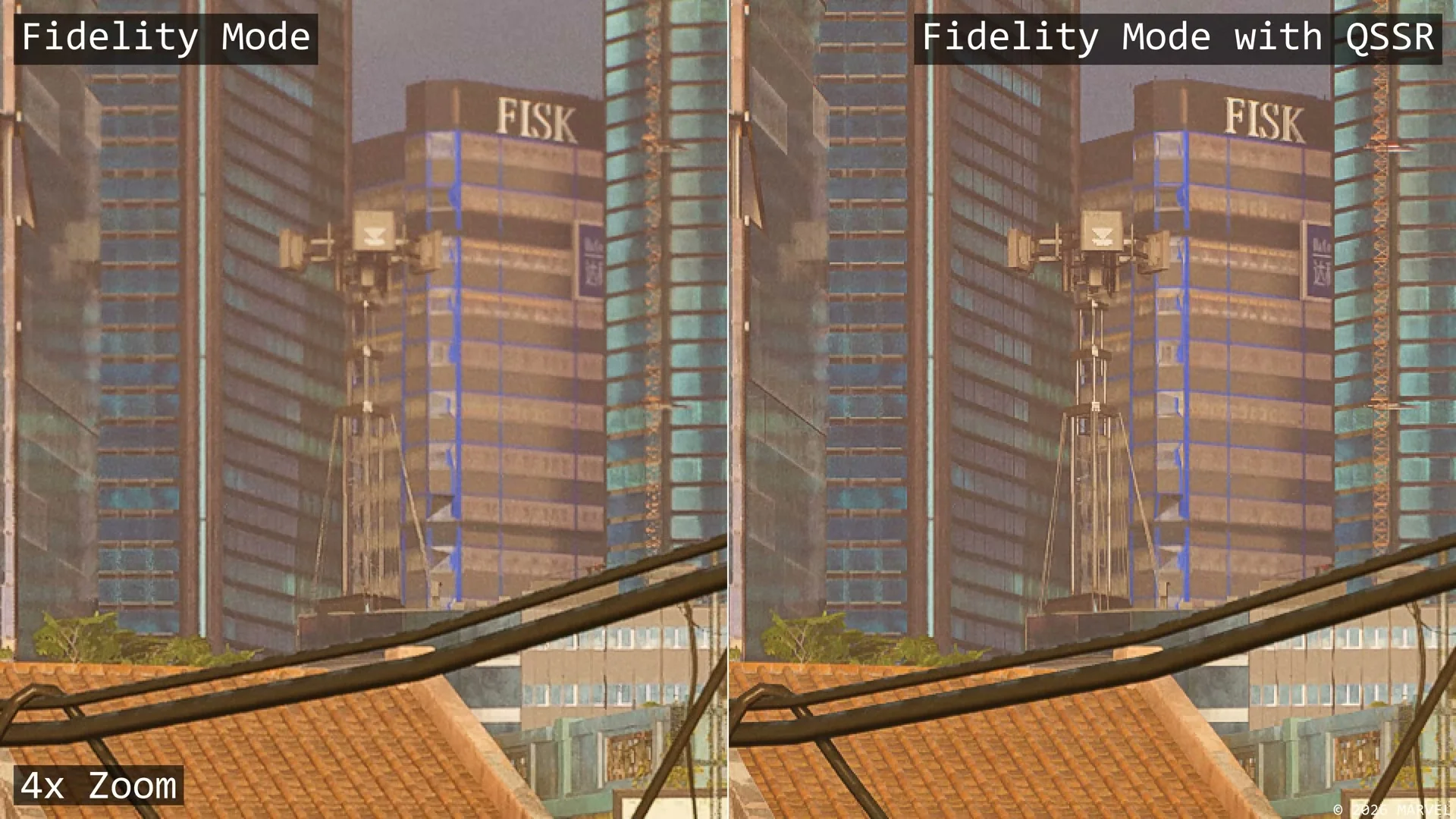
The close view is useful because the subject is full of straight edges and repeated shapes. Look at the window divisions and the slender framework between the buildings. Those are small features within the normal image, but they become much easier to follow when the demonstration moves closer. The comparison keeps the same scene on both sides, so the buildings themselves are not changing between shots.
Later, the video switches to Performance Mode and shows a waterfront skyline before enlarging another section of the buildings. That matters for anyone who prefers responsiveness over the game’s fidelity setting: Sony is not presenting QSSR only through one stationary beauty shot. The demonstration includes two named modes, with the enabled and disabled versions labeled separately.
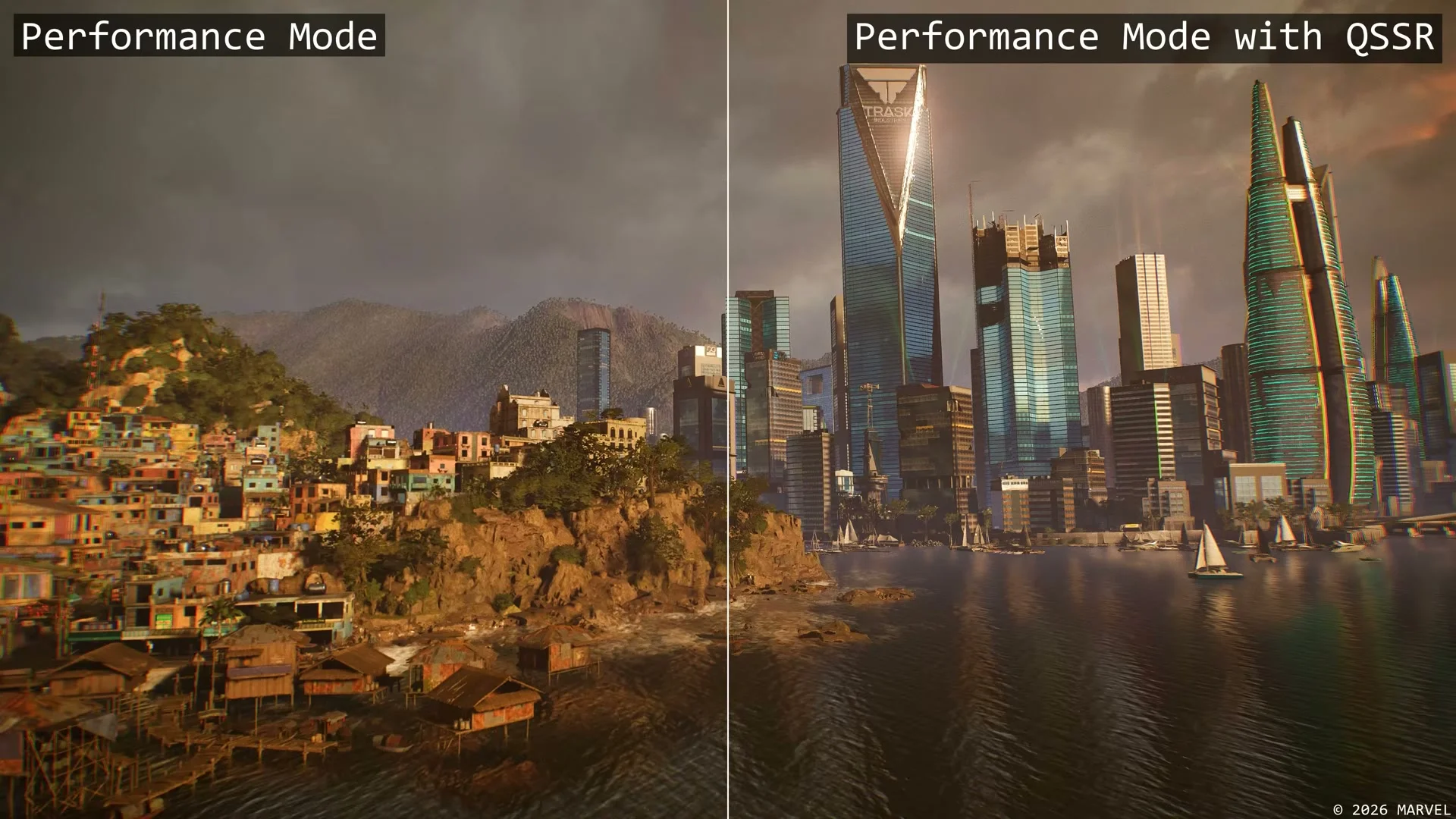
The four-times zoom is a demonstration, not how most people play. At your usual seating distance, the difference may be less obvious than it is in an enlarged view. The clip also does not provide a frame-rate graph or establish how the update behaves through an entire fight. Clearer building details and measured performance are different claims; this comparison supports the former.
Wolverine turns QSSR on by default
Insomniac’s patch notes make the practical part straightforward. Update 1.002.000 enables QSSR by default on PS5. It is not described as an extra purchase, a new edition or something that requires replacing your console.
The same update addresses more than image quality. Insomniac lists fixes involving progression, crashes, out-of-bounds problems, Photo Mode and the interface, along with visual polish. Its accessibility changes cover Navigation Assist, Lock On, High Contrast and the Screen Reader. Players using those tools have reasons to install the patch beyond the graphics comparison.
That broader list is worth keeping in mind if you have put the game down because of a particular problem. An upscaling headline can make the rest of an update easy to overlook. The notes group several different fixes together, so the patch should not be treated as nothing more than a switch for sharper scenery.
Ghost of Yōtei uses a different kind of detail
The Ghost of Yōtei comparison begins with Atsu riding beside a lake, then magnifies parts of the character and landscape. Its two sides are labeled Raytracing Mode and Raytracing Mode with QSSR. This is a different test scene from Wolverine’s city: grass, branches, rocks and the pattern on Atsu’s clothing take the place of building windows and metal structures.
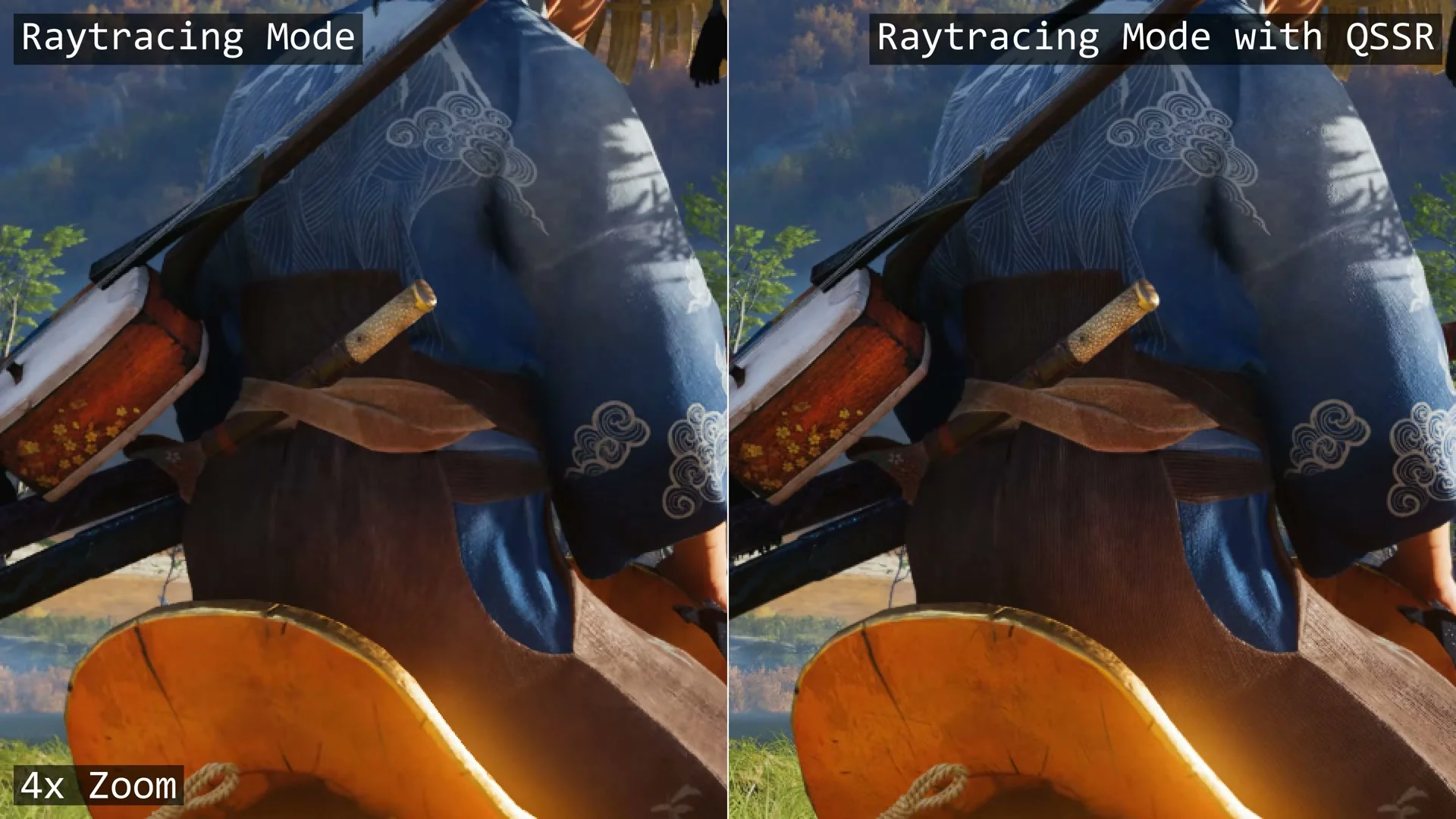
The close view of Atsu’s blue clothing is particularly helpful. Its fine diagonal lines and decorative patterns show why reconstruction is not only about making distant mountains look crisp. The player character occupies a large part of the screen, and the fabric detail moves with her. The demonstration also returns attention to vegetation, where many small shapes sit close together.
The video’s labels should guide the comparison. This is a ray-tracing-mode demonstration, not proof that every graphics mode receives an identical improvement. It is also not a side-by-side contest between Ghost of Yōtei and Wolverine. The two games use different environments and show different surfaces; each clip is useful for judging the change within its own scene.
For more about the game itself, the Ghost of Yōtei guide covers Atsu, exploration and combat. QSSR changes how a supported game reconstructs its picture; it does not introduce a new quest, weapon or character.
How to check for the update
On the PS5 home screen, highlight the game, press the controller’s Options button, then select Check for Update. Follow the on-screen instructions if a download is available. Sony also says games and apps update to the newest available version when started, but a manual check is useful before sitting down to play.
Check each game separately. Installing a PS5 system update is not the same action as installing Wolverine’s patch, and updating one title does not update another. If you are trying the new option, start from the current version of the game rather than assuming an older installation already has it.
The first supported titles are Wolverine and Ghost of Yōtei. Sony says QSSR will be offered more broadly to developers, but that is not an announcement that every PS5 game now supports it. For another title, wait for that game’s own update or confirmation. For these two, the immediate next step is much simpler: download the patch and compare the familiar scenes on the console you already own.