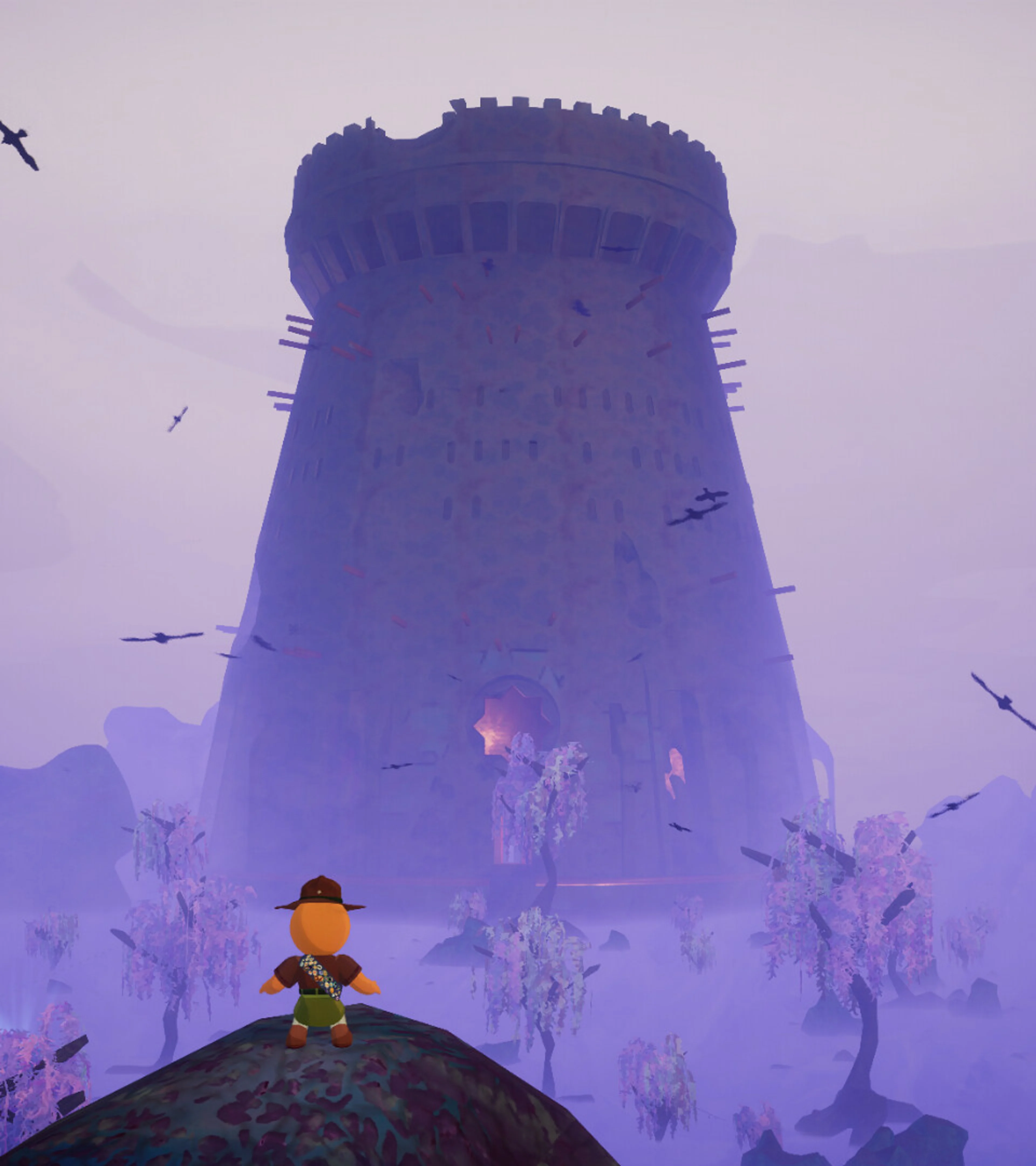
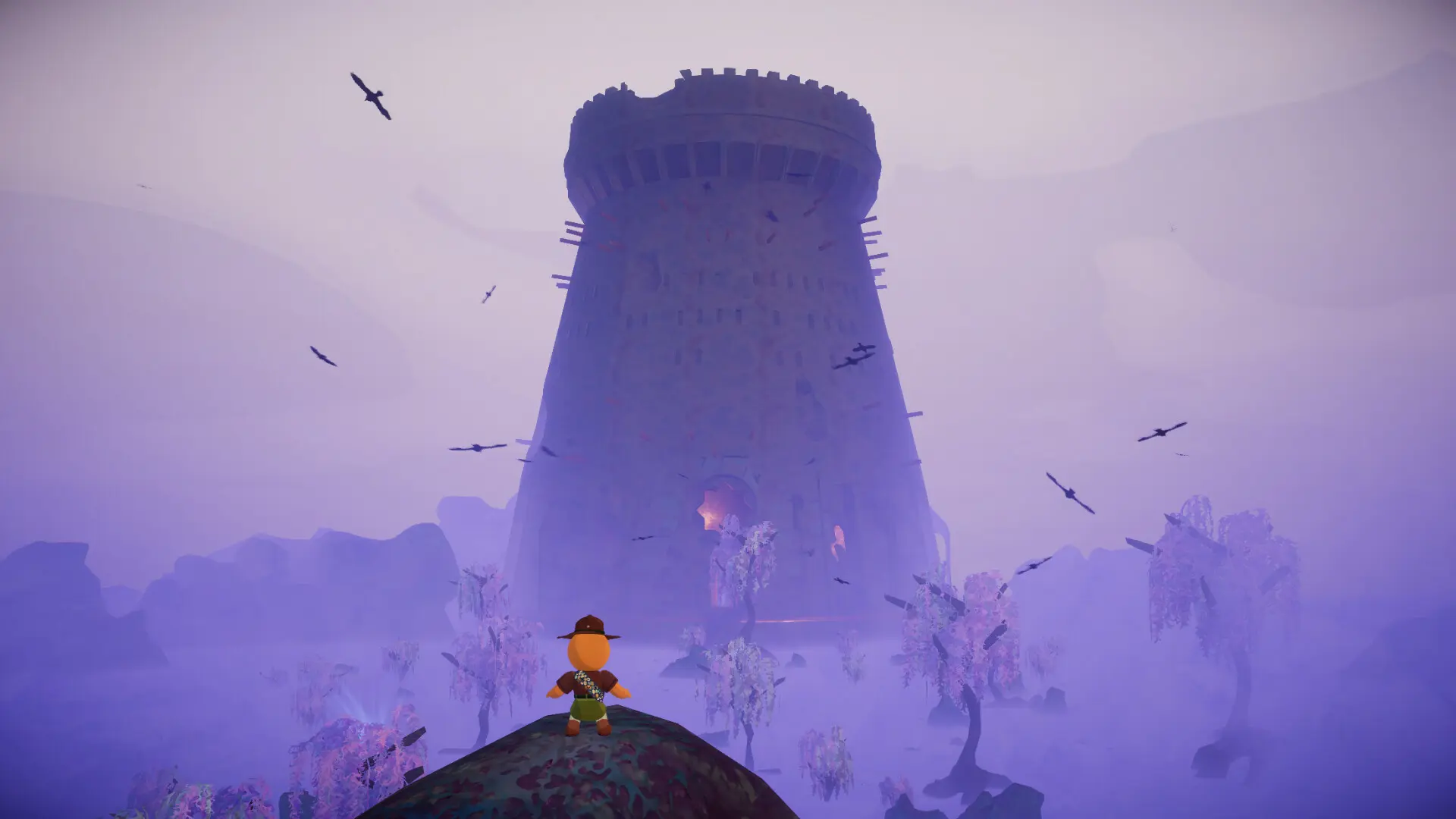
PEAK does not have one permanent route to memorize. Its mountain changes every 24 hours, while injuries, food, and support items change how far a scout can safely climb. The useful beginner skill is learning how to make the next section safer before committing to it.
This guide explains that decision loop for the current PEAK game. It does not replace a route walkthrough, because the exact walls and item locations can change with the daily island.
PEAK quick-start checklist
- Start a climb from stable ground with a full stamina bar whenever possible.
- Identify the next ledge or resting point before leaving the ground.
- Keep a shorter fallback route in mind in case an injury reduces your available stamina.
- Use ropes and climbing spikes on bottlenecks that the rest of the group will also cross.
- Spread essential food and climbing tools across the team instead of placing every useful item in one backpack.
- Repeat the same daily island to learn its dangerous transitions before the next 24-hour rotation.
Protect maximum stamina before you think about speed
PEAK's official description connects injuries directly to maximum stamina. That makes an injury more than a temporary health problem: it shortens every later climb until the condition is addressed or the route changes.
A beginner run often fails because the group treats the visible wall as the whole problem. The real question is whether each scout will still have enough stamina after the wall to reach safe ground, recover, and continue.
Climb in stages
Before grabbing a wall, pause long enough to answer three questions:
- Where is the next surface that can hold the scout without continued stamina drain?
- Is there a lower ledge that can serve as a fallback?
- Does the route still work for an injured scout with a smaller maximum bar?
If the answer to the third question is no, look for a gentler line or spend a support item before the group starts climbing. A route that only works for the healthiest scout is not yet a team route.
Stop after a bad fall
Do not immediately attack the same wall after an injury. The first attempt already proved that the route was too expensive, too uncertain, or badly timed. Refill what stamina remains, check for another approach, and decide whether a rope or spike would convert the section into a repeatable climb.
Make ropes and climbing spikes solve a shared problem
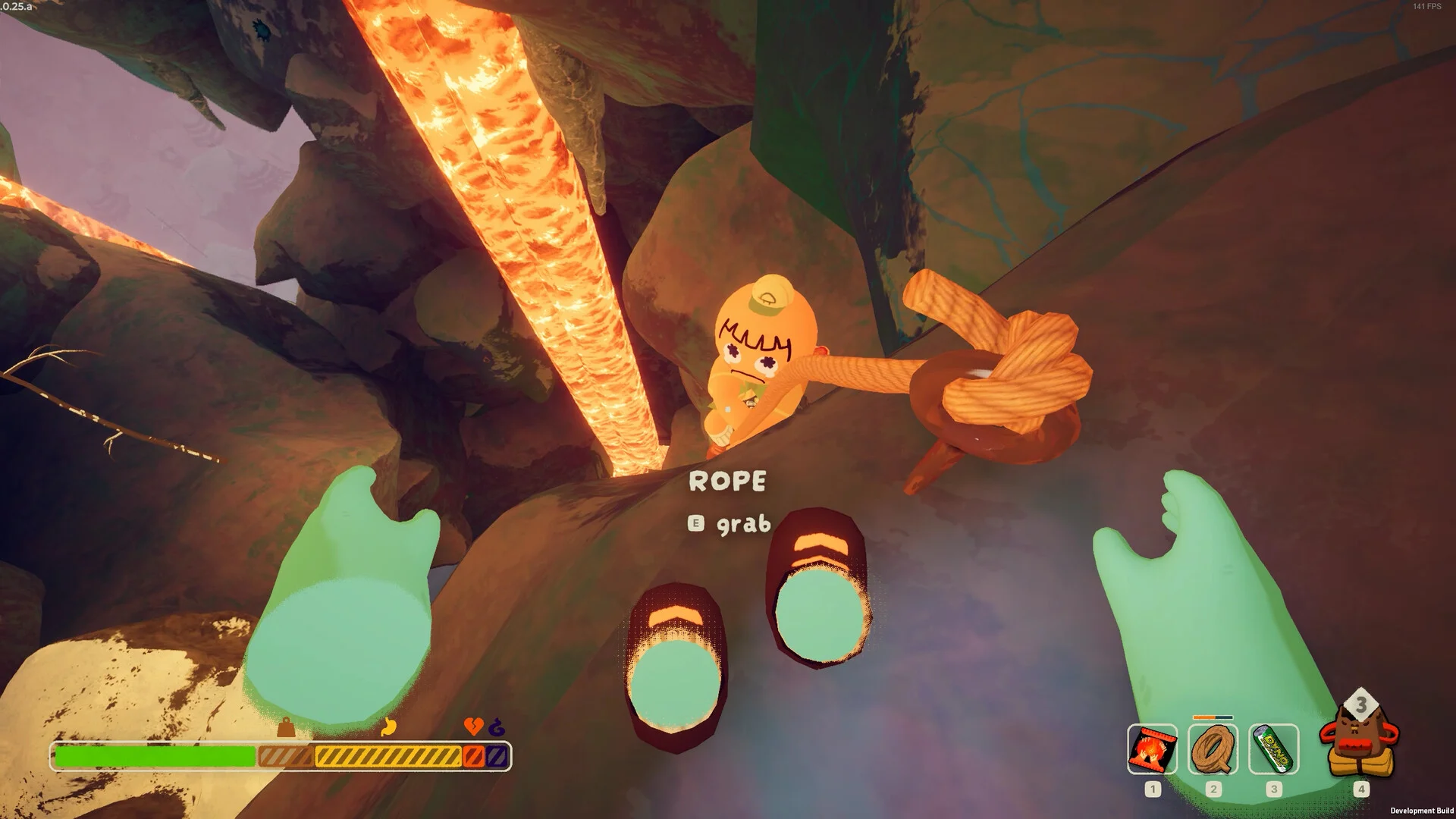
The official store page describes ropes and climbing spikes as tools that make the route easier for the scouts who follow. That is their clearest beginner use: one player reaches a reliable position, then turns a dangerous section into infrastructure for the group.
Avoid spending a rope on the first climbable wall simply because it is available. Save it for a long vertical bottleneck, a wall with a poor recovery ledge, or a section the full team must repeat.
A simple co-op order
- The scout with the best current stamina tests the route.
- That scout reaches stable ground before placing support.
- A rope or spike is positioned where later climbers can actually reach it.
- The next scout carries a second support item in case the route changes above.
- The group climbs one at a time when a fall could knock down or strand everyone.
This order keeps a failed first attempt from consuming the whole team's stamina and equipment at once.
Treat food as part of the route
PEAK describes its food as both necessary for survival and questionable. The beginner lesson is not to treat every pickup as an automatic refill. Food has value because of when and for whom it is used, not because it clears an inventory slot.
In co-op, avoid putting every useful food item on the same scout. A fall, separation, or injury can then remove the group's entire reserve from the next section. Distributing supplies also lets the scout who reaches stable ground first support the rest of the team.
Before using food, compare the current condition of the scout with the climb that remains. If the group is safe and the next biome is close, carrying the item forward may be more useful than consuming it immediately. If an injury has already reduced a scout's climbing range, preserving a safer route can matter more than rushing to match the fastest player.
Use the 24-hour map rotation to learn faster
The mountain changes every 24 hours, but the same island can be attempted repeatedly during that day. That makes a failed run useful if the next attempt records what went wrong.
On a same-day retry, remember four things:
- the first wall that forced the group to spend a rope or spike;
- the safest resting point before each major vertical section;
- where food or support items appeared;
- which biome transition caused the first serious injury or supply shortage.
Do not expect an exact route to survive the next daily reset. What carries forward is the ability to recognize a bottleneck, preserve maximum stamina, and build a route for more than one scout.
Solo and co-op need different inventory logic
PEAK supports offline single-player and friends-only online groups with up to four scouts. In co-op, the team can divide food, ropes, and route-testing duties. Solo players must carry every recovery and support option themselves.
For a solo run, favor items that solve a problem you cannot delegate. A rope is both a route tool and insurance against a wall that becomes too expensive after an injury. In a group, avoid four identical loadouts. A team is more resilient when one scout can establish the route and another still holds the item needed for the next bottleneck.
What to change when a run keeps failing
You run out of stamina just below the ledge
Start from a fully recovered position, then look for an intermediate foothold or a shorter line. If neither exists, the wall is a support-item problem rather than a timing problem.
The same fall causes repeated injuries
Stop repeating the same input and change the route. A lower ledge, slower approach, rope, or spike is more valuable than another attempt with a smaller maximum stamina bar.
The team loses every important item together
Split food and climbing tools between scouts before the next dangerous section. The group should still have a recovery option when the first route attempt fails.
The mountain changed since the last session
Treat the new island as a fresh route. Reuse the decision process, not a memorized sequence of walls.
Where the Final Ascent changes fit
This beginner guide focuses on the systems that shape every run. For the current GLOOM and CITADEL biomes, Ascent 8, newer items, console development, and crossplay plans, read the PEAK Final Ascent guide.
The PEAK guide hub keeps both the foundational guide and update-specific coverage together.