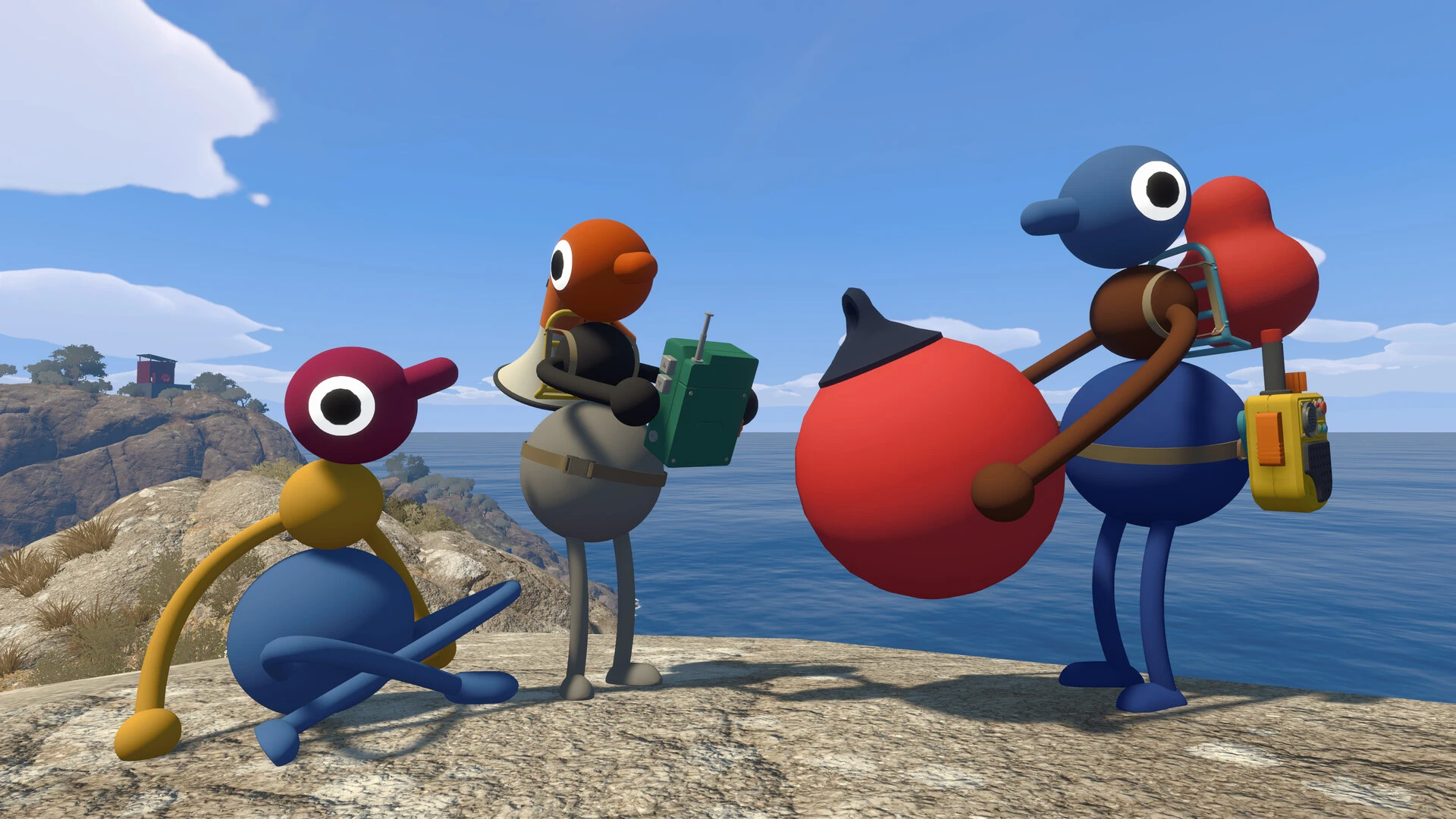
Big Walk arrived on August 4 and quickly became one of the busiest new co-op games on PC. House House, the studio behind Untitled Goose Game, built it for groups that want to explore, talk, and solve problems together without following a long list of quests.
The early numbers are strong. SteamDB recorded an all-time peak of 46,409 players on August 5, while the game's Steam reviews were more than 92 percent positive at the time of writing. Its PC critic score also sits in the 90s on Metacritic.
Those numbers explain why Big Walk is appearing everywhere, but they do not explain why groups keep talking about it. The attraction is how quickly it creates funny situations between friends. Someone gets separated. Another player misunderstands a signal. A simple climb turns into a group problem because one person cannot stop making things worse.
What You Actually Do in Big Walk
Big Walk supports two to 12 players. The group explores an island, finds routes through the environment, uses strange tools, and works out how to reach the next area. There is no traditional combat system pushing every session forward. Most of the tension comes from movement, distance, and communication.
The game uses proximity voice chat, so friends become quieter as they move away. That small decision changes how people play. A group can split up to investigate two paths, but doing so makes it harder to share information. Calling someone back is easy when they are close and much less useful when they have already disappeared behind a hill.
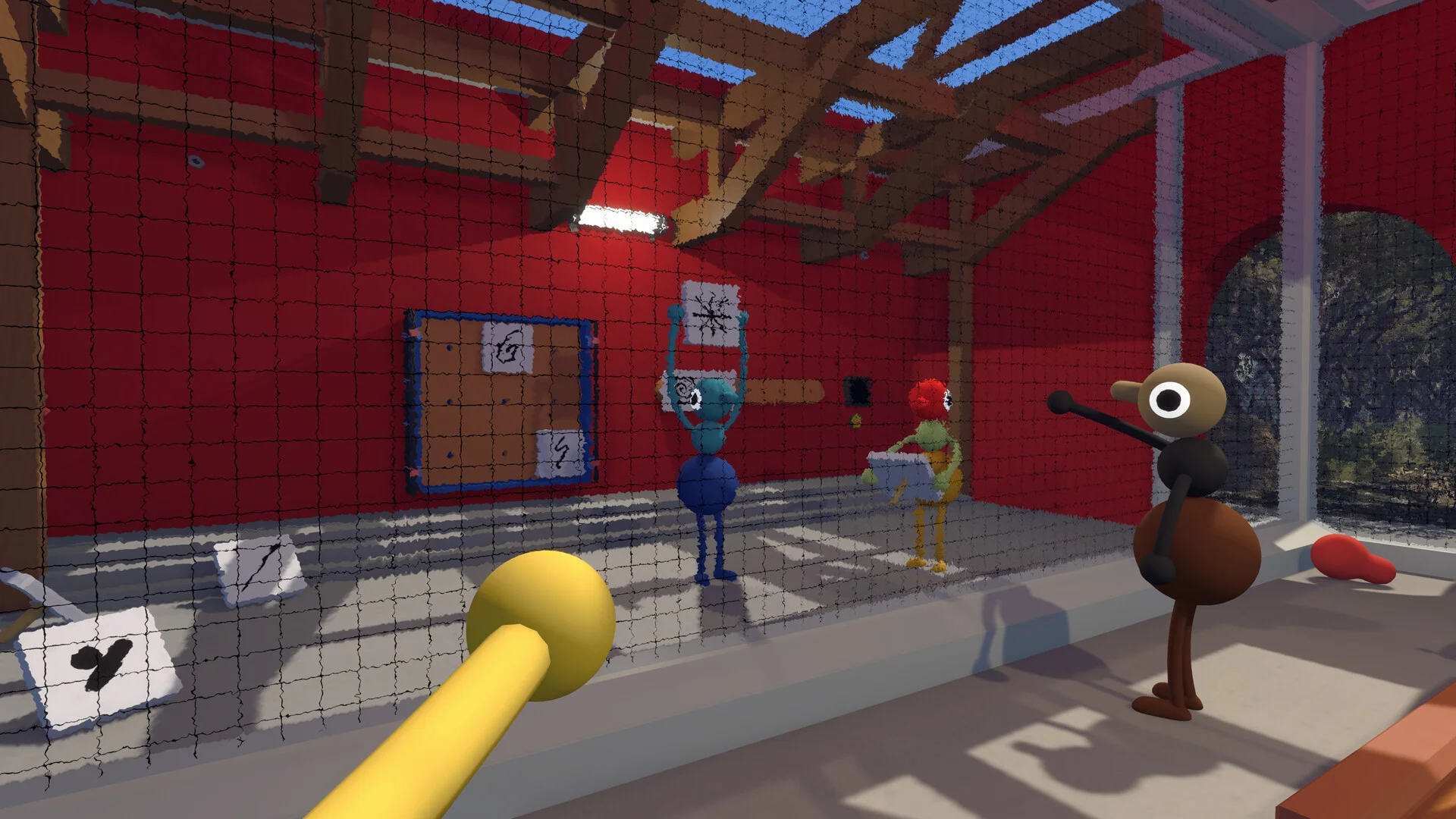
The tools are designed for communication as much as progress. Players can point, signal, and experiment without needing one person to act as the permanent leader. A mistake usually becomes part of the session instead of forcing the whole group to restart a difficult mission.
Why It Works So Well With Friends
House House says the world adjusts for different group sizes. The official Big Walk FAQ explains that the experience changes for two, three, four, or more players. A small group is not simply walking through an area designed for 12 people.
That flexibility makes Big Walk easier to recommend. You do not need to organize a full server before playing, and a larger group can still join when more friends are free. The game also supports crossplay, which removes one of the most common problems for a modern friend group.
Its launch through PlayStation Plus gave it another large audience immediately. Players who might have waited for a sale could try it with their subscription, then invite friends once they understood the idea. That kind of access is especially useful for a game whose best advertisement is one person saying, 'Get in here and see what happened.'
The Numbers Match the Reaction
A large launch does not always lead to a lasting community, but Big Walk has two useful signs in its favor. It reached tens of thousands of simultaneous Steam players, and the people leaving reviews were overwhelmingly positive. Metacritic also shows strong critic support rather than a gap between professional reviews and player reaction.
The current Metacritic page reflects how well the game's social design has been received. Critics repeatedly focus on the pleasure of getting lost, communicating badly, and solving problems as a group. Those ideas are easy to understand from a short clip, which helps the game spread on social media.
Big Walk also produces moments that are different for every group. A scripted story can be discussed once everyone reaches the ending. Here, players come away with stories about what their own friends did. That gives them a reason to share clips and return with another group.
There Is One Important Catch
Big Walk is built around other people. The official FAQ says a player can begin alone but will not get very far. Anyone buying it for a quiet solo adventure should understand that before starting. Its best ideas depend on communication and cooperation.
You also need a group that is comfortable talking and experimenting. Players who want exact objectives, constant rewards, or competitive progression may find the pace too loose. Big Walk is happier letting friends create their own entertainment between the major puzzles.
For its intended audience, that focus is a strength. The game does not waste time pretending it can offer the same experience alone. It wants people to bring friends, make mistakes, and spend an evening laughing about them.
Big Walk Speedrunners Are Already Under Nine Minutes
Most groups spend hours getting lost together, but speedrunners have already found a much shorter trip. The Big Walk leaderboard on Speedrun.com now has verified categories for unrestricted, flightless, and glitchless runs.
As of August 10, OLIVERb holds the verified Big Goodbye Unrestricted record at 8 minutes 37 seconds. The category allows any method needed to reach the Big Goodbye ending and only requires the host’s point of view. This is not a normal playthrough: movement exploits and major skips remove almost the entire journey.
The fastest verified glitchless run is 1 hour 35 minutes 2 seconds in the two-player category. Flightless—where infinite-height glitches are banned but other shortcuts remain allowed—is down to 10 minutes 33 seconds. Records can change quickly, so the live leaderboard is the best place to check the latest times.
New players should start with the Big Walk beginner guide or the full tower walkthrough. The unrestricted route is fun to watch, but it skips the co-op puzzles that make a first trip memorable.
Why Big Walk Is Blowing Up
Big Walk launched with excellent reviews, a large Steam audience, crossplay, and immediate PlayStation Plus access. More importantly, it gives groups a clear reason to keep inviting one another back. Every session can produce a different argument, accident, or success.
Players looking for a serious campaign may not find what they want here. Players who miss having a new game that their entire friend group can understand in minutes probably will. That is why Big Walk has moved from a curious indie release to one of the co-op games people are discussing most right now.