

Last updated August 26, 2026.
The safest beginner route is to feed the campfire, loot the closest buildings, craft a map, improve the crafting bench, prepare a return path before every long trip, and rescue children only when you can finish the fight before night. The run becomes much easier when every item has a job: fuel keeps the safe area active, food protects your stamina, tools speed up gathering, and healing items prevent one mistake from ending the team.
“Build a camp with friends. Something is watching you.” — Official Roblox description
Quick answer: what should you do first?
- Put wood or better fuel into the campfire so it cannot go out while you are exploring.
- Search nearby buildings and common chests before walking deep into unexplored forest.
- Craft the map early, then add navigation tools as your crafting tiers allow.
- Upgrade the crafting bench instead of spending all of your scrap on optional furniture.
- Carry food, a light source, and at least one healing or revive item before a rescue trip.
- Return to camp early enough that darkness does not catch you without a clear route home.
That route covers the systems that decide most failed runs. A powerful class helps, but it cannot replace fuel, navigation, food, or a plan for getting back to camp.
Your first day: secure the loop before chasing objectives
Start by cutting nearby trees and feeding the campfire. The fire is both a progression system and the center of your safe area, so letting it run low creates two problems at once. Do not carry every log into the fire. Keep enough wood and scrap available for the map, bench upgrades, and basic camp items.
Next, search the closest buildings. Early chests can provide food, fuel, tools, weapons, armor, or medical supplies without forcing you far from camp. Pick a direction, clear one small section, and return. Randomly changing direction wastes daylight and makes the route home harder to remember.
Craft a map as soon as the recipe is available. The map records explored ground and gives the team one shared picture of the run. A compass and timekeeping tool become more useful after the map exists because they help you choose a direction and judge whether you have enough daylight to finish a trip.
A practical build order for new players
There is no single perfect build because loot and map layouts change, but a stable order is map first, bench progression second, navigation and food support third, then defenses and specialized equipment. Move an item earlier only when the current run clearly needs it. For example, healing matters more than another convenience item when the group is already taking damage.
- Map: the first information upgrade and the easiest way to stop repeating the same ground.
- Crafting bench upgrades: access to stronger survival tools and the official Crafting badge objective.
- Compass and timekeeping: safer exploration and fewer late returns.
- Food production: a reliable answer to hunger during long rescue and stronghold trips.
- Lightning and weather protection when the recipe becomes available and the run needs it.
- Defenses near the camp perimeter before cultist pressure becomes difficult to control.
The official Roblox badges confirm that both campfire and bench progression are central goals. Firemaking badges track several campfire levels, while Crafting requires upgrading the bench to level 4. Those are useful milestones for a beginner because they also unlock more of the map and more ways to solve resource problems.
What to carry before leaving camp
- A light source with enough charge for the return trip.
- Food for the distance you plan to cover, not only the trip out.
- A weapon that matches the enemies in that area, plus ammo when it is a ranged weapon.
- A bandage or medkit when playing with others; both can be valuable for a rescue.
- Enough empty sack space to bring back fuel, scrap, keys, and objective items.
Do a quick inventory check at the edge of camp. If the sack is already full, food is almost gone, or the light is nearly empty, the correct move is to fix that before crossing more fog. A short delay is cheaper than losing the entire load far from camp.
How to explore without getting stranded
Use out-and-back routes at first. Walk in one direction, reveal a useful area, then return along the same line. This makes the map easier to read and prevents the team from scattering across several incomplete routes. Once the map has landmarks, longer loops become safer.
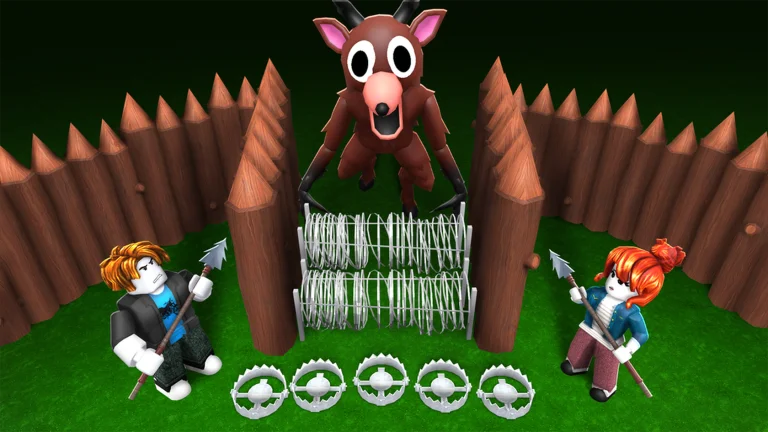
Watch the time and the route, not only the next chest. The Deer and other nighttime threats can turn a simple walk into a chase. A flashlight can create space against some creatures, but it is an escape tool rather than permission to stay out indefinitely. Do not spend ammunition on an enemy that the current game expects you to evade.
When cultists attack the camp, fight from a position where the group can heal and focus targets. Chasing one enemy into the forest splits attention and makes ranged attacks harder to see. Keep a small reserve of healing supplies for raids instead of using every item after minor damage.

Use the Pelt Trader to fix your weakest tool
The Pelt Trader first asks for a Rabbit Foot and can offer early tool upgrades. Choose the upgrade that removes the biggest bottleneck. A better axe saves time when wood is the problem, while a larger sack matters when good loot is being left behind. A flashlight upgrade is useful when charge or visibility is ending trips early.
Do not hunt so far from camp that the trade costs more time and supplies than it saves. Collect pelts while following the normal exploration route, then complete the trader sequence when the run is ready for the next area.
When should you rescue the missing children?
Rescuing a child increases the number of days added after each night, which shortens the path to day 99. It also requires fighting the animals guarding a locked cave. Attempt a rescue when the relevant area is revealed, the team has the right damage and healing, and there is enough daylight to clear the guardians and return.
The caves do not use fixed world coordinates because each run generates a new map. Use the camp posters, map reveal, and our missing kids guide to prepare for Dino Kid, Kraken Kid, Squid Kid, and Koala Kid.
A rescue is not required for every possible completion. The official Self-Preservation badge specifically recognizes reaching day 99 without rescuing a missing child. For most beginners, however, the day multiplier from rescues makes a normal completion faster once the camp can support the fights.
Solo and team priorities are different
Solo players need redundancy. Carry your own food, light, healing, and return plan because no teammate can recover a dropped role. Avoid fighting several guardians together and use terrain to separate them. Leave camp with extra time so one unexpected encounter does not force a night return.
A group should assign simple jobs: one player gathers fuel and wood, one handles food and camp upgrades, and one or two explore or fight. Everyone should still carry a light and food. A job split is useful only when the team shares supplies and returns for raids.
Common beginner mistakes
- Burning every piece of wood, then having nothing left for crafting or repairs.
- Opening a long route in several directions instead of completing one safe path.
- Leaving camp with a full sack and no room for fuel, keys, or rare loot.
- Starting a child rescue late in the day without enough ammo or healing.
- Spending Diamonds on an expensive class before understanding the basic loop.
- Using all medical items after small fights and having none for a raid or revive.
Free Diamonds and the next step
Before buying a class, claim the current free rewards in our 99 Nights in the Forest codes list. The page separates normal lobby codes from the disputed fishing phrase so you do not enter it in the wrong place.
For the game overview, official developer details, and every Pixel Twelve guide in this cluster, use the 99 Nights in the Forest game page.