


Gwent becomes much easier once you stop trying to win every round. A match is a contest of card advantage across as many as three rounds. The first player to win two rounds wins the match, but the ten cards in your opening hand normally have to last until the end. A smart pass can matter more than one extra point of strength.
This guide covers Gwent as it works in The Witcher 3: Wild Hunt and the Complete Edition. CD Projekt Red has announced The Witcher 3: Wild Hunt — Remastered for September 29, 2026, but it has not announced changes to Gwent's quest requirements or match rules. The guide should be checked again when that version launches.
How a Gwent Match Works
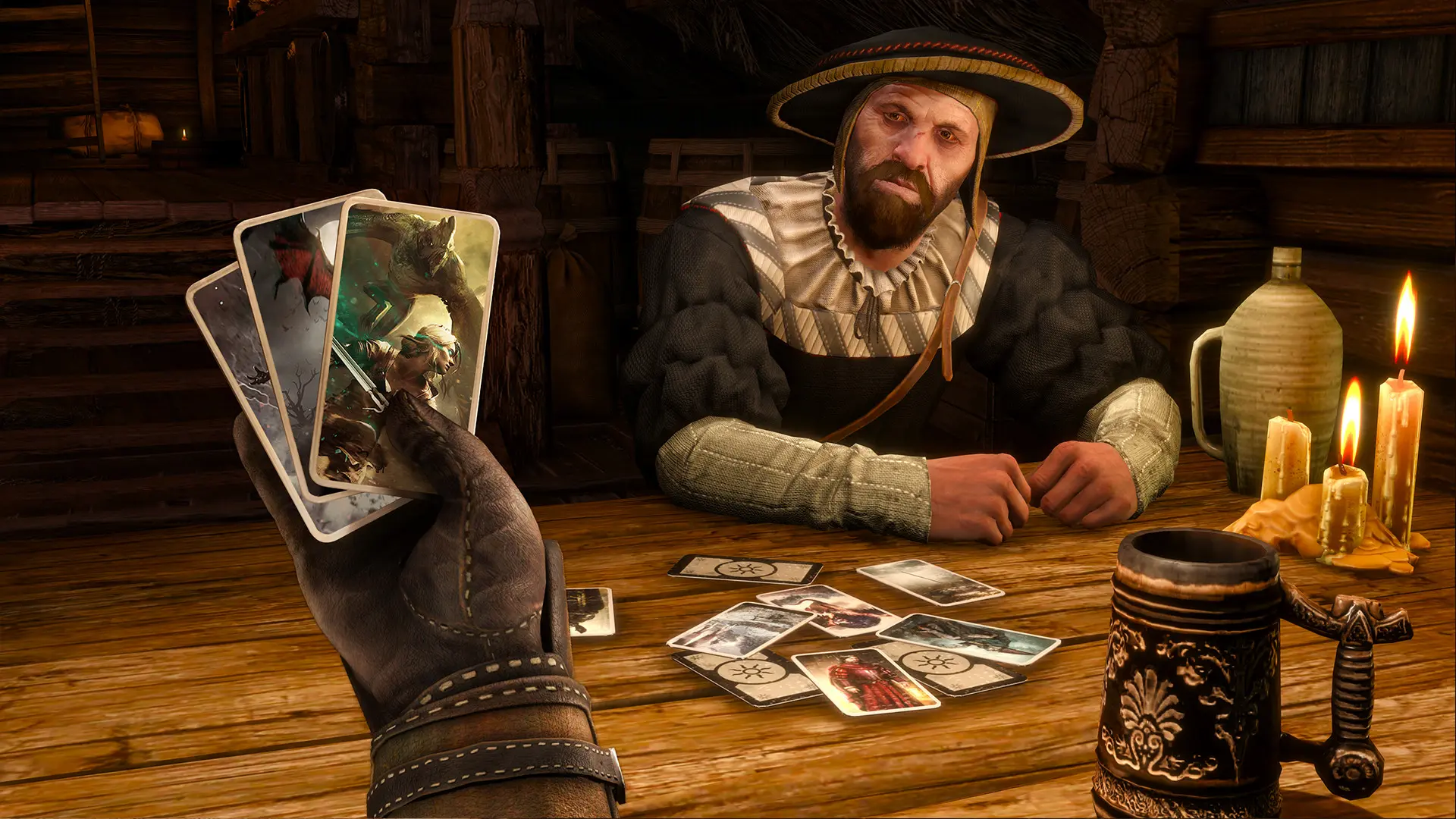
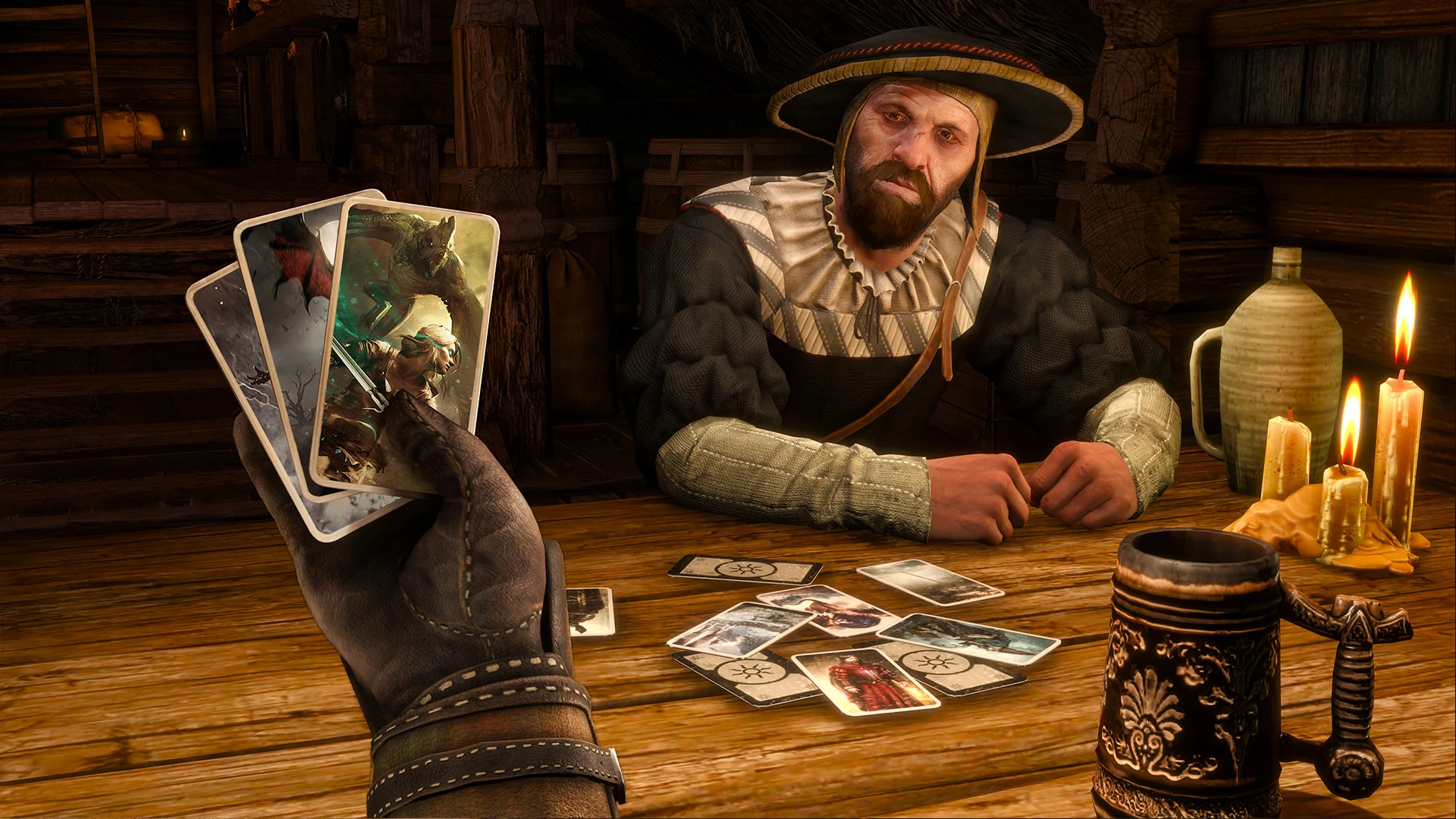
Each player brings one faction, one leader, at least 22 unit cards, and no more than 10 special cards. Both players draw 10 cards before the first round and may replace up to two of them. Those cards become the hand for the match. You do not receive a fresh hand at the start of every round unless a card or faction ability gives you an extra draw.

Players take turns placing one card or passing. Once you pass, you cannot play again during that round. The player with the higher total after both sides pass wins the round. A draw costs both players a life gem unless a faction ability changes the result.
That structure creates the main decision in Gwent: how many cards should you spend to win the current round? If an opponent uses six cards to beat four of yours, losing that round may leave you with an advantage for the next two. If you keep adding strength after the opponent passes, stop as soon as you are ahead.
Build a Smaller, More Reliable Deck
The deck editor allows more than 22 unit cards, but adding every card you own makes the opening hand less predictable. Start near the 22-unit minimum and remove weak cards as better ones become available. A compact deck draws its spies, medics, heroes, and strong units more often.
Do not fill all ten special-card slots just because the rules allow it. Weather, Decoy, Scorch, and Commander's Horn can be powerful, but a hand with too many special cards may not have enough unit strength to win a round. Two or three carefully chosen special cards are easier to use than a deck built around every possible answer.
The Northern Realms deck is the practical starting faction. Its faction ability draws one card after a round win, which helps a new player recover card advantage. Keep its strongest siege units, Tight Bond pairs, spies, and medics, then remove low-strength cards as replacements arrive.
Understand Unit Rows and Abilities
Most units belong to close combat, ranged combat, or siege. Their row matters because weather and Commander's Horn affect a specific part of the board. Agile units can enter either close or ranged combat, but they cannot change rows after they are placed.
Hero cards ignore special abilities. Weather does not reduce them, Scorch does not remove them, and Commander's Horn does not double them. That protection makes heroes reliable, but it also means they cannot benefit from many combinations.
The most useful abilities solve card economy or multiply existing strength:
- Spy: place the unit on the opponent's side and draw two cards. The opponent receives its strength, but you gain more options for later rounds.
- Decoy: return one non-hero unit from your side to your hand. It can recover your own spy, reuse a medic, or take an opponent's spy after it is played against you.
- Medic: play one non-hero unit from your discard pile. A medic can recover a spy or restore an important unit in a later round.
- Tight Bond: cards with the same name multiply each other's strength when played together.
- Muster: play matching units from your hand and deck at once. It creates a large board quickly, but it can also spend too many cards in one round.
- Morale Boost: adds one strength to other units in the same row.
Use Spies, Decoys, and Medics Together
Card advantage is the strongest repeatable plan in the base-game Gwent campaign. A spy gives the opponent points now but gives you two cards. A Decoy can retrieve a spy the opponent placed on your side, letting you play it back. A medic can revive a spy from the discard pile in a later round.
Do not judge a spy only by the strength it gives away. A low-strength spy is especially valuable because the opponent receives fewer points while you still draw two cards. If a spy puts the opponent far ahead, passing can turn that apparent loss into a better hand for the remaining rounds.
Nilfgaard and Northern Realms have strong spy options as their collections grow. A new player does not need a complete tournament deck before using this plan. One spy, one Decoy, and disciplined passing already change how a match feels.
Weather, Scorch, and Commander's Horn
Weather sets every non-hero unit in the affected row to one strength on both sides. Biting Frost affects close combat, Impenetrable Fog affects ranged combat, and Torrential Rain affects siege. Clear Weather removes all active weather effects.
Weather is strongest when the opponent depends heavily on one row and your own deck does not. Carrying all three weather types usually makes the deck less consistent. Choose the one that answers the opponents you are facing, or leave weather out when your units need the same row.
Scorch removes the strongest unit or tied group of strongest units from both sides of the battlefield. Count your own board before using it. If your best unit is tied with the opponent's, Scorch can destroy both.
Commander's Horn doubles non-hero strength in one row. Save it until the row has enough units to justify the card. Playing it early tells the opponent exactly where your largest total will be.
Know What Each Faction Does
Each faction changes one rule of the match:
- Northern Realms draws a card after winning a round.
- Nilfgaard wins a round that ends in a draw.
- Scoia'tael decides which player takes the first turn.
- Monsters keeps one random unit on the board after each round.
- Skellige, available through Blood and Wine, returns two random units from the discard pile to the board in the third round.
The best faction is the one supported by the cards you have collected. Northern Realms is usually the strongest early choice because the game supplies a usable deck immediately. Switching too early can leave another faction below the 22-unit requirement or dependent on weak filler cards.
Where to Find More Gwent Cards
Check every innkeeper and merchant you meet. Many sell inexpensive cards, and buying them is the fastest way to replace weak starter units. Some merchants carry several cards, so check the complete inventory before leaving.
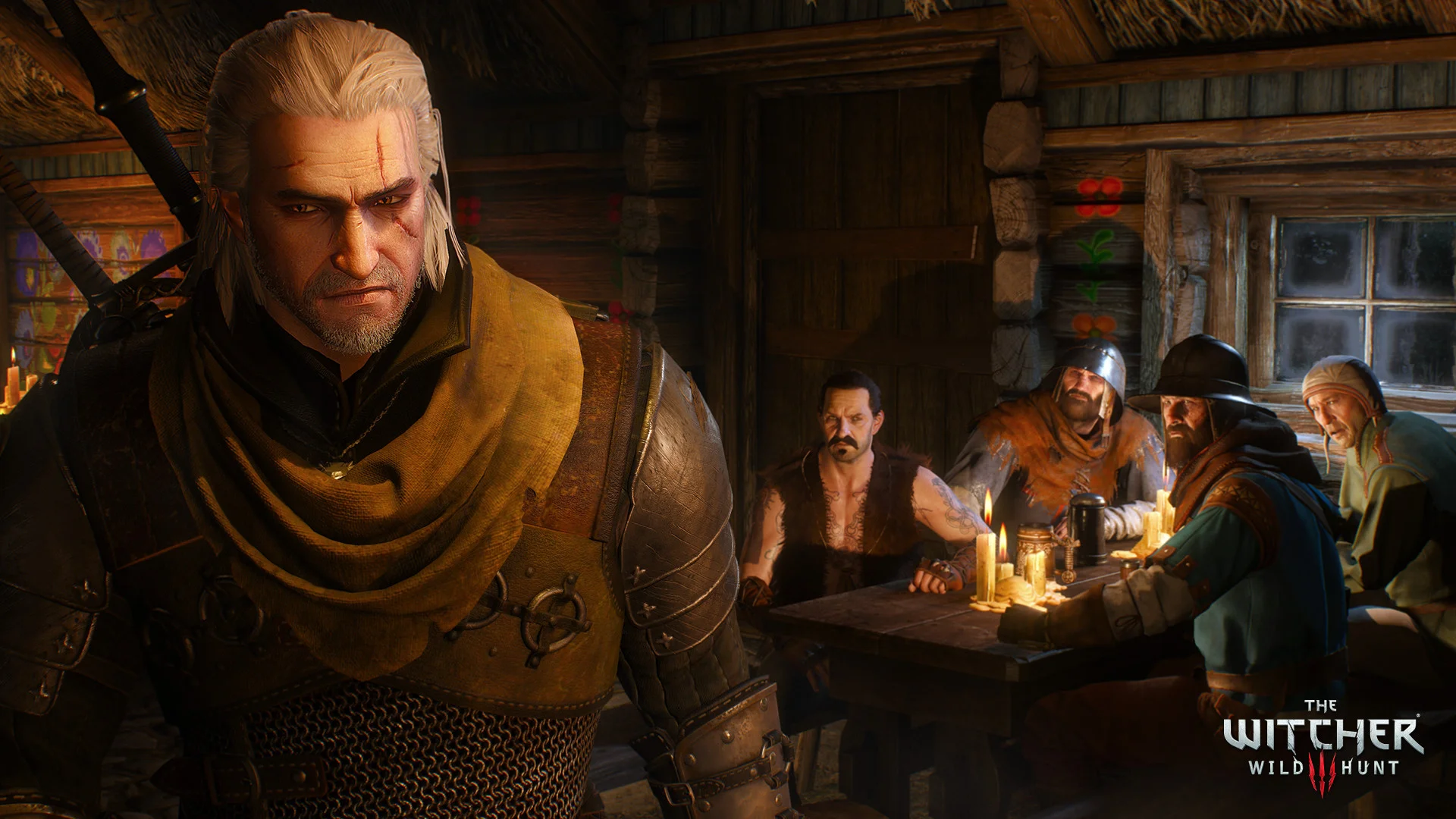
Ordinary merchants, armorers, blacksmiths, and innkeepers may also play Gwent. The first win against an eligible ordinary opponent can award a card from the game's random opponent pool. Named players and Gwent quests award fixed cards instead.
The main quest chains for collectors include Gwent: Velen Players, Big City Players, Old Pals, Playing Innkeeps, and Skellige Style. A Dangerous Game awards three specific cards if Geralt chooses them as the reward. High Stakes is the major Novigrad tournament and should be entered only after the deck is ready.
Some cards are tied to optional moments inside other quests. The small tournament during A Matter of Life and Death is easy to skip while following Triss through the Vegelbud estate. Save before tournaments and finish card matches before leaving their event area.
A Safe Early Collection Route
Use this order when the starting deck feels weak:
- Buy every affordable card from White Orchard's innkeeper and merchants.
- Play the scholar in White Orchard to complete the tutorial match.
- Challenge low-level innkeepers, merchants, armorers, and blacksmiths while completing normal quests.
- Start Velen Players after meeting the Bloody Baron and other named opponents in the region.
- Build around Northern Realms spies, Decoys, medics, and siege units before attempting stronger Novigrad players.
- Save before High Stakes and any quest-based tournament.
The Collect 'Em All quest tracks the wider goal, but it does not replace a checklist. When a named player offers a match, play before advancing the story if possible. A manual save before a tournament or major quest cutoff is safer than assuming the opponent will remain available.
How to Decide When to Pass
Pass when the opponent has spent more cards than you and would need to spend another card to take the round. Pass when a round is already lost but continuing would only reduce your options later. Pass after forcing a Monsters player to commit a large Muster group, then answer the remaining card in the next round.
Do not pass automatically because you are ahead. Check whether the opponent can beat the total with one obvious card. A Commander's Horn, medic, Scorch, or leader ability can reverse a narrow lead. Leave enough margin when the opponent still has a full hand.
The cleanest win is often one cheap round, one intentional loss, and one final round with the larger hand. Gwent rewards planning across the entire match rather than chasing the highest board total.
Common Gwent Mistakes
- Playing every strong card in round one.
- Keeping far more than 22 unit cards in the deck.
- Carrying too many weather cards against opponents who use different rows.
- Using Scorch without checking your own strongest unit.
- Playing a spy and then trying to win the same round at any cost.
- Missing optional tournament matches inside story quests.
- Entering High Stakes without a manual save and a complete deck plan.
For combat outside the card table, use the Witcher 3 builds guide. The Witcher 3 game page covers the wider RPG, while the Witcher 3 Guide Hub groups every guide in this cluster. Players planning story choices can continue with the romance guide and endings guide.