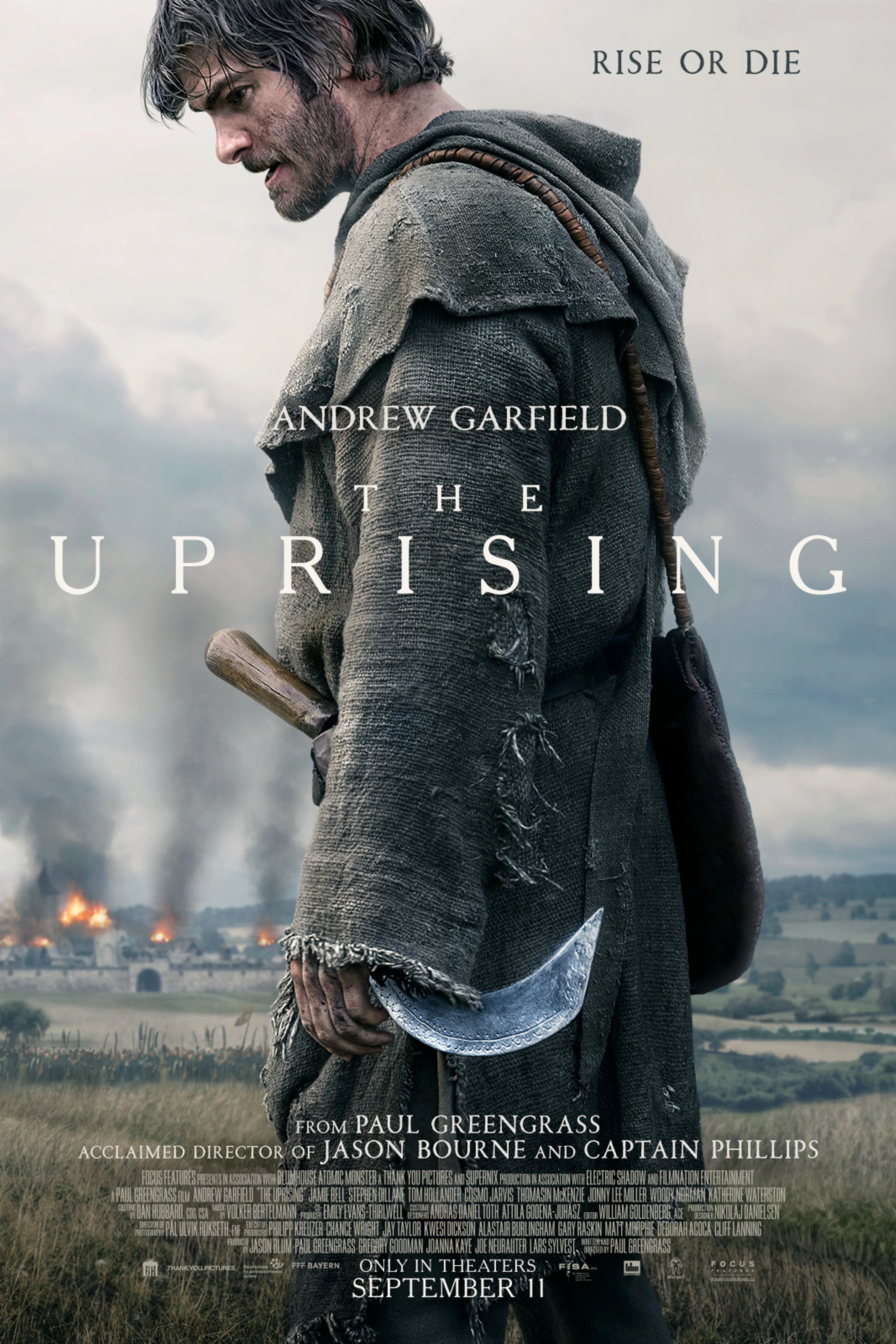
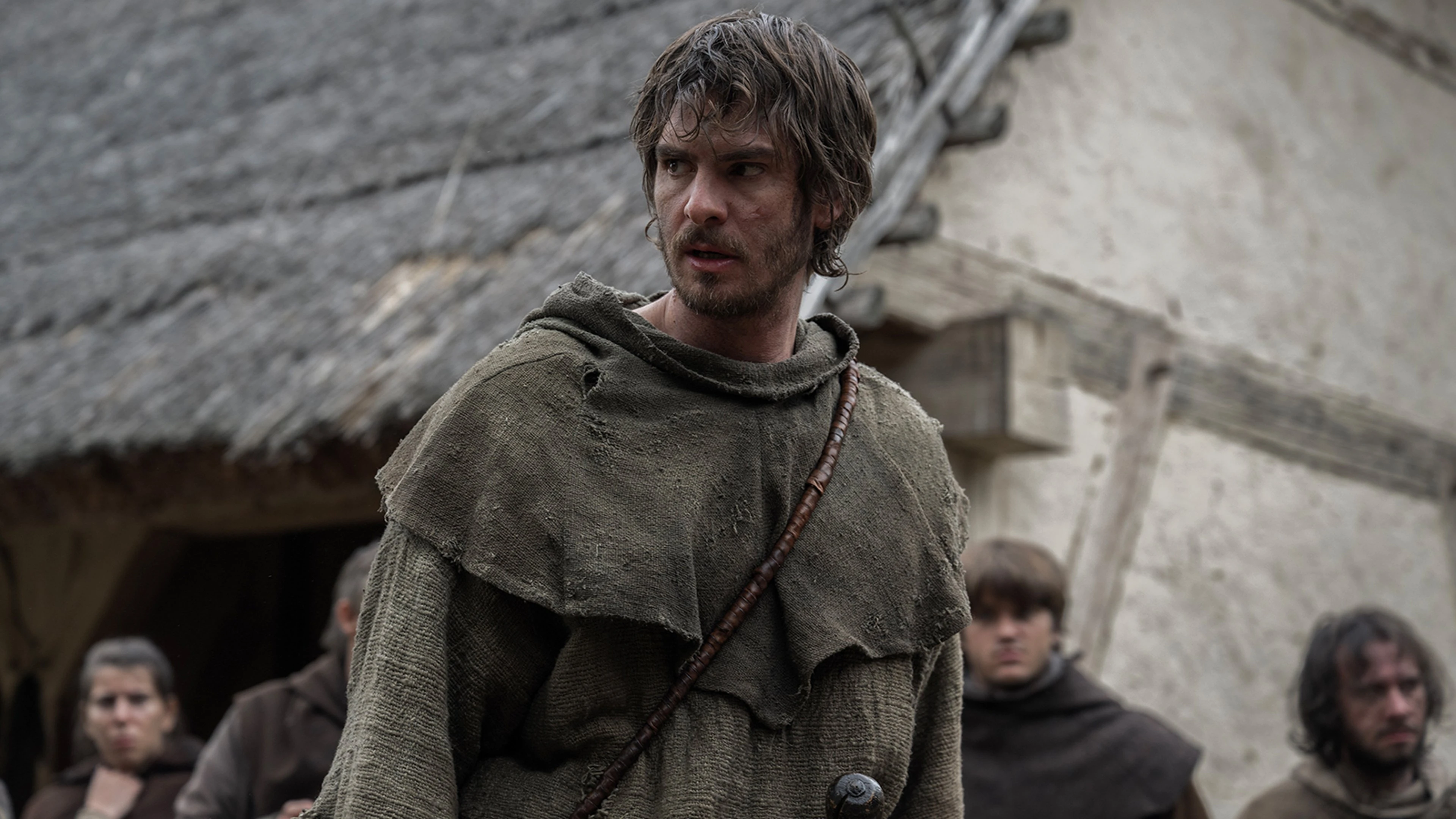
England’s poorest families are being asked for money they do not have. In The Uprising, tax collectors arrive with the power to take it by force. Andrew Garfield plays a farmer who has already lost his family and wants to be left alone. A violent encounter with the collectors makes that impossible. Soon he is walking toward London with people who want the king to hear them.
Paul Greengrass sets his film during the Peasants’ Revolt of 1381. You do not need to know that history to follow it. The opening explains who is paying for the country’s problems and who gets to decide. It also shows how quickly a demand for money can become an excuse to hurt someone.
Garfield gives us a reason to stay with this grim story. His farmer, known as the Ploughman, looks like someone exhausted by loss rather than eager to become famous. The trouble is that several people around him receive much less attention. The film gathers an angry crowd more convincingly than it develops the individuals in it. Its final attempt to give the story a different meaning is another disappointment.
Garfield makes the farmer worth following
The Ploughman does not begin by announcing a plan to change England. He is a widower trying to keep going. Garfield spends much of the early film listening and watching. That restraint helps: when he eventually speaks for other people, the change feels more significant than it would from a character who has been making speeches all along.
The tax collectors give him an immediate reason to act. Their demands are backed by intimidation, and the abuse extends to sexual violence against young women. These are upsetting scenes, not a light introduction to a heroic adventure. The film makes the villagers’ anger understandable before asking us to follow their rebellion.
The movement brings together people with different ideas about what should happen next. Jamie Bell plays John Ball, a priest who wants a much harsher response to the people in power. Cosmo Jarvis plays Wat Tyler, a veteran who becomes another leader. The Ploughman is more willing to negotiate. Agreement about an injustice does not mean agreement about how to stop it.
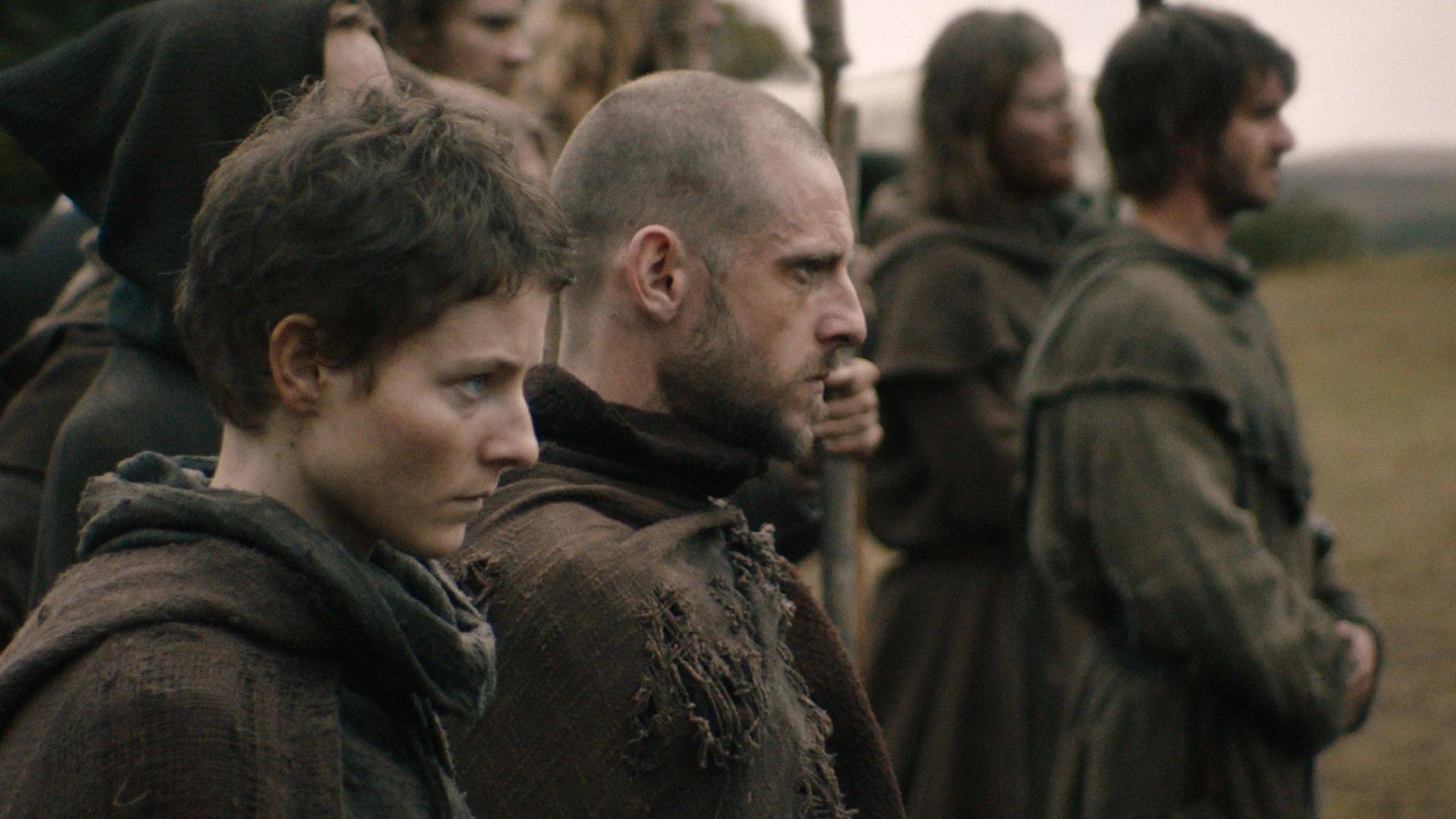
Those differences should make the group fascinating. Instead, the script often returns to anger without giving the supporting characters much more to do. Thomasin McKenzie’s Alyce is especially frustrating in that respect. We understand why she belongs in this story, but she deserves more than being another person affected by its cruelty. Tyler also feels less developed than his importance to the revolt would suggest.
The strongest question is what the Ploughman can actually control. He can help bring people together, but he cannot decide how every person in a furious crowd will behave. Revenge threatens his hope of reaching an agreement. That problem is more interesting than another speech about the rich mistreating the poor, because it gives him a difficult choice rather than a point everyone already understands.
Richard II is more interesting when he has to listen
The rebels initially hope that the young King Richard II will listen to them. They are not all marching toward London with the same plan to remove him. That distinction matters. If they believe the king can help, reaching him could be a solution. If that belief is wrong, they have placed their hopes in someone whose position depends on the system hurting them.
Woody Norman makes Richard more than a distant figure wearing a crown. He is young and surrounded by adults who have their own interests. The royal council prefers taking money from poor people to making concessions to the wealthy. Those discussions explain why the tax collectors keep coming, even when ordinary families cannot afford to pay.
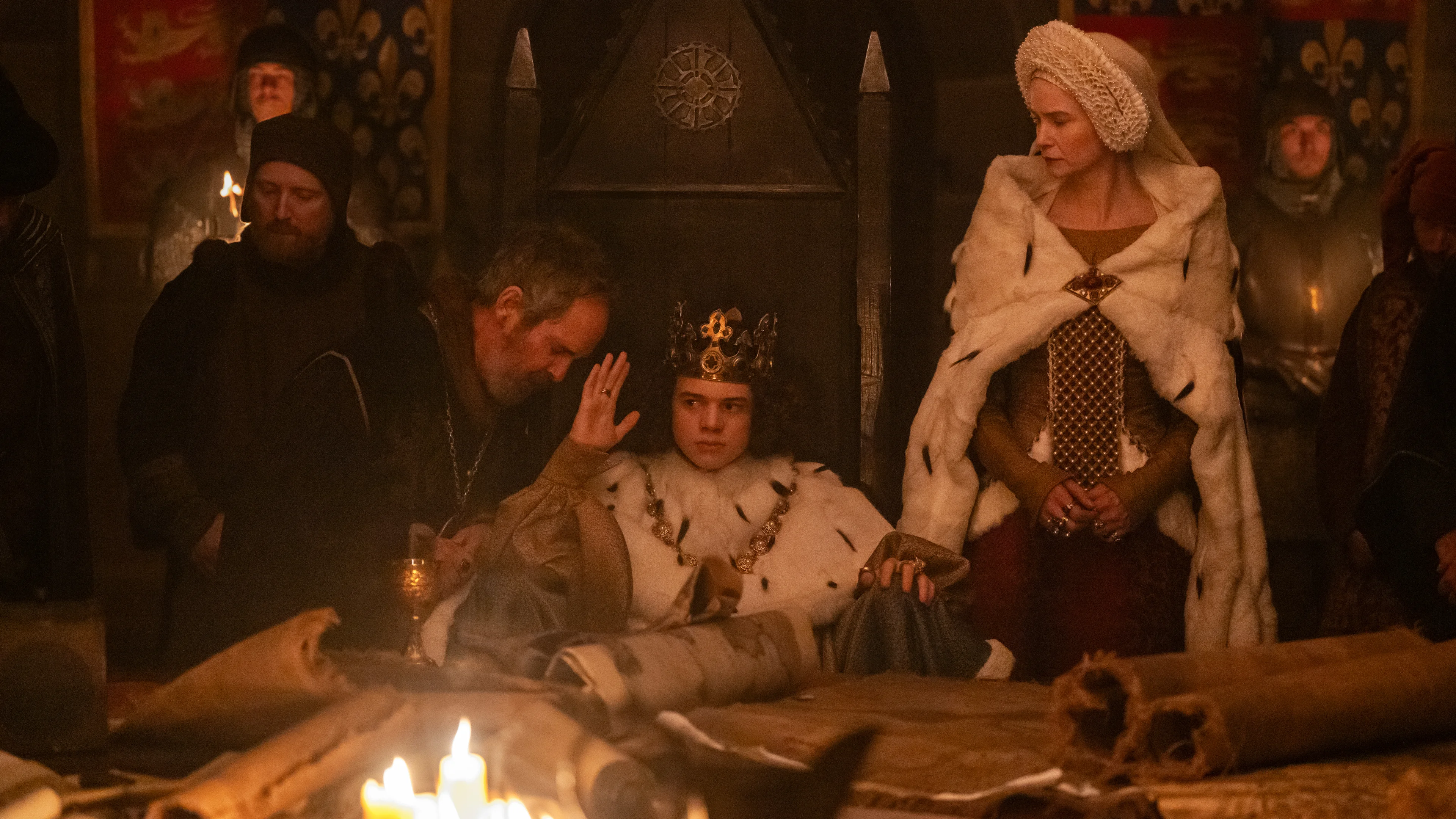
Katherine Waterston, as Richard’s mother, makes the court scenes less predictable. Her concern for her son exists alongside the need to protect his rule. She is not interchangeable with the officials around him. Watching these characters weigh what they can promise is often more involving than another confrontation outside.
The negotiations also change the kind of suspense. A crowd can demand an answer, but it cannot make a promise trustworthy. The Ploughman has to consider what an agreement might achieve and whether the other side intends to honor it. Garfield’s restraint works well here. His character has something to lose by accepting too quickly, but refusing to talk has consequences too.
This is where the film comes closest to the more complicated drama its subject deserves. Cruel officials are easy to hate. A possible agreement is harder to judge. We wanted more time with that uncertainty and with the disagreements among the rebels. The film is less effective when it repeats its political message instead of letting those conflicting interests play out.
The crowds create tension, but the camera can be tiring
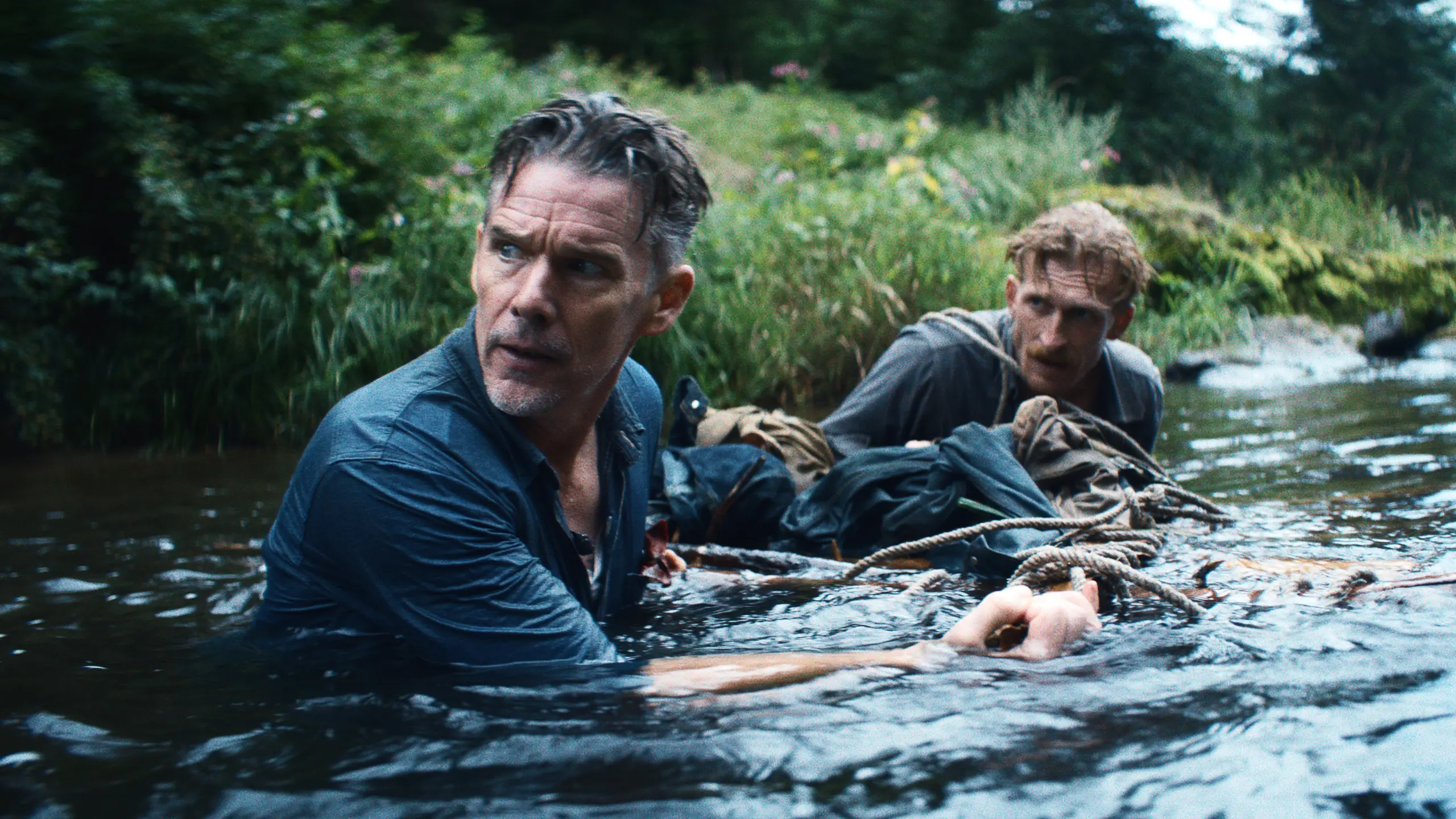
Greengrass frequently places the camera close to people as they move through a crowd. During the revolt, that gives the action a sense of pressure: faces and bodies fill the image, and the Ploughman cannot simply step away from everyone around him. The large groups look threatening because an individual has so little room to act.
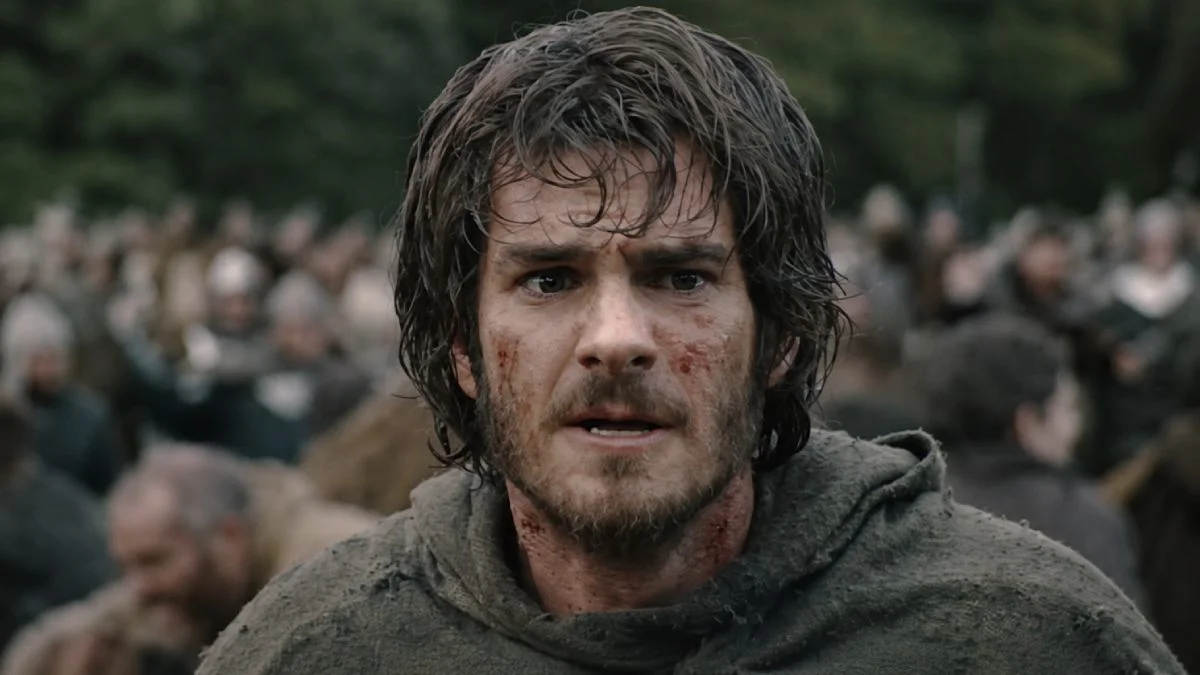
The same approach is less useful in quieter exchanges. The handheld movement and sudden zooms can pull attention away from the person speaking. We do not need every conversation to look unstable to understand that these people are afraid. If shaky camerawork usually bothers you, this is an important reason to be cautious about the film.
Wider aerial views show how many people are involved, but they also interrupt the close, restless photography. Some scenes look as though we are trapped beside the characters; others pause to show the scale from above. Both approaches can work separately. The changes between them are not always smooth here.
The rebels and the royal army
2 screenshotsThe film is also uneven about when it moves on. It can build up an intense situation and then jump ahead before the consequences have had enough time to register. That helps keep the story moving, but it can leave an individual scene feeling unfinished. The quiet attention given to the Ploughman’s grief shows how much more effective it can be to stay with someone after a loss.
The ending is our biggest reservation. Without revealing what happens, the film adds a late connection that changes how it asks us to understand the story. After so much emphasis on suffering and political choices, that addition feels forced. The people we have followed already have enough at stake. They do not need a separate reason to be remembered.
Before buying a ticket:
- See it for Garfield’s restrained performance and the tense discussions with the royal court.
- Expect a bleak historical drama, not a cheerful adventure about rebels outsmarting a king.
- Be prepared for sexual violence, beheadings and other graphic brutality.
Pixel Twelve’s score is 6.2/10. Garfield and Norman make the conflict worth watching, and the negotiations give the film genuine tension. Thin supporting characters, distracting camera movement and an unconvincing final addition keep it from being an easy recommendation. For viewers interested in historical revolts, there is enough here to consider. For everyone else, the performances are stronger than the film around them.
Loading results