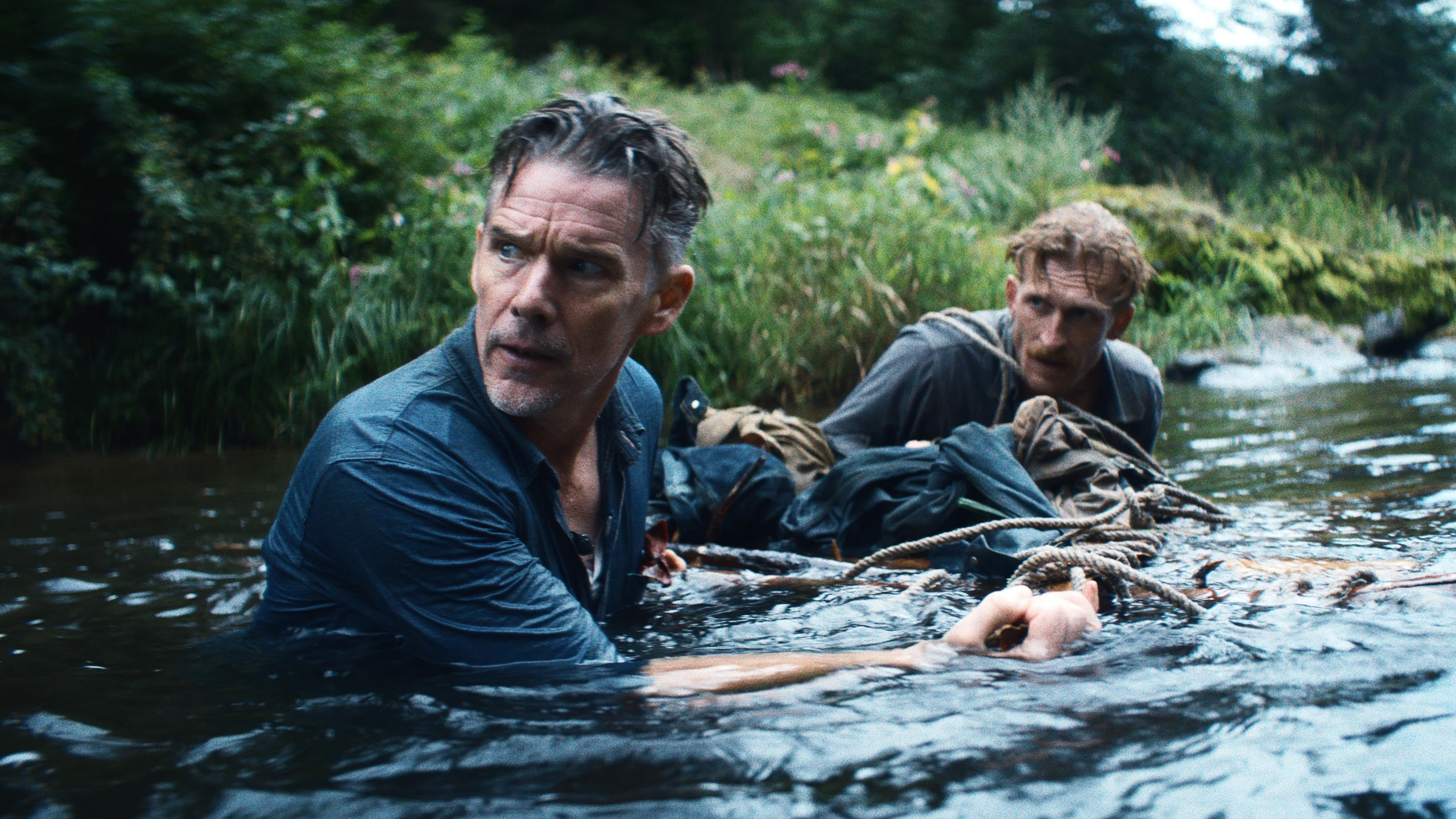
Samuel Murphy needs to get back to his daughter. He is a widowed mechanic who has lost his home, been sent to a prison work camp, and learned that Penny could be adopted before he gets out. Then the man running the camp offers him a deal: carry stolen gold through the wilderness and earn his freedom. It sounds dangerous. For Murphy, waiting in prison could be worse.
That is a good reason to follow Ethan Hawke into the woods. In The Weight, he plays a man who can work out how to move a boulder but cannot protect his child from the people making decisions about her. Hawke makes that difference painful. The film becomes an exciting survival story without making Murphy seem suddenly skilled at everything.
We enjoyed the difficult river crossing and the uneasy cooperation between the men carrying the gold. The fights are less satisfying when the editing makes them hard to follow. Some of Murphy’s companions also deserve more attention than the script gives them. This is a good thriller with a particularly convincing lead performance, rather than a great film about everyone on the journey.
Murphy accepts the job because he could lose Penny
The story takes place in Oregon during the Great Depression, when many people had no steady work. Being a capable mechanic is not enough to keep Murphy and Penny housed. Their separation gives the opening more urgency than a simple arrest would. He is not just counting the days until his sentence ends. He is afraid that someone else will be raising his daughter by then.
Hawke is especially good when Murphy has to listen. His face can look tired before a conversation even begins, but he still pays attention to what might help him. When someone offers a possible way out, hope does not instantly replace his suspicion. You can understand why he considers an offer from Clancy, the camp’s corrupt warden, without thinking he has suddenly decided to trust him.
Russell Crowe makes Clancy unpleasant without constantly shouting. The warden can sound friendly while discussing something that could get his prisoners killed. That relaxed manner is what makes the exchange uncomfortable. He gets to explain the terms from a position of safety. Murphy has to think about the consequences of saying no.
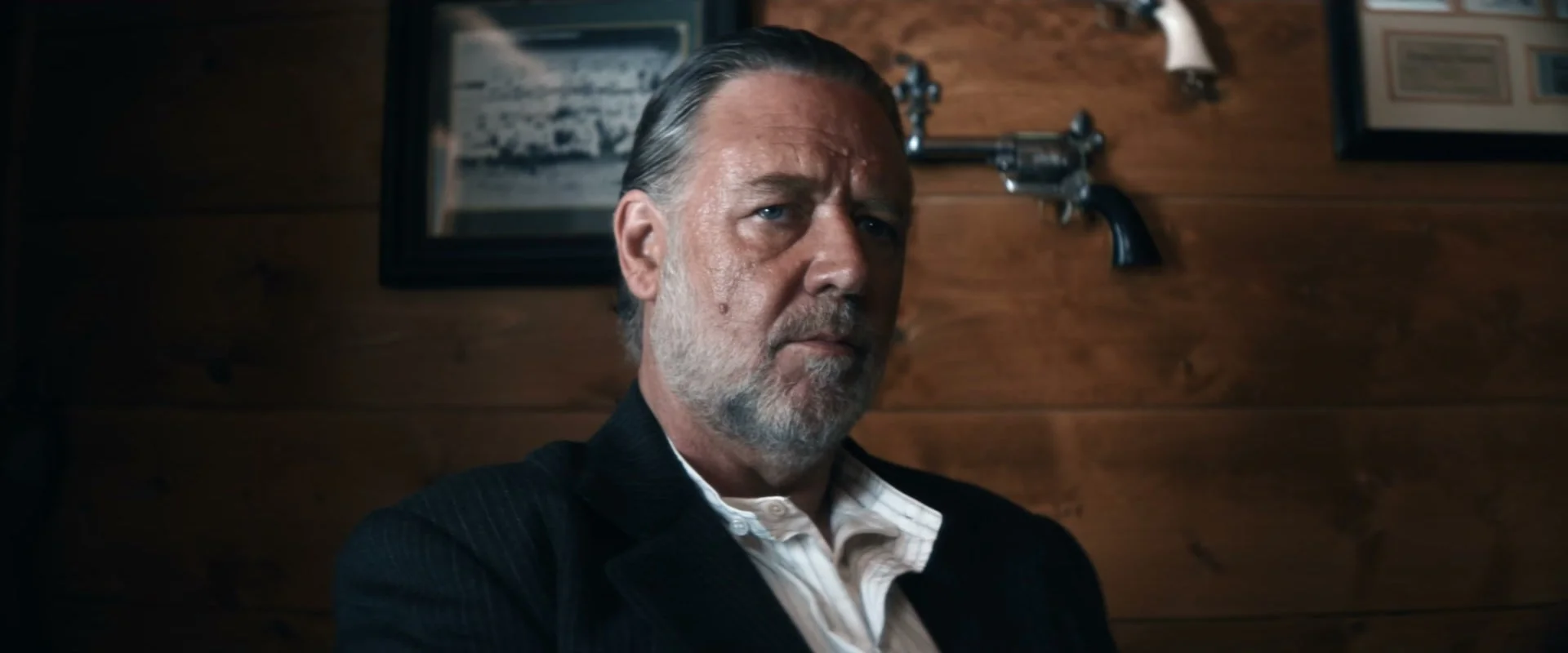
The arrangement is simple enough to follow. Murphy and three other prisoners must carry the gold through the woods under armed supervision. They cannot solve the problem by abandoning the heavy bags when the route becomes difficult. The people expecting the delivery will not accept missing gold. Freedom depends on finishing a job that becomes harder with every obstacle.
Before the trip, the work camp gives Murphy a chance to show how he thinks. Faced with a boulder that needs moving, he looks for a practical solution instead of simply using more force. This makes his later role in the group believable. The film has shown why the others might need him before asking us to accept him as their leader.
There is a drawback to the time spent setting all this up. The wilderness journey takes a while to begin, and viewers expecting action from the start may grow impatient. We would still keep the scenes that establish Murphy’s relationship with Penny. Without them, he would be another prisoner hoping to escape. They explain why he takes risks that are not worth taking for money alone.
Crowe’s name is prominent in the advertising, but this is mainly Hawke’s film. Clancy does not accompany the prisoners through the forest. Crowe makes a strong impression in his limited scenes, though anyone buying a ticket for a long Hawke-and-Crowe adventure together should adjust that expectation. Their tense conversations matter more than the amount of time they share.
The river crossing is worth the slow start
Once the group leaves the camp, the gold becomes a physical problem. These men have to carry it on foot across rough ground. A route that looks possible for an unburdened person may be much harder with that load. The best suspense comes from watching them deal with those limits, rather than from wondering when someone will pull a gun.
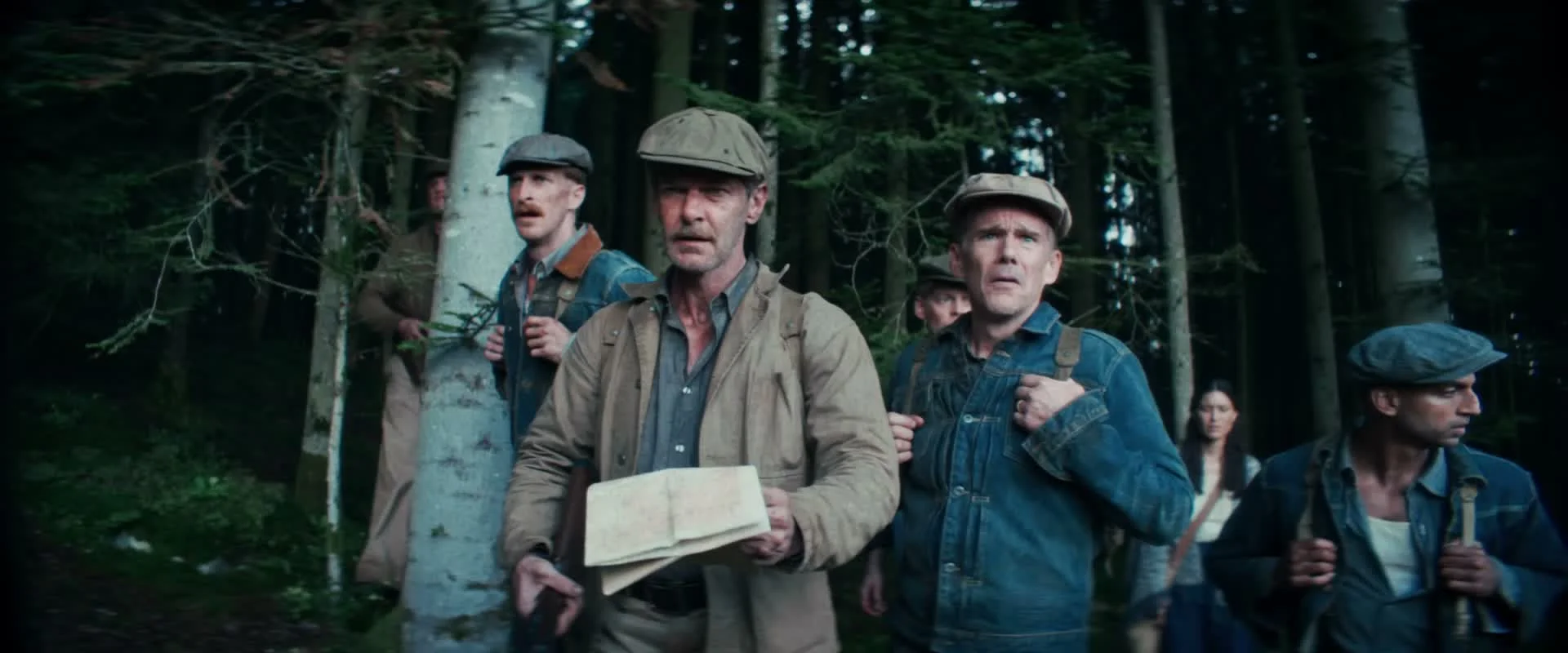
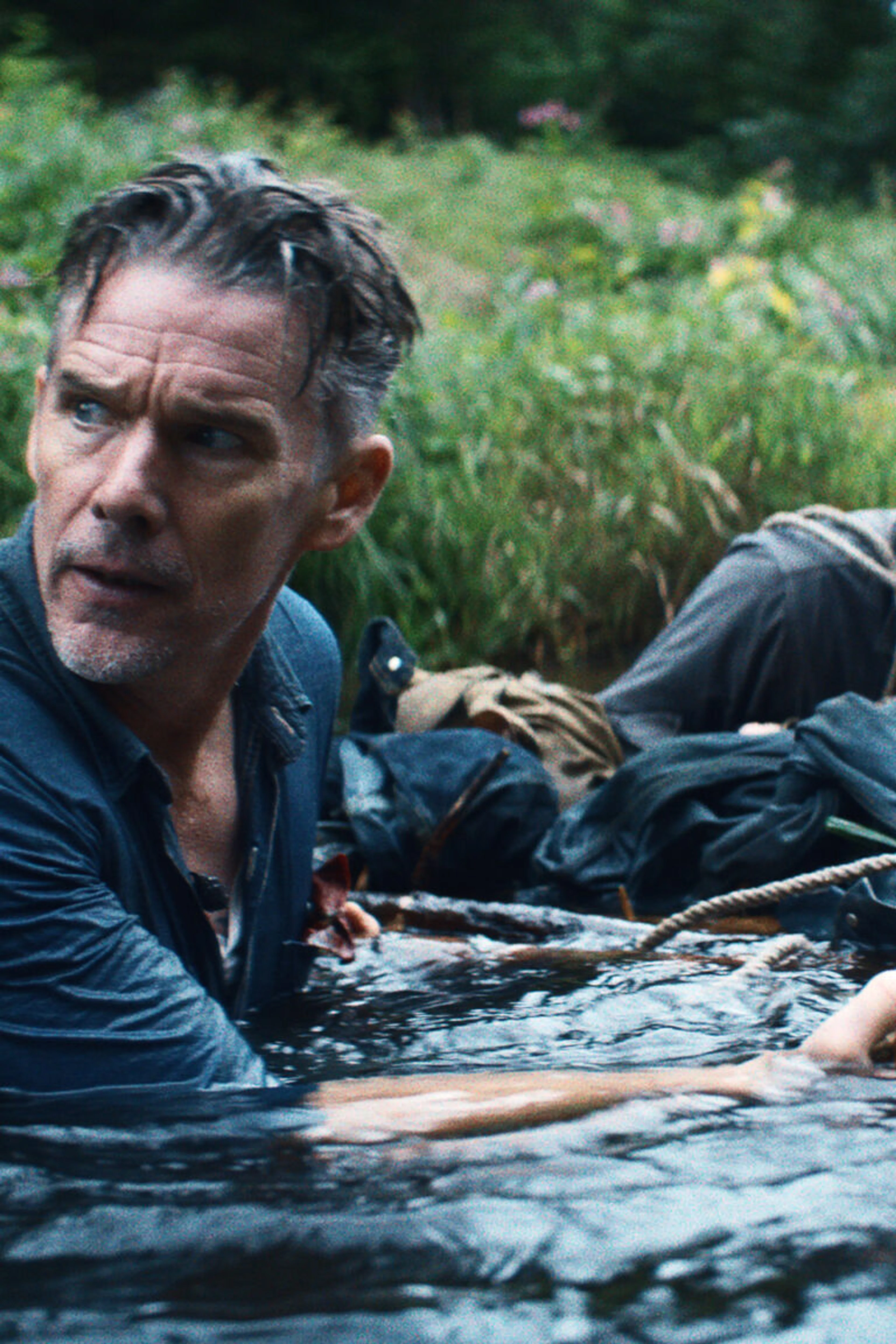
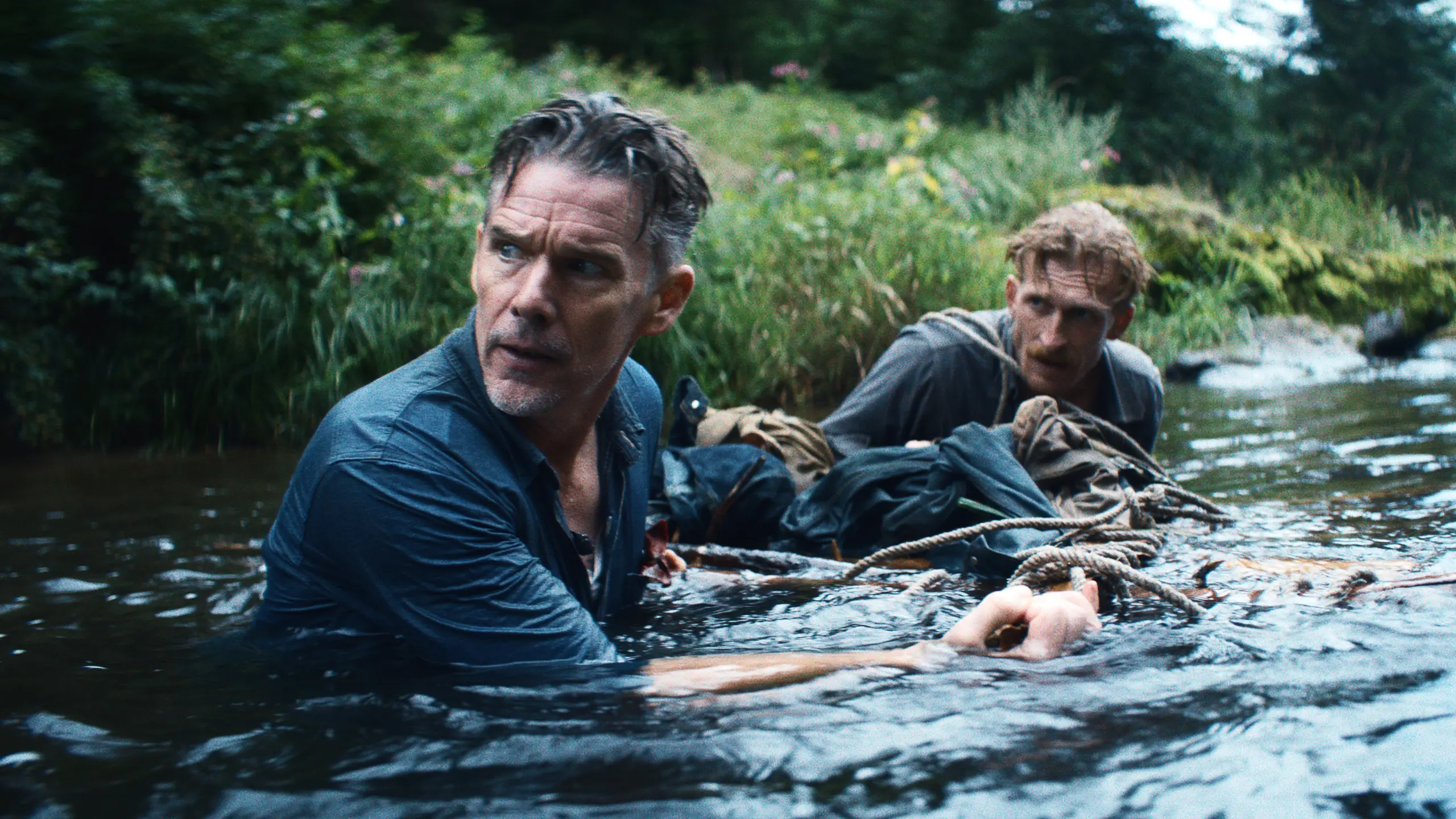
The river puts the problem right in front of us. Murphy and his companions have to manage their cargo in moving water, with logs adding another danger. Keeping hold of the gold and getting out safely are not the same task. The crossing is tense because there is so much they cannot control once they are in the water.
Hawke helps by letting Murphy look worn down. He does not behave like a trained fighter enjoying a challenge. His practical knowledge is useful, but it does not prevent him from being hurt or frightened. That makes the quiet moments after danger important too. We want him to have enough strength left to continue, not just to win the next confrontation.
The rope bridge presents a different problem. The group needs to get the men and the gold across a deep gap on a crossing that looks far too fragile for the job. Its narrow boards and long drop make the danger immediately understandable. There is no need for a complicated explanation before the characters start deciding how to proceed.
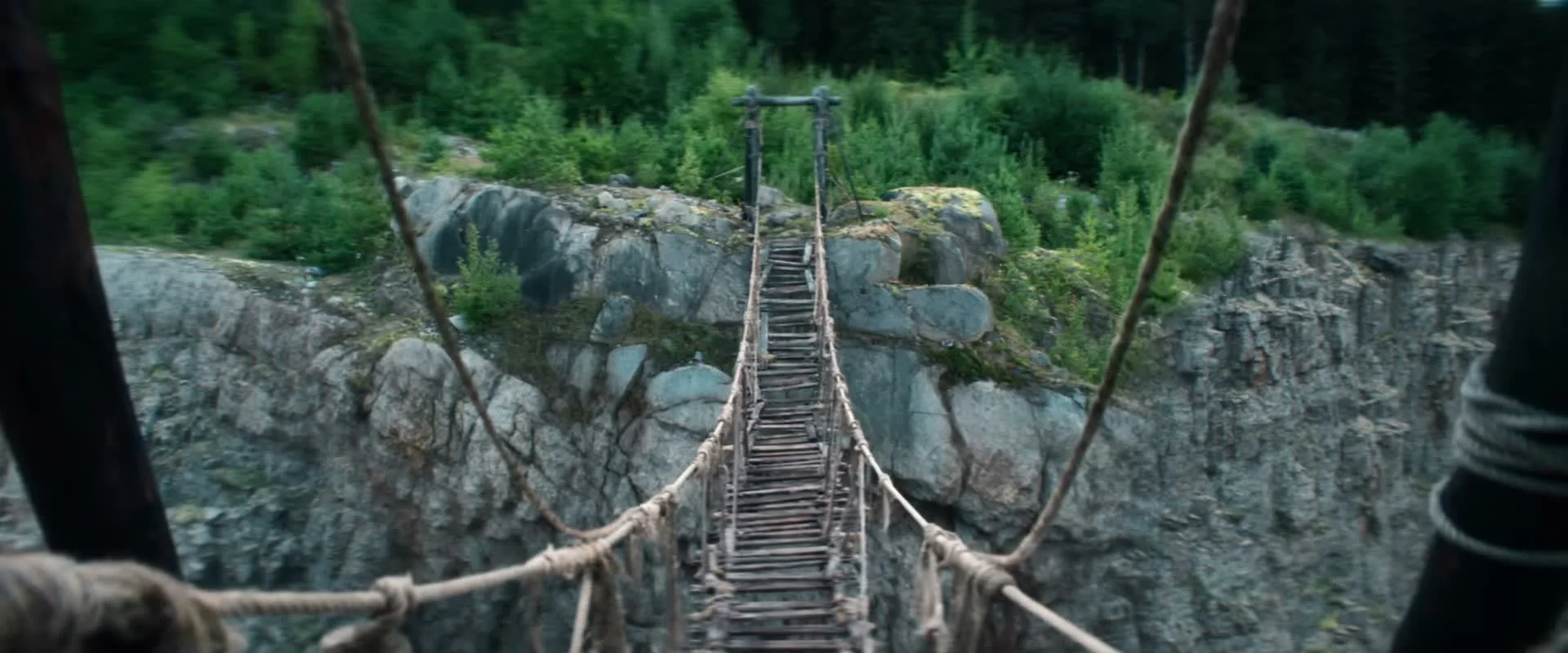
We found the bridge sequence gripping, but less believable than the river. The situation seems arranged to make the transfer as difficult as possible, and the way it concludes feels too quick after the effort spent setting it up. We will leave the method of crossing unspoiled. It is a memorable scene, though it also shows the film pushing its characters into an obstacle because it will look exciting.
Matteo Cocco’s photography gives the journey a convincing setting. In the forest, the men are crowded by trunks and branches. At the bridge, the open space below them is the danger. These places ask the characters to move differently, so the woods do not become one repetitive background. The wide views are attractive, but the terrain remains difficult to cross.
The action editing does not always give that setting enough time on screen. Some dangerous moments include brief cuts ahead in time before the scene continues. Instead of making the danger more exciting, those jumps can make it harder to follow what has happened. During a fight, the shaky camera adds to the problem. Murphy being confused or frightened makes sense; the audience losing track of an action is less useful.
The crew needs more than suspicion to stay interesting
The prisoners are not friends setting off on a shared adventure. They have been chosen for a job, and the armed men supervising them have power over their lives. Cooperation is necessary, but trusting someone too quickly could be a mistake. That makes the conversations between obstacles worth watching. A person who helps Murphy move the gold is not automatically someone he can rely on later.
Rankin, played by Austin Amelio, gives Murphy someone difficult to work beside. His hostility makes the group’s need for cooperation uncomfortable. Singh, played by Avi Nash, initially seems likely to offer a different perspective through his political beliefs. The disappointment is that Singh receives less attention as the journey continues. We learn enough to expect a fuller character, then spend more time on the next danger.
Julia Jones makes Anna, an Indigenous woman who joins the group, calm and capable. She is not simply waiting for Murphy to handle every problem. Her exchanges with him give the film a welcome break from threats and arguments. Even so, the writing does more to establish that she can survive than to develop a life beyond this journey. Jones makes us interested in someone the film only partly explores.
The Weight image gallery
3 screenshotsThe closing stretch is another limitation. After spending so much time establishing the trip and its dangers, the film resolves its remaining problems too quickly. That does not erase the suspense of the river or Hawke’s performance, but it makes the finish less satisfying than the journey. A little more time with the consequences would have helped more than another burst of action.
For viewers deciding whether to see it:
- Choose it for Hawke’s performance and tense survival scenes built around moving heavy cargo.
- Expect a gradual start and a Hawke-led story, not constant action or equal screen time for Crowe.
- Be aware of bloody injuries and strong language. The father-and-daughter story does not make this a family film.
Pixel Twelve’s score is 7.6/10. Murphy’s determination to return to Penny gives the film a reason to matter beyond the stolen gold. Hawke makes him vulnerable and resourceful, and the river crossing delivers the suspense the premise promises. Confusing cuts, underdeveloped companions and an abrupt finish keep our recommendation from being stronger. We would still choose this for a tense evening at the movies.
The Weight opened in U.S. theaters on September 18, 2026. See our release guide for the cast and theatrical details.
Loading results