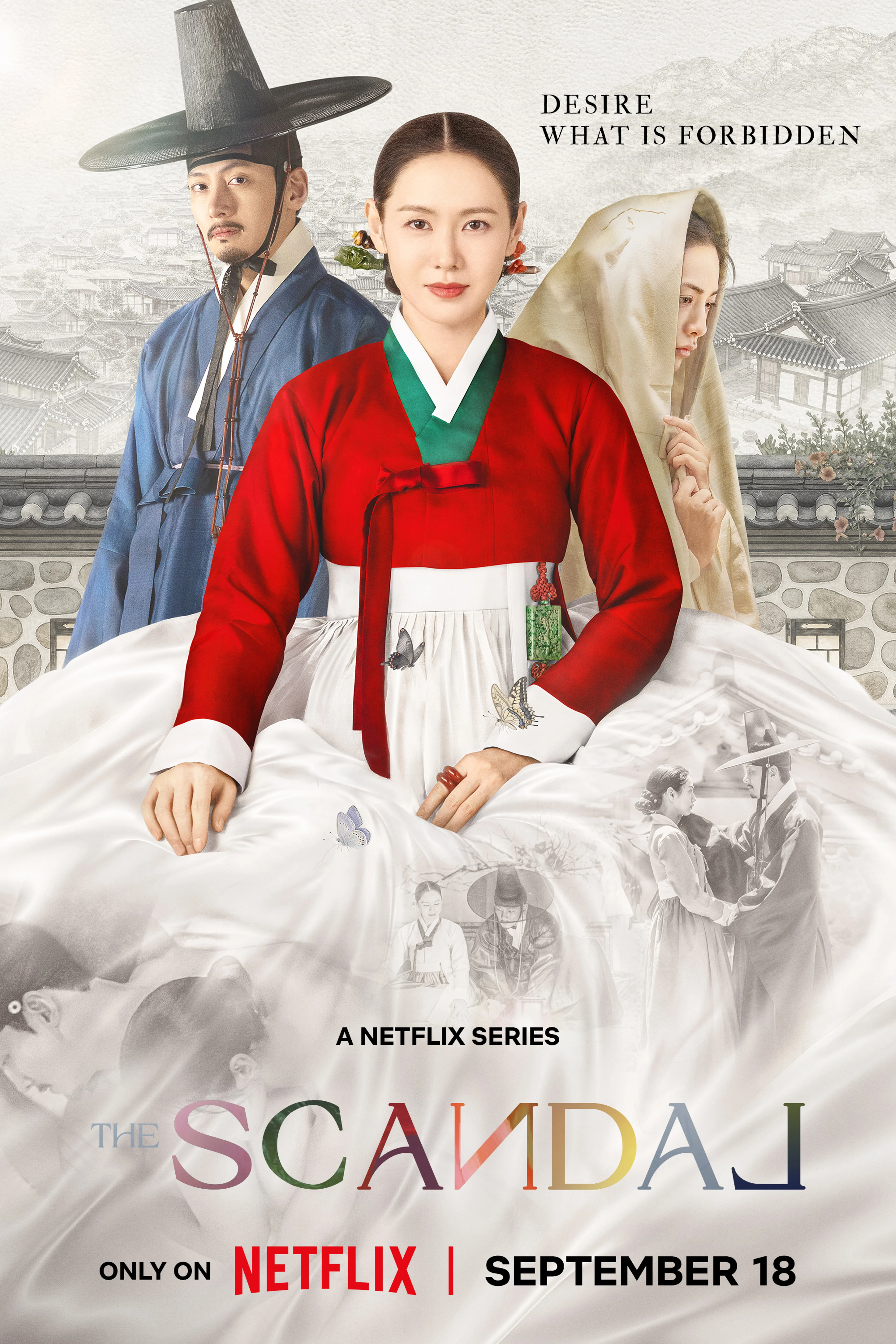
Lady Cho has a wealthy home and very little say in her marriage. Her husband wants another woman to live with them and give him an heir. Instead of accepting this quietly, she asks Cho Won, a relative with a reputation for seducing women, to interfere. Son Ye-jin makes her anger understandable from the start. What makes The Scandal uncomfortable is that Lady Cho responds to being mistreated by planning to hurt someone else.
Netflix’s eight-episode Korean series follows that decision into several troubled relationships. Ji Chang-wook plays Cho Won, while NANA plays Hui-yeon, a widow he chooses to pursue. Director Jung Ji-woo gives these adults time to talk and deceive each other. Sometimes that patience lets an actor make a difficult feeling believable. Sometimes we are still waiting for a relationship to change long after the reason for its problems has become obvious.
The performances make this worth watching, but the story takes too long to develop. We found Lady Cho’s resentment more convincing than some of the romantic decisions that follow. This is a review of the complete limited series without revealing the ending. You do not need to know the French novel Dangerous Liaisons or the Korean film Untold Scandal to follow it. The important information is who wants whom, and who does not know about the bet.
Lady Cho wants revenge, and Cho Won chooses another woman to pursue
The story takes place in Korea during the Joseon period. In this household, a husband can bring in a concubine: a woman who has a recognized relationship with him but is not his wife. Lady Cho is expected to tolerate an arrangement she did not choose. So-ok is the young woman intended for that position. Lady Cho’s first proposal is for Cho Won to seduce her, making her husband’s plan more difficult.
Cho Won suggests a different challenge. He wants to seduce Hui-yeon, whose reputation rests on her devotion to her late husband. Lady Cho and Cho Won turn this pursuit into a wager. Hui-yeon does not know that her private life has become part of their agreement. That information changes how we watch his attention toward her. A conversation that might seem romantic to Hui-yeon has another purpose that she cannot yet see.
There is also a complication between the people making the bet: Lady Cho and Cho Won are cousins with feelings for each other. The series returns to their youth to explain the attachment. This is not a romance where two strangers gradually discover an attraction. We meet adults who already have a history and are using other people while trying to get something from each other. Their family connection makes the relationship forbidden as well.
The additional history helps explain Lady Cho’s dissatisfaction, but it creates a problem for the wager. When the series spends so much time establishing that she and Cho Won already want each other, the elaborate pursuit of another woman can feel unnecessarily prolonged. Understanding their attraction is easier than believing every delay they create. We needed more changes in their relationship, not simply more reminders that it cannot be straightforward.
Son is particularly good at keeping Lady Cho from becoming an easy person to support. Her disappointment deserves sympathy; her treatment of other women does not. Both responses can exist in the same conversation. We do not have to decide that her marriage is fair in order to dislike her next move. That distinction gives the character more interest than a simple revenge story in which everyone she targets deserves punishment.
Lady Cho is most interesting when her hurt does not excuse her cruelty. Son allows her to seem composed without making her emotionless. The formal clothes and polite exchanges do not mean that she has accepted her circumstances. Her efforts to control Cho Won are also a reminder that being denied a choice in one relationship does not make her considerate in another. The writing is strongest when it keeps that contradiction visible.
Hui-yeon needs more than Cho Won’s attention
For Hui-yeon, Cho Won’s pursuit is not a harmless distraction. Her reputation as a faithful widow affects how other people judge her. Beginning a new relationship would mean reconsidering the life she is expected to maintain. Cho Won approaches a woman dealing with grief and religious belief, not someone who has agreed to a casual contest. That is why his apparent kindness is difficult to enjoy without questioning it.
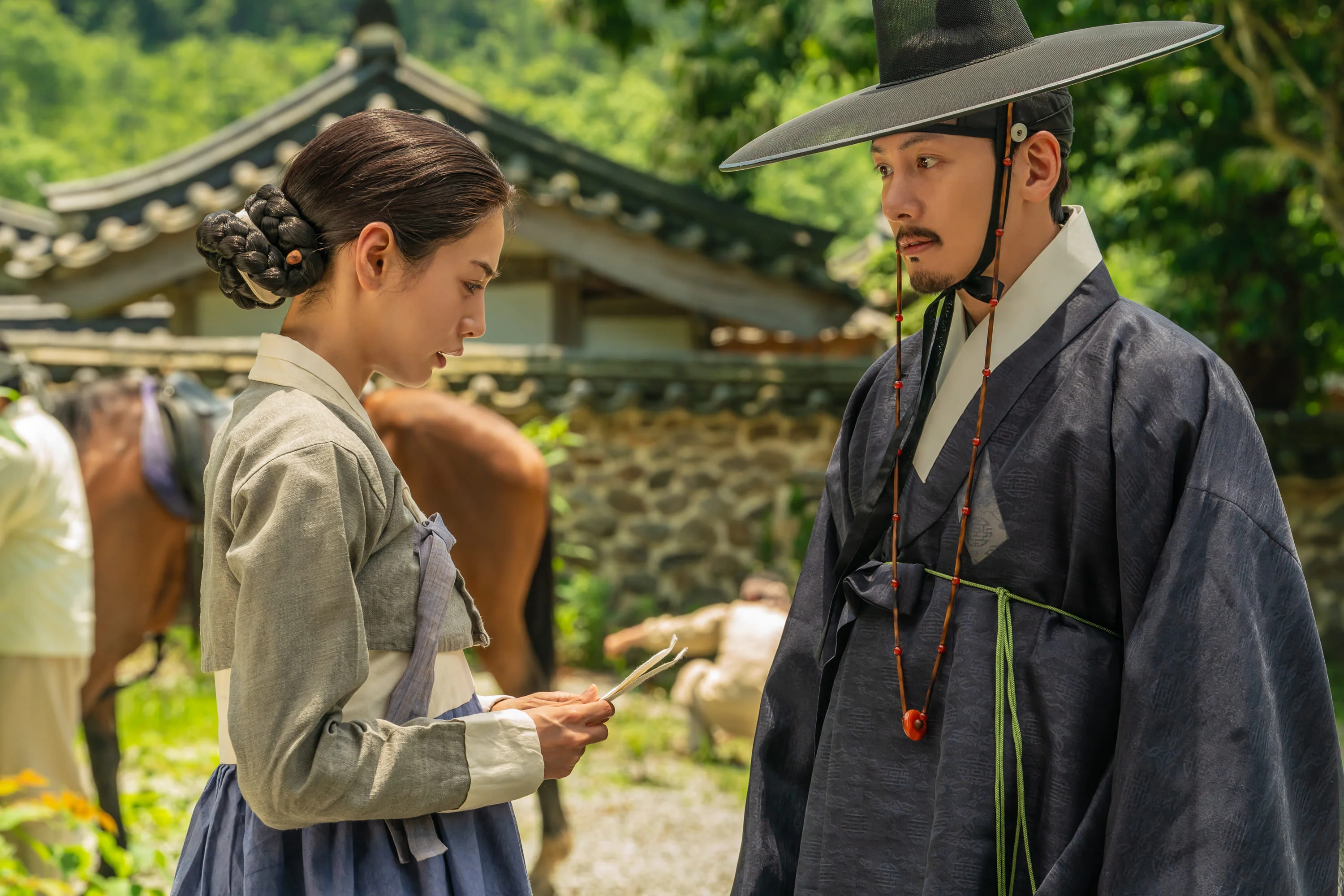
Ji makes Cho Won engaging without removing the dishonesty from the situation. We can understand why someone might welcome his attention while knowing that he has not been honest about his reasons. Cho Won becoming emotionally involved does not erase how the relationship began. This is a useful source of tension: sincere affection and selfish behavior are not opposites here. A person can start to care and still owe the other person an explanation.
The series is less consistent about giving Hui-yeon enough room to reach her own decisions. NANA provides a different presence from Son’s more openly calculating Lady Cho, and the contrast is welcome. Yet some changes in Hui-yeon’s trust happen faster than the surrounding story has prepared us for. We spend plenty of time watching Cho Won pursue her. We do not always get an equally convincing account of why she changes her mind.
The weakness is the development of Hui-yeon’s choices, not the idea that she might want love again. A widow does not need to remain unchanged for the story to be believable. The series simply needs to make each important shift feel earned. When a drama gives itself almost eight hours, it is reasonable to expect more of that time to show the person taking the greater risk deciding what she wants.
Her connection with Lady Cho gives the story another relationship to consider. These women are not just two possible partners for Cho Won. Their encounters raise questions about sympathy and trust between people whose freedom is restricted in different ways. Lady Cho can recognize another woman’s vulnerability while still acting against her interests. The scenes between the women deserve as much attention as the seduction. They make the damage caused by the wager harder to dismiss as a private matter between the cousins.
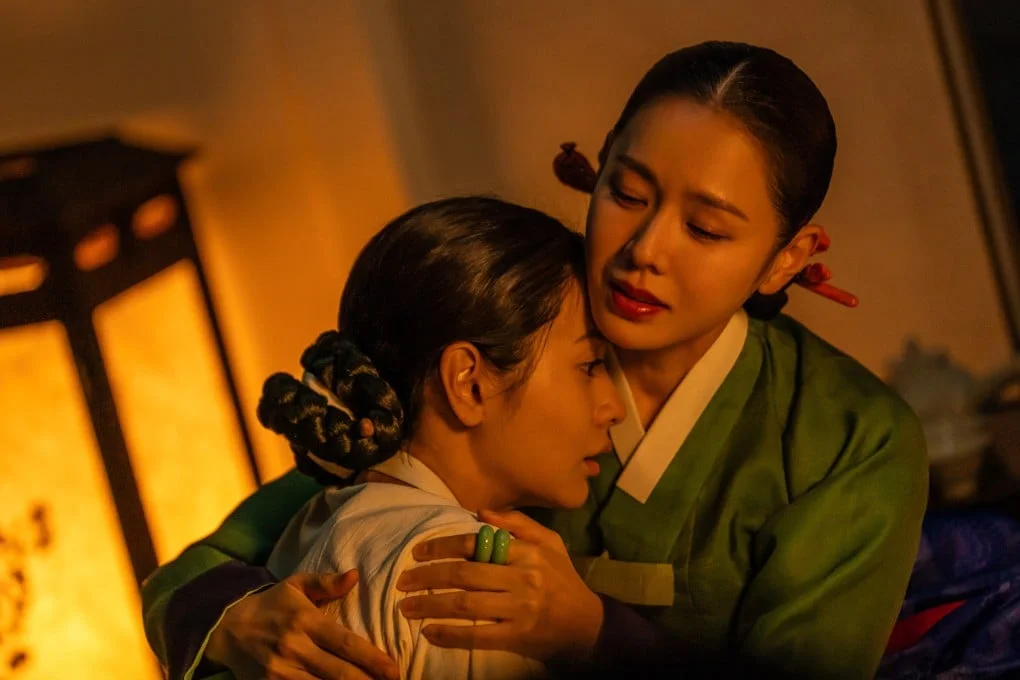
The period setting supports that unequal risk. Lady Cho’s husband can seek an heir through another relationship, while the women face strict expectations about their own behavior. The costumes identify their social positions, but the rules matter more than the clothes. We are not simply waiting to learn whether a romance succeeds. We are watching people make decisions under conditions that do not give them equal freedom to recover from a mistake.
Eight episodes spend too long on repeated conversations
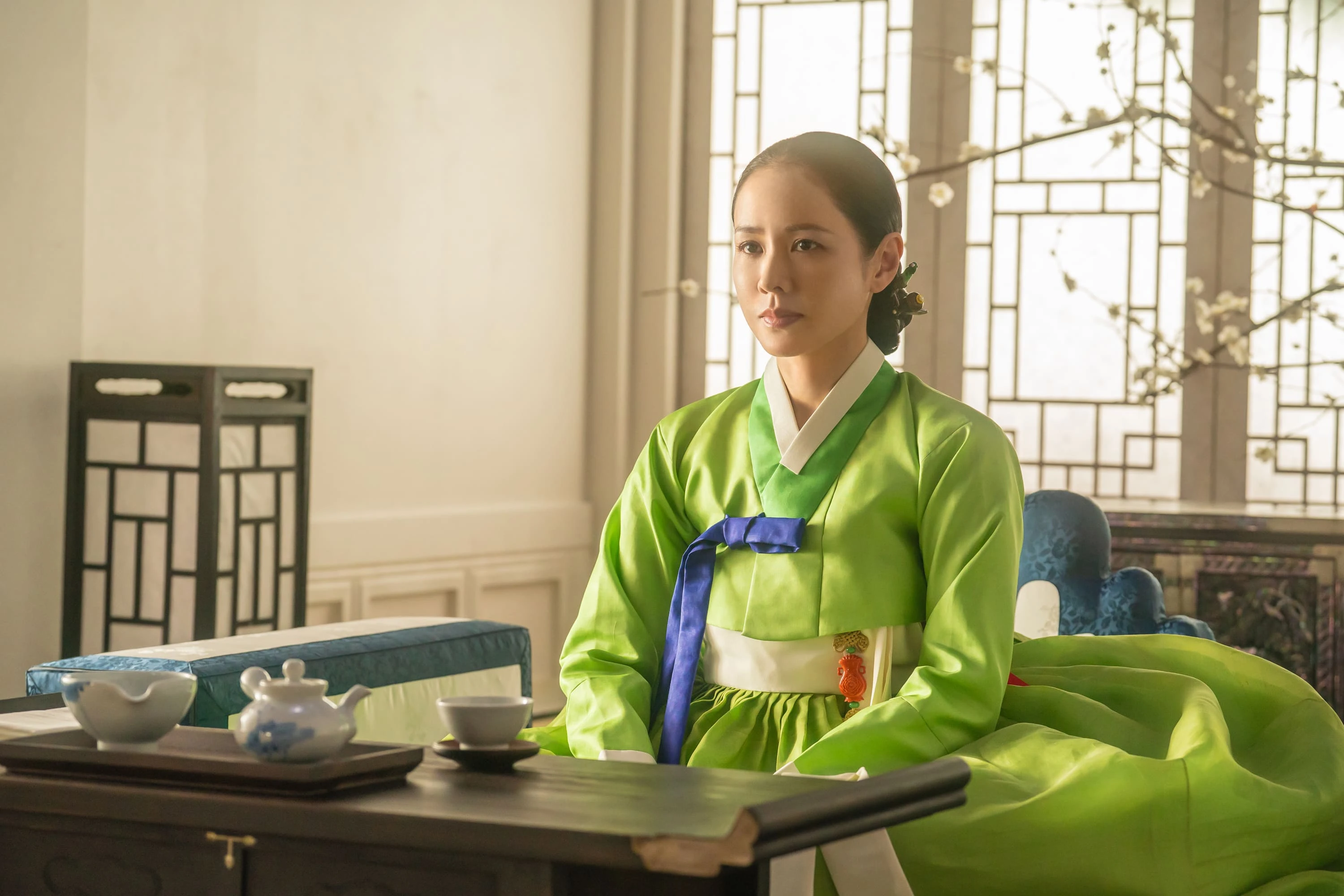
The Scandal often looks inviting even when the relationships are unpleasant. The bright green fabric of Lady Cho’s formal dress contrasts with Hui-yeon’s quieter colors. In the interior scenes, warm light lets us see the actors’ faces instead of concealing every conversation in darkness. Those details help distinguish the characters and the spaces they occupy. The attractive surroundings do not make their conduct admirable, which is part of the interest.
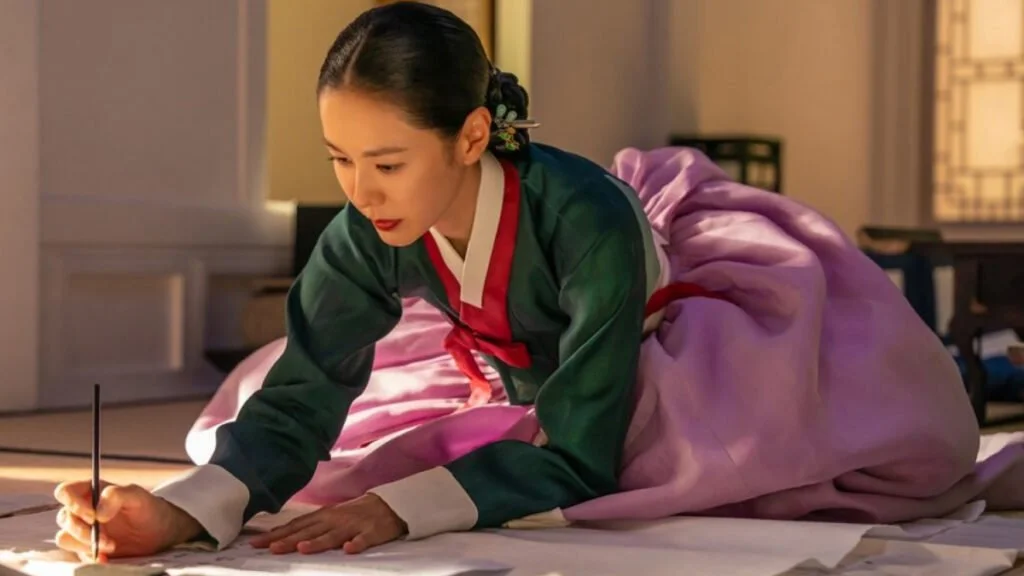
But attractive rooms cannot make every pause necessary. Characters exchange letters, consider what someone meant and look at one another without always changing what we know. There are times when waiting is appropriate: Hui-yeon should not trust Cho Won immediately. The problem is repetition after a scene has already explained the hesitation. Several episodes repeat a feeling instead of developing it. That reduces the urgency of a premise built on deception.
The imbalance becomes more noticeable toward the end, when important conflicts receive less time than earlier exchanges. Without revealing anyone’s fate, the final episodes need to connect decisions that the series has spent hours preparing. Some developments arrive too quickly to be as convincing as the actors make the smaller conversations. A shorter version would not automatically solve this. The existing episodes needed to spend their time more evenly.
The Scandal images
3 screenshotsWatch this for Son Ye-jin and complicated adult relationships, not for a fast sequence of surprises. If you enjoy examining why someone can be sympathetic in one situation and selfish in another, there is plenty to discuss. If long conversations and repeated uncertainty frustrate you, the cast may not compensate. Familiarity with earlier adaptations is optional, and the eight episodes can be watched as a complete story rather than a weekly release.
All eight episodes are on Netflix, where the series premiered on September 18, 2026. This is an adult drama with sexual material and manipulative relationships, not a light historical romance or family viewing. Viewers looking primarily for a reassuring love story should know that the attraction here begins with people deliberately misleading someone.
Pixel Twelve score: 7.0/10 — Good. Son Ye-jin and Ji Chang-wook make the central relationship worth following, and Lady Cho’s marriage gives her anger a specific cause. Our reservations are substantial: repeated exchanges slow the middle, Hui-yeon’s changing trust needs fuller development, and later conflicts feel compressed. Those problems keep the score below the stronger performances. The Scandal is worthwhile for its difficult characters, but we wanted their decisions to be as persuasive as the actors playing them.
Loading results