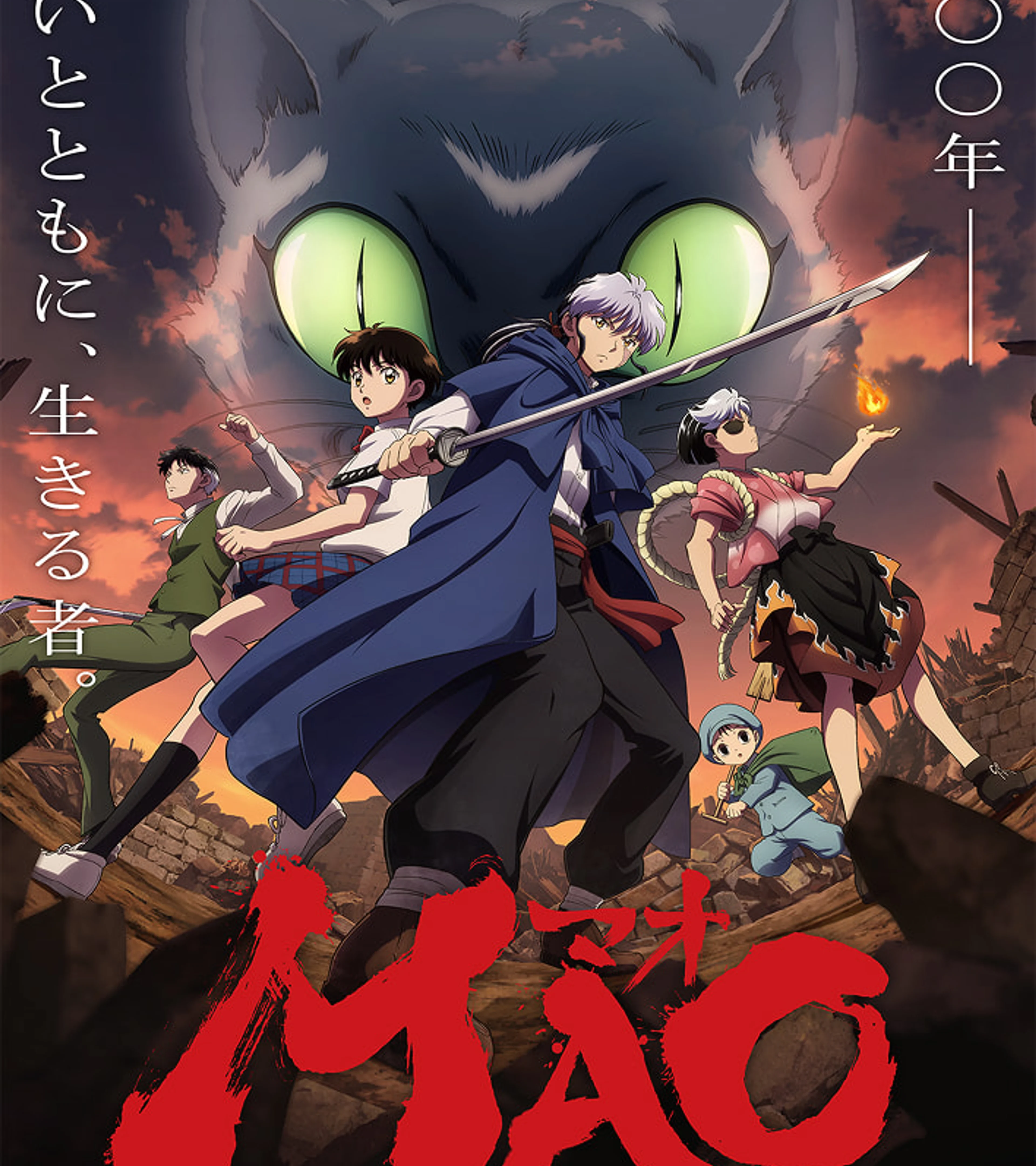
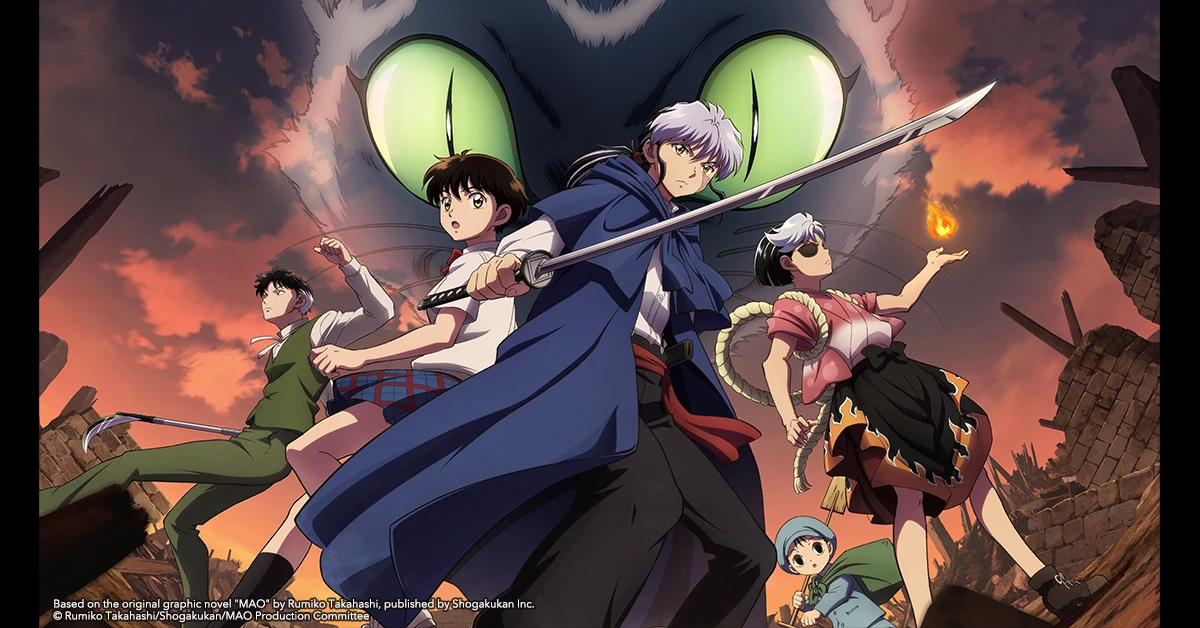
The English dub of MAO arrives on Hulu August 24, and viewers will get Episodes 1–13 together. Hulu's official August schedule lists the batch as MAO: Season 1, Episodes 1–13 (Dubbed), while VIZ's latest Anime NYC alert confirms the date and episode count.
That makes this a useful starting point for anyone who has been curious about Rumiko Takahashi's latest supernatural series but has been waiting for an English track. It is also a little more than a one-episode premiere: the first 13 episodes will be there at launch.
This is a dub launch rather than the anime's U.S. debut. VIZ's April licensing announcement placed the subtitled series on Hulu in the United States on April 4. VIZ first announced the English date during Anime Expo in July, then repeated the information in its newer Anime NYC alert with the clearer Episodes 1–13 wording.
When the MAO English dub arrives
Hulu's official August 2026 schedule places the dubbed episodes on August 24. VIZ's announcement does not list an exact release time, so viewers should check Hulu's listing that day instead of relying on an assumed hour.
The first batch contains Episodes 1–13. VIZ has not announced when the English dub will continue, and the available announcements do not say whether later episodes will arrive weekly or in another group. The August release should not be described as the complete dubbed season.
The dub is specifically confirmed for Hulu in the United States. The official MAO streaming page lists Hulu for America and Disney+ for Canada, Australia, New Zealand, and Latin America, but it does not clearly say that the English dub will launch on Disney+ in those regions.
What MAO is about
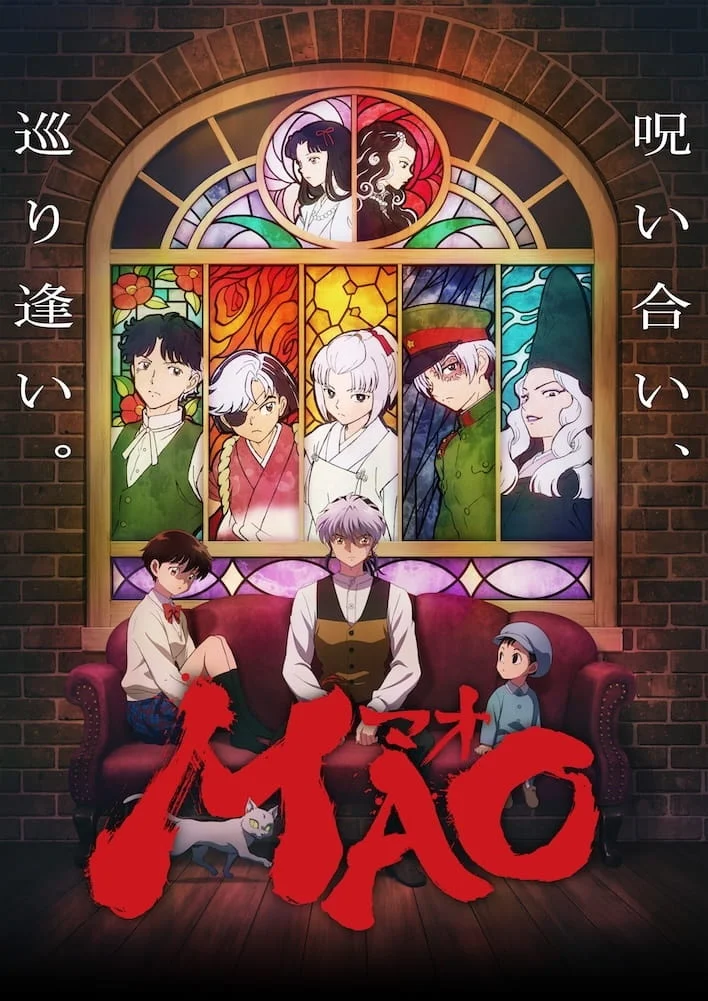
MAO follows Nanoka Kiba, a modern-day junior high school student who enters a portal at the shopping arcade tied to a childhood accident. She lands in Japan's Taisho era, where supernatural ayakashi are part of the danger around her. The official synopsis from VIZ says Nanoka meets Mao, an exorcist who has survived for 900 years after a life-changing curse.
Mao rescues Nanoka from a grotesque yokai attack, but the encounter follows her back to the present. She discovers that she has developed mysterious abilities and returns to the past looking for answers. The two end up investigating threats that connect their lives across different eras.
The setup is easy to understand even if you have never read the manga: a girl from the present, a cursed exorcist from the past, and a supernatural mystery that keeps pulling them back together. The darker tone also gives MAO a different feel from the broader comedy many viewers associate with Takahashi's earlier work.
The time-travel hook also gives the show two different kinds of atmosphere to play with. Nanoka brings a modern point of view into a period where the rules of a supernatural threat are not obvious, while Mao has centuries of experience and plenty of reasons to keep people at a distance. VIZ describes the series as a dark fantasy, time-traveling mystery rather than a straightforward monster-of-the-week adventure.
Why the Inuyasha creator connection matters
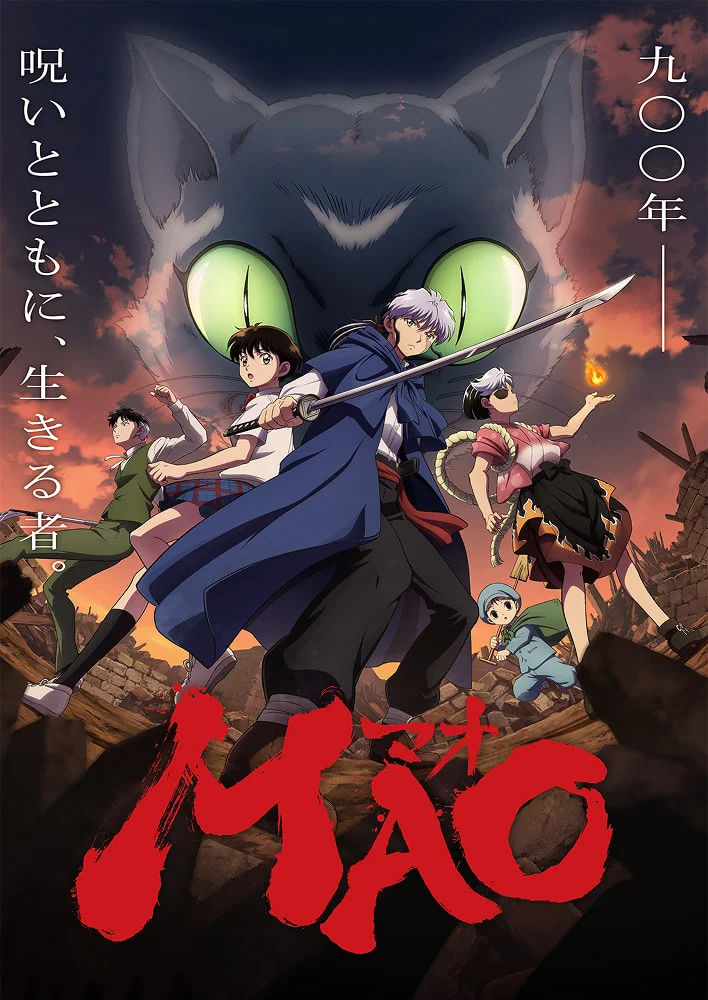
Takahashi is best known to international audiences for Inuyasha, Ranma ½, and Urusei Yatsura. MAO is not a continuation of any of those stories, but it carries over a familiar interest in folklore, strange creatures, and relationships that become complicated when the characters cannot agree on what they are dealing with.
The comparison is useful context, not a promise that MAO will feel identical to Inuyasha. Fans looking for another current supernatural anime can also browse our BLACK TORCH guide, while our Anime NYC 2026 schedule covers the event where VIZ announced the new dub details.
Who made the anime
SUNRISE produces the anime. VIZ's licensing announcement names Teruo Sato as director, Yuko Kakihara as series composer, and Yoshihito Hishinuma as character designer and chief animation director. The same release lists Yuki Kaji as Mao and Natsumi Kawaida as Nanoka in the Japanese cast.
VIZ holds the English-language distribution rights for the series in the United States and other covered territories. The July Anime Expo announcement first gave fans the August 24 dub date, but the newer VIZ alert and Hulu schedule are the clearest sources for the current platform and episode count.
The staff list also includes Hiroshi Kato and Izumi Hoki as art directors, Masumi Otsuka on color design, and Shu Kanematsu on music. Those credits do not reveal what the English version will sound like, since VIZ has not announced the dub cast or director yet, but they establish who is behind the Japanese production viewers are about to sample.
What viewers can expect on August 24
Episodes 1–13 will be available as dubbed episodes on Hulu on the same day. VIZ has not announced the English voice cast, a precise release hour, or a timetable for the next batch, so those details should wait for a later update.
For viewers who prefer dubs, the launch offers enough of MAO to see how Nanoka's accident, Mao's curse, and the Taisho-era setting fit together before deciding whether to continue. It is a clean entry point for fans of Takahashi's older work and for anyone who wants a supernatural mystery with a time-travel hook.
There is no indication that the English release changes the story, edits the first cour, or starts a separate version of the anime. It is the same series VIZ began streaming with subtitles in April, now with a new language track and a substantial opening batch. That distinction matters for viewers who see the August date and assume they are starting from a completely new premiere.
If the series clicks, the missing information is easy to name: who voices Mao and Nanoka in English, how quickly the dub catches up, and whether the later episodes will arrive in weekly drops. None of those answers is in the current announcement, so the safest expectation for Monday is simply the first 13 episodes and nothing beyond them.
The practical takeaway is simple: look for MAO on Hulu August 24, start with the first 13 English-dubbed episodes, and do not assume that Disney+ carries the dub in every international market just because the anime itself is listed there.