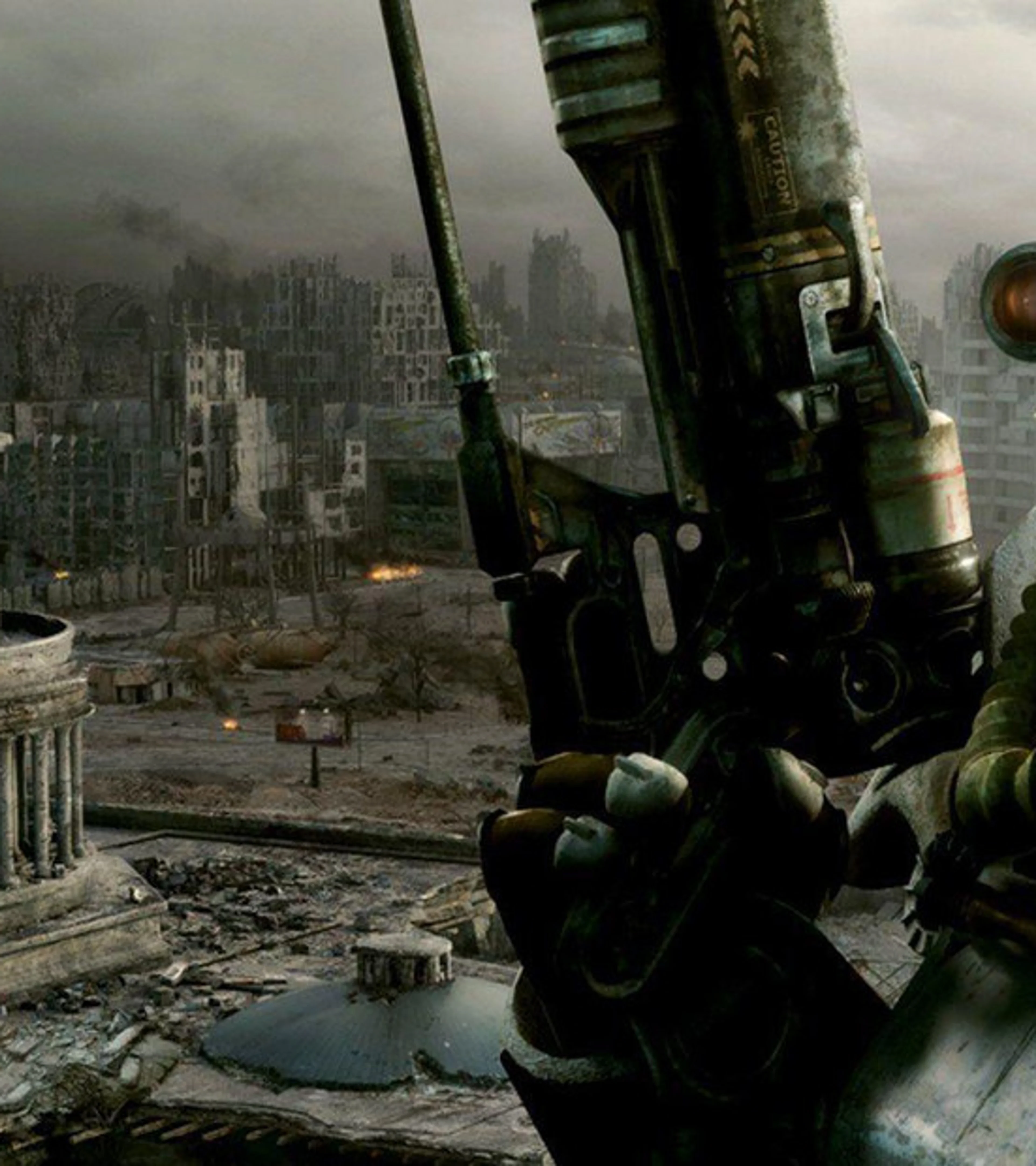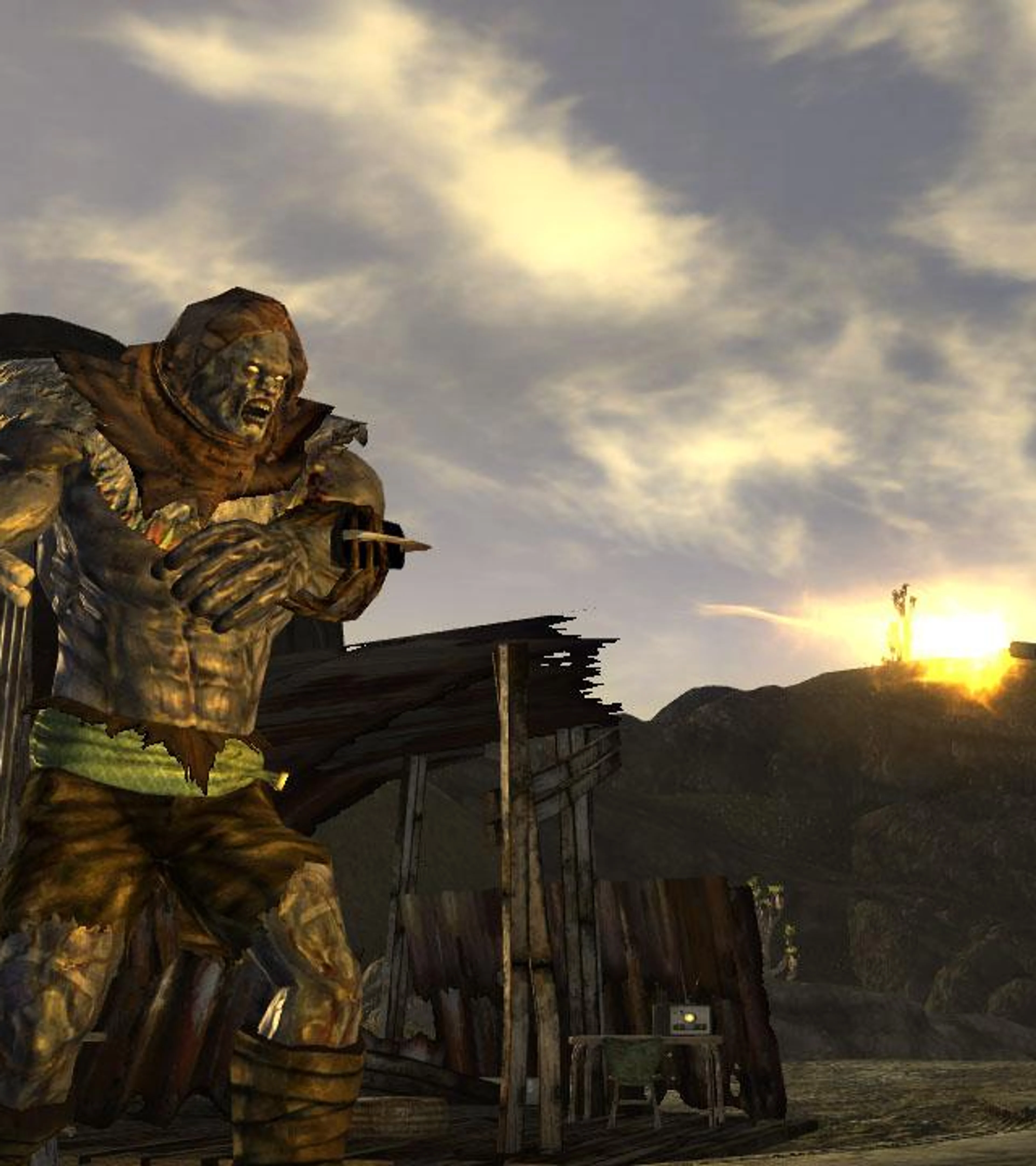
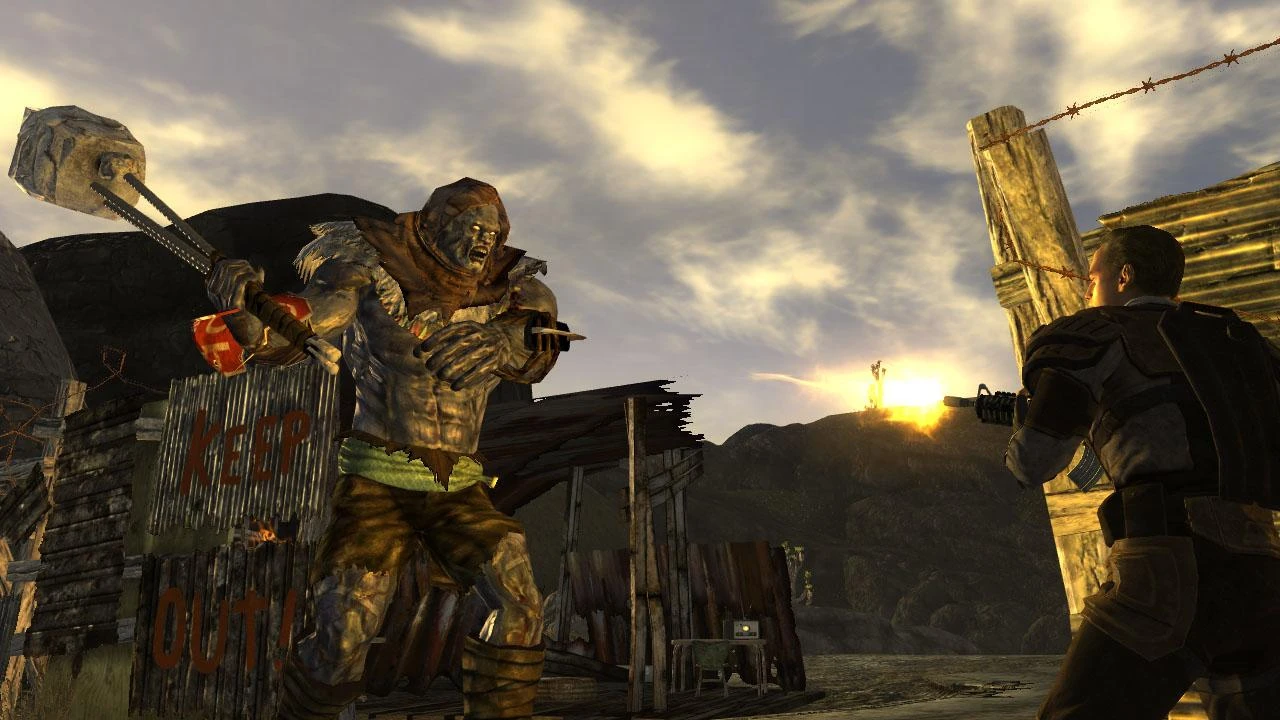
Fallout 3 and Fallout: New Vegas use the same basic language: open wastelands, V.A.T.S. combat, SPECIAL stats, strange side quests, and choices that can turn a settlement against you. Play them back to back, though, and they feel like two different answers to the same question.
Fallout 3 is the better starting point if you plan to play both. Its Capital Wasteland is built around discovery, isolation, and the excitement of seeing Bethesda's 3D version of Fallout for the first time. New Vegas then expands the role-playing side with stronger faction politics, more dialogue paths, weapon systems, and endings that react to your alliances.
If you only have time for one, the answer depends on what you want most. Choose Fallout 3 for atmosphere and open-ended exploration. Choose New Vegas for deeper choices, factions, and character builds.
Fallout 3 vs New Vegas at a glance
- Best order for playing both: Fallout 3, then New Vegas
- Better for exploration: Fallout 3
- Better for role-playing choices: New Vegas
- More central faction politics: New Vegas
- Stronger lonely wasteland atmosphere: Fallout 3
- Higher level cap with all DLC: New Vegas
- Can continue after the ending: Fallout 3 with Broken Steel
- Best single pick for dialogue-heavy RPG fans: New Vegas
Both games are now confirmed for remasters, although Bethesda has not announced dates or platforms. Our Fallout 3 and New Vegas remaster explainer separates the official details from the questions that remain open.
The main difference between Fallout 3 and New Vegas
Fallout 3 is Bethesda Game Studios' first-person reinvention of the series. You leave Vault 101 as the Lone Wanderer and search the ruins of Washington, D.C. for your father. The story gives you a direction, but the world constantly tempts you to ignore it. A radio signal, a ruined building, or a strange shape on the horizon can turn into an hour-long detour.
New Vegas was developed by Obsidian Entertainment using the same foundation. You play a Courier left for dead in the Mojave, then become involved in a struggle over Hoover Dam. The New California Republic, Caesar's Legion, Mr. House, and an independent route compete for control, and your reputation with those groups changes how the story opens or closes around you.
The simplest split is this: Fallout 3 asks where you want to explore next. New Vegas asks who you want to support and why. Both games do more than that, but their strengths pull in those directions.
Which game has the better story and choices?
New Vegas gives you more room to define your character through dialogue, skills, faction reputation, and quest outcomes. Important problems often have several solutions. A high Speech skill can end a conflict without gunfire, while Science, Medicine, Barter, and other skills regularly open paths that fit a particular build.
Faction reputation also creates consequences that feel more specific than a simple good-or-evil meter. Helping one group can make another hostile, wearing faction armor can change how people react, and smaller communities remember what you did. The final battle reflects a long chain of alliances rather than one late binary decision.
Fallout 3 still has memorable choices, including the fate of Megaton, but it leans harder on a broad Karma system and a more direct main story. Its best writing often appears in self-contained side quests and environmental stories: a vault experiment, a family secret, or a ruined neighborhood that explains itself through terminals and skeletons.
For players who want the most reactive traditional RPG, New Vegas wins this category. For players who enjoy piecing together stories from abandoned places, Fallout 3 remains excellent.
Which wasteland is better to explore?
The Capital Wasteland feels hostile and lonely. Washington's broken monuments, subway tunnels, bombed suburbs, and scattered settlements create a strong sense that civilization barely survived. The map frequently rewards curiosity with hidden shelters, unusual encounters, and locations that have little connection to the main quest.
New Vegas has a more organized world. Roads guide you around dangerous areas, towns connect to trade and politics, and faction territory gives the Mojave a readable structure. That makes the setting feel believable, but it can also make the opening hours feel more directed. Trying to cut straight north from Goodsprings is a quick way to meet enemies built to stop you.
Fallout 3 is stronger at pure wandering. You can choose a direction and find something strange. New Vegas is stronger at connected world-building. Its places make more sense in relation to one another, and its quests frequently cross faction lines.
Which game has better combat and character builds?
Neither game is a modern shooter, and both are easier to enjoy when you treat V.A.T.S. as a core system instead of an optional gimmick. Fallout 3 offers first- and third-person combat, locational targeting, weapon repair, and a straightforward progression curve.
New Vegas adds several useful layers. Guns use iron sights, ammunition comes in more types, weapons can accept modifications, and armor uses Damage Threshold. Hardcore Mode adds survival pressure by making ammunition carry weight and requiring attention to hunger, thirst, and sleep.
Character building is also more flexible in New Vegas. Traits return, skills appear more often in dialogue, and perks support specialized approaches. A smooth-talking gambler, explosives expert, energy-weapon scientist, or melee bruiser can each feel meaningfully different.
If mechanical depth matters most, New Vegas is the stronger game. Fallout 3 is simpler to learn and still offers plenty of build variety, which is another reason it works well as the first stop.
Which game has better DLC?
Fallout 3: Game of the Year Edition includes Operation: Anchorage, The Pitt, Broken Steel, Point Lookout, and Mothership Zeta. Broken Steel is the most important addition for a full playthrough because it raises the level cap to 30 and lets the game continue after the original ending.
Fallout: New Vegas Ultimate Edition includes Dead Money, Honest Hearts, Old World Blues, Lonesome Road, Courier's Stash, and Gun Runners' Arsenal. Its four story expansions connect through recurring characters and events, gradually building toward the Courier's history with Ulysses. With the story DLC installed, the level cap reaches 50.
New Vegas has the more connected expansion arc, while Fallout 3 offers a wider mix of settings and tones. Point Lookout is an eerie swamp adventure; The Pitt is a morally ugly industrial story; Old World Blues is a strange science-comedy playground; and Dead Money turns the rules into a tense survival challenge.
One practical difference matters: New Vegas ends after its final battle. Keep a manual save before the point-of-no-return warning if you want to finish side quests. Fallout 3 can continue after the main ending when Broken Steel is installed.
Should you play Fallout 3 or New Vegas first?
Play Fallout 3 first if you intend to finish both. It released first, its systems are easier to learn, and moving from Fallout 3 to New Vegas feels like gaining more options. Reversing the order can make Fallout 3's dialogue checks, faction handling, and weapon mechanics feel limited.
The story does not require this order. New Vegas takes place later and contains references to the wider Fallout world, but it follows a different protagonist in a different region. You will understand either game without completing the other.
Starting with Fallout 3 is about the smoother mechanical progression, not a mandatory timeline. Spend time exploring the Capital Wasteland, finish Broken Steel if you have it, then head west and build a Courier around the lessons you learned.
Which one should you choose if you only play one?
Choose Fallout 3 if your favorite part of an open-world RPG is leaving the quest marker behind. Its ruined city, underground routes, radio stations, and lonely landmarks create a mood that still carries the game. It is also the simpler introduction for someone who has never played Fallout.
Choose New Vegas if you care most about role-playing. Its factions, dialogue, skill checks, companions, and branching outcomes give you more ways to express who your Courier is. It is the usual recommendation for players who want decisions to reshape the political state of the world.
There is no wrong pick. The two games overlap enough to feel familiar and differ enough to justify playing both. The larger wait is for whatever comes after them; Fallout 5 is real, but still far away, so these classics remain the easiest way to get a full single-player Fallout fix.
Final recommendation
Play Fallout 3 first, then New Vegas. That order gives you the strongest introduction to Bethesda's wasteland exploration before New Vegas adds its denser faction politics and role-playing systems.
If you are making a one-game choice, forget arguments about which fan base is right. Pick the experience that matches your mood: Fallout 3 for discovery and atmosphere; New Vegas for choice and consequence. Both are at their best when you stop rushing the main quest and let the wasteland distract you.