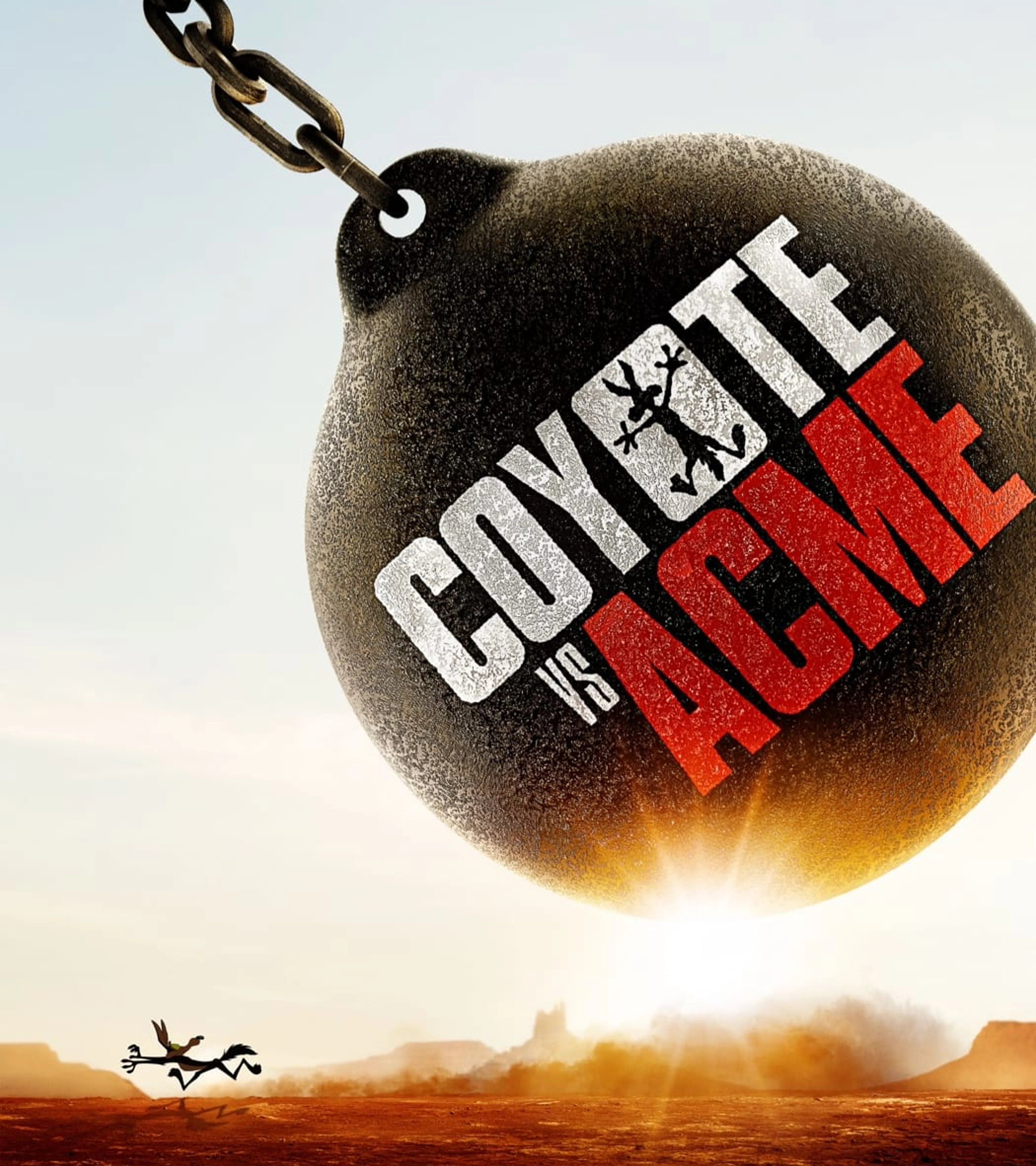
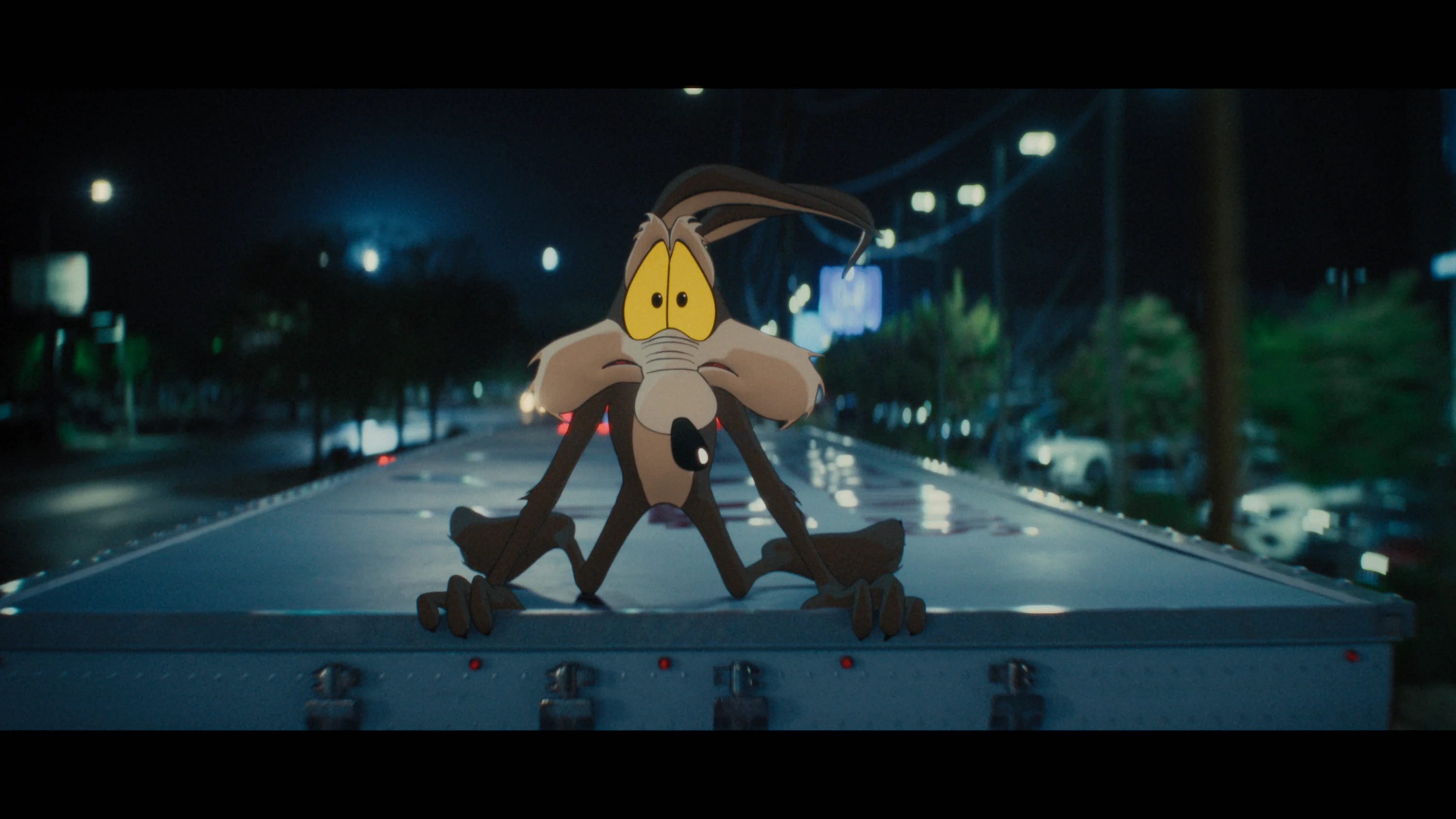
Wile E. Coyote has spent decades buying products that explode, collapse, or send him off a cliff. Coyote vs. Acme asks a sensible question the shorts never needed to answer: why does he keep paying the company that hurts him? The answer becomes a product-liability lawsuit, with every rocket skate, dehydrated boulder, and defective detonator entered as evidence.
Kevin Avery is the personal-injury lawyer who takes the case. He works from a tired Albuquerque office, accepts small settlements for cartoon clients, and has stopped expecting the law to do more than cover the next bill. His niece Paige still believes the practice can help people. Wile E. arrives with the stubbornness to test both positions.
The movie earns 8.7/10 because it builds a real story from cartoon logic instead of treating the characters as decorations. Director Dave Green preserves the setup, escalation, and physical consequences of the Road Runner shorts while screenwriter Samy Burch finds corporate behavior worthy of Acme's name. The hybrid effects occasionally wobble and some side roles are thin, but the comedy, anger, and affection point in the same direction.
Wile E. stays a cartoon, not a mascot
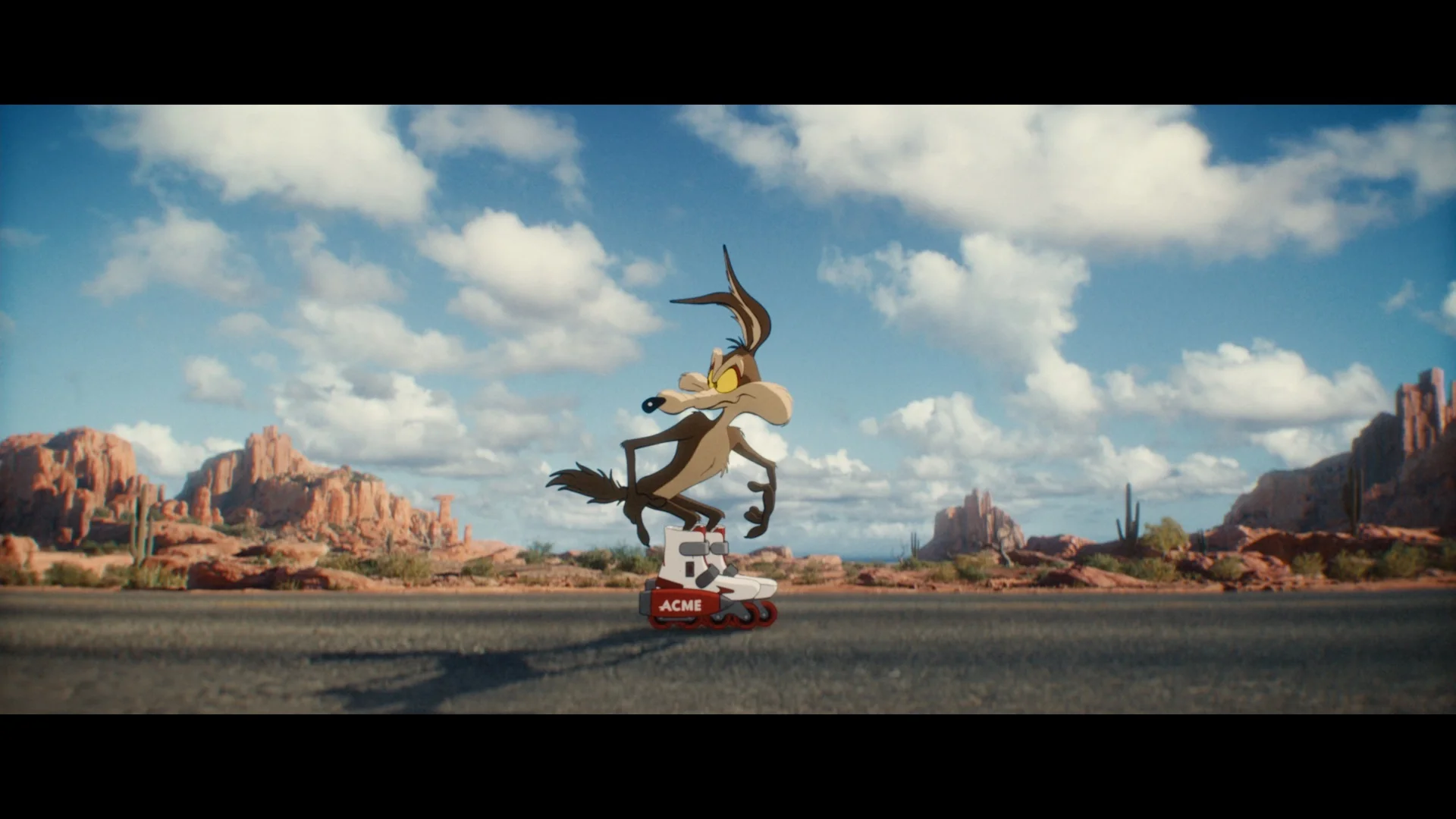
The most important decision is also the simplest: Wile E. does not start talking. He communicates through signs, drawings, gestures, narrowed eyes, and the long pause before another bad idea becomes irresistible. The movie gives him emotional stakes without replacing the personality built across the shorts. He remains vain, hungry, irritable, inventive, and incapable of leaving a plan alone once it exists.
That stubbornness makes him a credible plaintiff. Acme has sold him dangerous goods, but nobody forced him to keep aiming them at the Road Runner. The script lets both facts remain true. Wile E. deserves accountability from the corporation without becoming harmless or innocent. His sharp teeth, selfish goal, and willingness to try again are part of the sympathy, not details the movie must hide.
Kevin understands the coyote because failure has become a routine for him too. Will Forte plays the lawyer with sweat, exhaustion, and a small reserve of pride that returns reluctantly. He can match a cartoon reaction without turning into a rubber human. When the film needs sincerity, he lowers the performance rather than announcing that a serious scene has begun.
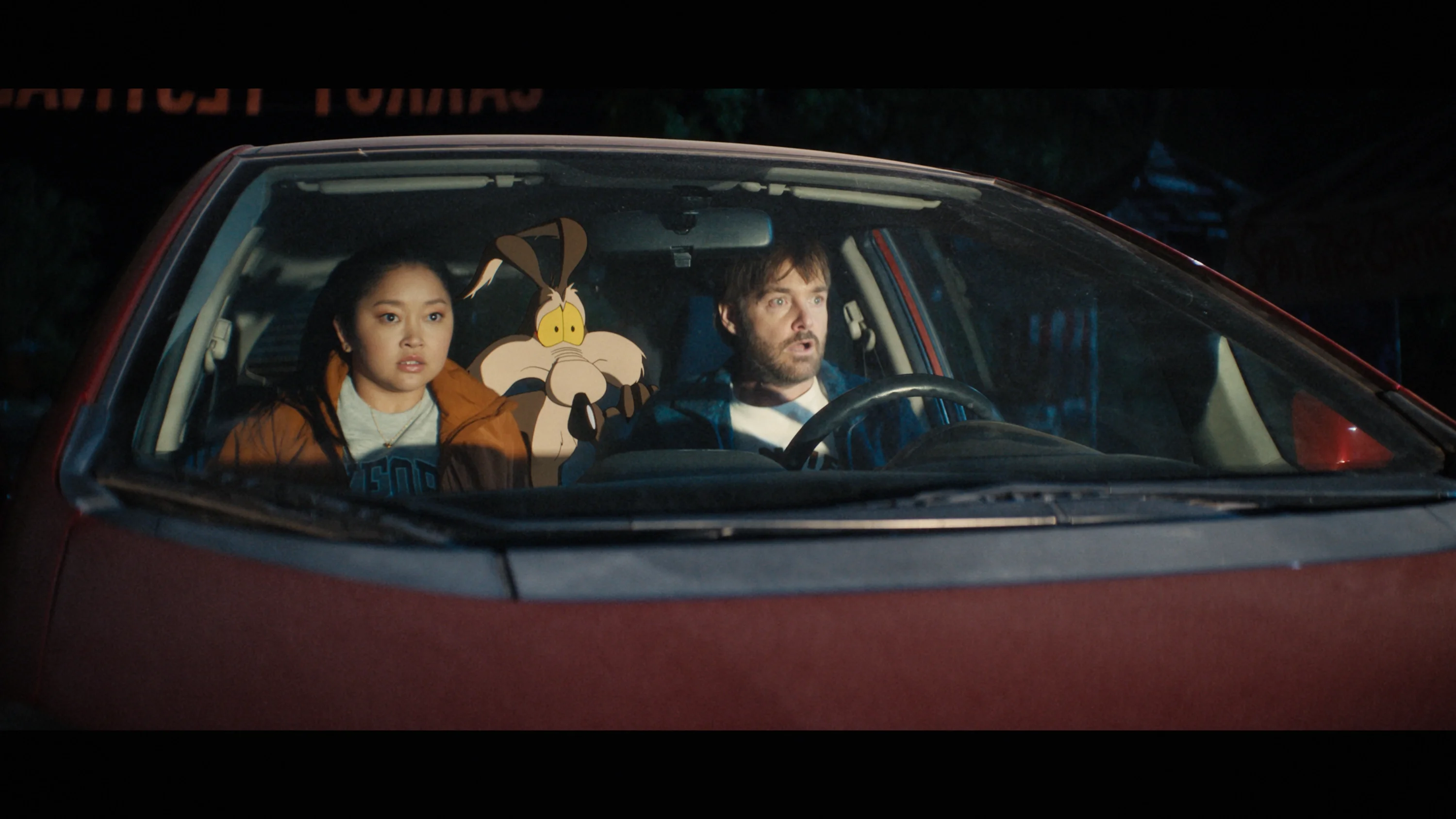
Lana Condor gives Paige enough confidence to keep the legal team from becoming a two-person misery contest. She pushes Kevin toward the case he claims he cannot win and treats Wile E. as a client rather than a novelty. The role is useful, though it remains less developed than the bond between the lawyer and the coyote. Paige often supplies the next practical step before the story moves away from her.
John Cena takes the opposite approach as Acme attorney Buddy Crane. His posture, suits, and fixed certainty are already close to animation. Cena does not wink at the comparison. He plays corporate power as someone who finds its rituals completely natural, which makes every inflated threat and immaculate presentation funnier. Buddy can share a frame with Foghorn Leghorn without either performance shrinking.
The other Looney Tunes appearances work best when they serve the case or expand the rules of the world. Cartoon citizens need lawyers because their injuries are dismissed as temporary. Familiar faces occupy ordinary jobs, public offices, or Acme's corporate structure. The weakest cameos stop the main story for recognition. Most arrive quickly, deliver a joke with a function, and leave before nostalgia becomes the only point.
The hybrid comedy understands impact
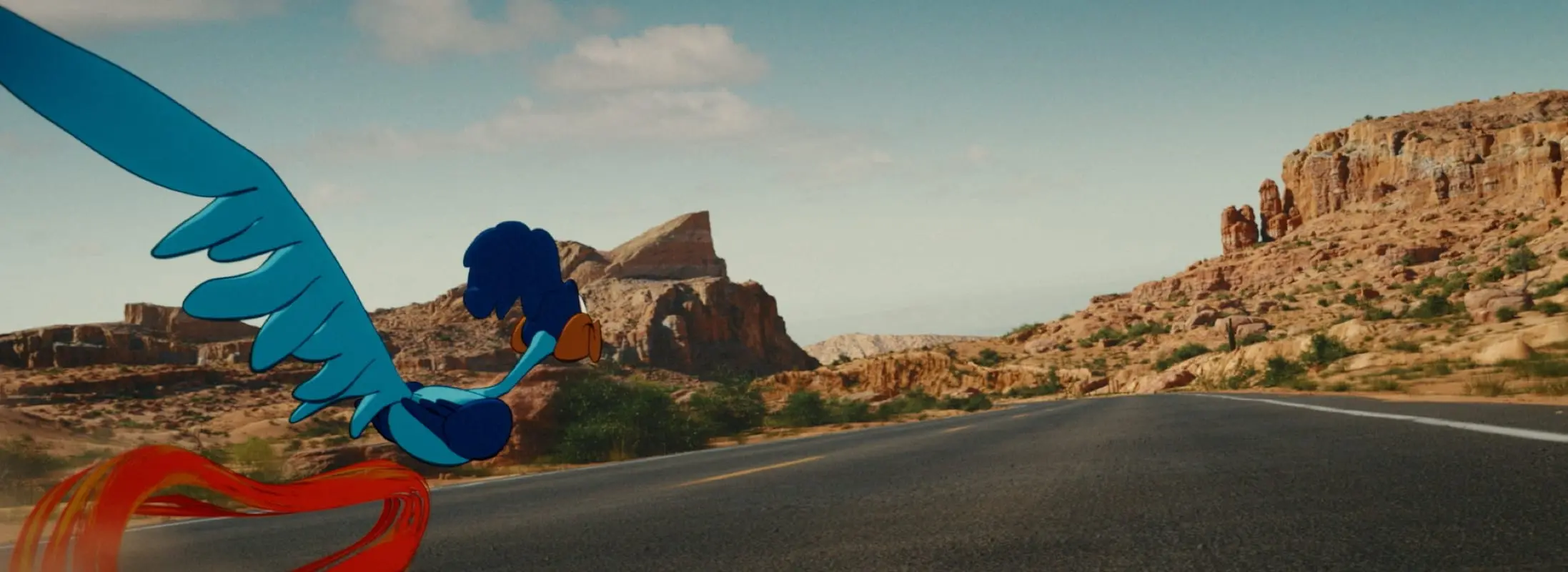
Road Runner comedy depends on certainty. The audience must see what Wile E. expects, how the machine is supposed to work, and the exact instant when physics chooses him as the target. Coyote vs. Acme protects that sequence. Props are introduced clearly, danger has direction, and the camera holds long enough for a reversal to be understood before the explosion covers the screen.
Green carries the same discipline into live action. Courtrooms, law offices, desert roads, Acme facilities, and city streets are laid out as spaces where a body or vehicle can cross the frame. Human performers react to animated movement rather than stare near it. The better composite shots give cartoons weight through shadows, eye lines, and physical consequences in the surrounding environment.
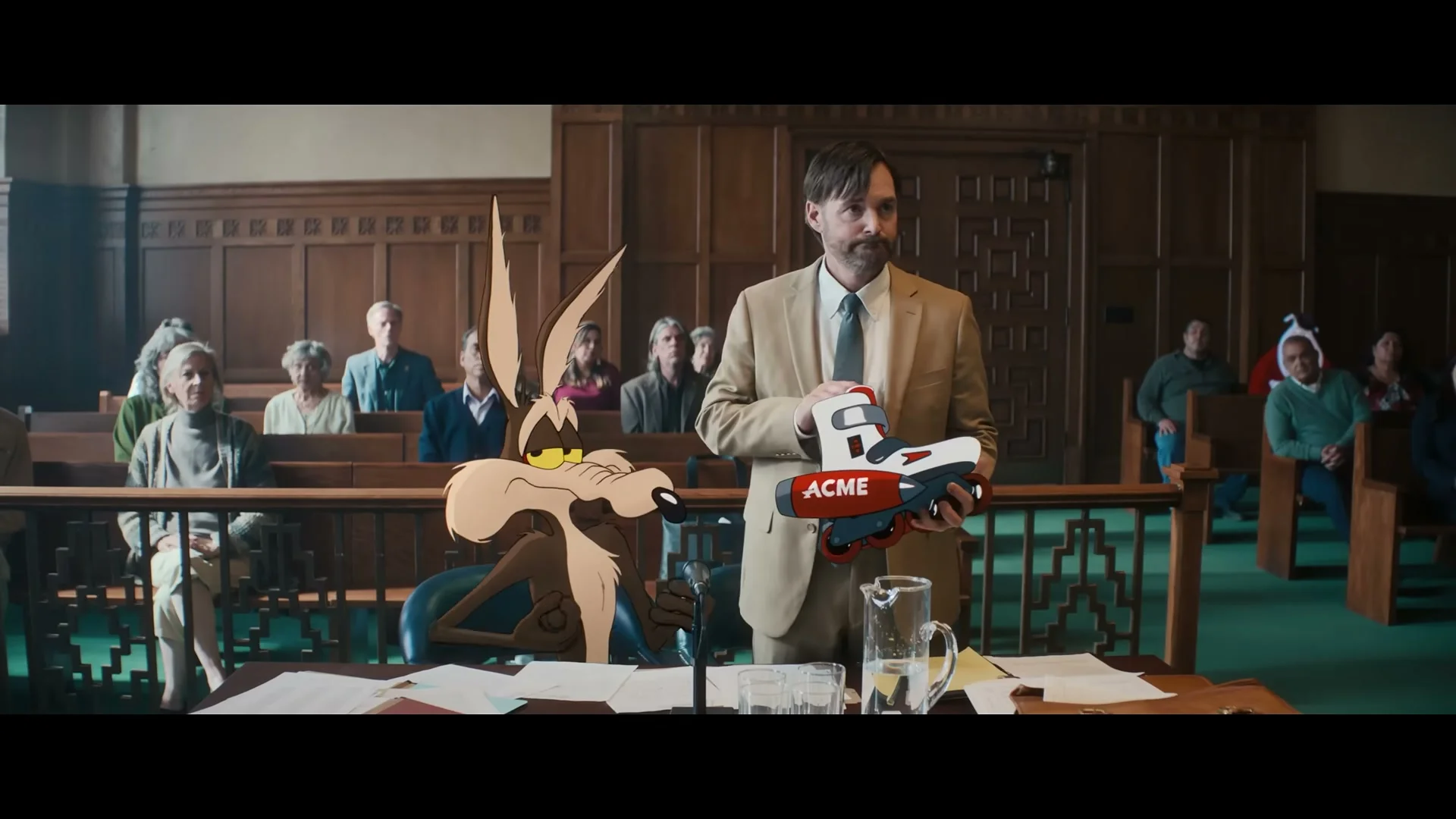
Not every blend is equally convincing. A few close views give animated characters too much volume or let light sit on them in an unfamiliar way. The difference is most noticeable when the film asks a character to occupy depth rather than move across a flatter composition. These shots rarely damage a joke, but they reveal the compromise behind a production mixing hand-drawn identity with digital space.
Advertisement

The movie looks strongest when it accepts contrast. Wile E.'s desert remains angular, bright, and absurdly open. Kevin's office is cramped and brown. Acme headquarters uses glass, steel, and intimidating scale. Moving between them makes the corporate story visual before anyone explains it: a consumer and his worn-down lawyer are tiny inside a system designed to look permanent.
Sound carries an equal share of the joke. Machines announce their mechanical logic, impacts arrive with clean punctuation, and Steven Price's score can treat a chase as grand drama while leaving space for a tiny Road Runner response. The film knows when silence around a sign or expression is funnier than another line. That restraint is rare in a family comedy built from familiar intellectual property.
Coyote vs. Acme official images
5 screenshotsThe violence stays close to the original cartoons: bodies flatten, burn, fall, and return. The joke depends on pain being vivid but temporary. Live-action people occupy a slightly different level of risk, and the movie handles the distinction without creating a rulebook. Wile E. can survive the impossible; Kevin's alarm still matters because friendship makes survival more than a reset button.
Pacing is brisk without becoming frantic. Courtroom material gives the picture a stable spine, and action erupts when an argument needs physical proof. The final stretch expands the scale, but the best gags still retain a visible object, target, and mistake. The movie never forgets that one correctly timed anvil can be funnier than a wall of indistinct effects.
The Acme lawsuit has real bite
Acme is more than a warehouse full of bad gadgets. It controls a market, defines the terms of every complaint, and assumes cartoon customers will accept tiny settlements because injury is part of their public identity. The satire works because the company does not need to behave like a secret criminal organization in every scene. Ordinary contracts, fees, delays, and public relations already create enough damage.
Kevin's law practice shows the smaller end of that system. He has learned to measure justice by what can be settled quickly. Cartoon clients appear indestructible, so their pain becomes easy to discount. Wile E. refuses that discount. His persistence forces Kevin to decide whether professional realism is wisdom or merely the language he uses for surrender.
The film's own release history gives that argument unavoidable force, but the story does not require outside knowledge to function. A finished project nearly disappeared because a large corporation judged accounting value more important than an audience. On screen, Acme makes the same calculation about customers and products. The resemblance is clear without turning every scene into commentary on the studio that produced it.
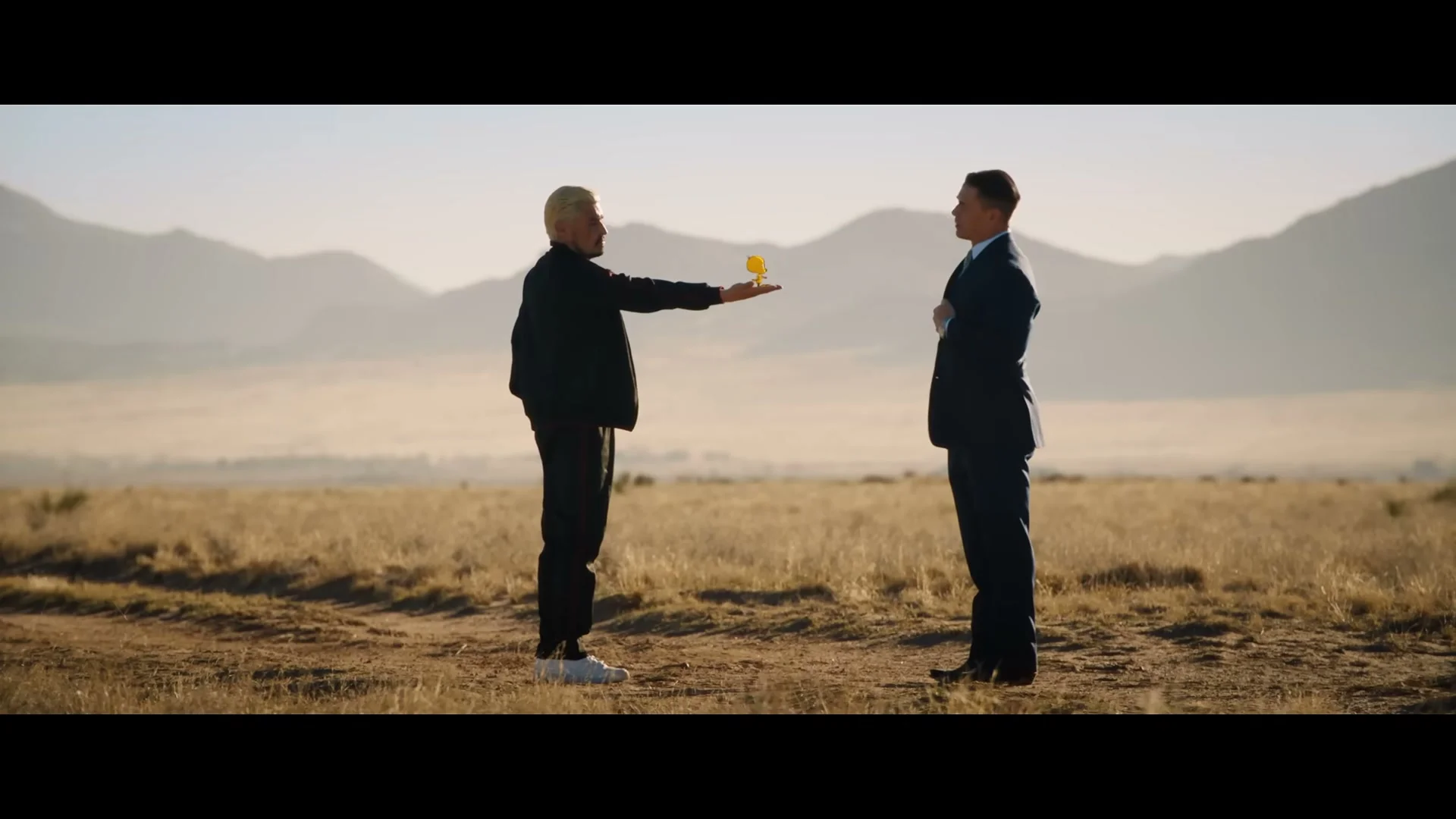
Foghorn Leghorn as an executive is an obvious joke with useful precision. His confidence, broken syntax, and appetite for attention fit a corporation that treats noise as leadership. Buddy Crane translates that attitude into legal language. Cena's character can make an absurd position sound inevitable because the institution behind him has already arranged the room to agree.
The politics remain accessible because the emotional case is concrete. Wile E. paid for products. The products failed in ways their instructions did not disclose. Acme profited from his repeated belief that the next purchase would work. That cycle describes more than cartoon explosives, but the movie does not need a speech about every modern industry. The pile of invoices and bruises is enough.
Some legal detail will pass over younger viewers. The courtroom has procedure, corporate structure, and arguments about responsibility that cannot all become visual slapstick. Children still have chases, explosions, expressive characters, and a clear contest between the small team and the giant company. Adults get the sharper layer. The two tracks overlap often enough that the film does not split into separate movies for separate ages.
Critical disagreement centers on whether this structure contains enough anarchy. One view finds the hybrid too polite beside the most violent Chuck Jones shorts and considers the human characters thin. The stronger reading sees control as the point: the movie cannot reproduce a seven-minute short for feature length, so it uses legal pressure and friendship to vary the rhythm while preserving the cartoons' exact physical grammar.
Who should watch Coyote vs. Acme
Coyote vs. Acme is a strong choice for families willing to follow a courtroom story as well as a chase. Younger children may care more about the explosions than the contracts, while older viewers can read the consumer satire without losing the simple pleasure of Wile E. holding the wrong end of another invention. The PG comedy has frequent cartoon violence and some language but treats injury as elastic rather than graphic.
Longtime Looney Tunes fans have the most to gain. The film recognizes visual habits, names, locations, sounds, and character relationships without reducing them to a list of hidden references. Wile E. and the Road Runner remain central rather than appearing as approval stamps on a human story. Cameos reward familiarity, but the main emotional line works for anyone who understands repeated failure.
Viewers skeptical of animation and live action sharing a frame should expect some uneven digital surfaces. This is not the seamless physical illusion of the strongest historical examples in every shot. It is, however, a directed blend with rules, compositions, and performances built around the cartoons. The occasional weak composite is easier to accept because the film knows what each image is trying to accomplish.
Anyone seeking pure Road Runner mayhem should also adjust expectations. The lawsuit, Kevin's confidence, Paige's idealism, and Buddy's defense occupy real time. That slower material is not filler; it gives the explosions meaning beyond repetition. It also explains why a small number of gags feel less ferocious than the shorts. The movie is extending a character, not assembling a theatrical clip reel.
An 8.7/10 recognizes a comedy that understands both its inheritance and its present target. Coyote vs. Acme gives Wile E. dignity without curing his flaws, gives corporate satire teeth without abandoning family entertainment, and lets Will Forte and John Cena meet animation on its own terms. Thin side roles and a few awkward effects remain visible, but they do not weaken the case.
The best final proof is the coyote himself. He still wants what he wants, still prepares too carefully, and still survives the result. The difference is that another person finally notices the pattern and stands beside him. That small change turns a familiar failure into a story while leaving the next impossible Acme device ready to explode.