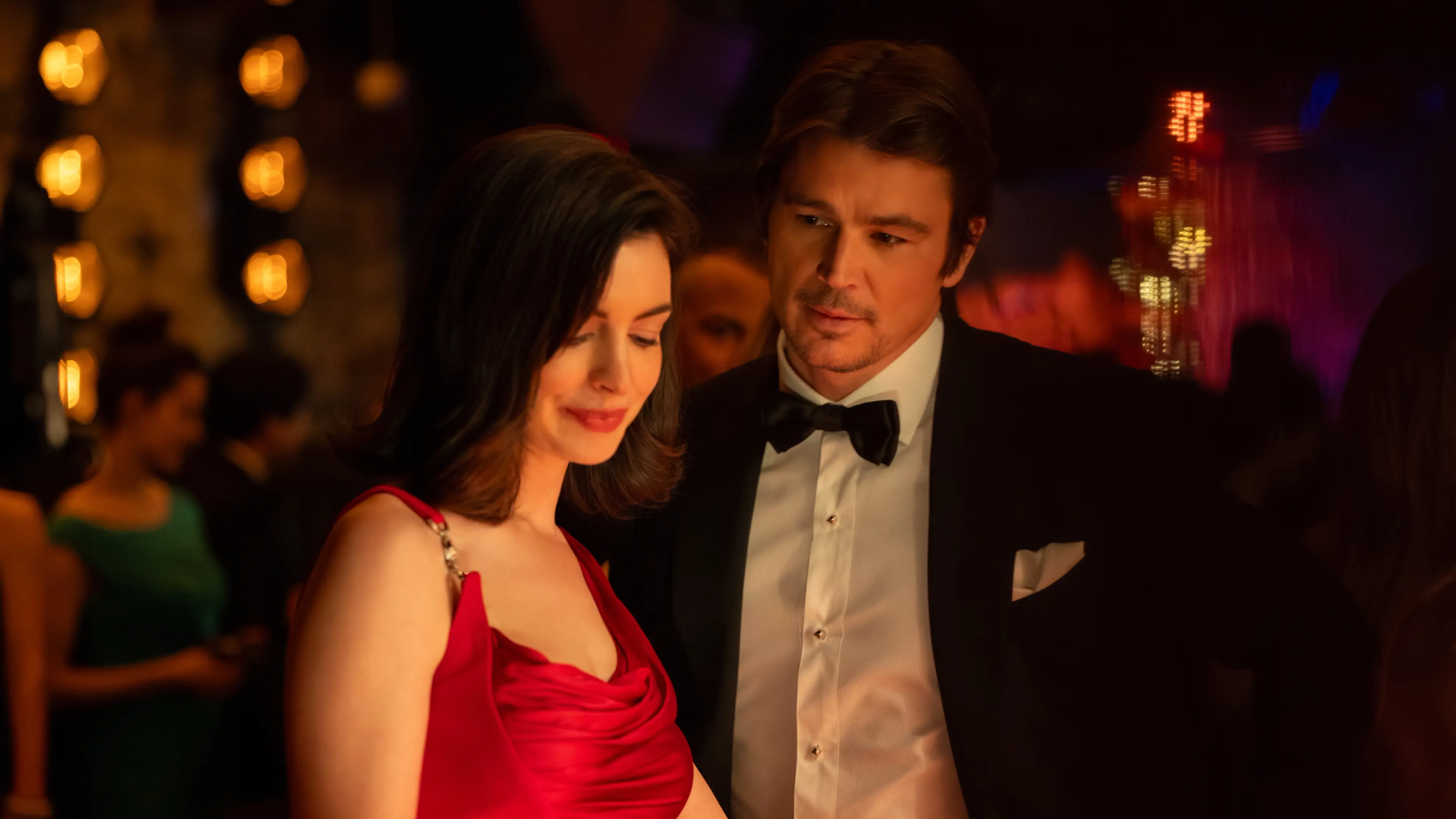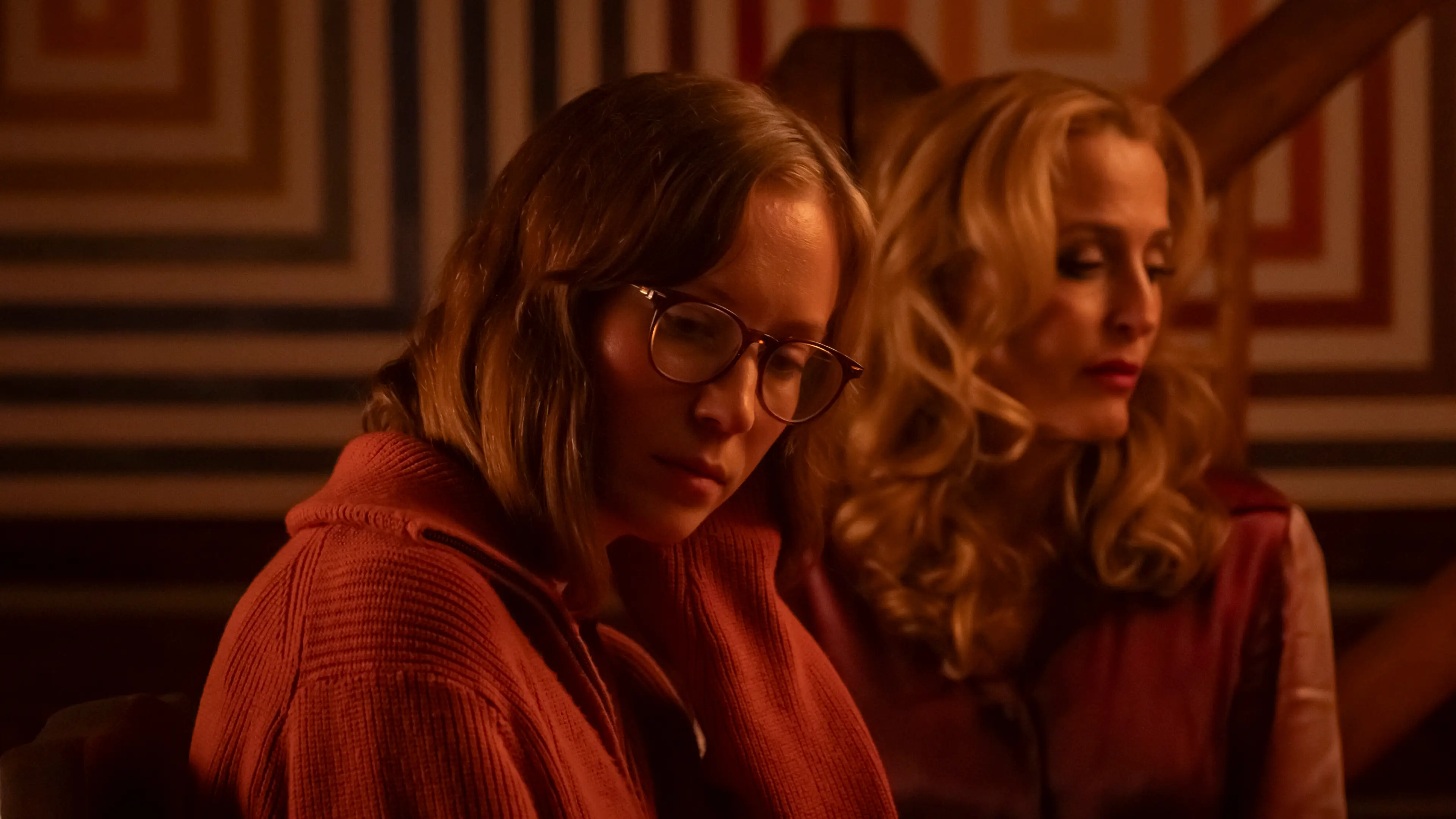
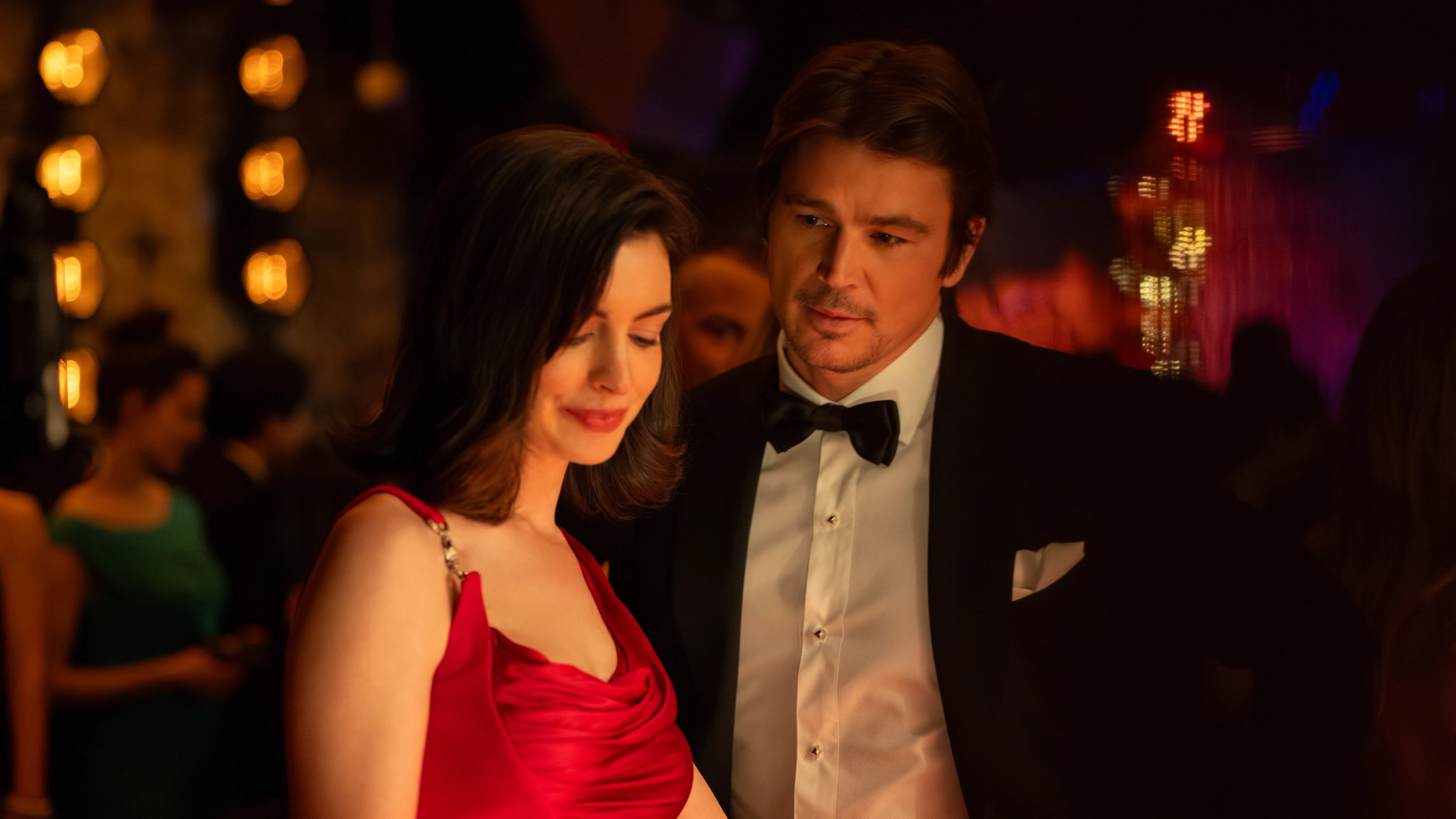
Lowen Ashleigh has been offered enough money to stop worrying about losing her home. There is a difficult condition: she must move into a famous writer’s house and finish that writer’s books without the public knowing. The writer, Verity Crawford, is still there, unable to speak or move normally after a car accident. So are her husband and son. Lowen arrives to do a job, not to investigate a crime. Finding a private manuscript changes that.
Michael Showalter’s adaptation of Colleen Hoover’s novel works best when Dakota Johnson’s Lowen is in the same room as Anne Hathaway’s Verity, waiting for her to react. It works less well when Lowen and Jeremy begin an affair or Lowen reads another passage about the family. You do not need to have read the book to follow the film. Its problem is not missing background information. Too often, Lowen stops searching while narration and flashbacks repeat what she has found.
Viewing details: Verity is now in US theaters. Its US rating is R, for sexual content, nudity, language, violence and bloody images. This is an adult thriller, not a family movie. Spoiler scope: We discuss early scenes below. Two marked paragraphs near the end discuss a late note, but not the characters’ final fates.
Who’s who in Verity
- Lowen AshleighPlayed by Dakota Johnson
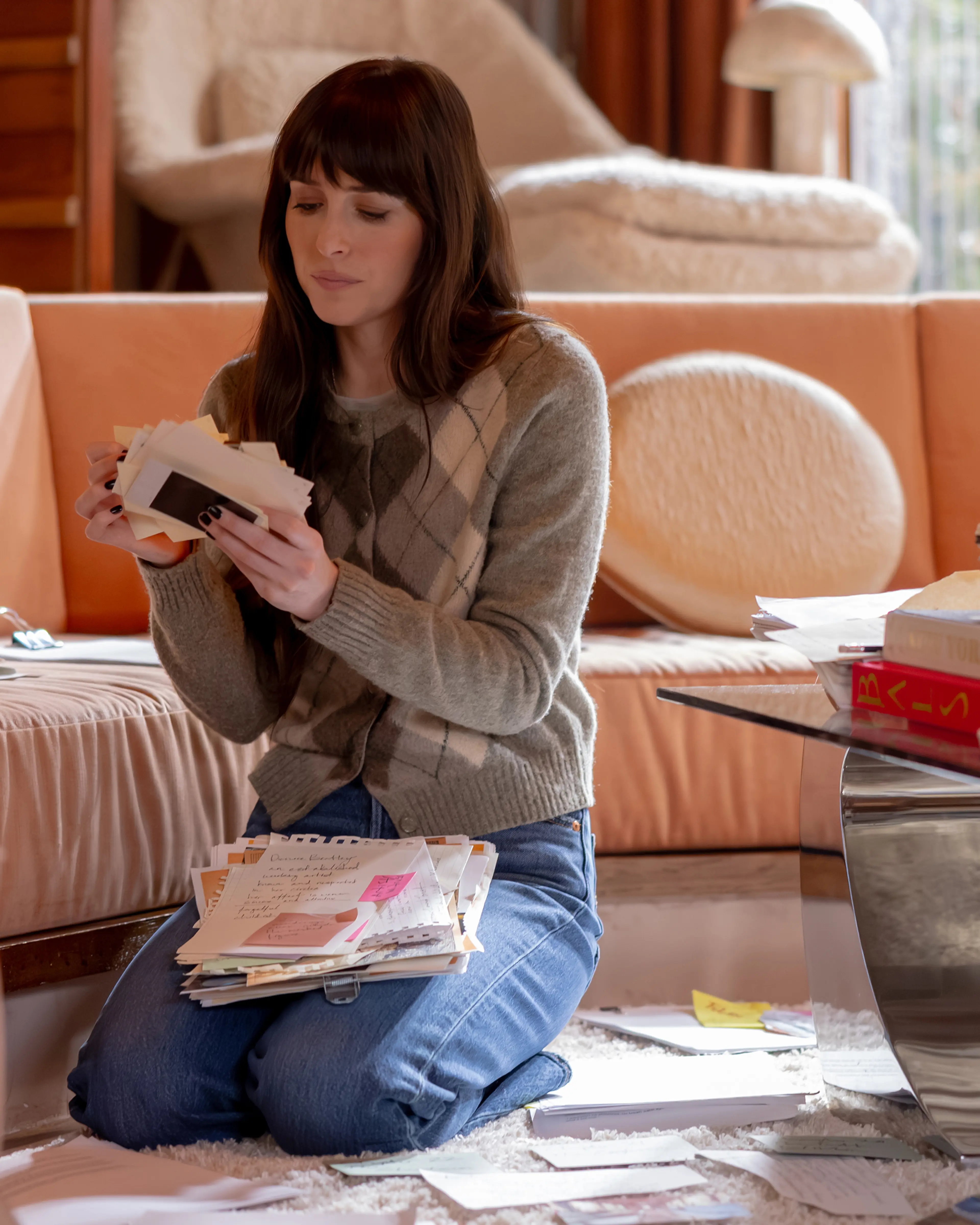
- Verity CrawfordPlayed by Anne Hathaway
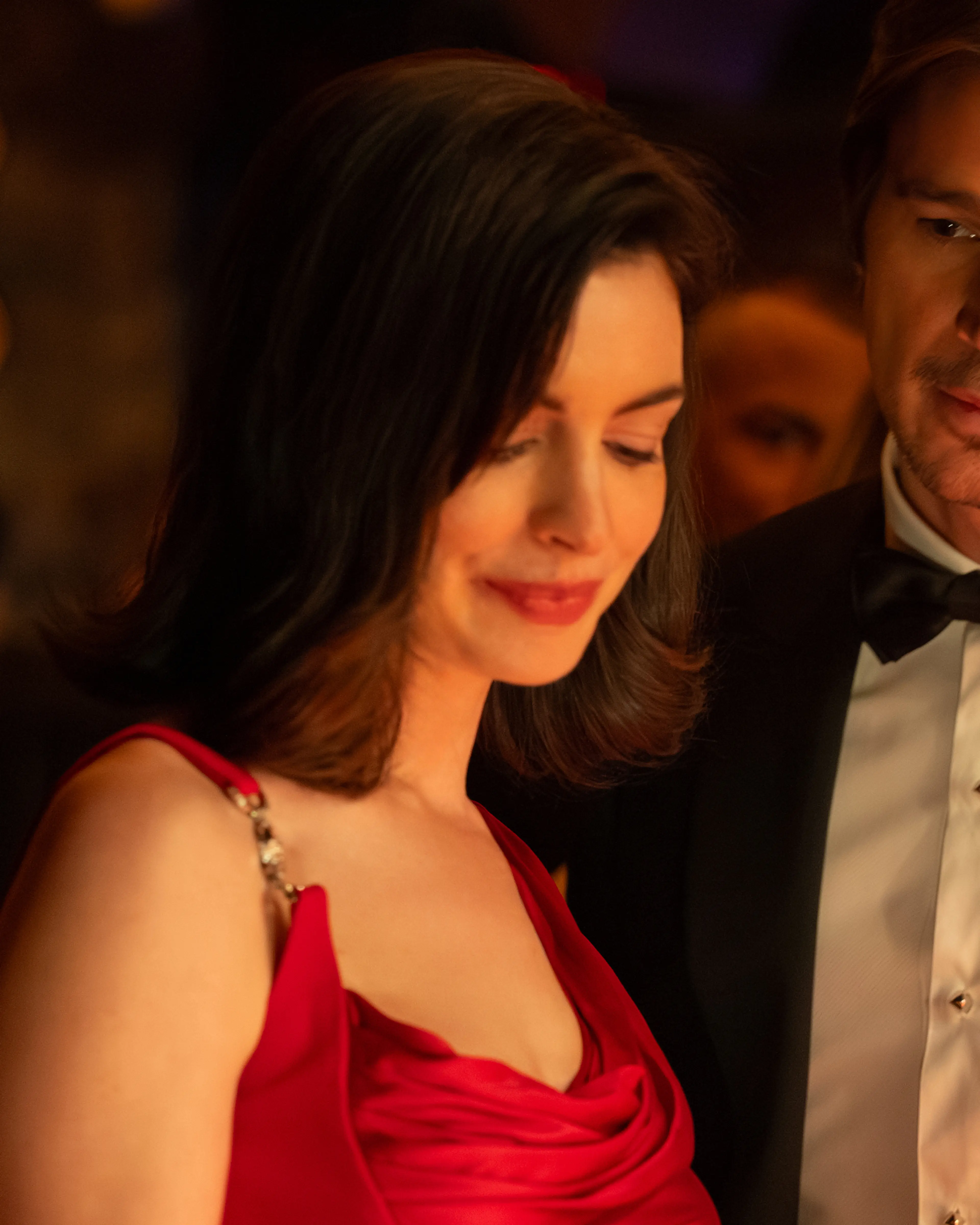
- Jeremy CrawfordPlayed by Josh Hartnett

More cast
- Crew CrawfordPlayed by Brady Wagner
Lowen Ashleigh — Dakota Johnson: A little-known writer facing eviction after her mother’s death. She accepts a private job completing Verity’s novels and stays at the Crawford home to study the notes.
Verity Crawford — Anne Hathaway: The successful author Lowen is replacing. She lives at home after a serious car accident. Her private writing gives Lowen a very different account of the family from the one she expected.
Jeremy Crawford — Josh Hartnett: Verity’s husband and Crew’s father. He helps arrange Lowen’s job and welcomes her into the house. Lowen’s growing attraction to him affects how she reads his wife’s writing.
Crew Crawford — Brady Wagner: The Crawfords’ young son, who still lives with his parents in the house where Lowen comes to work.
Lowen takes a writing job she cannot afford to refuse
Before the job offer, Lowen witnesses a fatal road accident in New York. A cyclist is killed, and blood gets on her clothes. Jeremy helps her and offers her a clean shirt. She does not yet know that he is connected to the meeting she is about to attend. His first act of kindness gives her a reason to trust him. Hartnett’s quiet manner helps: Jeremy deals with the immediate problem instead of trying to impress her.
The publishing meeting turns that chance encounter into an offer. Verity cannot finish her successful series, and Lowen is asked to write the last three books in her place. A ghostwriter does the writing while another person’s name appears on the book. Here, keeping that arrangement private also protects Verity’s public career. Lowen needs money and a place to stay; Jeremy’s offer gives her both. Moving into the house makes sense before the frightening discoveries begin.
Credits
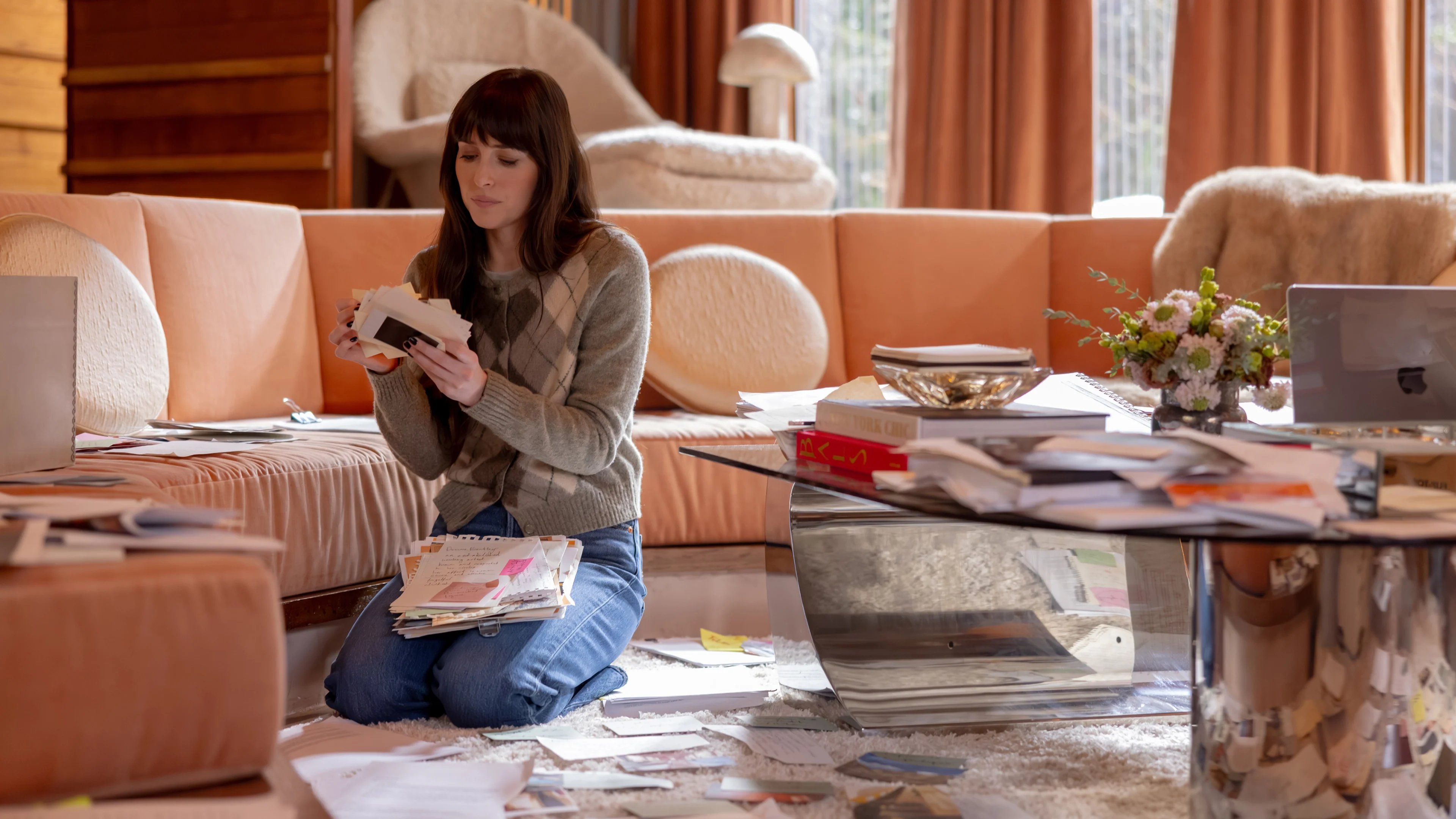
Alisha Wetherill / Amazon MGM Studios (photographs); Amazon MGM Studios (official frames and poster).Lowen’s first task is to sort through Verity’s work. The room is full of books, loose papers and notes, so there is something specific for her to do. The discovery that matters is a digital manuscript on a thumb drive. It appears to be a memoir: Verity writing about her own life rather than inventing another crime novel. Lowen expects useful material for the job. Instead, she reads disturbing claims about Verity’s marriage and motherhood. The question becomes whether these private pages describe real events.
The film shows earlier events as Lowen reads. Those scenes are flashbacks, taking us away from the present-day house to Verity’s relationship with Jeremy and the family’s past. Hathaway’s narration gives these passages a deliberately unpleasant confidence. But a scene presented from a manuscript is not automatically proof that it happened. Lowen is reading one person’s account, and she is already attracted to the husband that account describes.
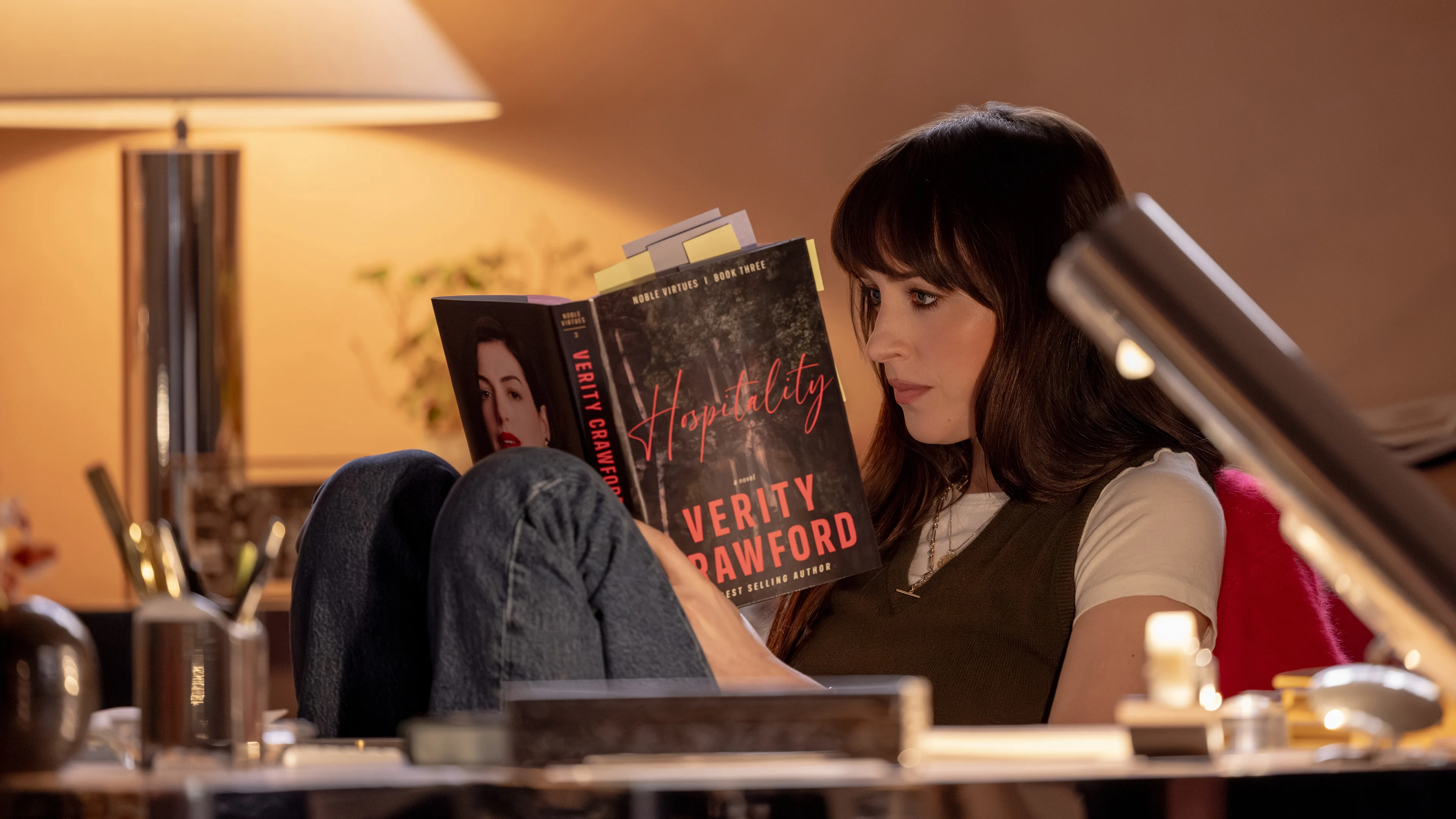
This gives Johnson something more interesting than reacting to a frightening wife. Lowen is supposed to learn how Verity writes, yet starts wanting access to her life as well. The problem is the amount of time we spend watching her read. The film keeps returning to the manuscript instead of letting Lowen make a new discovery in the house. When narration, written words and a flashback all explain the same part of Verity’s life, the next development takes longer to arrive. We wanted more of Lowen deciding what to do with the information she already had.
Lowen waits for Verity to respond
In the present-day house, Lowen tries to get a response from Verity. Verity sits in a wheelchair, with her head tilted and her face almost still. Lowen talks directly to her, but does not get the answer she wants. Hathaway makes it hard to look away from the woman’s eyes and mouth: we are checking for movement along with Lowen. A tiny change in Verity’s expression can matter more than another narrated confession. This is the film’s most effective use of its two leading actors.
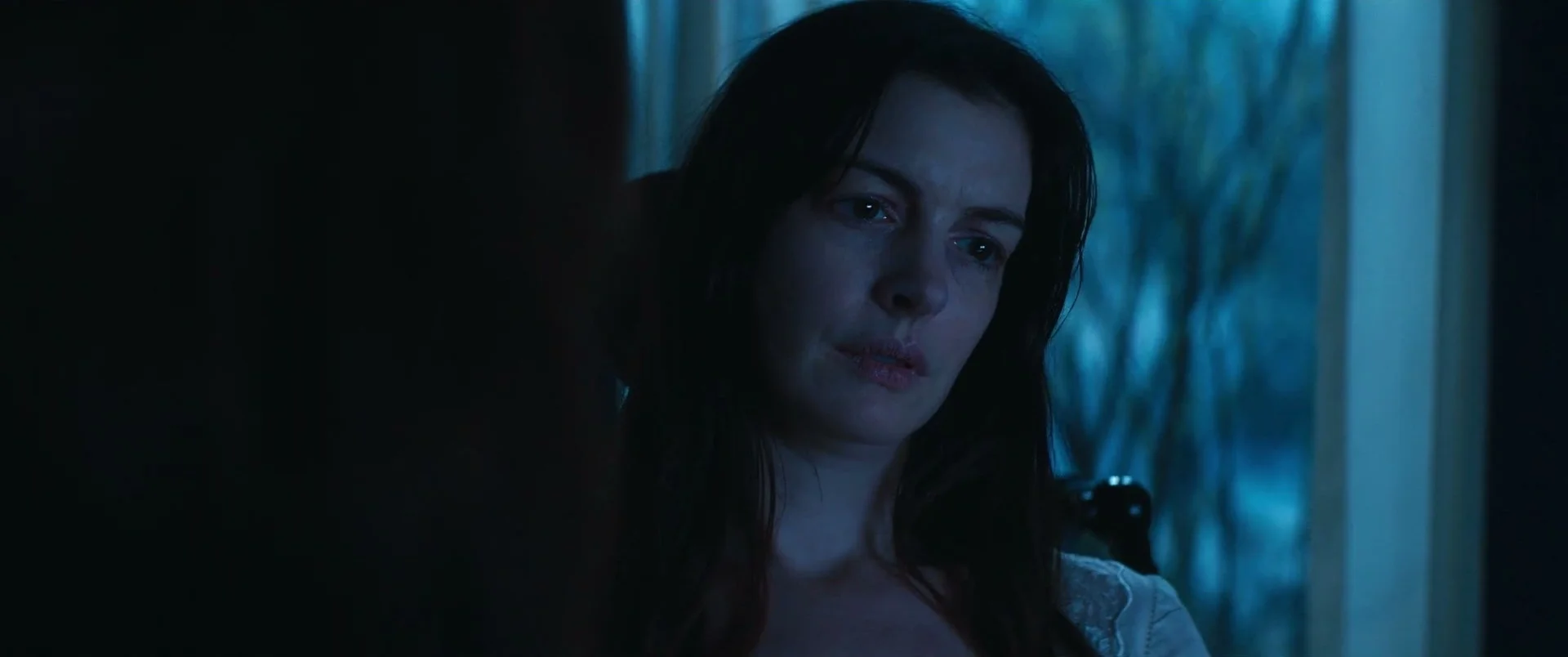
Hathaway plays the manuscript scenes differently. There, Verity can speak, flirt and describe her marriage with confidence. In the house, she is almost motionless while Lowen studies her. The difference matters because we have just seen how forcefully Verity can behave, but cannot tell how much of that person remains aware of what is happening around her. Hathaway does not need a speech to make Lowen’s visit uncomfortable. The short clip above shows that stillness without giving away the explanation for it.
The house also helps these scenes. Lowen sorts papers beside a soft peach-colored seating area, while large glass panels show the woods outside. The office looks comfortable, even with the papers spread across the floor and table. Her confrontation with Verity is much darker: the window behind Hathaway gives her face a cold blue light. Lowen’s bright working space and the dark confrontation look very different. The open view and peach colors initially make the office inviting. The dark room is much less comfortable to watch as Lowen tries to get Verity to speak.
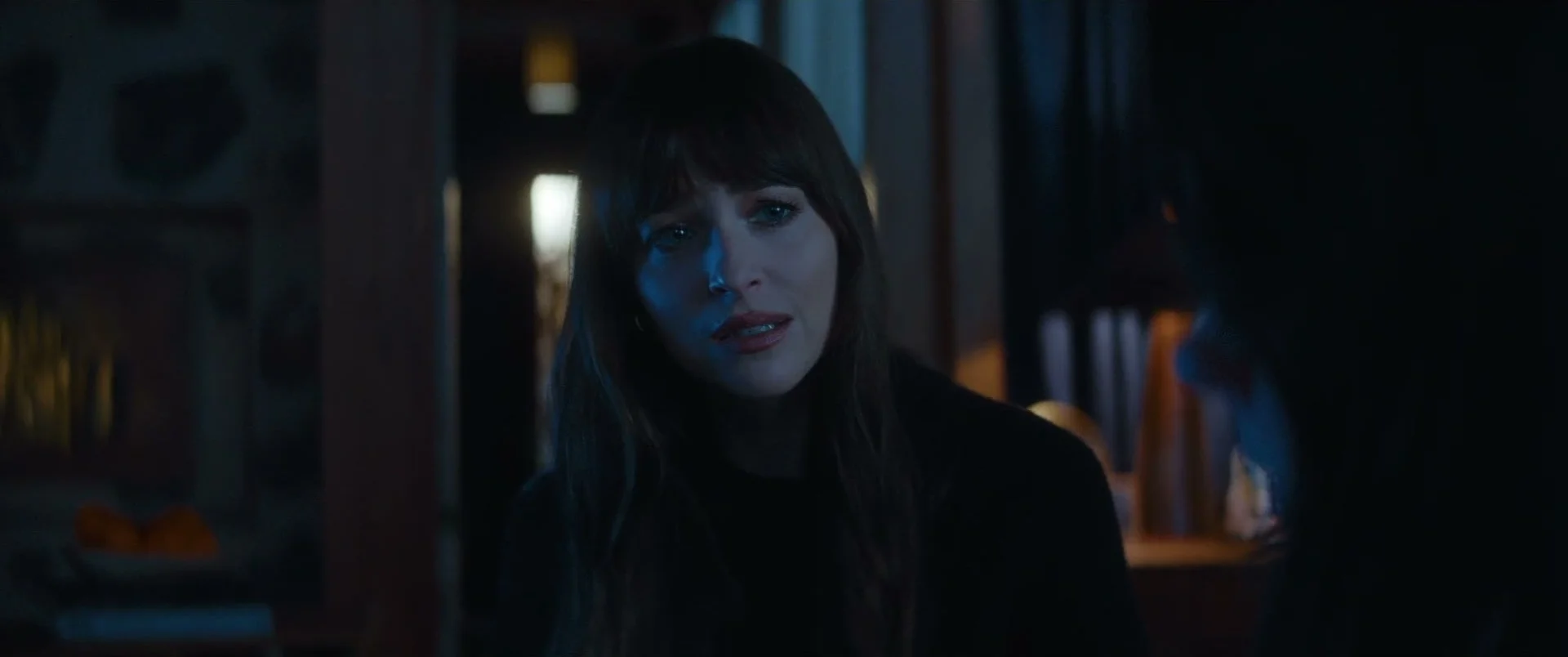
Jeremy’s relationship with Lowen is less convincing. The shirt he offers after the road accident establishes care through an action. Later, their sexual relationship gives us plenty of physical attraction, but less to show why these two people trust each other with anything more. Lowen is living beside his injured wife while reading accusations about their family. That should make each step toward Jeremy difficult. Instead, the affair develops more clearly through sex than through conversations that explain their trust. Hartnett can look sympathetic and suspicious in the same scene, but that uncertainty does not make the romance more believable.
One detail makes Lowen’s interest less innocent. After reading about Verity and Jeremy’s sex life, she notices the marks on their bed’s headboard and wants to repeat what she has read. She is no longer only attracted to a man who helped her; she is comparing her own experience with his wife’s. That is a useful, uncomfortable change in her behavior. Lowen wanting Verity’s life is more interesting than Lowen simply falling in love. Johnson’s reserved performance suits that private jealousy better than the scenes asking us to accept the affair as a persuasive romance.
The late note makes the mystery harder to believe
For much of the film, Lowen treats the manuscript as important evidence. She reads it privately, sees its author sitting in the house and becomes involved with the husband it describes. A later piece of writing changes what she thinks those pages mean. Lowen is left with two accounts that cannot both be true. That uncertainty could make the mystery more interesting, but the new account is less convincing than the early discovery.
Late-note spoiler — skip the next two paragraphs if you have not seen Verity
The note claims that the memoir was a writing exercise: Verity was imagining the worst possible version of herself, not confessing. A supposed autobiography becomes a possible piece of invented writing. That changes Lowen’s reason for believing Verity is dangerous and asks us to reconsider the flashbacks we have watched.
There is a practical problem with Jeremy. If the note is true, he had read the manuscript before Verity’s accident. Yet when Lowen shows it to him, his response plays as though the information is new. Jeremy’s earlier knowledge and his later reaction do not fit together comfortably. The second account makes his behavior harder to explain, rather than giving us an equally believable alternative.
Pixel Twelve verdict
Pixel Twelve score: 5.5/10 — Mixed. We give Verity credit for more than its ending. Lowen’s financial problems explain why she accepts the job; Jeremy’s clean shirt makes her first trust in him understandable; Hathaway’s wheelchair scenes make a face-to-face exchange tense even without an answer. Those are good reasons to keep watching. We would not dismiss the whole film because the late note disappoints.
They are not enough for a stronger recommendation. The repeated reading and flashbacks delay Lowen’s next move, the affair does not build on the convincing first meeting, and the final written explanation creates a problem with Jeremy’s behavior instead of resolving it. Watch it for Hathaway and for Lowen getting too close to the Crawford family. If you mainly want a mystery whose final explanation makes the earlier scenes more convincing, Verity is likely to frustrate you.
More from Verity
3 screenshotsLoading results
Find the cast, official trailer, age rating and release details on our Verity movie page, or browse more Pixel Twelve reviews.