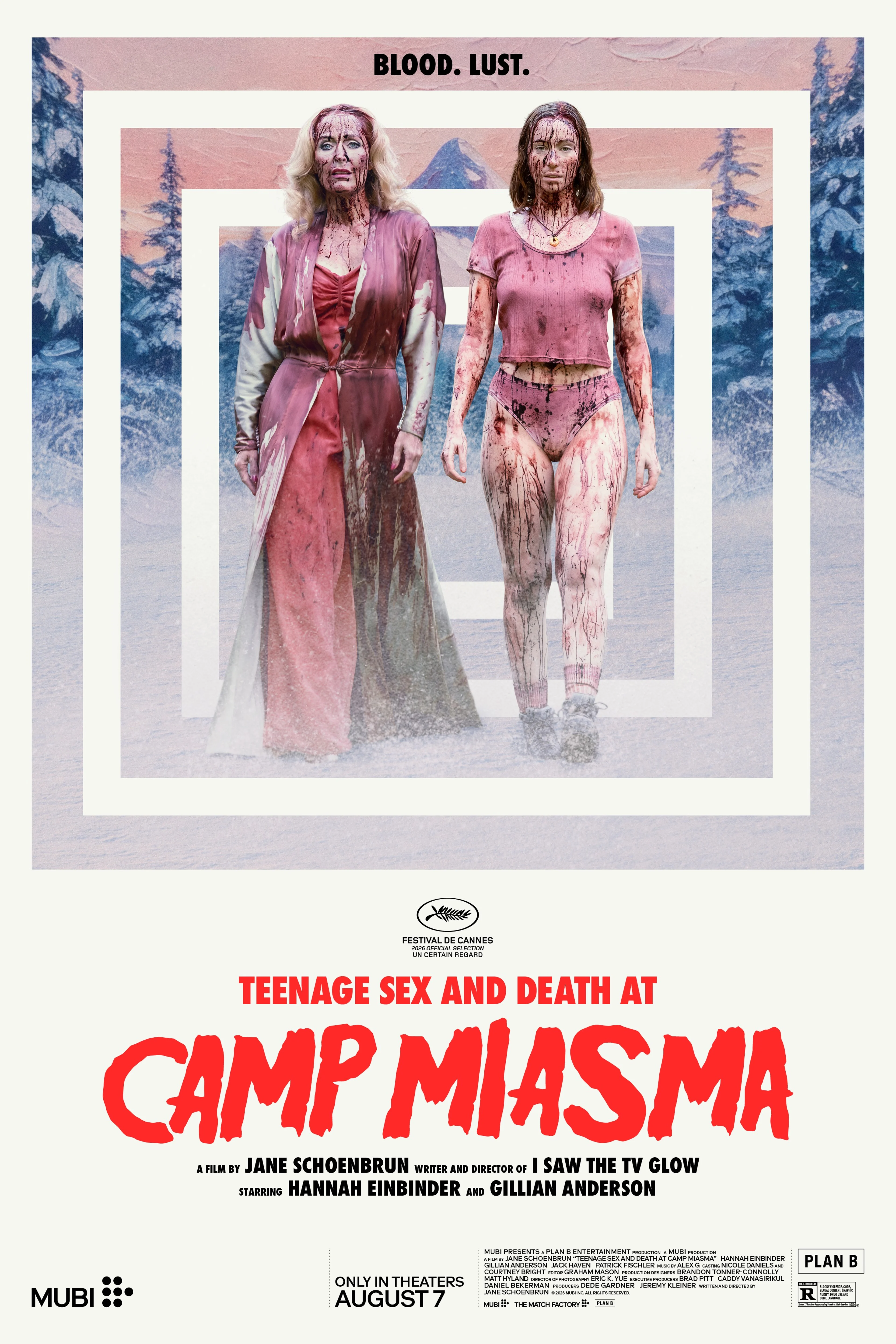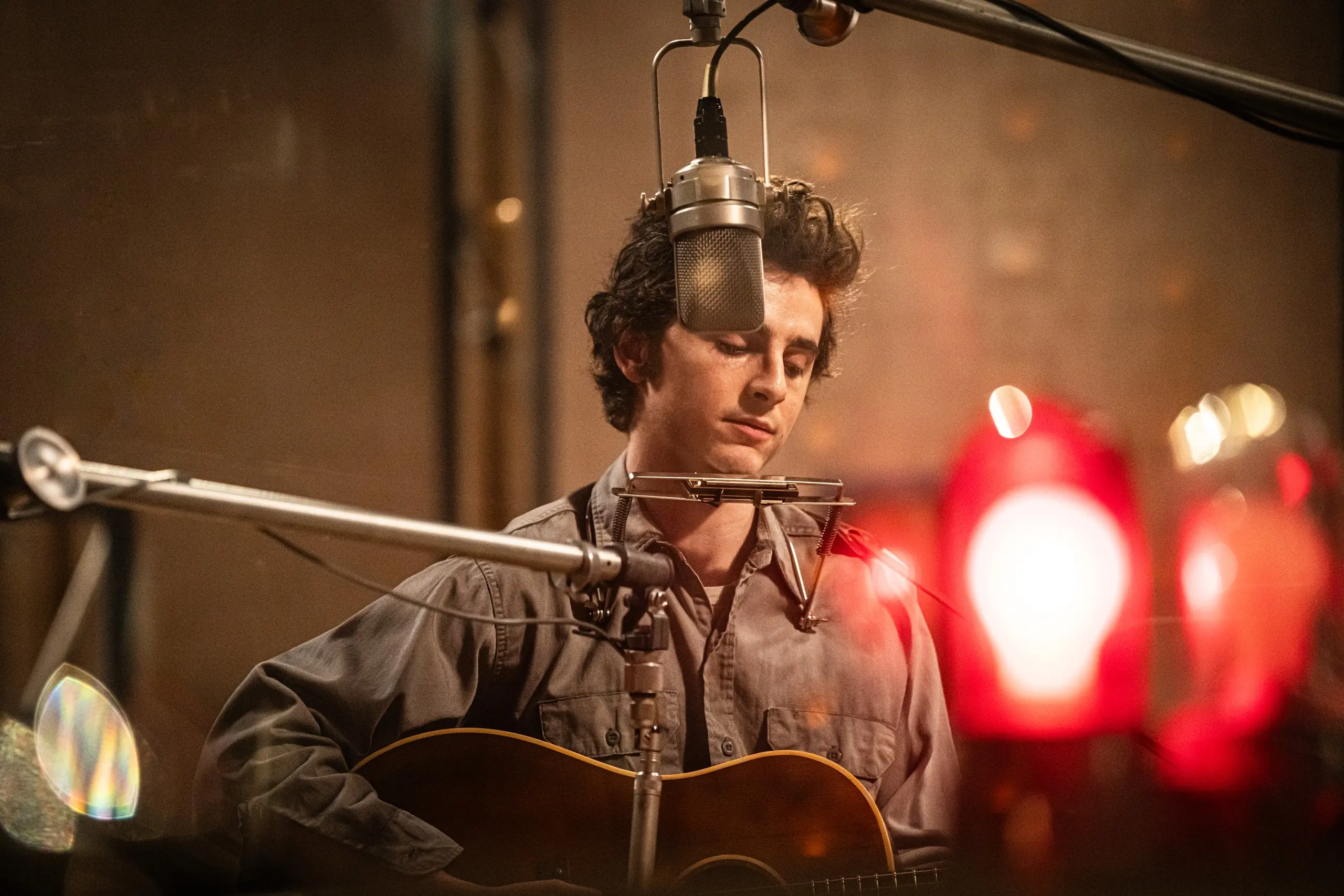
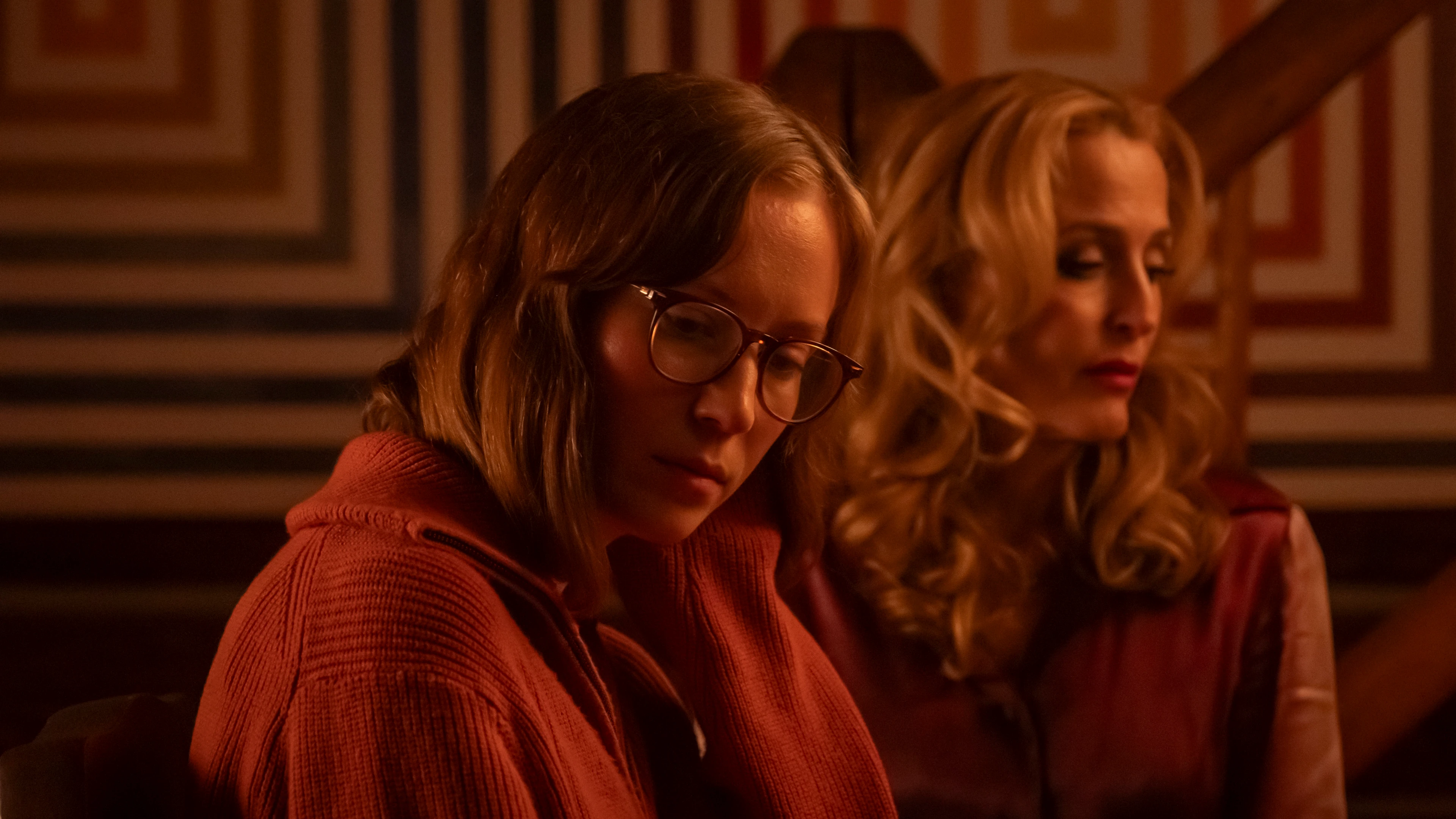
A young director travels to meet the actress who played the survivor in an old camp horror movie. She wants help making a new version. The actress is more interested in finding out why this visitor cares so much about the original. That conversation is the best reason to watch Teenage Sex and Death at Camp Miasma. Hannah Einbinder and Gillian Anderson make the embarrassment, teasing and attraction enjoyable well before the film gets to its bloodiest scenes.
Writer-director Jane Schoenbrun combines a romance, jokes about Hollywood and a movie about a masked killer. The romance works better than some of the explanations around it. When the two women are trying to understand each other, Camp Miasma is funny and surprisingly tender. When the script repeatedly tells us what horror movies mean to them, it becomes less interesting.
The film opens on MUBI in the United States on October 2, 2026, following its theatrical release. This is a spoiler-free review. The US classification is R, with bloody violence, gore, sexual content, graphic nudity, drug use and some language. Its affectionate tone does not make it a family film.
You do not need to know any earlier Camp Miasma movies
Kris, played by Einbinder, has been hired to restart a once-popular series about young people being killed at a summer camp. Those older films, their sequels and their merchandise are invented for this story. Camp Miasma is a fictional franchise, not a real collection of movies you need to catch up on.
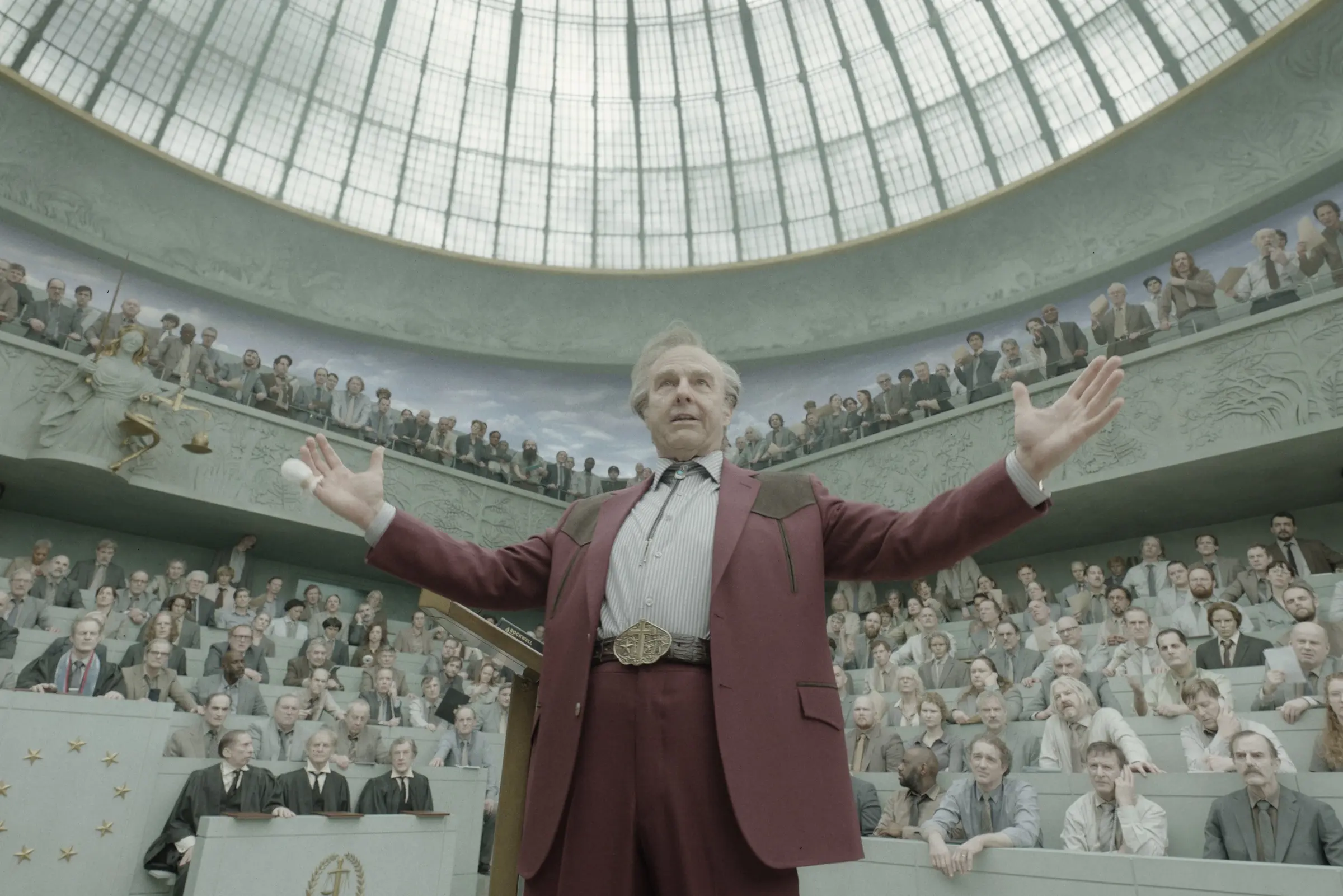
The opening gives that series a history through its changing titles and products. A meeting with studio executives then makes Kris's job clear: she is supposed to revive something they already own, not necessarily make the personal film she wants. The joke works because the business decision is so easy to understand. The executives want a familiar name to sell; Kris wants it to mean something.
She seeks out Billy Presley, the actress who played the original film's surviving heroine. Billy has left acting and lives at the old camp location. Anderson's Billy does not behave like someone patiently waiting to answer a fan's questions. She is amused by Kris, sometimes blunt with her, and quite capable of deciding what they will do next. Kris arrives with a work assignment; Billy makes the visit personal.
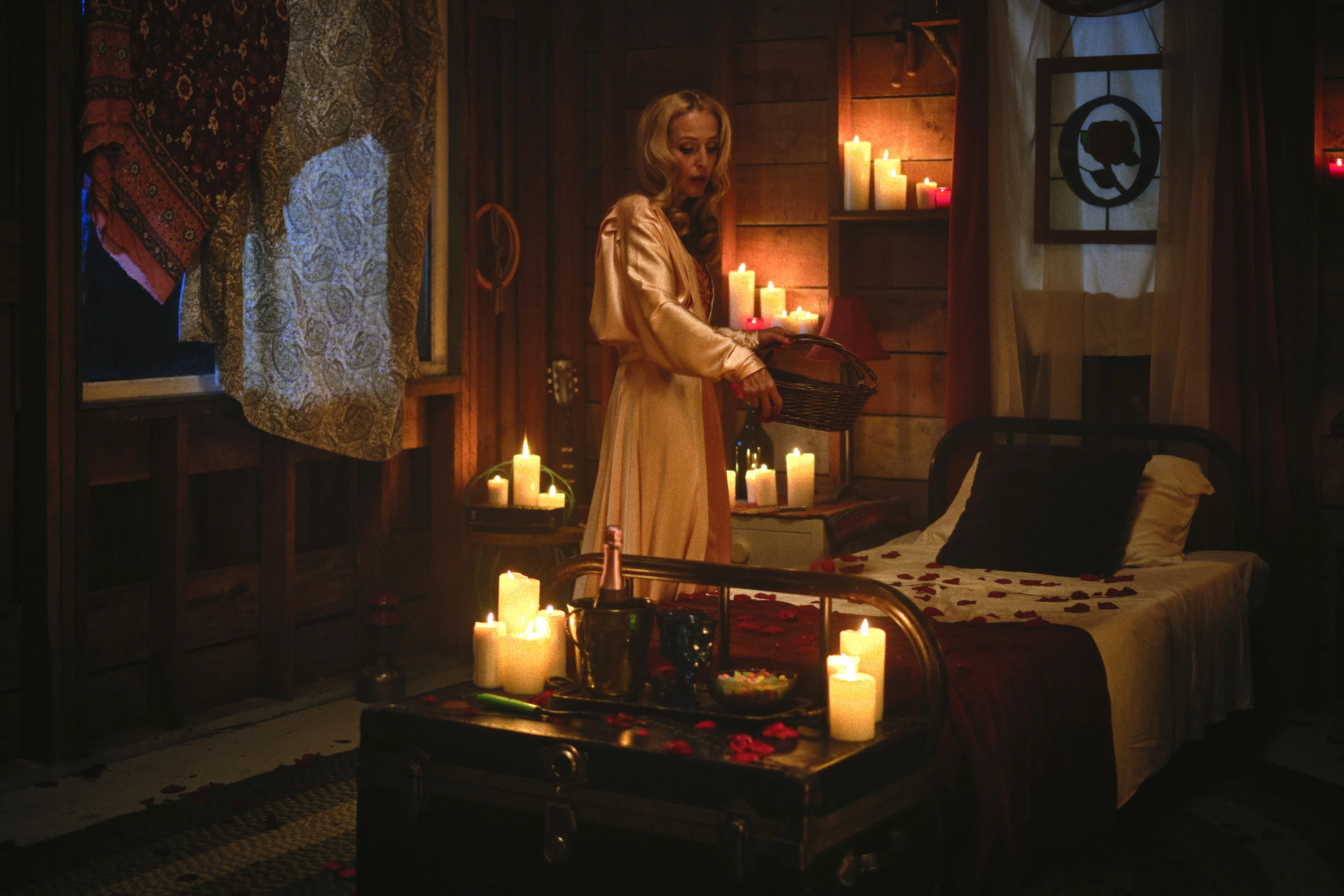
The awkward conversations are the best part
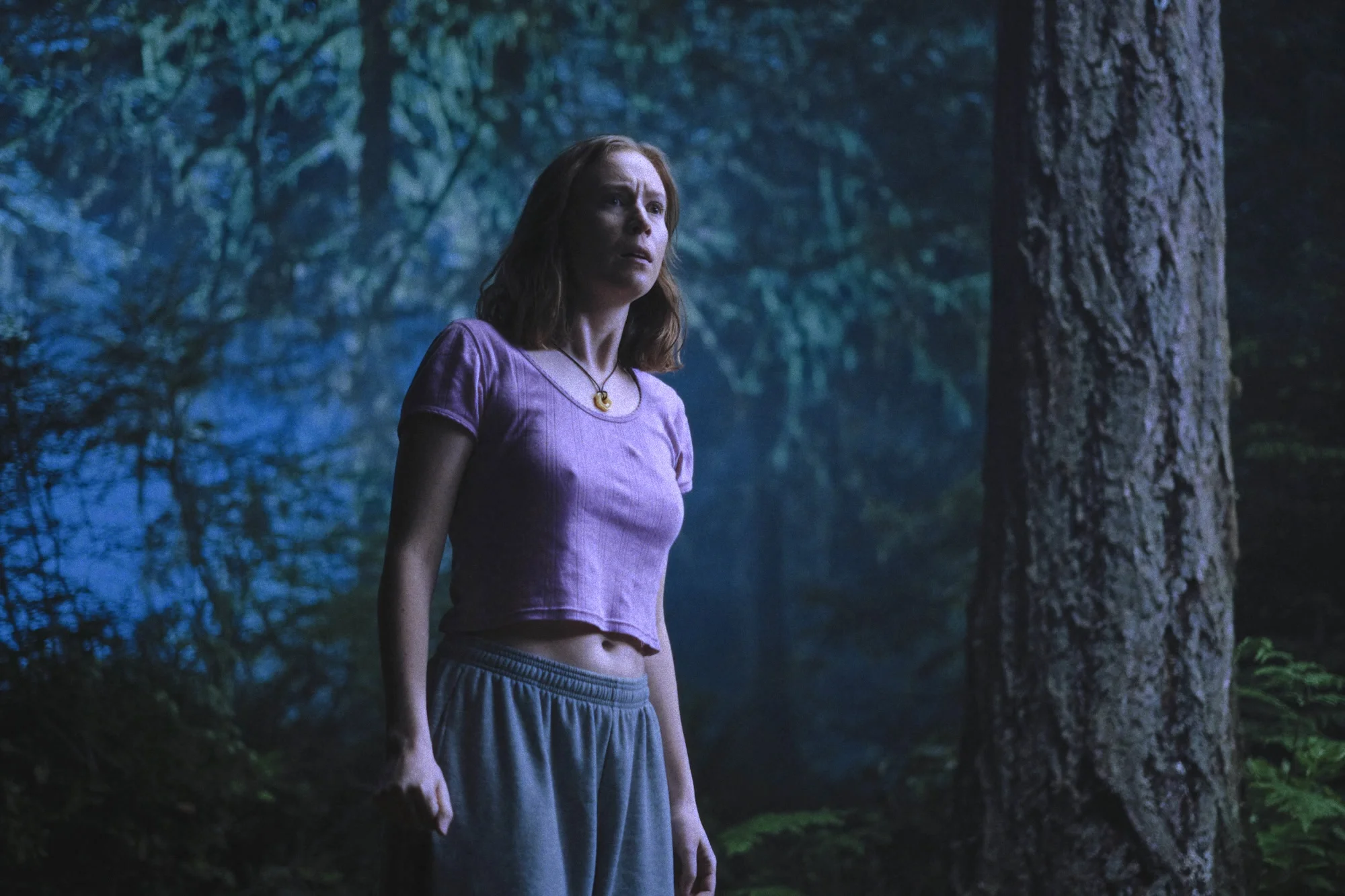
Einbinder lets you see Kris trying to sound confident and failing. Kris can explain a horror film at length, but talking about what she wants from another person is harder. Her nervousness is funny without making her a fool. It also makes sense of why she keeps returning to films whose dialogue and images she already knows.
Anderson plays the opposite kind of person. Billy's voice, robes and carefully arranged surroundings suggest someone who still enjoys being watched. Her exaggerated delivery is funny, but she also pays close attention to the visitor sitting beside her. Billy can be theatrical without feeling indifferent to Kris. That distinction matters once their meeting becomes a possible romance.
Their first night together includes fried chicken and conversation rather than an immediate rush into danger. The ordinary food makes the encounter less formal, while Anderson's delivery keeps it odd. These scenes give the two women time to react to each other. We liked that more than the passages where they explain their relationship to horror in complete speeches.
The attraction is not treated as a joke at their expense. Schoenbrun lets desire be awkward, funny and genuinely welcome. The film is most convincing when the actors show what their characters want, instead of the dialogue spelling it out. You do not have to share Kris's obsession with old slashers to understand her excitement and discomfort around Billy.
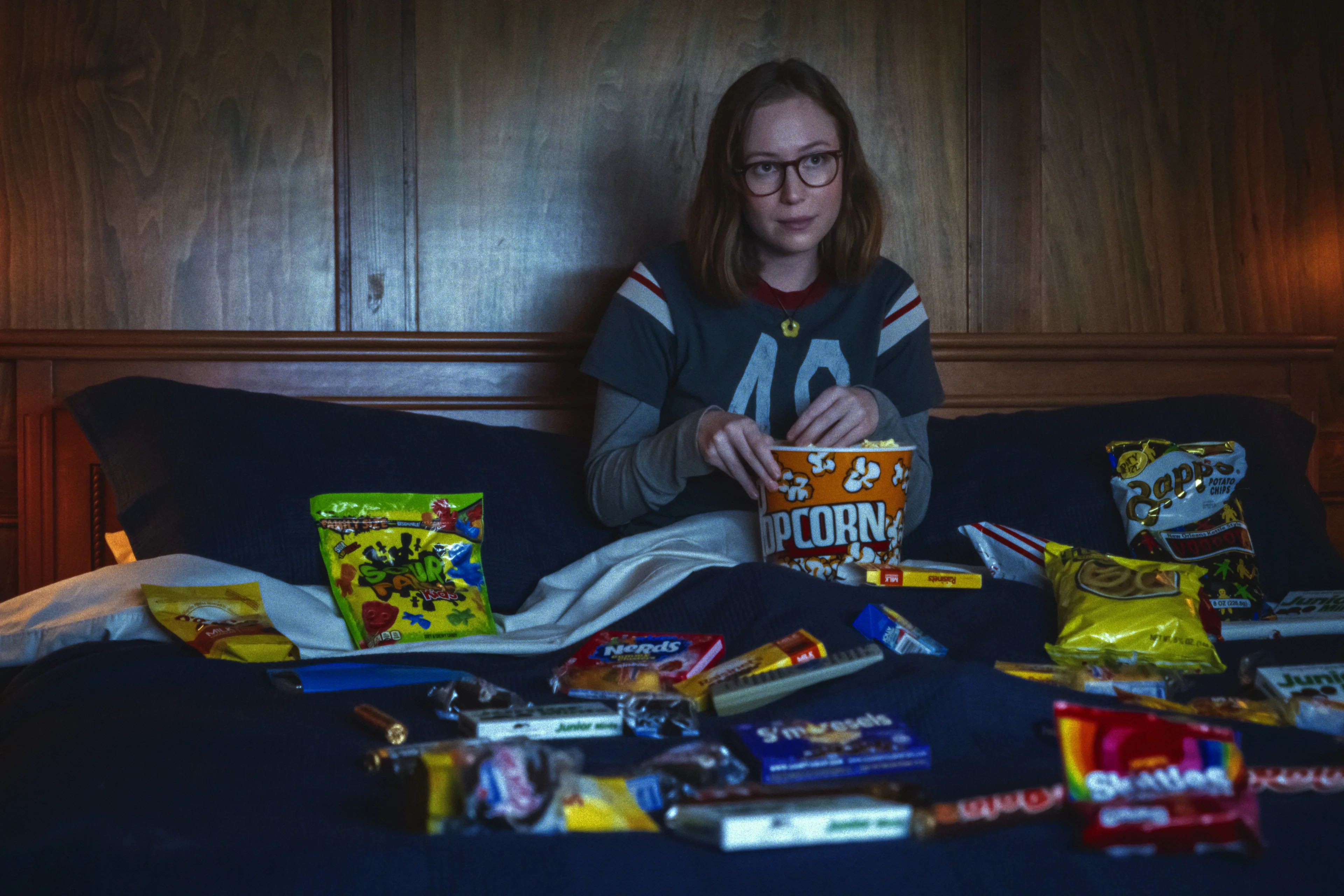
We watch long scenes from the invented horror movie
Kris and Billy watch footage from the original Camp Miasma. We watch it too, and eventually it takes up a substantial part of the film. This is more than a few quick clips used to explain a backstory. Schoenbrun gives the invented movie its own camp counselors, awkward conversations, dancing and violent attacks.
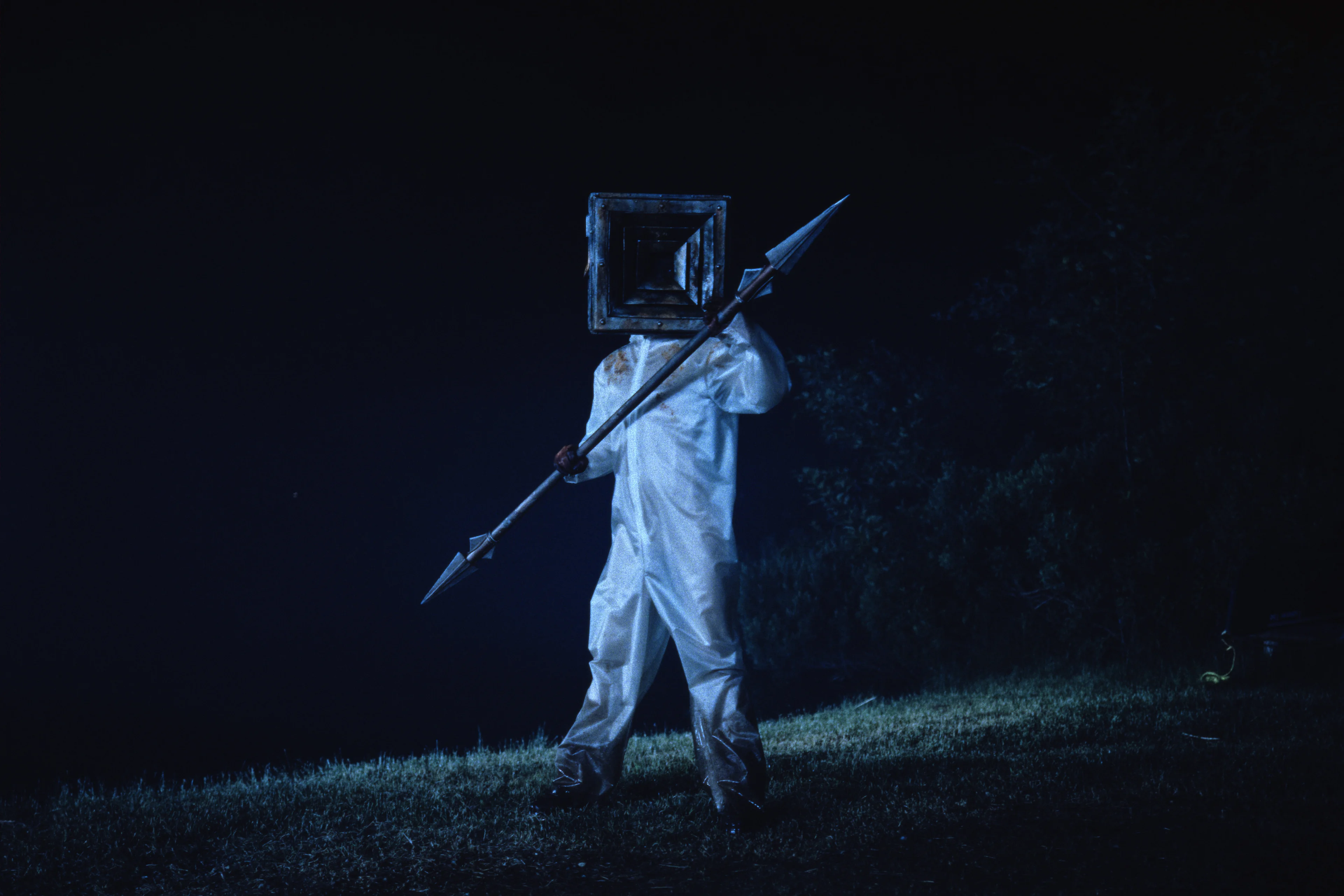
Its killer, Little Death, has a box-shaped mask and a clear plastic covering over camp clothes. The simple, strange costume is more memorable than a complicated monster design would be. You can recognize the figure immediately, even in a dark scene. The weapon and stiff-looking outfit fit the cheap-looking horror world that Kris has grown attached to.
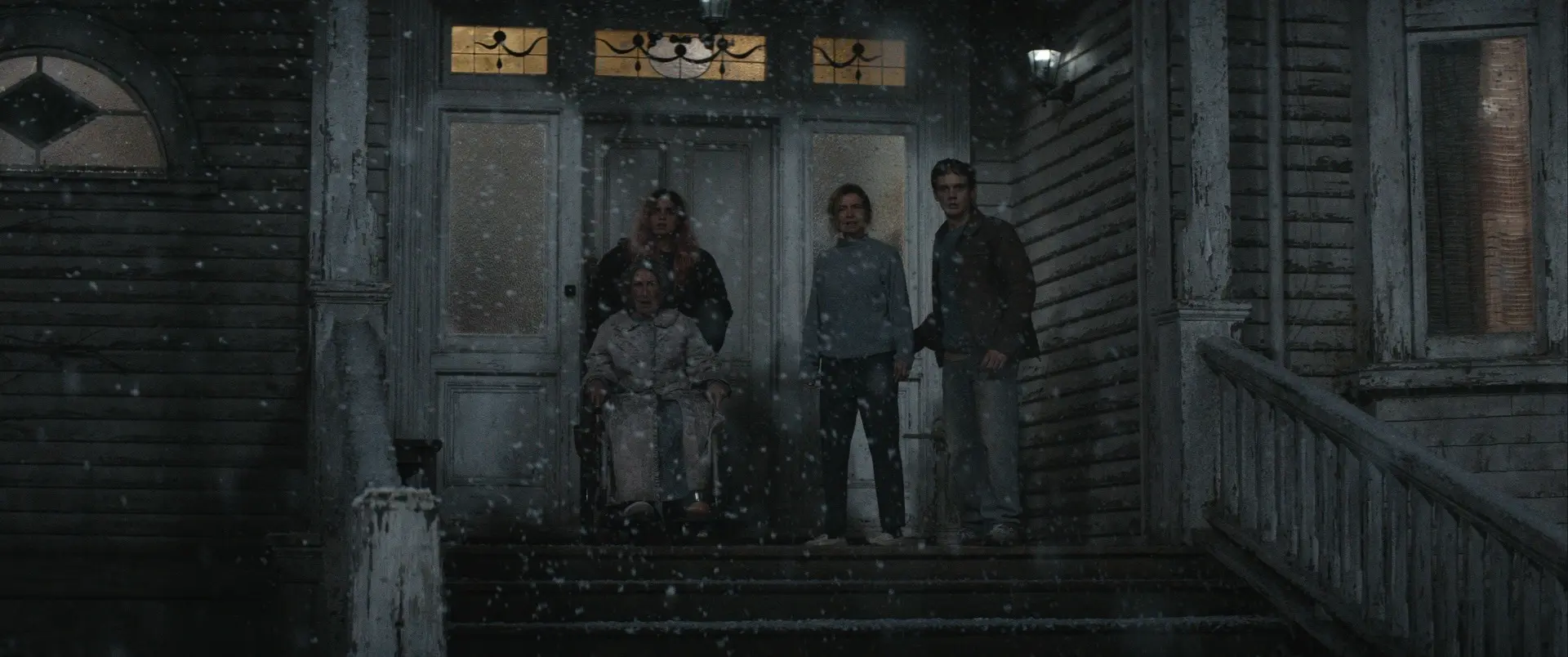
Painted landscapes are another good choice. Instead of trying to pass every setting off as a real place, the film lets you notice the scenery. Warm rooms, snowy surroundings and brightly colored backgrounds give its different sections distinct looks. The artificial scenery is deliberate, and it makes the invented movie feel like something its characters could remember in unusually precise detail.
Bloody does not always mean frightening
The attacks involve graphic gore, but the film often makes them exaggerated and ridiculous. Music and dancing can sit beside violence rather than stopping when danger arrives. Expect a bloody horror comedy, not constant suspense. If you mainly want to worry about which camper will survive the next attack, the long conversations and changes in tone may disappoint you.
Alex G's score and the use of pop songs also help the film move between affection, discomfort and violence. The music does not simply warn us that something bad is approaching. Sometimes it lets a scene remain enjoyable even as its images become disturbing. That combination is a major part of the experience, not an occasional joke between serious scares.
The film also asks why someone might love a movie that treats people like them badly. Kris's attachment to the old series is not presented as a tidy answer. Familiar scenes can matter to her even when their ideas are cruel. That conflict is worth exploring. The problem is how often the dialogue explains it after the story has already given us enough to understand.
Some explanations slow the story down
At 112 minutes, Camp Miasma gives its invented horror film a lot of room. Some of that material is funny and visually inventive. Some keeps us away from Kris and Billy long enough that their relationship feels interrupted. We wanted more of their particular reactions to each other, not necessarily more examples of what an old camp slasher could contain.
The later sections also make it harder to separate the movie the women are watching from the events around them. That uncertainty can be exciting, especially when the scenery changes. But not every confusing moment becomes more rewarding afterward. Several transitions feel less like a useful change in perspective than a reason to stop and work out what we are being shown.
None of that makes the film's emotions impossible to follow. Kris's attraction and Billy's interest remain clear. It does make the long speeches frustrating: the actors communicate those feelings well, while the script sometimes talks as though we have not noticed them. A shorter version with fewer repeated explanations would be stronger.
Pixel Twelve verdict: 8/10
Our Pixel Twelve score is 8/10. Einbinder and Anderson make Kris and Billy worth spending time with, and the painted settings and peculiar killer give their favorite horror movie a recognizable identity. The humor is affectionate, the attraction is convincing, and the film is willing to make its violence strange rather than simply unpleasant.
We stop at eight because the relationship is more consistently engaging than the extended film-within-a-film, and because some of the dialogue repeats ideas that the performances have already made clear. The late confusion is another limitation, not something every viewer has to appreciate to understand the movie correctly.
Watch it for the two leads and its unusual mix of romance, comedy and graphic horror. You do not need to have seen Schoenbrun's earlier work. You do need to be comfortable with a film that spends as much time on attraction and movie obsession as on its killer. Viewers after a direct, tense camp slasher should go in knowing that this is doing something different.
More from Camp Miasma
3 screenshotsLoading results
Visit the Camp Miasma movie page for the official trailer and film details, or read more Pixel Twelve reviews.