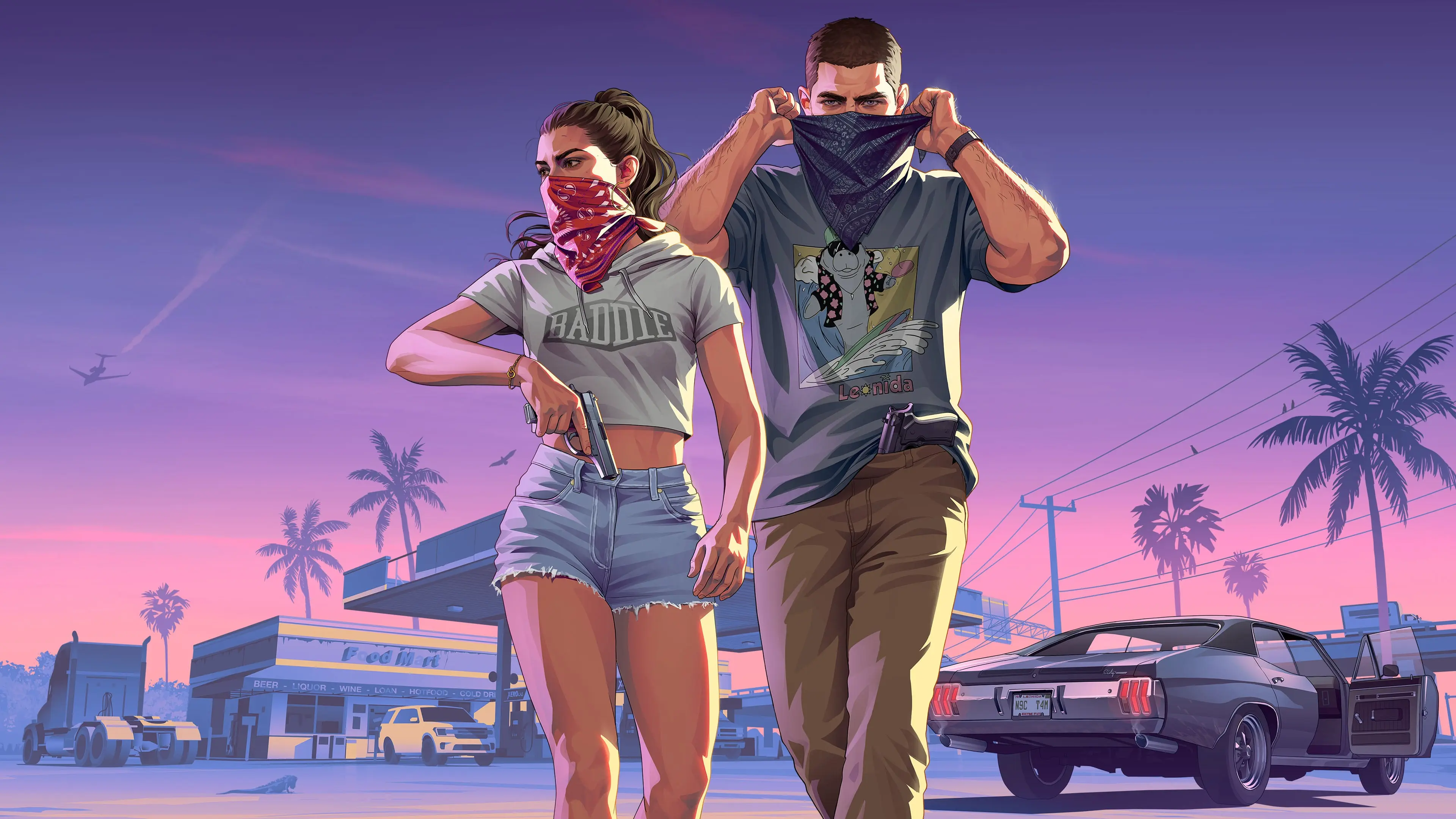

Rockstar is bringing back one of Red Dead Redemption 2’s best ideas for GTA 6, then pushing it into a much busier world. Rob Nelson, the Rockstar North co-studio head, says the NPC interaction system is returning in an evolved form and that GTA 6 takes it “much further.”
The clearest example is simple: stand too close to a group and keep listening, and people may realize you are eavesdropping. That small reaction can make a crowded street feel less like a loop of background animation and more like a place that notices what you are doing.
What did Rockstar say about GTA 6’s NPCs?
Nelson said the team had pushed NPC interaction as far as it could in Red Dead Redemption 2. For GTA 6, the same basic idea is coming back with more dialogue, more context, and more ways for a character to respond to the player. He used eavesdropping as an example: a group should not carry on forever if Jason or Lucia is standing right beside them.
That is a design goal, not a complete feature list. Rockstar has not published a table showing every reaction, how long an NPC remembers a player, or how many conversations can change. The confirmed news is that the system from Red Dead Redemption 2 is returning and being expanded.
How did Red Dead Redemption 2 handle NPC interactions?
Red Dead Redemption 2 gave Arthur Morgan a small set of ordinary actions that made the world feel personal. He could greet people, antagonize them, ask questions, and react to situations without every encounter turning into a mission. The response depended on where Arthur was, what he had done, and how long he kept pressing the conversation.
The system also allowed people to get uncomfortable. An NPC could walk away, become hostile, or remember that Arthur had caused trouble. Those moments worked because the game did not treat every person as a silent prop. Rockstar now wants that same layer of social friction in a modern city and its surrounding towns.
What is GTA 6 adding to that system?
GTA 6 has more people in tighter spaces, so the challenge is not simply giving the player more lines of dialogue. The game has to decide who noticed Jason or Lucia, what they were already doing, and whether the player’s behavior deserves a reaction. A group chatting outside a business, for example, should feel different from a room full of people waiting for a robbery to end.
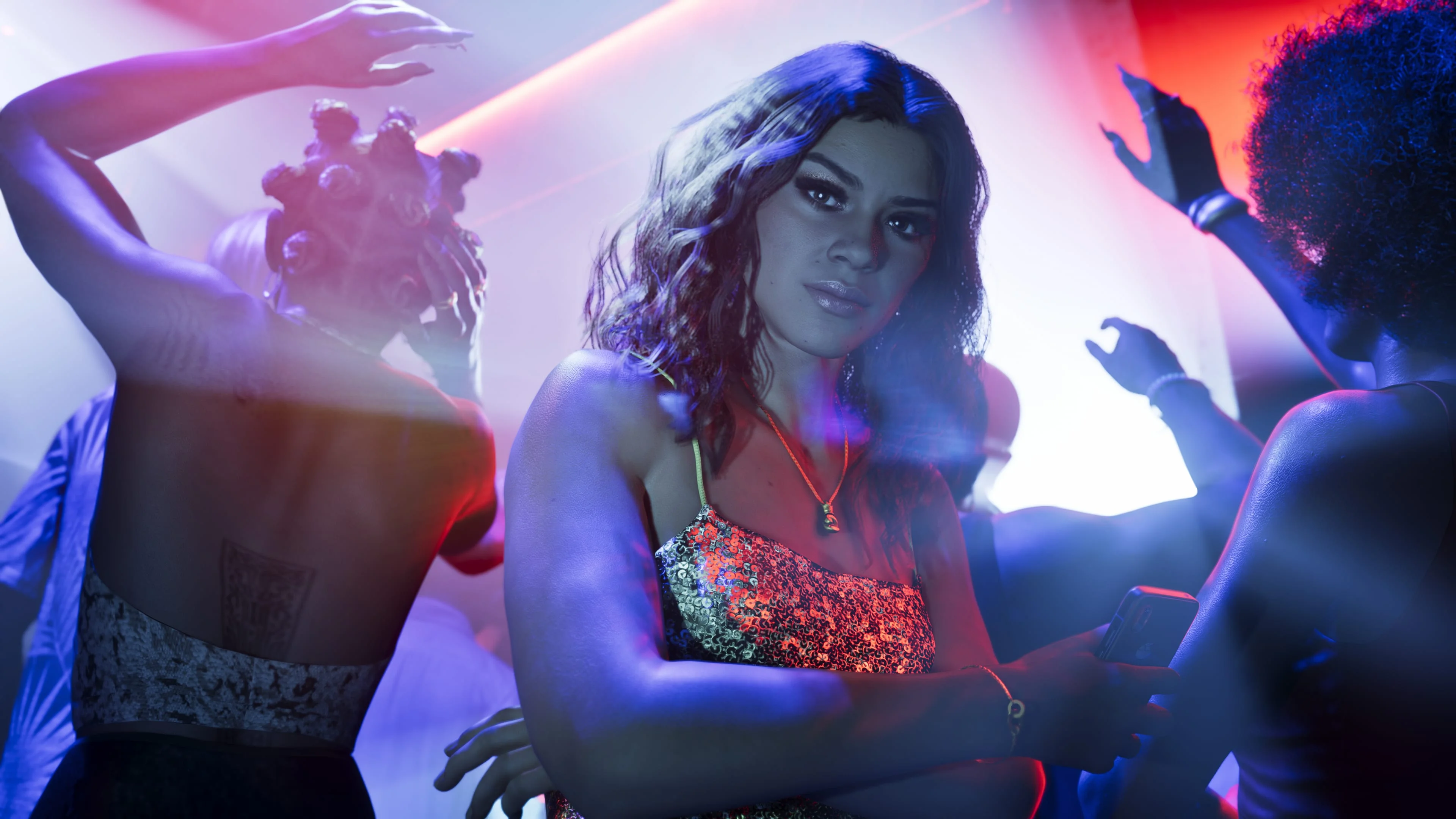
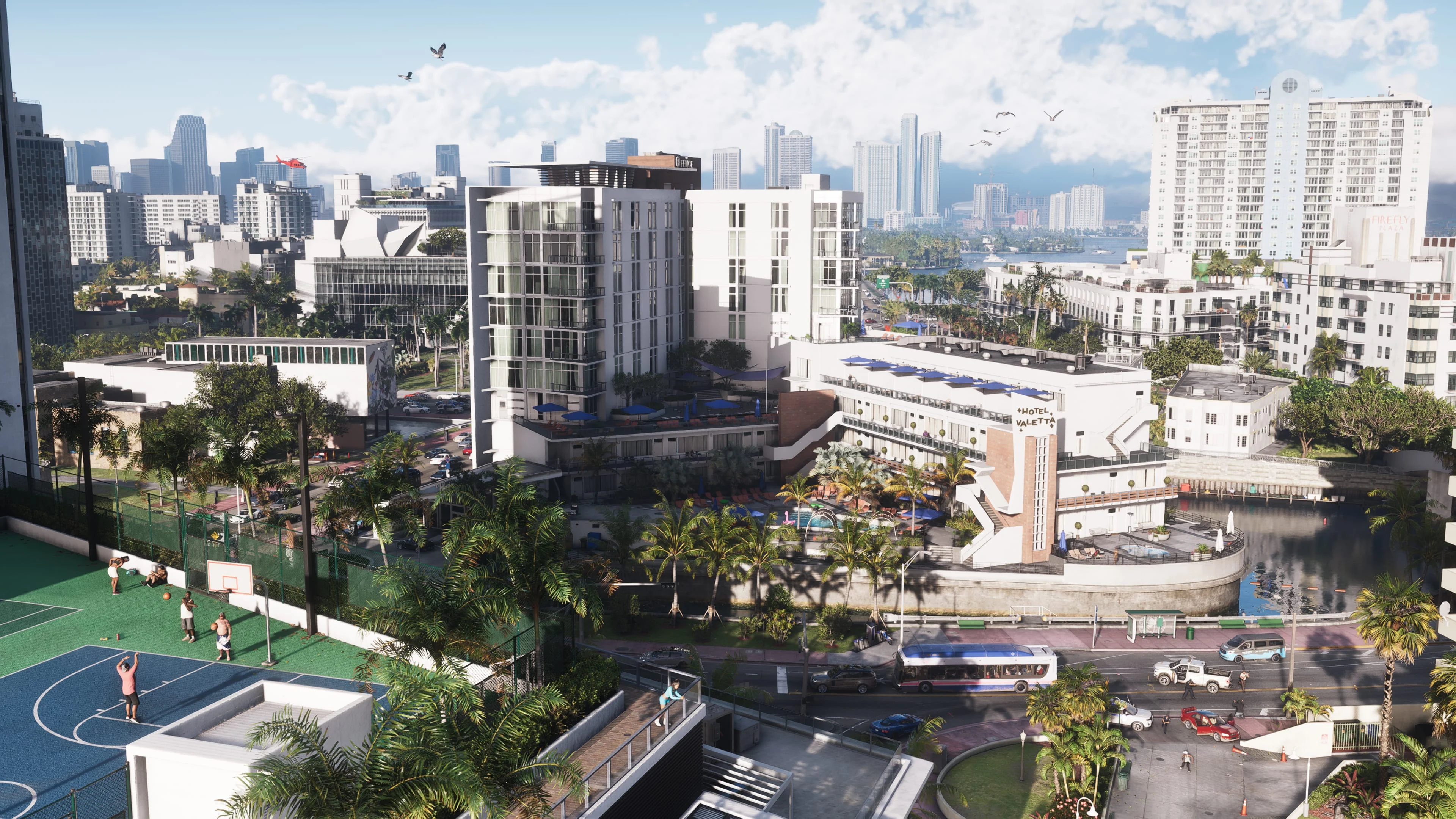
The public footage already shows the direction. Jason can interact with a dog through contextual prompts, and people in a tense building react as a job turns into a firefight. Other scenes put the pair in clubs, parties, shops, and busy streets where the surrounding characters keep moving while the protagonists make their choices.
Will NPCs react differently to Jason and Lucia?
It is reasonable to expect some differences because Jason and Lucia are separate characters, but Rockstar has not explained a character-by-character reaction chart. The footage shows them entering situations together, splitting up, and approaching the same criminal world from different angles. That gives the developers more room to make an interaction fit the person the player is controlling.
The partnership also changes how a reaction can play out. An NPC might address Lucia while Jason waits nearby, or notice that both characters are listening. If the system can track that kind of proximity without making every scene stop for a cutscene, Leonida should feel far more responsive than a simple greet button suggests.
Does this mean every NPC has a huge storyline?
No. Most people in an open-world game still need short, repeatable behaviors so the city can run at a believable scale. The upgrade is about the quality of the response, not turning every stranger into a side quest. A quick insult, a worried glance, or someone stepping away from a suspicious conversation can be enough.
It is also too early to call this generative AI. Rockstar is describing authored dialogue and a more advanced interaction system. Until the studio explains the technology and its limits, claims about endlessly improvised conversations go beyond what has been confirmed.
Why compare it with Red Dead Redemption 2?
Red Dead Redemption 2 is the obvious measuring stick because its world was built around slow travel, small communities, and time spent close to individual characters. GTA 6 moves that idea into a louder setting: dense streets, nightlife, criminal crews, tourists, and two protagonists who can create trouble in seconds.
Nelson said Rockstar first imagined the system in a more sparsely populated world, then wondered what it could feel like at the scale of a modern one. GTA 6 is the answer to that experiment. The hard part will be keeping the reactions readable when dozens of people, vehicles, police officers, and scripted events overlap.
What did the GTA 6 reveal actually show?
The 26-minute extended look did not stop for a formal NPC demonstration. Instead, the interactions were woven into jobs and everyday scenes. Jason and Lucia walk into a gang-controlled building, move through a tense drug operation, deal with people at parties, and pass through streets where unusual encounters happen around them.
That presentation is useful because it shows the system in motion rather than as a menu of promises. It still cannot tell us how often a player will trigger a special reaction during a normal playthrough. Preview footage is selected, and the final game may balance these behaviors differently.
The extended look also fits with what we saw in our GTA 6 Netflix coverage, where fans focused on the game’s crowded spaces, character details, and the way the city keeps moving around Jason and Lucia.
When can players try the new system?
Rockstar’s official page lists Grand Theft Auto VI for November 19, 2026, on PlayStation 5 and Xbox Series X|S. A PC version has not been announced. Our GTA 6 release-date guide tracks the confirmed platforms and the other details Rockstar has made public.
The real test will be a normal playthrough
Rockstar has shown the right ambition: NPCs should notice when players hover, listen, threaten, or disrupt a scene. Red Dead Redemption 2 proved that small reactions can make a world memorable. GTA 6 has to make those reactions survive a much denser city without turning every sidewalk into a scripted event.
If the system works as described, the best moments may be the ones players do not record in a trailer. Someone hears Jason behind them, Lucia gets recognized after a messy job, or a conversation changes because the player chose to wait instead of walk away. That is the kind of detail that can make Leonida feel alive long after the first spectacular mission is over.