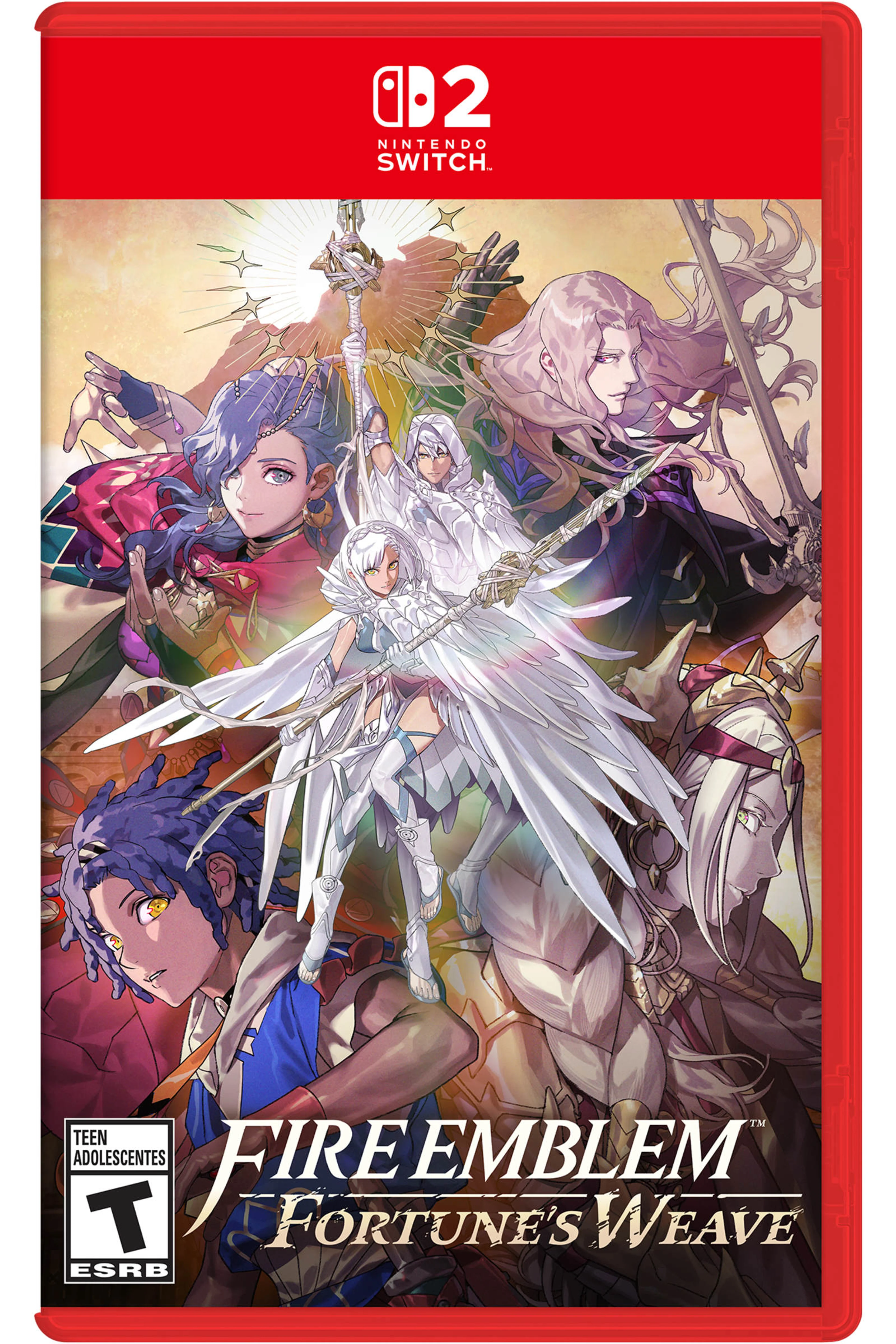
In Fire Emblem: Fortune’s Weave, you lead a group of fighters in battles where each side takes turns. You move your characters across a map and choose who they attack. Then the enemy gets to move and fight back. Sending someone ahead alone might help you defeat one opponent, but it can leave that character surrounded before you can move them again.
You also spend time outside those battles, meeting people who can join your army and training the fighters you already have. Four heroes lead different stories about a tournament whose winner is promised a wish. Helping them compete gives you a reason to improve the army, but not every preparation task is equally enjoyable. Repeated trips through menus are much less exciting than deciding how to win a difficult fight.
This Switch 2 game is easiest to recommend if you enjoy both sides of that routine: getting to know your companions and deciding how they fight together. You do not need to know earlier Fire Emblem games to understand that appeal. If you mostly want one battle after another, however, expect the conversations and preparation to keep you waiting.
The best attacks still need a plan
You choose where each fighter moves on a battlefield divided into squares. Weapons can reach different distances, so position affects who can attack whom. An archer can shoot from farther away than a fighter using a sword, but may still need protection from enemies who get close. You need to consider where everyone will be after your turn, not just which enemy you can defeat immediately. Before confirming an attack, a panel shows the expected damage and the chance of hitting. Those numbers help you judge whether the move is worth the risk.
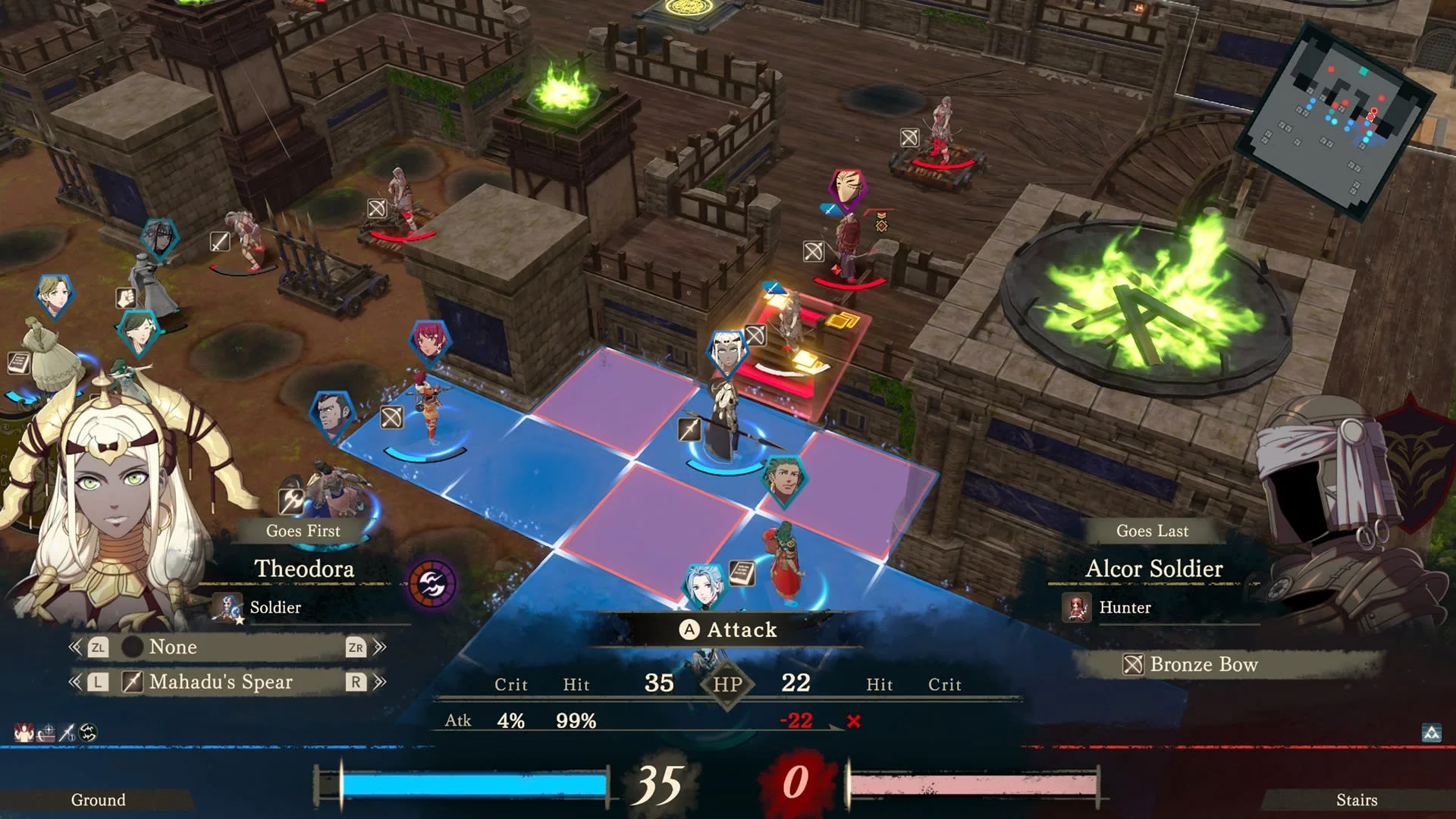
Choosing whom to attack also means checking the enemy’s equipment. Arrows are especially useful against characters who fly, while magic helps against heavy armor. Sending your hardest-hitting fighter at every target is therefore not always the best answer. We like how this encourages a team with different abilities: a companion who struggles against one enemy can be the right person to face another.
During tournament battles, you also need to watch for hazards and moving obstacles in the arena. Charging chariots can affect which places are safe, so moving everyone straight toward the opposing army is not always sensible. These matches are more enjoyable than straightforward fights because you have something else to account for while deciding where to put each character.
When a normal attack is not enough, you can select a special weapon move. These moves reduce a number that tracks how much use the weapon has left; ordinary attacks do not use it up in the same way. The game calls the special moves Combat Arts and that remaining-use number durability. You have to decide whether the immediate benefit is worth using some of it. We like having a reason to save a powerful move instead of choosing it every time.
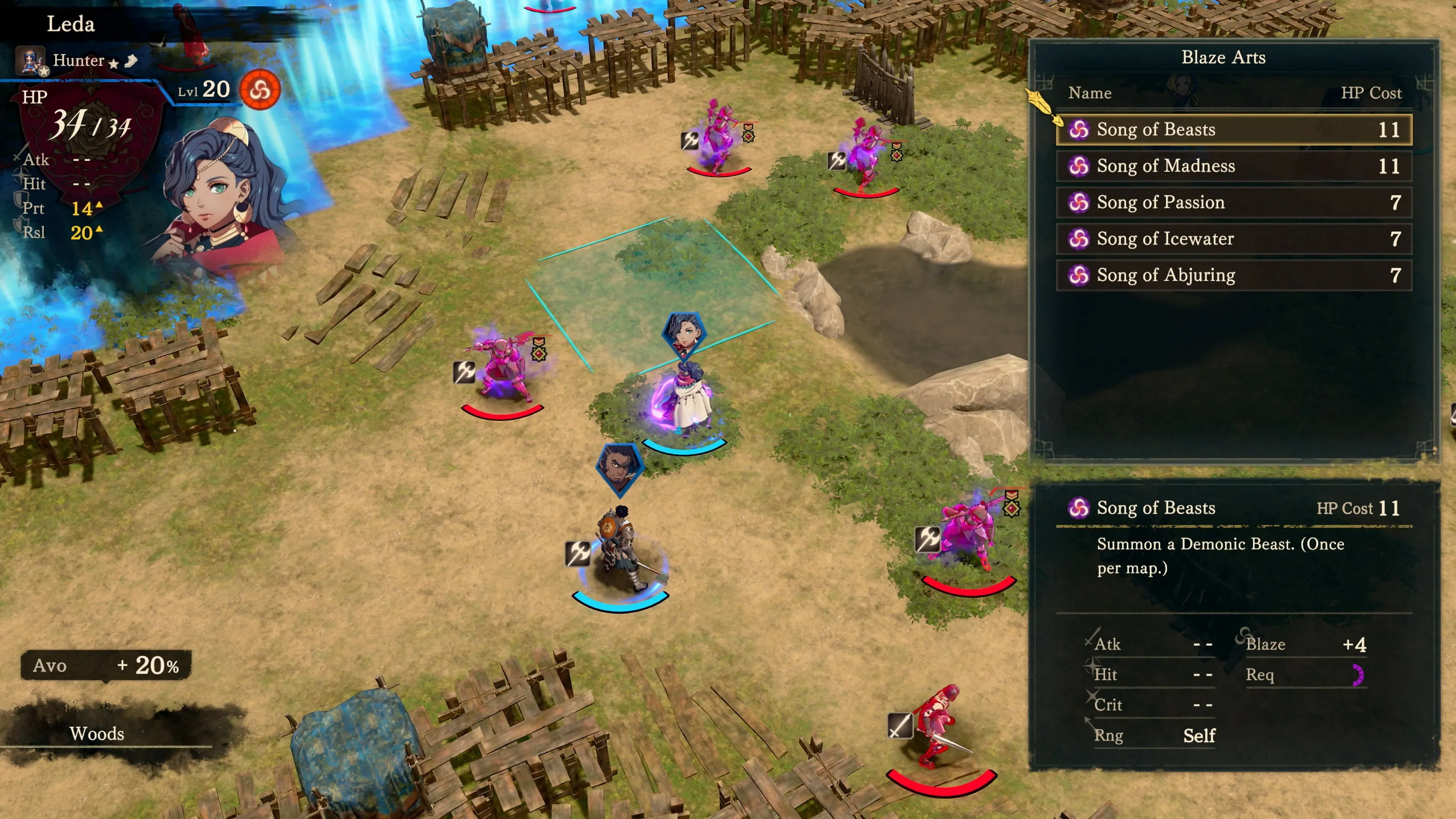
The four leading heroes have another option: use a special power that reduces their own health, the amount of damage they can take before being defeated. This can help against an enemy, but also leaves the hero easier to defeat afterward. These powers are called Blaze Arts. Leda, one of the four heroes, can summon a large creature with Song of Beasts. The menu below shows its health cost before you choose it. We like that these powers carry a risk rather than simply being stronger attacks.
Between fights, you train characters to use different weapons and prepare them for new fighting roles. A role, called a class, determines which abilities and equipment a character can use. To change into certain classes, characters take certification exams. That gives training a purpose: you can work toward a specific kind of fighter instead of improving skills without knowing what they will be useful for.
The choice matters when your army is missing something. You might want someone who can fight from a distance or move around on a mount. Looking at available roles gives you a way to plan for that need. For us, this is one of the better reasons to spend time preparing: the changes affect what you can do in the next battle.
Classes and special attacks
3 screenshotsYou can choose how much a defeat costs you. In Casual mode, a fallen ally returns for the next battle. Classic mode can remove that character permanently. You can also undo earlier actions in a battle through the rewind feature, giving you another chance to correct a mistake. These options make it easier to find a level of risk you enjoy. We recommend starting with the less punishing rules if fear of losing a favorite character stops you experimenting.
Four heroes give the tournament a personal reason to matter
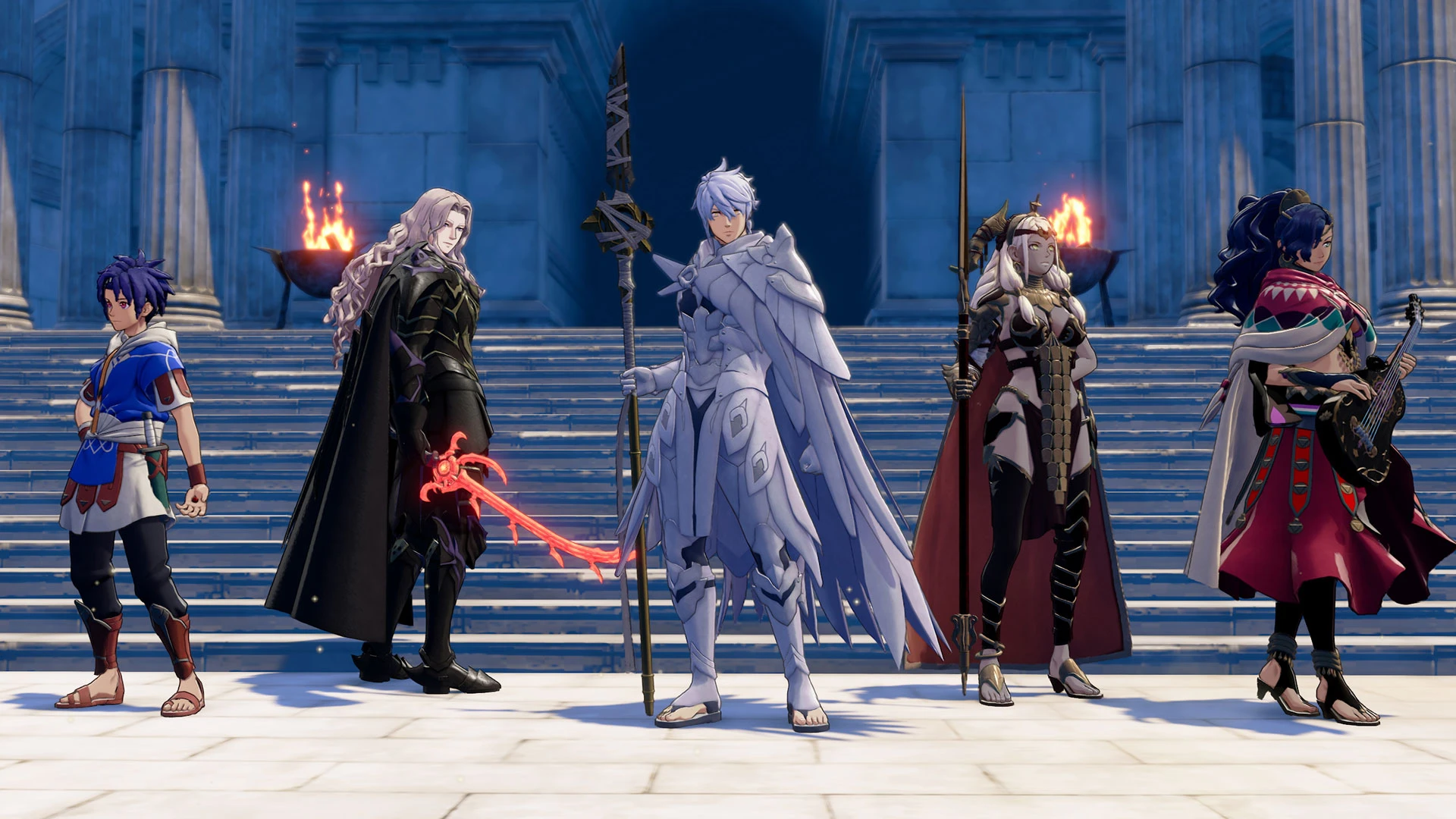
Your character, Eshmel, travels back from a ruined future to help four heroes change what happens. In the past, they enter a competition called the Heroic Games. Its winner is promised a wish, and each hero has a different reason to want that prize. You do not need to remember events from earlier games to understand what these people are trying to achieve.
- Cai wants to free his imprisoned father.
- Dietrich wants to challenge powerful opponents.
- Theodora wants to protect her kingdom and its people.
- Leda is searching for the person who killed her father.
Those motives make it easier to care about the tournament before understanding every part of the larger conflict. Cai’s situation is especially direct: winning could help someone he loves. Leda approaches the same event with a very different purpose. The game benefits from letting those differences remain visible instead of treating all four heroes as interchangeable leaders.
You choose which hero’s story to follow, and can switch to another between tournament matches. That means you can find out what another contender is doing without starting the entire game again. The stories are often called routes, but the useful part is the choice itself. We like being able to follow a different person when their involvement in an event makes us curious.
Outside battles, companions can have conversations with each other. These scenes, called support conversations, let you learn more about the people you command rather than only seeing their weapons and abilities. That makes us more interested in keeping them in the army. Players who enjoyed getting to know the students in Fire Emblem: Three Houses will recognize that appeal, but the conversations matter even without that comparison.
Each hero also has activities outside the tournament. Cai can work on a farm, while Leda performs at a tavern. Theodora has activities involving a boat and groups of soldiers under her command. Dietrich can seek out difficult opponents. This gives you something different to do when changing stories, although much of the ordinary training and recruiting remains familiar.
The story is not equally convincing throughout. Some later developments move too quickly, and important changes do not always get enough attention before the next event arrives. The personal conversations are often stronger than the way the larger plot moves forward. We cared about the cast, but caring about a character does not automatically make an abrupt story change satisfying.
Preparation becomes repetitive before the battles do
To bring more people into your army, you sometimes need to earn their trust or improve your reputation. Sharing meals and giving gifts can help with the relationship requirement. Other recruits also care about a reputation measure called renown. Working toward one particular companion can be satisfying. Keeping track of several people’s requirements is less enjoyable, especially when it sends you repeatedly across the city.
Travel makes that problem more noticeable. Moving across the world map in small steps adds interruptions to trips you already understand. It is not the same as exploring an unfamiliar area and discovering something along the way. Sometimes you simply want to reach the next useful stop, and the repeated selections make that take longer.
You can also explore enclosed areas outside the main tournament to collect materials and treasure. These are the game’s dungeons. When a fight starts there, your companions attack as a group instead of moving separately across a map. This different format is called a Clash Battle. We find these fights less engaging because positioning individual characters is such a large part of what makes the main battles enjoyable. After several similar encounters, letting the game fight automatically becomes tempting.
When you follow another hero’s story, the game can carry over some progress and let you skip certain tasks you have already completed. That reduces how much work you repeat. We appreciate those shortcuts, but they do not solve the larger problem for someone who dislikes preparation between battles. Doing less of a task is not the same as making that task enjoyable.
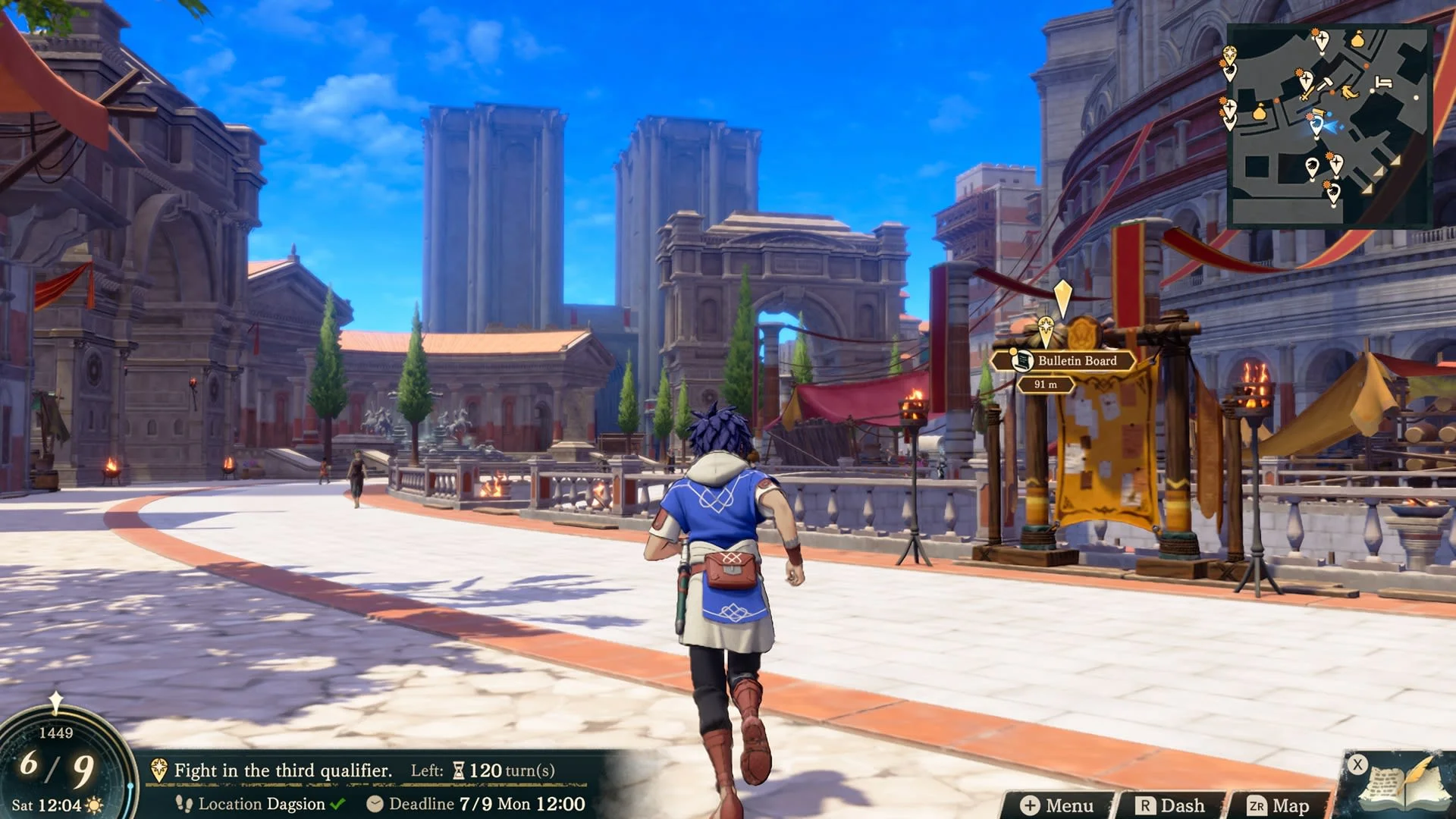
You see the characters close up during conversations, and their facial expressions help those scenes hold attention. The city of Dagsion also gives you buildings and streets to look around between matches. Movement sometimes stutters in the city and dungeons instead of staying smooth. That is distracting even in a game where quick reactions are not the main challenge, and it is worth considering if uneven movement usually bothers you.
You can select characters and menu options with the controller’s buttons. There is also an optional way to move a pointer by using a Joy-Con 2 controller like a computer mouse. This can suit checking information and choosing squares on the battlefield. We welcome the extra choice, but you do not need to learn mouse controls to play.
Nintendo has released a downloadable update that adds weapons and includes fixes. As checked on September 19, the latest listed update is version 1.0.1, dated September 16. Its notes do not say that the stuttering has been fixed. We would not assume every performance problem has disappeared just because the notes mention general improvements.
It is still early to know what most players will think after finishing. Some early reactions praise the characters; others complain about spending too much time on activities outside battles. That difference matches the main buying decision here: do you want to spend time with the army between fights, or mainly command it in battle? Our review covers the Switch 2 game.
- Play it if you enjoy planning battles and getting to know the people in your army.
- Be cautious if repeated errands and long stretches between major fights usually make you lose interest.
Pixel Twelve’s score is 8.6/10. Fortune’s Weave makes commanding an army satisfying and gives its heroes reasons worth following. The class choices and tournament battles are strong enough to earn our recommendation. Repetitive travel, weaker dungeon encounters and uneven story pacing keep it from being an unqualified one.
Loading results