Deadlock Ranked Mode is live as part of Valve’s matchmaking overhaul. The update separates the game into Standard Mode for lower-stakes play and Ranked Mode for players who want visible progress, stricter entry rules, and more competitive matches.
Ranked is not available to a fresh account. You must first build a real hero pool in Standard matches, then complete a calibration phase before the game gives you a rank. Season 1 is scheduled to end on October 7, 2026.
Deadlock Ranked Mode Requirements
- Standard wins: At least 60 wins in Standard Mode.
- Eligible heroes: A hero becomes available in Ranked after you win at least 15 Standard games with that hero.
- Roster size: You need at least three Ranked-eligible heroes before you can queue.
- Account standing: You cannot enter Ranked while the account has an active sanction, including low priority or a communication ban.
The 15-win requirement applies to each hero you want to select in Ranked. Winning 15 games with one hero does not unlock the full roster, so prepare at least three choices before trying to join the queue.
Standard Mode vs. Ranked Mode
Standard Mode has no party-size or skill-spread restriction. It is the place to learn a new hero, play with a wider group of friends, or queue without worrying about visible Rank Points.
Ranked Mode is built around closer competition. It limits parties, controls which heroes you can use, shows rank progress after each match, and stores your highest seasonal result in the Ranked Hub.
How Calibration Works
Every player begins Season 1 with eight calibration games. Valve uses some history from your previous performance to seed those matches, but calibration still acts as a soft reset.
- Calibration must be completed solo. Parties are disabled for all eight matches.
- The highest rank you can receive when calibration ends is Oracle VI.
- After calibration, Ranked supports solo and duo queues.
For a normal duo, both players must be no more than one full rank apart. Eternus players can only queue with another Eternus player, and the pair must be within three subranks.
Every Deadlock Rank in Order
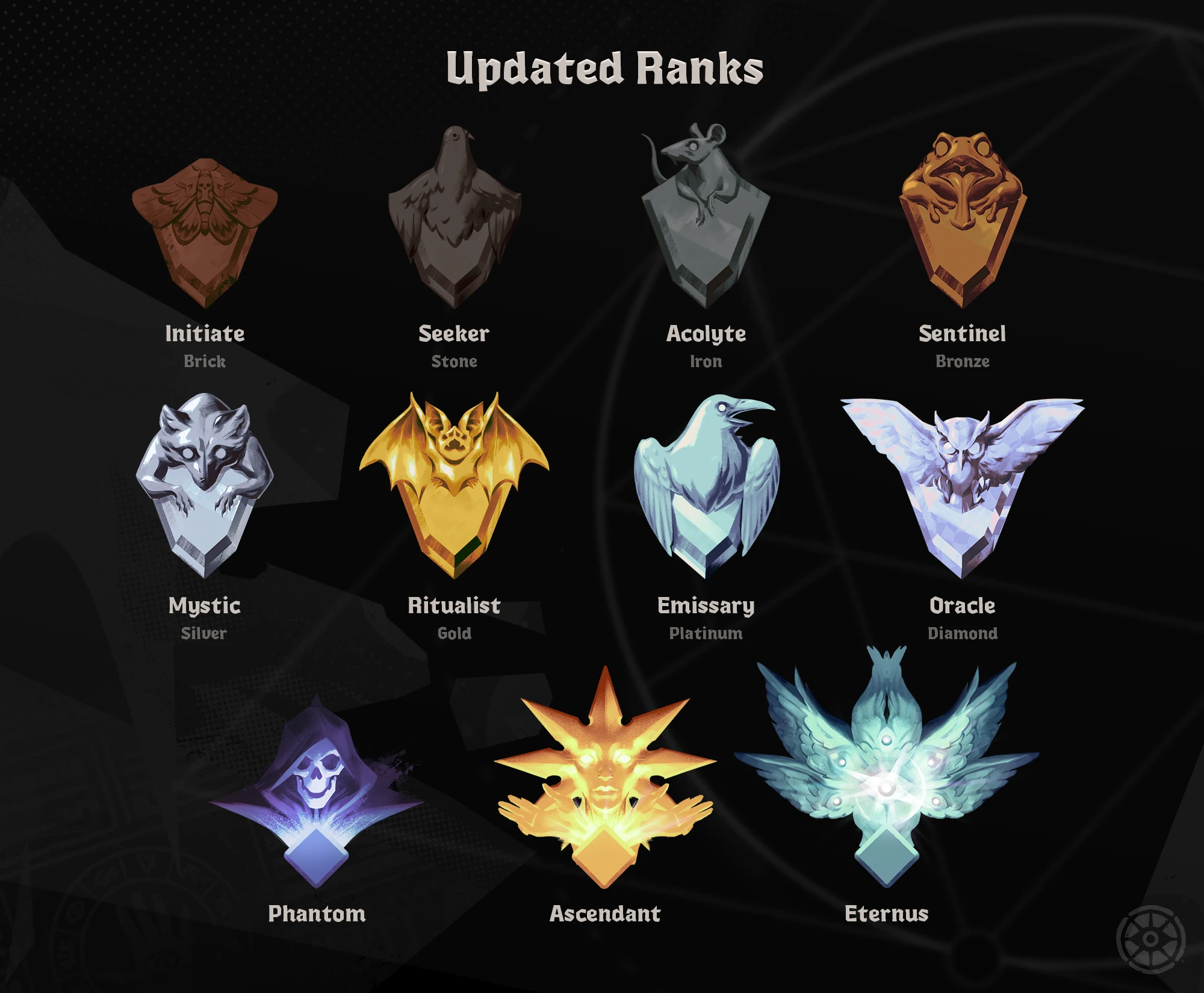
Obscurus is the uncalibrated state. After that, the ladder runs through Initiate, Seeker, Acolyte, Sentinel, Mystic, Ritualist, Emissary, Oracle, Phantom, Ascendant, and Eternus.
Every named rank contains six subranks, from I to VI. Eternus works differently at the top because its subrank thresholds are adjusted daily by player percentile.
How Rank Points and Protection Work
A win or loss changes your visible Rank Points after the match. Valve says the average movement is around 250 points, but the exact amount can shift based on what the matchmaker expected and on win streaks.
- Most subrank promotions require 1,000 Rank Points.
- Moving from the sixth subrank into a new full rank requires 2,000 points.
- A full-rank boundary has five games of loss protection.
- A normal subrank boundary has two games of loss protection.
Protection delays a demotion; it does not erase the result. Once the protected games are used, another loss can move you down.
Hero Swaps, Lanes, and Bans Before a Match
Ranked adds a pre-game waiting area after the lobby forms. You can see every player’s rank, control your assigned hero, and adjust your team before the opening lane phase.
Each player may swap heroes once, but only to another unused hero already unlocked for Ranked. Enemy swaps are not shown live, so this is meant more for fixing your own team composition than for direct counter-picking.
Teams can also adjust starting lanes in the waiting area. Zipline lane swaps are disabled afterward, pausing is unavailable until two minutes into the match, and Ranked increases the total number of banned heroes from two to three.
What Happens When Someone Abandons
An abandon before five minutes makes the match safe to leave and voids it for everyone except the leaver and that player’s party. The leaver’s side receives the relevant loss and leaver penalties.
After five minutes, teammates who did not abandon can leave without taking a loss, or stay and earn a win if they finish the match successfully. Penalties begin with queue timeouts and can grow into low-priority games.
Leaderboards and Season 1
The global leaderboard now requires 75 games in the last 30 days. Hero-specific leaderboards require 30 games with that hero during the same period and at least 100 lifetime wins on the hero.
Season 1 ends October 7. The highest rank you reach will be saved in your Rank history, and Valve says later seasons may be longer and include splits or recent-play requirements for eligible heroes.
Expect a Rough Start
Valve warned that the first week could have long queues and uneven matches because many players will not immediately meet the unlock requirements. The matchmaking system was also heavily rewritten, so early bugs and composition problems are possible while the pool fills and players calibrate.
The full rules are available in Valve’s official Deadlock Matchmaking Update. If your Ranked button is locked, check the 60 Standard wins, three eligible heroes, and account-sanction requirements first.