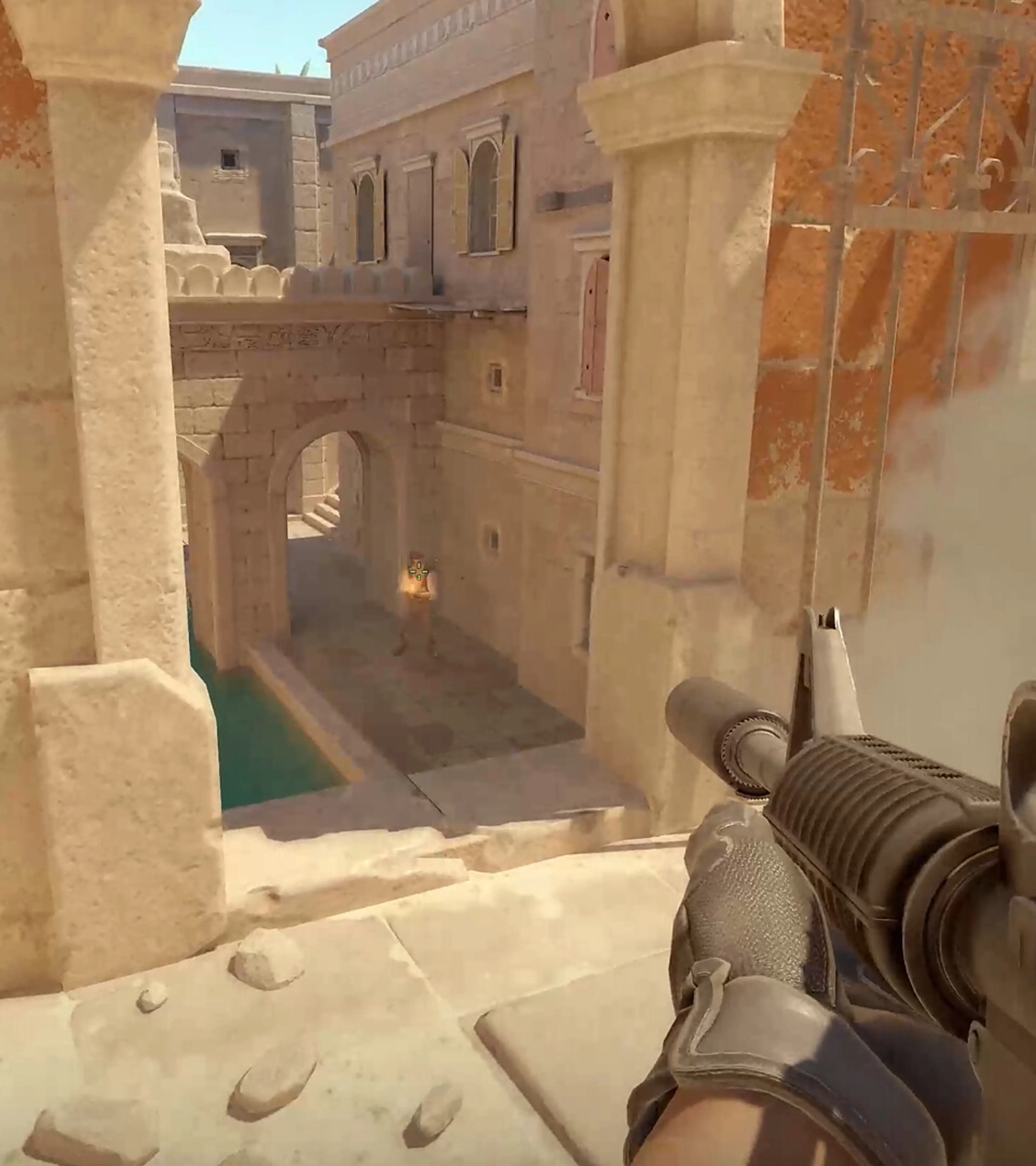
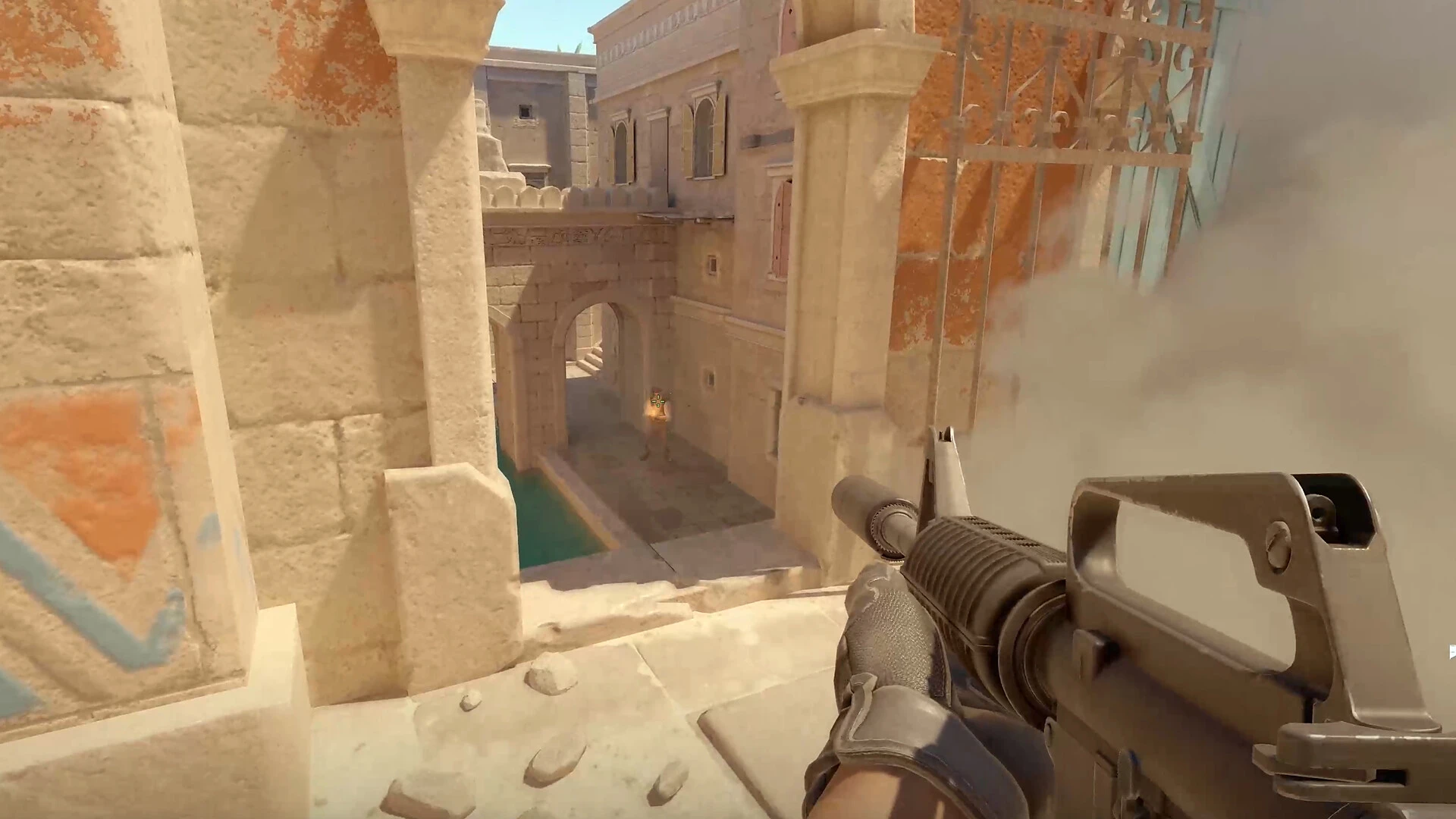
You can start Counter-Strike 2 for free and learn its main modes without buying Prime. Use Casual, Deathmatch, practice, or Competitive to learn movement, crosshair placement, the buy cycle, and a small group of maps. Buy Prime only when you want Prime-only matchmaking, XP, weekly care packages, Competitive Skill Groups, and access to Premier after reaching Profile Level 10.
This beginner route is updated for Premier Season Five. Valve added Cache to the Active Duty pool and removed Overpass on July 8, 2026. The most useful preparation is still broader than memorizing one map: learn when to stop before firing, buy with the team, use utility with a purpose, and distinguish the three progression labels the game displays.
Counter-Strike 2 quick-start route
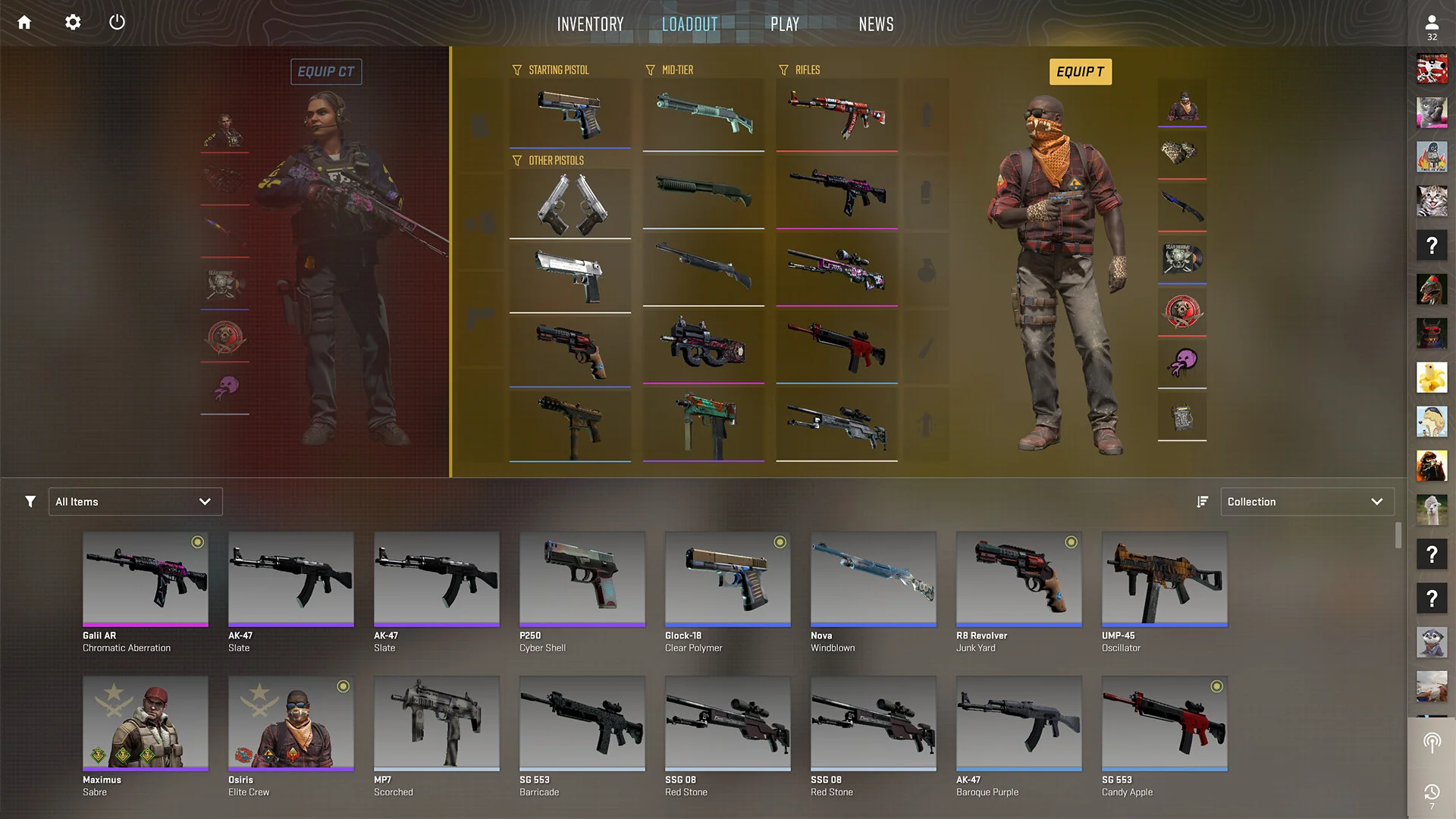
- Set both team loadouts. Open Loadout and make sure your preferred pistols, mid-tier weapons, and rifles are equipped for Counter-Terrorists and Terrorists.
- Practice stopping before shooting. Move, release the movement key, then fire a short burst. Accuracy is far more reliable once your character is no longer running.
- Learn one rifle and one affordable backup. Build repeatable habits with a main rifle, then keep one lower-cost option for rounds when the team cannot afford a full buy.
- Play Deathmatch for mechanics. Use it to warm up crosshair placement and first-shot control, not as a model for bombsite rotations or team economy.
- Play Casual or practice for round structure. Learn planting, defusing, time pressure, common sightlines, and what changes after a teammate is eliminated.
- Enter Competitive on a small map rotation. Competitive gives each map its own Skill Group, so you can learn a few maps without making every match a full Active Duty pick-ban.
- Move to Premier when the foundation is ready. Premier uses one visible CS Rating and a pick-ban phase. It requires Prime Status and Profile Level 10.
Is Counter-Strike 2 free, and do you need Prime?
Counter-Strike 2 is free to play. Steam Support says free players can use every game mode and matchmaking type except Premier. That makes the free version sufficient for learning aim, movement, bomb rules, maps, utility, and ordinary Competitive matches.
Prime is a permanent account upgrade rather than a subscription. Prime players are normally matched with other Prime players, earn XP, receive Competitive Skill Groups and CS Rating, qualify for weekly care packages, and can enter Premier once their Profile Rank reaches Level 10. A mixed premade party containing Prime and non-Prime players is treated as non-Prime and cannot enter a Prime-only match.
The exact benefits and restrictions are maintained in the official Steam Support Prime FAQ. Check that page before purchasing if Valve changes the package.
Premier vs Competitive: which mode should a beginner play?
Competitive is the easier place to narrow the learning problem. You select maps before matchmaking, and the game assigns a separate Skill Group to each map. A beginner can repeat one or two maps, recognize the same callouts and rotations, then add another map when the first pair feels readable.
Premier asks both teams to ban and select from the Active Duty pool before the match. Its result changes one visible CS Rating used for global and regional leaderboards. That structure is useful once you can contribute on several maps, but it adds a map-veto decision before the first round and is locked behind Prime plus Profile Level 10.
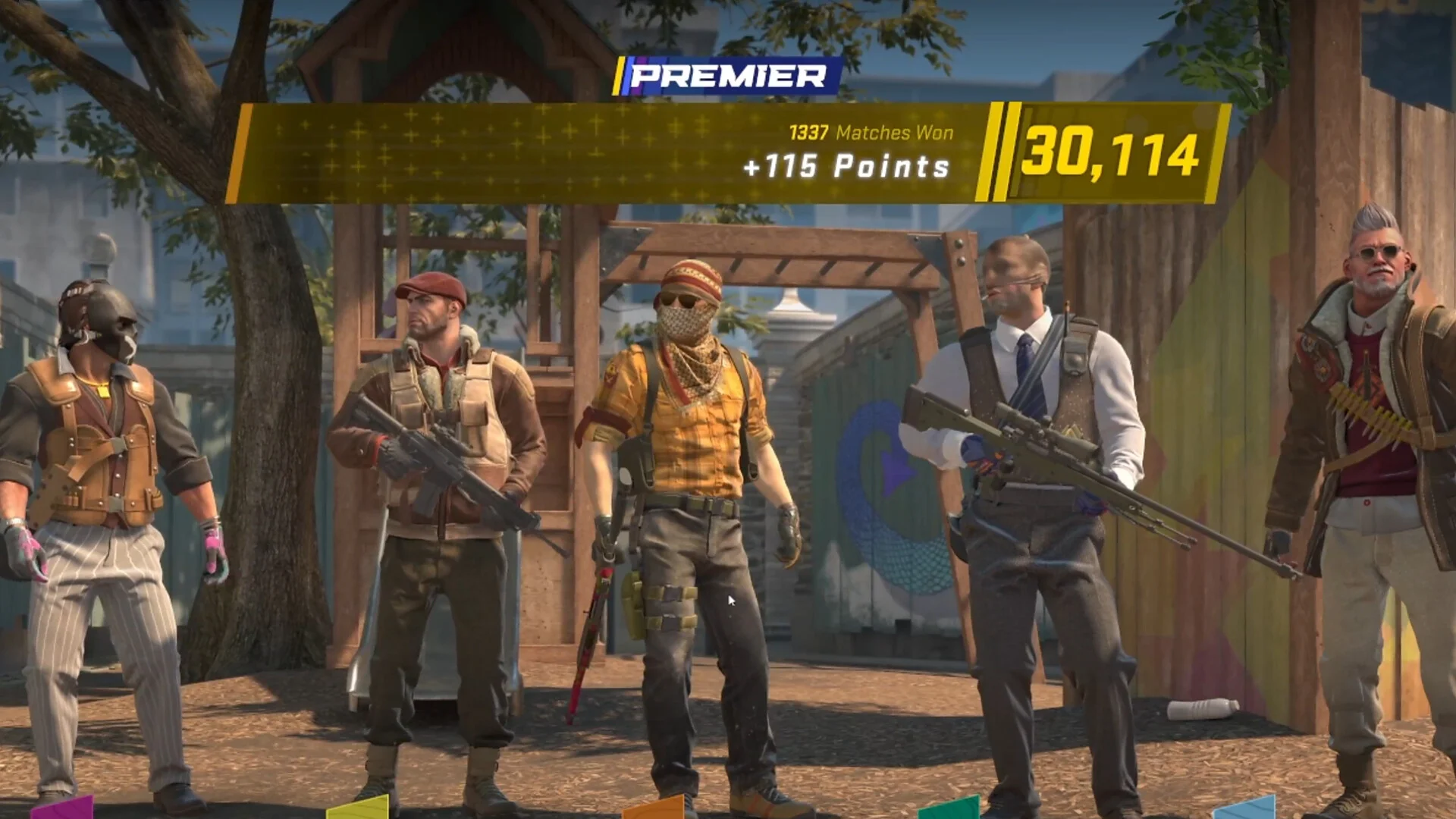
CS Rating, Skill Group, and Profile Rank are different
- CS Rating: the visible number calibrated through Premier matches.
- Competitive Skill Group: a performance group calibrated separately for each Competitive map.
- Profile Rank: account progression earned through match XP. It can reach 40 and can be reset to 1 when a player claims a Service Medal; that reset does not remove the Competitive Skill Group or Prime eligibility.
If a Competitive Skill Group disappears after a long break, Steam Support says winning one Competitive match lets the system reassess it. A group can also be adjusted when a recent party member is permanently banned for cheating.
What changed in Premier Season Five?
Premier Season Five began on July 8, 2026. Valve moved Cache into the Active Duty map pool and removed Overpass. The same update redesigned C4 explosion damage on official defusal maps so the shockwave expands from the bomb and interacts with map geometry instead of applying everywhere at once.
A July 20 follow-up added a health preview once the bomb becomes audible and made the explosion interact with smoke clouds and molotov or incendiary fire. Valve continued shipping map, movement, security, and stability fixes through August. Beginners should therefore learn the current in-game version rather than depend on an old lineup or a fixed safe-distance chart.
Valve records those changes in the official Counter-Strike 2 update log.
Set your loadout before queueing
Counter-Strike 2 does not place every weapon in the buy menu at the same time. Your Loadout screen determines which choices appear for each team. Review both the Counter-Terrorist and Terrorist sides before matchmaking so a weapon you practiced is not missing when the round begins.
Keep the first setup simple. Equip dependable rifles for full buys, a lower-cost option for limited rounds, and pistols you can control. A larger collection is not automatically better: the useful loadout is the one that gives you a clear purchase at several team budgets.
How to think about the economy without memorizing everything
Every purchase changes what you can afford now and next round. Before buying, look at teammate money and equipment. If most of the team can buy rifles, armor, and useful grenades, buy together. If the team is saving, one expensive solo purchase often creates two weak rounds instead of one coordinated recovery.
- Full buy: the team can field its planned rifles or sniper, armor, and enough utility to execute or defend sites.
- Limited buy: the team spends selectively on cheaper weapons, armor, or a focused grenade plan while preserving a stronger next round.
- Save or eco: the team spends little or nothing so the next buy arrives together.
These are decisions, not official menu labels. The exact best purchase depends on side, map, loss bonus, saved equipment, and team plan. The beginner rule that transfers to every match is coordination: say what you can afford before the freeze time ends.
Movement and shooting: fix accuracy before recoil
Running and firing is the fastest way to make a good crosshair position irrelevant. Approach an angle, stop, confirm the crosshair is already near likely head height, and fire a controlled shot or short burst. Long sprays are useful only after you understand the first bullets and the distance.
Crosshair placement saves more time than a dramatic flick. Trace the edge where an opponent is likely to appear, leave enough space for reaction time, and clear one angle at a time. When you lose a duel, ask whether the miss came from movement, placement, timing, or recoil instead of changing sensitivity after every round.
Use grenades to solve a specific problem
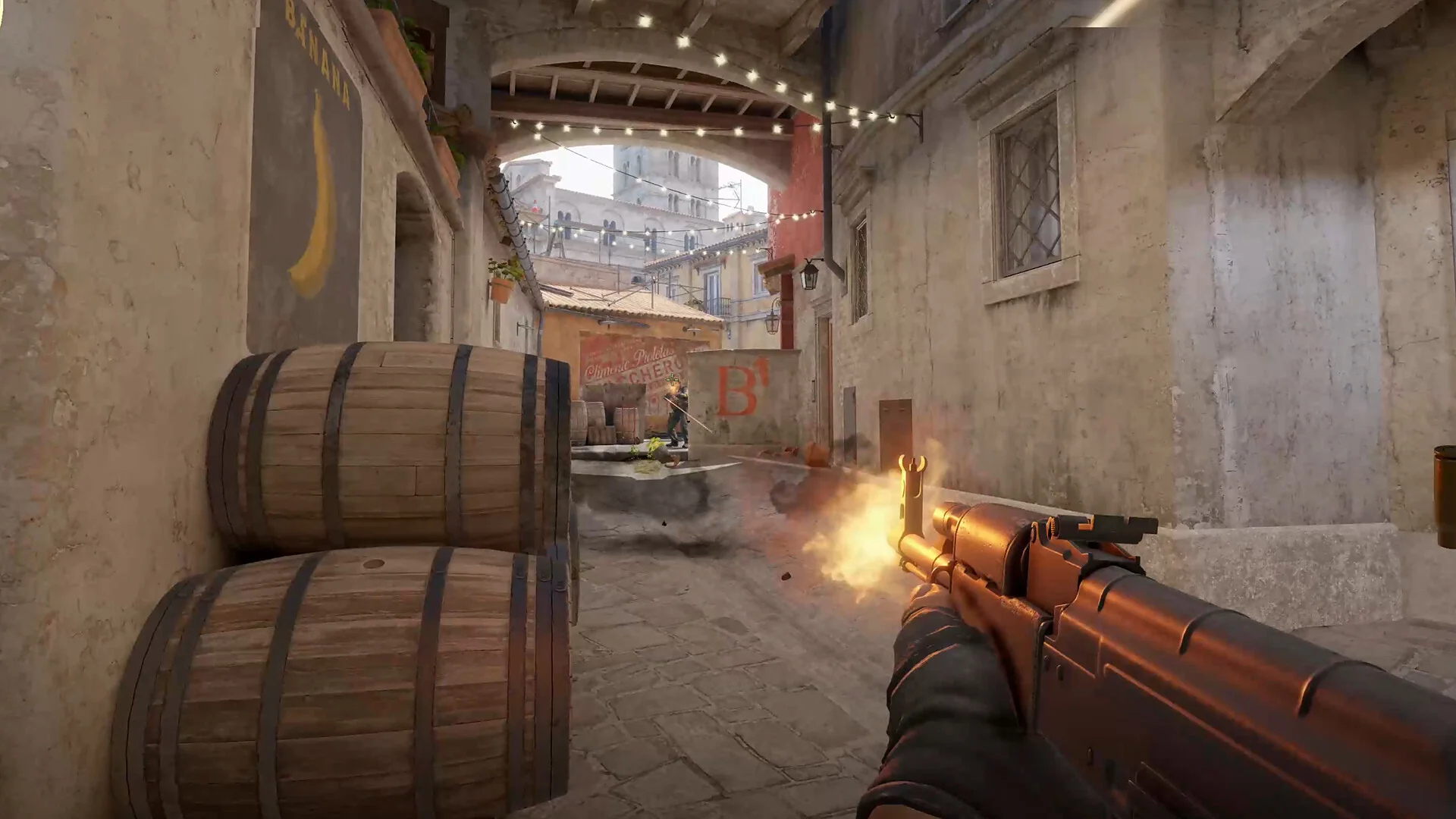
A smoke should block a sightline, isolate a defender, protect a plant or defuse, or delay a push. A flash should create a timing window for someone to peek. A molotov or incendiary should clear or deny a space. Throwing utility without a follow-up wastes money and can make the position harder for your own team.
CS2 smoke grenades are volumetric objects. Gunfire and explosions can carve brief holes in a cloud, and the cloud responds to lighting and the surrounding environment. Treat smoke as temporary cover with counterplay, not a solid wall that guarantees safety.
Valve explains dynamic smokes, sub-tick updates, and CS Rating on the official CS2 overview.
How many maps should a beginner learn first?
Start with two maps. Learn the bombsites, spawn routes, a few callouts, where defenders usually take first contact, and one safe smoke or flash for each site. Two maps provide repetition without turning every loss into a completely new geography lesson.
When you can rotate without opening the full map, understand where the bomb is likely to travel, and buy without searching the menu, add a third map. Premier comes later because the pick-ban format can place you on any map left after both teams make their choices.
Seven beginner mistakes that cost rounds
- Buying alone: match the team plan instead of turning your money into an isolated rifle.
- Reloading after every duel: check cover, ammunition, and the chance of a second opponent before committing to the animation.
- Making noise without a reason: running, jumping, firing, and some utility can reveal timing and location.
- Watching the same angle as a teammate: cover another threat or prepare a trade instead of stacking two crosshairs on one doorway.
- Dying with all grenades: plan one useful piece of utility before the round rather than carrying a full belt into the final duel.
- Chasing eliminations after the objective changes: the bomb timer, defuse kit, saved weapons, and remaining routes matter more than the scoreboard.
- Changing every setting after one bad match: keep sensitivity, crosshair, and key binds stable long enough to identify the actual problem.
A practical plan for your first 10 serious matches
- Matches 1–2: play one map and focus on stopping before every shot.
- Matches 3–4: keep the same map and announce whether you are buying, saving, or using a limited purchase.
- Matches 5–6: add one grenade for each bombsite and use it only when a teammate can act on it.
- Matches 7–8: add a second map while keeping the same main weapons and settings.
- Matches 9–10: review deaths by category—movement, crosshair placement, utility, economy, timing, or communication—and practice the most frequent one.
Counter-Strike 2 PC requirements
Steam currently lists Windows 10, a processor with four hardware CPU threads at Intel Core i5-750 level or higher, 8 GB RAM, a DirectX 11 graphics card with at least 1 GB memory and Shader Model 5.0 support, and 85 GB available storage as the Windows minimum. The Linux minimum lists Ubuntu 20.04, 8 GB RAM, 85 GB storage, and supported Vulkan hardware and drivers.
Those are minimums, not a promise of a stable competitive frame rate on every map or display. Install current graphics drivers, close unnecessary overlays and background recording tools, and test frame pacing in practice before entering a ranked match.
The best next step
Download the free game, set both loadouts, choose two maps, and play until stopping before a shot and buying with the team feel automatic. Prime is valuable when you specifically want its matchmaking and progression benefits; it is not required to discover whether Counter-Strike 2 is a game you want to keep learning.
Use the Counter-Strike 2 game page for the official trailer, platform details, gallery, and future Pixel Twelve coverage.