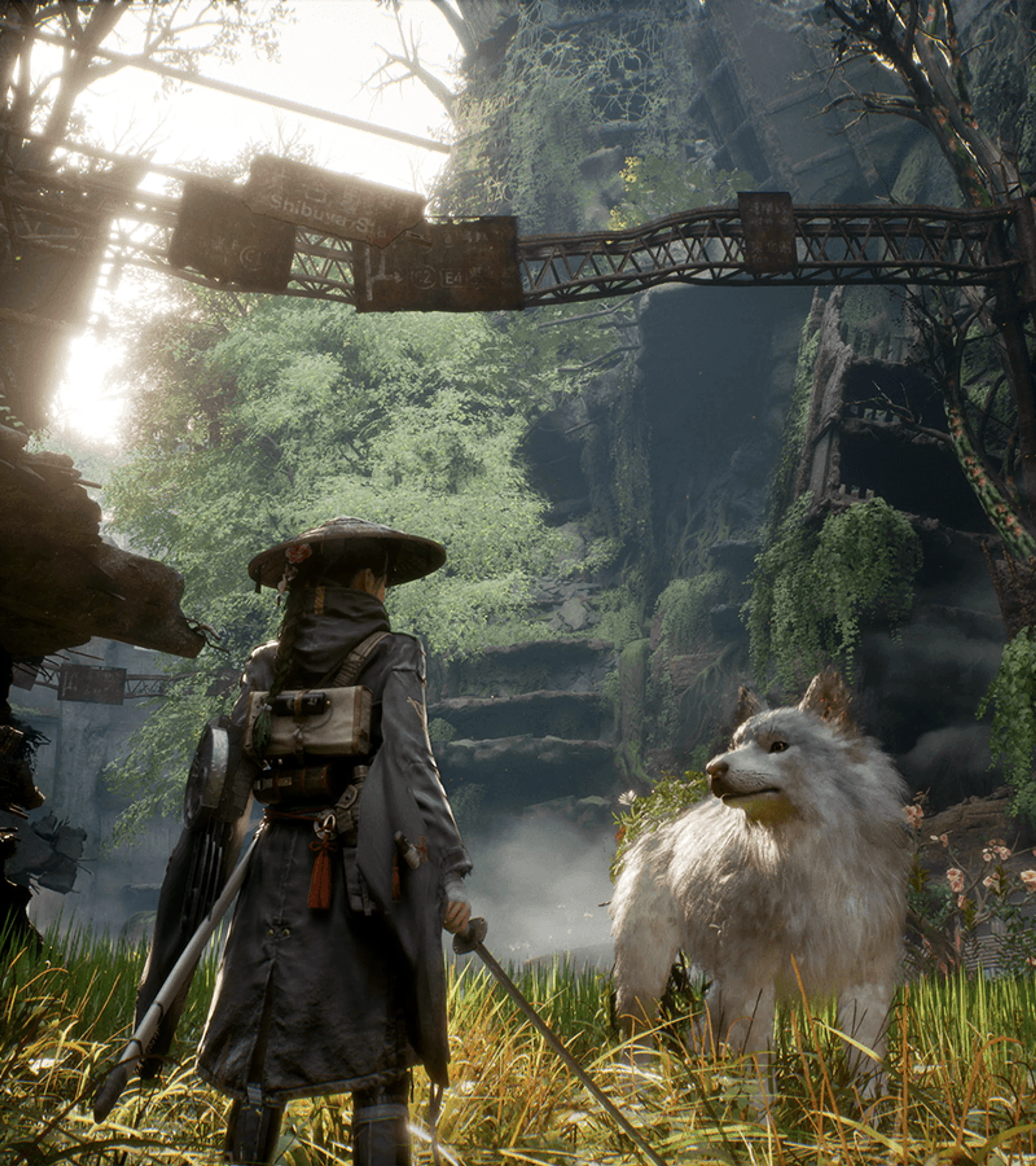
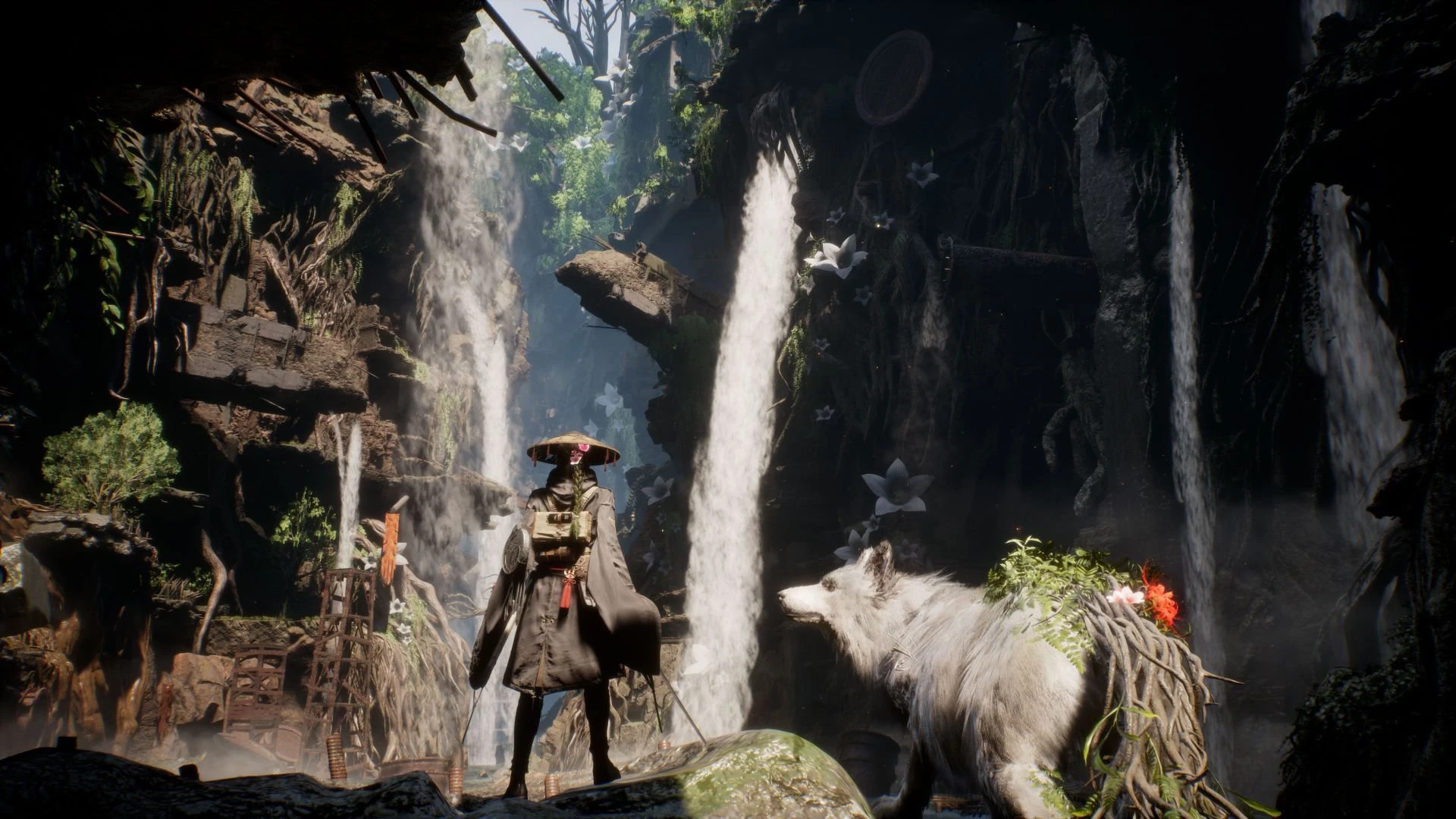
Beast of Reincarnation has a clear strength from the first serious fight: Emma and Koo work better together than either character would alone. Emma brings the sword, movement, blocks, dodges, and parries. Koo turns those actions into a team system, opening attacks, holding enemies in place, and giving the player another way to control the pace of a battle. The partnership is the reason to keep going when the rest of the game starts repeating itself.
Game Freak's action RPG takes place in a ruined version of Japan where the Blight has changed the land, the animals, and the people living among them. Emma is connected to that corruption, while Koo is a large canine Malefact who stays beside her through combat and exploration. The setting gives the game a strong visual identity, but the story is less confident about what to do with the world once it has introduced the central mystery.
Combat is at its best when Emma and Koo share the job
Emma's parry is the main reason the combat feels good. The timing is readable, and a successful defense does more than prevent damage. It creates an opening, affects an enemy's posture, and helps bring Koo's abilities into the fight. The result is a rhythm that rewards attention without demanding perfect execution from the start.
Koo keeps the system from becoming another sword-and-parry action game. His commands give the player a second set of decisions, and the short pause before choosing an ability makes that choice feel deliberate rather than frantic. A fight can begin with Emma controlling space, shift to Koo interrupting an enemy, and finish with both characters combining their strengths. That is the game's most convincing idea because it changes how the player reads every encounter.
The problem is that the combat does not keep developing at the same speed. Once the player understands the main timing and a few reliable Koo abilities, repeated enemy patterns become easier to predict. The game has corrupted animals, mechanical enemies, and larger bosses, but the campaign does not always turn those ingredients into sufficiently different problems. A visually impressive enemy can lose its threat when its attack sequence feels familiar.
The camera becomes a bigger issue when several enemies attack at once. A system that feels precise against one target can become difficult to read when an attack comes from outside the frame. Lock-on behavior and crowded arenas sometimes make the player lose information rather than lose because of a bad decision. That distinction matters in a game that wants its defense system to feel fair.
Advertisement

Beast of Reincarnation gameplay gallery
5 screenshotsThe ruined world is worth exploring
The post-apocalyptic landscape is more than a backdrop. Blighted forests, damaged machines, and altered creatures give each region a different visual problem to solve. Emma's movement abilities open routes across gaps and raised platforms, while optional paths hide materials, equipment, and upgrades. Exploration is strongest when the player notices a route first and uses the tools to reach it instead of following a single obvious marker.
The upgrade structure gives players room to shape Emma and Koo, but it also adds layers that do not always improve the core experience. Skill trees, crafting materials, food, equipment effects, and support abilities are all functional. The issue is density. Some of these systems feel like useful ways to specialize a build; others feel like extra maintenance around combat that is already forgiving enough to carry the game.
Emma's quiet personality is an intentional part of the story. The Blight has affected how she connects with other people, and Koo becomes the clearest way to show what she still values. Their relationship is more effective when the game lets actions carry the emotion. Koo protects Emma, reacts to danger, and remains involved outside battles. That bond gives the journey warmth without removing the harshness of the setting.
The wider story is less consistent. The world contains enough ideas for a stronger narrative, but the delivery can be vague, and some supporting characters do not receive the same care as the central pair. The game often asks the player to wait for an explanation when the relationship between Emma and Koo has already supplied the more interesting question: what does loyalty mean when neither of them is untouched by the world they are trying to survive?
Verdict
Beast of Reincarnation is a good action RPG with one genuinely memorable partnership and a combat system that can feel excellent in the right encounter. Its best moments come from reading an enemy, answering with Emma's defense, and deciding how Koo should change the fight. Its weaker moments come from repetition, uneven storytelling, crowded camera behavior, and technical roughness that can make a fair system feel less reliable.
Players who value combat feel, exploration, and companion chemistry will find enough here to stay engaged. Players who need a polished campaign with constant enemy variety should lower their expectations. Beast of Reincarnation has the foundation of a stronger game, and parts of it already work. The full experience does not develop every good idea far enough to earn a higher note.