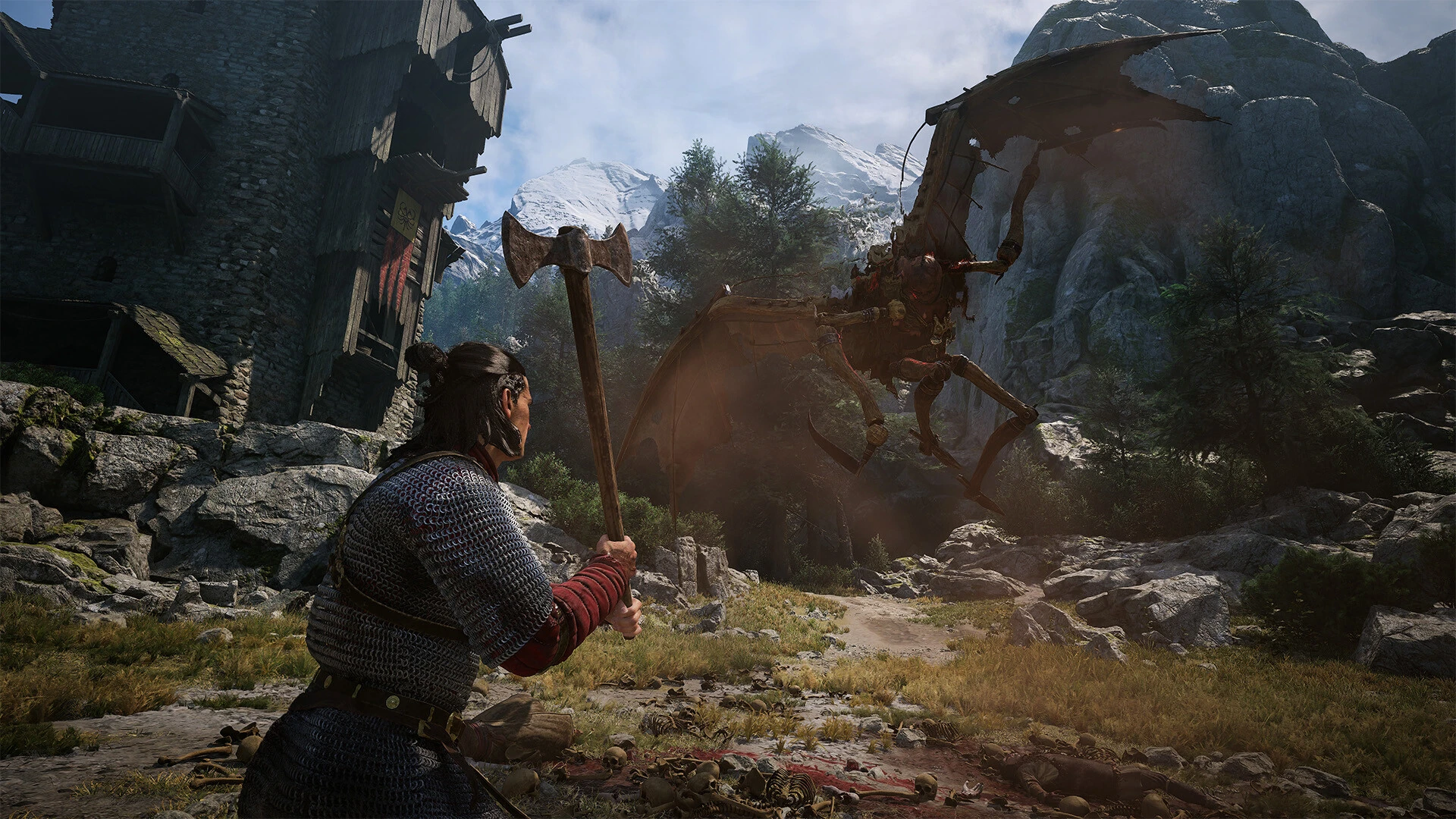
The Blood of Dawnwalker is most interesting when it makes the player choose what not to do. Coen has 30 in-game days to rescue his family from Brencis and the vampire court. Important actions consume time, so helping one village, learning a skill, or following one investigation can close another path. The limit gives ordinary quests a consequence that most open-world RPGs avoid.
That structure supports an 8.2/10 game with excellent writing and uneven action. Vale Sangora is grim, specific, and full of people whose problems connect to the wider occupation. Major quests can change according to evidence, alliances, timing, and previous decisions. Directional sword combat and the day-night split are less reliable. Both have strong ideas, but repeated patterns and technical roughness keep interrupting them.
Rebel Wolves has not made a larger version of The Witcher 3. Dawnwalker is more constrained and more willing to deny completion. It works best as a story about responsibility under a deadline, not as a map that expects every icon to be cleared. Players who accept that rule will find a reactive and unusually focused RPG. Players who need to finish every side task may spend more time worrying about the clock than enjoying the choices it creates.
The 30-day limit makes quest selection matter
Time does not drain while Coen stands in a street or studies a menu. It advances when he commits to meaningful work. A trip, investigation, lesson, or quest stage can consume part of a day or night. The player can therefore explore and think without a real-time countdown, but cannot pretend that every request will fit before Brencis completes his plan.
The distinction matters. A constantly moving clock would punish curiosity and reading. Dawnwalker's action-based clock instead asks whether a task is worth its cost. A missing person may lead to a useful ally, evidence against a local authority, or only a personal resolution. The reward is not always an item or experience points. Sometimes the reason to spend time is that leaving someone behind feels wrong.
The best multi-part quests justify that decision with strong characters and several ways forward. Investigations can uncover information that changes a confrontation. Day and night can offer different entrances, witnesses, and risks. An apparent side story may later affect who is available or how another situation develops. The connections do not make every outcome radically different, but they make earlier choices visible often enough to sustain attention.
The system also exposes a weakness in open-world habits. Map markers and small activities still invite collection, yet the deadline says that many of them should be ignored. Some objectives deserve that dismissal because they repeat a basic route or disruption task. Others are written well enough that skipping them feels like a loss. Dawnwalker deliberately creates that discomfort, and it is more memorable than another game that allows every problem to wait forever.
The pressure is not perfectly maintained. The main confrontation is available early, and the game becomes clearer about its point of no return before all 30 days are gone. Once the route to the ending appears manageable, the remaining calendar can feel less dangerous than the premise suggests. Spending time on simple upgrades is also frustrating because a passive increase can demand the same scarce resource as a character-driven quest.
Even with that uneven pressure, the limit changes how Vale Sangora is read. A decision is not only about which dialogue answer sounds kindest. It includes where Coen goes, whom he helps, what skill he chooses to learn, and whether he returns before another opportunity disappears. The design makes absence part of the story. That is a significant achievement for a genre that usually treats unfinished content as a failure by the player.
Vale Sangora is stronger than its combat
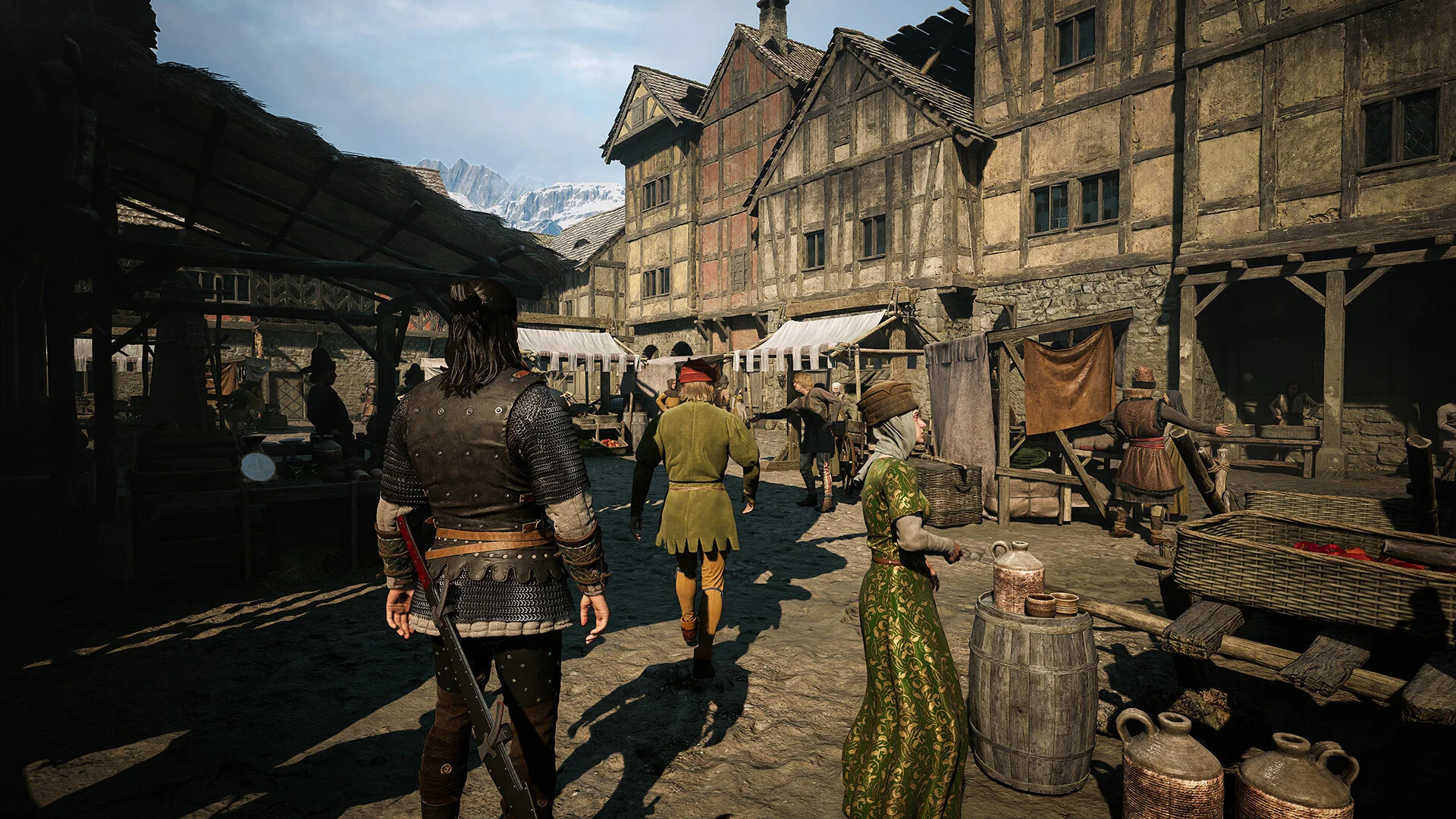
The 14th-century valley is caught between plague, feudal violence, and a vampire regime that presents itself as an alternative to human cruelty. Brencis and his court do not simply hide in a castle. Their rule reaches churches, public rituals, trade, and local loyalties. Residents can fear the vampires, depend on them, resist them, or decide that the old human order was no better. That political pressure gives the setting more substance than its muddy roads initially suggest.
Svartrau and the surrounding settlements are visually convincing places to investigate. Markets stay busy in daylight. Forests, swamps, ruins, caves, and mountain paths separate communities with distinct problems. At night, roofs and upper routes become more useful as Coen's movement changes. The strongest dungeons leave familiar medieval spaces behind and allow the supernatural history of the vampire court to dominate the architecture.
Dialogue carries much of the game. Supporting characters have clear interests, and a conversation can reveal prejudice, fear, affection, or practical compromise without stopping for a long explanation of the setting. Coen's focus ability helps reconstruct events and follow evidence, but the writing is what makes an investigation matter. A good quest ends with a decision between people and consequences, not only a highlighted clue.
Advertisement

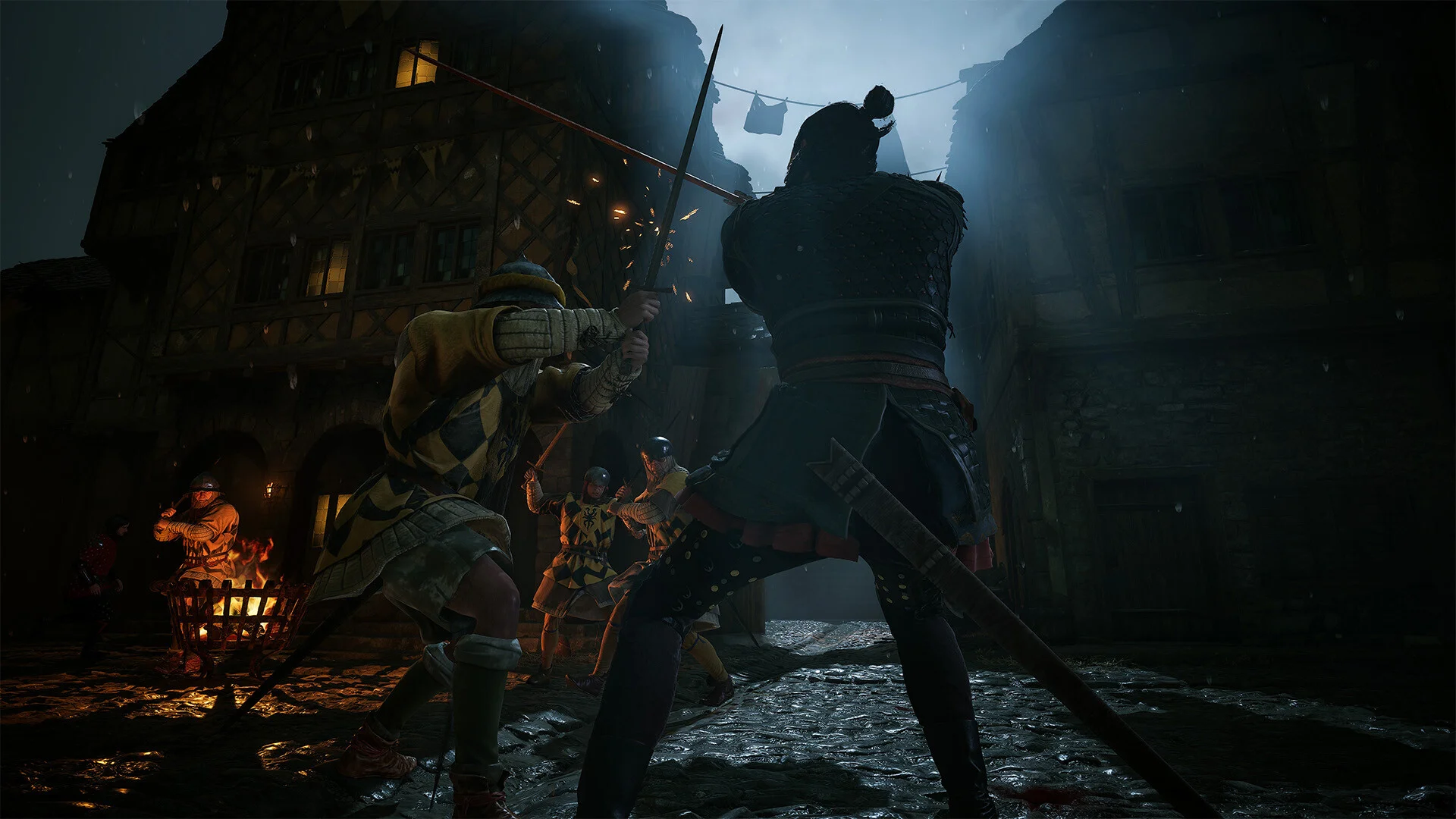
Combat begins with a promising directional system. Enemies signal the angle of an attack, and Coen can block from the matching direction, time a stronger response, or answer with a directional strike. A clean exchange has more intention than repeated light attacks. The system encourages watching the opponent instead of staring at cooldown icons, and a successful counter can make a small duel feel controlled.
The quality drops when several enemies crowd the same space or when familiar patterns return too often. Lock-on behavior can make target selection feel less deliberate than the sword system requires. Many regular opponents settle into sequences that stop being surprising. Human weapons, witchcraft, and vampiric abilities add options, but encounters do not always demand enough variation for those options to become meaningful builds.
Bosses and major quest encounters are better because the arena, enemy, and story support one another. They give the directional rules enough room to work and make supernatural abilities feel less decorative. Routine open-world fights are more likely to expose repetition. Dawnwalker can be satisfying in one encounter and dull in the next without changing its basic controls.
Difficulty settings make the combat more flexible than its stern presentation suggests. Players can adjust broad difficulty and several combat pressures, including enemy health, aggression, the timing window for perfect blocks, and automatic blocking. That helps people who want the story without turning every directional cue into a test. The accessibility options around subtitles and interface presentation are less complete, so combat flexibility does not cover every need.
Technical polish is the other limitation. Independent release coverage describes inconsistent frame pacing, texture loading, animation roughness, traversal problems, and bugs, though results vary by hardware and by the patch installed during testing. Some reports improved after updates arrived. That moving target makes a single platform-wide performance claim unreliable. Buyers who care about frame rate or image quality should check current results for their exact system and patch.
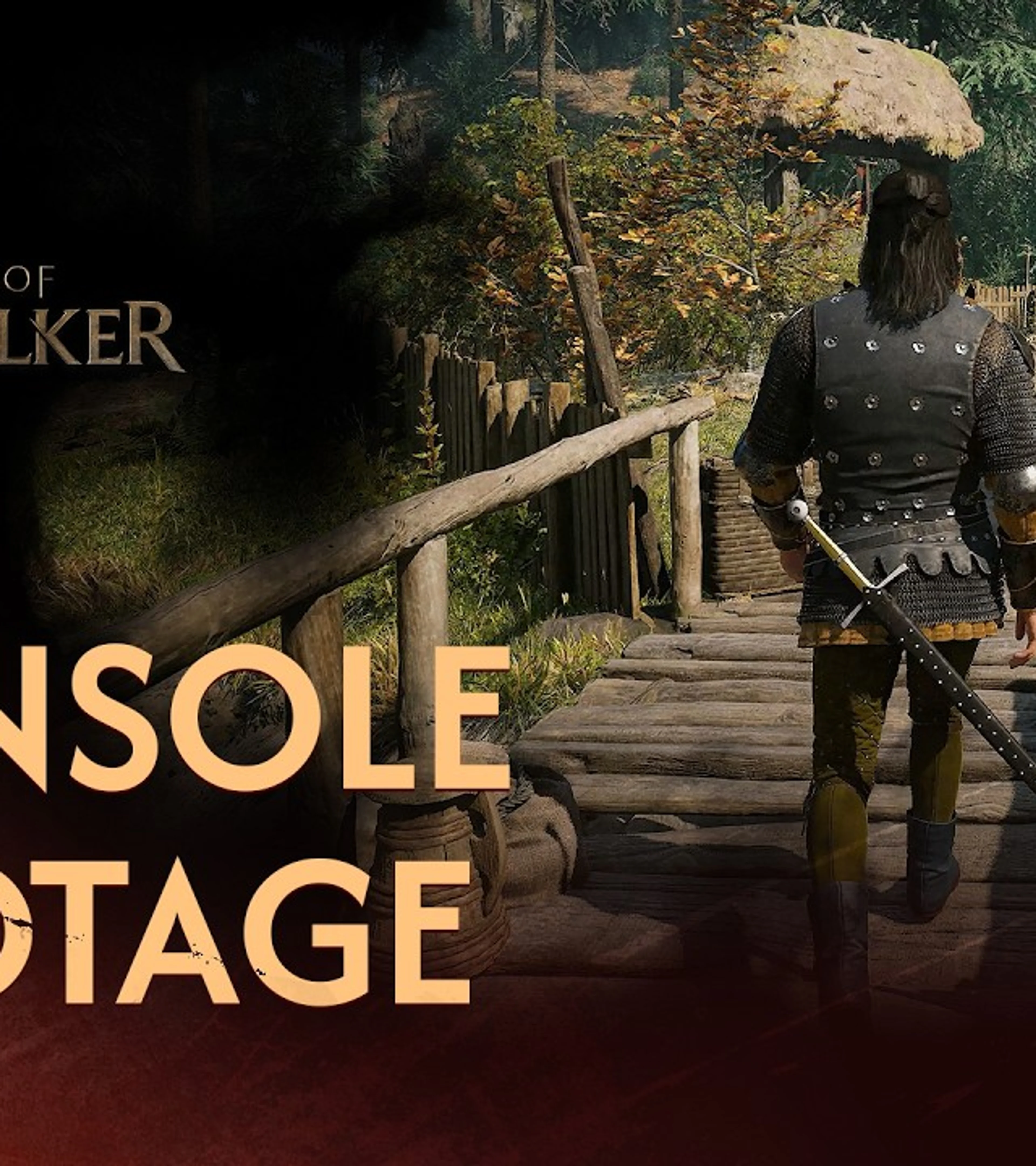
The Blood of Dawnwalker screenshots
5 screenshotsHuman by day and vampire by night is only partly convincing
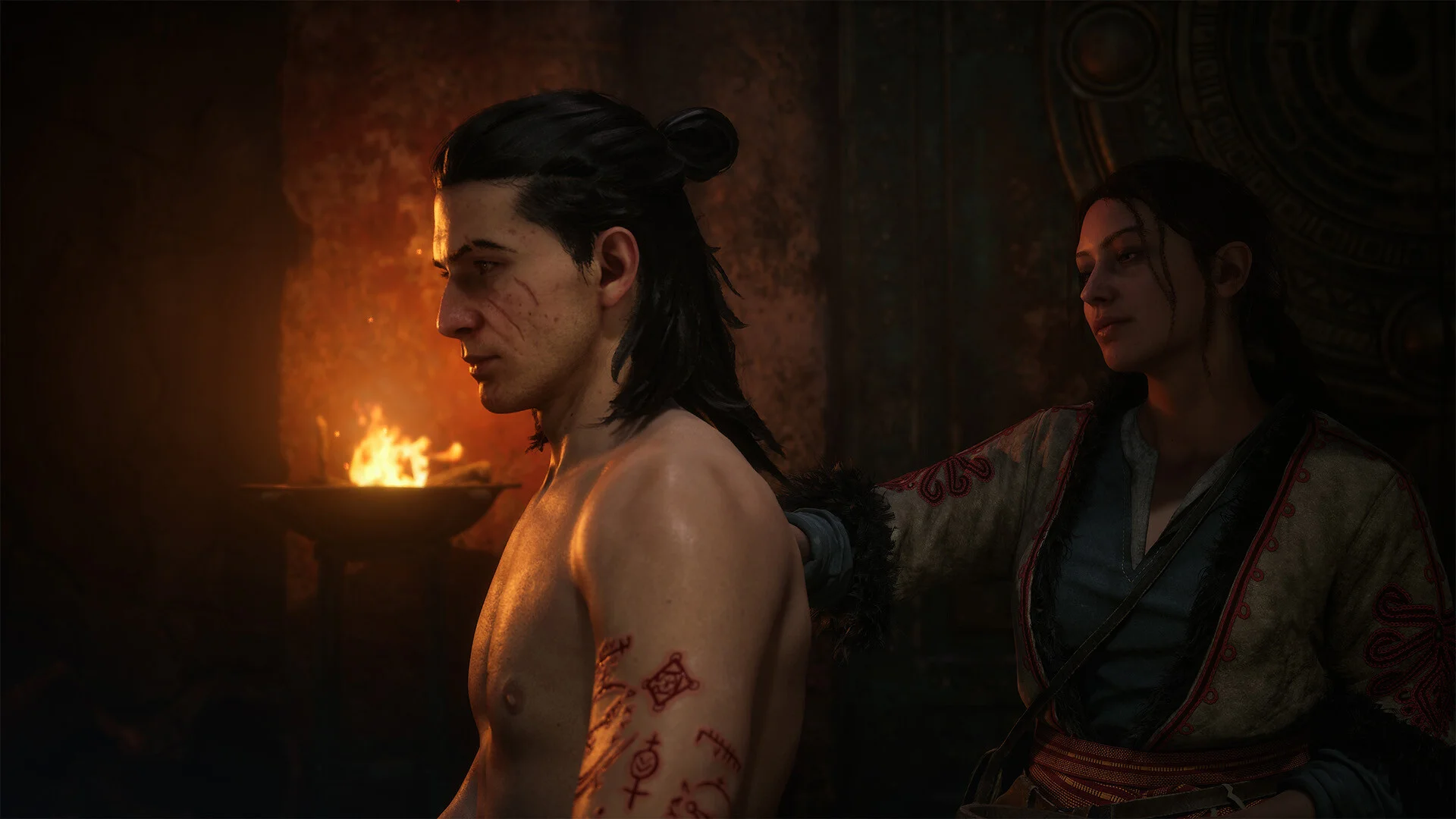
Coen's divided nature changes more than his appearance. Daytime favors grounded weapons and witchcraft. Night replaces part of that kit with vampiric attacks, feeding, faster movement, and routes across roofs or walls. Some quests can be approached during either period with different tools. The split gives exploration a practical reason to revisit a location after dark instead of applying a cosmetic filter to the same map.
The two halves do not always feel as different in combat as the premise promises. Swordplay remains central, and several vampire abilities function as stronger attacks or traversal shortcuts rather than a complete change in behavior. Feeding is presented as a dangerous need because hunger can affect Coen's control, but health resources and available targets can make that threat easy to manage. A system designed to force morally uncomfortable decisions often allows a safer routine.
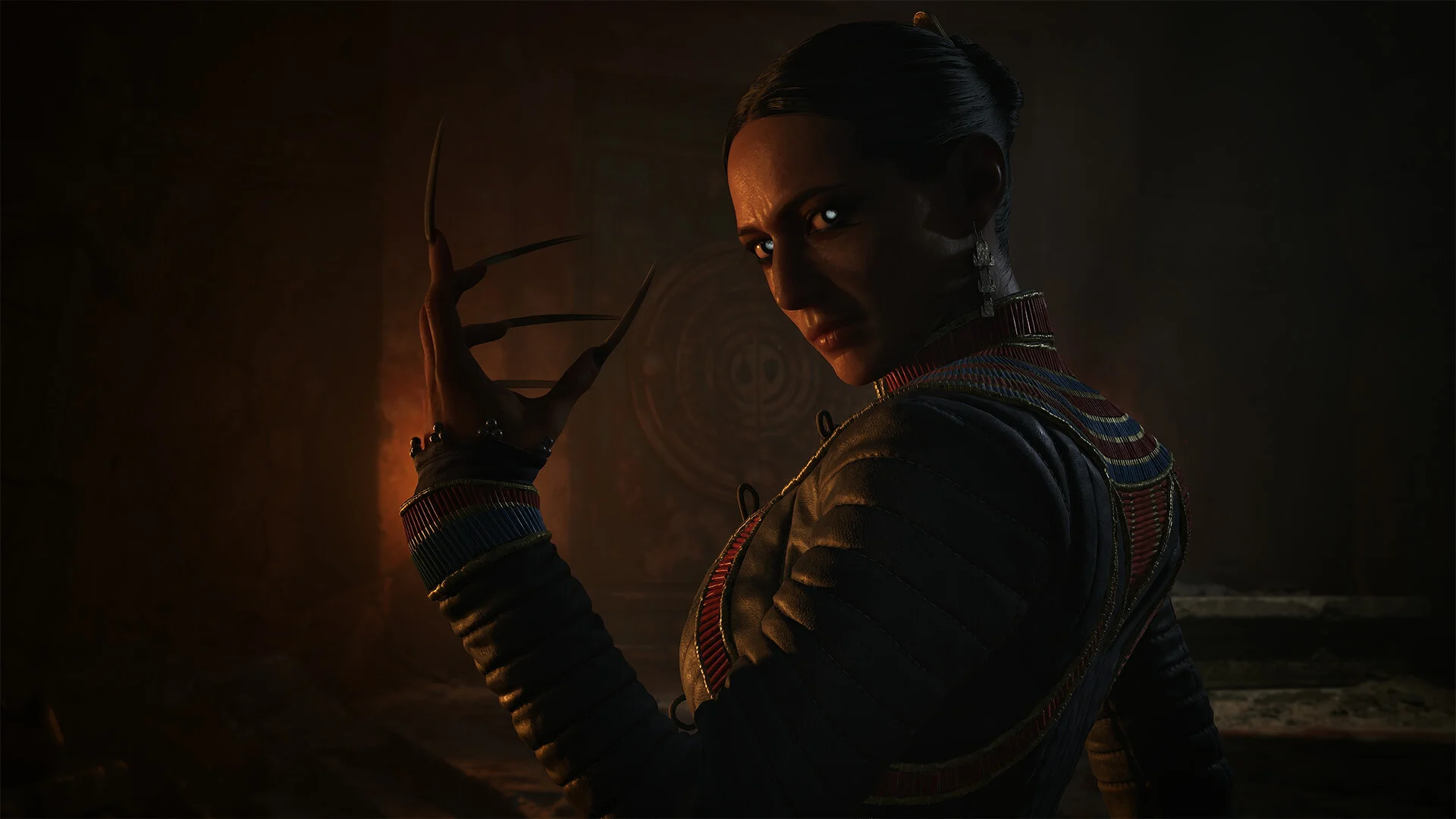
The vampire fantasy is stronger in the story. The court uses blood, faith, architecture, clothing, and public ceremony to make its power visible. Main missions can move into stranger spaces and images that separate Dawnwalker from more familiar medieval RPGs. These scenes show what the entire game could have emphasized. Too much ordinary travel and combat passes before that identity returns.
Coen is functional rather than magnetic. Saving his family gives him a direct motive, and his human-vampire condition makes him useful to several factions without making him fully trusted by any of them. Supporting characters are often more distinctive, especially when a quest gives them room to argue, betray, or reconsider. Coen holds those stories together, but rarely dominates them.
The art direction does substantial work when the mechanics fall short. Snowy mountains frame damaged settlements, candlelit interiors turn the vampire court into a political performance, and red supernatural effects cut through the brown and gray landscape. Creature designs can be grotesque without becoming unreadable. The soundtrack and environmental sound maintain tension, while directional combat still provides enough audible feedback to follow an exchange.
Inventory and progression are less disciplined. Equipment, materials, skills, and separate abilities create room to shape Coen, but they also add many small decisions around a campaign already defined by larger choices. Spending in-game time to learn routine upgrades can feel punitive. Collecting low-value objects while a family faces execution weakens the urgency that the calendar works so hard to establish.
Who should play The Blood of Dawnwalker
Story-first RPG players are the best audience. The game rewards attention to people, evidence, timing, and consequences. It is willing to let some stories close without the player, and it uses that absence to define the journey. Anyone who enjoyed choosing between important quests more than clearing every activity will understand its priorities quickly.
Combat-first players should be more cautious. Directional defense has a satisfying core, but enemy repetition, group targeting, and uneven impact prevent it from carrying the whole game. The adjustable settings can reduce frustration, but they do not create additional enemy variety. Players expecting every fight to match the quality of the best quests may find long stretches ordinary.
Completionists face a different problem. Dawnwalker is designed around leaving work unfinished. Trying to optimize every hour can turn the campaign into calendar management, while accepting imperfect choices makes the story more personal. The useful question is not how to see all content in one run. It is which people and problems Coen considers important enough to spend time on.
The game launched on PC, PlayStation 5, and Xbox Series X|S. Story structure, quests, and abilities are shared, but performance and visual results can differ by platform, mode, hardware, and patch. Current technical comparisons are worth checking before purchase. The review score reflects the design and writing across releases, not an unsupported claim that every version performs the same.
An 8.2/10 recognizes a strong first game with one genuinely valuable structural idea. The 30-day limit makes choices concrete, Vale Sangora supports memorable quests, and the day-night split changes exploration in useful ways. Uneven combat, repeated tasks, underused vampirism, and technical roughness stop the systems from matching the writing. The Blood of Dawnwalker is still an easy recommendation for players who value consequence more than completion.