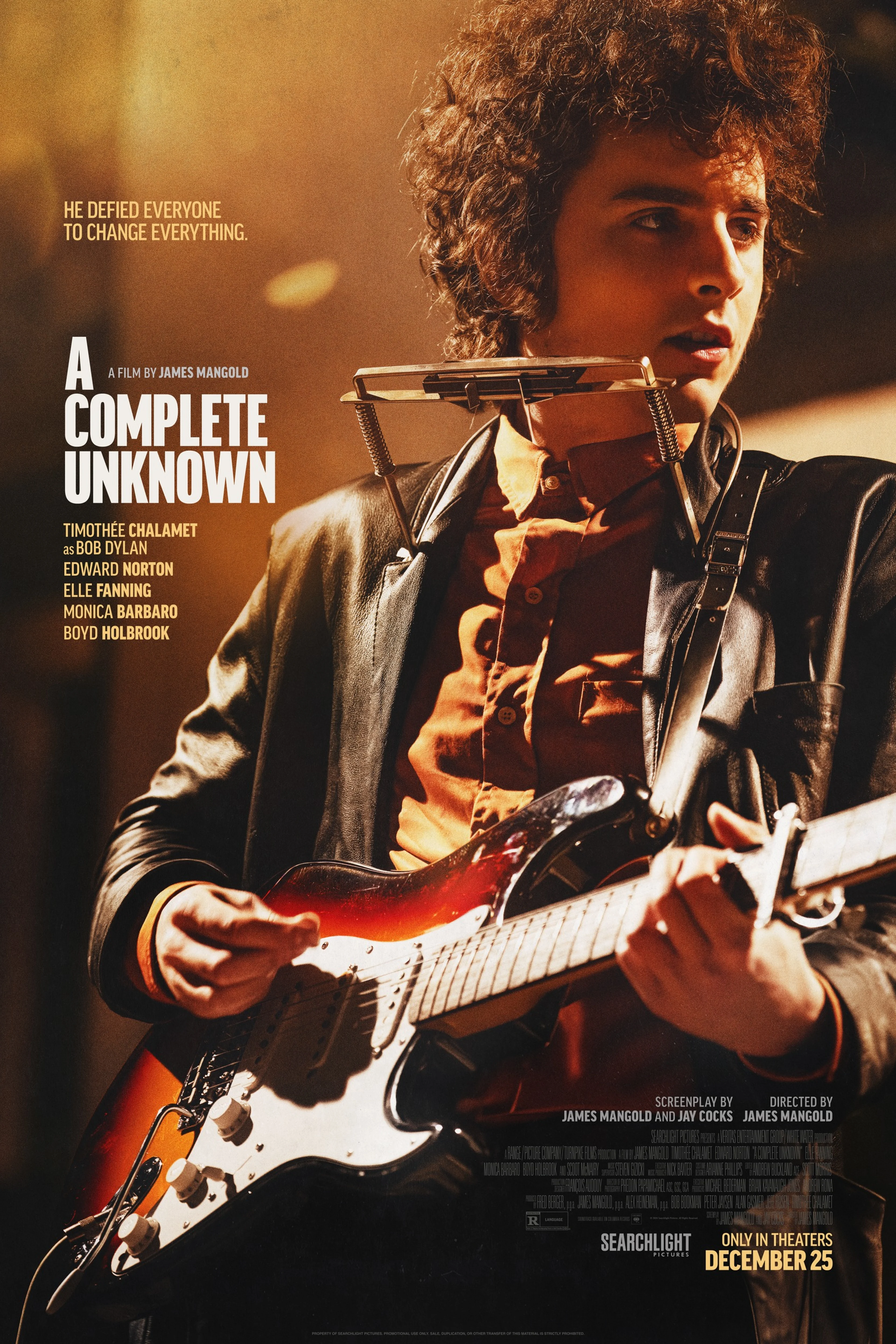
Bob Dylan arrives in New York in 1961 with a guitar and very few people who know his name. By 1965, audiences have strong opinions about what he should play. A Complete Unknown follows those four early years, with Timothée Chalamet playing the young singer as he finds work, falls in love and becomes famous. You do not need to know Dylan’s albums to follow the story.
The most enjoyable parts are the performances. Chalamet’s singing makes it believable that people would stop to listen to Dylan. But director James Mangold gives us less reason to care about his relationships. The music gets time to develop; the people around him often have to explain their feelings in much shorter scenes.
Dylan’s first audiences
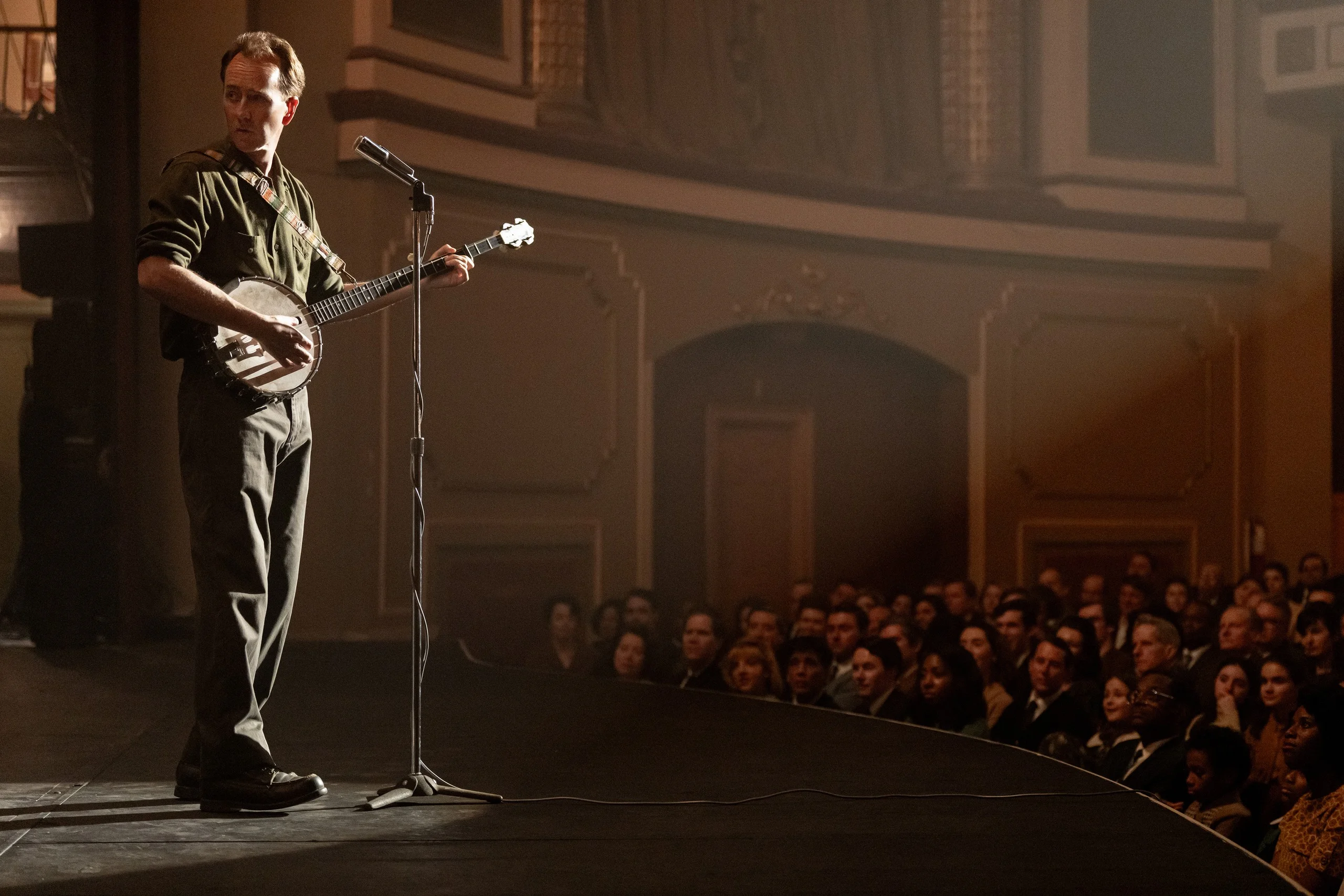
Dylan comes to New York hoping to meet Woody Guthrie, a singer he admires. Guthrie is ill in hospital, where Dylan also meets Pete Seeger, another established musician. They belong to the folk-music world: singers telling stories or discussing social problems, often with an acoustic guitar or banjo. Seeger helps Dylan find an audience, and Edward Norton makes that help feel friendly rather than like a business arrangement.
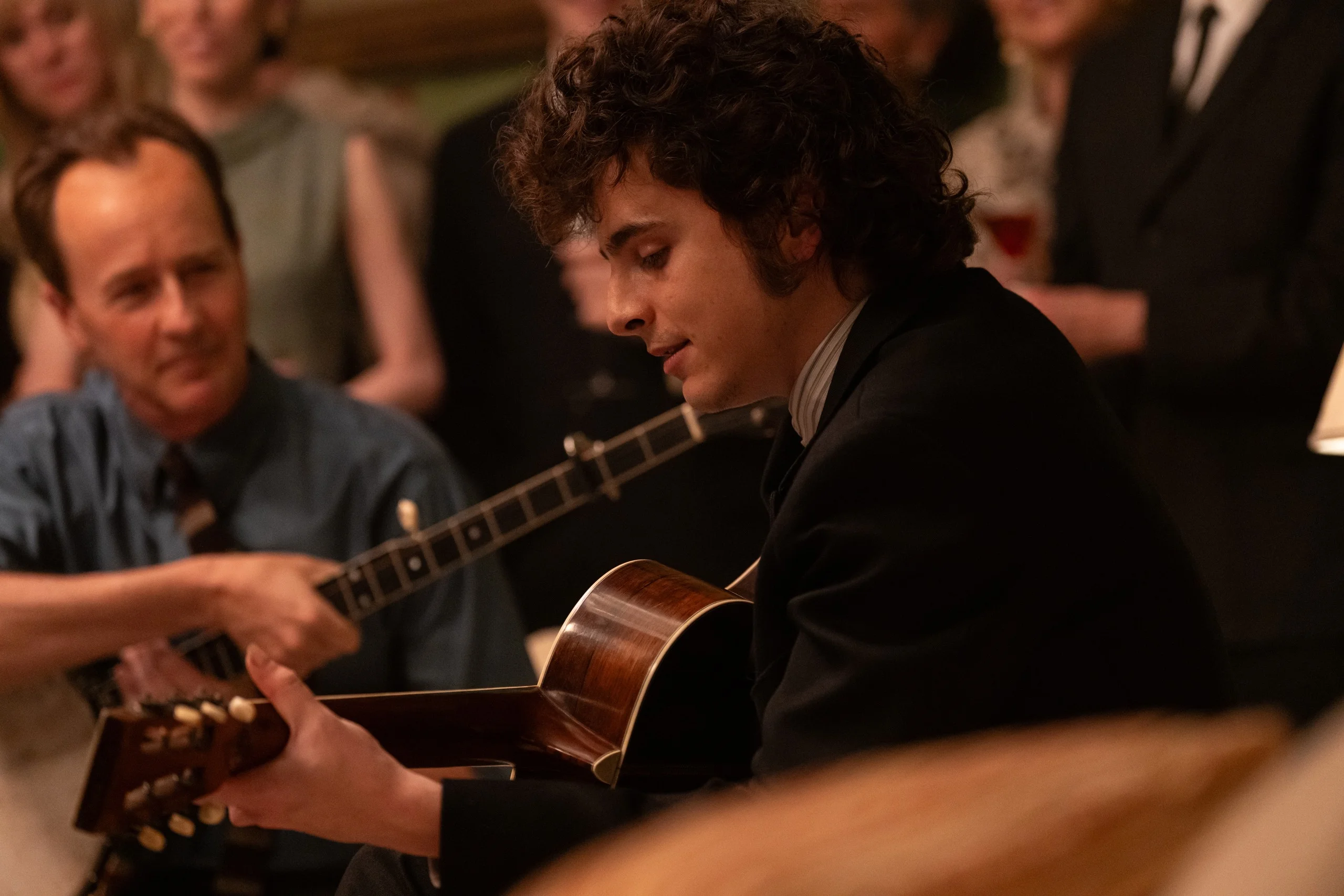
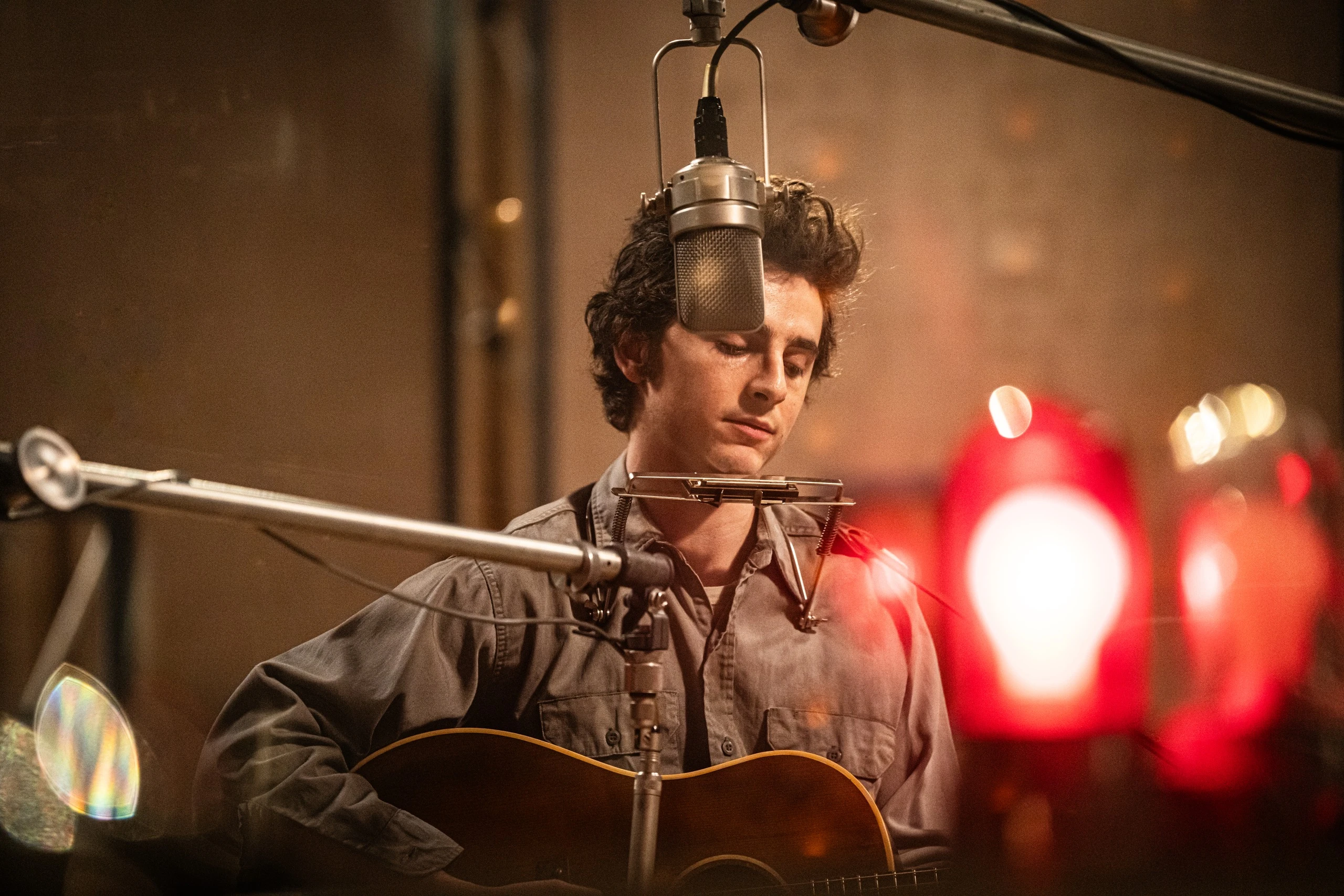
Their early scenes are easy to enjoy because Dylan is not yet facing a huge crowd. He has to sing to people in the room. Chalamet keeps the rough voice and slightly awkward delivery, without making every line sound like an impression performed for a laugh. The songs are allowed to continue, so you can hear what people respond to instead of being hurried through a few famous lines.
That choice is especially welcome if Dylan is new to you. The gradual move from small rooms to bigger stages gives his success some context. But Mangold repeatedly cuts to people watching with amazement or approval. A few of those reactions help establish that an unknown singer has surprised them. After a while, the extra admiring faces become unnecessary. Chalamet’s performance is already convincing without so many reminders.
Two singers, and two uneven relationships
Joan Baez is already a successful folk singer when Dylan meets her. Monica Barbaro gives her a much clearer, higher singing voice than Dylan’s. When they perform together, both voices remain easy to hear. Barbaro makes Joan someone you want to hear on her own, too. Their musical partnership is one of the best reasons to watch.
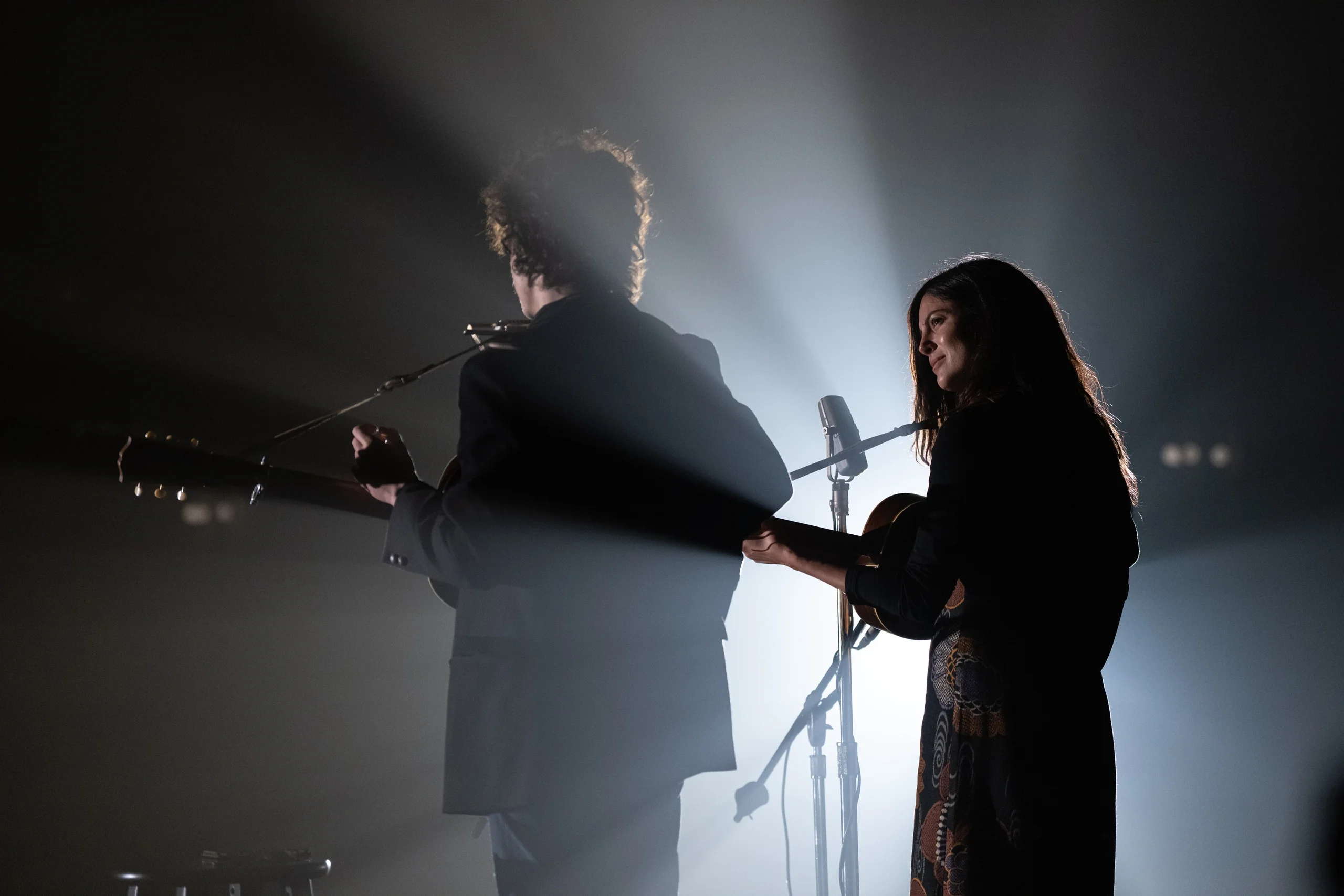
Their attraction is harder to enjoy once Dylan starts dismissing her music. Joan challenges him, and Barbaro makes her irritation believable. The problem is not that Dylan behaves badly. Joan needs more scenes that are about her, instead of how she responds to him. We hear enough of her singing to know she has talent, but spend much less time with her as a person making her own choices.
Dylan’s other important relationship is with Sylvie Russo, played by Elle Fanning. She is his girlfriend during his early years in New York. Fanning is convincing when Sylvie feels left out as Dylan grows closer to Joan, particularly when she watches them sing together. Still, the relationship gets less attention than the songs. Her hurt is easy to understand, but the film gives us fewer reasons to believe this particular couple belongs together.
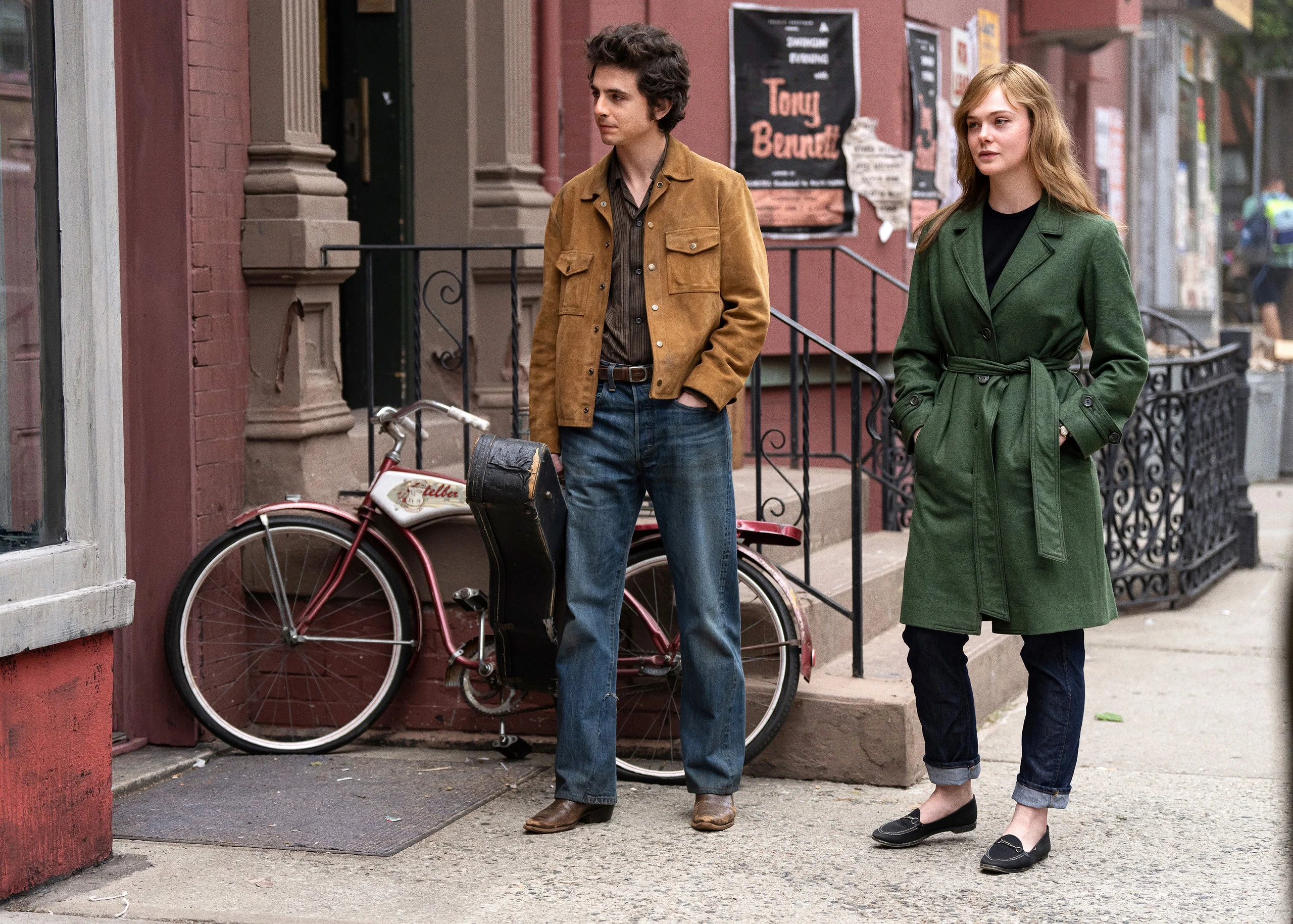
At 141 minutes, there is plenty of time to hear Dylan perform. There is less time to see what makes him a good companion away from music. That imbalance can make the middle section feel long, even when the next song is worth hearing. If you are hoping to understand why these women stay close to him, his musical talent is too often the main explanation.
Why changing guitars causes an argument
As Dylan becomes more successful, he wants to play louder rock music with electric instruments. Seeger and others in the folk scene prefer the acoustic music that brought them together. Their argument is about more than volume: they disagree over what Dylan should do with the audience he now has. Norton makes Seeger’s disappointment convincing because we have already seen how much he helped the younger singer.
By the time Dylan reaches the 1965 Newport Folk Festival, several people are trying to influence what he will play. But we spend more time seeing people resist his change than understanding how he arrives at it. The move to electric music would be more interesting with more of that decision-making, not just the arguments that follow. You can still enjoy the performances without treating every dramatic confrontation as a precise history lesson.
Pixel Twelve score: 7.5/10 — Good. Chalamet and Barbaro make this an easy recommendation for anyone who wants to hear Dylan’s early songs performed well. Norton is also likable as the older musician who helps him get started. But too little time with Joan and Sylvie makes the scenes away from music less satisfying. It is a good introduction to this period of Dylan’s career, but not a thorough explanation of his private life.
A Complete Unknown is streaming on Hulu in the United States at the time of publication. It runs 141 minutes and carries a U.S. MPA rating of R for language. Availability and age ratings can differ by country.
More from A Complete Unknown
2 screenshotsLoading results
Visit the A Complete Unknown movie page for the cast and official trailer, or read more Pixel Twelve reviews.