Electronic Arts wants advertising to feel like part of a game’s world instead of something added at the last minute. The company’s advertising leadership says future development teams should think about possible brand placements while games are still being designed.
That does not mean EA has announced pop-up commercials for every new release. The plan is broader: stadium signs, broadcast graphics, branded challenges, cosmetics, and other placements that can be built into a game from the beginning.
Players are still concerned because the line between a believable in-world advertisement and an interruption can be thin—especially in a full-price game that already includes other forms of monetization.
What is EA Advertising?
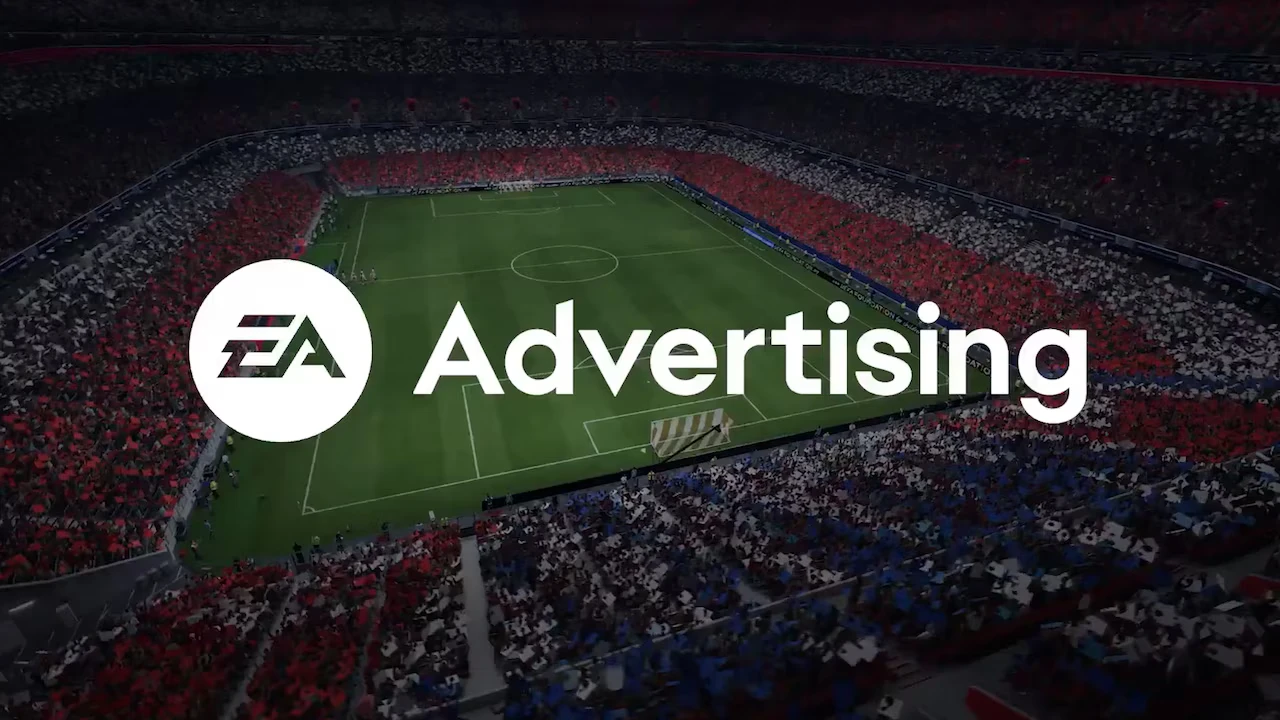
EA Advertising is a dedicated business created to connect real-world brands with EA’s games and live experiences. The company says it can build campaigns around dynamic placements, custom content, sponsorships, challenges, and virtual items.
EA’s launch announcement describes options such as stadium boards, scoreboards, broadcast overlays, branded environments, and in-game rewards. It also says EA has developed advertising technology for Frostbite, the engine used by many of its major games.
According to EA, its network reaches more than 120 million monthly active players. That scale makes games attractive to advertisers, but it also means EA has to prove that brand campaigns will not damage the experience for a huge audience.
Which EA games could contain these ads?
Sports games are the most natural fit. Real stadiums already use sponsor boards, scoreboards, clothing, and broadcast graphics, so brands can appear without feeling completely out of place.
EA has already highlighted campaigns involving brands such as Visa, Lowe’s, and Mountain Dew. The company has also discussed opportunities across games and communities including EA Sports titles, The Sims, and Skate.
There is no confirmed list showing that every upcoming EA game will include advertising. The format and amount can vary by title, audience, platform, and the type of experience the development team is building.
Does this mean every EA game will have advertising?
No. EA has not announced a rule requiring ads in every game. Alexander Dao, the company’s vice president of advertising and partnerships, said the approach has to make sense for each title.
The important part is that EA wants teams to consider advertising during development. PC Gamer’s coverage of Dao’s comments explains that early planning can make a placement feel more natural than an ad inserted after the rest of the game is finished.
That approach could produce subtle background details, but it could also influence how a mode, menu, event, or reward system is designed. Players will judge the result, not the planning language.
Advertisement

Why are players concerned?
The biggest concern is paying for a game and then feeling pushed through an advertising experience. Many EA titles already sell premium editions, virtual currency, cosmetic items, season passes, or other extras.
A sponsor logo beside a football pitch is very different from a video that blocks the screen, interrupts a match, or must be watched to claim a reward. Both are advertising, but only one feels like it belongs naturally in the setting.
Players may also want clear information about targeting and measurement. EA’s advertising platform promotes tools that help brands reach audiences and track campaign performance, so transparency about data and controls will matter.
What has EA promised?
EA says advertising should enhance a game rather than disrupt it. Dao has argued that the right placement depends on the title and that a campaign should fit the experience players came for.
That promise sounds reasonable, but it will be tested by implementation. Players will notice whether an ad is optional, contextual, age-appropriate, easy to ignore, and honest about what it is.
Where should EA draw the line?
Contextual placements are the safest option. A real sponsor on a stadium board, a branded racing event, or a believable sign in a modern city can add realism when it matches the world.
Ads become harder to defend when they stop play, cover important information, pressure players to spend, or turn progression into a marketing funnel. The more expensive the game, the less patience players are likely to have for interruptions.
EA should also explain which games contain paid placements and how player data is used. Clear labels and useful privacy controls would make it easier for people to decide what they are comfortable with.
What happens next?
The real test will come when EA shows how these plans appear in future releases. A well-placed stadium sponsor will barely surprise anyone. A disruptive commercial inside a paid game would create a very different reaction.
Until those games arrive, the accurate takeaway is that EA sees advertising as a larger business opportunity and wants some placements considered during development—not that every EA game is about to receive the same type of ad.
For another look at how EA’s design decisions are dividing players, read our EA Sports FC 27 open-world report.