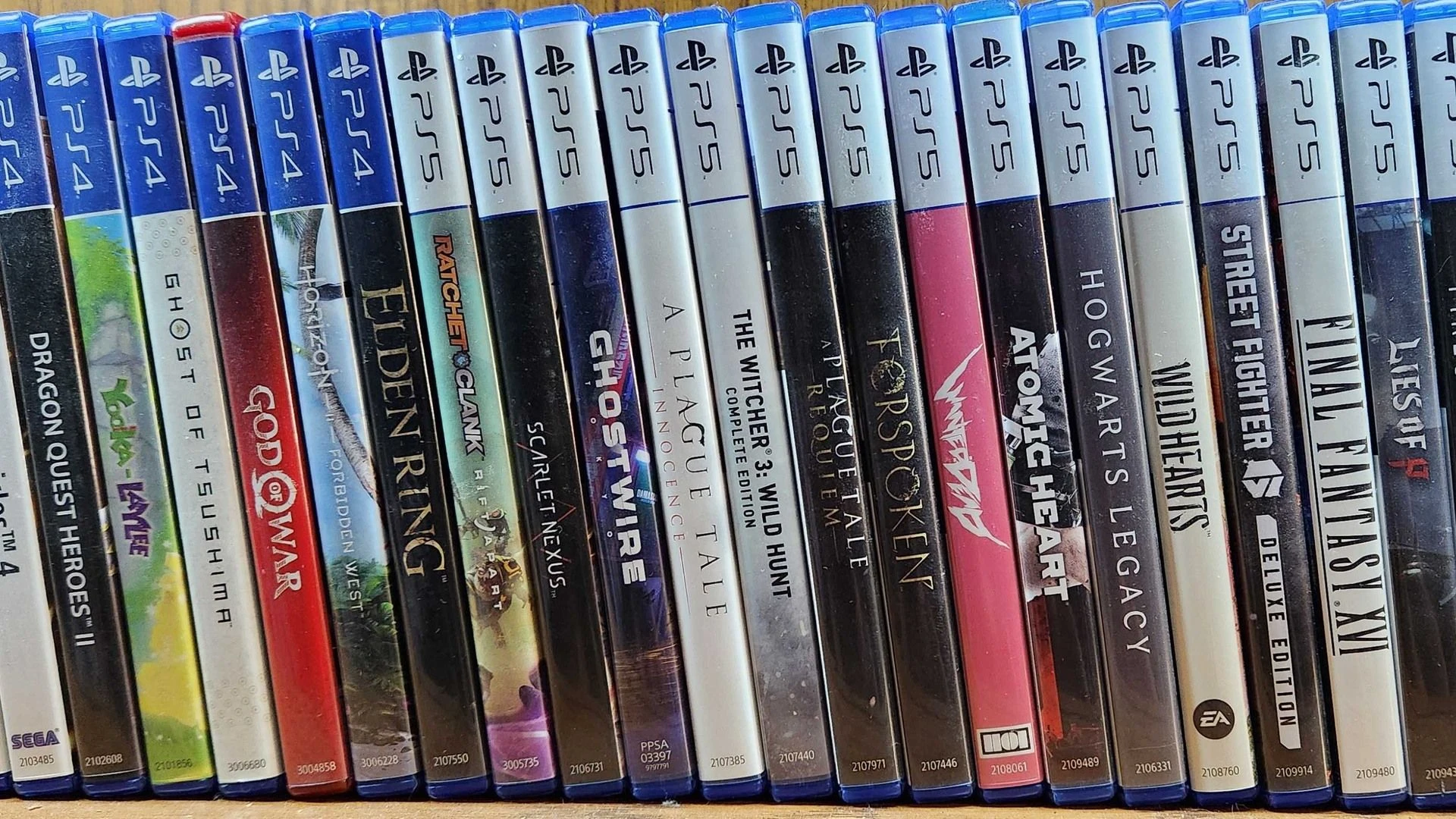
Yes, people still buy games on disc. They are just no longer the majority when a new PlayStation game is sold.
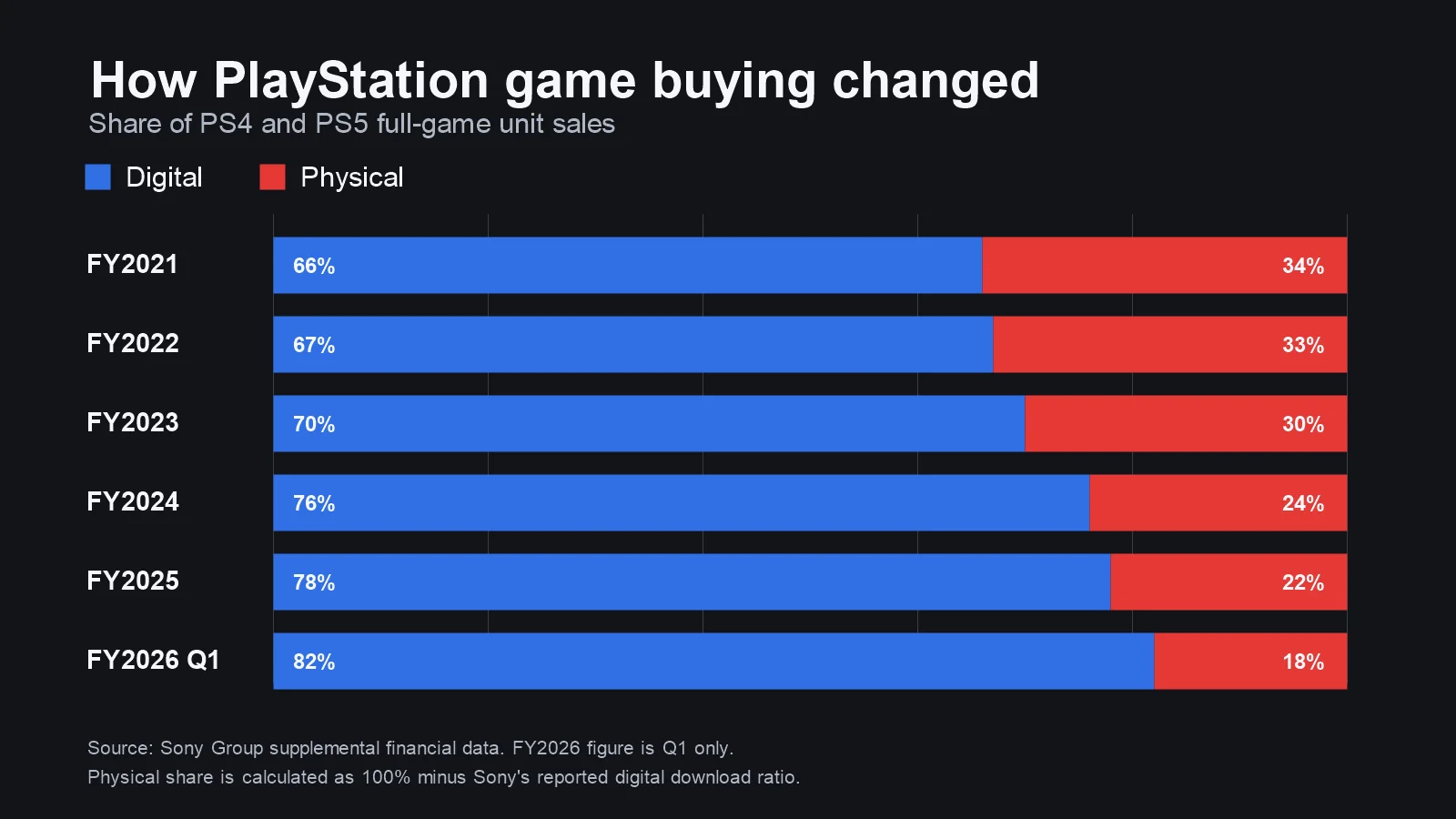
Sony's latest financial data shows that 82% of full-game sales on PS4 and PS5 were digital during the first quarter of its 2026 financial year. That leaves about 18% for physical copies. Five years earlier, the physical share was roughly 34%.
Those numbers confirm that disc buyers are now a minority. They do not mean only 18% of PlayStation players use discs. One person can buy some games digitally and others physically, and Sony is counting purchases rather than individual people. The total also includes games that were never offered on disc.
Five Years of PlayStation Sales
The move toward downloads has been steady. Physical copies represented about 34% of PlayStation full-game sales in FY2021, 33% in FY2022, 30% in FY2023, 24% in FY2024, and 22% in FY2025. The latest quarter brought that figure down to 18%.
This did not happen in one year. Digital stores became easier to use, consoles gained more storage, subscriptions put large libraries behind one payment, and many smaller games stopped receiving physical editions. Players also became more comfortable downloading a release at midnight instead of visiting a store or waiting for delivery.
The Change Goes Beyond PlayStation
Electronic Arts reported a similar change across its PlayStation and Xbox releases. Its digital share of console unit sales rose from 62% in FY2021 to 81% in FY2026, according to the company's SEC filings. That comparison covers one publisher rather than the whole market, but it shows how quickly major console releases have moved online.
Physical games still generate serious money. U.S. consumers spent about $1.5 billion on new physical games in 2025, according to Circana data reported by GameSpot. Spending was down 11% from the previous year and reached its lowest level in three decades, but $1.5 billion is not a market with no customers.
Who Is Still Buying Discs?
The UK Entertainment Retailers Association says 25% of players under 25 use discs and that the country's disc-based game market was worth more than £300 million in 2025. That pushes back against the idea that physical games only appeal to older collectors.
Players keep buying discs for practical reasons. A physical game can be resold, traded, lent to a friend, wrapped as a gift, or bought used for less money. Collectors also like seeing a library on a shelf. Digital games are convenient, but they cannot offer all of those things.

A disc does not always contain a complete modern game. Large downloads, launch updates, online checks, and server requirements can still apply. Even with those limits, the disc can preserve the ability to install, share, or sell a copy in ways a download usually cannot.
Are Disc Buyers Now the Minority?
For new PlayStation full-game purchases, yes. The five-year sales record makes that clear. The same pattern appears in EA's console sales, and physical spending continues to fall in the United States.
Minority does not mean irrelevant. Nearly one in five PlayStation full-game purchases in Sony's latest quarter was still physical, and the format remains important to people who care about price, ownership, collecting, and the used-game market.
Sony plans to stop producing discs for newly released PlayStation games in January 2028. Its official announcement does not make current discs disappear, but it will remove an option that a smaller, still substantial group continues to use.
When did you last buy a game on disc, and what would make you stop?