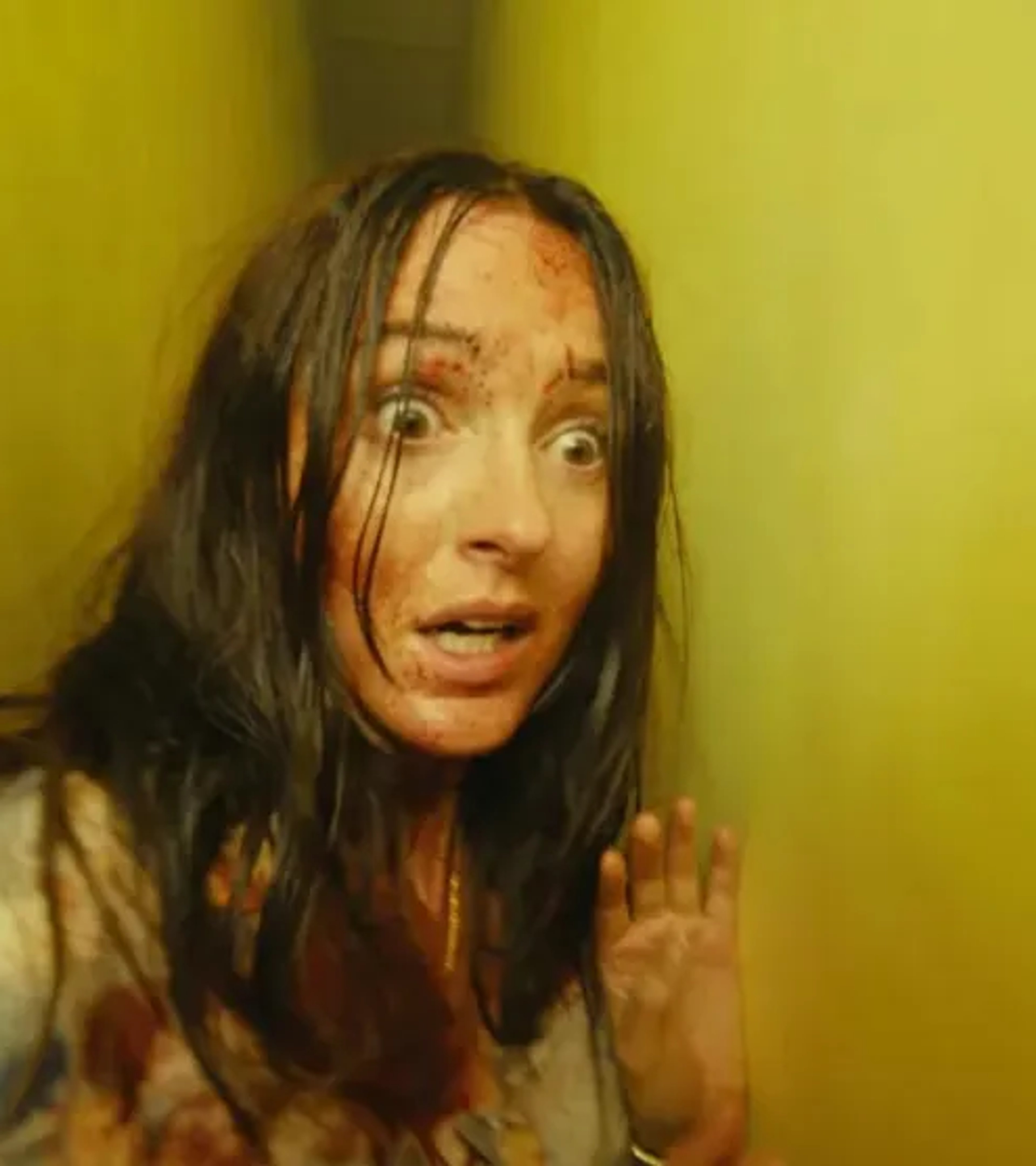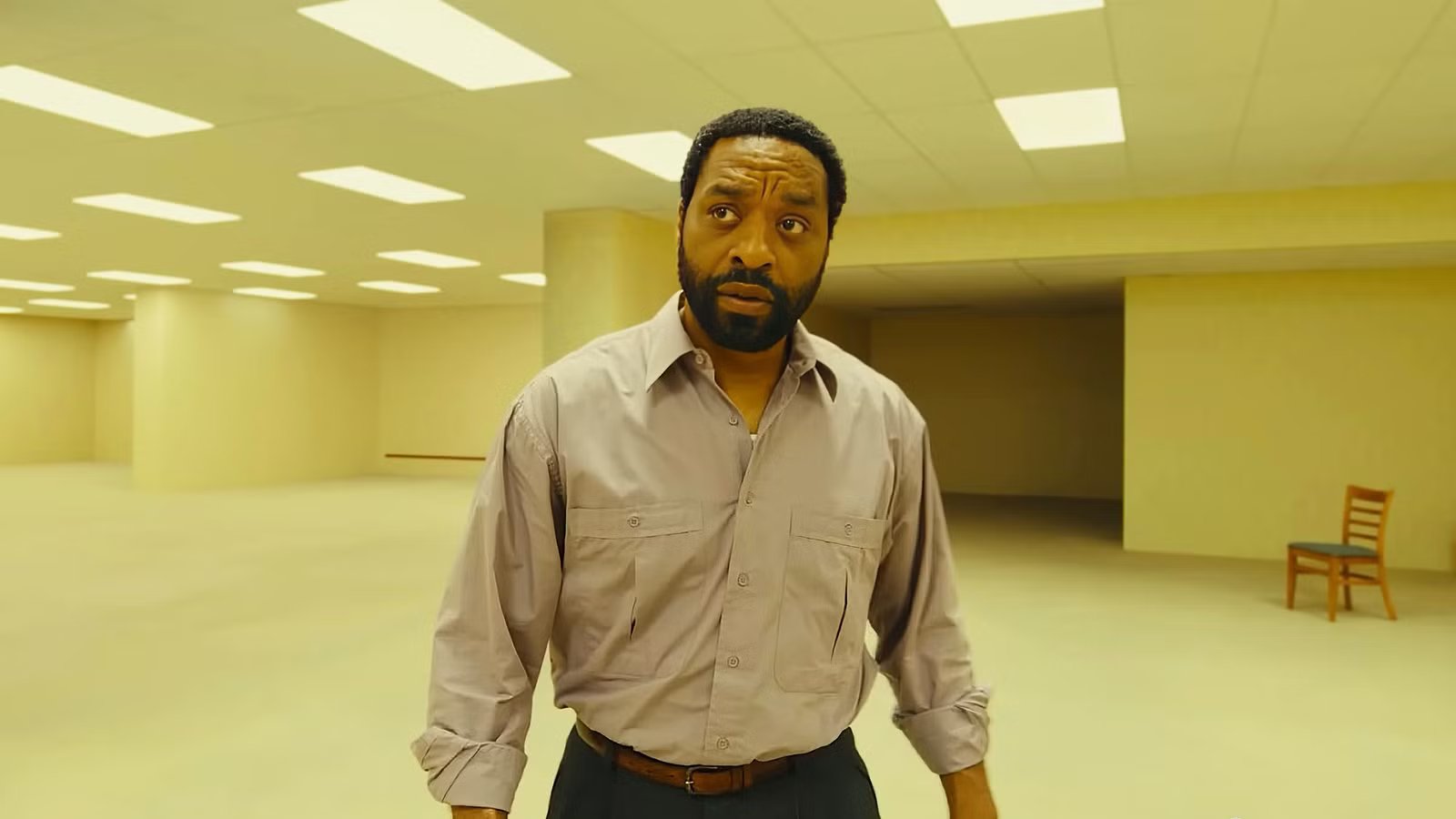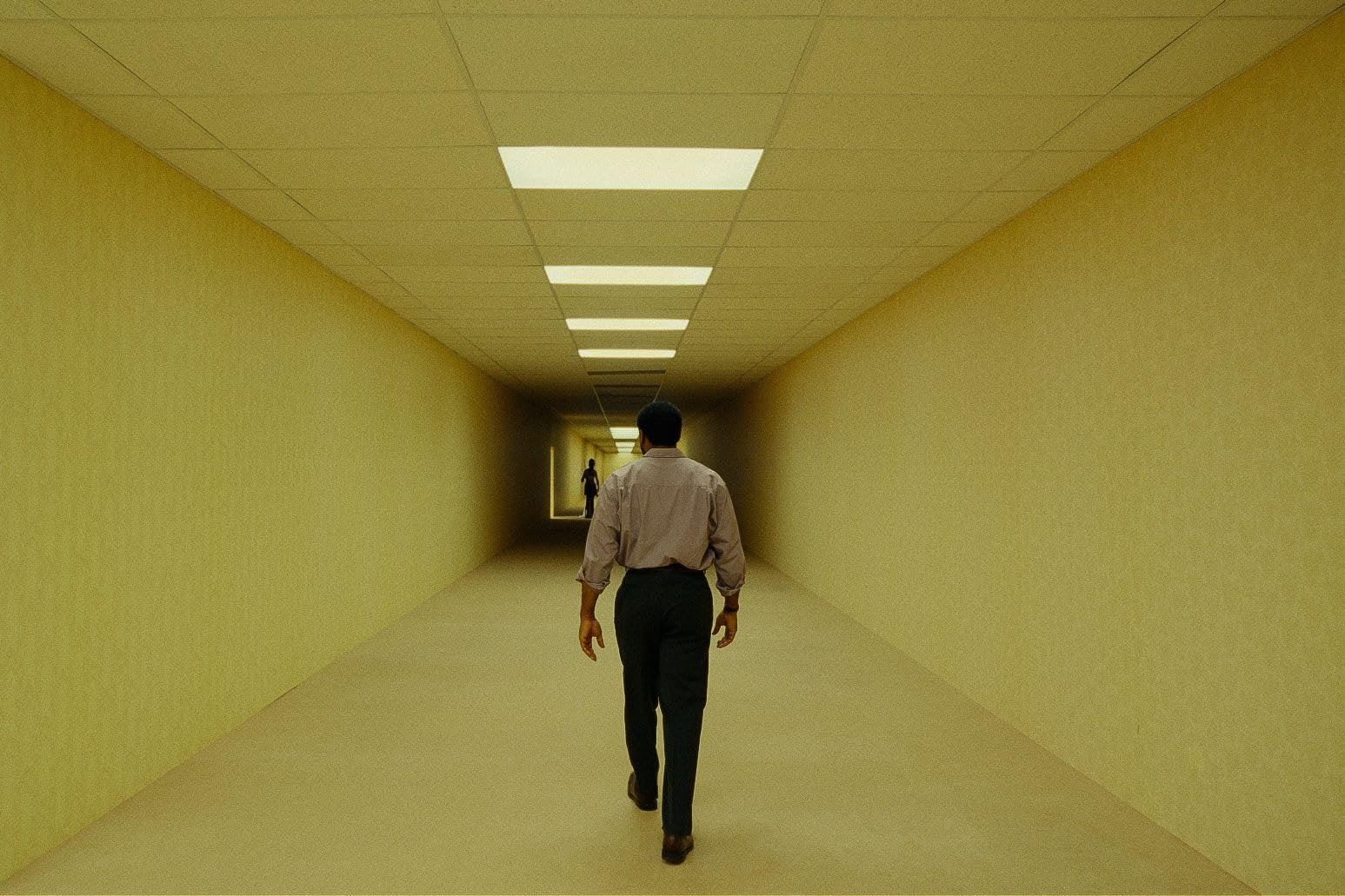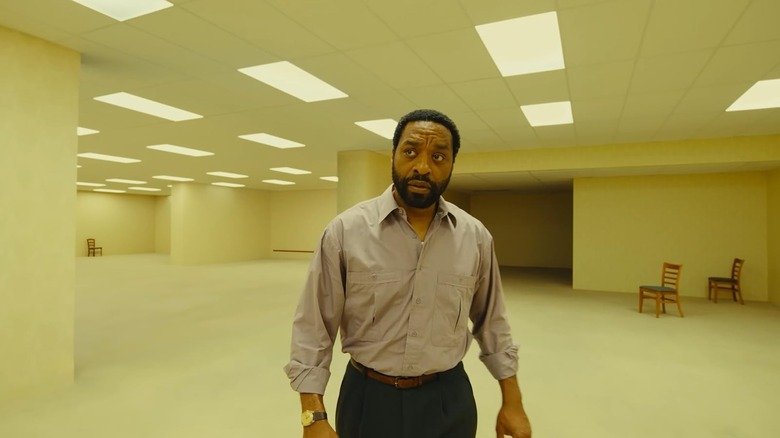
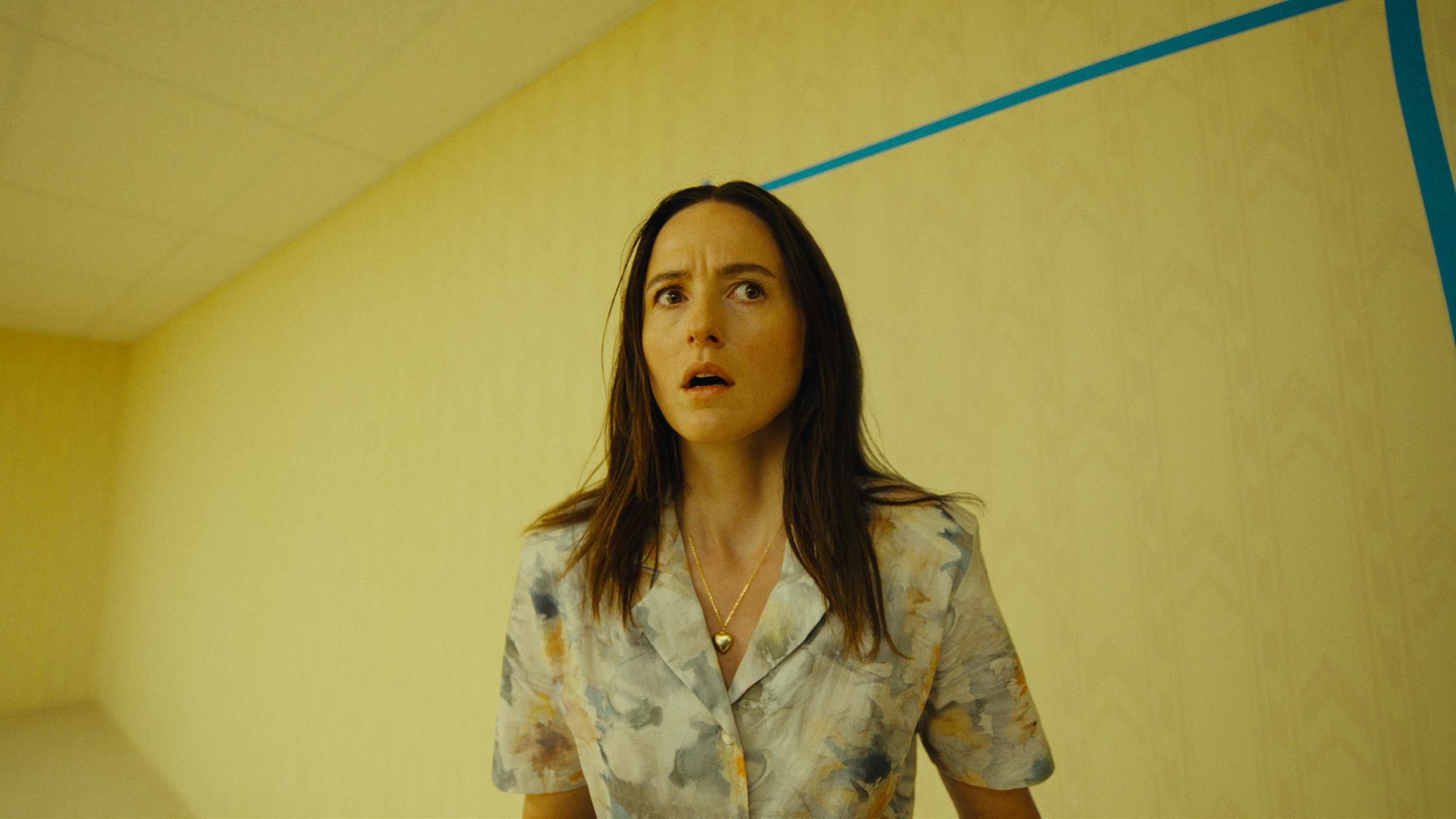
Backrooms feels like the kind of horror movie that could only happen after the internet trained people to be afraid of empty rooms. Not haunted houses. Not cursed dolls. Empty rooms. Fluorescent lights, bad carpet, yellow walls, office corridors that look familiar enough to trust for half a second and then wrong enough to ruin your night. That is why A24's Backrooms matters beyond one movie. It turns a very online kind of fear into a theatrical event.
The official A24 setup is almost comically plain: a strange doorway appears in the basement of a furniture showroom. Kane Parsons directs, Will Soodik writes, and Chiwetel Ejiofor and Renate Reinsve star. On paper, that could sound like a clean studio horror pitch. In practice, the whole reason people care is that Backrooms did not begin as normal studio IP. It came from creepypasta, liminal-space images, and Parsons' Kane Pixels videos, especially the found-footage short that made the concept feel like a corrupted memory you accidentally clicked into.
That is the bigger story. Horror is not just adapting books, games, toys, and old franchises anymore. It is adapting internet feelings. Backrooms shows how a mood that spread through forums, YouTube edits, and screenshots can become something people buy a ticket to experience in a dark room with strangers.
The Backrooms Were Built for Internet Fear
The Backrooms idea works because almost everyone knows the texture before they know the lore. The yellow walls, buzzing lights, endless hallways, and dead corporate emptiness do not need a monster to feel hostile. The space already feels like a mistake. It is not a castle or a graveyard. It is a place that looks like it should have a copier, a vending machine, or a bored employee somewhere nearby, except there is nobody.
That is why the jump from online horror to theatrical horror makes sense. Internet horror is often strongest when it does not over-explain itself. It gives you a piece of evidence, a video, a photo, a strange file, or a half-broken story and lets your brain do the rest. Parsons' original Backrooms work understood that rhythm. It felt discovered rather than presented. The feature has a harder job because a movie needs characters, structure, and escalation, but the appeal is still the same: the fear that ordinary space can suddenly stop obeying ordinary rules.
The Backrooms also arrived at the right cultural moment. A lot of modern horror is about domestic spaces, apps, social feeds, parasocial obsession, and the weird loneliness of being too connected. Backrooms sits right in that zone. It is not about an ancient evil waking up. It is about a blank, endless place that feels like it was made by a broken system no person is controlling anymore.
That makes it different from a normal haunted-location story. A haunted house usually has history. Someone died there, someone did something terrible there, or some family secret poisoned the walls. The Backrooms are scarier because they feel history-less. They look mass-produced, abandoned, and endless, like a place designed by nobody for no one. That lack of personality is the personality.
That is why the best Backrooms images spread so easily online. They do not require a viewer to know the canon. You can see one frame and understand the wrongness. The space feels like a memory from a mall, school, hotel, office, or storage room, but it refuses to become one specific place. It belongs to everyone and no one, which is exactly the kind of horror the internet is good at multiplying.
Why A24 Was the Right Studio for This
A24, the studio behind Backrooms, has spent years making unusual horror feel like a brand advantage instead of a liability. That does not mean every A24 horror movie is the same. It means audiences are already trained to expect riskier tone, stranger pacing, and ideas that might not look like a traditional multiplex sell. For Backrooms, that trust matters.
The movie could have easily become a generic creature feature with yellow wallpaper. The smarter path is letting the space be the event. Interview Magazine's profile of Parsons says the film was shot on a 30,000-square-foot practical set, and Parsons talks about wanting the floor, walls, and rooms to feel physically real whenever characters moved through them. That detail matters because Backrooms horror depends on geography. If the rooms feel fake, the entire spell breaks.
A movie theater also changes the experience. Watching a Backrooms clip alone on YouTube feels like finding something you were not supposed to see. Watching Backrooms in a theater makes the dread communal. The room is dark, the sound is huge, and everyone is waiting for the same empty hallway to do something. That is a very old moviegoing trick attached to a very new internet myth.
That shift is risky in a good way. Online horror often works because it feels small and private. The viewer can pause, scroll away, or wonder whether the clip was part of something larger. A theatrical movie removes some of that accidental texture. The tradeoff is scale: bigger sound, fuller performances, longer tension, and the physical pressure of sitting through the maze instead of clicking out when the dread gets uncomfortable.
The Kane Parsons Factor
The reason this movie has trust with the online audience is Kane Parsons. He is not a studio hire brought in to imitate a meme from the outside. He helped define the popular modern language of Backrooms horror through his own videos. Interview Magazine describes him as a self-taught YouTuber whose feature debut became a major A24 success, and that makes the movie feel like a rare case where internet-origin horror kept its original fingerprints.
That does not automatically make the movie work. A nine-minute short and a feature film are different beasts. A short can live on atmosphere and one frightening idea. A feature has to decide how much story the audience needs before the mystery becomes smaller. The challenge for Backrooms is keeping enough ambiguity to feel wrong while giving Chiwetel Ejiofor, Renate Reinsve, and the rest of the cast enough human pressure to carry the maze.
That balance is why Backrooms is interesting as a guide topic for Pixel Twelve readers. The movie is not just asking whether the monster is scary. It is asking whether internet horror can survive being translated into a bigger, cleaner, more expensive format without losing the dirty little feeling that made it spread in the first place.
Parsons also matters because his age and path into film change the usual adaptation story. This is not a veteran director discovering a trend through a studio development meeting. It is a creator whose online work became the proof of concept. That does not guarantee the feature's quality, but it gives the project a different kind of authenticity. The original grammar of the fear is not being reverse-engineered from the outside.
What Backrooms Says About the Future of Horror
The obvious takeaway is that studios will keep looking online for the next horror idea. That part is not new. Hollywood has always followed audiences. The more interesting takeaway is that not every internet horror concept works the same way. Backrooms is not powerful because it has the most complicated mythology. It is powerful because the core image is instantly readable. You can understand the fear in one shot.
That is probably the real lesson for future adaptations. The internet can produce endless lore, but movies need a clean emotional doorway. Backrooms has one: what if a normal place opened into a space that looked almost normal, but had no exit and no mercy? That is easy to explain, easy to market, and still strange enough to keep people theorizing.
The risk is that studios learn the wrong lesson and start buying internet terms instead of internet instincts. Backrooms works because it understands blankness, distance, sound, and the fear of being misplaced. A movie that only copies the wallpaper would miss the point. The next wave of internet horror has to preserve the feeling, not just the name.
That is also why Backrooms sits beside, but apart from, game adaptations and toy adaptations. Those properties usually arrive with characters, rules, fan expectations, and merchandising clarity. Internet horror often arrives with a feeling first and a mythology second. The job is not only fan service. It is atmosphere service. If the movie makes the hallway feel wrong, the adaptation is doing the part that matters most.
That is why Backrooms is such a useful marker for 2026 horror. It proves that online dread can move into theaters when the image is strong, the filmmaker understands the original language, and the studio lets the concept stay weird. Horror has always followed the places people feel unsafe. Right now, one of those places is a hallway that looks like it came from nowhere and goes on forever.
The next question is whether other online horror concepts can make the same jump. Some will not, and that is fine. Not every creepy thread needs a two-hour movie. But Backrooms shows the path: start with a fear people already recognize in their bodies, keep the original creator's voice close, and use the theater to make the space feel bigger instead of explaining the mystery until it stops breathing.