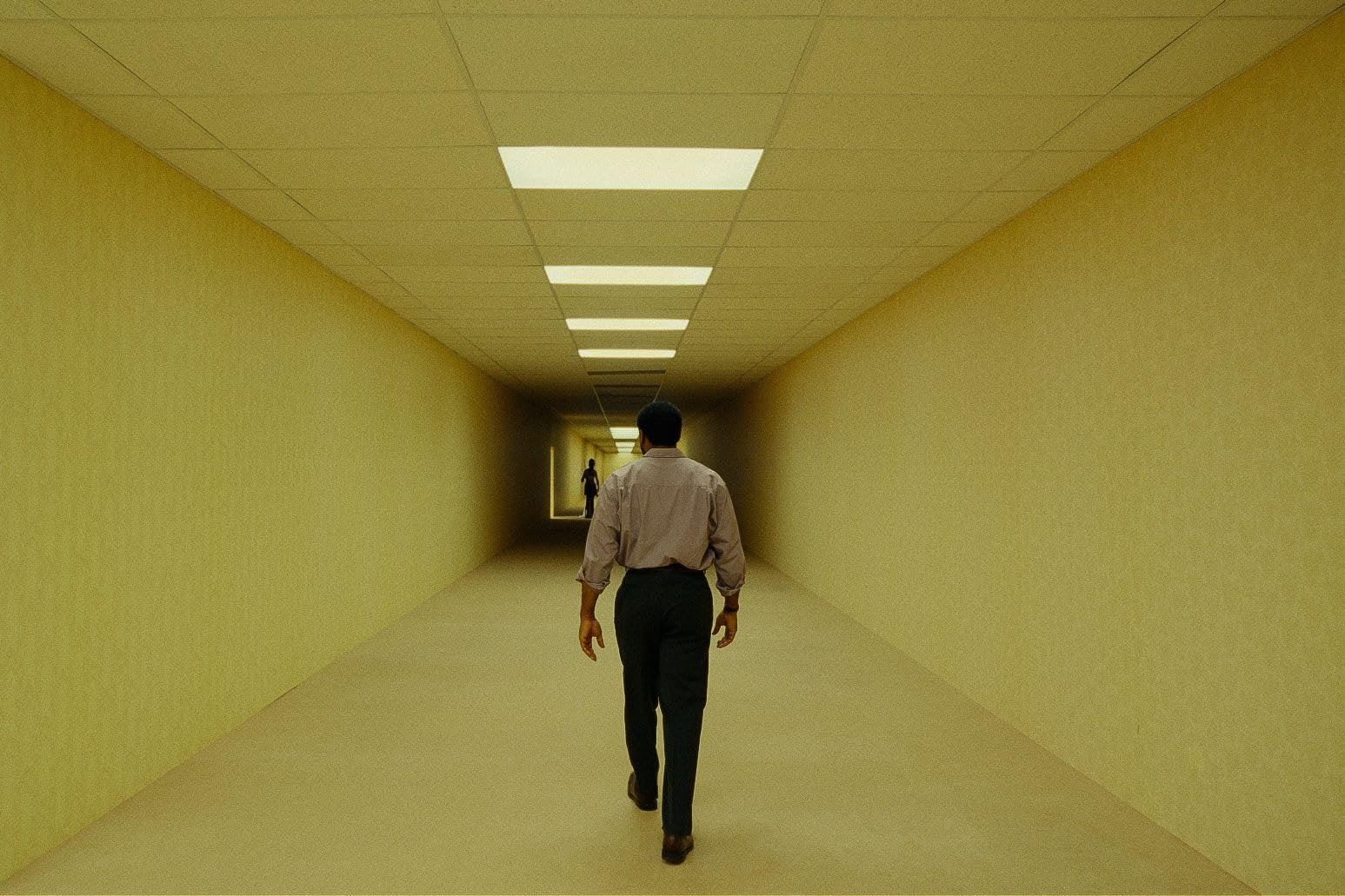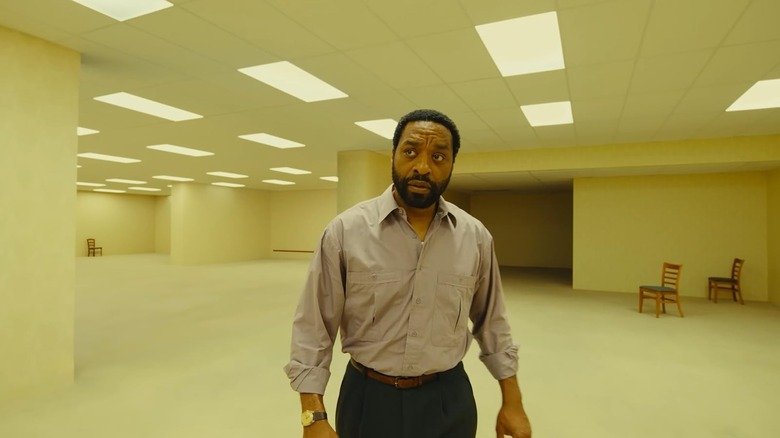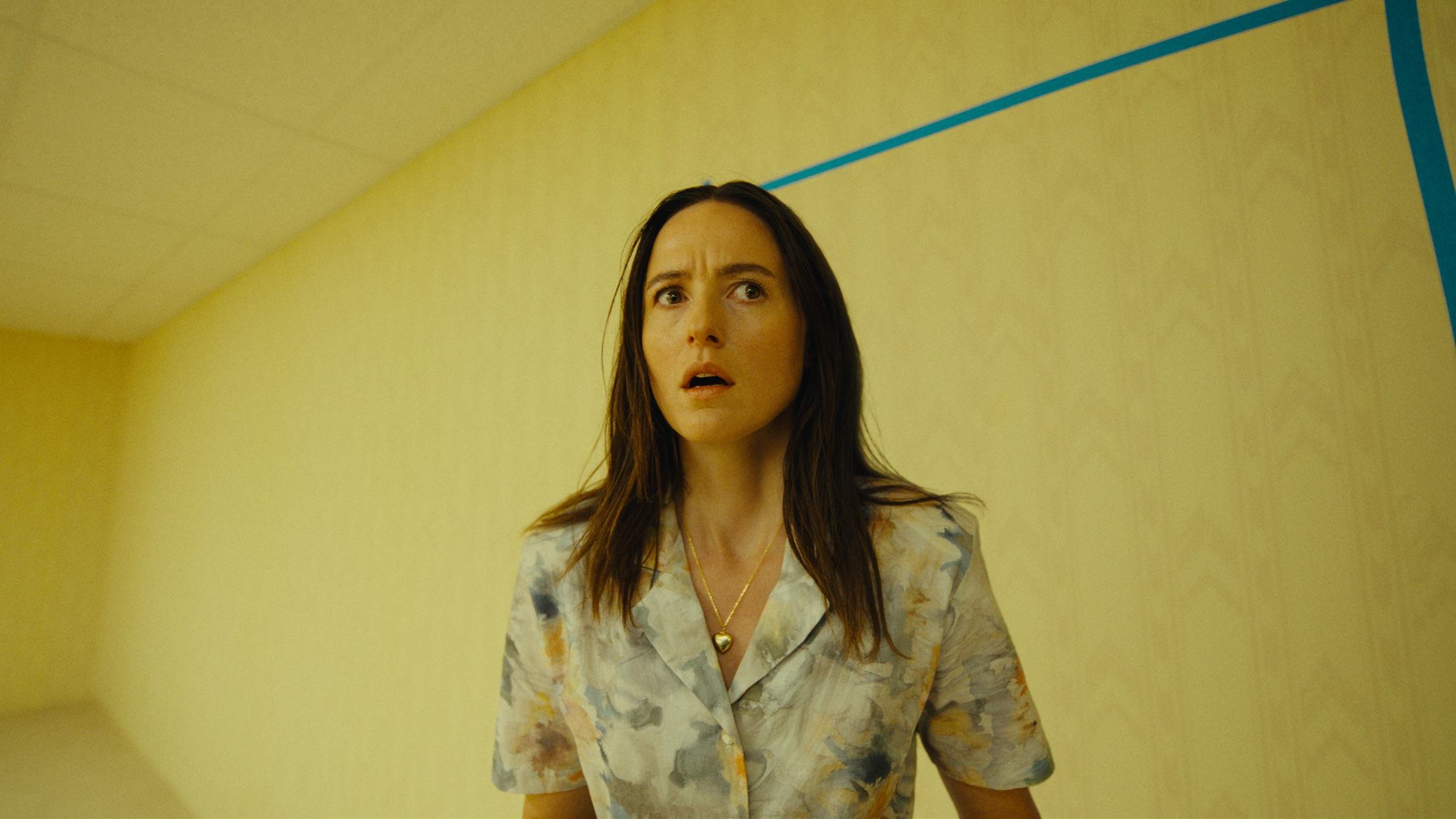
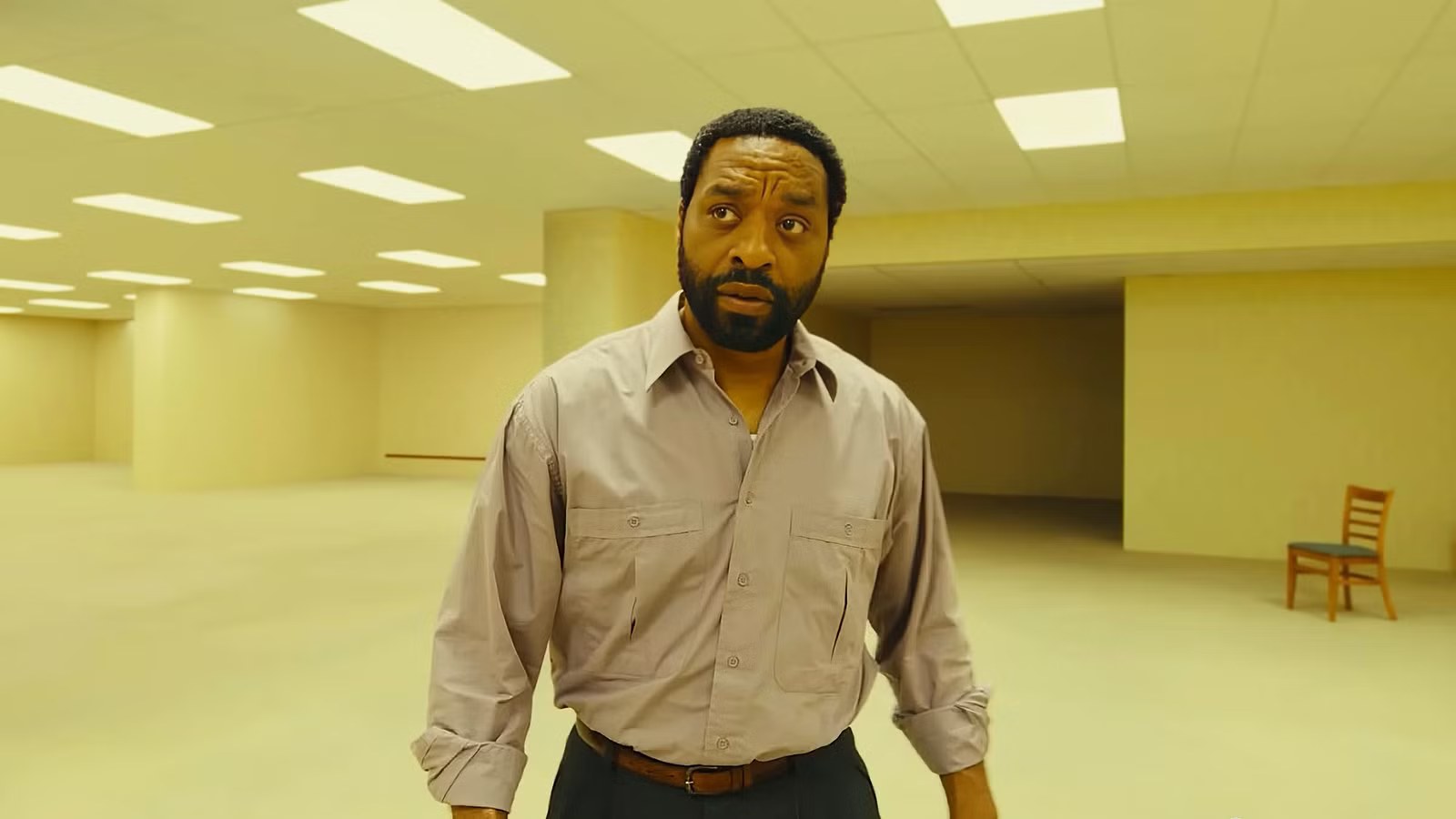
Backrooms is not a normal horror brand waiting to be scaled up. Its power comes from something smaller and stranger: the sick recognition of a place that looks ordinary until your brain refuses to accept it. Yellow walls. Dead office light. Carpet that seems to hold old moisture. A feature film has to preserve that wrongness while carrying the weight of a full theatrical experience.
That is a harder challenge than adding monsters, lore, or a bigger mythology. The Backrooms are frightening because they make architecture feel hostile without doing anything dramatic. The rooms do not need to chase you. The hum does not need to explain itself. The horror is the suspicion that a familiar space has become infinite and that reality is too indifferent to correct the mistake. The more a movie explains that feeling, the more it risks shrinking it into a set of rules.
Kane Parsons' connection is why the project feels more interesting than a simple internet-to-screen grab. Backrooms is part of a wider entertainment shift in which digital creators are not just handing studios recognizable IP; they are bringing a visual grammar with them. Internet horror has its own rhythm. It understands degraded images, impossible spaces, dead time, and the weird intimacy of watching something alone at night. Hollywood can use that, but it also has to resist smoothing it into familiar horror grammar.
The biggest danger is polish. A24 can make a horror film look gorgeous, but Backrooms should not look too pleased with itself. The original fear depends on the ugly office texture, the dead-air realism, the feeling that the world has become cheaply manufactured and endless. If the film turns every hallway into a beautiful composition, it may lose the mundane rot that makes the concept unsettling. The space needs to feel designed by nobody and maintained by something worse than neglect.
Why the Backrooms Should Not Get Too Polished
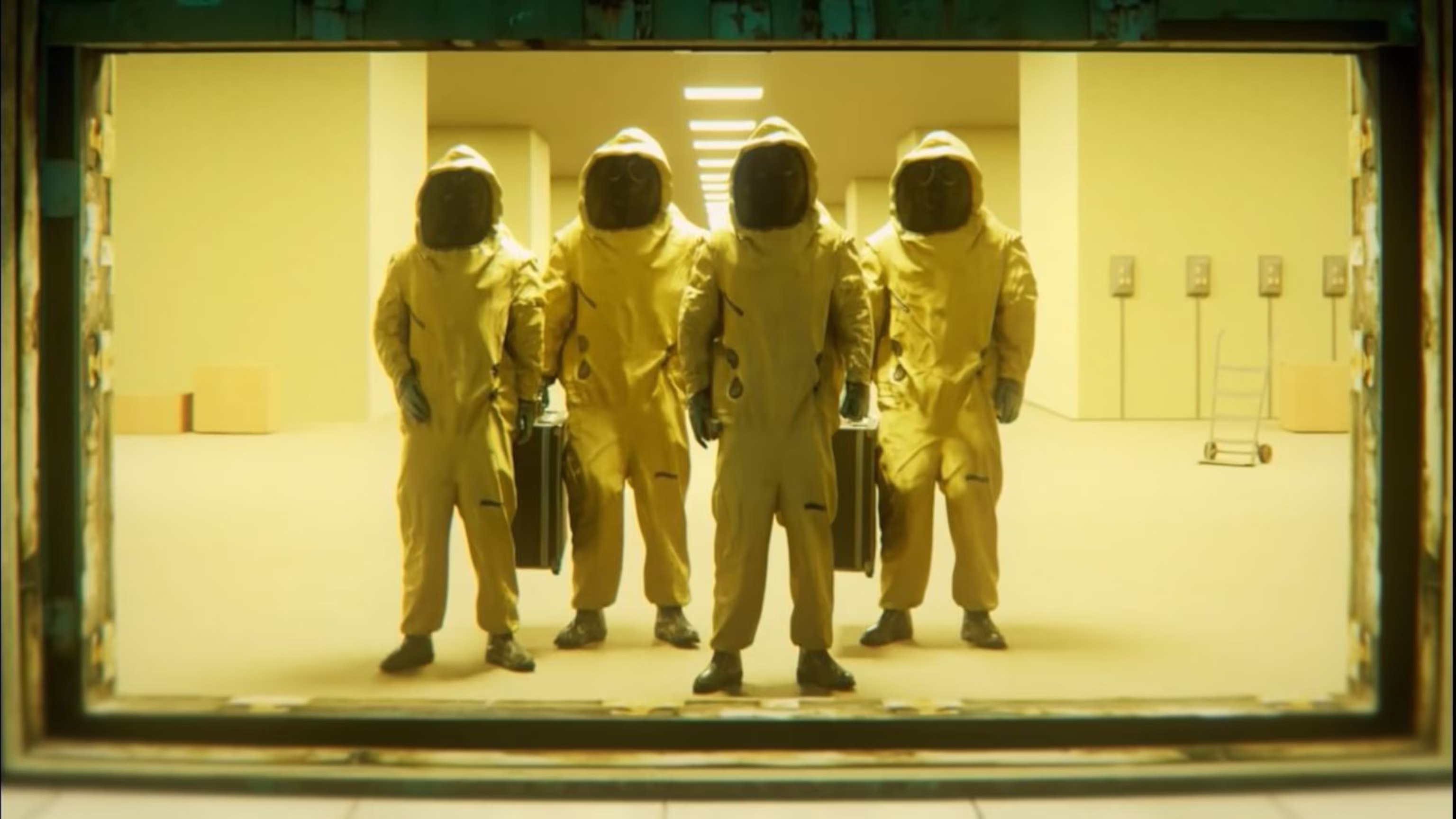
There is also a scale problem built into the idea. Online, the Backrooms can work as a glimpse. You see enough to understand that the place is impossible, then your imagination supplies the rest. A movie has to keep viewers inside that impossibility for much longer. That means pacing becomes everything. If the film rushes from threat to threat, it becomes a maze thriller. If it sits too long without escalation, it risks becoming inert. The sweet spot is dread that keeps mutating without becoming noisy.
The creature question matters less than the atmosphere question. Monsters can exist in this world, but they should feel like consequences of the space, not attractions placed there because horror audiences expect something with teeth. The Backrooms are already a monster in architectural form. A hallway that does not end, a room that repeats incorrectly, a light that makes time feel diseased: those are threats. The film needs to trust that viewers can be afraid of a place before they are afraid of what lives there.
That trust is rare in bigger horror filmmaking, where the impulse is often to clarify, escalate, and brand the nightmare. Backrooms should not be ashamed of ambiguity. It does not have to be vague for the sake of vagueness, but it should understand that some fear comes from not knowing what kind of story you are trapped inside. Is this a survival film? A cosmic joke? A punishment? A rupture in reality? The film can suggest answers without turning the mystery into a spreadsheet.
The human side is just as important. Liminal horror can become sterile if nobody inside it matters. A feature needs characters who bring more than panic to the rooms. The best approach would be to let the space press on ordinary emotional needs: rescue, guilt, memory, loneliness, the desperation to find another human signal in a place built out of absence. The Backrooms should not become a lore museum. They should become a pressure chamber.
Sound may be the secret weapon. The hum of fluorescent lights is already part of the Backrooms' myth, but a film can make that hum physical. Silence, distant mechanical noise, carpeted footsteps, the thinness of a voice in a room that should not echo: these details can do more than a jump scare. Horror fans remember images, but they also remember the feeling of listening for something they do not want to hear. Backrooms has a chance to make sound feel like a trap.
The Real Monster Is the Space Itself
The movie also has to handle audience familiarity carefully. A chunk of the audience will arrive already knowing the iconography. The stronger move is to make the familiar image feel dangerous again. Show the yellow rooms, yes, but find a way to make viewers feel they are seeing them from the inside rather than pointing at a meme brought to life.
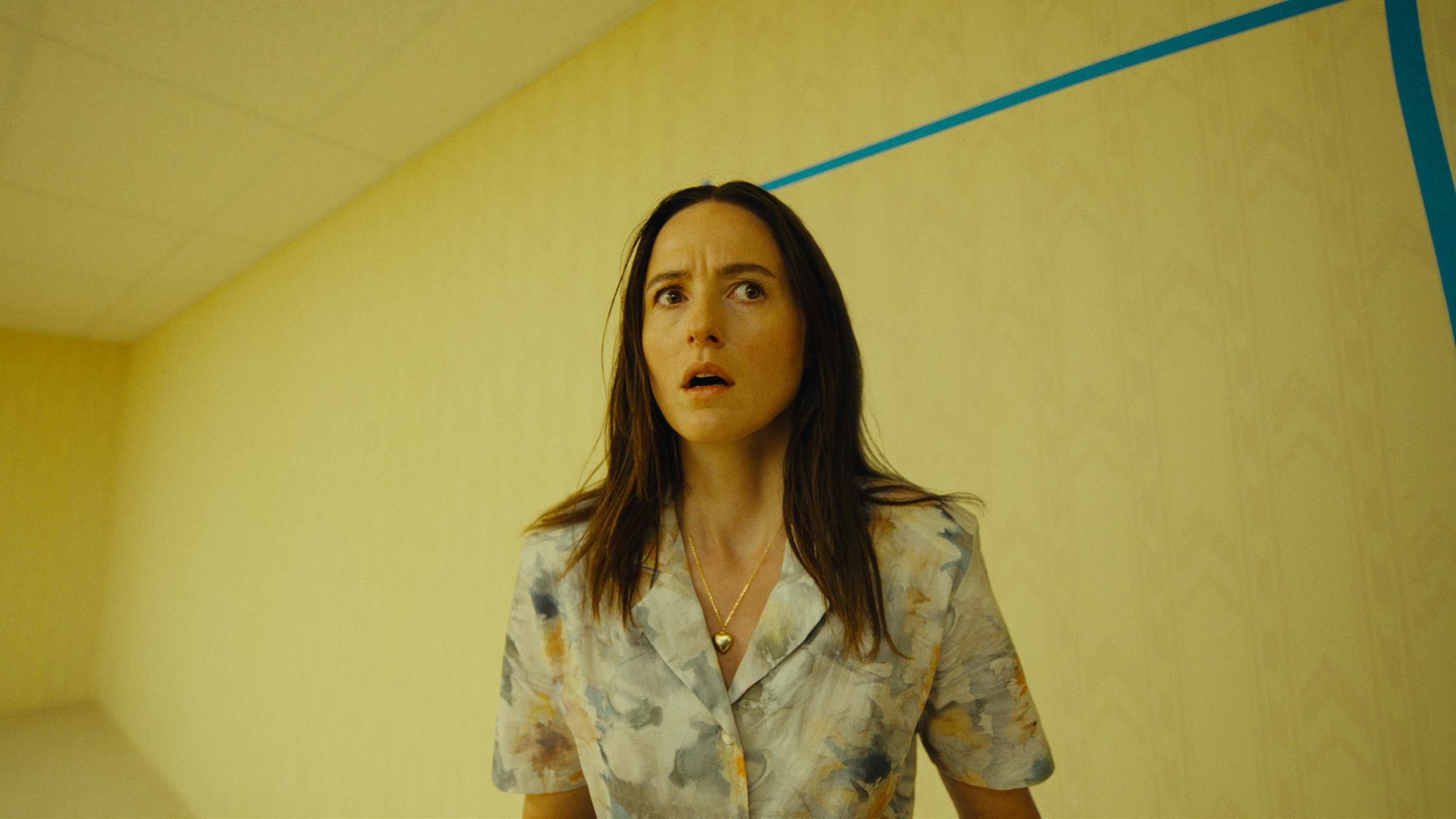
That is why the project carries a bigger industry question. Internet-native horror is not only a farm system for new franchises. It is a challenge to traditional horror form. It asks whether a movie can borrow the texture of digital dread without flattening it into plot. It asks whether a studio can let a creator's weirdness remain weird. It asks whether an audience trained by short-form fear can be held for a full feature without being overfed.
If Backrooms succeeds, it could open a door for more creator-led horror that respects the language of the internet without treating it like a gimmick. It would prove that viral horror can be more than a recognizable image and that online fear has cinematic value beyond brand awareness. If it fails, the failure will probably be instructive too. Some nightmares do not need more explanation. Some become smaller the moment they are forced to behave like franchises.
The best version of Backrooms is not bigger in the obvious sense. It is deeper, colder, and more patient. It makes the audience feel the old internet sensation of finding something that seems unowned, unapproved, and impossible to delete from the mind. It understands that the scariest part of the Backrooms is not being chased. It is realizing the room itself does not care whether you ever leave. That is the horror the movie has to protect.
The film should also understand why liminal horror became so sticky in the first place. It is not only fear of being lost. It is fear of systems without people: offices after work, hotels with no guests, malls after closing, spaces that were built for human activity but emptied of human reassurance. Backrooms takes that discomfort and removes the exit. A good movie can make viewers feel the loneliness of infrastructure, the way modern spaces can seem familiar without ever feeling safe.
How Internet Horror Survives the Jump to Theaters
Character perspective will be crucial. If the audience is asked to follow someone through this space, that person needs a psychological reason to matter beyond being frightened. The Backrooms should test memory, time, and trust. It should make characters doubt their senses and their own need for explanation. A person trapped in an impossible building does not only ask where the door is. They ask whether the world they came from is still there, and whether they would recognize themselves if they got back.
The marketing may sell the recognizable yellow rooms, but the film's endurance will depend on escalation that does not betray the premise. Each new space should feel like a wrong answer to the last one. A hallway can become a pool room, a stairwell, a service corridor, a place that looks almost public but has no public in it. The geography should suggest patterns and then break them. That is how the film can grow without becoming a monster tour.
Backrooms has the potential to be a true test of restraint. The temptation will be to prove that the film is big enough for theaters by making it louder. The better move is to make the theater feel trapped in a very large silence. If the movie trusts emptiness, ugly light, and the horror of a place that cannot be reasoned with, it can turn an internet nightmare into something genuinely cinematic without losing the rot that made it famous.
The ending will be especially important because liminal horror can be damaged by a conclusion that tidies too much. Backrooms does not need to explain every rule of the space in order to satisfy. It needs to leave the audience with a feeling that the world is less stable than it was before the movie began. A strong final movement would answer enough emotional questions to make the journey feel complete while leaving the architecture itself fundamentally wrong. The rooms should not become solved. They should become unforgettable.
That lingering quality is what could separate Backrooms from a quick brand adaptation. The audience should leave with the ugly light still in their head, not just a plot summary. If the movie can make people distrust ordinary rooms for a few minutes after the credits, it has understood the assignment.